
The biggest mistake residents make with moonlighting is thinking “extra shifts = extra money.” That is only half-true. Once you throw PSLF and income-driven repayment into the mix, every extra dollar behaves differently. Some dollars are cheap. Some are heavily taxed. Some quietly explode your future tax bomb.
Let me walk you through how this actually works in the real world.
The Core Rule: Moonlighting Can Hit You Three Times
Moonlighting income does not just “add to your paycheck.” It can:
- Increase your taxes (obvious part).
- Increase your IDR payment if it shows up in your AGI.
- Potentially decrease the long-term value of PSLF or forgiveness.
So if you are not careful, that extra $10,000 of moonlighting can feel more like $4,000–$5,000 by the time taxes and higher loan payments are done with it.
But here is the kicker: depending on your plan (PAYE vs REPAYE vs SAVE vs IBR vs standard), your training level, and your career plans, moonlighting can either:
- Be a huge net win, or
- Quietly gut the financial value of PSLF, especially in low-paying specialties.
We will break this down concretely.
Step 1: How Moonlighting Flows Into Your PSLF Equation
PSLF Basics in 60 Seconds
You know this, but we need the exact mechanics:
- You need 120 qualifying monthly payments under a qualifying repayment plan (IDR or certain others).
- You must work full-time for a qualifying employer (non-profit, government, or 501(c)(3)).
- The size of each monthly payment is typically based on your discretionary income, derived from Adjusted Gross Income (AGI) on your tax return.
So the link is:
Moonlighting → Shows up as taxable income → Increases AGI → Increases IDR payment → Changes how much you pay on the way to PSLF.
If you finish all 120 payments and stay with a PSLF-eligible employer, the total forgiveness is:
Forgiveness = Original balance + accrued interest − Total payments you actually made.
Moonlighting shifts the “Total payments you actually made” part of this equation.
Step 2: Where Moonlighting Actually Shows Up (W‑2 vs 1099)
This part gets glossed over but matters for how your AGI is calculated.
Common scenarios
Internal moonlighting at your academic hospital
- Often paid as W‑2 employee income through the same payroll system.
- Fully shows up in your W‑2 wages → directly into AGI.
External moonlighting through another hospital as an employee
- W‑2 again.
- No shelter. Straight into AGI.
Independent contractor moonlighting (urgent care, rural ED, telemed)
- Paid as 1099 income (Schedule C).
- You can take business deductions: licensing, CME, malpractice tail (if required), mileage to distant sites, possibly a portion of home office if telemed.
- AGI includes net Schedule C profit, not gross revenue.
- That net number then feeds directly into your IDR payment calculation.
Short version: all moonlighting income flows into AGI eventually, but 1099 gives you more knobs to turn via legitimate business expenses.
Step 3: How Different IDR Plans React to Moonlighting Income
Let me be specific. IDR plans calculate your payment as a percentage of your “discretionary income”:
- Discretionary income ≈ AGI − 225% (SAVE) or 150% (older plans) of the poverty line.
Then your monthly payment is a set percentage of that discretionary income.
| Plan | % of Discretionary Income | Poverty Multiplier | Typical Resident Impact |
|---|---|---|---|
| SAVE | 5% (UG only) or 10% | 225% | Lowest payment |
| PAYE | 10% | 150% | Moderate |
| REPAYE (legacy) | 10% | 150% | Higher, no cap |
| New IBR | 10% | 150% | Similar to PAYE |
Now connect it to moonlighting:
- Every extra $1 of AGI from moonlighting raises your annual required payment by about:
- $0.05 under SAVE (if only undergrad loans)
- $0.10 under PAYE / REPAYE / new IBR
Example:
- $10,000 extra AGI from moonlighting
- On PAYE → You owe an additional $1,000 over 12 months ≈ $83/month in extra loan payments.
- On SAVE (5%) → $500 per year ≈ $42/month.
That is the lever you are actually pulling.
Step 4: PSLF + Moonlighting: The Net Effect in Real Dollars
Let’s run a realistic PGY‑2 example.
- Federal loans: $300,000 at ~6.5%.
- Family: single, no kids.
- Base PGY‑2 salary: $65,000.
- SAVE plan, working at 501(c)(3) academic center.
- Contemplating $20,000/year of moonlighting.
Case A: No moonlighting
Rough numbers (ballpark; actual numbers vary by year and poverty line):
- AGI ≈ $65,000
- Poverty allowance (225%) ≈ $32,000
- Discretionary ≈ $33,000
- SAVE payment (10% loans, assume grad): $3,300/year → $275/month
Total over 4 years of residency/fellowship = roughly $13,200 of PSLF-qualifying payments before attendinghood.
Case B: Add $20,000 moonlighting
- New AGI ≈ $85,000
- Poverty allowance ≈ $32,000
- Discretionary ≈ $53,000
- SAVE payment: $5,300/year → $441/month
Difference caused by moonlighting:
- Extra payments: $5,300 − $3,300 = $2,000 per year
- Over 4 years → ~$8,000 more total loan payments before PSLF.
Now, what did you earn?
- Moonlighting gross: $20,000/year → $80,000 over 4 years.
- Assume combined fed/state marginal tax ~30% as income rises:
- Taxes ≈ $24,000 over 4 years.
- Extra IDR payments (from above): ≈ $8,000.
Net in-your-pocket benefit from 4 years of moonlighting:
$80,000 − $24,000 − $8,000 ≈ $48,000.
So yes, moonlighting is still very profitable. But about 40% of your moonlighting was siphoned away by taxes and higher PSLF payments.
The problem is when people completely ignore that $8,000 piece and assume every moonlighting dollar is “free extra cash.”
Step 5: PSLF Value and the “Forgiveness Delta”
If you are a lifelong academic physician, PSLF is real money. If you moonlight a ton and dramatically increase your payments during training, you are reducing the future forgiveness. This is not automatically bad. But it changes the ROI of that shift.
Simple framing:
- Call the total amount forgiven after 10 years the Forgiveness Delta.
- Moonlighting during residency shrinks that delta, because you are prepaying more of the balance out of your pocket.
From a pure financial standpoint:
If you are 100% sure you will finish PSLF (10 years at qualifying employer):
- Extra IDR payments driven by moonlighting are effectively paying down a loan that would have been forgiven.
- That is slightly inefficient financially, but can still make sense for lifestyle, savings, or risk reduction.
If you are uncertain about PSLF (maybe private practice later, maybe switch employers):
- Extra payments may actually be fine or even wise, because you may never reach the full PSLF benefit.
- In that case, moonlighting is just helping you pay down principal earlier, which is not crazy.
Point: the risk of PSLF non-completion matters. If you treat PSLF as a guaranteed windfall and then leave academics in year 7, you overpaid on your loans relative to another optimized strategy.
Step 6: Moonlighting and the “Tax Bomb” for Non-PSLF Forgiveness
Different game now: imagine you are using IDR but not planning on PSLF. After 20–25 years, any remaining balance is forgiven but currently taxable (unless the law changes).
Then the equation is:
- Higher moonlighting income → higher IDR payments → smaller final balance → smaller tax bomb.
Here, moonlighting does two things:
- Transfers some cost from “tax bill in 25 years” to “higher payments now.”
- De-risks your position because you are less dependent on legislative favors later.
For non-PSLF, long-horizon forgiveness paths, I am far more comfortable with residents aggressively moonlighting, paying more, and not obsessing over the final forgiven amount. They are compressing future pain into present years when their earning potential is climbing.
Step 7: Where Moonlighting Helps PSLF Strategically
Let me push back against a naive “moonlighting hurts PSLF so do not do it” narrative. That is too simple and usually wrong.
Here are places where moonlighting is highly rational even for PSLF-track residents:
1. Building an emergency fund
If you have no cash buffer, your biggest risk is not “overpaying” loans, it is being one car repair away from credit card debt at 24% APR. That is financial malpractice.
Moonlighting to:
- Accumulate 3–6 months of living expenses.
- Pay off high-interest credit cards.
- Replace a 20% APR furniture loan.
…is high-yield, even if it slightly reduces future PSLF forgiveness.
2. Funding Roth contributions during residency
The combination of low resident income + high future attending income + Roth accounts = a rare opportunity.
Using moonlighting to:
- Max out Roth IRA each year.
- Possibly even a Roth 403(b)/401(k) portion if offered.
Those Roth dollars will never be taxed again. The long-term effect of extra Roth contributions usually outweighs the PSLF delta from somewhat higher IDR payments.
3. Shortening your attending debt hangover
If you enter attending-hood with:
- A slightly smaller balance.
- A habit of high cash flow from side work.
- Some savings already in place.
You have far more flexibility during the critical early attending years. You can choose PSLF vs private refinance from a position of strength, not desperation.
Step 8: Specific Tactics To Keep Moonlighting From Blowing Up Your Loans
Now the practical moves. This is where I see the difference between residents who “sort of think about this” and those who actually optimize.
1. Prefer SAVE over older plans if you qualify
SAVE’s higher poverty line multiplier (225%) relative to PAYE/REPAYE (150%) means less of each moonlighting dollar leaks into IDR payments.
Even if you are PSLF-bound, a lower payment produces:
- More forgiveness,
- Less drag from each additional dollar of income.
Quite bluntly: if you are on PAYE with significant moonlighting and not checking how SAVE compares, you are likely leaving money on the table.
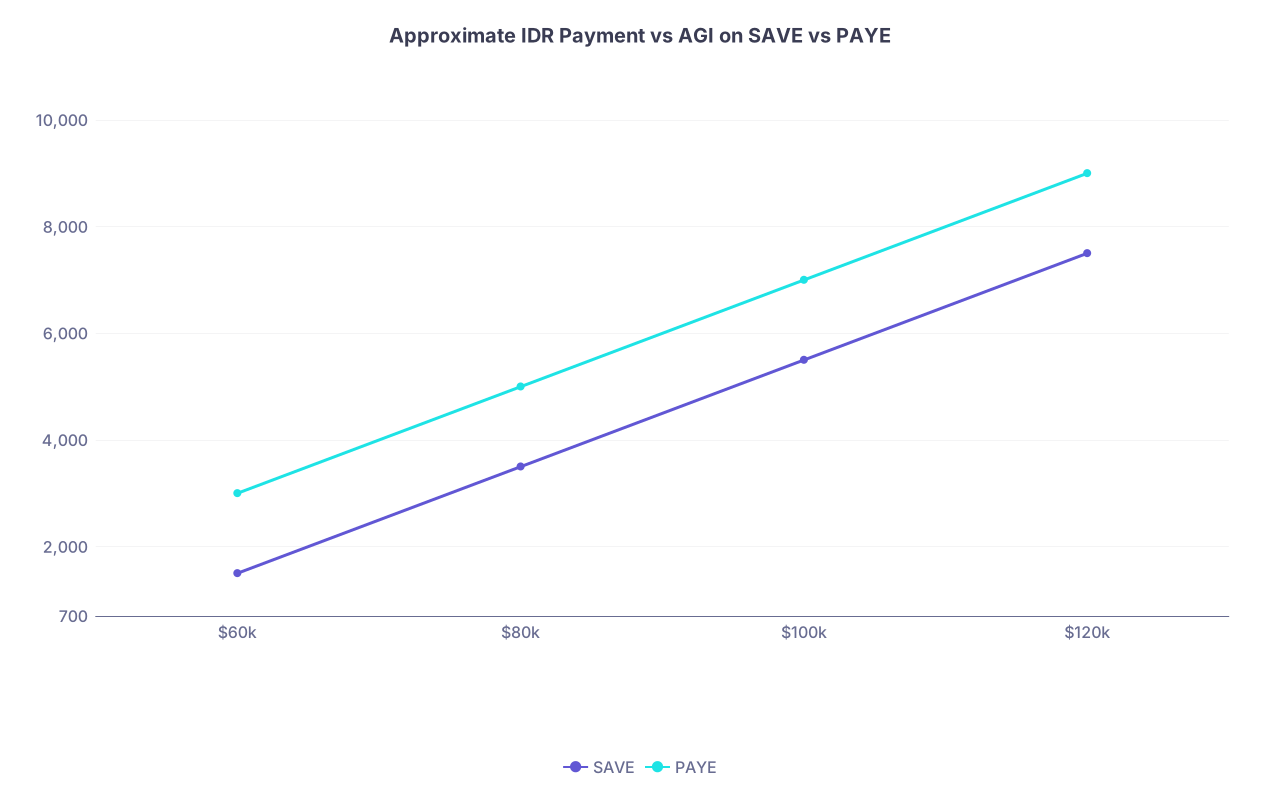
| Category | SAVE | PAYE |
|---|---|---|
| $60k | 1500 | 3000 |
| $80k | 3500 | 5000 |
| $100k | 5500 | 7000 |
| $120k | 7500 | 9000 |
(Values are approximate annual payments; pattern is what matters.)
2. Use 1099 setups strategically (when legitimate)
If your moonlighting is 1099:
- Track every legitimate business expense.
- Malpractice premiums, CME/board prep, work laptop, stethoscope, scrubs, mileage to non-primary work sites, licensure fees in extra states.
- Reduce net business income; that is what lands in AGI and drives IDR.
I have seen residents cut $5,000–$8,000 off their AGI this way when they are doing a lot of rural ED 1099 shifts. At 10% IDR, that is $500–$800 annually reclaimed.
3. Time your tax return and IDR recertification
Your loan servicer typically uses your most recent tax return to determine IDR payments for the next 12 months.
You can:
- Delay filing if your income spiked this year vs last year, to lock in another year of lower IDR payments based on the prior, lower AGI.
- Alternatively, if your income dropped, file early and recertify early.
This “AGI lag” is one of the few levers you actually control on the PSLF path.

| Step | Description |
|---|---|
| Step 1 | Moonlighting Year |
| Step 2 | File Tax Return |
| Step 3 | Delay Recertification if allowed |
| Step 4 | Recertify Early |
| Step 5 | Lower IDR Payment for 12 Months |
| Step 6 | Higher AGI than last year |
4. Do not withhold incorrectly on moonlighting income
A surprisingly common error: residents under-withhold on 1099 income, then discover a giant tax bill and no cash.
Then they raid savings meant for:
- Roth IRA,
- Emergency fund,
- Future down payment.
Or worse, they put the tax bill on a credit card. That 20–25% interest makes whatever PSLF optimization you did almost irrelevant.
If you are 1099:
- Set aside 25–35% of gross moonlighting income in a separate savings account for taxes, depending on your state and bracket.
- Pay quarterly estimated taxes if needed.
Step 9: Lifestyle Inflation vs Loan Optimization
This is where I see residents shoot themselves in the foot.
They start moonlighting, see an extra $1,500–$2,000/month, then:
- Upgrade apartment,
- Add a new car lease,
- Take multiple expensive trips.
Suddenly their baseline monthly burn rises to the point where they feel perpetually broke again, despite earning more.
Then attending-hood hits, they lose moonlighting options, PSLF payments jump, and lifestyle has no room to compress.
If you are PSLF-bound and moonlighting heavily, the rational play is:
- Keep fixed lifestyle reasonably tight during training.
- Channel most moonlighting toward:
- Cash buffer,
- Roth accounts,
- Targeted principal prepayment if PSLF is uncertain,
- One or two intentional quality-of-life upgrades, not five.
You do not need to live like a monk. You also do not need the “I’m a doctor; I deserve this” BMW at PGY‑3.
Step 10: Future of Medicine Angle – Why This Interplay Will Matter More
A few macro trends that make this moonlighting–PSLF interaction more critical, not less:
Higher debt loads
$350k–$500k all-in is increasingly common for MD/DO + interest. That makes the structure of repayment and forgiveness a major driver of real wealth, not an afterthought.Growing reliance on IDR/SAVE
SAVE is more generous and more complex. It encourages aggressive use of IDR, which means AGI management is the battlefield. Moonlighting is a core part of that AGI for many residents.PSLF stability but evolving rules
PSLF has survived political attacks and is becoming more entrenched, but details will change. The physician who depends entirely on PSLF and never builds liquidity, while moonlighting heavily but thoughtlessly, is exposed.Expansion of telemedicine and flexible moonlighting
You can realistically stack an extra $20–$40k a year with remote urgent care or telepsych from your apartment. That is a massive input to your AGI and loan strategy. Ignoring that interaction is negligent planning.
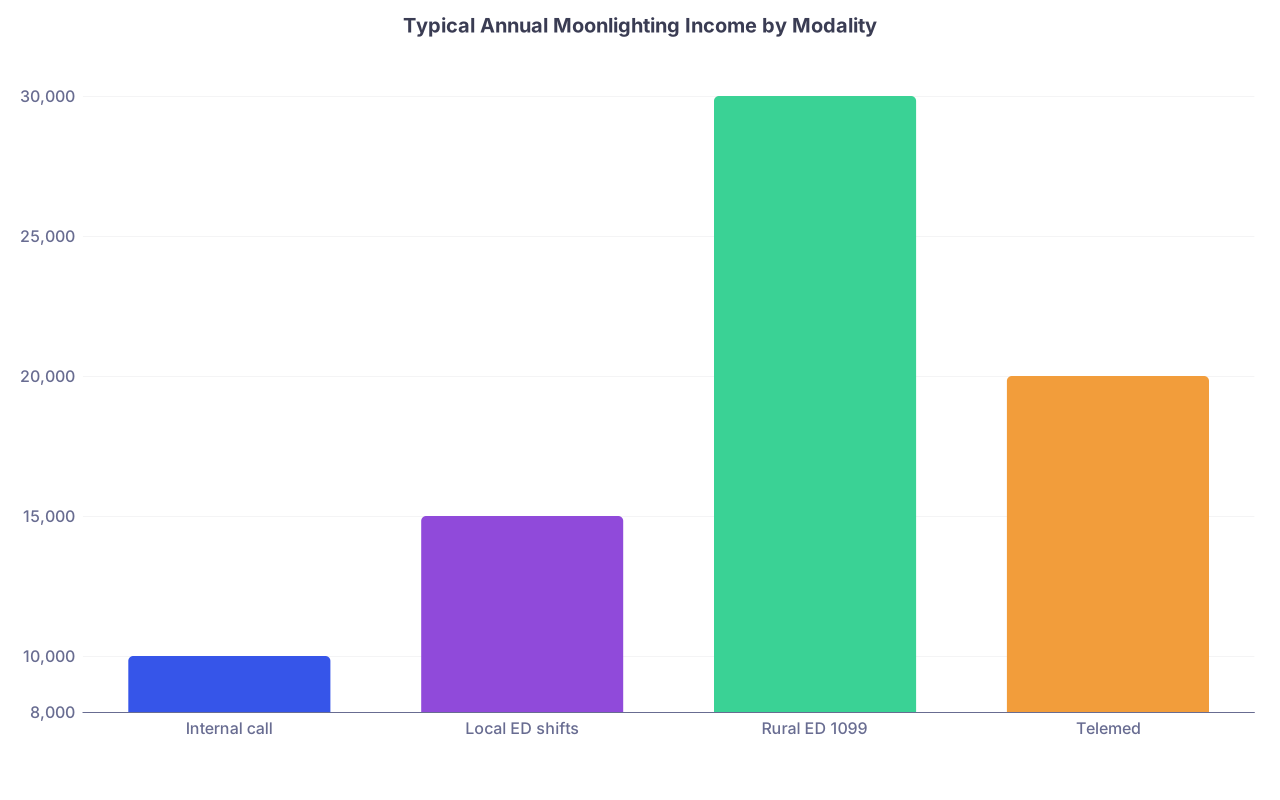
| Category | Value |
|---|---|
| Internal call | 10000 |
| Local ED shifts | 15000 |
| Rural ED 1099 | 30000 |
| Telemed | 20000 |
As flexible side work increases, the importance of understanding how that income flows through PSLF and loan repayment only grows.
Quick Scenario Walkthroughs
To make this concrete, let me give you three archetypes I see over and over.
Scenario 1: Academic IM resident, PSLF lifer
- Debt: $280k.
- Plan: SAVE, 3-year residency, 3-year fellowship, then academic attending.
- Moonlighting: $12k/year PGY‑2+, internal call.
Impact:
- Payments rise modestly, PSLF forgiveness shrinks slightly.
- Moonlighting mostly used to:
- Build 4–5 month emergency fund,
- Max Roth IRA each year.
Verdict: Highly rational. PSLF still very valuable. Moonlighting improves resilience and long-term wealth despite slightly lower forgiveness.
Scenario 2: EM resident, probably private practice
- Debt: $350k.
- Plan: REPAYE or SAVE during residency, then refinance and aggressively pay off after graduation.
- Moonlighting: $30k/year PGY‑3–4, mostly 1099 rural ED.
Impact:
- IDR payments rise, but PSLF unlikely anyway.
- Higher early payments simply reduce principal faster.
- Huge upside in extra cash for retirement and liquidity.
Verdict: Moonlighting is almost unambiguously good here. Focus on tax planning and not burning out, not PSLF.
Scenario 3: Peds resident, torn between academic and private hospitalist
- Debt: $320k.
- Plan: SAVE. Unsure PSLF vs refinance after graduation.
- Moonlighting: $8k/year PGY‑3, small amount of 1099 urgent care.
Impact:
- Tiny effect on PSLF math.
- Main value is lifestyle support and small savings cushion.
Verdict: Do the moonlighting if it does not wreck your sanity. But do the big thinking: run actual numbers on academic PSLF vs community hospital + refinance. The PSLF vs private decision here is worth six figures; the moonlighting detail is a secondary lever.
One Visual to Keep in Your Head
Think of each moonlighting dollar as:
- ~60–70 cents after taxes
- Minus 5–10 cents more if it increases your IDR payment
- Plus whatever psychological and lifestyle cost those extra hours at 1 a.m. represent.
If you take shifts consciously with that math in mind, you will make good calls. If you treat all moonlighting as “free money,” you will wake up to a fractured tax bill and a muddled PSLF path.

| Step | Description |
|---|---|
| Step 1 | Offered Moonlighting |
| Step 2 | Strongly Consider |
| Step 3 | Estimate added IDR cost |
| Step 4 | Focus on total payoff math |
| Step 5 | Take shifts if net benefit and lifestyle OK |
| Step 6 | Need cash buffer or pay high interest debt |
| Step 7 | On PSLF track long term |
FAQ (Exactly 6 Questions)
1. Does moonlighting ever disqualify me from PSLF?
No. PSLF eligibility is based on your employer type and full-time status, not your income level. Moonlighting income does not knock you out of PSLF. It only changes the size of your monthly IDR payments and therefore how much you pay on the way to forgiveness.
2. Should I avoid moonlighting if I am committed to PSLF?
Usually no. Avoiding all moonlighting just to maximize PSLF is too extreme. The smarter move is to understand the tradeoff: a portion of your moonlighting income will be lost to taxes and higher IDR payments, but the remainder still meaningfully improves your financial position. Use moonlighting to build savings, fund Roth accounts, and avoid high-interest debt. Then decide if extra shifts beyond that are worth the marginal benefit.
3. Is 1099 moonlighting better than W‑2 for loan repayment purposes?
Often yes, but only if you actually have legitimate business expenses and track them well. With 1099 work, your net profit hits AGI, not your gross receipts. If you can reasonably deduct licensing, CME, malpractice, and travel, you reduce both your tax bill and your discretionary income for IDR. If you have minimal expenses, the difference between 1099 and W‑2 is smaller from a loan perspective (but still matters for tax and retirement plan options).
4. Can filing taxes separately from my spouse lower IDR payments when I moonlight?
Sometimes. On certain plans (PAYE, IBR, SAVE in specific cases), filing “married filing separately” can isolate your income from your spouse’s and keep payments lower. However, you may lose other tax benefits (like certain credits or deductions), and your combined tax bill can rise. This is a nuanced decision that should be modeled with actual numbers, ideally with a CPA who understands IDR rules.
5. If I expect to refinance and pay loans off fast as an attending, does PSLF even matter when I moonlight as a resident?
Not much. If your dominant plan is private practice + aggressive refinance, then PSLF is basically a backup. In that situation, moonlighting is almost simply “extra cash to reduce future debt burden.” The subtle PSLF optimization becomes less relevant than maximizing total savings and avoiding lifestyle creep. You still want the cheapest IDR payments consistent with your risk tolerance, but the PSLF math is not the main driver.
6. How do I know if a moonlighting opportunity is “worth it” given taxes and loans?
Run a rough three-step check:
- Estimate your marginal tax rate (federal + state) and assume 25–35%.
- Estimate how much your AGI will rise over a year and multiply that by your IDR percentage (5–10%) to see the added loan cost.
- Subtract both from your gross moonlighting income and divide by hours worked.
If your net after-tax-after-IDR hourly rate is still compelling compared with the fatigue and time cost, take the shift. If it falls into a low number (e.g., effectively $40/hour for brutal overnight work), you may be better off skipping some of those shifts and protecting your bandwidth.
Key points:
Moonlighting always flows through your AGI into your IDR payment. That interaction can quietly erode PSLF value if you ignore it, but it does not make moonlighting “bad.” The win is to use moonlighting intentionally—for liquidity, Roth contributions, and strategic early payoff—while choosing the right IDR plan and tax approach so you keep as much of those hard-earned extra dollars as possible.