
The idea that “academic medicine always pays less” is lazy and increasingly wrong. It used to be roughly true. It is now a half-myth that can cost you both money and career satisfaction if you believe it blindly.
Let me be blunt: if you think “academic = poor, private = rich,” you’re using a 1990s mental model in a 2020s marketplace.
The Old Story vs The Current Reality
The old narrative went like this: go academic, accept a big pay cut in exchange for prestige, teaching, and research. Go private, make “real money” but kiss goodbye to titles and publications.
That split still exists in some places and specialties. But the edges have blurred badly.
You now have:
- Academic jobs that quietly pay in the MGMA 75th–90th percentile;
- “Private” jobs owned by massive health systems that cap RVUs and micromanage you like a university;
- Hybrid jobs where you’re employed by a hospital, do some teaching, but are paid on a production-heavy model;
- Clinicians on academic titles who are basically full-time RVU factories with a few fellows following them around.
So the question “Is academic medicine always lower paying?” is the wrong question. The better one is: “What exactly are you trading money for, and are the differences as big as people claim?”
Let’s drag some structure into this.
| Specialty (Example) | Academic Median ($) | Nonacademic Median ($) |
|---|---|---|
| Internal Medicine | 230,000–260,000 | 270,000–320,000 |
| General Surgery | 420,000–480,000 | 480,000–600,000 |
| Cardiology | 500,000–600,000 | 600,000–750,000 |
| Heme/Onc | 420,000–520,000 | 450,000–600,000 |
| Radiology | 420,000–500,000 | 500,000–650,000 |
These are blended, directional numbers based on common MGMA/AAMC/Medscape patterns, not a specific year’s dataset. The point isn’t the exact figure. It’s the gap.
That gap is often 10–25%, not 50%. And in some niches or cities, the gap basically vanishes once you add benefits, retirement, and protected time.
What “Lower Paying” Academic Actually Means
Most people only look at the base salary. Which is like judging a residency program by its parking situation.
When you compare academic vs nonacademic compensation, you have to account for:
- Base salary
- RVU/bonus structure
- Retirement and match
- Loan repayment
- Protected time (which is effectively a paid discount on your hourly rate)
- Moonlighting options
- Lifestyle factors that indirectly affect your finances (call, burnout, turnover)
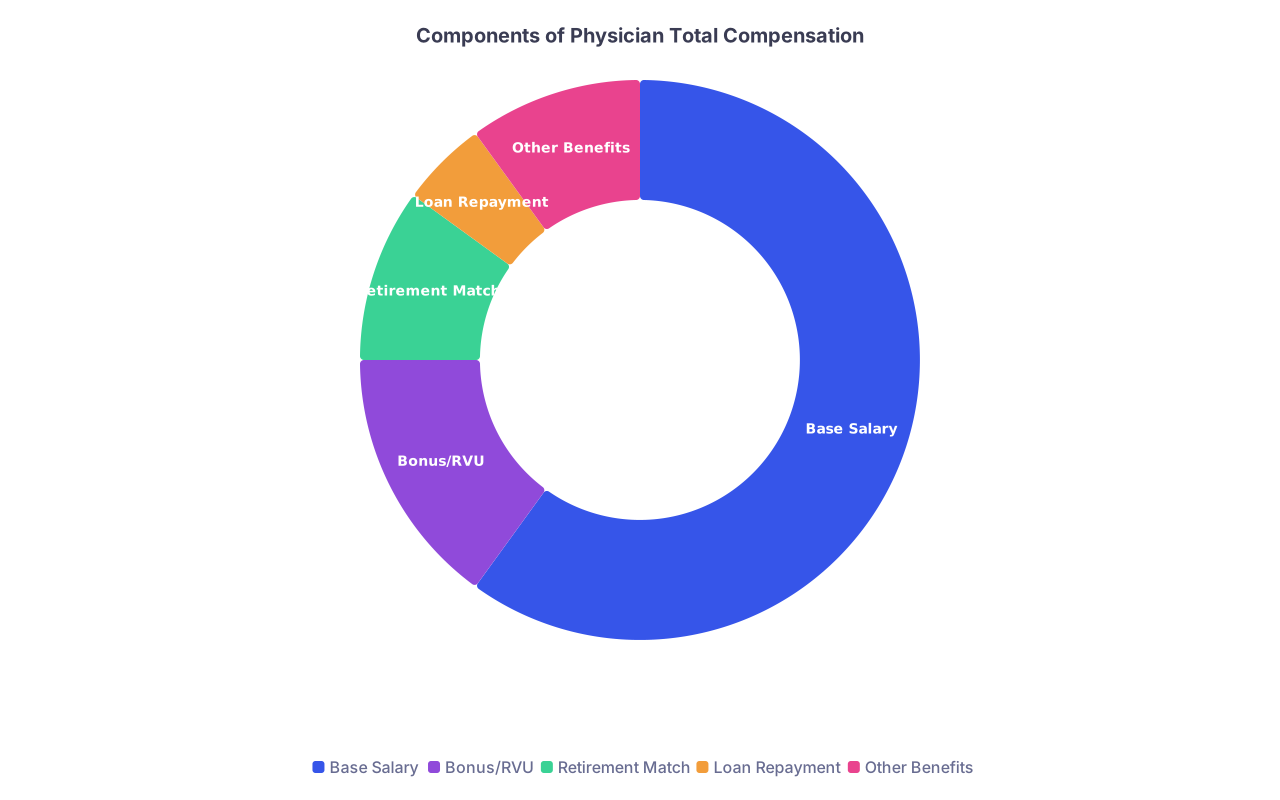
| Category | Value |
|---|---|
| Base Salary | 60 |
| Bonus/RVU | 15 |
| Retirement Match | 10 |
| Loan Repayment | 5 |
| Other Benefits | 10 |
Academic centers often lose on base and sometimes on bonus, but they can win or tie on the rest—especially if you exploit the system instead of just accepting it.
I’ve seen this play out multiple times:
- Hospital-employed cardiologist in a “private” setting making $650k with brutal call, 1:3 weekends, zero real vacation because admin keeps “asking for favors.”
- Academic cardiologist at a large university pulling $500–550k on paper, with 8 weeks off, real CME time, 403(b) plus 457(b) with fat institutional contributions, and far more flexibility to ramp down later in life.
Who’s actually ahead at age 50? Not as obvious as you think.
The Real Trade‑Offs: Money vs Time vs Control
The real myth is that the only trade-off is “less money vs more prestige/teaching.” The actual trade-offs are more complex and, frankly, more interesting.
1. Hourly Rate vs Annual Salary
Academic physicians often accept a lower annual salary. But if you actually calculate an hourly rate, things flip.
Take two simplified scenarios for a general internist:
- Academic: $250k, 45–50 hours/week, lighter call, some admin/teaching weeks that are “easy”
- Nonacademic: $320k, 60–70 hours/week, heavier call, high clinic volume every day
Let’s be generous and say:
- Academic: 48 hours/week × 48 weeks = ~2,300 hours → ~$109/hour
- Nonacademic: 65 hours/week × 48 weeks = ~3,100 hours → ~$103/hour
Is that “lower paying”? Technically, yes, on a W-2. Per hour, not necessarily. And that’s before you add moonlighting, which academics often have more latitude to do.
2. Flexibility, Protected Time, and Burnout
The other thing the salary charts ignore: control over your time.
Academic jobs more often include:
- Admin/teaching weeks where clinical load is lighter;
- Real “academic days” where you round with residents instead of speed-running 25 outpatients;
- Sabbaticals or formalized protected time after promotion;
- Easier transitions to part-time, leadership, or niche roles (quality, education, etc.).
You know what that buys you? Longevity. Less burnout. Better odds you’re still earning in your 50s rather than rage-quitting at 43.
Nonacademic jobs can absolutely offer good lifestyles. But be honest: a lot of the high-paying ones are designed on the assumption you’ll grind hardest in your first 10–15 years and then… figure something out.
3. Moonlighting: The Quiet Equalizer
Here’s a big secret nobody tells residents properly: academic physicians moonlight. A lot. And when they do, the compensation gap shrinks fast.
Common moonlighting options in academic settings:
- Night hospitalist shifts
- ED coverage in affiliated community sites
- Telemedicine (urgent care, follow-ups)
- Locums tenens on vacation weeks or off days
I’ve watched a supposedly “underpaid” academic hospitalist at $240k turn that into $320–340k with one or two extra shifts a month plus a stretch of locums over holidays. The base is low. The ceiling is not.
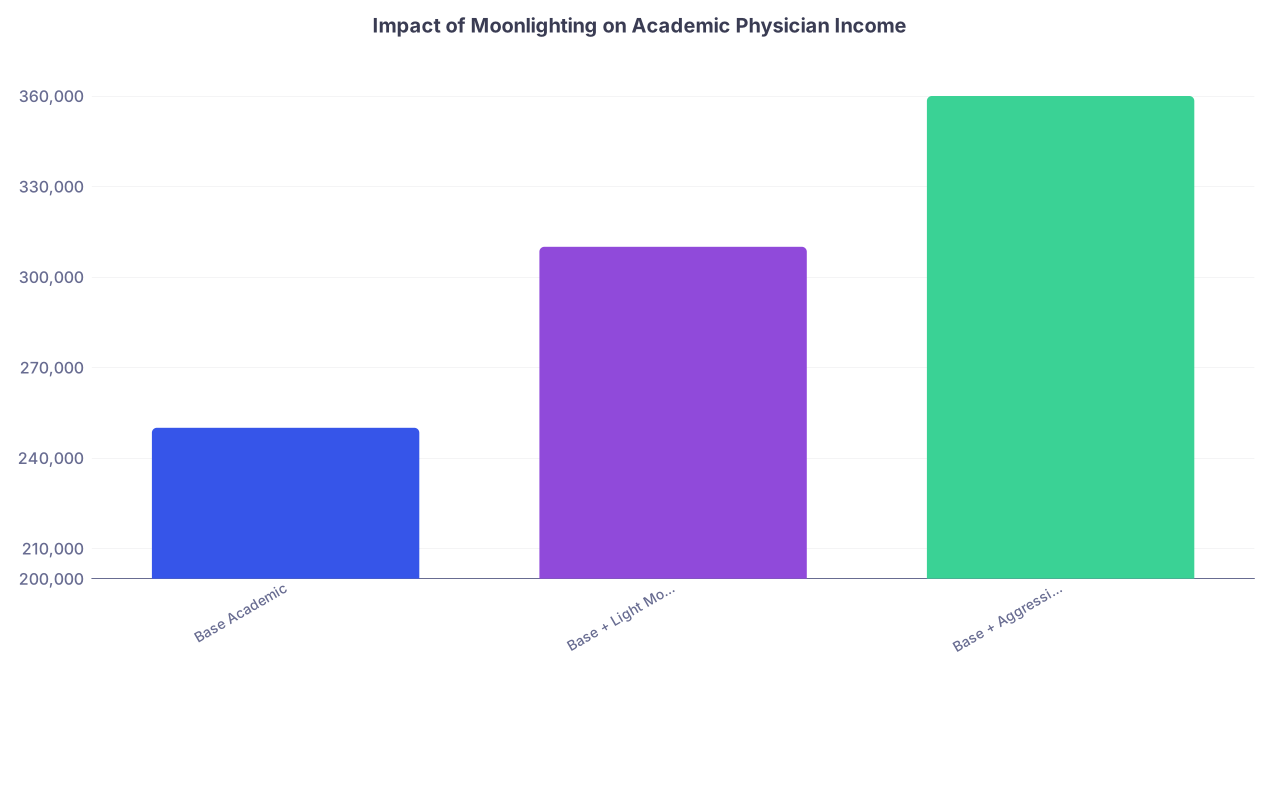
| Category | Value |
|---|---|
| Base Academic | 250000 |
| Base + Light Moonlighting | 310000 |
| Base + Aggressive Moonlighting | 360000 |
Meanwhile, many “lucrative” private jobs quietly lock you out of external earning (non-competes, exclusivity clauses) or leave you so drained that the last thing you want is more shifts.
4. Benefits and Retirement: The Boring Stuff That Actually Matters
Academic centers, especially large universities, often have:
- Generous 403(b) or 401(a) with 8–12% institutional contribution;
- Access to 457(b) deferred compensation;
- Strong disability policies and sometimes better health insurance rates;
- Occasional state pension components if you’re in a public system.
Compare two physicians over 20 years:
- Academic: $250k salary, 10% institutional retirement = $25k/year
- Nonacademic: $320k salary, 3% match = $9.6k/year
Difference in salary: $70k/year on paper. Difference in retirement contributions: ~$15k/year.
Over 20 years, that’s $300k of extra tax-advantaged money, which, compounded, is a big deal. Does it erase the salary gap? No. Does it narrow it materially? Yes.
Again, “academic pays much less” gets fuzzier the closer you look.
Specialty and Market Matter More Than “Academic vs Private”
Here’s another abused myth: academic vs nonacademic is the primary determinant of your income. It’s not. Specialty and geography dwarf it.
- Academic neurosurgeon vs community outpatient psychiatrist? The neurosurgeon wins by a mile.
- Academic radiologist at a major coastal center vs small-town primary care doc in an independent group? The radiologist still probably wins, even with an “academic haircut.”
Also, the local market matters:
- In hyper-saturated urban markets, private and academic pay can both be mediocre.
- In underserved regions, academic hospitals sometimes pay aggressively to attract subspecialists, and their so‑called “private” competitors don’t exist.
The most common pattern I’ve seen:
- In procedural specialties (ortho, neurosurgery, GI, interventional cards): community/private still often wins by more, though high-end academic groups can be closer than people assume if they’re specialty-heavy and busy.
- In cognitive and hospital-based specialties (IM, peds, heme/onc, hospitalist, ID, geriatrics): the gap is much narrower and sometimes flips once you factor in total comp and lifestyle.
So “academic always pays less” is shorthand for “you’re not maximizing every last RVU.” That’s true. It doesn’t mean you’re poor or stupid for taking the deal.
Non-Financial Upsides That Indirectly Affect Money
There are also at least three “soft” benefits of academic medicine that indirectly influence your long-term financial life.
1. Optionality
An academic appointment gives you access to:
- Leadership tracks (section chief, program director, vice chair);
- Grants and funded time if you do care about research;
- Institutional roles in quality, safety, or education that later morph into cushy system jobs or industry roles.
Those roles often pay at or above clinical salaries once you’re mid-career. I’ve seen people pivot into CMO, medical director, or pharma roles largely because they had academic titles and committee experience that private docs rarely accumulate.
2. Reputation and Referral Base
Being at a big-name center can give you:
- A steady stream of complex referrals;
- Speaking opportunities;
- National recognition within your niche.
Over time, that turns into non-clinical income: consulting, speaking honoraria, guideline work, paid advisory boards. None of that shows up in MGMA “academic” salary tables.
3. Burnout Protection = Longer Earning Horizon
If academic structure and peer environment keep you from burning out, you simply earn for more years. That’s boring but huge.
Earning $280k for 25 years is better than earning $350k for 10 and then leaving medicine or going 0.4 FTE because you’re broken.
Private practice can absolutely be sustainable. But the myth that money is simply “higher” there ignores the attrition. A nontrivial number of “high earners” pay the price with their health, marriages, or early exits.
When Academic Really Is Financially Worse
Let me not swing too far in the other direction. There are very real situations where academic medicine is a clear financial downgrade.
You’re likely taking a real hit if:
- You’re a high-end proceduralist in a market with strong independent groups and good payer mix;
- The academic offer caps RVUs, gives you extensive non-billable teaching on top of high clinical load, and still pays you below the 50th percentile;
- There’s limited moonlighting, weak retirement, and big cost-of-living issues (e.g., coastal academic center vs community job in a cheaper metro).
Also, some academic environments are stuck in a 1980s mindset: “We pay you in prestige and trainees; why are you asking for money?” Those places are structurally hostile to physician financial health. In those settings, yes, you will likely earn much less—both absolutely and relative to your potential.
The point is not “academic secretly pays more.” It doesn’t, on average. The point is that “academic always pays far less” is a sloppy belief that ignores variance, benefits, moonlighting, and time.
How to Actually Compare Two Offers
If you ever want to test whether the myth applies to you, here’s the adult way to compare an academic vs nonacademic job:
- Put both offers in a spreadsheet.
- Include: base, bonus structure, realistic RVU targets, call pay, retirement contributions, loan repayment, CME, and estimated annual hours.
- Calculate:
- Realistic total annual comp (not fantasy top-end bonus);
- Approximate hourly rate;
- Retirement and loan benefits over 10–20 years;
- Lifestyle factors that may affect longevity in the job (call, nights, admin support).
You’ll quickly see that:
- Sometimes the private job crushes the academic one financially.
- Sometimes the academic job is “only” 10–15% less and gives you a better life.
- Occasionally, the academic job actually wins outright when you add in moonlighting, benefits, and realistic hours.
At that point, it’s not about myths. It’s about preferences and risk tolerance.
And just to underline the time factor:
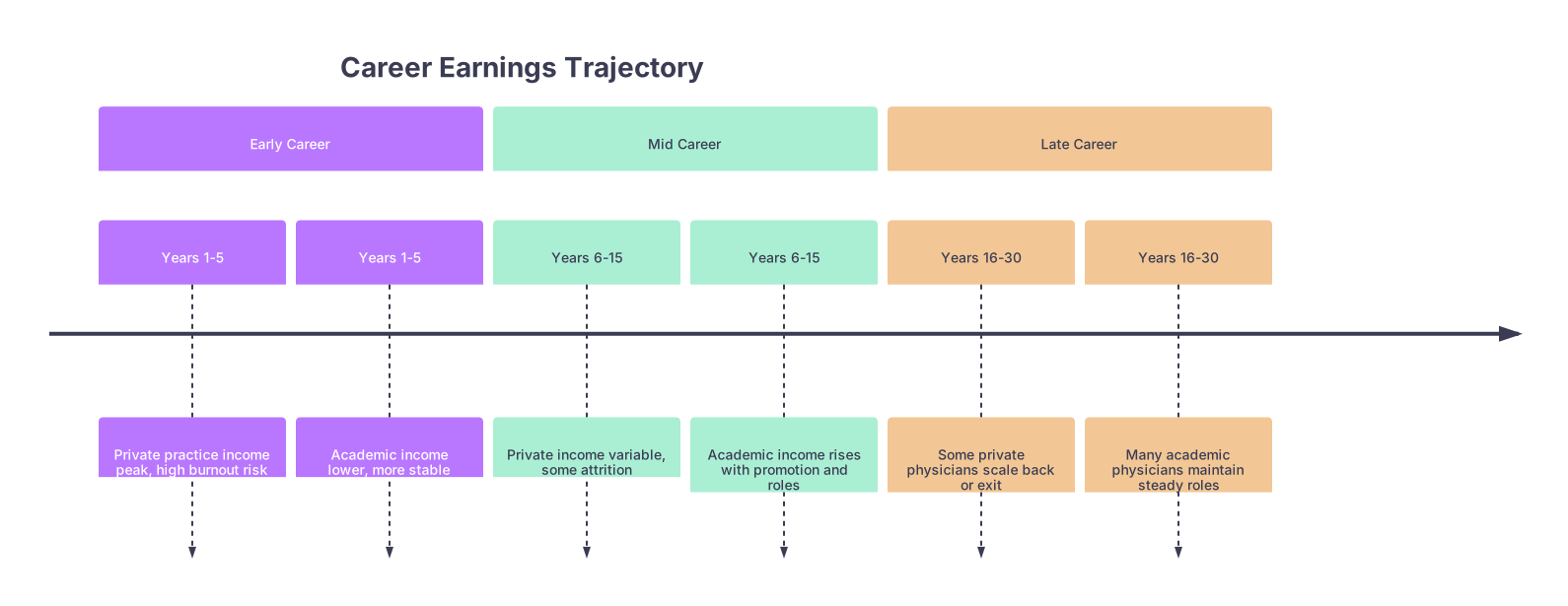
| Period | Event |
|---|---|
| Early Career - Years 1-5 | Private practice income peak, high burnout risk |
| Early Career - Years 1-5 | Academic income lower, more stable |
| Mid Career - Years 6-15 | Private income variable, some attrition |
| Mid Career - Years 6-15 | Academic income rises with promotion and roles |
| Late Career - Years 16-30 | Some private physicians scale back or exit |
| Late Career - Years 16-30 | Many academic physicians maintain steady roles |
It’s not just the first contract that matters. It’s the 30-year arc.
The Bottom Line
Strip away the noise and you’re left with this:
- Academic medicine usually pays less in raw salary, but the gap is often smaller than the myths suggest once you account for hours, benefits, and moonlighting.
- Specialty, geography, and specific employer matter more than the label “academic” or “private” when it comes to your true financial trajectory.
- The real trade-off isn’t simply “money vs prestige”—it’s short-term maximized income vs long-term flexibility, lifestyle, and career options. Ignore that nuance and you’re not making an informed choice.