
Six months from graduation. Your co-resident just matched her dream job and casually mentioned her sign-on bonus will vanish if she doesn’t sign by the end of the month. Another friend is frantically emailing HR because he missed his disability insurance window and now needs a medical exam. You’re staring at your inbox with 4 unread “Contract Update” emails and exactly zero energy.
This is the point where people quietly lose tens of thousands of dollars and years of leverage. Not because they’re dumb. Because they’re busy.
Let’s walk this chronologically. From six months before graduation up through your first week as an attending. What you should be doing, what you can safely defer, and which deadlines are absolutely not optional.
6 Months Before Graduation: Lock in Your Timeline and Priorities
At this point you should stop pretending “I’ll deal with this later” is a plan.
Week 1–2: Build a Deadlines Map
Pull up your offer letters, benefits packets, and any moonlighting or locums contracts you’re considering.
Create one central tracking sheet. I don’t care if it’s Excel, Notion, or a legal pad with coffee stains — but it must exist.
| Item | Common Deadline Window |
|---|---|
| Job offer acceptance | 1–4 weeks after offer |
| Sign-on bonus deadline | 1–3 months before start date |
| Relocation reimbursement | Usually before move/90 days |
| Health insurance choices | 30 days before or on start |
| Disability insurance GSI | 60–90 days before graduation |
At this point you should:
- List each job/contract (primary job + any moonlighting).
- Write down:
- Offer acceptance deadline.
- Contract revision deadline (if stated).
- Start date.
- Sign-on bonus conditions (start by X date, repay if you leave before Y).
- Relocation/loan repayment details and timelines.
- Add benefit deadlines:
- When you lose residency health insurance.
- When your GME-sponsored disability/life insurance ends.
- Any “guaranteed standard issue” (GSI) disability offers tied to training completion.
This looks like a hassle. It’s cheaper than missing a $20,000 sign-on bonus because the contract sat unread in your Gmail Promotions tab.
Week 3–4: Decide Where You Need a Contract Review
You do not need a lawyer for every little thing. You absolutely do for some.
At this point you should:
Triage your contracts
- Main employment contract (hospital/health system group) → almost always worth formal review.
- Independent contractor / 1099 locums or urgent care gig → strongly consider review.
- Simple hourly moonlighting within your own institution → maybe not, but at least read it carefully.
Book a review with enough lead time
- Good physician-contract attorneys book out 1–3 weeks.
- Your contract often has a 1–2 week “please sign by” line buried on page 3.
- You want the lawyer’s comments back with at least 5–7 days to spare before your signature deadline.
Gather comparison data
- Talk to recent grads from your specialty:
- “What are you being paid in [region]?”
- “What’s your call schedule?”
- “Any buy-in requirements or tail insurance surprises?”
- Use MGMA or specialty society data if you have access, but treat it as a reference, not gospel.
- Talk to recent grads from your specialty:
5 Months Before Graduation: Deep Contract Review and Negotiation
This is where you stop skimming and start reading like your future self is on the line. Because they are.
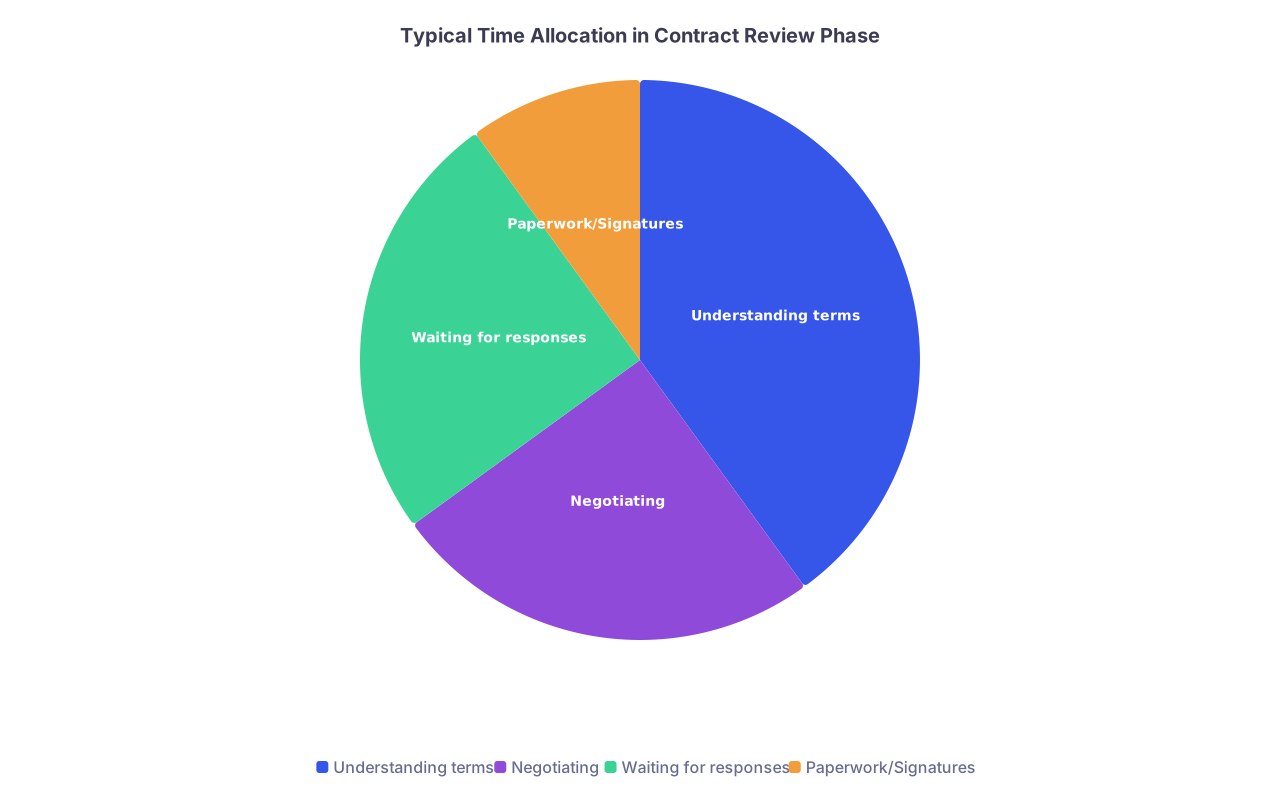
| Category | Value |
|---|---|
| Understanding terms | 40 |
| Negotiating | 25 |
| Waiting for responses | 25 |
| Paperwork/Signatures | 10 |
Week 1–2: Read Every Line Once, Then Mark the Landmines
At this point you should print or annotate the PDF and mark:
Term length and renewal
- Initial contract length (1 year? 3 years?).
- Auto-renewal clauses.
- “Without cause” termination notice (60–180 days is typical).
Compensation structure
- Base salary vs RVU/productivity vs collections.
- Guaranteed salary period (e.g., 1–2 years) before RVU-only.
- Bonus structure and how/when it’s paid.
- Withholdings or “true-ups” (where they claw back money if you don’t hit RVU targets).
Non-compete / restrictive covenants
- Radius (10 miles? 50? Whole county?).
- Duration (6–24 months).
- What locations count (every clinic in the system, or just where you actually work?).
Malpractice
- Claims-made vs occurrence.
- Who pays for tail coverage if you leave.
- Coverage limits (e.g., $1M/$3M).
Schedule and call
- Expected clinic/OR hours.
- Call frequency and type (in-house vs home).
- Weekend and holiday expectations.
- “Other duties as assigned” catch-alls.
Exit terms and penalties
- Repayment of sign-on bonus or relocation if you leave early.
- Education loan repayment clawbacks.
- Any “liquidated damages” that look like giant fees.
You’re not just looking for “is this fair.” You’re looking for “what, specifically, will be painful to live with at 2 AM three years from now.”
Week 2–3: Get Professional Eyes on It
At this point you should already have a contract attorney identified. If you don’t, this is the week to fix that.
Send:
- The full contract in PDF.
- Any recruitment emails or offer letters that conflict with the contract (this happens constantly).
- A brief note:
- Your specialty.
- Location of job.
- Your top 2–3 priorities (e.g., shorter non-compete, tail coverage paid by employer, better base comp).
Ask them to focus on:
- Compensation red flags.
- Non-compete scope and enforceability in your state.
- Termination language that traps you.
- Call coverage and work-hour vagueness.
- Malpractice and tail allocation.
Then actually schedule a 30–60 minute call to go over the contract. Email summaries are fine, but spoken explanations are where you realize which parts really matter.
Week 3–4: Negotiate (Without Being That Person)
At this point you should send back a clean, reasonable counter.
How:
Prioritize 2–4 must-haves
- Example set:
- Employer pays malpractice tail if they terminate you without cause.
- Non-compete reduced from 30 miles to 10.
- Sign-on bonus repayment prorated, not all-or-nothing.
- Slight bump in base salary or RVU rate.
- Example set:
Bundle your asks
- Do not send 17 scattered changes.
- Group into a single email or marked-up document with:
- “Here are the main areas I’d like to discuss: A, B, C.”
Phrase like a professional, not a hostage negotiator
- “I’m excited about this position. There are a few areas where I’m hoping we can align the contract with current market norms…”
Remember: deadlines matter here. If your offer letter says “must sign by March 15,” your negotiation needs to start a minimum of 10–14 days before that.
4 Months Before Graduation: Benefits, Insurance, and Moonlighting Clean-Up
You’ve moved past “Will I have a job?” to “Will this job and my benefits actually protect me when life punches sideways?”
Week 1–2: Disability and Life Insurance Windows
Most residents sleepwalk through this and regret it later.
At this point you should:
- Ask your GME office directly:
- “Do we have a guaranteed-standard-issue disability partnership this year?”
- “When does that window close for graduating residents?”
A GSI policy typically:
- Lets you buy own-occupation disability insurance with:
- No full medical exam.
- Limited or no underwriting (pre-existing conditions less punitive).
- Has a deadline:
- Usually final year of training, sometimes specifically 3–6 months before graduation.
If you delay until after graduation:
- You may:
- Pay more.
- Get exclusions (e.g., no coverage for your back because of that one ED visit).
- Be denied entirely if you’ve had significant medical history.
Same logic for optional life insurance, though disability is usually higher priority early on.
Week 2–3: Health Insurance Transition Plan
You do not want a gap between residency coverage and your new job’s insurance. Hospitals mess this up more often than you’d think.
At this point you should:
- Confirm with GME:
- Last effective day of your current health insurance.
- Confirm with new employer:
- First effective day of new health insurance (some start day 1, others first of the next month).
If there’s a gap:
- Options:
- COBRA extension from your residency institution (expensive but safe).
- Short-term marketplace plan.
- If your start date is early in the month, consider moving start up a few days to align coverage.
You’re not trying to optimize every premium dollar. You’re trying to avoid being uninsured when you step off a curb wrong.
Week 3–4: Moonlighting Contracts and Overlap
A common screw-up: people keep moonlighting into early attending life without checking conflict of interest or non-compete language.
At this point you should:
- Review every moonlighting contract:
- Termination notice requirements (sometimes 30 days).
- Malpractice coverage details: does coverage end when your employment ends?
- Cross-check with your new job:
- Some employers ban outside clinical work.
- Some allow it with written approval.
- Some quietly expect you not to compete with them in the same market.
If your new contract prohibits outside work:
- Plan an end date for moonlighting at least 2–4 weeks before you start the new job.
- Get written confirmation from your new employer if they’re OK with limited, clearly separate moonlighting.
3 Months Before Graduation: Deadlines, Details, and Documentation
This is where benefits packets start appearing, HR portals open, and the admin-spam begins.
Week 1–2: Confirm All Sign-On, Relocation, and Repayment Terms
At this point you should have:
- Final signed contract.
- Offer letter that matches the contract (if not, fix it now).
You should double check:
Sign-on bonus
- When it’s paid (on signing, on start date, in installments).
- Repayment rules:
- If you leave before 1–3 years, is repayment:
- 100% all at once?
- Prorated (best-case)?
- If you leave before 1–3 years, is repayment:
- Tax implications (it’s all taxable income).
Relocation
- What’s covered (movers vs stipend).
- Whether it’s a reimbursement (save receipts).
- Deadlines for submission.
- Repayment if you leave early.
Loan repayment
- Who pays (employer vs external program).
- Schedule of payments (annually? lump sum?).
- Whether payments go directly to lender or to you as taxable income.
- Conditions to keep the benefit (RVU thresholds, full-time status, etc.).
You don’t want to find out in year 2 that your “loan repayment” benefit is a taxable stipend you have to partially give back.
Week 2–3: Lock in Licensing, Credentialing, and Start Date Dependencies
Not glamorous, but essential.
At this point you should:
- Confirm your state license application status and expected approval timing.
- Ask HR/medical staff office:
- “When do you need my state license, DEA, and board eligibility proof to keep my start date?”
- Check your contract:
- Some jobs automatically delay start (and pay) if licensing is late.
- Some jobs can rescind offers if you’re not credentialed by X date.
Build backwards:
- If start date is July 1, credentialing might need everything by May.
- If the board exam is part of your privileges, know how a failed or delayed exam affects your contract.
2 Months Before Graduation: Benefit Elections and Final Edits
Most systems will send you a “New Hire” packet around now, even if you’re not technically on payroll yet.
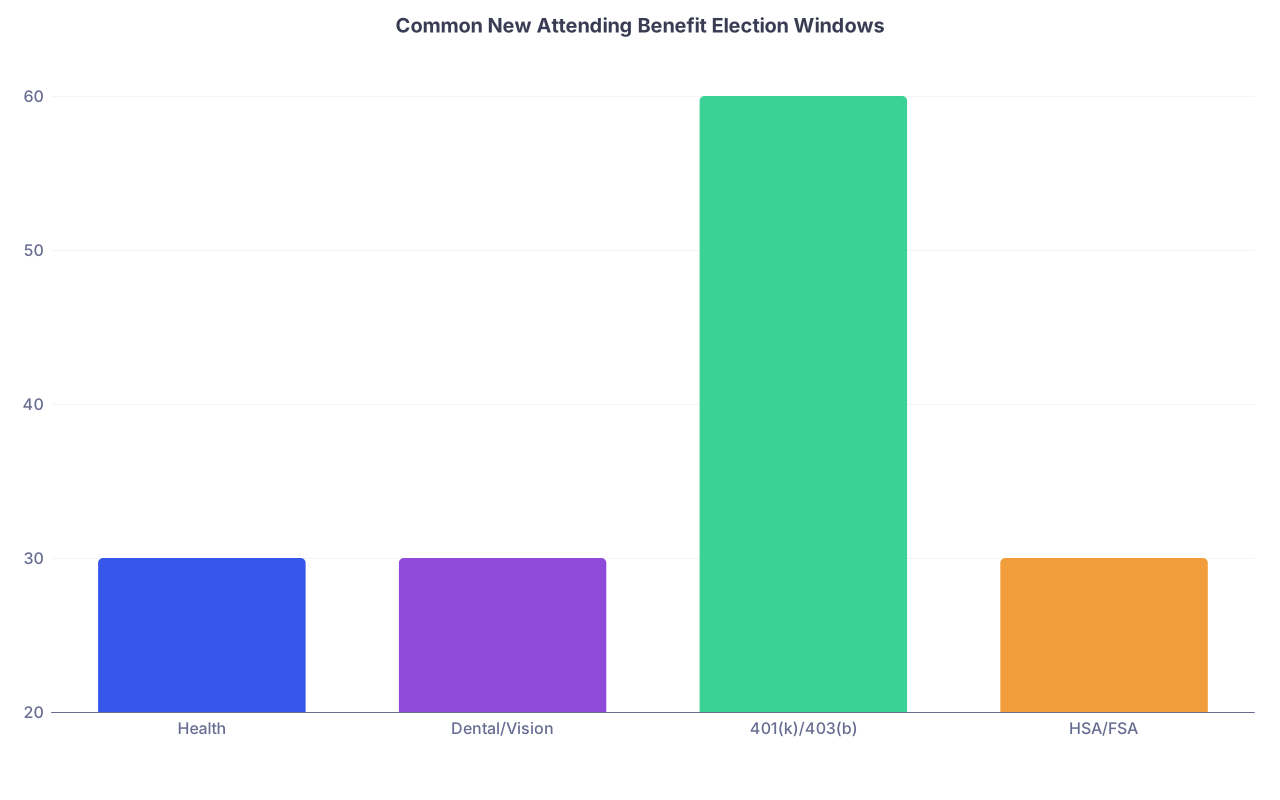
| Category | Value |
|---|---|
| Health | 30 |
| Dental/Vision | 30 |
| 401(k)/403(b) | 60 |
| HSA/FSA | 30 |
Week 1–2: Retirement Plan Basics and Decisions
At this point you should:
- Review:
- 401(k) or 403(b) options.
- Employer match (e.g., 3–5%).
- Vesting schedule (how long you must stay to “own” the match).
Decide:
- Contribution level on day 1 (enough to capture full match is usually non-negotiable).
- Roth vs traditional contributions if allowed.
You can fine-tune the details later. Your only deadline-sensitive move is: do not leave employer match money on the table your first year because you forgot to elect contributions.
Week 2–3: Health, HSA/FSA, and Other Elections
At this point you should:
- Choose:
- Health plan (HDHP with HSA vs PPO).
- Dental and vision (often modest cost, usually worth it).
- If you choose a high-deductible plan:
- Start an HSA on day 1 (you can’t retroactively fund it for months you weren’t enrolled).
- Decide on FSA carefully:
- It’s “use it or lose it” (with minor carryover in some plans).
- Do not overshoot.
Deadlines: typically 30 days from your benefits eligibility date. Miss it, and you may be stuck with default/no coverage until the next open enrollment.
1 Month Before Graduation: Final Checks and Exit Strategy
You’re now in the zone where residency is ending, orientation emails are multiplying, and mental bandwidth is wrecked.
Week 1–2: Confirm Malpractice and Tail Coverage on All Fronts
At this point you should:
- Ask your residency program:
- “Our malpractice coverage: does it include tail after graduation for acts during training?”
- Most academic centers do. Some community sites with separate coverage do not.
- Confirm with your new employer:
- Coverage start date.
- Whether it’s claims-made or occurrence.
- Who pays for tail when you leave.
If you’ve ever moonlighted:
- Ask each site:
- “Does your malpractice include tail when I stop working here?”
- If not, you may need to purchase individual tail. Yes, it can be pricey. Better than personal bankruptcy.
Week 2–4: Non-Compete and Future Flexibility Check
This is your last clean shot to fully understand what you’re agreeing to.
At this point you should clearly know:
- The exact non-compete radius (on a map).
- Locations covered (primary clinic only vs whole system).
- Duration.
- Whether non-solicitation prevents you from bringing patients/staff if you leave.
Think about your realistic life:
- If your partner’s job is fixed in this city, a 30-mile, 2-year non-compete may be unacceptable.
- If you’re fine moving states in a few years, maybe you tolerate it.
You may still be able to negotiate slight modifications here if the contract isn’t fully effective yet, but assume leverage is lower this late. Better to know and plan than discover it when you’re burned out and trying to leave.
Graduation Month to Start Date: Close the Loops
You’re signing logs, returning badges, and planning a move. Don’t let HR details slip because your brain is in survival mode.
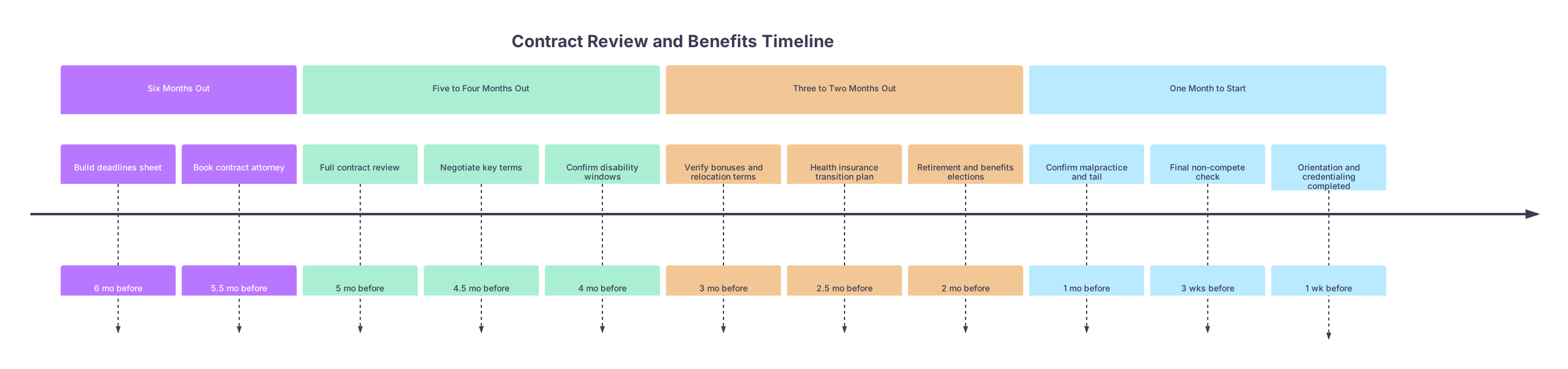
| Period | Event |
|---|---|
| Six Months Out - Build deadlines sheet | 6 mo before |
| Six Months Out - Book contract attorney | 5.5 mo before |
| Five to Four Months Out - Full contract review | 5 mo before |
| Five to Four Months Out - Negotiate key terms | 4.5 mo before |
| Five to Four Months Out - Confirm disability windows | 4 mo before |
| Three to Two Months Out - Verify bonuses and relocation terms | 3 mo before |
| Three to Two Months Out - Health insurance transition plan | 2.5 mo before |
| Three to Two Months Out - Retirement and benefits elections | 2 mo before |
| One Month to Start - Confirm malpractice and tail | 1 mo before |
| One Month to Start - Final non-compete check | 3 wks before |
| One Month to Start - Orientation and credentialing completed | 1 wk before |
Final 2–3 Weeks Before Graduation
At this point you should:
- Confirm:
- All contracts are signed and fully executed (with copies saved in a non-work email/cloud).
- You’ve received written confirmation of:
- Start date.
- Salary.
- Sign-on and relocation details.
- Save PDFs of:
- Final contract.
- Any addenda.
- Benefits elections.
- Malpractice/insurance cover letters.
Tell your future self “you’re welcome” when you’re hunting for these docs in 3 years from a different job.
First Week as an Attending
You’re not done on day one.
At this point you should:
- Log in to HR portal:
- Verify your benefit elections are correct.
- Check retirement contributions actually started.
- Confirm first paycheck:
- Matches expected base pay.
- Includes any promised upfront bonus if it was supposed to hit on start.
- Re-verify malpractice:
- You’ve got your policy number.
- Coverage dates match your start.

Quick Reality Check: Common Costly Mistakes
I’ve watched residents make the same avoidable errors:
| Mistake | Rough Cost Range |
|---|---|
| Missing sign-on bonus deadline | $10,000–$50,000 |
| Ignoring tail coverage responsibility | $20,000–$100,000 |
| Letting disability GSI window lapse | Higher premiums/denials |
| Non-compete blocks local job switch | 1–2 years of lost pay |
| Skipping retirement match first year | Tens of thousands long-term |
None of these are dramatic stories. They’re just quiet, expensive outcomes that start with “I was too busy to read that email.”

Bottom Line
Three things to walk away with:
- Six months out is contract season. Get a lawyer, know your non-compete, and do not sign blind because “everyone else did.”
- Your benefit and insurance windows are real deadlines. Disability GSI, health coverage transitions, and first-year retirement elections can’t be fixed retroactively.
- Write it all down. A single deadlines sheet and 2–3 focused negotiation points will save you far more money and stress than another extra moonlighting shift.