

The most stressful NRMP situations do not happen on Match Day. They happen when your own department starts circling you before the rank list is due.
You’re flattered. You’re terrified of breaking a rule. And you’re getting mixed advice from upper levels, advisors, and random Reddit threads. Let’s cut through that.
This is about one specific situation: your home program is actively recruiting you, and you don’t want to get burned by NRMP violations, accusations of coercion, or just plain awkwardness.
You’re in the gray zone. Here is how to handle it step by step.
1. Know the Lines You Cannot Cross (and What They Cannot Do Either)
If you do not understand the “big red lines” in NRMP rules, you’re going to feel bullied or guilty in conversations that are actually not allowed in the first place.
Here are the core boundaries in normal language.
| Topic | What’s Allowed | What’s Not Allowed |
|---|---|---|
| Commitments | You can say “I’m very interested” | No asking for or making rank commitments |
| Pressure | Program can express interest | No pressure to reveal rank order |
| Benefits | Standard info about salary/benefits | No special incentives to influence ranking |
| Contracts | Nothing signed before SOAP | No pre-Match contracts for NRMP positions |
| Communication | General post-interview contact | No “If you rank us first, we’ll rank you” deals |
Most of your anxiety comes from not knowing the exact language that crosses the line. So here’s the rule of thumb I use:
If the conversation shifts from “interest” to “deal-making,” you’re in violation territory.
Specifically:
They may:
- Tell you they liked you a lot.
- Ask if you’re still interested in the program.
- Ask if you have any questions about the program, training, lifestyle, etc.
- Express that they hope you’ll rank them highly.
They may not (under NRMP rules):
- Ask, “Where are you ranking us?” or “Are we your number one?”
- Say or imply, “If you rank us first, we’ll rank you to match.”
- Offer you special treatment, benefits, or roles only if you commit to ranking them in a specific way.
- Ask you to sign anything related to training before Match / SOAP.
You may:
- Say “You’re at or near the top of my list.”
- Say “I’m very interested in staying here.”
- Say nothing about your exact rank list.
- Change your mind later. You’re allowed.
You may not:
- Make a binding promise like, “I will rank you first no matter what” and then collude with them around that.
- Ask them where they’re ranking you.
- Try to negotiate a “guaranteed match” in exchange for your top rank.
The NRMP enforcement isn’t perfect, but they do investigate clear reports of coercion or violations. Programs know this. When they still cross the line, it’s either ignorance or arrogance. Neither is your problem to fix, but you must protect yourself.
2. Decode What “Recruiting You” Actually Means
“Your home program is recruiting you” can look very different on the ground. You need to know which version you’re dealing with.
Common patterns I’ve seen:
Soft enthusiasm
- PD or APD: “We loved working with you. You’d be a great fit here.”
- Residents: “We’re rooting for you to stay.”
This is normal, legal, and honestly a compliment. No problem.
Active courting
- PD pulls you aside: “Are you thinking of staying here? We’d really like you to.”
- You’re invited to an extra meeting to answer your questions.
Still okay as long as they’re not asking your rank list or offering deals.
Borderline pressure
- “We really need to know if you’re staying so we can plan our rank list.”
- “We’d like some assurance you’ll rank us highly.”
This is where you start using careful language and written records (email summaries after conversations).
Full-on NRMP violation
- “We’ll rank you to match if you rank us number one.”
- “We expect loyalty. You did med school here. We need you to commit.”
- “If you promise to stay, we’ll give you X role / schedule / benefit.”
This is not just awkward—it’s a violation. You need to protect yourself.
So before you respond, label which pattern you’re in. Category 1–2: manage gracefully. Category 3–4: time to get more strategic.
3. Script Your Responses Before They Corner You
Do not walk into a PD meeting “to talk about your plans” without prepared lines. That’s how you end up blurting things you regret.
Here’s the playbook.
When they say: “Are you planning to stay here?”
Safe responses:
- “I really value this program and I’m strongly considering it. I’m still finalizing my rank list, but this is definitely one of my top choices.”
- “I’ve had a great experience here and could absolutely see myself training here. I’m still doing the work of comparing everything, but I have very positive feelings about staying.”
Those sentences:
- Show interest.
- Don’t make promises.
- Stay within NRMP rules.
When they push: “Where are you ranking us?”
This is the illegal question they’re not supposed to ask—but many still do. Here’s how to respond without escalating.
- “Under NRMP rules I’m not supposed to talk about my exact rank order, but I can tell you I’d be very happy training here.”
- “I’m keeping my exact rank list private, but I have a very strong interest in this program, and I really appreciate your support.”
You’re allowed to invoke NRMP. That often shuts down the line of questioning.
When they say: “If you rank us first, we’ll rank you to match”
Red flag. That’s a problem.
Out loud, you stay calm:
- “I really appreciate your enthusiasm. I’m planning to follow the NRMP rules and put together my rank list based on my preferences, but I’m genuinely grateful to know you’re interested in me.”
Then you write down exactly what they said afterward. Date, time, who was present, the exact wording you remember.
You may never need it. But if something goes south and someone accuses you of anything, that record might save you.
4. How to Handle Mixed Feelings: You Like Them, But You’re Not Sure
This is the most common real scenario:
- You know your home program well.
- You like the people (mostly).
- You’ve seen the flaws up close.
- You had some strong away rotations elsewhere.
- The PD is now clearly recruiting you.
And you’re thinking: “If I say I love them, I’ll feel guilty if I rank somewhere else higher. If I say I’m not sure, will they tank me?”
Here’s the blunt truth: the algorithm protects you more than you think. You should rank programs in your true preference order. Period. The NRMP algorithm is applicant-optimal. Not program-optimal.
So what do you tell your home program?
Use language that’s honest but not oversharing:
- “I’m incredibly grateful for the training I’ve had here and would be very happy staying. I’m also weighing some other strong options I saw on away rotations. I’m taking the ranking process seriously and want to make sure I choose the best fit for my long-term goals.”
- “You’ve trained me well, and I’d be honored to continue here. I’m just working through comparing a few programs that fit my career interests slightly differently.”
Notice what you’re not doing:
- You’re not declaring them #1.
- You’re not saying they’re out.
- You’re not apologizing for having other options.
Your guilt is not a useful data point.
5. When You Actually Want to Stay: Saying It Without Overcommitting
Sometimes the situation is simpler: you love your home program, you want to stay, and you’re just scared of NRMP issues.
Good news: you can absolutely tell them you’re very likely to rank them first, as long as you don’t create a binding, conditional deal.
Legal, safe versions:
- “I’m planning to rank this program very highly, and I’d be thrilled to match here.”
- “After all my interviews, this truly feels like home. I’m leaning very strongly toward ranking this program first.”
- “You’re my top choice right now, and I’d be very happy if I matched here.”
The line you do not cross is a mutual guaranteed exchange:
- Bad: “If you rank me to match, I’ll rank you first.”
- Bad: “I promise I will rank you number one, no matter what.”
Real life: people say “I’ll rank you first” all the time. NRMP is not hunting down every casual phrase. The actual issue is explicit, quid-pro-quo deals and pressure.
So if you want to stay, be clear but not transactional.
6. Document, Don’t Drama: Protecting Yourself Quietly
If your program starts doing sketchy things, the worst move is to freak out and start threatening people with “I’m going to NRMP.”
Instead, you quietly build a paper trail and get advice.
What to document:
- Date, time, place of the conversation.
- Who was present.
- Exact phrases you remember that refer to rank lists, promises, deals, pressure.
- Any email or text follow-ups—archive them, don’t delete.
Then, who do you talk to?
Priority order:
- A trusted faculty advisor not in your home department (student affairs, another department, etc.).
- Your dean of student affairs or equivalent.
- If really necessary and your dean is useless—NRMP policy staff (they exist for this).
Most of the time, step 1 is enough. A seasoned dean has seen this movie a hundred times and will tell you whether this is normal “PD enthusiasm” or serious violation territory.
7. Balancing Loyalty, Politics, and Your Future
Here’s the blunt part no one tells you nicely: some departments feel “ownership” over their medical students. They think you owe them first loyalty.
You do not.
You owe them respect and professionalism. Not your career.
So when a home program PD says things like:
- “We invested in you for four years.”
- “We expect our top students to stay.”
- “Going elsewhere would send a bad message.”
You translate that in your head as: “They’re anxious about recruitment and they want control.” Not as “I’m morally obligated to stay.”
Your priority order is:
- Your training quality.
- Your fit with the culture.
- Your career goals.
- Everything else—including politics and department ego.
You can still be tactful:
- “I’m deeply grateful for the investment this department has made in me. Wherever I go, I’ll carry that forward and represent this place well. My final decision will be about where I can grow the most for the next phase.”
That’s adult. Not disloyal.
8. Timeline Reality: How Communication Fits Around Rank Lists
It helps to see how this typically plays out over time, so you’re not surprised when that “check-in” email lands.
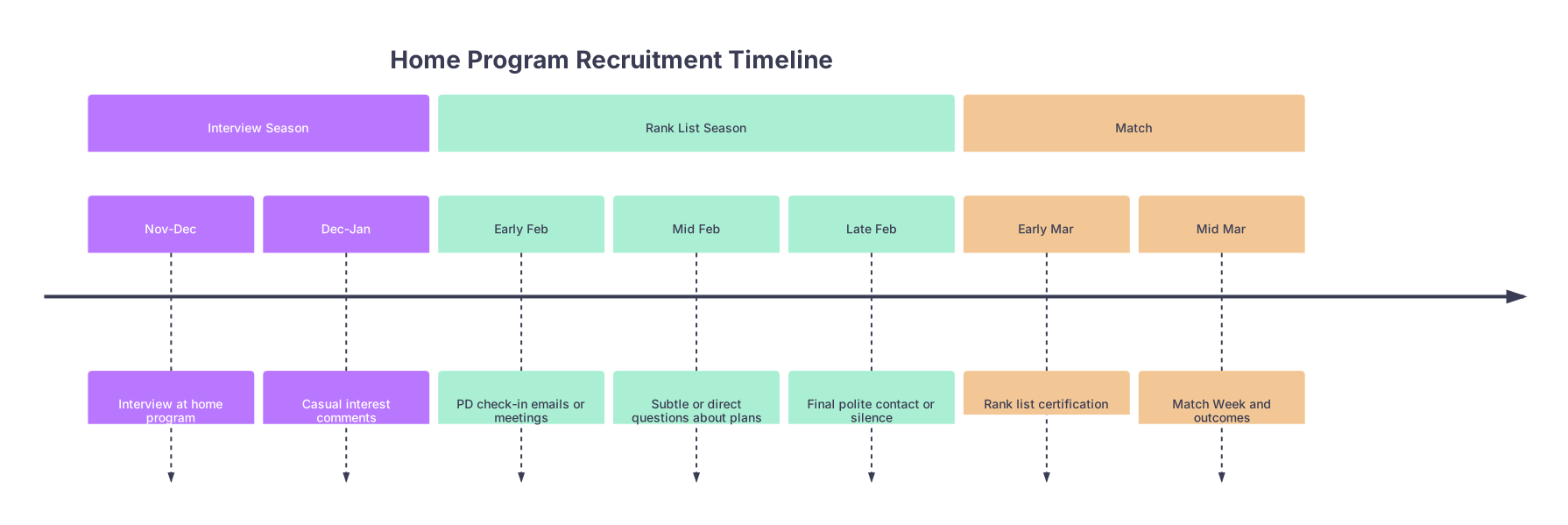
| Period | Event |
|---|---|
| Interview Season - Nov-Dec | Interview at home program |
| Interview Season - Dec-Jan | Casual interest comments |
| Rank List Season - Early Feb | PD check-in emails or meetings |
| Rank List Season - Mid Feb | Subtle or direct questions about plans |
| Rank List Season - Late Feb | Final polite contact or silence |
| Match - Early Mar | Rank list certification |
| Match - Mid Mar | Match Week and outcomes |
What you’ll likely see:
- Late January / early February: “We’d like to touch base about your interest in our program.”
- Mid February: More direct conversation about whether you are “seriously considering” staying.
- After rank list certification: silence or generic “good luck” messages.
The key: your honest interest can change during this time. You’re not locked into what you said on February 1 when you submit the list on February 28.
9. Mental Checklist: Before You Walk into Any PD Meeting
Run this quick internal checklist sitting outside the office door or before hopping on Zoom.

Ask yourself:
- What is my current honest ranking of them? (Roughly. You don’t need exact order, just vibe: top 3, mid, low.)
- What am I willing to say out loud?
- What questions do I actually have about the program that would help me decide?
- What lines will I not cross if they push (e.g., I will not share exact rank order)?
Then decide your “anchor sentence” in advance. One you can come back to when they push.
Examples:
- “I’m very interested, but still finalizing my rank list based on overall fit.”
- “I really value this program and am strongly considering staying.”
You can repeat that in different forms three times if needed. People do this in negotiations all the time. It’s not rude. It’s controlled.
10. When Things Feel Off: Red Flags and What They Mean
Some programs telegraph their culture directly through how they handle this phase. Pay attention.
Red flags I’ve seen:
- PD or chair invoking guilt: “After all we’ve done for you…”
- Residents telling you privately, “If you don’t promise to stay, they’ll blacklist you.”
- Any mention of special treatment “if you commit to us.”
- Strong negative reactions when you mention you’re considering other places.
What this usually predicts:
- Controlling leadership style.
- Poor boundaries around work-life issues.
- Retaliatory behavior when people make independent choices.
If they’re inappropriate while recruiting you, imagine how they’ll be when you’re their intern with no leverage.
Sometimes the best career decision you’ll make is: “If this is how they behave now, I’m ranking them lower.”
11. Quick Comparison: What You Can Safely Say vs. Should Avoid
| Situation | Safe to Say | Avoid Saying |
|---|---|---|
| Expressing interest | "I’d be very happy to match here." | "I’ll definitely match here if you rank me high." |
| Talking about rank | "You’re one of my top choices." | "You’re number one, guaranteed." |
| Responding to pressure | "I’m following NRMP rules and keeping my list private." | "Fine, I’ll tell you exactly where you are." |
| Changing your mind | "My thinking has evolved as I’ve reflected on my interviews." | "I know I promised, but I changed my mind." |
12. Final Word: You Don’t Owe Them Your Rank List
Two last realities to anchor you:
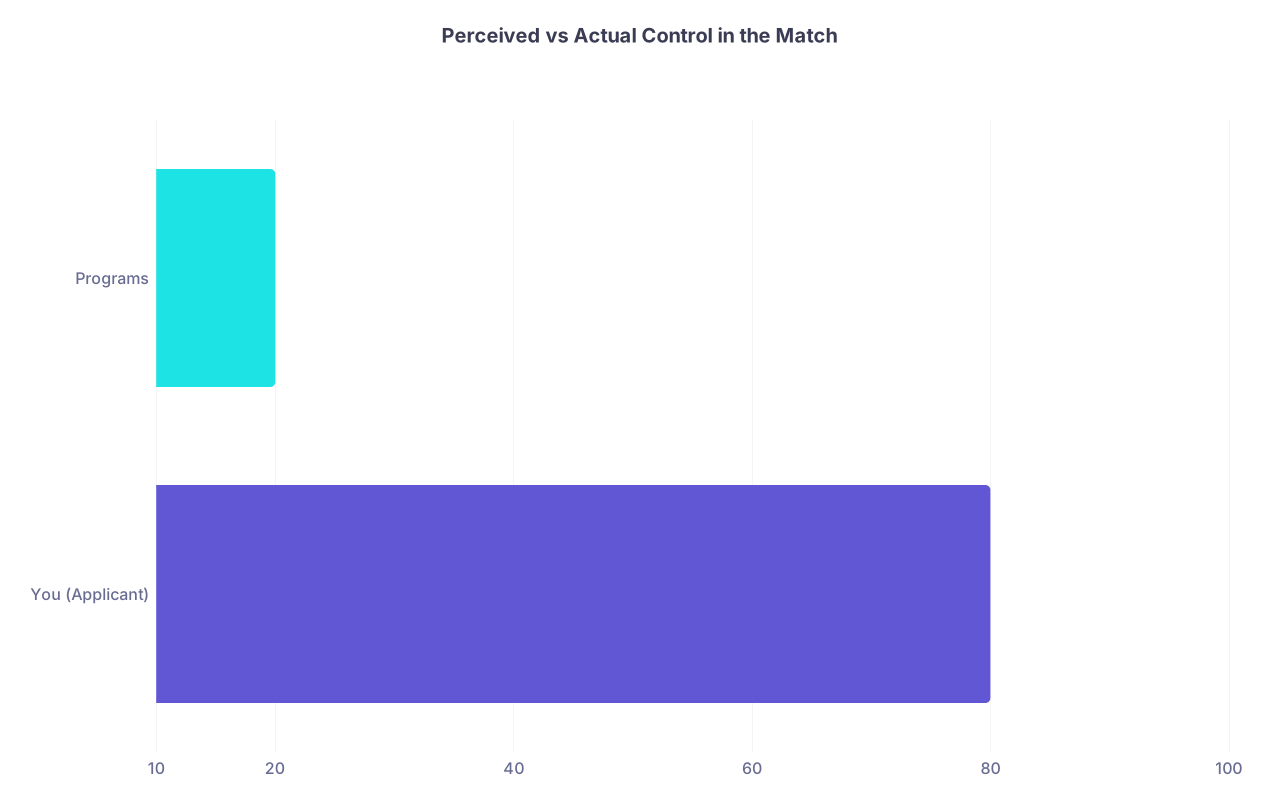
| Category | Value |
|---|---|
| You (Applicant) | 80 |
| Programs | 20 |
That chart is rough, but roughly true emotionally: you feel like you have 20% control and programs have 80%. That’s backwards. The algorithm is built to honor your preferences first.
And one more thing: your relationship with your home program is long. Even if you leave. These people will be your letter writers, future colleagues, maybe even fellowship connections.
So you:
- Stay polite.
- Stay firm.
- Stay within NRMP rules.
And you build your rank list for you, not for them.

Key Takeaways
- NRMP rules are actually simple in this context: no deals, no pressure about rank lists, no special incentives. Interest is fine. Coercion is not.
- Your safest move is to express genuine interest without sharing exact rank order or making conditional promises. Script your lines before any meeting.
- Rank according to your true preferences, not loyalty or guilt. Protect yourself with documentation if conversations cross the line, and remember: your career comes first.


