

It’s December. You’re in that tiny advising office that somehow smells like old coffee and whiteboard markers. Your school advisor leans back in their chair, smiles like they’ve seen it all, and says something like:
“Don’t worry so much about those NRMP rules. Everyone does X. Just do what you need to do to match.”
Your brain immediately goes into meltdown mode.
Wait. Isn’t that… illegal? Match-illegal? Can I get banned from the Match? Are they setting me up to take the fall while they just shrug and say, “Oh, guess you misunderstood”?
You walk out nodding like everything’s fine, but your stomach is in free fall. And now you’re here, Googling “NRMP violations student advisor told me to” at 1 a.m.
Good. You should be worried. But you should also be informed, because “my advisor told me to” does not protect you.
Let’s go through this like someone who’s actually scared of getting screwed by this system. Because that’s me. And probably you.
First: Who Actually Has Power To Punish You?
Here’s the thing that makes my heart race:
NRMP doesn’t care what your advisor said. They care what you did.
Your school can give stupid advice. A PD can say shady stuff. Your buddy can tell you “everyone lies about their rank list.” None of those protect you if NRMP decides you violated the Match Participation Agreement.
The entities involved:
NRMP – controls the Main Match rules, can:
- invalidate your match
- bar you from future matches (temporary or permanent)
- report violations to med schools / residency programs / licensure boards
Your medical school – can:
- write disciplinary notes in your MSPE
- refuse to certify you for future matches
- quietly blackball you with programs they’re connected to
Residency programs – can:
- report you for violations
- withdraw offers
- label you as “problematic” to other PDs (yes, that happens, unofficially)
None of them are going to accept “But my advisor said it was fine” as a defense. That’s the nightmare scenario: you follow bad advice, and you’re the one who ends up sanctioned.
What “Ignore NRMP Rules” Usually Sounds Like
Nobody literally says “Ignore the rules.” It’s more subtle. That’s what makes it scary.
Here are some sketchy phrases that should make every alarm bell in your head go off:
- “You can tell a program they’re your top choice even if they’re not. Everyone does that.”
- “If you get a pre-match offer outside the Match, just take it. NRMP doesn’t really enforce that.”
- “You should pressure them for where you are on their list. That’s just being proactive.”
- “If a PD hints they want a commitment, you should reassure them you’ll rank them #1, whether or not you actually do.”
- “If you don’t like where you matched, just don’t show up. That’s not a big deal.”
Those are not “grey area.” Those are how people end up in NRMP violation case summaries.
Let’s be more concrete.
| Situation | Risk Level |
|---|---|
| Lying about rank order to a program | High |
| Signing a contract outside NRMP | Very High |
| Accepting a prematch when also in Main Match | Very High |
| Not showing up after matching | High |
| Program asks improper questions; you answer honestly | Low |
The Rules That Actually Matter For You (Not the Legend Version)
I’m not going to restate the entire NRMP handbook. I’ll hit the parts students actually get burned on.
1. You cannot make or demand a rank commitment
NRMP is very explicit:
You can say:
“I really enjoyed your program and I’m very interested.”
“Your program will be ranked highly on my list.” (if it’s true enough)You risk violation territory when you:
- Tell multiple programs they’re your “#1” when they’re not
- Tell a program: “I will rank you #1” as part of trying to influence their ranking
- Pressure a program to tell you where you stand on their rank list
Is NRMP going to hunt you down for one dumb email? Probably not. But if:
- another applicant complains,
- a PD forwards your messages,
- or it becomes part of a larger pattern,
you’re suddenly in front of a violations committee explaining yourself.
2. You can’t accept a binding offer outside the Match (if you’re in it)
This is huge and underrated.
If your specialty and program participate in NRMP, you agree to:
- Not sign contracts outside the Match that cover the same training period.
- Not accept a “pre-match” that’s essentially a backdoor position that should go through NRMP.
If your advisor tells you “Just sign this offer, we’ll figure out the Match later”—run.
3. If you match, you’re expected to show up
Is there a way out for catastrophic situations? Yes, via NRMP waiver processes. But:
- Just deciding “I changed my mind” and not showing up = very unsafe.
- Walking away without a waiver can = violation, which can haunt you for years.
Big picture: the algorithm is designed to protect you as an applicant. You don’t need to play games.
So What Do You Do When Your Advisor Is The Problem?
This is the part that makes people feel trapped. Because saying “no” to your advisor feels like professional suicide. I get it.
Here’s how I’d handle it without nuking your relationship or your future.
Step 1: Get very specific, very calm
When they say something sketchy, your brain screams “THIS IS ILLEGAL.” Don’t say that out loud. Instead:
You: “I’m a little anxious about NRMP rules, and I don’t want to accidentally violate anything. Can you clarify—does NRMP actually allow applicants to [whatever they just suggested]?”
You’re playing dumb on purpose. You’re inviting them to either:
- walk it back, or
- be explicit enough that you can later say, “This was the advice I was given,” if you need to defend why you asked NRMP or your dean for clarification.
Then:
You: “Would you be okay if I double-check that interpretation with NRMP or our dean’s office? Just for my peace of mind.”
Their reaction tells you a lot.
If they get defensive? That’s a red flag. A big one.
Step 2: Quietly fact-check them
You have multiple options that don’t involve starting a war.
NRMP rules directly
Read the actual Match Participation Agreement and “Communication Code of Conduct” on NRMP’s site. They’re dry, but clear.Ask someone other than this advisor at your school
- Student affairs dean
- Director of student advising
- Another trusted faculty member
Phrase it neutrally: “I’ve heard mixed advice about whether it’s okay to tell multiple programs they’re my number one. What’s the official stance consistent with NRMP?”
NRMP policy email
NRMP does answer policy questions. You don’t have to say “my advisor told me X.” You can say: “As an applicant, am I allowed to [describe the behavior] without being in violation of NRMP rules?”
If your gut and the written rules don’t match your advisor’s advice, trust the rules. Not the person shrugging at them.
How To Push Back Without Burning Bridges
You’re scared of ending up “that student” who faculty whisper about. Fair. So don’t come in hot with accusations.
Here are some scripts.
Scenario: Advisor pushes you to tell multiple programs they’re your top choice.
You:
“Honestly, I’m pretty anxious about NRMP stuff and I really don’t want to blur any lines. I read their communication guidelines and they seem pretty strict about not making misleading statements about rank order. I’m more comfortable saying they’ll be ranked highly if that’s true, but not promising #1.”
If they keep pushing:
You:
“I totally get your perspective, but I’d rather stay conservative on this. I’ve seen too many stories of people getting in trouble. I’d rather let my application speak for itself than risk an NRMP issue.”
You’re not calling them unethical. You’re framing it as your anxiety and your risk tolerance.
Scenario: Advisor says to accept something outside the Match.
You:
“I thought NRMP doesn’t allow accepting binding contracts outside the Match if I’m participating. I’m nervous about accidentally violating something. Can we loop in [dean / official] to make sure this is okay?”
If their reaction is, “No, don’t bother them”—massive red flag. Pause everything until you have clarity from someone actually responsible for compliance.
Worst-Case Scenarios You’re Probably Imagining (And What Actually Happens)
Because yeah, I know your brain is going there.
Nightmare 1: “I follow bad advice and get banned from the Match”
Reality:
NRMP doesn’t randomly ban people for honest mistakes or one awkward email. The big punishments tend to come from:
- Clear, documented deception
- Failing to start a position you matched to (without a waiver)
- Accepting conflicting positions / contracts
So your defense is:
- Don’t lie, especially in writing, about your rank list.
- Don’t sign or verbally accept things you don’t fully understand.
- If something goes sideways, request a waiver instead of ghosting.
Nightmare 2: “If I don’t do the sketchy thing, I won’t match”
I’ve watched so many people match perfectly fine without lying, pressuring, or gaming the system. PDs expect some awkwardness. They do not expect you to violate national rules to impress them.
What actually hurts you more than refusing to be shady?
- Coming across as desperate or manipulative
- Sending contradictory “you’re my #1” emails that programs share with each other (yes, they do talk)
- Getting a reputation as “that student who plays games”
Nightmare 3: “If I question my advisor, they’ll tank my career”
Real talk: most advisors are not going to sabotage you because you politely say, “I’m nervous about breaking NRMP rules; I’d like to stay conservative.”
You’re not accusing. You’re cautious.
If your advisor is truly that fragile or vindictive, that’s information. It’s also your cue to quietly build relationships with other faculty and get letters and support from people who aren’t operating in the gray zone.
When You Should Absolutely Say “Nope”
If any of this happens, you stop. Immediately. Don’t negotiate it.
- You’re asked to sign something committing you to a program that participates in NRMP before the Match
- You’re told to falsify anything (emails, documents, dates, reasons you canceled interviews)
- You’re pushed to no-show a matched position instead of going through waiver processes
- A program or advisor says, “NRMP will never find out,” about something that clearly conflicts with written rules
Pin this in your brain:
If someone is willing to casually risk your NRMP standing, they are not going to protect you when it blows up. They’ll say you misunderstood. Every time.
Simple, Safe Communication Rules To Live By
This is the “I don’t want to think through 100 hypotheticals” version.
You are almost always safe if you:
- Do not promise rank order: say “ranked highly,” not “ranked #1,” unless that’s 100% true and you’re saying it once.
- Avoid pressing programs for their rank list or commitments.
- Don’t sign contracts/letters that feel like binding offers if the position goes through NRMP.
- Don’t ghost a matched program. Use the official waiver process if disaster strikes.
- Keep emails polite, positive, and non-committal beyond “I’m very interested.”
If you stick to those, your chance of NRMP trouble is extremely low.
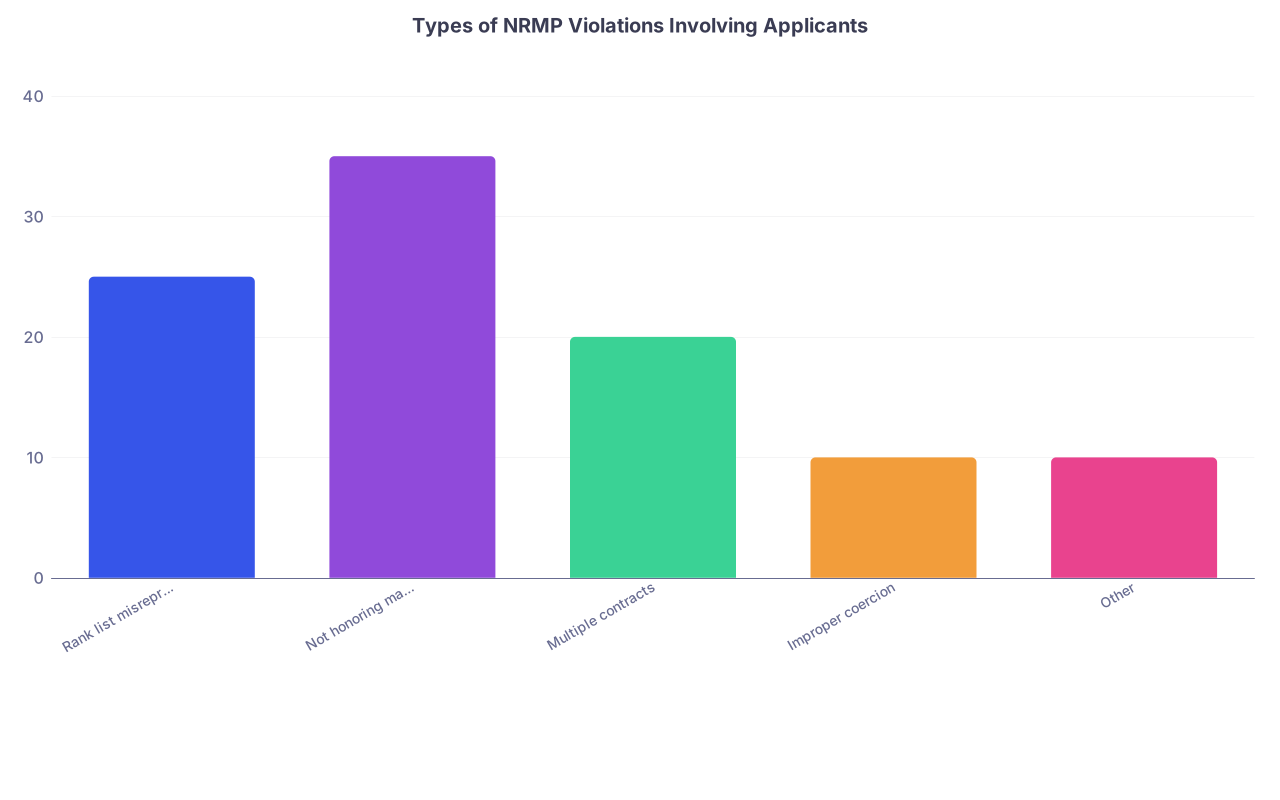
| Category | Value |
|---|---|
| Rank list misrepresentation | 25 |
| Not honoring match | 35 |
| Multiple contracts | 20 |
| Improper coercion | 10 |
| Other | 10 |
Document Quietly, Just In Case
You don’t need to turn into a court stenographer, but it’s not crazy to:
Keep brief notes after any weird meeting:
“12/3 – Advisor said it’s fine to tell multiple programs they’re my #1. I said I was uncomfortable and wanted to follow NRMP guidelines.”Save emails where you ask for clarification about NRMP rules.
You’re not planning a lawsuit. You’re protecting yourself if something escalates and someone tries to rewrite history. This is you being cautious, not paranoid.
When It’s So Bad You Should Escalate
Most of the time, you can just… not follow the sketchy advice and quietly fact-check with someone better.
You consider escalation when:
- The advisor is clearly telling multiple students to break rules
- They get angry or threatening when you suggest checking NRMP policy
- They dismiss NRMP as “technicalities” and push you to do things that are clearly against written rules
In that case, I’d go to:
- Your student affairs dean or equivalent
- If they blow you off, consider NRMP directly, again asking policy questions without names at first
You are not obligated to go down with someone who’s normalized cheating the system. Protect your own future first.

| Step | Description |
|---|---|
| Step 1 | Advisor suggests sketchy action |
| Step 2 | Check NRMP written rules |
| Step 3 | Do NOT do it |
| Step 4 | Ask neutral dean or NRMP |
| Step 5 | Politely decline advisor suggestion |
| Step 6 | Proceed if comfortable |
| Step 7 | Consider discreet escalation |
| Step 8 | Move on and use other advisors |
| Step 9 | Clear violation? |
| Step 10 | Confirmed allowed? |
| Step 11 | Pattern of bad advice? |

You Are Allowed To Be More Ethical Than Your Advisor
Here’s the thing nobody says out loud: some faculty and advisors are stuck in a pre-NRMP-enforcement world where stuff was looser, more handshake based, more “gentleman’s agreement.”
You are not living in that era.
Everything now is:
- documented
- forwarded
- screen-shotted
- and amplified
The safest people in this process are the ones who:
- Respect the written rules
- Avoid ego games about “gaming the Match”
- Don’t let fear push them into lying or signing things they barely understand
You don’t have to be perfect. You just have to not be reckless.
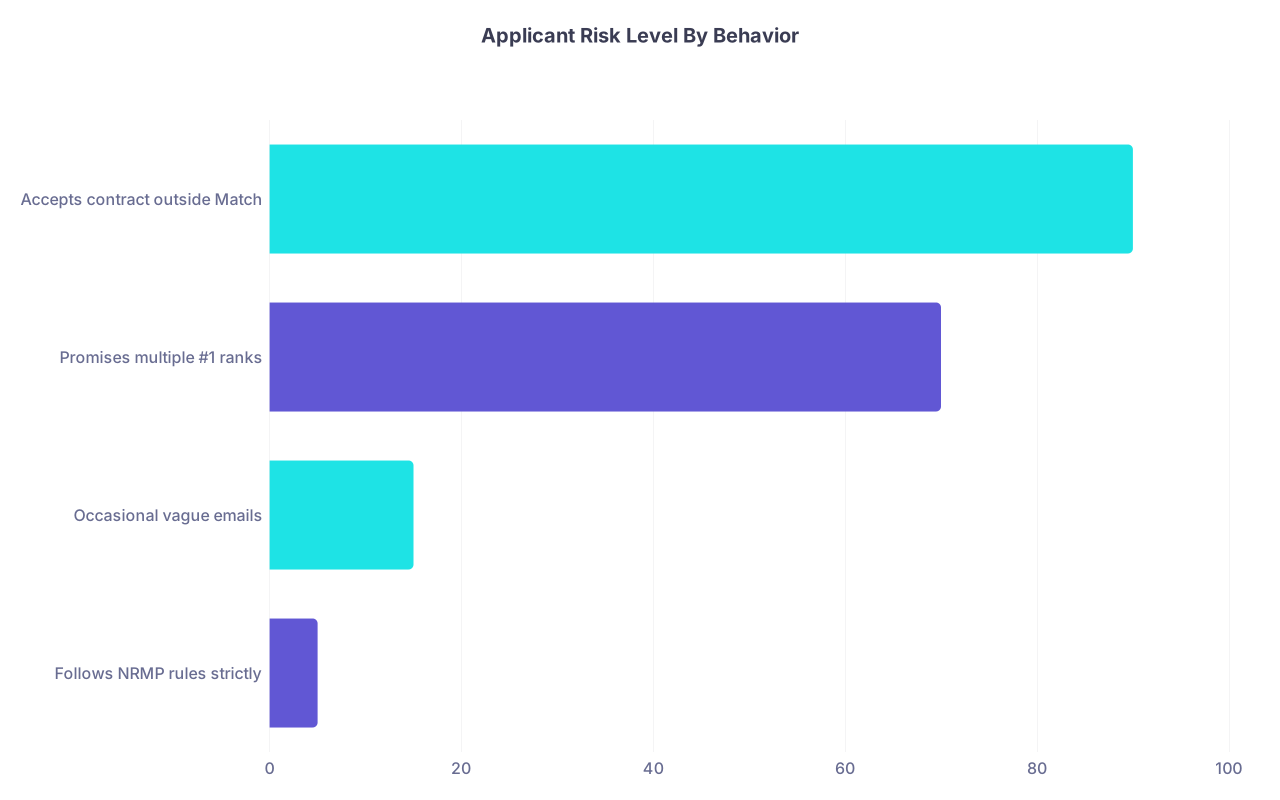
| Category | Value |
|---|---|
| Follows NRMP rules strictly | 5 |
| Occasional vague emails | 15 |
| Promises multiple #1 ranks | 70 |
| Accepts contract outside Match | 90 |
FAQ (Exactly 4 Questions)
1. What if I already told more than one program they’re my “top choice”? Am I doomed?
Probably not doomed. Don’t send any more of those messages. Going forward, stick to “ranked highly” or “very interested.” If you’re really panicking, you can ask NRMP a general question about communications (without naming yourself) to figure out if you’re in real danger. But a single cringe email doesn’t automatically equal a formal violation.
2. Can my advisor get in trouble with NRMP for giving bad advice?
Usually NRMP focuses on participants’ actions, not casual conversations. Advisors don’t sign the Match Participation Agreement—you do. Schools can get flagged if there’s a pattern of institutional misconduct, but NRMP’s enforcement hammer usually lands on applicants or programs who actually break the rules, not the loudmouth who encouraged it.
3. What if a program directly asks me to say I’ll rank them #1?
You don’t have to play that game. You can respond with: “I’m very interested in your program and plan to rank you highly, but I’ve been advised to keep my rank list private to stay within NRMP guidelines.” If they punish you for respecting NRMP rules, that’s not a program you want to work for. And no, you don’t need to report them automatically—but you can if the pressure is extreme.
4. How do I stay competitive if I refuse to do any sketchy NRMP stuff?
By being strong on the things that actually matter: solid application, good letters, normal human communication, and not freaking programs out with weird, game-playing behavior. Most PDs prefer an honest, slightly anxious applicant over a slick, manipulative one. You don’t need to cheat the system to match; you just need to not actively sabotage yourself trying to “beat” an algorithm that’s already designed to favor you.
Key points, so you can finally sleep:
- “My advisor said it was okay” is not a shield; NRMP looks at what you do.
- If something feels like lying, coercion, or backdoor contracting, it’s probably risky—walk it back and fact-check with real NRMP rules.
- You’re allowed to be cautious, boring, and ethical and still match just fine. The Match is stressful enough; don’t add “formal violation” to the list by following someone else’s bad instincts.


