

Worried You Signed Something Sketchy Pre-Match? Interpreting the Risk
What if that “little pre-match form” you signed at your interview actually just nuked your Match and you don’t even know it yet?
Because that’s the fear, right? You signed something you didn’t fully read. Or you felt cornered in the PD’s office. Or they said, “This is just a standard form,” and you believed them. And now you’re lying awake at 2 a.m. wondering:
Did I just violate NRMP rules?
Can they report me?
Can I get banned from the Match?
Let’s walk straight into the nightmare scenario you’re imagining and pick it apart.
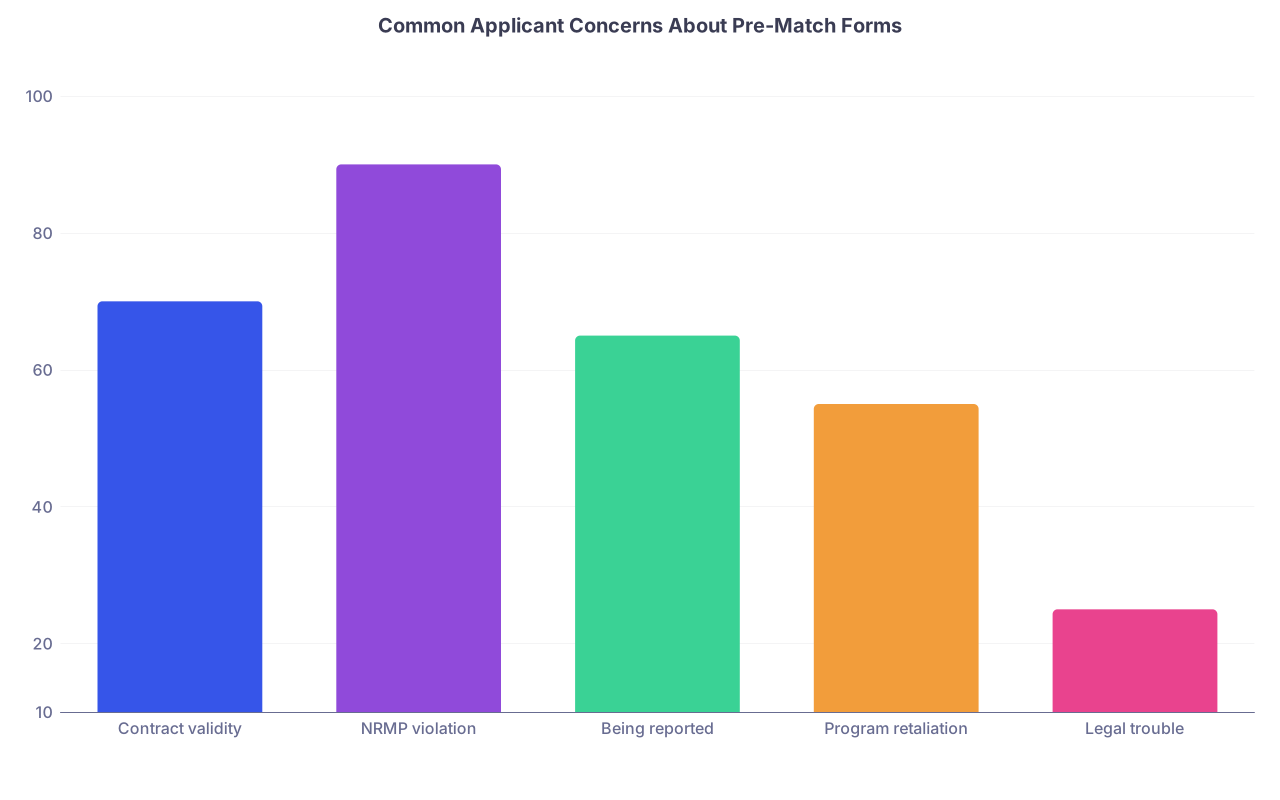
| Category | Value |
|---|---|
| Contract validity | 70 |
| NRMP violation | 90 |
| Being reported | 65 |
| Program retaliation | 55 |
| Legal trouble | 25 |
First: What Actually Counts as Sketchy Under NRMP Rules
I’m going to be blunt: a lot of stuff feels sketchy but isn’t technically an NRMP violation. And some stuff that people shrug off is actually a big problem.
The NRMP (for residency: the Main Match, not SOAP) has a simple core idea:
No binding commitments before Match Day. Not for you, not for programs.
The big red lines:
- You cannot sign a binding contract with an NRMP-participating program before the Match.
- Programs cannot require or ask you to commit, rank them first, or withdraw from the Match.
- Both sides are supposed to let the algorithm decide, not back-door it with early deals.
So what’s often okay, even if it made your stomach drop at the time?
Nonbinding forms like:
“We’d like to send you an offer if we match.”
“Please sign this acknowledging you’ve reviewed our policies.”
“Sign this to allow us to do a background check / drug test if we rank and match you.”Institutional stuff not tied to Match ranking:
HR release forms, confidentiality forms, EMR access agreements “to be effective if you match.”
That usually feels gross in the moment, especially if they spring it on you. But the NRMP cares about binding commitments affecting the Match, not every awkward paperwork moment.
Where it moves into real risk territory:
- You signed something that explicitly says you agree to:
- Rank them first
- Not rank other programs
- Withdraw from the Match if they accept you
- Work there regardless of Match outcome
That’s where my anxiety would go from “ugh” to “okay we might need to do something.”

Step One: What Did You Actually Sign?
I know the instinct: spiral first, read later. But the actual text matters more than the feeling you had in the room.
Go grab the document. Or open the PDF. Or the email attachment.
Then check for these things:
Does it mention NRMP or Match explicitly? Look for phrases like:
- “not participate in the NRMP Match”
- “withdraw from the Match”
- “in lieu of NRMP participation”
- “pre-Match offer” These are giant red flags.
Does it look like an employment contract? Stuff like:
- Salary, benefits, start date, title as “PGY-1 Resident” or similar
- “This employment contract is binding”
- Signature lines for both you and the institution That starts to look like a binding commitment.
Or does it look more like a conditional thing? Key safe-ish phrases:
- “Conditional upon successful Match”
- “Effective only if you are matched to this program”
- “This is not an offer of employment” These are usually fine under NRMP rules.
Did they pressure you verbally? If you were told:
- “Sign this or we can’t rank you”
- “We expect you to rank us first if you sign this”
- “Everyone here signs this as a commitment”
That’s bad behavior on their part. Even if the paper is worded vaguely, the intent matters if it ever goes to NRMP.
Now, the part you’re dreading: what if the thing you signed does look like an actual pre-Match commitment?
Pause. Don’t start emailing the program or NRMP yet. You still have options.
| Document Type | Likely NRMP Risk Level |
|---|---|
| Policy acknowledgment (nonbinding) | Low |
| Background check consent (conditional) | Low |
| “We intend to rank you highly” letter | Low |
| Form asking you to rank them first (nonbinding) | Medium |
| Binding pre-Match contract / withdraw Match | High |
How Much Trouble Are You Personally In?
Here’s the messed-up secret: even when rules are broken, programs are often more at risk than applicants. NRMP takes coercion and program abuse seriously.
If there’s:
- A pattern of the program doing this
- Evidence they pressured you
- Language that clearly conflicts with NRMP agreements
The program is in trouble. You’re usually not their target.
The NRMP is not sitting there hunting for terrified M4s who signed a sketchy paper under pressure. They’re trying to stop programs from rigging the system.
Your realistic personal risk usually depends on:
Did you actually follow through with the “agreement”? For example:
- You signed “I will rank them first”… and then you didn’t. That’s technically a misrepresentation, but if the document itself violated NRMP policy, it often ends up being more damning for the program.
Did you or the program report anything? Many of these sketchy deals just… die silently in the background.
Is that ideal? No. Is it reality? Yes.Was it clearly labeled as binding pre-Match employment instead of Match participation? That’s where NRMP really gets interested.
If you’re imagining being banned from the Match for some line you half-read at 5 p.m. after eight back-to-back interviews? That is almost never how enforcement plays out.
Is it possible? Yes. Is it the norm? No.

| Step | Description |
|---|---|
| Step 1 | Realize you signed something |
| Step 2 | Get the exact document |
| Step 3 | Likely low risk |
| Step 4 | Assess if binding |
| Step 5 | Document concerns |
| Step 6 | Seek confidential advice |
| Step 7 | Contact dean or advisor |
| Step 8 | Consider NRMP query |
| Step 9 | Mentions Match or NRMP? |
| Step 10 | Binding commitment? |
What You Should Do Right Now (Without Making It Worse)
Here’s the move: you want to protect yourself, maybe report if needed, but not panic-email the PD in a way that creates more problems.
Do this in order:
Save everything. Emails. Attachments. Copies of whatever you signed. Notes on what they said in person. Dates, names, who was in the room.
Do NOT confront the program directly yet. Tempting to fire off: “Is this NRMP compliant???”
Don’t. If this escalates, you want your school or NRMP handling it, not you solo in a power imbalance.Talk to someone at your med school who actually understands the Match. Not just your random favorite attending. People like:
- Your Dean of Students
- Your school’s Match advisor
- The person who runs MS4 advising / NRMP stuff
Be honest: “I signed this at X program, I’m worried it violates NRMP rules. Here’s the document.”
They’ve heard worse. I promise.Ask explicitly: “Do you think this is an NRMP violation?” You’re not overreacting. This is exactly the type of thing they’re supposed to help with. They can:
- Tell you if this is a non-issue
- Contact the program quietly
- Escalate to NRMP if needed
If your school is useless or you’re worried they’ll minimize it, consider a confidential NRMP inquiry. The NRMP has a Policy Review / violation reporting process. You can:
- Ask hypothetical-style questions
- Disclose what happened and ask for guidance
- Report a potential violation
Yes, this is scary. But it’s better than doing nothing while catastrophizing in your head.
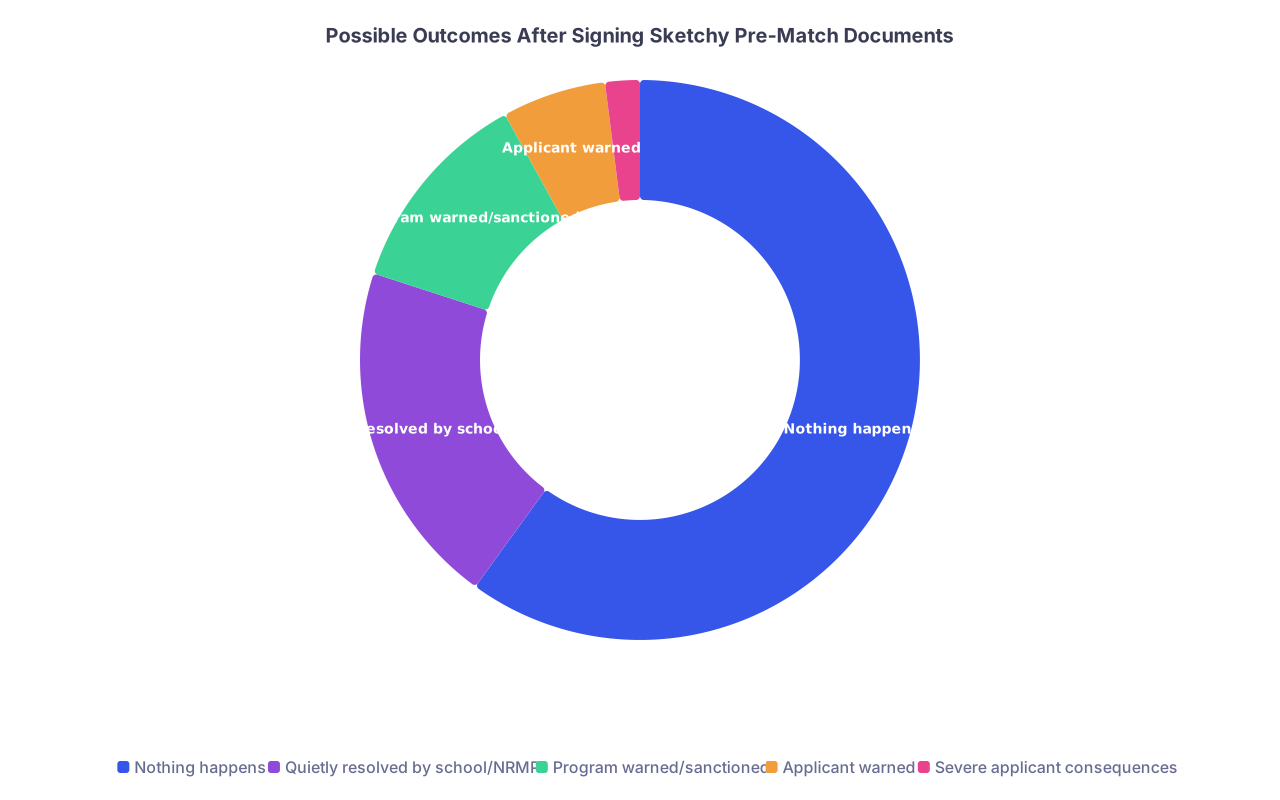
| Category | Value |
|---|---|
| Nothing happens | 60 |
| Quietly resolved by school/NRMP | 20 |
| Program warned/sanctioned | 12 |
| Applicant warned | 6 |
| Severe applicant consequences | 2 |
Worst-Case Scenarios vs Reality
Let’s line up what your brain is probably screaming at you versus what usually happens.
Your fear:
“I’ll get kicked out of the Match and never be a doctor.”
Reality patterns I’ve actually seen:
Student signs sketchy paper, freaks out, shows it to dean.
- Dean calls PD quietly: “Hey, this looks noncompliant.”
- Program backs off, sometimes sends a clarifying email: “This is nonbinding, we apologize for confusion.”
- Nothing else happens. Student still ranks however they want.
Multiple students from same school bring similar forms from the same program.
- School compiles evidence, sends to NRMP.
- Program gets investigated, maybe sanctioned.
- Students are protected; they still Match.
In more serious cases (like actual signed pre-Match employment contracts):
- NRMP may require specific corrective steps.
- Program can get fined, barred from Match cycles, etc.
- Applicant consequences still tend to be less severe than your panic-brain thinks, especially if you were misled or pressured.
Does NRMP sometimes penalize applicants? Yes. Especially if:
- They knowingly engage in Match circumvention
- They double-commit to two different programs
- They sign one thing, then intentionally misrepresent to others
But that’s very different from “I got cornered in a PD’s office and signed something I didn’t fully understand.”

How To Protect Yourself For The Rest Of Interview Season
You can’t go back and unsign something. But you can stop this from happening again.
Some hard rules I wish we were all given on day 1 of M4:
You do not owe any program an on-the-spot signature.
You can say:
“Can I take this home to review?”
“I’d like to look this over carefully before signing.”
If they push back aggressively, that’s a red flag all by itself.Anything that sounds like a commitment? Treat it as dangerous.
Phrases that should make you freeze:- “In exchange for ranking us first…”
- “You agree not to rank other programs higher…”
- “You agree to withdraw your NRMP registration…”
“This is just standard paperwork everyone signs” is often code for “We know this is weird, but we’re banking on you being too scared to say no.”
Never let “I don’t want to upset them” override “This could actually violate a national matching system.”
I know the pressure. You’re terrified of tanking your chances. But any program willing to skirt NRMP rules is showing you exactly how they’ll treat you when you’re a resident and have zero power.
Believe them.
If You Already Signed But Haven’t Matched Yet: What Now?
This is the awkward middle ground you’re probably in right now. Here’s the cleanest way to think about it:
You are still free to:
- Rank that program anywhere on your list
- Not rank them at all
- Rank others higher
The NRMP rank order list is the only thing that legally binds you on Match Day, not whatever weird pre-Match paper a program waved at you.
The paper you signed might be:
- Totally meaningless legally
- Technically in conflict with NRMP rules
- Mostly leverage for them to intimidate you, not actually enforce anything
If they ever tried to “enforce” a pre-Match contract after the Match:
- NRMP would be very interested in that
- Your school would likely back you
- Programs that try to play games like that tend to get burned
So your priority is not to appease them. It’s to:
- Protect yourself
- Document what happened
- Get advice
- Submit your rank list in the order that is best for you, not based on fear of some sketchy form
Because that’s literally the core NRMP rule: the Match must be free and voluntary.

Quick Reality Check Before You Spiral Again Tonight
Let’s summarize like we’re sitting in the call room and you just blurted all this out at 1:30 a.m.:
- Yes, programs sometimes ask for shady pre-Match commitments.
- No, you’re probably not getting kicked out of the Match for signing something under pressure once.
- The worse the document looks, the more trouble the program, not you, is usually in.
- You are still allowed to rank however you want. The NRMP rank list is what really counts.
- The smartest next move is: save documents → talk to your dean/advisor → consider NRMP guidance if it seems truly bad.
You’re not the first person to sign something you regret in residency season. You will not be the last. What matters now is how calmly and strategically you handle it.
Years from now, you won’t remember the exact wording of that awful form. You’ll remember whether you let fear dictate your rank list—or whether you trusted yourself enough to put your actual goals first.
FAQ (Exactly 5 Questions)
1. Can a program actually force me to rank them first because I signed something?
No. They can threaten, guilt-trip, or strongly “encourage” you, but they cannot force you in any enforceable way under NRMP rules. Your certified NRMP rank list is what matters. If a program ever tried to punish you for ranking them lower than some paper suggested, they’d be opening themselves up to NRMP scrutiny.
2. Could I really be banned from the Match for this?
It’s theoretically possible but highly unlikely if you were pressured or misled. NRMP tends to focus penalties on clear, intentional Match violations and patterns of abuse. If anything, they’re more interested in programs coercing applicants than in one anxious MS4 trying to survive the process.
3. Should I just ignore it and hope nothing happens?
You can do that, and honestly, a large number of these situations never go anywhere. But if the document explicitly mentions withdrawing from the Match or making a binding pre-Match commitment, it’s smarter to at least show it to your dean or advisor. Ignoring it doesn’t erase the risk—it just keeps you in the dark.
4. If my dean contacts the program, won’t they blacklist me?
Programs are not supposed to retaliate, and doing so creates even more liability for them. Most of the time, when a dean or NRMP nudges them, they quietly back off and pretend the whole thing was a misunderstanding. Could they secretly tank you? Maybe. But a program willing to play dirty like this is not a place you want to depend on for your entire residency training.
5. I signed something but I don’t fully remember what was in it. Is it too late?
No. Ask for a copy of what you signed if you don’t have one—say you want it “for your records.” That’s a normal request. Then review it calmly, line by line. Bring it to someone experienced. The worst move is to let your imagination torture you about something you haven’t actually re-read. The sooner you know what you’re dealing with, the more options you have.


