The usual advice about residency personal statements—“just bang it out in September”—is how people end up with bland, forgettable essays. You do not write your life’s pitch to programs in a weekend between night float shifts.
You need a timeline. From MS3 spring to ERAS submission.
Below is a month‑by‑month, then week‑by‑week plan that assumes:
- You’re an MS3 starting in March/April
- You’ll submit ERAS in September
Adjust a month forward/back if your school calendar is odd, but keep the sequence.
Big Picture: What Happens When
At this point you should see the whole arc:
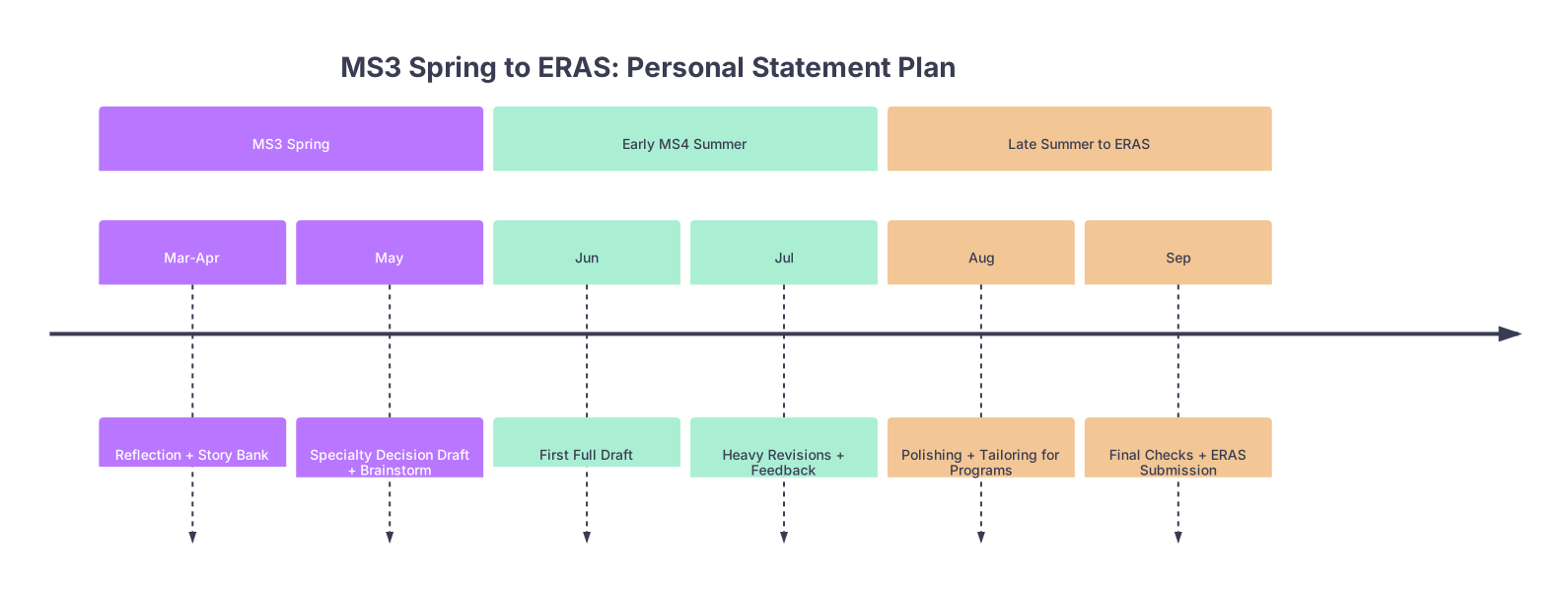
| Period | Event |
|---|---|
| title MS3 Spring to ERAS | Personal Statement Plan |
| MS3 Spring - Mar-Apr | Reflection + Story Bank |
| MS3 Spring - May | Specialty Decision Draft + Brainstorm |
| Early MS4 Summer - Jun | First Full Draft |
| Early MS4 Summer - Jul | Heavy Revisions + Feedback |
| Late Summer to ERAS - Aug | Polishing + Tailoring for Programs |
| Late Summer to ERAS - Sep | Final Checks + ERAS Submission |
You’re going to:
- Collect stories (spring)
- Decide your angle (late spring)
- Draft ugly (early summer)
- Cut and sharpen (mid-late summer)
- Polish and lock (August/September)
MS3 Spring (March–April): Story Collection Mode
At this point you should not be drafting full paragraphs. You’re building raw material.
March: Start the Story Bank
Block 30 minutes once a week. Non‑negotiable.
Create one document (call it “PS Story Bank”) with three sections:
- Clinical stories
- Personal/non‑clinical stories
- Specialty‑specific moments
Each week, add at least 3 bullets under clinical:
- A patient
- A team interaction
- A moment you messed up or almost did
Sample entries:
- “Surgery – 72yo F with SBO, stayed late to help son understand prognosis; attending later said, ‘She doesn’t need another CT, she needs someone to talk to her family.’”
- “Medicine – intern quietly re‑checked all my vitals on new admit, then showed me what I missed without shaming me.”
- “Peds – kid with sickle cell drawing superheroes with central lines; shifted my thinking about ‘chronically ill’ kids.”
Key rule:
Do not judge whether a story is “PS worthy” yet. Just capture.
By the end of March you should have:
- 10–15 short clinical bullets
- 3–5 personal/non‑clinical bullets (e.g., pre‑med job, family background, sports, military)
- A growing sense of what kinds of moments actually move you
April: Specialty Direction + Early Reflection
By this point you should be narrowing to 1–2 realistic specialties. Not in stone, but with a lean.
Each week:
- Add 2–3 specialty‑flavored bullets:
- What you liked on that service
- What annoyed you (yes, that matters)
- A moment you felt “I fit here”
Start a second doc: “Why This Specialty – Messy Notes” Free‑write for 10–15 minutes once a week:
- What kind of patients do I actually like talking to?
- What kind of problems do I enjoy solving on call at 2 a.m.?
- When do I feel useless vs. energized on the team?
You’re not crafting sentences; you’re searching for patterns:
- “I keep writing about following patients long‑term”
- “I always mention procedures”
- “I hate when I’m far from the bedside”
By end of April you should have:
- 25–30 clinical story bullets total
- 8–10 personal/non‑clinical bullets
- 2–3 clear themes that show up repeatedly (continuity, procedures, advocacy, complexity, teaching, etc.)
May: From Chaos to Concept
Now you start thinking like a writer, but still not drafting the final product.
First Half of May: Pick a Core Thread
At this point you should spend one 60–90 minute block to do this exercise:
- Re‑read your Story Bank and Why Specialty doc.
- Highlight:
- Anything that feels emotionally charged (good or bad)
- Anything that clearly ties to specialty fit
- On a blank page, write 3–4 answers to:
- “If a PD remembered just one thing about me, it should be…”
- “If I never finished med school, the thing I’m proudest of so far would be…”
Now sketch 3 possible angles for your personal statement. Angles, not full outlines. For example:
- “Former high school teacher → teaching mindset on wards → academic medicine interest”
- “Grew up interpreting for parents in clinic → communication focus → patient advocacy in IM”
- “College paramedic → chaos tolerance → thriving in EM resus bay”
Do not pick a cute gimmick. Pick the angle that actually matches your real stories.
Second Half of May: Build a Skeleton Outline
Now you’re allowed to outline.
For your chosen specialty, build a rough structure:
- Opening scene (first paragraph)
- One concrete clinical moment
- Specific details (room, smell, time of day, what was actually said)
- Bridge
- 2–3 sentences: what this moment says about you + why it matters
- Body paragraphs (2–3)
- Each built around a theme:
- e.g., “teamwork and humility,” “procedural curiosity,” “longitudinal care”
- 1–2 stories each (short)
- Each built around a theme:
- Closing
- Where you’re headed and what kind of resident you will be
- No grand “since childhood I wanted to be a doctor” nonsense
By end of May you should have:
- One clear angle you actually believe
- One skeleton outline (even if it’s rough)
- Agreement from at least 1 trusted person that this direction feels like you (not a template)
June: First Full Draft – Ugly on Purpose
At this point you should schedule your first serious writing block.
Week 1 of June: Draft #1 – No Editing While You Type
Sit down for 90 minutes and write the whole thing:
- Aim for 750–900 words; you’ll trim later
- Force yourself to finish in one sitting
Rules:
- Start with the scene you picked. Make it vivid:
- “It was 2:17 a.m., and the ED was quiet for once…”
- Use names like “Mr. S” not “a 65‑year‑old male”
- Let your voice show through. If you’re a bit dry and sarcastic in real life, don’t suddenly sound like a Hallmark card.
The goal is completion, not quality.
Week 2 of June: Cooling Period
Do not touch the draft for 5–7 days.
During this week:
- Keep adding to your Story Bank if anything new hits you
- Jot down any new specialty‑related insights but do not edit the draft yet
Then, at the end of the week, re‑read Draft #1 once, in one go, and answer:
- Where did I get bored while reading my own essay?
- Where did I sound like a brochure?
- Where did the voice suddenly not sound like me?
Week 3–4 of June: Draft #2 – Structural Fix
Now you do your first major revision.
Focus on big moves, not commas:
- Cut any paragraph that:
- Could belong to any applicant
- Repeats your CV (e.g., listing research projects)
- Check the arc:
- Clear opening scene
- Logical progression of themes
- Clear closing that points forward
Aim to get down to 650–750 words.
By end of June you should have:
- A coherent Draft #2
- A PS that reads like one continuous story, not a list of accomplishments
July: Feedback, Heavy Revisions, and Specialty Variants
July is where strong personal statements separate from mediocre ones.
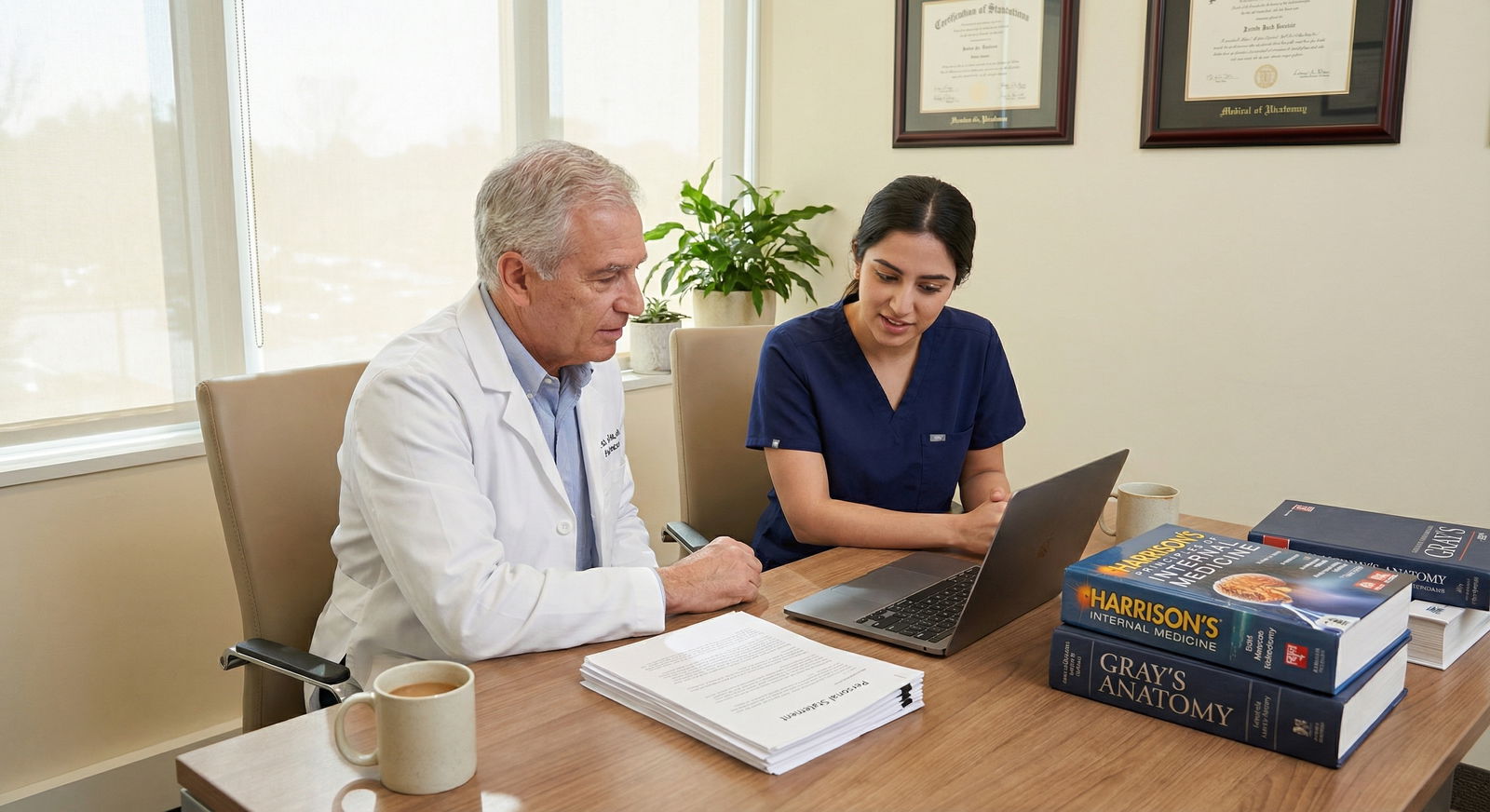
Early July (Week 1–2): First Feedback Round
At this point you should get 3 types of readers:
- Someone who knows you well (friend, trusted faculty)
- Someone in your specialty (resident/attending)
- Someone who doesn’t know you at all (for clarity/flow)
Give them specific questions:
- What 3 adjectives would you use to describe the person in this essay?
- What do you remember 10 minutes after reading?
- What parts sound generic or fake?
Do not ask, “Do you like it?” Ask, “What’s confusing or forgettable?”
Collect feedback, then decide:
- What are the consistent themes people see?
- Where do multiple readers point to the same problem?
Mid July (Week 3): Draft #3 – Deep Cut and Clarify
Now you make painful changes.
Common surgeries I end up recommending:
- Cut the “origin story” if it’s cliché (grandparent’s illness, etc.) unless you have a strikingly specific angle
- Reduce “I learned that…” sentences; show the learning instead
- Remove 90% of adverbs (“truly,” “deeply,” “very”) and vague adjectives (“incredible,” “amazing”)
Goals for Draft #3:
- 650–700 words
- One clear through‑line: a reader should be able to say, “You’re the [X] person” (teacher, systems‑thinker, communicator, proceduralist)
Late July (Week 4): Specialty Backup Version (If Needed)
If you’re applying to more than one specialty, at this point you should:
- Create a duplicate of Draft #3
- Adjust:
- Opening anecdote to match the other specialty
- Middle paragraphs to emphasize different aspects (e.g., for FM: continuity and community; for EM: acute care and rapid decisions)
- Closing to speak specifically to the training environment of that specialty
Do not just change the name of the specialty. Program directors can smell that from space.
By end of July you should have:
- One strong primary specialty personal statement (Draft #3)
- One workable alternate specialty version if you need it
August: Polishing, Tailoring, and Sanity Checks
Now you’re in the danger zone where people either over‑edit to death or get lazy. Don’t do either.
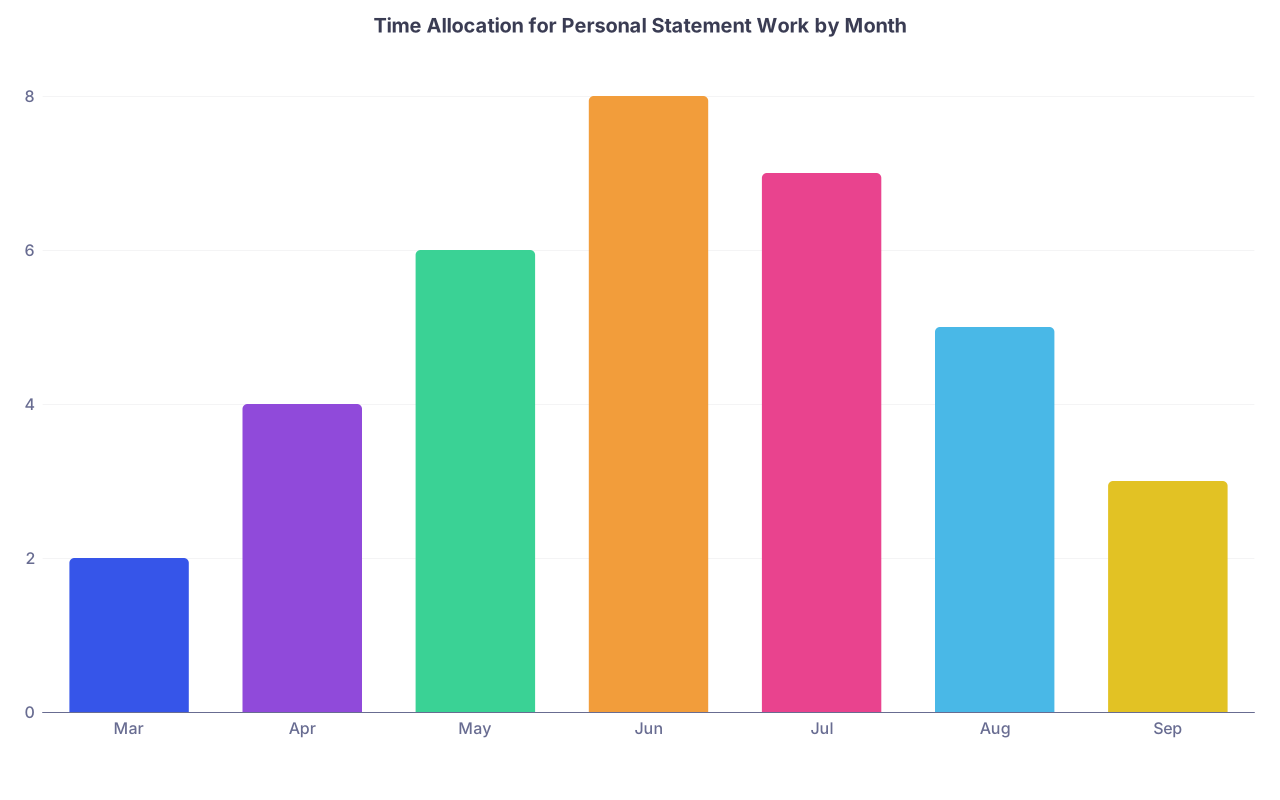
| Category | Value |
|---|---|
| Mar | 2 |
| Apr | 4 |
| May | 6 |
| Jun | 8 |
| Jul | 7 |
| Aug | 5 |
| Sep | 3 |
Early August (Week 1): Language and Flow Polish
At this point you should read the statement out loud. Yes, out loud.
Check for:
- Tongue‑twisters and overly long sentences
- Repeated words (especially within the same paragraph)
- Awkward transitions
Then do a line‑by‑line pass with these questions:
- Can I cut this sentence and lose nothing?
- Is there a more precise verb? (e.g., “managed,” “argued,” “noticed,” “advocated,” instead of “helped”)
- Did I accidentally re‑list something that’s obvious from my CV?
Aim to land around 600–650 words. Under 700 is usually safer for attention spans.
Mid August (Week 2–3): Program‑Level Tailoring (Optional but Powerful)
No, you’re not writing 60 different personal statements. But for a handful of dream programs, you can create small variants.
Create a short “tailoring list”:
- Geographic ties
- Particular aspects of your background that matter regionally
- Specific training features (e.g., county hospital, strong addiction medicine, rural tracks)
For those programs only:
- Add or tweak 1–2 sentences in the closing paragraph:
- “I’m particularly drawn to training in a county system like X because…”
- “Having grown up in Y, I’m excited by programs committed to serving this community…”
Do not force it for every program. This is for the top slice.
Late August (Week 4): Final Outside Read
Get one more reader now:
- Ideally, a faculty member or chief resident who reads a lot of statements
Ask them:
- Would you interview this person based on this statement alone?
- Does the tone match someone I’d want on my team at 3 a.m.?
At this point you should be making micro‑edits only. If they suggest completely different angles, ignore them unless they’re pointing to a glaring mismatch.
By end of August you should have:
- A final personal statement file for your main specialty
- Any lightly tailored variants saved and clearly labeled
September: ERAS Upload and Last Checks
This is where people sabotage themselves with last‑minute panic edits. You’re going to avoid that.
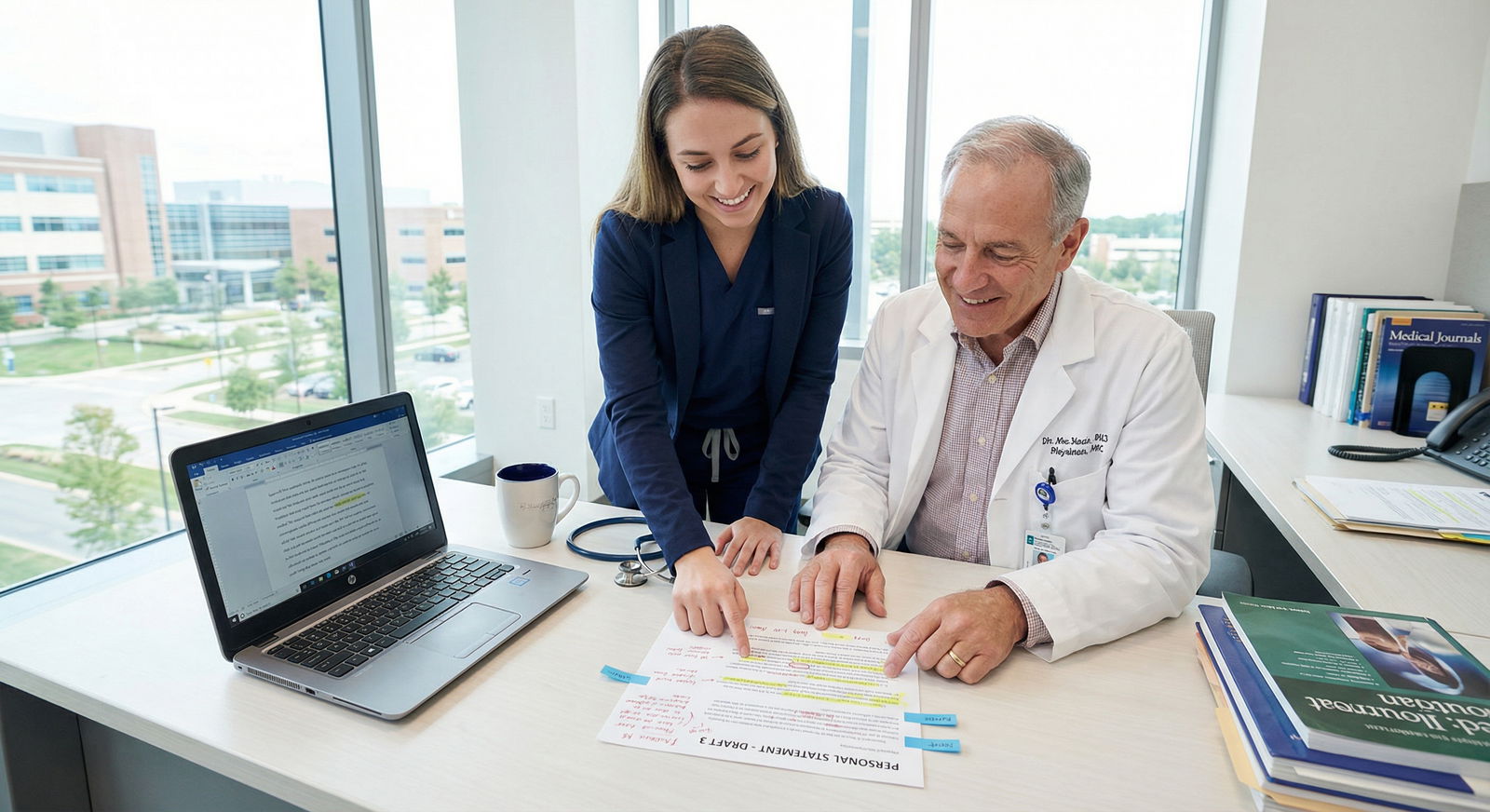
Early September (Week 1): Format and Platform Reality Check
At this point you should:
- Paste your PS into a plain text editor (to strip formatting)
- Then paste into ERAS and:
- Check paragraph breaks
- Confirm no weird symbols or lost punctuation
- Make sure it’s not cut off by the character limit
Print or export a PDF of what ERAS shows. Read that version. That’s what PDs will see.
Mid September (Week 2): The 24‑Hour Rule
Before you finally lock:
- Make any last micro‑tweaks (typo fixes, one word swaps)
- Then do not touch it for 24 hours
After 24 hours:
- Read it once more, silently
- If you still feel it sounds like you and there are no glaring issues, you are done
No more edits. Every change after this point usually makes it worse.
ERAS Submission Week
You hit submit.
By now you should:
- Have a PS that took months of honest thinking, not 48 hours of panic
- Be able to answer in an interview, without blinking, about any story in your essay—because they’re real, and they’re yours
Quick Month‑by‑Month Checklist
| Month | Main Goal |
|---|---|
| March | Start Story Bank, 10–15 clinical bullets |
| April | Clarify specialty direction + themes |
| May | Choose core angle + create outline |
| June | Draft #1 and #2 (ugly → coherent) |
| July | Get feedback, create Draft #3, backup specialty version |
| August | Polish language, optional tailoring, final faculty read |
| September | ERAS upload, formatting check, lock statement |
Two Common Pitfalls by Timepoint
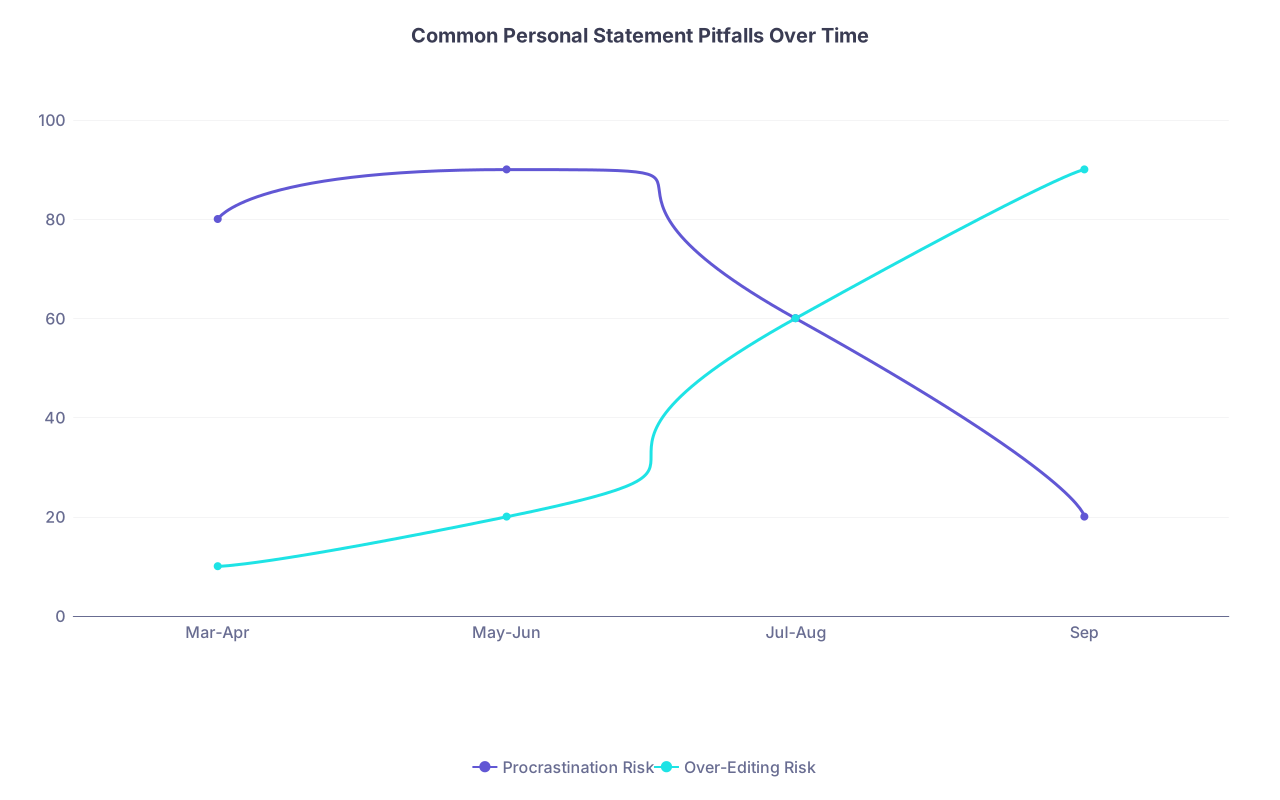
| Category | Procrastination Risk | Over-Editing Risk |
|---|---|---|
| Mar-Apr | 80 | 10 |
| May-Jun | 90 | 20 |
| Jul-Aug | 60 | 60 |
| Sep | 20 | 90 |
- Spring (Mar–Apr)
- Pitfall: “I’ll think about this after Step 2.”
- Fix: Commit to one 30‑minute story‑bank session per week.
- Pitfall: “I’ll think about this after Step 2.”
- Early Summer (Jun)
- Pitfall: Polishing sentences before you even finish Draft #1.
- Fix: Force ugly completion first.
- Pitfall: Polishing sentences before you even finish Draft #1.
- Mid Summer (Jul–Aug)
- Pitfall: 12 conflicting editors; losing your own voice.
- Fix: 3–4 readers max. You are the tie‑breaker.
- Pitfall: 12 conflicting editors; losing your own voice.
- September
- Pitfall: Last‑minute total rewrites after hearing other students brag about their essays.
- Fix: Trust the process you followed; small tweaks only.
- Pitfall: Last‑minute total rewrites after hearing other students brag about their essays.