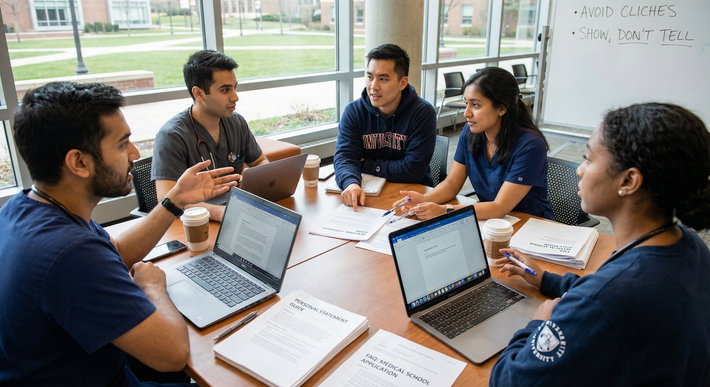
You’ve got a draft of your residency personal statement open at 1:30 a.m. You’ve moved commas around 40 times. You hate every sentence and love it at the same time. And now you’re stuck on the next problem:
Who the hell should actually read this thing before you submit it?
Because you know two things:
- You’re too close to it to see the flaws.
- The wrong person can absolutely make it worse.
Let’s cut through the noise. Here’s exactly who should proofread your personal statement—and who definitely shouldn’t.
The Short Answer: Build a 3-Person “Editing Team”
If you remember nothing else, remember this setup:
- One content person: “Does this story make sense for your specialty and your app?”
- One language person: “Is this clean, clear, and correct?”
- One admissions-savvy person: “Would a PD or faculty actually like this?”
You don’t need 15 people. You need 2–3 carefully chosen readers with different strengths, who won’t rewrite your voice into oblivion.
Now let’s get specific.
Who Should Proofread Your Personal Statement
1. A Resident or Recent Graduate in Your Specialty
This is usually your best first reader.
They know:
- What sounds cliché in that specialty
- What red flags PDs actually talk about
- How your statement will read next to 100 others in the same field
They can tell you:
- “Every EM applicant says they love the ‘organized chaos’ of the ED. Delete it.”
- “This part where you admit you almost failed third year? Dangerous unless you explain it better.”
- “This anecdote is great, but move it up. Nobody cares what you did in high school.”
Ideal options:
- Resident at your home program
- Alumni from your med school who matched where you want to go
- Senior resident/fellow you worked closely with on rotation
What they’re best for:
- Content
- Specialty fit
- Tone (professional vs too dramatic/too casual)
What they’re not always best for:
- Perfect grammar
- Fine-tuning sentence structure
You want them for: “Should you be saying this?” more than “Is this comma right?”
2. A Trusted Faculty Member Who Knows You (and Actually Reads These)
Keyword: trusted and knows you.
Good choices:
- Clerkship director
- Specialty advisor
- Research mentor who writes a lot of letters
- Program leadership at your home institution (if they offer to read it)
Bad choices:
- Random attending you shadowed for 2 days who barely remembers your name
- Faculty who love to monologue and rewrite everything in their own voice
What good faculty do well:
- Spot professionalism issues
- Catch subtle red flags you don’t see as a student
- Help you avoid sounding arrogant, desperate, or vague
They often say things like:
- “This part reads like an apology tour. Cut it in half.”
- “You’re underselling your leadership here.”
- “This humor won’t land with everyone. Tone it down.”
They’re useful early or mid-draft. If you go to them with a perfectly polished version, you’ll often just get “Looks good” because they don’t want to rip it apart that late.
3. One Strong Writer / Grammar Person (Doesn’t Have to Be Medical)
You need at least one person who:
- Notices typos instantly
- Hears clunky phrasing in their head
- Has no mercy for vague, bloated sentences
This could be:
- A partner/friend who’s a good writer
- Someone with humanities/English background
- A former teacher
- Even a professional editor, if they understand they can’t change core content
Their job:
- Grammar, punctuation, spelling
- Clarity and flow
- Removing repetition and fluff
They should not:
- Tell you to “sound smarter” by adding jargon
- Turn your voice into something fake and stiff
- Suddenly make you sound like a 45-year-old professor
You hand it to them when:
- Your content is basically set
- You’re done adding new ideas
- You need to make it clean and tight
4. Someone Who Doesn’t Know Medicine Well (Optional But Very Useful)
One “outsider” reader can be incredibly helpful.
Why? Because if a normal smart person:
- Can follow your story
- Understands why you chose this specialty
- Feels like “This sounds like you”
…then you’re in good shape.
This could be:
- A sibling in finance
- A friend in law or tech
- A parent who’s not medical but literate
You ask them:
- “Where did you get bored?”
- “Where did you get confused?”
- “What line made you like me more? Which made you like me less?”
If they can’t follow your logic, a tired PD skimming at 11 p.m. definitely won’t.
Who Definitely Shouldn’t Proofread It (Or Should Be Kept on a Short Leash)
Here’s where people shoot themselves in the foot.
1. The Group Chat / 10-Classmates-Crowdsource Disaster
Sending your statement to:
- 6 classmates
- 3 random people from your specialty interest group
- 2 people from Reddit or Discord
…is how you end up with a Frankenstein essay.
What goes wrong:
- Conflicting advice you can’t reconcile
- Endless nitpicking of minor phrases
- Losing your voice completely
Use one trusted peer at most. Ideally, someone applying in the same specialty who you respect and who won’t project their own insecurity onto your essay.
2. Parents Who Are Overinvested or Controlling
Blunt truth: many parents are terrible editors for personal statements.
Typical issues:
- They want to re-live your entire life story
- They insist on adding things that matter to them, not to PDs
- They push you to brag in weird ways
You get comments like:
- “Why don’t you talk more about how hard we worked to support you?”
- “Mention that you played violin since age 5 and were always top of your class.”
- “Remove that part about struggling. It makes you look weak.”
If your parent is:
- A professional writer, or
- Someone with genuinely good editorial instincts
…you can use them as your “language person.” But set boundaries: they’re fixing clarity and grammar, not content and life choices.
3. People Who Don’t Actually Like You (or You Don’t Trust)
You’d be surprised how often this happens.
Red flags:
- That competitive classmate who low-key undermines you
- A resident who’s been dismissive or condescending to you all year
- An attending who clearly thinks most students “aren’t cut out for this”
These people:
- Overemphasize your weaknesses
- Nitpick minor things to feel powerful
- May push you to downplay good parts of your story
If you walk away feeling smaller, more confused, or like your wins suddenly don’t count, they weren’t the right reader.
4. Anyone Who Wants to Rewrite It in Their Voice
You’ve met this person:
- They take your draft
- They line-through entire paragraphs
- You get it back and it sounds…nothing like you
Common culprits:
- “I love editing, let me just take a pass at this for you” friend
- Faculty who dictate sentences to you: “Write this down exactly”
- Professional editors who don’t work with med applications routinely
How you know it’s gone wrong:
- You read it and think “I’d never say this”
- People who know you say, “This doesn’t sound like you at all”
- You can’t explain key lines in an interview because you didn’t write them
Let them comment, not control. If you’re retyping someone else’s words verbatim, you’ve gone too far.
5. Total Strangers from Reddit / SDN / Random Forums
Is it tempting to get quick feedback from strangers? Yep.
Is it smart to let anonymous people shape a document that determines where you train for 3–7 years? Not really.
Issues:
- No context about your full application
- No accountability for bad advice
- Biases (someone with a 270 Step score giving advice that only works for them)
- People trying to make your statement sound like “everyone else’s”
If you really must use these spaces:
- Ask targeted questions: “Is this too long?” “Is this sentence confusing?”
- Never assume they know what PDs at your level of competitiveness actually want
- Don’t let one strong anonymous opinion dismantle a draft that trusted real-life mentors liked
How Many Proofreaders Is Enough?
More isn’t better. It’s just noisier.
Here’s a sane structure:
| Stage | Who Reads It | Main Goal |
|---|---|---|
| Early Draft | Resident/faculty | Big-picture content & fit |
| Mid Draft | Faculty + 1 peer | Tone, red flags, clarity |
| Final Draft | Strong writer/editor | Grammar, polish, flow |
Three to four people total is usually plenty.
If you’re on draft 11 and still changing major content because of new opinions, you’re no longer editing—you’re spiraling.
How to Ask for Feedback (So You Get Useful Answers)
Don’t just email, “Can you take a look?”
Give them a job.
Examples:
To a resident:
- “Can you tell me if this sounds appropriate for internal medicine and if anything feels like a red flag?”
To a faculty advisor:
- “Can you let me know if there are professionalism issues or if this aligns with my application strengths?”
To a grammar/clarity person:
- “Please ignore content and just mark anything that sounds awkward, wordy, or confusing.”
To an outsider:
- “Can you tell me where you got bored or confused, and whether you feel like you know who I am after reading this?”
People give better feedback when they know what you actually want.
Signs You’re Getting Good Feedback vs Bad Feedback
Good feedback:
- Points to specific sentences or sections
- Explains why something doesn’t work
- Respects your voice and keeps your core story
- Leaves you clearer on what to fix
Bad feedback:
- “It’s fine” with no details
- “I’d totally rewrite this” with no explanation
- Changes all your wording to theirs
- Leaves you doubting everything, with no direction
One more test: if three smart, independent readers all point to the same weak spot? Fix it. That’s real data.
If one person hates a line that everyone else loves? That’s preference. You can ignore it.
What About Professional Editing Services?
They can be useful if:
- They specialize in medical or residency personal statements
- They focus on coaching and revision, not ghostwriting
- They’re willing to explain their edits and preserve your voice
They are a problem if:
- They promise to “guarantee interviews” (nobody can)
- They want to start from scratch instead of working with your story
- You can’t recognize your writing afterward
If you go this route, still run the final version past:
- A resident/faculty in your specialty
- One person who knows you well
You want a professionally polished statement that still sounds like you on your best, most articulate day—not a template product.
Practical Order of Operations (So You Don’t Go in Circles)
Here’s a simple workflow that actually works:

| Step | Description |
|---|---|
| Step 1 | Brain dump draft |
| Step 2 | Revise to coherent story |
| Step 3 | Resident or specialty faculty review |
| Step 4 | Revise content & structure |
| Step 5 | Peer or advisor review |
| Step 6 | Revise tone & clarity |
| Step 7 | Grammar/strong writer review |
| Step 8 | Final light edit and submit |
You’re not sending Draft 0 to six people. You’re controlling when and how each person enters the process.
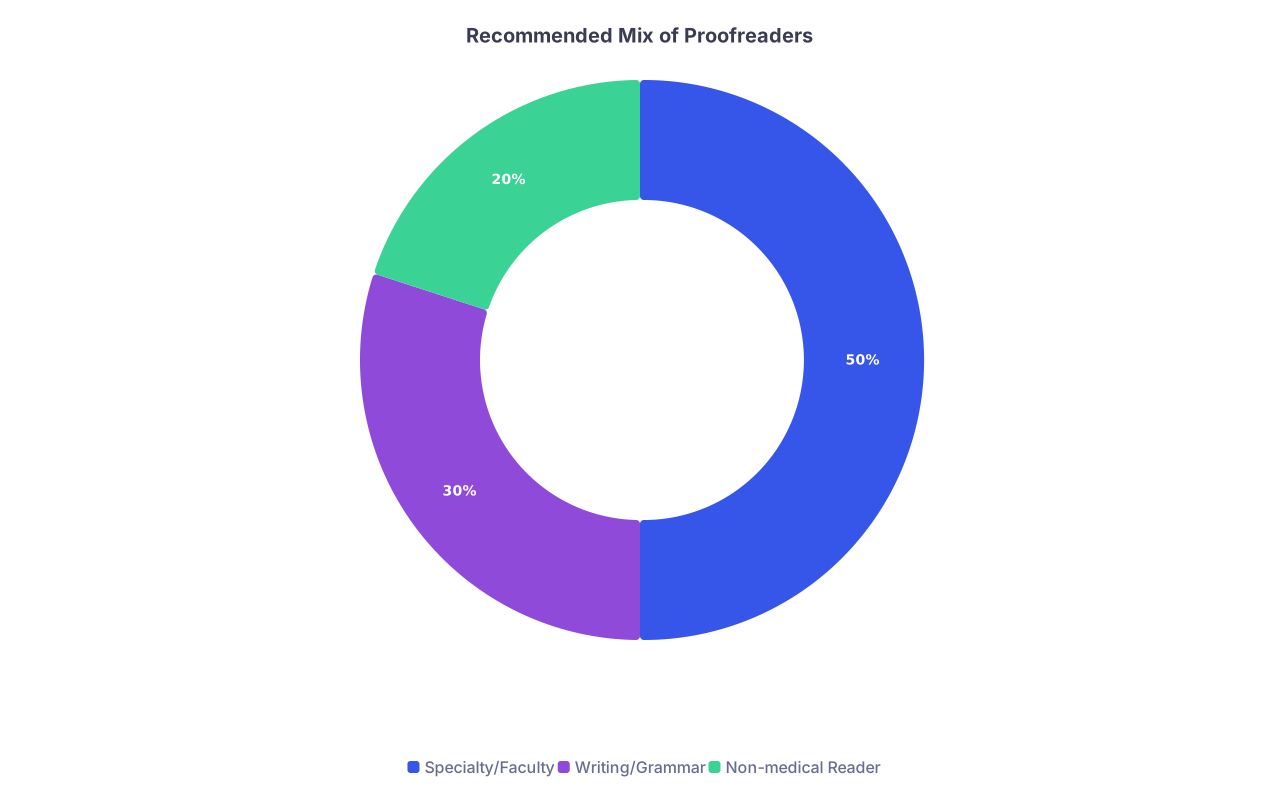
Visual: How to Balance Your Editing Team
| Category | Value |
|---|---|
| Specialty/Faculty | 50 |
| Writing/Grammar | 30 |
| Non-medical Reader | 20 |
Aim for most of your feedback to come from people who understand the residency context, then polish it with one or two strong language-focused readers.
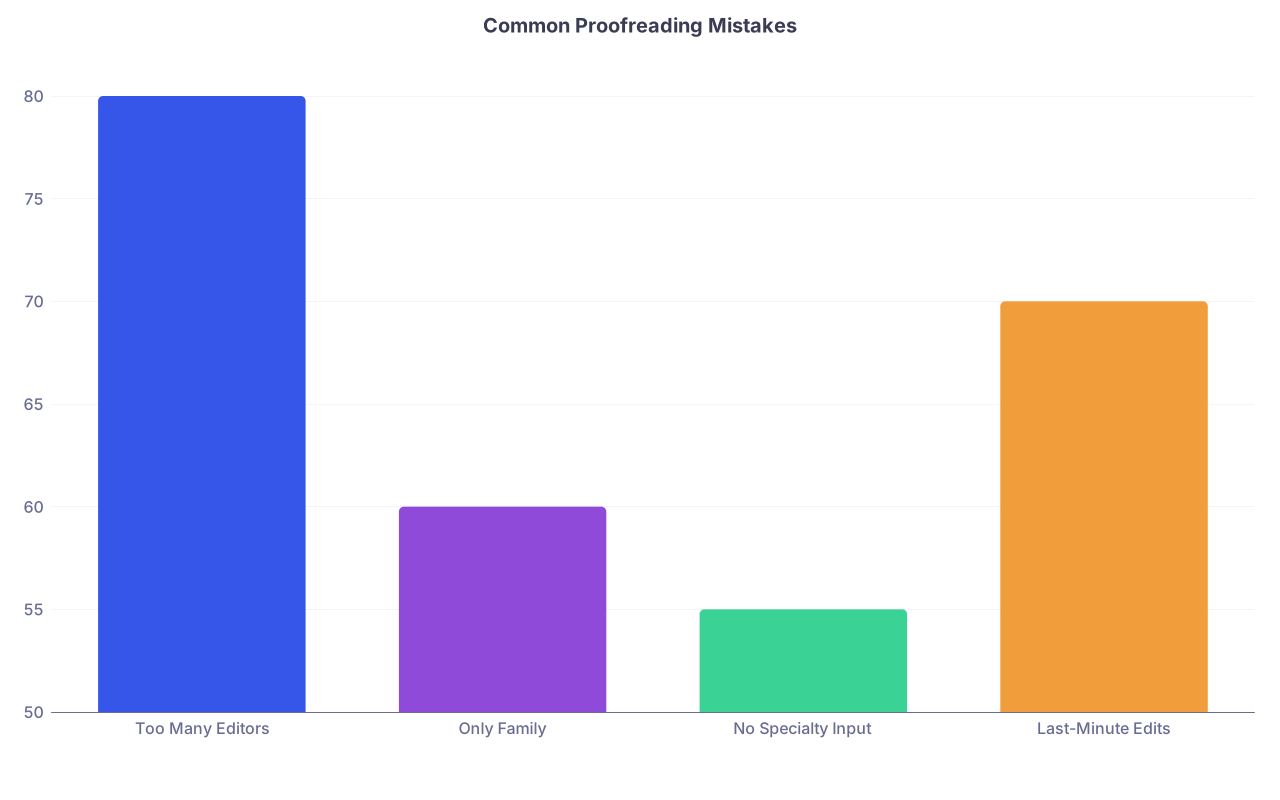
FAQs: Who Should Proofread Your Personal Statement?
| Category | Value |
|---|---|
| Too Many Editors | 80 |
| Only Family | 60 |
| No Specialty Input | 55 |
| Last-Minute Edits | 70 |
1. Should a program director read my personal statement?
Usually no, unless:
- They explicitly offer to
- You’re at a small program where they’re very involved in advising
More commonly, you’ll have:
- A specialty advisor
- Clerkship director
- Residency education faculty
These people are close enough to PD expectations without needing the literal PD.
2. Can I use the same personal statement for all programs in a specialty?
Yes—with minor tweaks.
You should:
- Keep one “core” statement per specialty
- Avoid program names unless you’re creating truly different versions
- Make sure nothing in it contradicts specific program missions or obvious fit issues
Still, every version should go through your core proofreaders. Don’t create 12 variations and then forget to have anyone read the last 6.
3. How many drafts is too many?
If you’re:
- Beyond draft 7–8
- Still changing your main story or opening
- Reacting to every single new opinion…
…you’ve crossed the line into over-editing.
The sweet spot for most people:
- 1–2 rough drafts
- 2–3 revision drafts
- 1–2 polish passes
After that, you’re making lateral changes, not improvements.
4. Is it okay if my partner/parent does heavy editing?
It can be—but only if:
- You still recognize your voice
- You can explain every sentence in your own words
- They’re not introducing content that feels fake or braggy
Test it: read it out loud. If it feels like reading a script someone else wrote, you’ve gone too far.
5. What if two trusted readers totally disagree?
Then you decide whose opinion matters more for that issue.
Example:
- Resident says: “This anecdote is overused in our specialty.”
- Grammar friend says: “This anecdote is beautifully written.”
You listen to the resident on content and specialty cliches.
Another example:
- Faculty says: “This line is fine.”
- Strong writer says: “This line is clunky and hard to follow.”
You listen to the writer on phrasing.
Split their roles. Don’t treat all readers as equal on all questions.
6. How late is too late to get it proofread?
If you’re sending a first draft to someone 48 hours before your submission target, expect superficial feedback only.
Realistic timing:
- 3–4 weeks before ERAS submission: first serious draft to resident/faculty
- 2 weeks before: revised version to second reader
- 1 week before: final version to language-focused editor
You want at least a few days after your last round of edits to sit with it, read it again, and fix anything small that still bugs you.
Here’s your next step today:
Make a list of exactly three people you’ll ask to read your personal statement—label each of them as “content,” “admissions/faculty,” or “language.” If someone doesn’t clearly fit one of those roles, they’re not on this list. Then send your current draft to the content person with a short, specific ask.