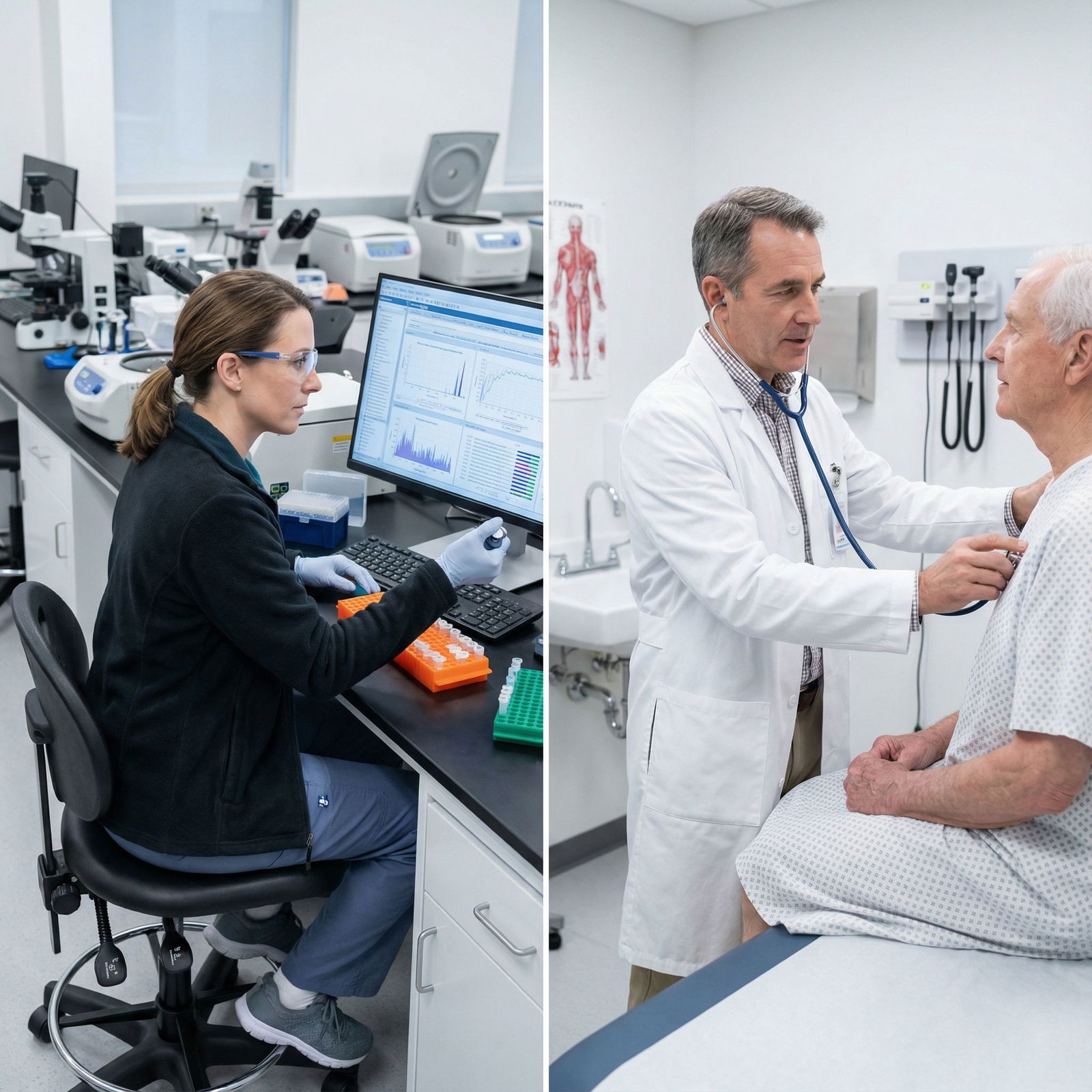
The assumption that “a PhD buys you out of research in medical school” is flat-out wrong.
If you already have a PhD and you’re in (or heading into) medical school, the real question is not “Can I skip research?” It’s:
- How much research do I actually need now?
- What kind?
- And for whom does it really matter?
Let me walk you through this like I would with a former postdoc sitting in my office trying to plan out their next four years.
The Short Answer: No, You Don’t Have To. But Sometimes You’d Be Crazy Not To.
Here’s the blunt breakdown:
- A prior PhD absolutely counts. Most programs and PDs will see you as “research-validated.”
- You do not need heavy research in med school to prove you can do science again. You already did.
- You do still need some medical school–level scholarly activity if:
- You’re targeting competitive academic specialties, or
- You want to be seen as an active, current physician-scientist, not “the person who used to do research.”
So no, you don’t need to grind out another 10+ first-author manuscripts to be taken seriously.
But if you completely ghost research for four years, many academic programs will quietly wonder whether you’re still in the game.
What Actually “Counts” When You Already Have a PhD?
This is where people overthink things. Let’s get concrete.
If you have a PhD, programs mainly care about three questions:
- Are you still engaged in scholarly work, or did you permanently change lanes?
- Can you connect your prior research identity with your future clinical field?
- Will you be productive and credible in an academic residency/fellowship?
You do not need brute-force publication volume to answer these. You need strategic activity tied to your specialty.
Here’s a realistic menu of what “enough” research might look like for a PhD MD-student:
- 1–2 clinically oriented projects in your chosen field (even if small)
- A mix of:
- one original research paper (any author position),
- a review article,
- a case series or case report,
- a methods or perspective piece.
- Some evidence of med school–era involvement:
- presenting a poster at a specialty conference,
- giving a short talk,
- working with a clinical mentor on quality improvement (QI).
That’s plenty for most specialties, given that you’re bringing a PhD portfolio on top.
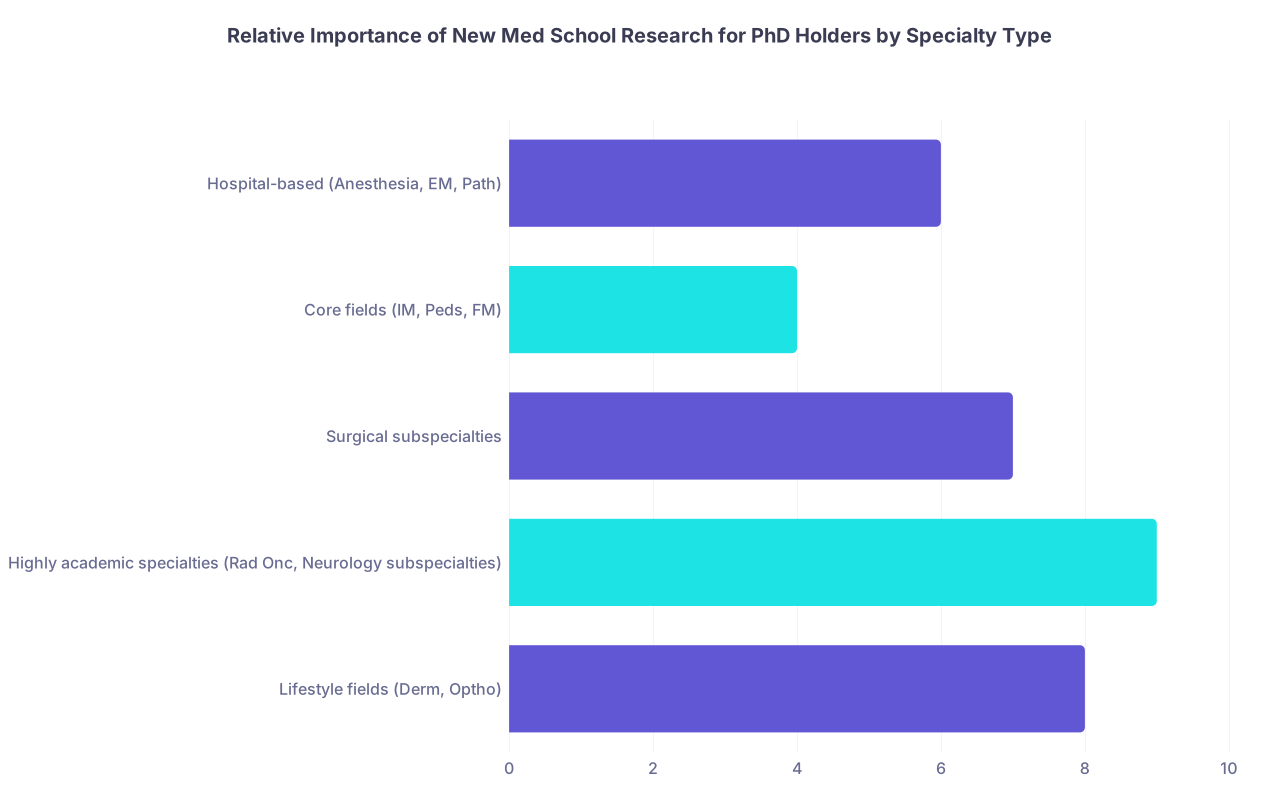
| Category | Value |
|---|---|
| Lifestyle fields (Derm, Optho) | 8 |
| Highly academic specialties (Rad Onc, Neurology subspecialties) | 9 |
| Surgical subspecialties | 7 |
| Core fields (IM, Peds, FM) | 4 |
| Hospital-based (Anesthesia, EM, Path) | 6 |
(Scale 1–10: 10 = absolutely critical, 1 = almost irrelevant)
Derm with a PhD and zero med school derm-related anything? That’s a problem. Internal medicine with a PhD in immunology and no new papers, but a solid explanation? Usually fine.
How Your Target Specialty Changes the Answer
This is where people get burned: they ask, “Do I need research?” in a vacuum, instead of “Do I need research for this field?”
1. Hyper-competitive academic specialties
Examples: Dermatology, radiation oncology, neurosurgery, plastic surgery, some ophthalmology programs.
Reality check:
- These fields live and die by CVs and perceived “upside.”
- A PhD gives you credibility, but if all your work is, say, basic yeast genetics from 8 years ago and you have no derm/rad onc/neuro-related work in med school, top programs may pass.
- They want proof that you:
- Can plug into their existing labs or clinical research groups.
- Understand the current questions in the field.
- Are not just bailing on research now that you’ve gotten the degree.
For these, you should aim for field-aligned work in med school, not necessarily “heavy,” but clearly relevant.
Think:
- Short clinical projects using your analytic skills.
- Translational work that bridges your PhD expertise to the specialty.
- At least one or two specialty conferences with your name on the program.
2. Surgical subspecialties (ortho, ENT, urology, etc.)
These are competition-heavy but slightly more forgiving on the exact flavor of your publications.
Good enough, in most cases:
- Being involved in at least one or two clinical projects within that specialty.
- Having your PhD work clearly documented and discussed in your personal statement and interviews.
- Maybe a mix of:
- One retrospective chart review,
- A QI project,
- A co-authored paper or abstract.
If you completely avoid research after your PhD, you’ll look more like a clinician-only applicant. Not fatal, but it undercuts the “future academic surgeon” narrative.
3. Core fields (internal medicine, pediatrics, family med)
Here, the PhD carries more than enough weight in many programs.
You can get away with:
- Minimal new research, if:
- Your PhD is relevant-ish to medicine or human biology,
- You interview well and frame your trajectory clearly.
- Better yet:
- One project in med school that touches your eventual subspecialty interest (e.g., cardiology, heme/onc, ID).
- Some sign of life: a poster, a small publication, a guideline or curriculum project.
Academic IM programs love PhDs. But they still want to know you’re not done with scholarship.
4. EM, anesthesia, pathology, radiology, psychiatry
Moderate expectation.
- Many programs will be impressed just by the PhD alone.
- The more academic or elite the program, the more they like seeing some med school–era research or QI.
- For fields like pathology or radiology, connecting your prior PhD (e.g., imaging, AI, molecular biology) to the specialty with even a single solid project can be a big plus.
How Much Is “Heavy” vs “Enough”? A Practical Framework
Let’s put numbers to it, because vague advice is useless.
Assume you’re a PhD entering med school with a few prior papers. Here are rough tiers:
| Level | Typical Output During Med School | When It Makes Sense |
|---|---|---|
| Minimal | 0–1 small project, maybe a poster | Community programs, non-academic trajectory |
| Moderate | 1–3 projects, 1–2 publications/abstracts | Most academic IM, peds, EM, anesthesia, psych |
| Heavy | 3–6 projects, 3+ publications/abstracts | Derm, rad onc, neurosurg, top-tier academic programs |
You don’t pick “heavy” by default. You pick it if:
- You’re aiming for a top 10 program in a very competitive field, and
- You actually want your career to be research-heavy anyway.
Everyone else? “Moderate” is usually plenty.
If You Hate Research Now — What Then?
I’ve seen this more times than you’d think: burned-out postdoc who finally escapes into med school and never wants to see another IRB or Western blot.
Here’s the truth: that’s allowed.
But you must control the narrative.
You can plausibly do:
- Little to no new research in med school,
- Focus on clinical excellence, teaching, leadership, advocacy, or QI instead.
Then you need to explain:
- “I did 6–8 years of deeply technical work, published X papers, and realized I’m far more fulfilled in direct patient care and education than traditional bench research. I’ll still collaborate, but my career focus is clinical and educational.”
That’s a coherent story. You’re not “wasting” the PhD; you’re reframing it as:
- Ability to think rigorously
- Comfort with literature and data
- Skill in teaching complex concepts
If you choose this lane, pick specialties and programs that value clinician-educators or clinicians first. Highly research-obsessed departments may not be your best fit. That’s fine.
If You Still Love Research — Use Your PhD Like a Weapon
If research is your thing and you want a true physician-scientist career, then yes, you should absolutely stay active in med school. Not because you must “prove” yourself, but because momentum matters.
Here’s how to do it without drowning:
Leverage your old skill set.
Don’t start from zero. Offer what you’re already good at:- Study design
- Statistics
- Data analysis
- Manuscript writing Faculty are desperate for people who can actually get projects across the finish line.
Find a PI who gets your background.
Not a random person tossing you “chart review #27.” Look for:- Someone with real funding and an active lab or group.
- An environment that bridges your prior expertise and your target specialty.
Pick 1–2 high-yield projects, not 10 random ones.
Goal: publications that strategically position you in your future field, not just padding.Protect your clinical performance.
You cannot afford to be the “brilliant PhD who got mediocre clerkship evals” because they were in the lab instead of learning how to talk to patients.

| Step | Description |
|---|---|
| Step 1 | Start Med School with PhD |
| Step 2 | Do minimal-med school research, focus on clinical |
| Step 3 | Choose heavy research, 3-6 projects |
| Step 4 | Choose moderate research, 1-3 projects |
| Step 5 | Align work with chosen specialty |
| Step 6 | Build narrative as clinician educator |
| Step 7 | Apply as physician scientist with recent output |
| Step 8 | Want research heavy career? |
| Step 9 | Targeting top programs or competitive fields? |
How Programs Actually Read Your Application as a PhD MD
Here’s what happens in the room when they pull up your ERAS file.
They’re asking:
- Is this person actually good at research, or did they just sit in a lab for 7 years?
- Are they still interested in scholarship at all?
- Do they understand our specialty’s questions, or is their work totally orthogonal?
- Are they going to be the person who drives new projects, grants, and publications for us in residency?
If your file shows:
- A solid PhD portfolio with clear contributions,
- At least some specialty-relevant or clinically oriented work in med school, and
- Coherent personal statements and letters that frame you as a future academic in that field,
then you’re fine. You don’t need 20 fresh papers.
Red Flags You Want to Avoid
Here are patterns that make committees nervous, even for PhD holders:
- Complete research silence for 4+ years of med school, with no explanation.
- PhD in a semi-related field (e.g., engineering, physics) with absolutely zero attempt to translate or connect it to your specialty.
- Vague or defensive attitude in interviews:
- “I’ve already done enough research.”
- “I don’t see why I should do more.” Those phrases sink academic impressions fast.
- Tons of tiny, low-quality projects (+ no clear story):
- Random case reports in fields you’re not applying to,
- Unfinished projects with no presentations or submissions.
It’s better to have one polished, relevant project than seven scattered, half-baked ones.
Practical Game Plan: What You Should Actually Do
Let’s boil this down to actions, not theory.
If you’re early in med school (M1–M2)
- Decide your general direction: research-heavy career vs primarily clinical.
- Identify 1–2 specialties you’re most drawn to.
- Talk to faculty who work at the interface of your PhD field and those specialties.
- Commit to no more than 1–2 serious projects initially.
If you’re on clinical rotations (M3–M4)
- Protect your clerkship grades. Do not tank clinical evaluations for extra data points.
- Focus projects on:
- your chosen specialty,
- questions you can finish in 6–12 months.
- Try to generate at least:
- one accepted or submitted paper, or
- 1–3 abstracts/posters/talks with your name on them.
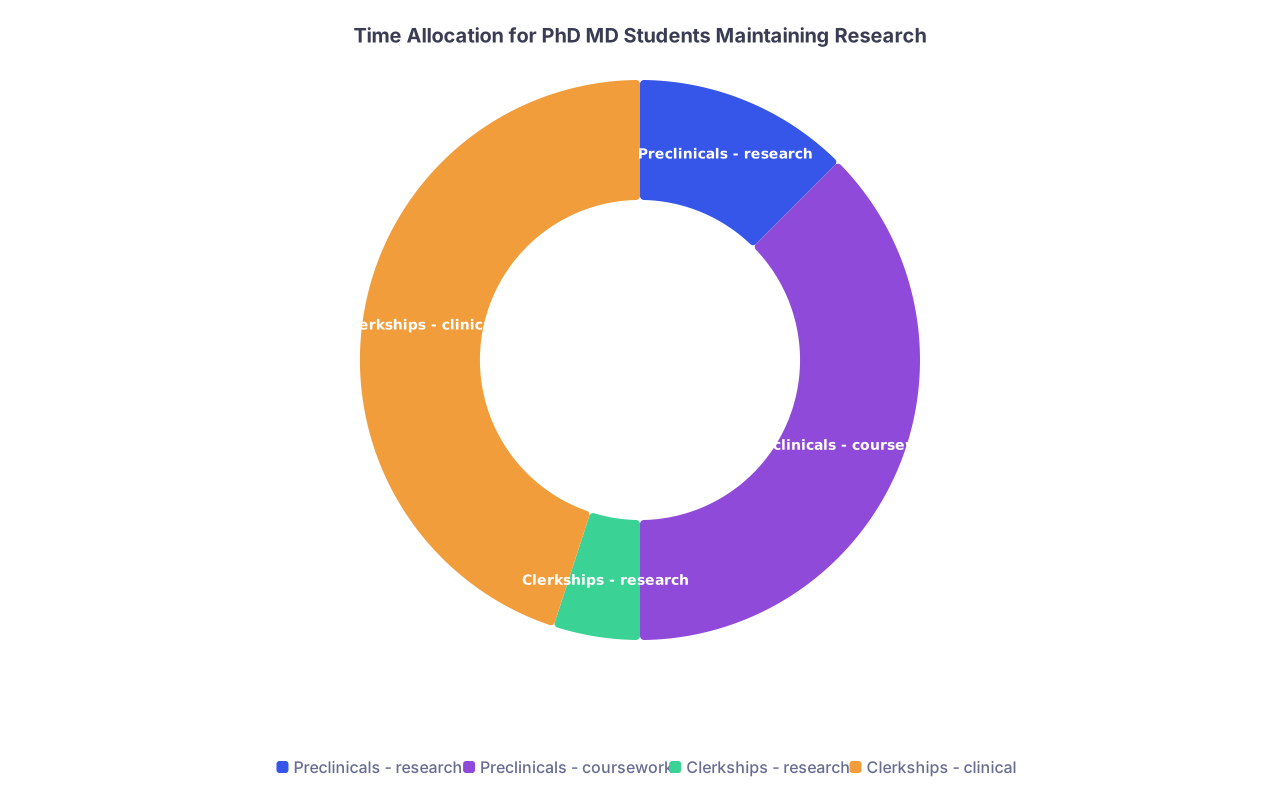
| Category | Value |
|---|---|
| Preclinicals - research | 25 |
| Preclinicals - coursework | 75 |
| Clerkships - research | 10 |
| Clerkships - clinical | 90 |
Numbers are rough percentages of available bandwidth, not hours. If you push research much beyond this during clerkships, your evaluations often pay the price.
FAQ: PhD vs MD Research Expectations in Med School
1. If I already have 5–10 PhD publications, do I really need any med school research?
You can get away with almost none if:
- You’re going into a less research-driven field, and
- You’re aiming for community or mid-tier academic programs.
But I’d still push you to have at least one med school–era project or poster in your chosen specialty. It shows currency. It anchors your PhD background to your future clinical identity.
2. Does the type of PhD matter (basic science vs engineering vs public health)?
Yes. A PhD in immunology applying to rheumatology or heme/onc is an obvious fit. A PhD in pure math applying to psychiatry needs a bit more storytelling, or some translational work to bridge the gap. But all rigorous PhDs prove you can think deeply and handle complex literature. You just need to translate your skills into the clinical space you’re entering.
3. Will programs expect me to keep doing heavy research as a resident if I have a PhD?
Academic programs will assume you’re capable of it. They may also gently pressure you into it. But you still control the dial. You can choose:
- heavy research during residency (protected time, projects, K-style trajectory),
- moderate involvement (occasional papers, QI), or
- a primarily clinical/educator track.
Be honest with yourself before you pick programs that brand themselves as “physician-scientist factories.”
4. Is a dedicated research year in med school pointless if I already have a PhD?
Not pointless, but often unnecessary. A research year makes sense if:
- You’re shifting fields (e.g., PhD in astrophysics → applying to neurosurgery),
- You lack any clinically relevant work and are targeting extremely competitive specialties, or
- You want to build a long-term collaboration with a specific lab or PI.
If your PhD is already strong and aligned, you usually do not need to burn an extra year just to add volume.
5. How do I explain backing away from research after a PhD without looking flaky?
Be direct and mature about it. Example:
“I loved the intellectual side of my PhD but realized I get more satisfaction from direct patient care and teaching than from running a lab full time. The PhD trained me to read and critique evidence, and I’ll still collaborate on targeted projects, but my career focus is as a clinician-educator.”
That’s coherent. Programs don’t need you to worship research. They need to know you’re not running from it out of failure or denial.
Key Takeaways:
You do not need “heavy” research in med school just because you have a PhD. You do need enough, and the right kind, to match your chosen specialty and career goals. Use your PhD strategically—either to power a true physician-scientist path, or as a foundation for being an evidence-savvy clinician or educator, not as a reason to disengage entirely.