

You’ve got your first attending offer in your inbox. The salary looks… decent. Location works. But then you scroll to the call expectations: “Approximately 1:4 night call, 2 weekends per month, additional backup as needed.”
Your stomach drops. You know exactly what “as needed” turns into.
Here’s the real question you’re asking: can you actually negotiate call responsibilities as a new attending—or are you supposed to just eat whatever they hand you and be grateful for the job?
Short answer: yes, you can negotiate call. And you should. But you have to be smart and specific about how you do it.
Let me walk you through how this actually works in the real world, not the fantasy world recruiters like to describe.
Step 1: Get Extremely Clear on What “Call” Actually Means
You can’t negotiate what you don’t understand. Most new grads mess this up by asking, “So what’s the call schedule like?” and then accepting some vague, hand‑wavy answer.
You need details. Written, quantified details.
Here’s what to pin down before you even talk about changing anything:
Call type
Is it:- In-house vs home call?
- Primary vs backup?
- Telephone-only vs needing to come in?
Frequency
- Weeknights per month
- Weekend days/nights per month
- Holidays per year
- “Jeopardy” or backup expectations
Workload on call
- Average pages/texts per night
- Typical number of admissions/consults
- How often you’re physically in the hospital at 2 AM
Compensation
- Is call included in base salary?
- Separate stipend per call shift?
- Extra pay if you come in?
- RVU credit for overnight work?
If they say “It varies,” that’s not an answer. Ask: “What are your current attendings actually doing? Can you show me a typical call schedule for the last three months?”
You’re not being difficult. You’re doing basic due diligence.
Step 2: Know What’s Reasonable for Your Specialty and Market
Before you start asking for changes, you need a sanity check: are they already offering a standard burden, or are they clearly exploiting new hires?
This is where you compare against norms.
| Specialty | Common Weeknight Call | Common Weekend Call |
|---|---|---|
| Hospitalist | 7-on/7-off, nights separate | Depends on model |
| General IM clinic | 1:6–1:10 (home) | 1 weekend every 6–8 |
| Neurology | 1:4–1:6 | 1:4–1:6 |
| General Surgery | 1:3–1:5 | 1:3–1:5 |
| OB/GYN | Laborist models vary | Often 24-hr shifts |
Are these perfect numbers? No. But they’re a reality anchor.
If your general IM outpatient offer is 1:3 call, every third weekend, with hospital coverage and no stipend, that’s not “normal.” That’s them trying to plug holes cheaply.
Also consider geography. Rural groups often have heavier call but higher pay or more autonomy. Academic centers may have less independent call because fellows and residents help, but the pay is lower. You can’t separate call from compensation.
Step 3: Decide What You’re Actually Trying to Change
“Less call” is not a negotiable term. It’s vague and easy for them to spin.
You need to decide what you’re willing to live with and what you want to push on. A few common levers:
- Frequency: from 1:4 to 1:6, or capped nights per month
- Type: home vs in-house, or no backup call in year one
- Compensation: higher call stipend or RVU credit
- Protected time: post‑call clinic cancelation or lighter load
- Holiday distribution: fair rotation with written limits
Pick your top 2–3. You won’t win everything, especially as a new attending. But you can often fix one or two big pain points.
Step 4: How to Actually Talk About Call in Negotiations
This is where people either get what they want or get steamrolled.
You don’t say, “I don’t want to take much call.” That sounds entitled. You frame it around fairness, sustainability, and patient care.
Here’s a structure that works:
Start with facts.
“From our conversations and the sample schedule you sent, it looks like call is currently about 1:4 with one full weekend per month and holiday coverage.”Acknowledge reality.
“I understand call is part of the job and I’m willing to participate in a fair rotation.”State your concern clearly.
“My main concern is sustainability—especially night call frequency and post‑call workload. I want to be sure I’m functioning safely and not burning out in year one.”Make a specific ask.
“I’d like to see if we can structure year one as 1:5 call instead of 1:4, with a clear cap on total nights per month, and a defined post‑call policy.”Offer flexibility somewhere else if you have it.
“I’m flexible on starting salary if needed, as long as the call burden is sustainable.”
This sounds professional, not whiny. You’re signaling: I’ll work hard, but I’m not volunteering to be the dumping ground.
Step 5: Realistic Things You Can Negotiate as a New Attending
You’re not walking in as the new cardiothoracic star with 20 years of reputation. You’re the new person. That matters. But it doesn’t mean you have zero leverage.
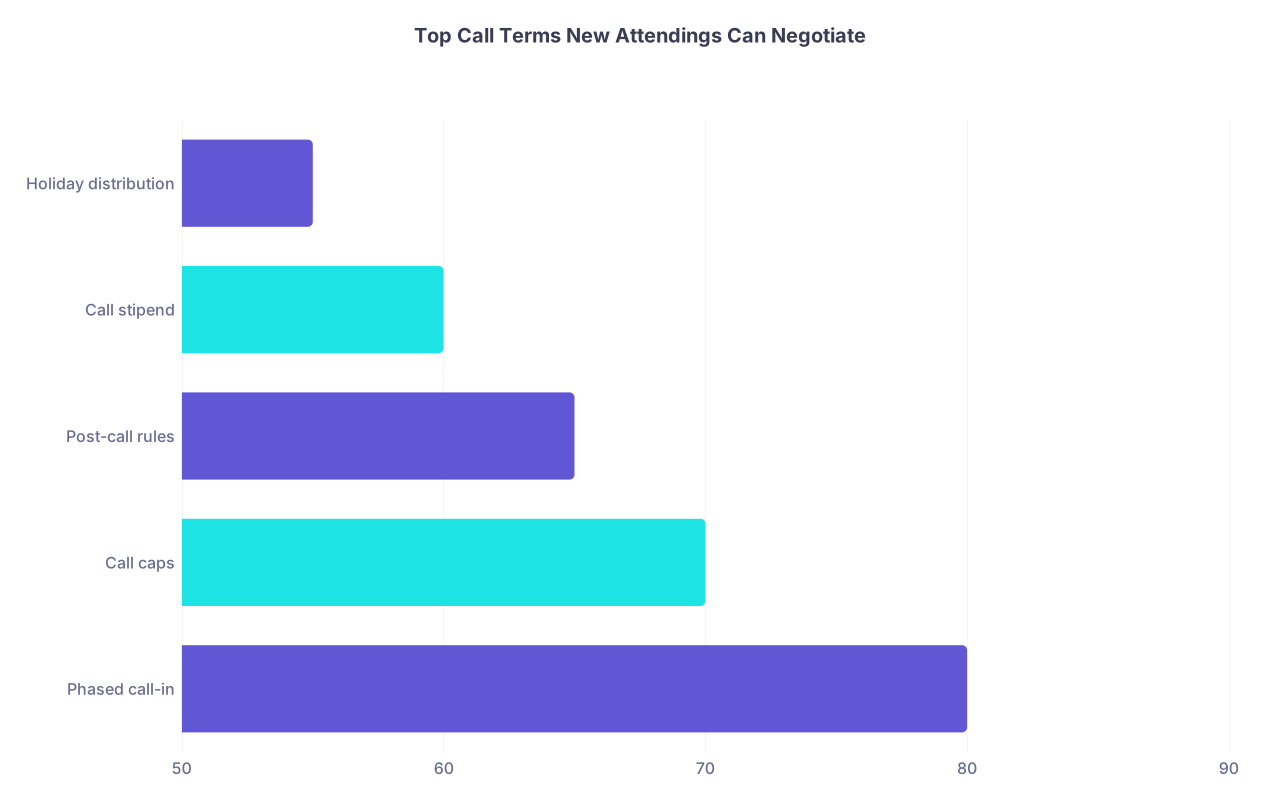
Here’s what I’ve actually seen new attendings successfully negotiate around call:
Phased Call-In
- Example: First 6–12 months at 50–75% of the usual call load, then reevaluate.
- Good for: brand-new grads, especially in heavy-call specialties.
Hard Caps on Call
- Example: “No more than 7 total call nights per month, including backup.”
- This should be explicitly written in the contract or an addendum.
Post‑Call Protection
- No clinic the morning after in-house call.
- Reduced clinic template post‑call (e.g., 50% load).
- Guaranteed day off after certain heavy 24‑hour shifts.
Call Pay and Differentials
- Higher stipend per call night than initially offered.
- Extra pay for holidays.
- RVU credit or bonus structure for overnight work bringing in revenue.
Call Distribution Rules
- Clear, written rules around holiday rotation.
- No disproportionate assignment of weekend call to new hires.
- Explicit statement that call will be evenly distributed among FTEs.
Exemptions or Limits
- No OB call for general FM if that’s not your comfort zone.
- No ICU call if you’re purely outpatient and not trained/credentialed.
You may not get all of this. You probably won’t. But you can often get one or two, especially if they’re already eager to hire you.
Step 6: Where Groups Usually Push Back (And What That Tells You)
The way they react when you bring up call is a big red flag/green flag moment.
Healthy response sounds like:
“We’re tight on call coverage, but let’s look at options. Maybe we scale you up over the first year or tweak holiday distribution.”
Toxic response sounds like:
“Everyone else does it, so you should too. It’s just part of being a team player.”
Translate that: “We’re burned out, and we’d like you to join us in the fire.”
If every attempt to clarify or cap call is met with “trust us,” don’t. People who are being treated fairly don’t have to say “trust us”—they can show you the schedule.
Step 7: Put This Stuff in Writing. No Verbal Promises.
If it’s not in the contract or an attached call policy that the contract references, it does not exist.
“I’m sure we can work that out later” means “we will forget this conversation the second you sign.”
You want something like:
- “Physician will participate in call no more frequently than 1:6 on average, with no more than 7 call nights per month.”
- “Physician will not be required to work scheduled clinic sessions the day immediately following in-house night call.”
- “Call compensation will be $X per weekday call and $Y per weekend/holiday call.”
If the real scheduling rules live in a separate policy document, ask for it and keep a copy. Make sure the contract doesn’t give them unlimited power to change that policy unilaterally without notice.
Step 8: Understand How Call Ties Into Your Pay
You can’t negotiate call in isolation. It’s part of the whole deal: base salary, bonus structure, RVUs, and lifestyle.
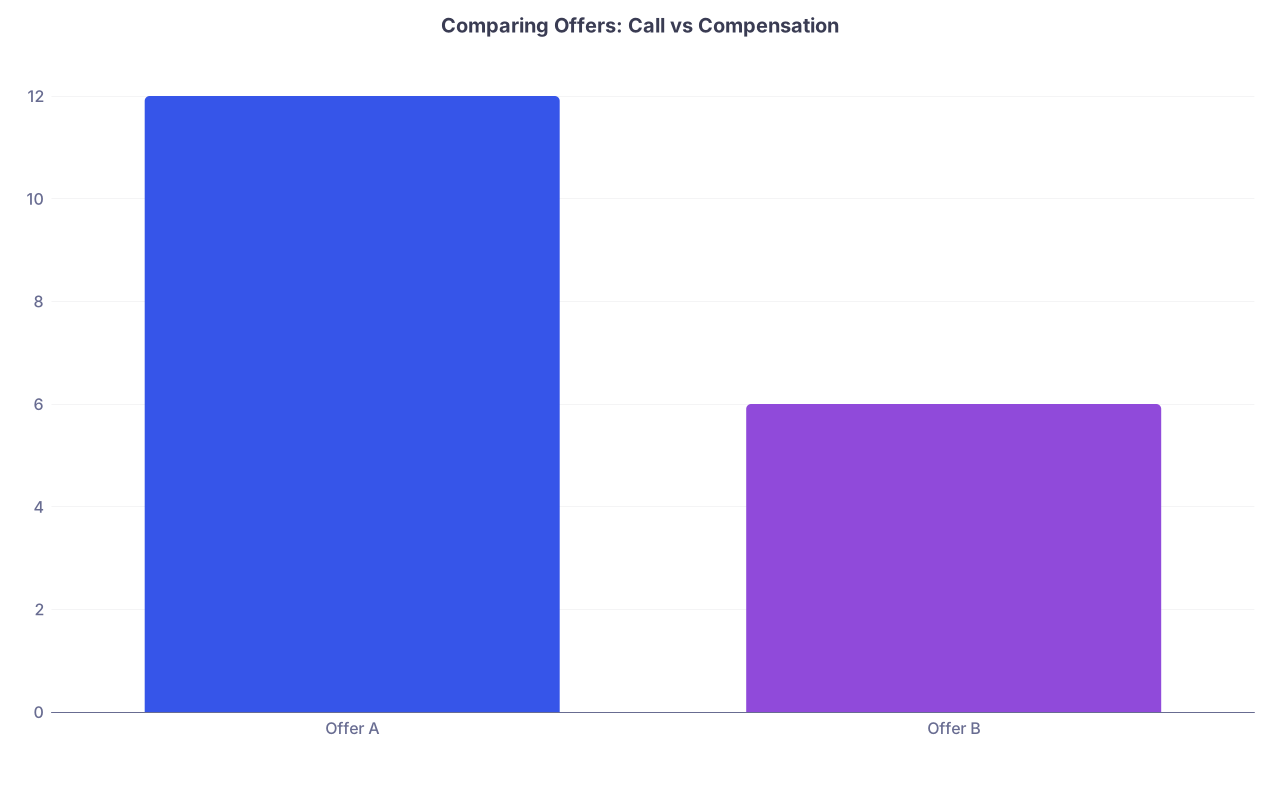
Here’s where people get tricked—they see a higher base at one job and forget that they’re also signing up for brutal call.
| Category | Value |
|---|---|
| Offer A | 12 |
| Offer B | 6 |
Say:
- Offer A: $320k base, 1:4 call, frequent nights, no stipend
- Offer B: $290k base, 1:8 call, light nights, $300/night stipend
Over a year, B often comes out ahead when you factor in stipends—and you’re not a zombie.
Do the math:
- How many call shifts per month?
- What’s the stipend per shift, if any?
- Are you getting RVU credit for admissions/consults done on call?
- Are you losing revenue the next day because you’re post‑call and not in clinic?
You’re allowed to say: “I’ll accept slightly lower base if the call burden is significantly lower and better compensated.” That’s not weakness. That’s protecting your brain and your family.
Step 9: Use Timing and Leverage to Your Advantage
You have the most leverage:
- When they’ve already told you “You’re our top candidate.”
- When the group is clearly short-staffed and losing people.
- When you have more than one offer.
You have the least leverage:
- In hyper-competitive metros where 20 people want your job.
- In big academic systems with fixed pay and call structures.
So you adjust your expectations:
- Small private group in a mid-sized city? You can often get real changes in call structure or pay.
- Giant health system? You’re more likely to get tweaks (phased call, caps) than wholesale changes.
But at every level, you can at least clarify and get explicit written expectations. That alone prevents a ton of future misery.
Step 10: Red Flags That You Should Probably Walk Away
I’ve seen people ignore these and regret it within six months.
Watch out for:
- Nobody will show you an actual call schedule.
- Every attending you meet “jokes” about how awful call is. (They’re not really joking.)
- New hires are scheduled for more weekends/holidays “because you’re younger.”
- The contract gives the employer total discretion to change call “as needed” with no limits.
- They get defensive or offended when you ask basic questions about call.
If call is miserable, it usually means everything else is stressed too—staffing, turnover, admin support, culture. Call is just the most obvious symptom.
How to Script This in Real Life
If you want actual words to use, steal these.
On a call with the recruiter or chair:
“I’m excited about the position overall. Before we finalize anything, I want to make sure we’re aligned on call expectations. Could you send me a sample of the last couple months of the call schedule and confirm how often attendings are actually coming in overnight?”
Then, once you’ve seen it:
“Thanks for sending that. Looking at the schedule, it seems the current burden is about 1:4 with frequent weekend coverage. For my first year out, I’d like to see if we can structure this as 1:6 with a maximum of 6–7 nights per month and a clear post‑call policy. I’m very willing to be flexible in other areas to make this sustainable long term.”
And when the contract arrives:
“I don’t see the call limits we discussed reflected in the contract. To feel comfortable signing, I’d need the call frequency cap and the post‑call clinic expectations included explicitly, so we’re all on the same page.”
If they won’t put it in writing, treat that like a loud alarm.

| Step | Description |
|---|---|
| Step 1 | Get Call Details |
| Step 2 | Compare to Norms |
| Step 3 | Clarify and Confirm in Writing |
| Step 4 | Decide Priorities |
| Step 5 | Make Specific Asks |
| Step 6 | Negotiate Terms in Contract |
| Step 7 | Consider Walking or Accepting as Is |
| Step 8 | Reasonable? |
| Step 9 | Employer Flexible? |

(See also: Should You Hire a Physician Contract Attorney? Cost, Timing, and ROI for guidance.)
Where a Physician Contract Attorney Actually Helps
You do not need a lawyer to tell you “this is a lot of call.” You already know.
Where a good physician contract attorney is actually useful:
- Spotting vague call language that can be abused
- Adding specific caps, definitions, and compensation terms
- Making sure the group can’t change call expectations unilaterally
- Framing your asks in contract language that doesn’t sound amateur
If the call burden is heavy but the pay is strong, a good attorney can sometimes help you build in a “call differential” or bonus structure that makes it less painful.
Is it mandatory? No. Is it almost always worth it on a multi-hundred-thousand-dollar job with heavy call? Yes.
| Category | Value |
|---|---|
| Phased call-in | 80 |
| Call caps | 70 |
| Post-call rules | 65 |
| Call stipend | 60 |
| Holiday distribution | 55 |

Bottom Line: Yes, You Can Negotiate Call. Here’s What to Remember.
- You absolutely can and should negotiate call responsibilities—but you have to be specific: type, frequency, compensation, and post‑call expectations, all in writing.
- Focus on realistic, high-yield changes: phased call-in, caps on nights/holidays, post‑call protection, and fair stipends or differentials tied directly to the burden.
- How they respond to your call questions tells you almost everything about their culture; if they dodge, minimize, or refuse to write it down, you’re not “losing a great job” by walking—you’re dodging a long, exhausting mistake.


