

If you need a visa, the “standard contract” is not good enough.
If your ability to stay in the country depends on this job, you do not sign anything that is vague, verbal-only, or “we always take care of that.” You get visa details in writing or you walk.
This is the part nobody explains in residency orientation. HR tells you “we sponsor,” the recruiter says “we’ve had lots of IMGs,” and then your contract says… nothing specific. Six months later, premium processing was “not approved by finance,” your I-140 is delayed because “legal is backed up,” and you’re stuck in immigration limbo with an expiring H‑1B.
Let’s prevent that.
This is the checklist article I wish every IMG had in hand before they even requested a draft contract.
1. First Rule: Visa Terms Are Not “Details” – They’re Deal-Breakers
If your immigration status depends on this job, here’s the reality:
- The visa section is as important as your salary.
- Verbal assurances are worthless in an audit or a crisis.
- “We’ve always done it this way” is not a contract term.
You’re not “being difficult” by insisting on written language. You’re being rational.
You need to think in two parallel tracks:
- Can I practice the way I want here? (clinical scope, pay, call, location)
- Will this job reliably support my immigration path? (visa type, green card, timing)
If #2 is shaky, the job is not safe—no matter how good #1 looks.
2. Non‑Negotiable: Get Your Visa Type and Sponsorship in Writing
There are three main practical scenarios for post‑residency IMGs:
- J‑1 waiver job (Conrad 30, VA, HHS, etc.)
- Direct H‑1B sponsorship (no J‑1)
- O‑1 (less common, but growing)
Your contract should not just say “employer will sponsor visa.” It should specify what, who pays, and when.
| Clause Area | What It Should Answer Clearly |
|---|---|
| Visa Type | J-1 waiver, H-1B, O-1, or combo path |
| Fees & Costs | Who pays government and attorney fees |
| Timing | When filings will be submitted |
| Green Card | If/when I-140 and I-485 will be filed |
| If Denied/Delayed | What happens if visa is not approved |
If the contract is completely silent on visa sponsorship, that’s either:
- Incompetence, or
- Intentional flexibility… for them, not you.
Both are red flags.
3. If You’re a J‑1: Waivers, Service Obligations, and Traps
J‑1 waivers are their own beast. I’ve seen too many people burned because they did not get the waiver language nailed down.
You must lock in:
- Who handles the waiver application (attorney, cost, timeline)
- The type of waiver (Conrad 30 state, VA, ARC, HHS, etc.)
- The service obligation details (3 years full-time, location, hours)
- What happens if the waiver fails or is delayed
Clauses to demand for J‑1 waiver jobs
You want language that looks something like this (conceptually, not verbatim):
- Employer will retain and pay for immigration counsel to file the waiver.
- Employer will submit all necessary paperwork for the waiver by [date] or within X days of contract signing.
- Employer will sponsor H‑1B upon waiver recommendation/approval and will file with premium processing (ideally explicitly).
- The required 3-year service will be fulfilled only at the specified site(s) (list them clearly), not at random satellite clinics added later.
If they say “we don’t put that level of detail in contracts,” what they mean is “we want flexibility to prioritize our convenience later.” That might be fine if you’re a citizen. It’s not fine if you’re a J‑1.
4. H‑1B: Fees, Premium Processing, and Worksite Locations
H‑1B is more regulated than most HR people realize, and it affects your life directly.
You must cover in writing:
Who pays what fees
By law:- Employer must pay the ACWIA and fraud prevention fees.
- They cannot pass those to you, even disguised as lower salary.
- Attorney fees are negotiable, but if they push them onto you, that’s a sign they don’t know (or don’t care) about compliance.
Premium processing
You don’t “hope” they’ll use premium. You write it in:- “Employer will file all H‑1B petitions and extensions using premium processing at employer’s expense.”
All worksites must be listed
If they plan for you to work at multiple clinics / hospitals, those sites need to be covered in the LCA and petition. The contract should reflect your actual work locations so that immigration filings can mirror reality.Contingency if H‑1B is denied or delayed
Does the contract automatically terminate? Do they owe any compensation? Do they commit to re‑filing? Put it on paper.
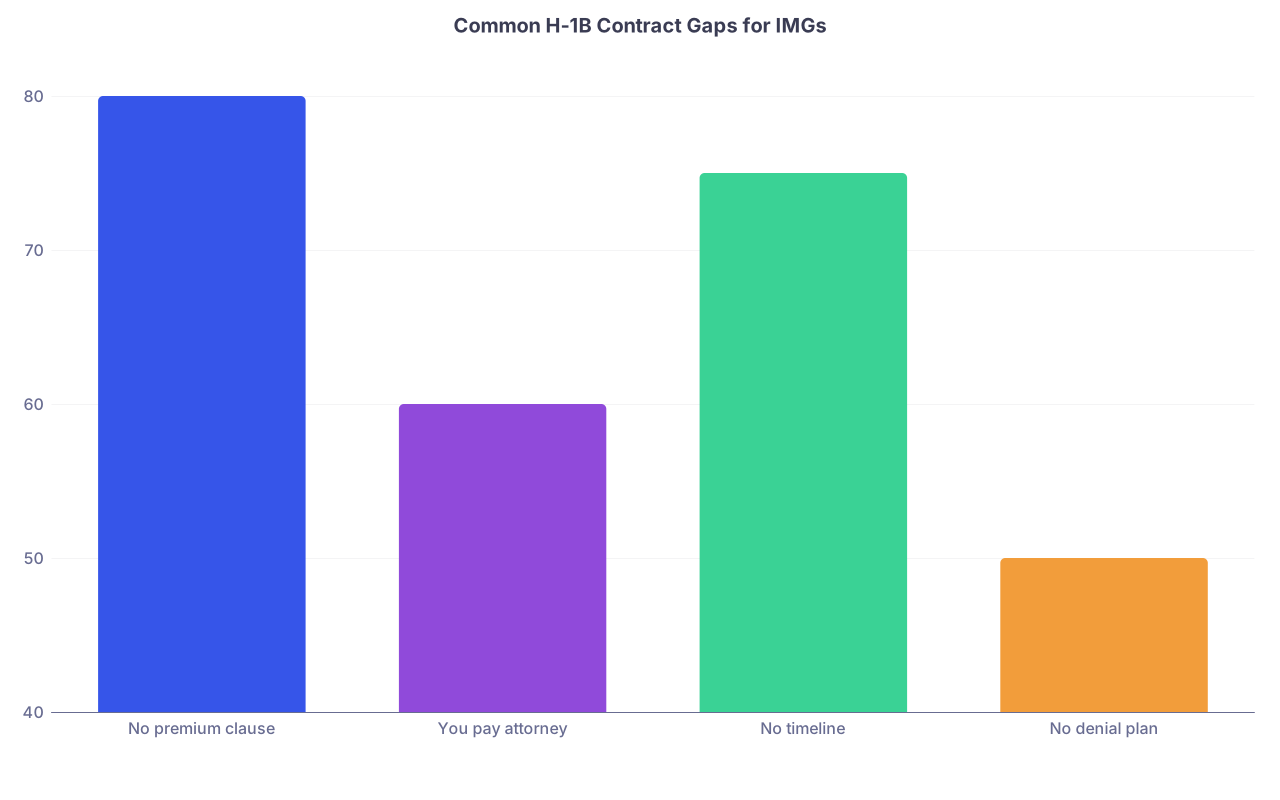
| Category | Value |
|---|---|
| No premium clause | 80 |
| You pay attorney | 60 |
| No timeline | 75 |
| No denial plan | 50 |
(Those percentages are my rough, experience-based sense of how often I see these mistakes. Too often.)
5. Green Card: Do Not Leave It as a Vague Promise
“I think we usually start green cards after a couple of years.”
“I’m sure we can file once you’re settled.”
“I don’t see a problem with that.”
None of that means anything.
You want three specifics in your contract:
Start date for green card process
Tie it to:- A calendar date (e.g., “within 6 months of start”), or
- A service period (e.g., “after 12 months of continuous full‑time employment”).
Responsibility and costs
- Who pays attorney fees for PERM, I‑140, I‑485?
- Who pays government filing fees?
- Are dependents covered?
Job description stability
Your PERM (for EB‑2/EB‑3) is based on a specific job description and prevailing wage. If they massively change your role or locations later, it can cause issues. You want some commitment that the sponsored role will remain consistent enough to support the green card process.
For J‑1 waiver folks:
You often can and should get your green card started during your 3‑year service. Otherwise you lose precious years.
A contract that says nothing about green card sponsorship but happily talks for three pages about productivity RVUs is telling you where you rank in their priorities.
6. Money: Who Pays for What (And How Much)?
Here’s where many IMGs get quietly squeezed.
You need explicit language on:
- Visa filing fees (H‑1B, O‑1, J‑1 waiver, etc.)
- Green card fees (PERM, I‑140, I‑485, dependents)
- Attorney fees
- Premium processing fees
The cleanest structure for a truly IMG‑friendly employer:
- Employer pays all employer and government fees for:
- J‑1 waiver
- All H‑1B/O‑1 filings and extensions
- PERM, I‑140
- Employer pays reasonable attorney fees for your family too (for H‑4/derivatives, I‑485s)
What I actually see a lot:
- Employer pays only bare minimum H‑1B costs.
- No mention of green card.
- You pay dependents’ fees.
- Contract is silent on dollar caps, then later they impose “budget limits.”
Push for a cap only if you must, but be explicit:
“Employer will cover up to $X in immigration-related attorney and filing fees per year.”
Not ideal, but at least predictable.
7. Contract Duration, Termination, and Your Status
This is the ugly part: what happens if they fire you, or you need to leave?
If you’re on H‑1B or J‑1 waiver, you can’t treat the contract like a disposable CME brochure. Termination terms can wreck your immigration status.
You must clarify:
Without cause termination
- Does the employer have it? (Almost always yes.)
- Do you have it? (Often yes, with notice.)
- How much notice? 60–180 days is typical.
You want enough notice that you can realistically secure another sponsor.
Cause termination
- What counts as “cause”?
- Is there a cure period for some issues (billing documentation, etc.)?
- Immediate termination with vague “unprofessional conduct” language is dangerous if it’s not clearly defined.
Obligation on visa support if terminated
For H‑1B:- By law, employer must pay “reasonable cost” of return transportation to your home country for early termination.
Get that stated. - Clarify whether they will withdraw your petition immediately upon termination (usually yes, but timing matters).
- By law, employer must pay “reasonable cost” of return transportation to your home country for early termination.
For J‑1 waiver:
Premature termination can torpedo your 3‑year requirement and your future immigration path. You want a clause that:
- Limits their ability to reassign you far away from the waiver site.
- Clarifies if they can move you to a non‑designated site and still count it toward the waiver (usually they can’t).
8. Non‑Competes + Visas: A Nasty Combination
Non‑compete clauses are bad enough for US grads. For you, they can be lethal.
Scenario I’ve seen:
You’re on H‑1B at a hospital in a semi‑rural area. Non‑compete says you can’t practice within 20–30 miles for 1–2 years after leaving. You get an offer from another group 10 miles away, willing to transfer your H‑1B and sponsor your green card. Too bad. You either violate the non‑compete and get sued, or you stay in a job that’s suffocating you.
Your leverage:
You say, calmly:
“I’m on an employment-based visa. If this job doesn’t work out and I cannot work for anyone else in this region, I may be forced to leave the country. That’s not acceptable risk for me. I need either:
- No non‑compete, or
- A very narrow non‑compete (short duration, small radius, specific sites).”
Push for:
- 5–10 mile radius tops in non‑urban areas, smaller in cities.
- 6–12 months max duration.
- Limited to specific competing entities (not “any medical practice”).
If they refuse any adjustment “for policy reasons,” remember: their “policy” is not more important than your legal right to remain in the country.
9. J‑1 Waiver Specific: Service Site, Hours, and “Bait & Switch”
Classic move: you sign for Clinic A in a shortage area for your waiver. After 6 months, they start moving you 2 days a week to Clinic B in a wealthy suburb that’s not designated. Another year in, most of your time is outside the waiver site. You assume you’re okay. You are not.
Your waiver service must be:
- Full-time (typically 40 hours/week)
- In a designated shortage area or serving designated populations
- For the full required period
Your contract must:
- Identify the primary waiver site(s) explicitly.
- Specify your minimum clinical hours at those sites.
- Address whether additional locations are temporary or permanent.
Refuse language that says “such other locations as employer may designate from time to time” without any guardrails.
Add something like (conceptually):
“Physician’s J‑1 waiver service obligation will be satisfied through full-time employment primarily at [Site A], located in a designated shortage area. Any permanent reassignment to a non-shortage site requires physician’s written consent.”
10. Timeline Clauses: Dates, Deadlines, and Accountability
Immigration delay is one of the main ways a job that looked fine on paper becomes a crisis.
You want specific timelines:
- Waiver filing: “Employer will submit all J‑1 waiver application materials within X days of contract execution and no later than [date].”
- H‑1B petition: “Employer will file H‑1B petition with premium processing within X days of waiver recommendation / availability.”
- Green card: “Employer will initiate PERM process within X months of employee’s start date.”
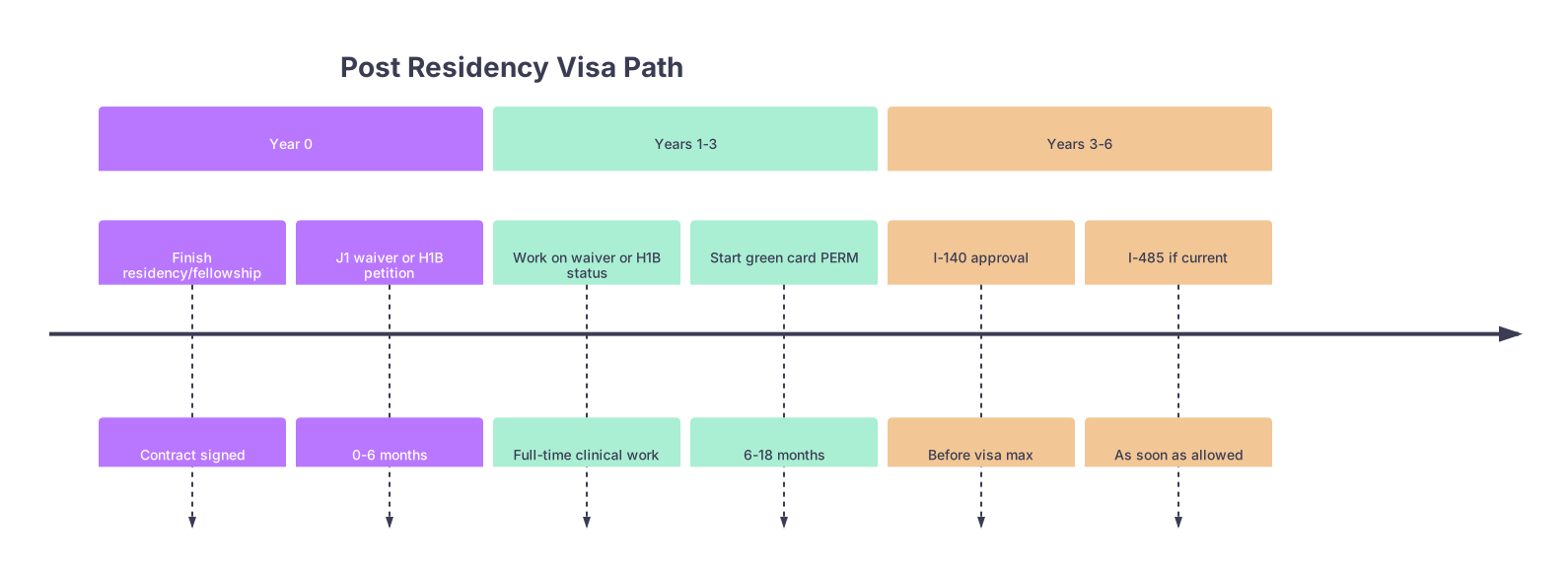
| Period | Event |
|---|---|
| Year 0 - Finish residency/fellowship | Contract signed |
| Year 0 - J1 waiver or H1B petition | 0-6 months |
| Years 1-3 - Work on waiver or H1B status | Full-time clinical work |
| Years 1-3 - Start green card PERM | 6-18 months |
| Years 3-6 - I-140 approval | Before visa max |
| Years 3-6 - I-485 if current | As soon as allowed |
If they refuse all timelines “because immigration is unpredictable,” that’s partially true, but also a dodge. You’re not asking them to guarantee USCIS; you’re asking them to guarantee their own behavior.
11. What to Do Before You Sign Anything
Let’s be concrete. You’re an IMG finishing residency/fellowship. You’ve got a job offer. Contract hits your inbox. What do you do?
Read the visa and immigration parts first.
If there aren’t any, that’s your first conversation.Email or call the recruiter/HR and ask direct questions:
- What visa type will you sponsor me for?
- Do you sponsor green cards? When do you typically start?
- Who pays for attorney and filing fees?
- Do you use premium processing for H‑1B?
- How many IMGs are you currently sponsoring?
Ask for a revised contract that reflects their answers.
Do not accept “we’ll put that in an email.” Email is better than verbal, but not better than contract.Get your own attorney.
Two kinds:- An immigration attorney who understands physician visas.
- A healthcare contract attorney who understands call coverage, non‑competes, productivity models.
Plenty of people try to cheap out here. It’s a multi‑year, career‑defining decision. Don’t.
Compare multiple offers not just by salary, but by visa security.
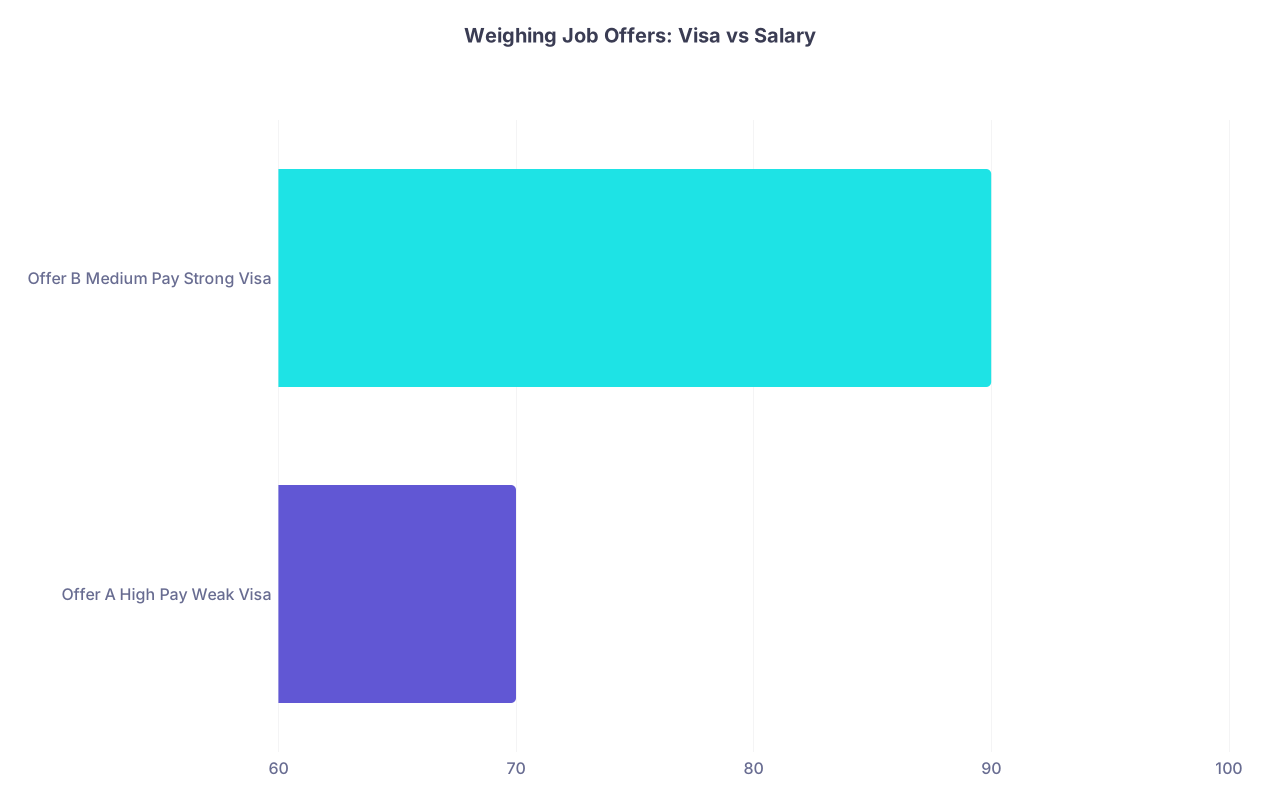
| Category | Value |
|---|---|
| Offer A High Pay Weak Visa | 70 |
| Offer B Medium Pay Strong Visa | 90 |
If you take the high‑pay/weak‑visa job and end up out of status or stuck, that extra 30–50k was a very expensive mistake.
12. Quick Red Flags: When You Should Seriously Consider Walking Away
These are not subtle:
- “We don’t put visa stuff in contracts; it’s standard.”
- “We don’t guarantee green card timing.” (Fine. But do they at least commit to start?)
- “You’ll have to cover your own attorney and premium processing; that’s just our policy.”
- “Non‑compete is standard and non‑negotiable.” (And it’s large radius, long duration.)
- “We haven’t sponsored many IMGs, but legal will figure it out.”
If you’re desperate, you might still sign. But go in knowing exactly how much risk you’re taking. And keep looking.
13. Example Scenario: J‑1 Neurologist vs. Two Offers
You’re a J‑1 neurology fellow. Two offers:
Offer 1 – Big Hospital System
- Salary: $340k
- Contract: One line – “Employer will sponsor necessary work authorization.”
- Non‑compete: 30‑mile radius, 2 years.
- No mention of green card.
- HR: “We’ll start the waiver once you sign; our legal team is very busy though.”
Offer 2 – Smaller Community Group
- Salary: $310k
- Contract:
- “Employer will sponsor J‑1 waiver through Conrad 30 program at employer expense, including attorney fees.”
- “Employer will file H‑1B with premium processing within 30 days of waiver approval.”
- “Employer will initiate PERM process no later than 12 months after start date.”
- Non‑compete: 10 miles, 12 months, limited to neurology practice.
Anyone obsessed with base salary picks Offer 1.
Anyone who understands visas picks Offer 2 without blinking.
Because Offer 1 could easily leave you without a timely waiver, stuck without a green card plan, and trapped with a huge non‑compete radius.
FAQ (Exactly 3 Questions)
1. Is it realistic to expect employers to pay for all my visa and green card costs?
Often, yes—especially hospitals, larger health systems, and IMG‑heavy groups. Many already do this as a standard benefit. For smaller private practices, you may need to negotiate, but you should still push hard for them to cover at least H‑1B and J‑1 waiver costs. Think of cost sharing (you cover dependents’ I‑485, for example) only after they’ve clearly committed to major employer-side expenses. If they refuse all financial responsibility, ask yourself why they want the benefit of your work without investing in your ability to stay.
2. What if the employer refuses to put green card timing in writing but “promises” to help later?
Then you assume there is no plan. Their reluctance usually means one of three things: they do not have internal approval to commit, they are disorganized, or they use green card sponsorship as a discretionary reward. None of those are good for you. You can compromise by asking for softer but still concrete language like “Employer agrees to make good faith efforts to begin the PERM process within X months of start date.” If they will not even do that, downgrade the offer significantly in your mind.
3. Can I fix a bad contract after I start, once they “know me” and like me?
Sometimes, but you’re gambling. Once you start, your leverage drops, especially if you’re on a visa tied to that employer. They know you cannot easily move. Improvements do happen—especially before renewals—but you should never count on renegotiation to solve structural visa problems. If the initial contract does not protect your immigration path, assume that is the true deal, and sign only if you can live with it as-is.
You’re not just choosing a job. You’re choosing the legal foundation of your life in this country for the next 3–10 years.
Get the visa clauses right, in writing, now. Once that’s locked, then you can worry about RVUs, call schedules, and CME funds. And when the time comes to leverage that first job into something better—with your green card in motion and options wide open—that’s where the next phase of negotiation starts. But that is a situation for another day.


