

It is your first real attending job offer. You just got an email from HR: “Attached is our standard physician employment agreement. All our doctors sign this one.”
You scroll.
30+ pages of dense legal language. Non-compete. Call schedule “as reasonably required by Employer.” RVU targets without numbers. Termination “with or without cause.” HR says, “We do not usually make changes.”
Here is the truth: “Standard contract” is code for “Our lawyers optimized this for the hospital, not for you.”
Your job is not to argue about philosophy. Your job is to turn that generic template into a customized contract that:
- Protects your license and reputation
- Limits how badly you can be exploited
- Gives you realistic exit options if things go sideways
I am going to walk you through exactly how to do that.
Step 1: Stop Treating “Standard” Like “Non-Negotiable”
Before you start marking up anything, you need a mindset adjustment.
“Standard” means:
- This is what we start with.
- This is what works fine for us.
- This is what many people signed because they did not push back.
It does not mean:
- This is the only version allowed.
- Lawyers will explode if we change a sentence.
- You will lose the offer if you ask questions.
I have seen this pattern over and over:
- Candidate 1 signs the “standard” contract as is. Years later they are stuck in a 50-mile non-compete and cannot work where their kids go to school.
- Candidate 2, same offer, same group, sends back targeted edits. They end up with a 10-mile non-compete, clearer call limits, and better termination language. Same employer, same template. Different result.
Here is the frame you use with them (and with yourself):
“I appreciate you sharing the standard contract. I do not sign anything that is not customized to the actual position and risk profile. I will send back a few clarifying edits so we are both protected.”
You are not being difficult. You are doing risk management.
Step 2: Triage the Contract – What Actually Matters
Do not edit this like a law school exam. You are not trying to make it pretty. You are trying to control the risk.
Go through the contract once, fast, with a highlighter and three symbols in the margin:
- “X” – Deal-breaker / red flag
If they refuse to change these, seriously consider walking. - “?” – Needs clarification / numbers / examples
These are vague or one-sided. You want specifics. - “★” – Negotiation opportunity
Solid leverage point for better compensation or lifestyle.
Focus on the following ten sections. These are the levers that actually change your life.

1. Term and Termination
Look for:
- Initial term (e.g., 1, 2, 3 years)
- Automatic renewal language
- Termination “with cause” and “without cause”
- Notice period (90 days, 180 days, etc.)
You want:
- A clear ability for you to terminate without cause with reasonable notice.
- Symmetry: if they get 90 days, you get 90 days, not 180 vs 30.
- Narrow and specific “for cause” language.
Bad clause (vague and dangerous):
“Employer may terminate Physician immediately for conduct Employer deems detrimental to its interests.”
Fix:
“Employer may terminate Physician for cause immediately only for:
(a) loss, suspension, or restriction of medical license or DEA registration required for performance of duties;
(b) exclusion from Medicare or Medicaid;
(c) conviction of a felony directly related to the practice of medicine;
(d) documented, material breach of this Agreement by Physician that is not cured within 30 days of written notice.”
And add:
“Physician may terminate this Agreement without cause upon 90 days prior written notice to Employer.”
2. Duties and Schedule – Make the Invisible Visible
The worst contracts say some version of:
“Physician shall provide services as reasonably required by Employer, including clinic, hospital, call, and administrative duties.”
That sentence is how you end up covering 1:3 call, two hospitals, and “occasional outreach clinics” 90 minutes away.
You customize this section hard.
Add specifics:
- Clinical locations (by name)
- Clinic sessions per week
- Expected patient volume range
- Call details (type, frequency, in-house vs home)
- Administrative / non-clinical time in hours or sessions
Concrete example:
Replace:
“Physician will take call as assigned.”
With:
“Physician will take general call no more frequently than 1:4 on average over a calendar quarter, home call, covering Hospital A only, with in-house presence required only for emergent procedures.”
And:
“Physician will have at least one half-day per week of non-clinical time for charting and administrative tasks, scheduled during regular business hours.”
If they say, “we do not put that in contracts,” response is:
“Then we are leaving too much open to future disagreement. I need the general parameters in writing so we are aligned.”
Reasonable employers will negotiate this.
Step 3: Non-Compete and Restrictions – Shrink the Cage
Non-competes are where a “standard” contract quietly ruins your future.
You care about 4 things:
- Distance (miles)
- Time (months / years)
- Scope (what kind of work is restricted)
- Trigger (what kind of termination activates it)
| Element | Red Flag Example | Reasonable Target |
|---|---|---|
| Distance | 50 miles from any clinic | 5–10 miles from primary site |
| Time | 2–3 years | 6–12 months |
| Scope | Any medical services | Specialty-specific only |
| Trigger | Any termination, including layoff | Only if you resign without cause |
You want language like:
“During the term and for 12 months following termination, Physician shall not provide [specialty] clinical services within a 10-mile radius of Hospital A, provided that this restriction shall not apply if Employer terminates Physician without cause or Physician terminates for cause due to Employer breach.”
Key customizations to push:
Tie it to a specific location, not “any facility of Employer or its affiliates.”
You are not agreeing to be locked out of half the state.Carve out situations where non-compete does not apply:
- They terminate you without cause
- They materially breach the agreement
- They close your clinic or significantly change your duties
Limit it to your specialty:
- If you are an interventional cardiologist, the contract should not bar you from any “healthcare related work.”
If they absolutely will not budge and the non-compete is broad, that is not a “standard” inconvenience. That is a major strategic risk. Treat it that way.
Step 4: Compensation – Turn Fuzzy Promises into Math
Comp sections are where optimism goes to die. Everyone talks about “typical RVU production” and “most physicians hit bonus,” but the written terms decide if that money ever shows up.
At minimum, your customizations must address:
- How your base salary is calculated and when it can change
- The exact wRVU target for bonus and the rate per RVU
- What counts as “productive work” for RVUs and what does not
- How quickly and transparently they report your data
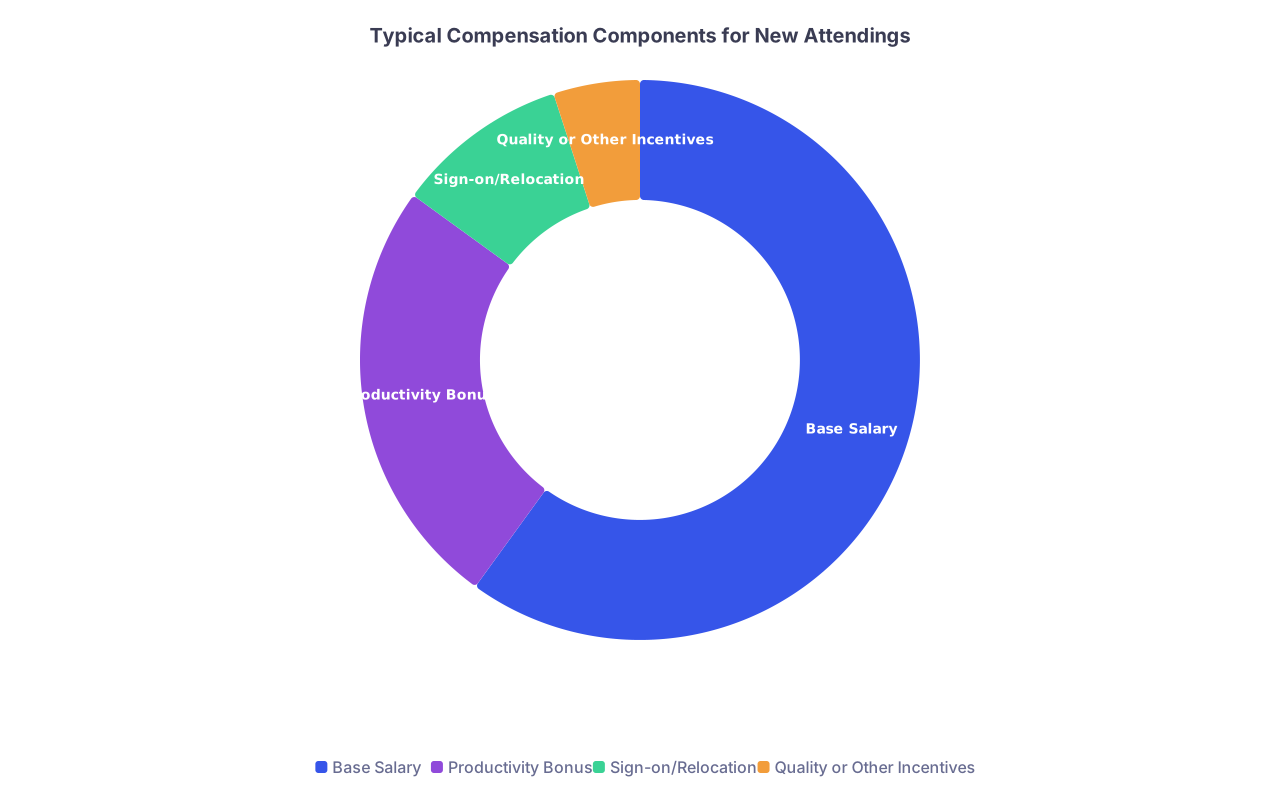
| Category | Value |
|---|---|
| Base Salary | 60 |
| Productivity Bonus | 25 |
| Sign-on/Relocation | 10 |
| Quality or Other Incentives | 5 |
Basic structure you want
-
“Base salary of $X in year one, $Y in year two, payable in equal biweekly installments.”
RVU or productivity bonus
“Physician will receive a productivity bonus of $ZZ per wRVU for wRVUs generated in excess of 6,000 per contract year.”
Transparency
“Employer will provide monthly written reports detailing Physician’s wRVU production, collections (if applicable), and bonus calculations, within 30 days of month end.”
No unilateral mid-year changes Add:
“Employer may not reduce base salary or change wRVU conversion rate during the contract term without Physician’s written consent.”
If they insist on annual adjustments:
- Tie it to a neutral benchmark (e.g., MGMA median) or cost-of-living index.
- Require mutual written agreement, not “as determined by Employer.”
And fix vague language like:
“Bonus may be paid at Employer’s discretion.”
To:
“If Physician exceeds 6,000 wRVUs in a contract year, Employer shall pay a bonus of $ZZ per additional wRVU within 60 days of the end of the quarter in which such wRVUs are generated.”
You do not want “discretion.” You want math.
Step 5: Call, Nights, and Weekends – Put Numbers on Pain
Call is the silent killer of “good offers.” On paper your salary and RVU rate look fine. In real life, you are drowning every third night.
Here is how you customize call:
Define the bucket
- General call vs subspecialty call
- In-house vs home
- Which hospitals / systems
- What kind of patients (adult only, no peds, etc.)
Cap the frequency with numbers
- “No more than 1:4 weeknight and 1:4 weekend call on average, calculated over each 3-month period.”
Address change in staffing
- What happens when someone quits and they try to “temporarily” make it 1:2?
Example clause:
“Physician will participate in general call coverage for [Specialty] at Hospital A no more frequently than 1:4 on average for weekdays and 1:4 for weekends, measured over each rolling 3-month period. If call frequency exceeds these limits for more than 60 days due to staffing changes, Employer and Physician will meet to adjust compensation or staffing. If no agreement is reached within 30 days, Physician may terminate this Agreement upon 60 days written notice, and such termination shall be treated as termination for cause by Employer for purposes of any restrictive covenants.”
That last sentence is how you avoid being trapped in a 1:2 call nightmare while still bound by a non-compete.
Is it aggressive? Yes. But no one is going to protect your nights and weekends for you.
Step 6: Malpractice, Tail, and Legal Exposure – Guard Your License
You are not just negotiating income. You are negotiating how much you personally eat if something goes wrong.
Key items to customize:
- Type and limits of malpractice coverage
You want:
“Employer shall provide occurrence-based professional liability insurance with limits of at least $1,000,000 per claim and $3,000,000 aggregate per year naming Physician as an insured.”
If they use claims-made coverage (common):
- Who pays for tail coverage
Do not accept:
“Physician shall be responsible for any required tail coverage.”
Push for:
“Employer shall purchase extended reporting (tail) coverage upon termination of this Agreement for any reason other than Physician’s termination without cause within the first 12 months.”
If they absolutely refuse and force you to pay tail:
- Get a dollar cap (e.g., “Physician responsible for tail up to $X; Employer pays any excess.”)
- Or a vesting schedule: they pay 100% after X years of service, 50% after Y years, etc.
- Indemnification
Watch out for:
“Physician agrees to indemnify and hold harmless Employer from any and all claims arising from Physician’s services.”
That is insane. Delete or balance it:
“Employer shall indemnify and hold Physician harmless from any claims, damages, or expenses arising from Physician’s services provided in the course of employment, except to the extent caused by Physician’s intentional misconduct or criminal acts.”
You are not personally bankrolling their system-level screwups.
Step 7: Bonuses, Sign-On, Relocation, and Repayment Traps
The front-end money is shiny. The strings attached are usually buried 20 pages later.
Look for:
- Sign-on bonus repayment clauses
- Relocation repayment clauses
- Training stipend clawbacks
- Loan repayment conditions
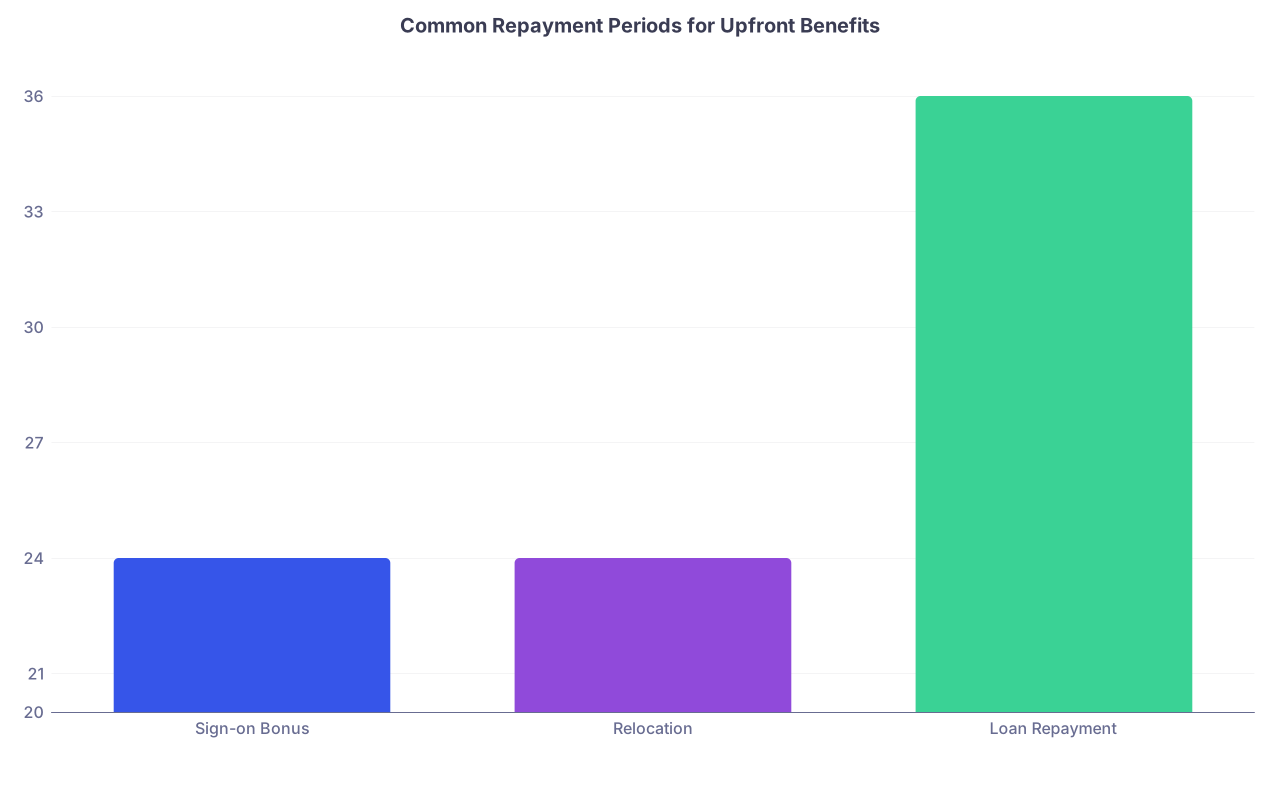
| Category | Value |
|---|---|
| Sign-on Bonus | 24 |
| Relocation | 24 |
| Loan Repayment | 36 |
Typical language:
“If Physician terminates this Agreement for any reason or Employer terminates this Agreement for cause within 24 months of the Effective Date, Physician shall repay the full amount of the sign-on bonus within 30 days.”
You customize this:
Pro-rate the repayment
“Repayment obligation shall be reduced by 1/24 for each full month of service completed after the Effective Date.”
Tie repayment to specific scenarios
- You resign without cause? Fine, they can claw back the remaining pro-rated portion.
- They terminate you without cause? No repayment.
- They breach the contract and you terminate for cause? No repayment.
Example fix:
“If Physician terminates this Agreement without cause within 24 months of the Effective Date, Physician shall repay the sign-on bonus on a pro rata basis (1/24 per full month of service). No repayment shall be owed if Employer terminates this Agreement without cause or if Physician terminates for cause due to Employer’s material breach.”
Do the same structure for relocation and loan repayment.
This is how you avoid writing a $40,000 check because the job turned hostile and you need to leave.
Step 8: Due Process, Peer Review, and Reputation Protection
One ugly part of physician contracts: they often let the hospital trash your career in one bad month.
Scan for:
- Summary suspension language
- Reporting to NPDB (National Practitioner Data Bank)
- Internal peer review / MEC process
You want two things:
- Defined process before career-ending actions
Example:
“Except in cases of imminent threat to patient safety, Employer shall not summarily suspend Physician’s clinical privileges without first providing written notice of the specific concerns and an opportunity to respond within 5 business days, in accordance with medical staff bylaws.”
- Clear statement on NPDB reporting
No contract can stop required reporting. But you can add:
“Employer shall provide Physician with written notice of any proposed report to the National Practitioner Data Bank at least 10 days prior to submission, including the basis for the report, and shall allow Physician an opportunity to provide a written statement for inclusion in the report.”
This gives you at least a procedural foothold.
Step 9: Actually Negotiating Changes Without Burning the Offer
You have marked up the contract. Now you need to send it back without coming across as a chaos engine.
Here is the process I recommend:
1. Get a physician contract attorney to do a first pass
Not your cousin who does real estate. A physician employment attorney licensed in that state. Pay the fee. You are betting your career; this is not the time to cheap out.
Have them:
- Identify state-specific landmines (non-compete enforceability, malpractice quirks)
- Redline the document in Word (track changes)
- Create a 1–2 page summary of key concerns
2. Group your edits into tiers
Tier 1 – Non-negotiable (you will walk if these are not changed)
- Non-compete too broad
- No without-cause termination for you
- You pay full tail no matter what
Tier 2 – Strong preferences (you fight hard but might compromise)
- Call limits
- Pro-rated bonus/repayment terms
- RVU target levels
Tier 3 – Nice-to-haves
- Conference budgets
- CME days count
- Titles, parking, minor perks
You lead discussions with Tier 1 and Tier 2. Your attorney can clean up language, but you own the strategy.
3. How to talk to them
You do not send a hostile email with 47 tracked changes and no explanation.
You do this:
Email:
“Thanks again for the offer. I have reviewed the contract with counsel. I had a few points I would like to clarify and modestly adjust so the agreement matches what we discussed. Would you prefer a short call to walk through the key points, then I can send a clean redline?”
On the call, pick your battles:
- Lead with patient care / stability / mutual protection, not “I want more money.”
- Example:
“On the non-compete, the current language covers 50 miles from any facility, which would essentially block me from practicing in the entire metro area if there are any changes in staffing or leadership. That level of restriction makes it hard for me to commit. I would be comfortable with a 10-mile restriction around Hospital A only, and I think that still protects your investment while allowing me some security.”
After the call, send the redline reflecting what you actually discussed. Do not surprise them with new issues.

| Step | Description |
|---|---|
| Step 1 | Receive Standard Contract |
| Step 2 | Mark X ? ★ Sections |
| Step 3 | Attorney Review |
| Step 4 | Prioritize Issues Tier 1-3 |
| Step 5 | Call with HR/Recruiter |
| Step 6 | Send Redline |
| Step 7 | Employer Response |
| Step 8 | Sign Customized Contract |
| Step 9 | Decide to Walk or Compromise |
| Step 10 | Key Issues Resolved? |
If they react with “We never change our contracts” on every issue, that tells you something very valuable about how they will treat you once you sign.
Believe them.
Step 10: Decide When to Walk Away
The last step of customizing a standard contract is understanding your BATNA (Best Alternative To a Negotiated Agreement). In plain English: your Plan B.
You walk if:
- Non-compete remains broad enough to cripple your future ability to work in the region.
- You have no reasonable way to terminate without cause without massive financial penalties (repayment traps, tail, etc.).
- They refuse to clarify basic things like call expectations, locations, or base metrics for productivity.
- Their response to respectful negotiation is hostility, gaslighting, or “you should just be grateful.”
I have seen too many people sign something they hate out of fear they will “never get another offer like this.” Six months later, they are desperate to get out and realize it will cost them $80,000 and a forced move.
It is almost always cheaper – financially and psychologically – to walk away before you sign than to escape a toxic contract later.
The Short Version: How to Turn “Standard” Into Protection
You are not editing for style. You are editing for survival.
Three key points to keep in your head:
Standard means starting point, not final answer.
Hospitals use templates written to protect themselves. Your job is to push that document toward balance—on term, termination, non-compete, malpractice, and money.Vagueness is the enemy.
Anywhere your lifestyle or risk hinges on vague words like “reasonable,” “as assigned,” or “at Employer’s discretion,” you insert numbers, limits, and objective triggers. Call, workload, bonuses, repayment—all of it.Your real power is before you sign.
After you sign, your leverage collapses. Use this phase to insist on clarity and fairness, and be willing to walk if they refuse to protect your license, your future mobility, or your basic sanity.
That is how you turn a “standard contract” into something that actually protects you, not just the system.


