

What if the “great” offer you just got locks you into a call schedule you’ll hate and a non-compete that handcuffs your future for two years?
That’s the real question behind: “Do I need a physician contract attorney?” You’re not paying for someone to move a comma. You’re paying to avoid regret.
Let’s walk through cost, timing, and return on investment like adults, not like vague “you should think about…” nonsense.
1. Do You Actually Need a Physician Contract Attorney?
Short answer: if you’re signing your first attending contract or any job with RVU/productivity, non-compete, or partnership track, you should at least get a paid review from a physician-focused contract attorney.
You don’t need a lawyer for:
- Internal moonlighting shifts during residency with a simple, short agreement
- Straightforward, low-stakes locums agreements (once you know what you’re doing)
- In-house policy documents you’re not legally binding yourself to (like handbook-only stuff)
You almost always should have one for:
- Your first post-residency attending job
- Any job with: bonus structure, RVU/collections-based pay, partnership, buy-in, or equity
- Private practice offers (single or multi-specialty)
- “Employed but complicated” – hospital-employed with wRVU incentives, call pay, or quality bonuses
- Any contract with a non-compete, relocation repayment, or signing bonus clawbacks
Here’s the real filter:
If you’d lose sleep walking away from the job, it’s high enough stakes to justify a contract attorney.
2. What Does a Physician Contract Attorney Actually Do?
Not theory. Practically.
Good physician contract attorneys do three things:
Risk translation
They turn legalese into plain English:- “If X happens, here’s what you owe / lose / are stuck with.”
- “This non-compete means if you leave, you probably move your kids or sit out for a year.”
Market and leverage intelligence
They know:- What’s “standard” for your specialty and region
- What’s actually negotiable at big systems vs private groups
- Which red flags are deal-breakers vs “fixable”
Negotiation strategy (and sometimes direct negotiation)
They help you:- Prioritize 3–5 things to push (salary vs schedule vs call vs non-compete)
- Decide where to let go to get what you really want
- Script emails and talking points—or occasionally negotiate directly if appropriate
What they don’t do (or shouldn’t):
- Rewrite the entire contract to look like a law school exercise
- Blow up relationships with aggressive, tone-deaf demands
- Promise “I’ll get you 50k more, guaranteed” – if someone says that, walk
You’re hiring them as a specialized risk consultant + strategist, not a magician.
3. How Much Does a Physician Contract Attorney Cost?
Here’s the part you actually want: real numbers.
| Service Type | Typical Cost Range |
|---|---|
| Basic contract review | $400 – $800 |
| Detailed review + call | $800 – $1,500 |
| Complex comp/partnership | $1,200 – $2,500 |
| Hourly rate | $250 – $500 per hour |
And yes, big markets and big reputations push to the high end of those ranges.
Most new attending reviews land here:
$800–$1,500 for a full review plus a 45–60 minute call and written summary.
That feels expensive when you’re still thinking in resident salary terms. But line it up against what’s at stake:
- Base salary differences of $10k–$50k/year
- RVU-based comp swings of $20k–$100k/year
- Non-compete restrictions that can cost you months of income if you have to sit out or move
- Signing bonus and relocation repayment obligations of $10k–$50k if things go bad early
Paying one-time $1,000 to optimize or protect a $300,000+/year job is not indulgent. It’s basic financial hygiene.
Here’s how that looks in ROI terms:
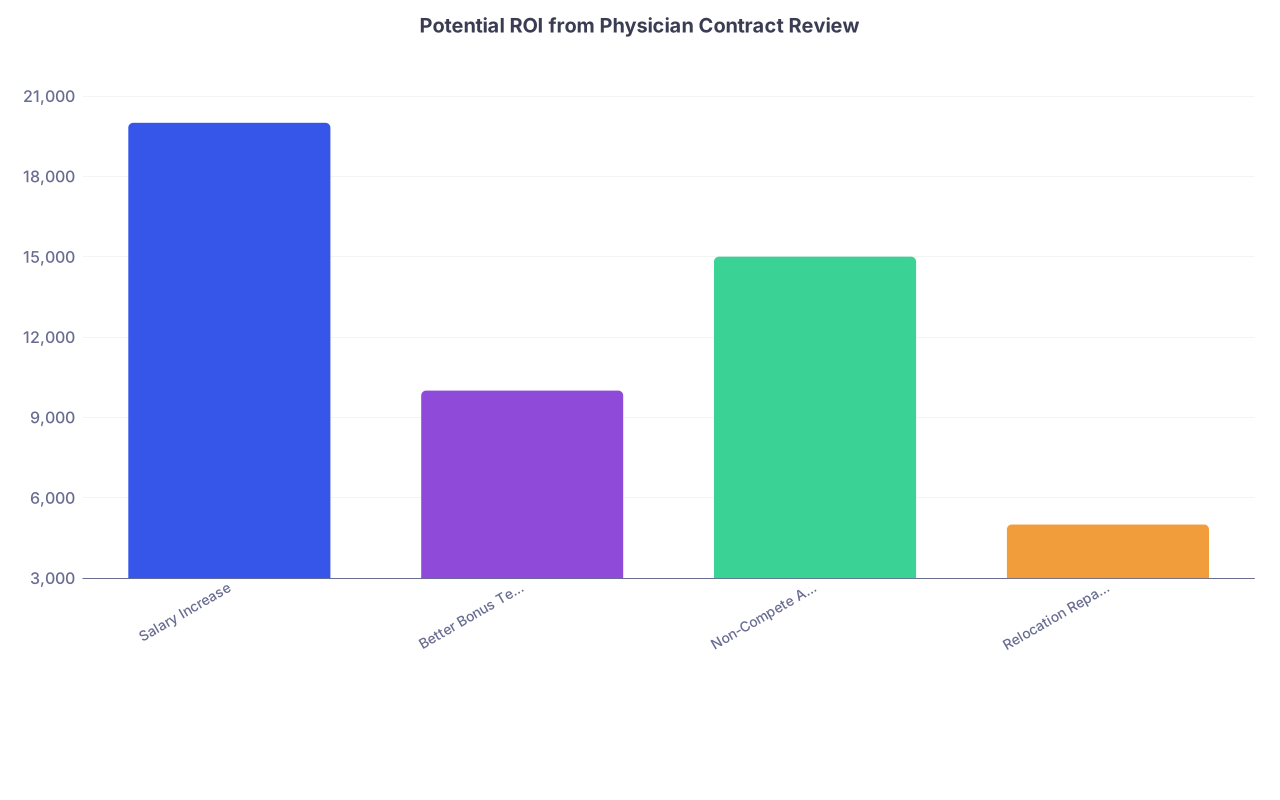
| Category | Value |
|---|---|
| Salary Increase | 20000 |
| Better Bonus Terms | 10000 |
| Non-Compete Adjustments | 15000 |
| Relocation Repayment Changes | 5000 |
Even modest improvements swamp the legal fee.
4. When Should You Bring the Attorney In?
Timing is where people screw this up.
They either send the contract to a lawyer too early (before they’ve even agreed on basics) or too late (after they’ve said “this all looks good, I’m excited to sign!”).
Here’s the clean play:
Interview phase – Do NOT send anything to a lawyer yet
- You’re just figuring out if you like the people and the job
- You’re getting verbal ranges for salary, schedule, call, etc.
Post-verbal offer, pre-contract – Still no lawyer
- You receive a verbal or email “offer outline”
- You clarify core terms: salary, bonus structure, expected RVUs, schedule, call, vacation, benefits
- You negotiate big-picture items verbally or over email first
Written contract received – NOW engage the attorney
- You send the final draft to the attorney
- You do a full review before you say “this looks good” to anyone
- You and the attorney plan what to push back on and how
Revision and finalization
- You (usually, not the lawyer) talk to the recruiter or practice about changes
- Attorney may help you write the email: “I’ve reviewed the agreement and have a few requested revisions…”
- Only after revisions are done and re-reviewed do you sign
Timeline-wise:
Most attorneys can review a contract in 3–7 business days. If you’re on a tight deadline, ask upfront about turnaround and rush fees.
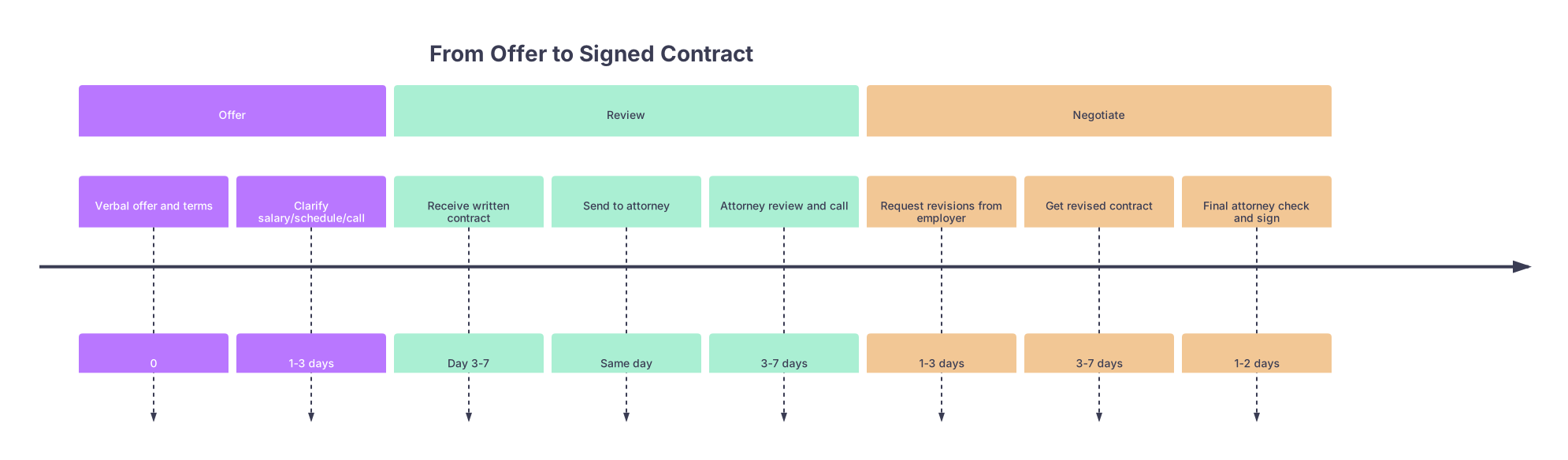
| Period | Event |
|---|---|
| Offer - Verbal offer and terms | 0 |
| Offer - Clarify salary/schedule/call | 1-3 days |
| Review - Receive written contract | Day 3-7 |
| Review - Send to attorney | Same day |
| Review - Attorney review and call | 3-7 days |
| Negotiate - Request revisions from employer | 1-3 days |
| Negotiate - Get revised contract | 3-7 days |
| Negotiate - Final attorney check and sign | 1-2 days |
Bottom line: you don’t need a lawyer before a written offer. You absolutely should not sign a written offer before a review.
5. What’s the Real ROI of Hiring a Physician Contract Attorney?
Let’s be blunt: the ROI is not always “I got $50k more.” Sometimes it is. Often it’s more subtle but just as valuable.
Here’s how the return on investment actually shows up:
1. Direct financial upside
Examples I’ve seen repeatedly:
- Turning a “$250k base + RVU bonus” offer into $280k base + clearer, realistic RVU thresholds
- Changing “repay entire relocation bonus if you leave before year 3” to prorated repayment
- Tightening vague “discretionary bonuses” into concrete metrics or guaranteed minimums
Even a $5k/year improvement over a 3-year initial term is $15k. For a $1,000 review, that’s a 15:1 return.
2. Avoidance of nasty surprises
This is where lawyers quietly save people:
- Explaining that the “65th percentile MGMA” you’re being promised is based on total comp, but your offer is base only, with unrealistic RVUs required to reach that percentile
- Catching call terms like “you will participate equitably in call” when the reality is: senior partners quietly duck weekends and dump them on new hires
- Pointing out that the hospital “may change compensation structure upon 90 days’ notice” with no floor
You don’t see this as “money saved,” but that’s because you didn’t step on the landmine.
3. Lifestyle and exit flexibility
This matters more than residents realize.
Non-competes, for instance, are one of the most misunderstood parts of physician contracts. A slight wording change can be the difference between:
- “You can’t work for a competitor within 30 miles of any employer location for 2 years”
vs - “You can’t work within 5 miles of your primary practice site for 12 months”
That gap is your ability to switch groups in the same city vs uprooting your family.
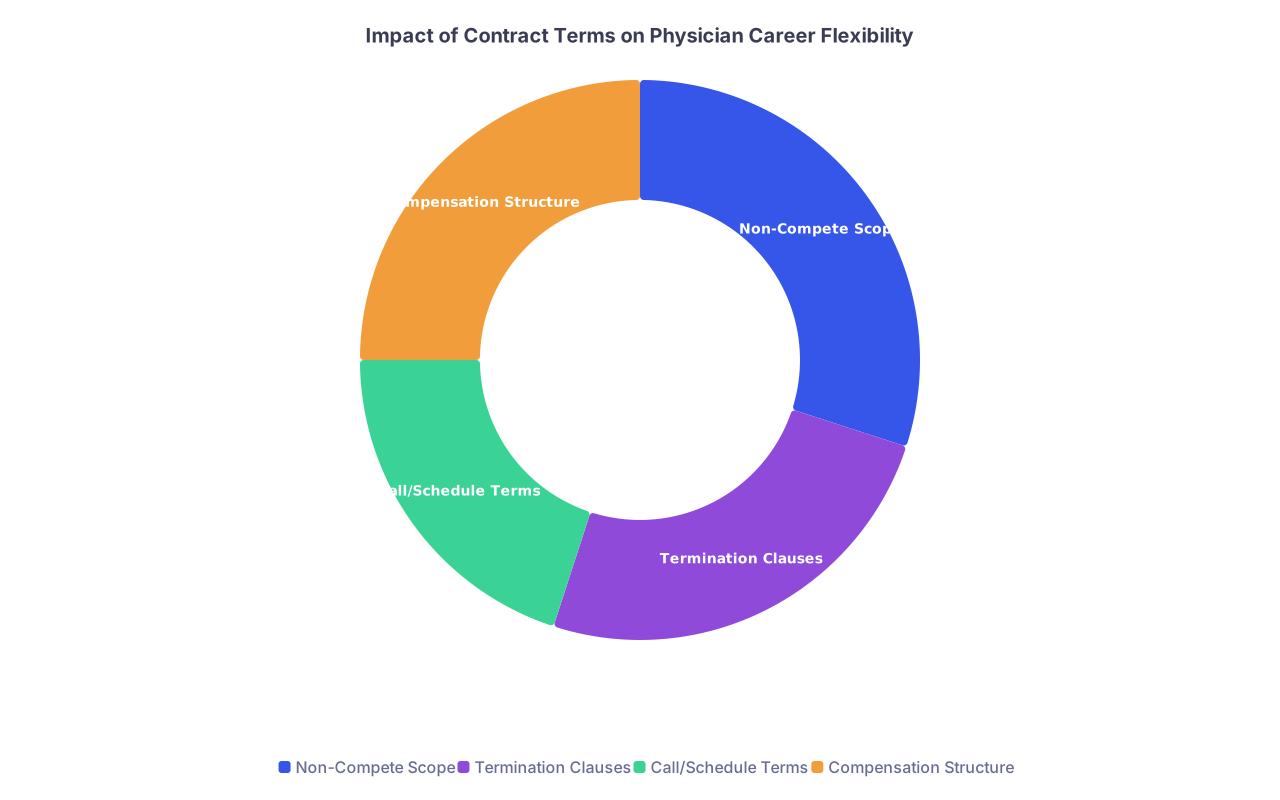
| Category | Value |
|---|---|
| Non-Compete Scope | 30 |
| Termination Clauses | 25 |
| Call/Schedule Terms | 20 |
| Compensation Structure | 25 |
The ROI here is measured in whether you’re stuck in a toxic job because walking away is too expensive.
6. How to Choose the Right Physician Contract Attorney
Not all attorneys are worth your time or money. You want niche expertise plus practical sense.
Look for:
- Exclusively or heavily healthcare-focused – not a general business lawyer who “can take a look”
- Actual physician contract experience – ask: “How many physician contracts do you review per year?” (You want dozens, not a few.)
- Familiarity with your state – especially for non-competes, malpractice, and employment laws
- Comfort with your specialty – surgeons and hospitalists and dermatologists don’t live in the same comp world
Red flags:
- They promise a specific dollar increase before seeing the contract
- They want to re-draft the whole agreement in legalese “their way”
- They insist on negotiating directly with your employer for everything (it’s often better if you stay the face of the negotiation, with them in the background)
A good first question:
“Given my specialty and this type of offer (hospital-employed vs private), what are the top 3 things that usually matter most in contracts like this?”
If they give you fluffy, generic answers, move on.
7. When You Might Skip Hiring an Attorney
There are narrow situations where I’d say: you can reasonably skip it.
- You’re taking a short-term locums assignment, under 6 months, with standard terms from a reputable agency, and you’ve done this before
- You’re doing a hospitalist nocturnist job on a templated hospital-employed contract, and you have a trusted senior colleague who’s signed the exact same agreement and walked through it with you
- You’re moving from one job to another within the same large system using the same standard agreement and your only change is salary, and you already had your original contract reviewed
Even then, if the compensation model, schedule, or non-compete is changing, I’d at least consider a lower-cost, quick review.
Don’t skip an attorney just because:
- “The recruiter said it’s a standard contract”
- “Other doctors here signed it”
- “I like them and trust them”
Good people can still offer bad contracts. Systems protect systems.
8. How to Work With a Contract Attorney Efficiently (And Not Waste Money)
If you’re going to spend $800–$1,500, don’t make them charge you to dig through chaos.
Do this before the review:
- Get the full contract and all attachments (comp plan exhibits, call policy, bonus policy, partnership documents)
- Get a written offer summary if they gave you one
- Write a 1-page bullet list of:
- Your goals (e.g., “strong base, less call, flexible location later”)
- Your concerns (“non-compete, RVU expectations, signing bonus repayment”)
- Any verbal promises that aren’t clearly in writing
Then send everything in one clean email. Ask for:
- A written summary of key issues
- A 45–60 minute call to go through: “What’s dangerous, what’s typical, what can we push?”
You’ll get way more value that way than just: “Can you mark this up and send it back?”
9. Quick Reality Check: Common Myths
Let’s kill a few bad assumptions I hear all the time.
“My offer will be pulled if I get a lawyer involved.”
Very rare. Large systems expect it. Private practices might sigh, but if they rescind just because you wanted a review, that’s a bright red flag.
“New grads can’t negotiate anyway.”
Wrong. You can’t bend reality, but you can absolutely tweak terms—especially around non-competes, call, signing bonus structure, and small-but-meaningful compensation points.
“I’ll just fix it later after I start.”
No. Once you’re in, your leverage drops. People stop trying to “recruit” you and start trying to contain costs.

10. Bottom Line: Should You Hire One?
For your first attending job after residency or fellowship:
Yes, you should almost always hire a physician contract attorney.
The stakes are too high, the language is too opaque, and the power balance is too skewed against you to wing it.
Think of the legal fee as:
- 0.3–0.5% of your first-year compensation
- A shot at improving pay and structure by 5–20%
- An insurance policy against being stuck in a contract that punishes you for leaving a bad situation
It’s not about being paranoid. It’s about being a professional who treats their own career with the same seriousness they treat their patients.

FAQ: Physician Contract Attorneys (6 Questions)
1. When in the job search process should I first talk to a physician contract attorney?
After you have a written contract in hand, not at the initial interview stage. You can have a quick intro call earlier to check pricing and turnaround time, but the actual review should happen once terms are mostly set on paper and before you say “this looks great, I’m ready to sign.”
2. Can a contract attorney really change what a big hospital system is willing to offer?
They won’t magically rewrite the entire comp grid of a massive system, but they can nearly always influence details that matter: non-compete scope, termination language, bonus clarity, call expectations, repayment terms for bonuses and relocation, and sometimes base pay or RVU targets. You won’t get everything, but you can usually get something.
3. Is it better for me or the attorney to negotiate directly with the employer?
Most of the time, it’s better if you stay the face of the negotiation, with the attorney coaching you in the background. Employers feel less defensive, and the relationship stays more collegial. The attorney can help you script emails and talking points. Direct attorney-to-employer negotiation is more useful in complex or contentious situations.
4. What are the biggest red flags an attorney is looking for in my contract?
Common landmines:
Non-competes that are too broad (large radius, long duration, multiple sites), vague or one-sided termination clauses, unrealistic RVU or productivity expectations, “we can change comp at any time” language, aggressive clawbacks on signing/relocation bonuses, and opaque partnership or buy-in terms. Those are the ones that quietly wreck careers.
5. Do I need a new review for every contract change or renewal?
If the changes are minor (like an annual raise with no other edits), you may not need a full review—maybe just a brief check. But if there’s a new comp model, changes to non-compete or duties, or new bonus structures, get it reviewed again. The first review teaches you a lot; follow-ups are usually faster and cheaper.
6. What if I truly can’t afford a full contract review right now?
You have options. Some attorneys offer shorter, cheaper “issue-spotting” reviews. You can also prioritize: ask them to focus on non-compete, termination, and compensation structure only. Worst case, at least pay for a 30–60 minute consult to walk through the highest-risk parts of the contract while you screen share or review together. Don’t sign blind.
Key takeaways:
- For your first attending job and any complex offer, a physician contract attorney is usually a smart, high-ROI spend.
- The right timing is after you get the written contract, before you tell anyone you’re ready to sign.
- The real value isn’t just more money—it’s clarity, flexibility, and not getting trapped by terms you didn’t fully understand.


