
The way physician groups buy their practice buildings is nothing like the clean, rational process your CPA describes. It’s messier, more political, and far more lucrative (or disastrous) than anyone admits in public.
You’re not just buying a building. You’re shifting power inside the group, changing who gets rich from the rent checks, and—if you do it right—building the most reliable source of wealth most physicians will ever touch.
Let me walk you through how it really works behind closed doors.
The First Move: Who Actually Controls The Deal
In most groups, the real estate conversation does not start in a partners’ meeting. It starts in the hallway.
One or two senior partners—usually the ones who’ve been quietly reading offering memoranda and talking to brokers for years—decide: “We should own our own building.” By the time it hits the agenda, they’ve already:
- Talked to a commercial broker they “trust”
- Had at least one informal meeting with a lender
- Floated the idea with the practice administrator
- Checked with a friendly attorney on basic structure
Everyone else? They’re reacting to a plan that’s half-baked but emotionally sold as “finally, we stop paying someone else’s mortgage.”
Here’s the unspoken truth: the first people to move on the real estate idea often end up with the best position—more equity, better tax planning, more control over refinance decisions. If you’re not in the early conversation, you’re playing catch-up.
In many groups, the proposal comes as a package:
- Let’s form an LLC to buy the building
- The practice will sign a long-term lease
- Partners can (optionally) buy into the LLC
Notice the trick: owning the practice and owning the building become two different games. Different players. Different winners.
How The Deal Is Actually Structured (Not What The Slides Say)
If you think “the practice buys the building,” you’re already behind. That’s not what happens at scale.
Here’s the pattern I see over and over:
- The operating entity (your practice) stays lean—no building on its balance sheet, just a lease obligation.
- A separate real estate entity (usually an LLC, sometimes a series LLC) is created to buy and own the property.
- The physicians or physician partners—not the practice itself—own that real estate entity.
Why? Because real estate wealth should survive partner turnover, payer mix swings, RVU drama, and hospital politics. The building is the golden goose. You do not strap it to the clinical business.
| Aspect | Practice Entity (PC/PA/PLLC) | Real Estate Entity (LLC) |
|---|---|---|
| Owns the building? | No | Yes |
| Signs the lease? | Yes (as tenant) | No (landlord) |
| Owners | All partners (or employed docs via equity track) | Partners who opted into real estate |
| Risk from malpractice | High | Low (if structured correctly) |
| Exit with partner buyout | Yes (required) | Usually no (separate agreement) |
Here’s the power move people don’t say out loud:
You can be a real estate owner without being a clinical owner. A senior partner who plans to retire in 3–5 years may not push hard for more practice equity, but they absolutely care about a long-term lease paying them rent in retirement.
That’s why you’ll see older partners fight like hell about lease terms but shrug at EMR changes.
Where The Money Actually Comes From
You’re not getting rich because the building goes from $5M to $7M. That helps. But the big wealth driver is this:
You’re turning practice rent into equity and cash flow for a subset of people.
The practice signs a lease—typically at or slightly above market rent—for 10–15 years with renewal options. That rent:
- Pays the mortgage
- Pays expenses (taxes, insurance, maintenance, property management)
- Creates a spread—cash flow—that lands in the pockets of the real estate owners
If the deal is structured well, the group effectively:
- Locks in their occupancy cost
- Uses pre-tax practice dollars to support a rent that services debt
- Has the building appreciated and loan paid down over time
If it’s structured poorly, the group:
- Overpays for a trophy building
- Locks into an above-market lease that suffocates younger partners
- Has no exit other than “hope a REIT bails us out someday”
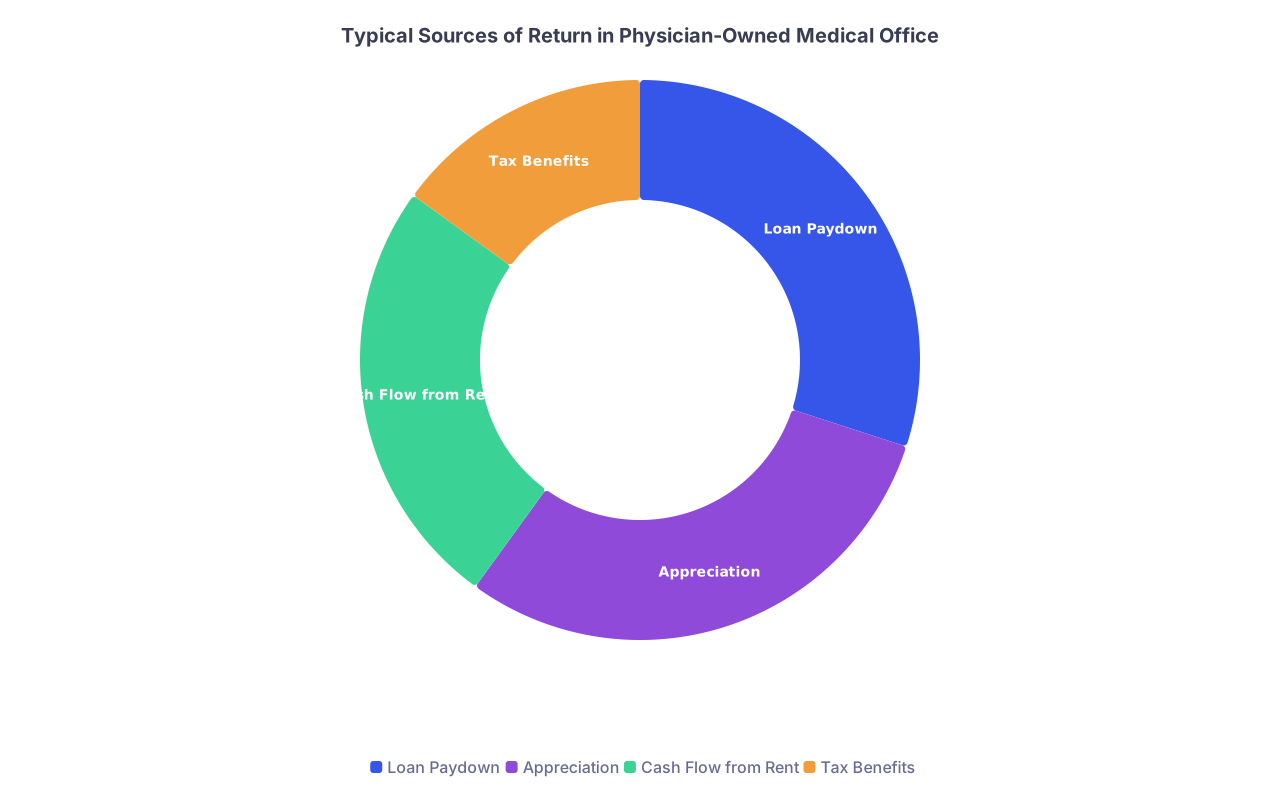
| Category | Value |
|---|---|
| Loan Paydown | 30 |
| Appreciation | 30 |
| Cash Flow from Rent | 25 |
| Tax Benefits | 15 |
That doughnut? It’s roughly how most wins stack up in a decent deal. Everyone obsesses over appreciation. The quiet monster is loan amortization paid by your own practice.
Who Pays What: The Equity, The Loan, The Silent Resentment
Inside the room, the argument always starts here: “How much do I have to put in?”
This is where old-school handshake medicine crashes straight into capital structure reality.
Here’s how they really do it:
Equity Contribution
Banks for medical office will usually finance 70–80% loan-to-value if the practice is financially strong and signs a long-term lease. That means 20–30% equity. On a $5M building, you’re talking $1–1.5M cash.Who writes those checks?
- Senior partners with decades of earnings and home equity lines
- Mid-career partners stretching to get in
- Junior partners saying, “I’ve got loans and daycare—how am I supposed to buy in?”
Unequal Participation
Despite the fantasy of “we’ll all own it together equally,” what usually happens is this:- Real estate shares are offered pro rata to practice shares, but with an opt-in and time limit.
- Some docs don’t buy in at all.
- Some buy as much as they can, often accumulating more than their clinical ownership percentage.
Result: Real estate ownership ends up more concentrated than practice ownership.
Silent Resentment Phase
Five years later, here’s the hallway conversation:- Younger doc: “I’m just paying rent making the partners richer.”
- Senior doc: “We took the risk; they had the chance to buy in.”
Both are technically right. Only one gets the appreciation.
That’s the politics you must walk into with eyes open. The real estate deal isn’t neutral. It reshapes the power and wealth map of the group.
The Lease: Where The Real Games Are Played
Everyone fixates on purchase price. Insiders pay more attention to the lease.
Your building’s value in the eyes of a bank, appraiser, or future buyer isn’t just bricks and drywall. It’s the stability and economics of the lease with your own practice.
Here’s what typically goes into a physician-practice lease:
- Term: 10–15 years initial, with 2–3 five-year renewal options
- Rent: Based on “market” medical office rates (with a lot of “trust me” baked in)
- Escalations: 2–3% annually or tied to CPI
- Structure: Usually triple net (NNN) or modified gross
- TI / Build-out: Paid by landlord, tenant, or a negotiated mix
Real insider move: the senior partners want a rent level that supports a higher valuation if they ever sell the building to an outside investor (private equity real estate, REIT, regional landlord). Higher rent = higher building valuation… but also higher long-term occupancy cost for the practice.

What happens in practice?
- The real estate owners push to set rent at the upper end of market.
- The practice CFO/administrator worries about future margins as payers squeeze.
- The lawyer nods and redlines indemnity but largely stays out of the economics, unless you specifically tell them otherwise.
You want your attorney and accountant both looking at:
- Related-party transaction rules
- Reasonableness of rent (to avoid IRS issues)
- Fairness provisions among partners
- How the lease interacts with potential future sale-leaseback
Because here’s the reality: the moment you sign a 15-year lease, you’ve effectively pre-sold part of your practice’s future earnings to the real estate owners—especially if those owners and clinical owners don’t fully overlap.
Financing: What Banks Really Care About
Here’s what the loan officer pretends:
They’re underwriting the building.
Here’s what they’re actually underwriting:
Your practice.
Medical office loans are catnip for banks. Low default rates, sticky tenants, recession-resistant income. But when a physician group buys its own building, the bank is looking at:
- Your last 3 years of practice financials
- Payer mix and volumes
- Stability of the physician roster
- Length and terms of the lease the practice is signing
- Personal guarantees (yes, this is where many of you look away)
Banks quietly know: if the group falls apart, the building is an empty shrine to medicine. So they demand:
- Personal guarantees from the real estate LLC members (sometimes limited, sometimes full recourse)
- Debt service coverage ratio comfortably above 1.25x on projected rent
- A global cash flow analysis that includes your other debts
This is where senior partners sometimes pull rank. They have the balance sheets the bank likes. So they volunteer heavier guarantees. Then they demand—correctly—more equity or preferred distributions in return.
Younger docs say yes because they want in. Years later, they realize they signed recourse on a $5M loan with less bargaining power than they thought.
The Legal Stuff You Won’t Hear At The Sales Pitch
Let’s talk about the documents that actually matter.
You’ll see three major stacks of paper:
- Purchase and sale agreement for the building
- Operating agreement for the real estate LLC
- Lease agreement between practice and real estate LLC
Most docs get obsessed with #1. The seller. The price. The closing. That’s fine, but it’s mostly one and done.
The quiet landmines live in #2 and #3.
Real estate LLC operating agreement
This is where the internal rules live:
- Voting rights (Do votes track ownership percentage? Any protective provisions?)
- Capital calls (What happens if the AC dies and you need $300K?)
- Distribution waterfall (Straight pro rata, or is there a preferred return to early investors?)
- Transfer restrictions (Can a partner transfer real estate interest to a spouse, trust, or outside doc?)
- Exit rules (What happens when a partner retires or is terminated from the medical practice?)
Smart groups separate clinical exit from real estate exit.
Less sophisticated groups tie them together: leave the practice, you must sell your real estate shares at a pre-set formula.
Sometimes that formula is fair. Often it massively discounts the true market value of the building because it was written ten years ago by someone who thought 6% cap rates would exist forever.
The lease
This is where compliance and tax risks live:
- If rent is above or below fair market, you risk IRS issues and possible Stark/AKS headaches in some arrangements, especially if hospital systems are involved.
- If the lease doesn’t clearly specify who pays which expenses, expect constant partner fights over repairs, build-outs, and “why did the common area paint job cost $50K?”
A good healthcare real estate attorney will fix 80% of your future misery here. Most groups cheap out. Then they pay for it for 15 years.
The Exit They Don’t Talk About At The Beginning
Nobody wants to talk about selling on the day you buy. That’s naive.
There are three common exits for physician-owned buildings:
Internal transfer only
The building stays owned by docs forever. Retiring partners sell to new partners at a formula price. This sounds safe. It often underperforms badly if the formula is stale or the younger docs are financially squeezed and can’t pay full freight.Sale-leaseback to private equity / REIT
This is the shiny object. “We’ll sell the building at a 6% cap, pocket millions, and keep practicing.” I’ve seen this work brilliantly. I’ve also seen groups cripple their long-term margins by locking into 15–20 years of high rent that bakes in the investor’s return.Sale with practice transaction
When a hospital or PE firm buys the practice, they often want the building too—or at least a long lease. This negotiation is political. Clinical value and real estate value get entangled. I’ve seen administrators try to “throw in” the building at a bargain to close the clinical deal, much to the fury of the real estate owners.
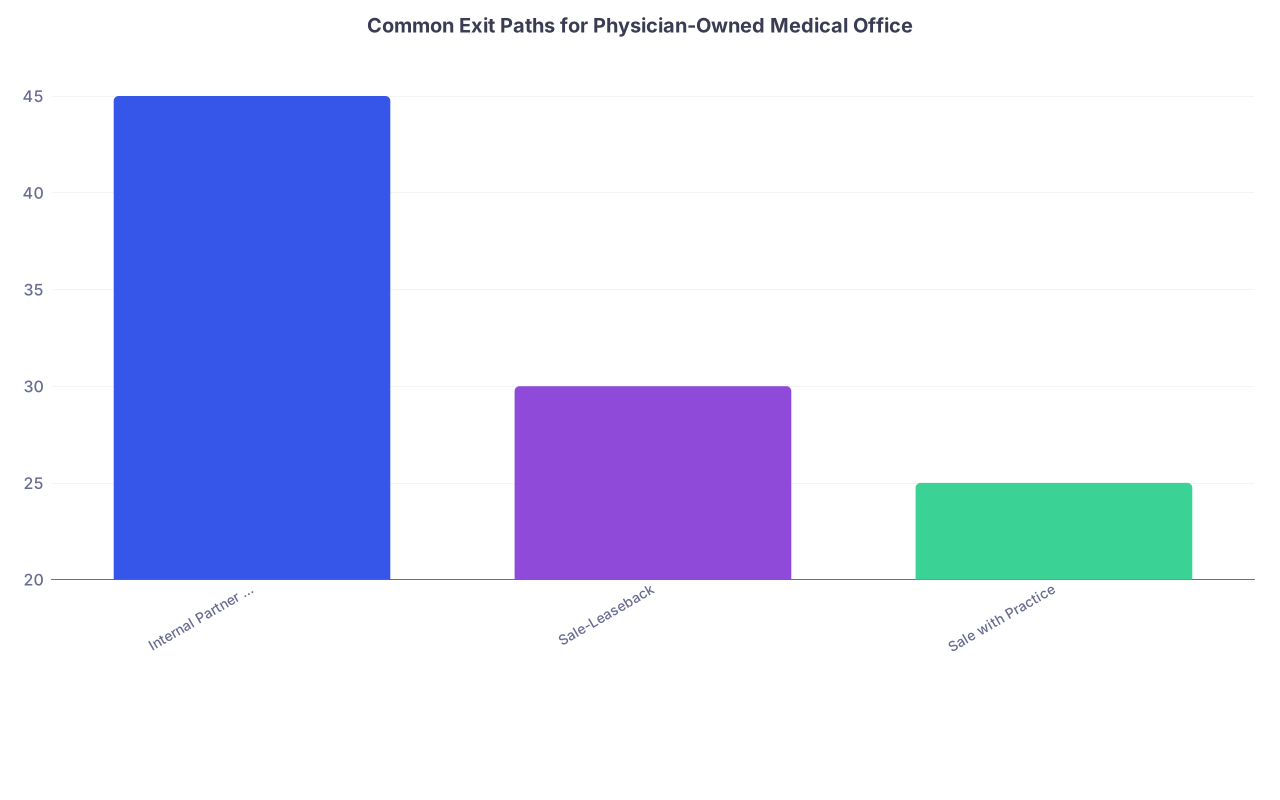
| Category | Value |
|---|---|
| Internal Partner Buyouts | 45 |
| Sale-Leaseback | 30 |
| Sale with Practice | 25 |
Those percentages are directional from what I see in practice groups over 15–20 years. Most never execute a fancy sale-leaseback. They just grind along with internal buy-sell drama.
The key is this: your operating agreement and lease need to contemplate all three outcomes. If they don’t, you’ll be rewriting documents under pressure with buyers, hospitals, or investors dictating terms.
The Quiet Winners and Losers
You want the real behind-closed-doors truth? In 10–15 years, when everyone looks back at “the building deal,” here’s how it usually shakes out:
The quiet winners:
- Partners who bought early, held their interests through the full loan term, and pushed for disciplined capital improvements instead of emotional projects.
- Docs who never got into practice politics but consistently invested in the real estate entity whenever it raised capital.
- Those who insisted on solid legal structure from day one—clear rules for exits, buy-ins, capital calls, and voting.
The losers:
- Partners who opted out of the building because “I’ll just invest in the market instead,” then never actually did.
- Younger docs forced to buy in at much higher valuations later, essentially subsidizing the early group’s wealth creation.
- Groups that overbuilt—too big, too fancy, too expensive—then found themselves stuck with empty suites and a crushing mortgage when referrals or payer contracts changed.
The building itself rarely ruins anyone. The structure, politics, and timing do.
FAQs
1. Should junior partners buy into the building if senior partners already own most of it?
If the rent is fair market, the building isn’t absurdly over-levered, and you plan to stay at least 7–10 years, yes—most of the time you should. You’re already paying the rent via your clinical work. Owning a slice of the landlord side lets you capture some of that forced savings. What you should fight for is a transparent valuation formula and access to the same terms (per unit of equity) that senior partners had, not some artificially inflated “today price” with no justification.
2. Is it better for the practice entity itself to own the building?
Almost never. When the practice owns the building: malpractice risk touches the asset, partner exits become messy, and you lose a ton of flexibility on refinancing, sale-leaseback, and future structuring. A separate real estate LLC, with clearly drafted agreements, is almost always the smarter move. If your accountant tells you to just “put it in the PC,” they’re thinking small.
3. How do I know if the rent we’re paying to ourselves is reasonable?
You do not trust a single broker’s word on this. You get at least one independent appraisal or broker opinion of value, plus comps for similar medical office in your submarket—same size, build-out quality, parking intensity, and landlord responsibilities. Document that file. You want to be able to show, cleanly: “We set rent at $X based on third-party data.” That protects you on tax, compliance, and partner fairness.
4. What’s the biggest legal mistake physician groups make in these deals?
They under-lawyer the operating agreement for the real estate LLC. Purchase contracts get attention. Leases get moderate attention. The operating agreement—the thing that determines what happens when people die, divorce, retire, get fired, or refuse to fund a capital call—gets templated or copied from another deal. That’s insane when you’re talking about a $3–10M asset. Spend real money there. It’ll be the cheapest “insurance” you ever buy.
5. How much personal risk am I really taking with the loan guarantees?
More than the banker makes it sound. If it’s full recourse and you sign it, your house, your accounts, your other investments—all potentially on the line if everything goes sideways and the building sells for less than the loan. You want, wherever possible, limited or partial guarantees, burn-off provisions as the loan amortizes, and a clear understanding—written, not verbal—among partners about who’s on the hook and in what proportion. Any partner who takes on a heavier guarantee should be compensated for that risk, either in equity, preferred returns, or explicit guarantee fees.
Two things to remember and you’ll be ahead of 90% of groups doing this:
You are not “just buying a building.” You’re creating a long-term machine that converts practice rent into wealth for whoever owns the real estate LLC. Design that machine intentionally.
The real fight isn’t over price; it’s over structure—who owns what, who guarantees what, and what happens when people leave. Get those answers right, in writing, before you sign anything.