
It’s 11:47 p.m. You just finished a brutal call shift, your pager is finally quiet, you’re half‑dead on the couch… and your phone lights up with a text from your property manager: “We need to talk about Unit 3A. It’s… not good.”
And your stomach drops.
Because this is exactly why you’ve been scared of being a landlord in the first place. You keep thinking: what if I’m in the OR and there’s a flood? What if a tenant stops paying and I’m stuck with two mortgages? What if someone sues me and comes after my license? What if this whole “passive income” thing is just one giant headache dressed up as a podcast topic?
You’re not crazy. Those are real fears. I’ve heard all of them from physicians who are “landlord‑curious” but too anxious to pull the trigger.
Let’s walk through the actual, realistic worst‑case scenarios. Not the Instagram version of real estate, but the stuff people whisper about in the physician lounge when they think nobody from admin is listening.
And then, what intelligent, risk‑aware doctors actually do about it.
The Big One: “What If My Tenant Just Stops Paying?”
This is the #1 fear I hear: you’re on nights, your EMR is crashing, and meanwhile someone in your condo hasn’t paid rent in three months and you’re bleeding cash.
First, reality: yes, non‑payment happens. Even to “good” tenants. They lose jobs. Get divorced. Get sick. Sometimes they’re just irresponsible.
The more important thing is what that actually looks like financially and legally.
| Item | Amount |
|---|---|
| Monthly rent | $2,200 |
| Mortgage (PITI) | $1,900 |
| Months of no payment | 4 |
| Legal/eviction costs | $1,500 |
| Lost rent total | $8,800 |
| Net cash hit (lost rent + legal - avoided PITI if vacant) | ~$6,000–$8,000 |
So yeah. That’s not nothing. That’s a big ER bill, a family vacation, a chunk of a student loan payment.
A few hard truths:
- If you buy with minimal reserves, this exact scenario can wreck you.
- If the property barely cash flows in the best of times, you’ll feel every missed rent check.
- Eviction takes time. Months, depending on your state. You don’t just “kick them out.”
Here’s what smart, anxious‑but‑not‑paralyzed physicians actually do:
They underwrite the deal as if this will happen. They keep at least 3–6 months of property expenses in cash, separate from their personal emergency fund. They screen tenants like they’d screen a dangerous medication. They use a property manager who actually follows a written rent‑collection and late‑notice process, not a “yeah, I’ll call them” shrug.
Is it still stressful when someone stops paying? Of course. You’re human.
But the question isn’t “what if this happens.” The question is: “If this happens, does it ruin me or just annoy me?” Your structure decides that.
The Middle‑of‑the‑Night Maintenance Disaster
This is the classic panic scenario: you’re scrubbed in for a 6‑hour case and somehow you’re supposed to deal with a burst pipe or a gas leak or a broken heater in January.
If you self‑manage, yes, this can get ugly. Especially if you:
- Don’t have a handyman / plumber / HVAC person lined up
- Don’t have a property reserve fund
- Don’t have any systems, just vibes and a cell phone
But if you’re a full‑time physician, self‑managing long‑distance is almost always a terrible idea. Not because you’re not smart, but because you’re already at 120% capacity.
Here’s what actually happens in real life when things are set up decently:
Tenant calls property manager at 2 a.m. about a leak. Manager sends plumber from a pre‑vetted list. You get an email the next morning: “Emergency call last night, pipe fixed, invoice attached, came out of your reserve account, just an FYI.”
Is it annoying to pay $450 for a plumbing visit? Sure. Is it more annoying than being interrupted between consults and trying to Yelp a plumber while wearing your lead apron? Definitely not.
The risk isn’t “emergencies exist.” The risk is “I try to be a part‑time GC / landlord while working full‑time as a physician and I pretend that’s sustainable.”
The fix? Budget property management into the deal from day one. Run your numbers assuming 8–10% of rent goes to a manager and that major systems (roof, HVAC, plumbing) will eventually die. Because they will.
The Lawsuit Nightmare: “They’ll Come After My License, Right?”
This is the one that really keeps people up at night. You picture a tenant falling down the stairs, hiring some billboard lawyer, and then suddenly your name is on a complaint with “M.D.” right after it and you’re thinking: say goodbye to my career.
Deep breath.
I’m not going to say lawsuits never happen. They absolutely do. I’ve seen:
- A tenant sue over a trip‑and‑fall on an icy walkway
- A tenant claim mold caused respiratory problems
- A visitor injured in a parking lot fight
But here’s the less dramatic, more accurate part: if you set things up even moderately intelligently, those lawsuits go after the PROPERTY and the insurance, not your personal bank accounts and not your medical license.
The hierarchy of protection usually looks like this:
- Good liability insurance on the property (typically landlord policy with at least $1M liability).
- Umbrella policy over that (often $1–5M).
- Title held in an LLC (in many states) or other entity, separating it from your personal name.
Could a lawyer try to pierce this? Sure. Lawyers try everything. But physicians vastly overestimate how easy it is for a tenant in a C+ apartment building to take down a doctor with robust insurance and layered structure. The path of least resistance is always the insurance check.
Your medical license? That’s tied to your behavior as a physician, not as a landlord. If you’re not prescribing controlled substances for tenants, you’re generally not mixing those worlds.
Vacancy: The Slow Bleed You Don’t Feel Until It’s Too Late
Non‑payment feels like a punch. Vacancy is more like anemia. Subtle at first, then suddenly you’re short of breath.
You worry: what if the place just… never rents? What if it sits empty for months while I cover everything?
This is one of those risks you can estimate before you ever buy. Local vacancy data isn’t magic. Property managers in the area can tell you: “We usually lease units in 2–4 weeks if they’re priced right.” If a place has been listed at top‑of‑the‑market rent for 90 days with no bites, that’s screaming at you. Believe it.
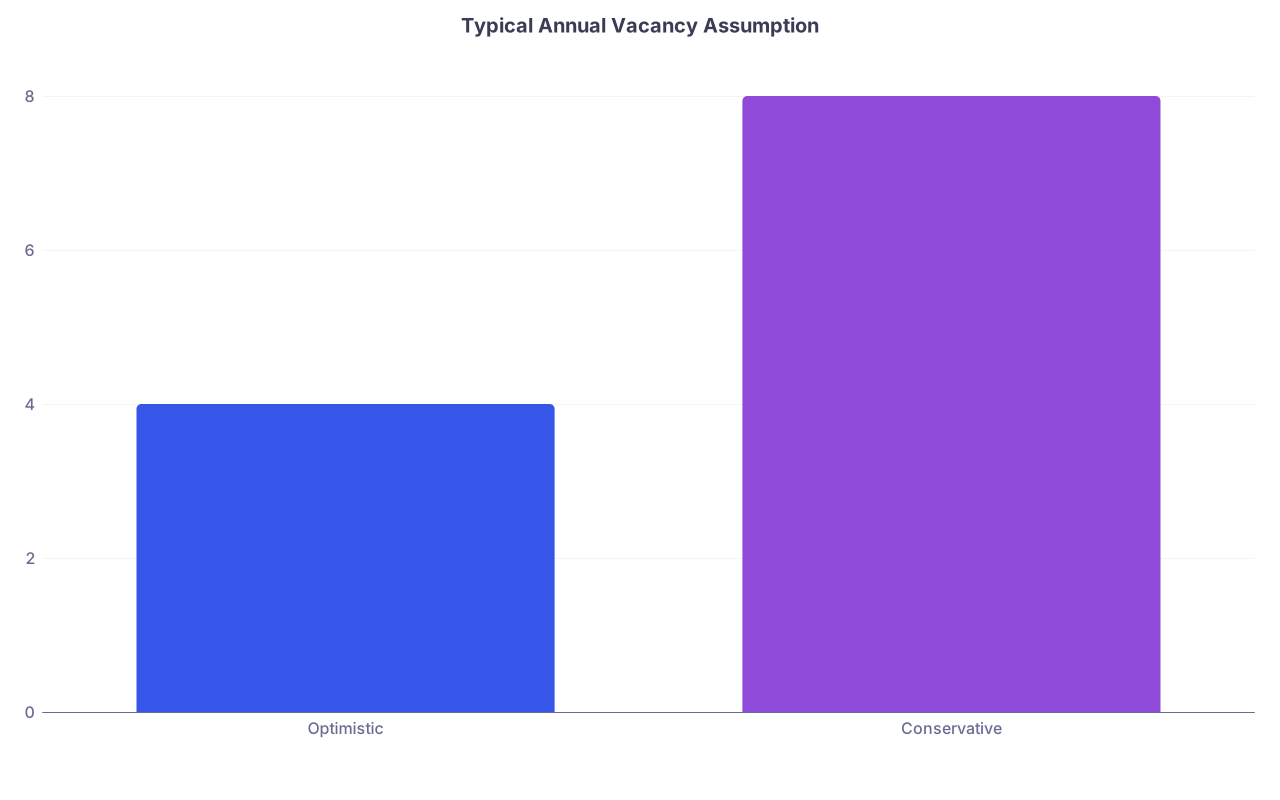
| Category | Value |
|---|---|
| Optimistic | 4 |
| Conservative | 8 |
Most conservative underwriters plug in 5–8% vacancy annually. That’s about 0.5–1 month per year. If your deal only works with 0% vacancy and perfect tenants? It’s not a deal. It’s denial.
Realistic way to think about it as a physician:
You’re not trying to squeeze every last dollar of return. You’re trying to build durable, boring income that doesn’t wreck you if it sits empty for a month or two. So you:
- Buy in areas with clear, persistent demand (near hospitals, universities, strong employers)
- Underwrite with 1 month of vacancy per year baked in
- Keep a reserve so 2–3 empty months don’t cause panic
Can you have a streak of bad luck and see longer vacancy? Yes. That’s why the reserve isn’t optional if you’re risk‑averse. It’s the price of sleeping at night.
Market Crash Fear: “What If I Buy At The Peak?”
You’ve seen the 2008 graphs. You’ve heard the “housing bubble” talk on CNBC. You imagine buying, then a year later your property is suddenly worth 20–30% less and you’re stuck while the world burns.
Here’s the unsexy truth most people don’t like: if your whole real estate strategy is “buy something and hope it goes up,” you’re not investing, you’re gambling.
Physicians who stay sane in real estate think about cash flow first, appreciation second. That doesn’t mean appreciation doesn’t matter. It just means your primary question isn’t “Will this be worth more later?” It’s “Does this pay me reasonably now, even if the value fluctuates?”
What a crash usually does in residential real estate:
- Purchase prices drop
- Rents… don’t drop nearly as much, and sometimes go up (because more people can’t or won’t buy)
- Financing tightens, so having stable income and good credit becomes even more valuable
The real nightmare is being forced to sell in a down market because you have no reserves and your life situation changes (move, divorce, job loss, burnout, whatever). So the real hedge isn’t predicting cycles. It’s:
- Fixed‑rate debt you can live with
- Conservative leverage (you don’t need 5% down with adjustable rate if you’re already anxious)
- Cash flow that still works with some bumps
Is it possible you’ll buy and then the paper value will drop for a while? Yes. Very possible. But if the rent covers the mortgage and you’re not selling, that “loss” is theoretical. Annoying, but theoretical.
The Tenant‑From‑Hell Scenario
You’ve seen the TikToks: hoarder tenants, destroyed units, cockroach armies. You picture walking into your unit after move‑out and seeing holes in the wall, ruined floors, and a fridge that smells like a biohazard lab.
I won’t sugarcoat this. It happens. I’ve walked a unit that looked like someone tried to keep 12 cats and 3 raccoons as roommates.
The key question is: how often does that happen, and what’s the financial hit when it does?
Most of the horror stories combine three mistakes:
- No real screening (just “they seem nice, they’re a nurse, it’s fine”)
- No regular inspections (nobody looks at the place for years)
- No clear lease / enforcement
The adult way to approach this if you’re a busy doc:
You’re not personally calling prior landlords between cases. You hire a property manager with a written screening process: credit, background, eviction history, income verification, rental references. No shortcuts because “they’re a med student” or “they’re a nurse at my hospital.” Healthcare workers can be great tenants. They can also be disasters. Just like everyone else.
You also allow for a “tenant from hell” fund mentally. Every X units, you’ll eventually have one that costs $5–10K to rehab after a bad exit. If that number would financially crush you, you’re either too thin on reserves or buying too many headache‑prone properties for your stress tolerance.
The Time Trap: Landlord vs. Call Schedule
This one gets underestimated. You’re not just worried about money. You’re worried about time. You already trade sleep for charting and meals for paging. The idea of adding “landlord” to that feels insane.
This is where you need to be brutally honest about what kind of investor you want to be. There’s “DIY landlord who knows every tenant by name and changes their own locks.” And there’s “capital provider who hires a team and reads monthly reports.”
As a practicing physician, that second one is almost always healthier.
Does that mean your returns are lower? Sometimes, yes. A good manager takes 8–10%. But ask yourself: is your marginal improvement in ROI worth the extra brain space and decision fatigue on top of patient care?
You’re not a college student trying to maximize every dollar. You’re trying not to burn out or miss important stuff with your kids because you’re arguing about a $75 late fee on a Sunday.
See it clearly: your real risk here isn’t just clogged toilets. It’s letting this “side hustle” bleed into your mental bandwidth so much that it pushes you closer to burnout.
Structure it from day one so you mostly see:
- Monthly owner statements
- Annual tax docs
- A few texts/emails for bigger decisions
If you’re getting frequent emotional phone calls and crisis decisions… something in the setup is wrong.
How To Decide If These Risks Are “Acceptable” For You
You’ll never reach a point where real estate feels risk‑free. If you need that feeling, you’re going to end up in CDs and money markets forever. Which is fine, but then stop torturing yourself with BiggerPockets episodes.
Here’s a blunt sanity check:
- If the thought of a $5–10K surprise expense makes you physically sick, you’re either not ready or you’re aiming at the wrong price point.
- If you’re already maxed out emotionally, don’t add active real estate management on top. Either do more passive options (REITs, syndications with people you deeply vet) or wait.
- If your spouse/partner is 0% on board, piling real estate stress on top of an already strained home front is asking for misery.
This isn’t about being brave enough. It’s about matching the type of real estate risk to your personality, career stage, and actual bandwidth.
Some physicians own a couple of small, boring single‑family rentals in their own city with rock‑solid managers and that’s it. They’re happy. Others build huge portfolios with more moving parts. You don’t have to copy the aggressive people to be “doing it right.”

| Step | Description |
|---|---|
| Step 1 | Thinking about rental property |
| Step 2 | Wait and build cash |
| Step 3 | High stress risk |
| Step 4 | Buy conservative cash flow deal |
| Step 5 | Hold long term with reserves |
| Step 6 | Do you have 6 months reserves? |
| Step 7 | Willing to use property manager? |
FAQ (Exactly 6 Questions)
1. Can a bad tenant actually bankrupt me as a physician?
Only if you walk in with no reserves, overleverage, and pretend problems don’t exist. A non‑paying or destructive tenant can cost you $5–15K in a bad case. Painful, yes. But with 6–12 months of property reserves and decent insurance, it becomes a nasty setback, not a life‑ender. The disaster stories usually have a common theme: landlord had no cash cushion and no systems.
2. Do I really need an LLC for each property to protect myself?
Need? Not always. Useful? Often. In many states, holding rental property in an LLC is a reasonable layer of protection between the asset and your personal name. But the first defense is always strong insurance (landlord policy + umbrella). I’ve seen plenty of physicians sleep fine with a few properties in one LLC plus large umbrella coverage. Talk to a real estate‑savvy attorney in your state before going entity‑crazy.
3. Could being a landlord ever affect my medical license?
As a rule, your board cares about your behavior as a physician, not your behavior as a landlord. A landlord‑tenant dispute, an eviction, or a civil lawsuit about a leaky roof isn’t a licensing issue. If you cross lines like prescribing meds to tenants or committing fraud, that’s different. But “I own a duplex and had to evict someone” is not a professional conduct violation.
4. How much cash should I have before buying my first rental as a doctor?
Bare minimum: down payment + closing costs + 3–6 months of property expenses in a separate reserve. Personally, I like physicians to be even more conservative: stable personal emergency fund, retirement still being funded, and then real estate on top of that, not instead of it. If coming up with a 20–25% down payment plus reserves feels impossible, you’re early. That’s not a character flaw; it’s just a timing issue.
5. Is it safer to buy near my own hospital or in a cheaper out‑of‑state market?
“Safer” depends on what scares you more. Buying near you costs more but you know the area, can drive by, and have some intuition about demand. Out‑of‑state can have better cash flow on paper but you’re 100% dependent on the team you hire and your due diligence. Anxious first‑time physician landlords usually sleep better starting close to home with one boring, solid property than chasing double‑digit returns in a place they couldn’t find on a map.
6. What if the stress of being a landlord makes my burnout worse?
Then it’s not worth it. Period. The whole point of physician real estate investing is to give you more options and more freedom, not another source of chronic anxiety. If every small property issue sends your cortisol to the moon, either (a) you need a better manager and clearer systems, or (b) you’re not a good fit for direct ownership right now. You can still get real estate exposure through REITs or very carefully vetted passive deals without dealing with tenants at all.
If you remember nothing else:
- Real estate risk is real, but it’s mostly predictable risk you can price in and buffer with reserves, insurance, and competent management.
- Your goal as a physician isn’t to be the scrappiest landlord—it’s to build boring, survivable income that doesn’t wreck your life when something goes wrong.
- If you’re going to do this, structure it like you expect problems, not like you’re hoping to get lucky. That’s how you move from “terrified landlord” to “mildly annoyed, but fine.”