
The nightmare scenario you’re scared of is real: one bad real estate deal can absolutely torch your debt-to-income ratio and block you from getting the mortgage you actually care about.
But here’s the part no one tells you: lenders don’t see that deal the way you do. They don’t care that it was “a learning experience” or that “it’ll cash flow once rents go up.” They care about one thing: does this property, on paper, make your numbers worse or better?
Let’s walk through this in the exact panicky way it’s living in your head—but with math, structure, and actual ways out.
The Fear: “One Stupid Deal Is Going to Ruin Everything”
You’re thinking something like:
- “I bought a rental too early in residency/early attending life.”
- “Now it’s bleeding money every month.”
- “My DTI is wrecked and I’ll never qualify for a home I actually want to live in.”
- “Did I just permanently screw my financial future because I thought BiggerPockets made it look easy?”
I’ve seen this play out for young physicians over and over.
You bought a duplex at a “great price,” but then:
- Insurance jumped.
- Property taxes got reassessed.
- Repairs were more than your ‘CapEx’ estimate from a random spreadsheet.
- Vacancy wasn’t “5%” like the podcast said; it was 3 months of no rent.
And now, right when you’re trying to buy a primary home, your lender is side-eyeing that rental like it’s a toxic asset. Because on paper, it is.
How Lenders Actually Treat That Bad Deal
Let’s strip the emotion out and look at how the underwriter sees your mess.
Your debt-to-income (DTI) ratio is basically:
(Total monthly debt payments ÷ Gross monthly income) × 100
They don’t care if you’re a physician with “future earning potential.” They plug numbers into boxes.
Here’s where the bad real estate deal kicks you in the teeth:
- You’ve got a mortgage on the rental: say $2,500/month PITI (principal, interest, taxes, insurance).
- You’ve got rent: say $2,000/month.
- On paper, that’s a $500/month loss.
Most conventional lenders don’t say, “Oh, that’ll improve later.” They say, “Cool, we’re adding that $500 against your income when we calculate DTI.”
Even if the property is close to break-even in real life after some variable expenses, if the docs they use show a loss, you get punished.
Here’s the rough difference between lender types:
| Loan Type | How They View Rental Loss | Flexibility |
|---|---|---|
| Conventional (Fannie/Freddie) | Very formulaic, uses tax returns or lease + vacancy factor | Low |
| Physician Loan | More flexible with student loans, but still looks at rental performance | Medium |
| Portfolio/Local Bank | Can make exceptions based on relationship and big picture | High |
| DSCR Investor Loan | Focuses on property cash flow itself, not your personal DTI | Very High |
You’re scared that because one property has ugly numbers, you personally are now ugly to all lenders. That’s not quite true.
They separate you into two buckets:
- Your base income as a physician
- The net impact (good or bad) of your rental/s
If that bad property is dragging you down, you have three choices: fix the numbers, hide the damage (legally, using the right products), or cut the limb to save the body.
We’ll talk about all three.
Where the Damage Actually Shows Up: The Tax Return Problem
The thing that blindsides people is how your Schedule E (rental income/expense on your tax return) gets weaponized against you.
Year 1: You buy the property mid-year, maybe no tenant for a while, rehab costs, initial chaos. That tax year usually looks terrible. Year 2 can be better, but lenders often look at a two-year average of rental income.
So if:
- Year 1 Schedule E: -$15,000
- Year 2 Schedule E: +$2,000
The average is still negative: (−15,000 + 2,000) ÷ 2 = −$6,500/year → about −$541/month
That −$541/month can literally be the difference between:
- “Congrats, you’re approved”
and - “Sorry, your DTI is too high”
Now layer that on top of:
- Student loans (even if income-driven, they put some number in the box)
- Car lease
- Credit cards you swore you’d pay off but haven’t yet
- Maybe a personal loan for boards/relocation
That’s how a single “learning property” can choke the life out of a primary home mortgage application.
And yes, this happens to physicians all the time. You’re not the only one who got seduced into buying a fourplex PGY-2.
Worst-Case Scenario: You Want Out AND You’re Stuck
This is the spiral most people are actually scared of:
You: “I’ll just sell it.”
Reality:
- Market’s soft.
- You’re underwater after closing costs and realtor fees.
- Or you can sell, but you’d bring $30–50K to the table while trying to save for your own home down payment.
Or the even grosser option: you can technically keep it, but every month it drains cash and makes your DTI uglier.
You feel like every path is bad:
- Keep it → cash drain + worse DTI
- Sell it → pay to dump it + maybe lose money + emotional defeat
- Do nothing → delay buying your own house indefinitely
Here’s where I’m going to be blunt: sometimes the right move is to take the financial loss and emotionally detach. Physicians cling to sunk costs like it’s a professional weakness to admit a mistake.
But from a lender’s perspective, a clean balance sheet with one ugly scar removed is way better than a decorated CV with a zombie property attached.
What You Can Actually Do to Survive This
Let’s get tactical. Because your brain doesn’t want philosophy—it wants “How do I get my life back and still buy a home?”
1. Get brutally honest numbers on the property
Not a spreadsheet fantasy. The real thing.
You need to know, today:
- Actual rent collected (last 12 months)
- Actual PITI
- Average repairs/maintenance
- HOA if any
- Property management fees
Start with a dead-simple question: Is this property truly losing money each month, or just on paper?
Sometimes your Schedule E looks horrible because of:
- Depreciation
- One-time repairs
- Closing costs rolled in, etc.
Lenders often add back certain “non-cash” expenses (like depreciation). A good loan officer who works with physicians and investors can dissect your tax return and show you how underwriters will actually treat it.
Have that conversation before you freak out.
2. Talk to a mortgage lender who actually understands physicians + rentals
This is non-negotiable. If you only talk to Big Generic Bank, you’ll get “computer says no” energy and think your life is over.
You want:
- A physician loan lender who’s used to student loans and uneven income
and/or - A portfolio lender (small/regional bank or credit union) who keeps loans in-house and can see nuance
Ask them specifically:
- “How is this rental being treated in my DTI right now?”
- “What would change if I improved rent to $X or refinanced?”
- “What DTI target are you aiming for on my primary mortgage?”
Once you know your target, you can work backwards.
3. Try to fix the property’s numbers before blowing it up
If the property’s not a total disaster, sometimes you don’t need to sell. You just need to get it to “not hurting me anymore” status.
Options you can explore:
- Raise rent to market (even $200–300/month can change DTI impact).
- Switch to a longer lease with a more stable tenant.
- Cut expenses: shop insurance, property management, refinance if rates and equity allow.
- Consider house hacking if it’s feasible—moving into a unit can change how lenders view the loan (primary vs investment).
No, it’s not fun. Yes, it’s way less sexy than duplex number four in your portfolio. But step one of getting your life back is usually turning the worst property from “anchor” to “neutral.”
4. Use an investor loan to quarantine the damage
If this property is poison for your conventional DTI, one sneaky-but-legal move is to:
- Refinance it into a DSCR (Debt Service Coverage Ratio) loan or other investor-focused product.
Those lenders care mostly about:
- Does the property’s rent cover its own mortgage and expenses by their formula?
They’re less obsessed with your personal DTI. It’s like isolating the infection in one limb.
Might the rate be higher? Yes.
Are the closing costs annoying? Yes.
Is it worth it if the end result is you qualify for the house you actually live in? Often, yes.
That’s the math you run with a good mortgage pro and maybe a financial planner.
5. Decide if it’s time to amputate
Some properties are just bad.
- Bad layout
- Bad location
- Bad rent-to-price ratio
- Bad everything
If, even after adjusting rents and expenses, the numbers are still ugly and dragging your DTI down, you have to ask a hard question:
“Is my pride in being a ‘real estate investor’ worth delaying my primary home and peace of mind?”
Selling at a loss hurts. Bringing cash to closing hurts. Admitting to co-residents or colleagues that your big investor move flopped? That stings.
But imagine two years from now:
- You own the primary home you actually like.
- You have positive cash flow or at least no active financial wounds.
- You sleep instead of obsessively checking Zillow and your mortgage portal.
Sometimes losing $20K to kill a zombie property is the tuition cost of a real-world real estate education. Cheaper than a single year of med school tuition, honestly.
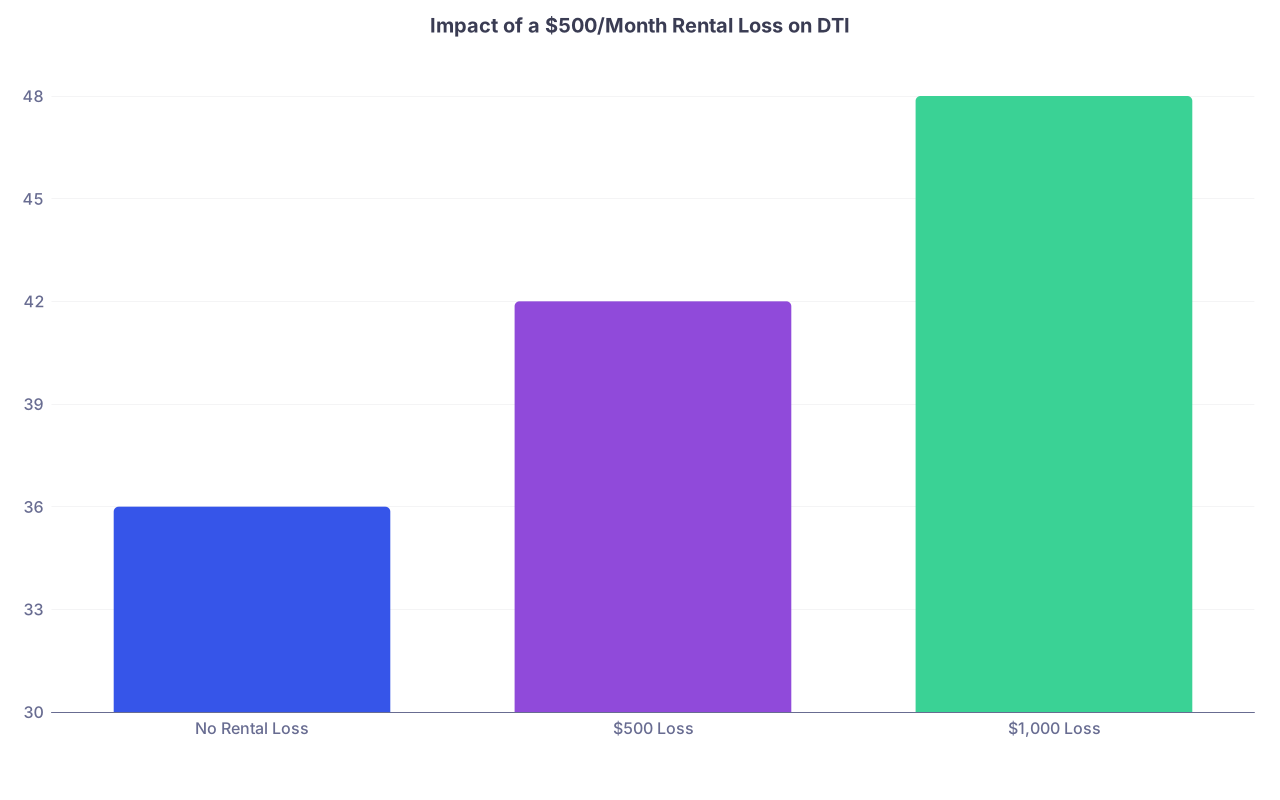
| Category | Value |
|---|---|
| No Rental Loss | 36 |
| $500 Loss | 42 |
| $1,000 Loss | 48 |
That’s what you’re dealing with: each ugly property can bump your DTI several percentage points and push you out of approval range.
Legal & Financial Landmines You’re Worried About
Because it’s not just about “getting approved.” You’re probably also thinking:
- “If I stop paying, will they sue me?”
- “Does putting it in an LLC magically protect me?”
- “If this goes sideways, does it kill my ability to ever get another mortgage?”
Brief reality check:
- An LLC does not erase personal guarantees if the loan is already in your name. You’re still on the hook.
- A foreclosure, short sale, or deed-in-lieu can hammer your credit and your ability to borrow for years. This is the last resort, not a strategy.
- Letting the property spiral into legal trouble will definitely hurt your future borrowing more than taking a controlled loss or restructure early.
If you’re near that cliff—missed payments, can’t float it much longer—this is when you talk to:
- A real estate attorney in your state
- A qualified CPA who knows physician taxes and rentals
Not Reddit. Not your co-resident who “has three doors” and no idea what they’re doing.
Your Identity vs Your Reality
This is the uncomfortable part.
You might’ve wrapped some identity around being the “doctor who’s smart with real estate.” You listen to the podcasts. You know all the acronyms. You follow the influencers who made “57 doors by 32” sound normal.
Now you’re sitting here thinking:
- “I’m supposed to be the smart one.”
- “How did I end up with a property that makes my life worse?”
- “If I sell, am I just admitting I’m bad with money?”
No. You’re admitting you’re human.
Real estate is a business. Businesses close unprofitable divisions all the time. They don’t cling forever because “but this product was my first.”
You’re allowed to call a deal bad. You’re allowed to exit. You’re allowed to say, “This isn’t worth blocking my primary home purchase.”
And here’s the kicker: most lenders and underwriters? They don’t care if you tried and failed at real estate. They just want your DTI under their line.
Take advantage of that. They’re not judging you. You’re doing enough of that yourself.

The Reassurance You Probably Need Right Now
Let me say the quiet part out loud:
No, one bad real estate deal does not permanently destroy your ability to get a mortgage.
It can:
- Delay things
- Shrink how much you qualify for
- Force you into some annoying fixes or hard choices
But lenders heavily weight:
- Your current income (you’re a physician or about to be one)
- Your recent payment history
- Your DTI at the moment you apply
That means time, cleanup, and smart moves can completely change your situation. You are not locked into this current version of your numbers forever.
You just have to treat this like what it actually is: a business problem, not a character flaw.

| Step | Description |
|---|---|
| Step 1 | Bad Rental Hurts DTI |
| Step 2 | Get Real Numbers |
| Step 3 | Talk To Physician Lender |
| Step 4 | Raise Rents And Cut Costs |
| Step 5 | Reassess DTI |
| Step 6 | Refi To Investor/DSCR Loan |
| Step 7 | Consider Selling At Controlled Loss |
| Step 8 | Apply For Primary Mortgage |
| Step 9 | Can Property Be Fixed? |
| Step 10 | Still Dragging You Down? |
What You Should Do Today (Not In Three Months)
Here’s your next step, and it’s specific:
Pull up last year’s tax return and find Schedule E. Then:
- Circle the net income or loss for the problem property.
- Divide that by 12 to get the monthly impact.
- Write that number on a Post-it and stick it on your laptop.
That number is what you’re fighting.
Tomorrow, reach out to one physician-focused mortgage lender and ask them exactly how that number plays into your DTI and what DTI they need to see for the home you want.
Stop trying to fix this in your head. Get the actual numbers they’re using, then decide: fix the property, quarantine it, or cut it loose.
Open your tax return right now and find Schedule E. If you don’t know where that is, that’s your first real estate problem to solve.