
The blanket advice that physicians should “only do passive real estate” is lazy, financially sloppy, and often self-serving.
You’ve probably heard the script:
“You’re too busy to manage properties. Just stick your money in syndications or REITs and let the professionals handle it.”
Sounds neat. Also happens to be exactly what people selling those “passive” products want you to believe.
Let’s dismantle this properly.
The Myth: “Doctors Are Too Busy (or Too Dumb) for Active Real Estate”
The usual talking points:
- “You should focus on medicine; real estate is a distraction.”
- “Tenants and toilets aren’t worth your time.”
- “You’ll get better returns with truly passive syndications.”
- “You’re not trained to underwrite deals—leave it to experts.”
Here’s what the data and real-world outcomes actually show:
- Plenty of physicians successfully own and operate small portfolios of rentals while working full-time.
- The best risk-adjusted returns and tax benefits many physicians get in real estate come from small, boring direct ownership, not blind-pool syndications.
- “Passive” is wildly oversold. Many passive deals are opaque, fee-heavy, and illiquid. And you still carry real risk with almost zero control.
I’m not anti-passive. I’m anti-dogma. And “only passive” is dogma.
What you actually need is a clear comparison of active vs passive: returns, risk, taxes, time, and legal exposure. Let’s do that—without the sales pitch.
Active vs Passive: What the Numbers Actually Look Like
Start with the financials instead of the slogans.
| Feature | Active Small Rentals | Passive Syndication/ Fund |
|---|---|---|
| Typical Cash-on-Cash | 8–12% (properly bought) | 5–8% (after all fees) |
| Total Annualized Return | 12–18% | 8–14% |
| Control Over Decisions | High | Near zero |
| Liquidity | Moderate (sell/refi) | Low (5–10 years locked) |
| Tax Benefits (you direct) | High, directly visible | Indirect, GP controls timing |
Are these exact? No. But they’re realistic ranges I’ve seen repeatedly across actual physician portfolios.
The key: active (or semi-active) small properties can outperform passive deals on both returns and tax flexibility, especially in the early wealth-building phase, with far less time than people scare you into believing.
So where did this “only passive” mantra come from? Partly from truth: most doctors are busy and some are terrible business operators. Partly from convenience: it’s much easier for a guru or syndicator to tell you to write checks and shut up.
But that doesn’t make it optimal advice.
Time: The Most Overstated Argument Against Active Investing
“You don’t have time” is the scare line used to funnel you into other people’s products.
Double-check that assumption.
Most attending physicians who actually own 1–4 rentals and use professional property management spend 1–3 hours per month on their portfolio. Not per property—total. That’s less than you spend charting on a bad clinic day.
Where the time arguments go off the rails:
- They assume “active” means DIY maintenance, 3 a.m. calls, personally showing units.
- They ignore modern systems: online listing platforms, e-sign leases, ACH rent collection, property management software, professional PM firms.
- They confuse “setup time” (heavier in year 1) with steady-state time (light in years 2+).
What active actually looks like for a full-time physician
First 6–12 months (learning & acquiring):
- 2–4 hours/week learning basic underwriting, local laws, lender options.
- A few evenings or weekend blocks walking properties with an investor-friendly agent.
- Some calls with lenders, insurance, property managers.
After that, once you own stable rentals with a manager:
- Responding to occasional emails from your PM (“Approve this $450 repair?”).
- Reviewing monthly statements.
- Annual rent review and insurance/tax checks.
That’s “active” in practice. Not swinging a hammer between night shifts.
Is there more effort than wiring $50k into a syndication? Obviously. But the reward is control, better downside protection, and often better returns.
Risk & Control: Who’s Actually Taking the Risk?
The passive pitch is that you’re “reducing risk” by handing the wheel to professionals. Sometimes true. Often incomplete.
You’re not removing risk; you’re moving it.
Let’s break it into two directions:
- You control the risk: Direct ownership of a small number of properties you actually understand.
- Someone else controls the risk: A GP team you barely know running a complex 300-unit value-add strategy in another state.
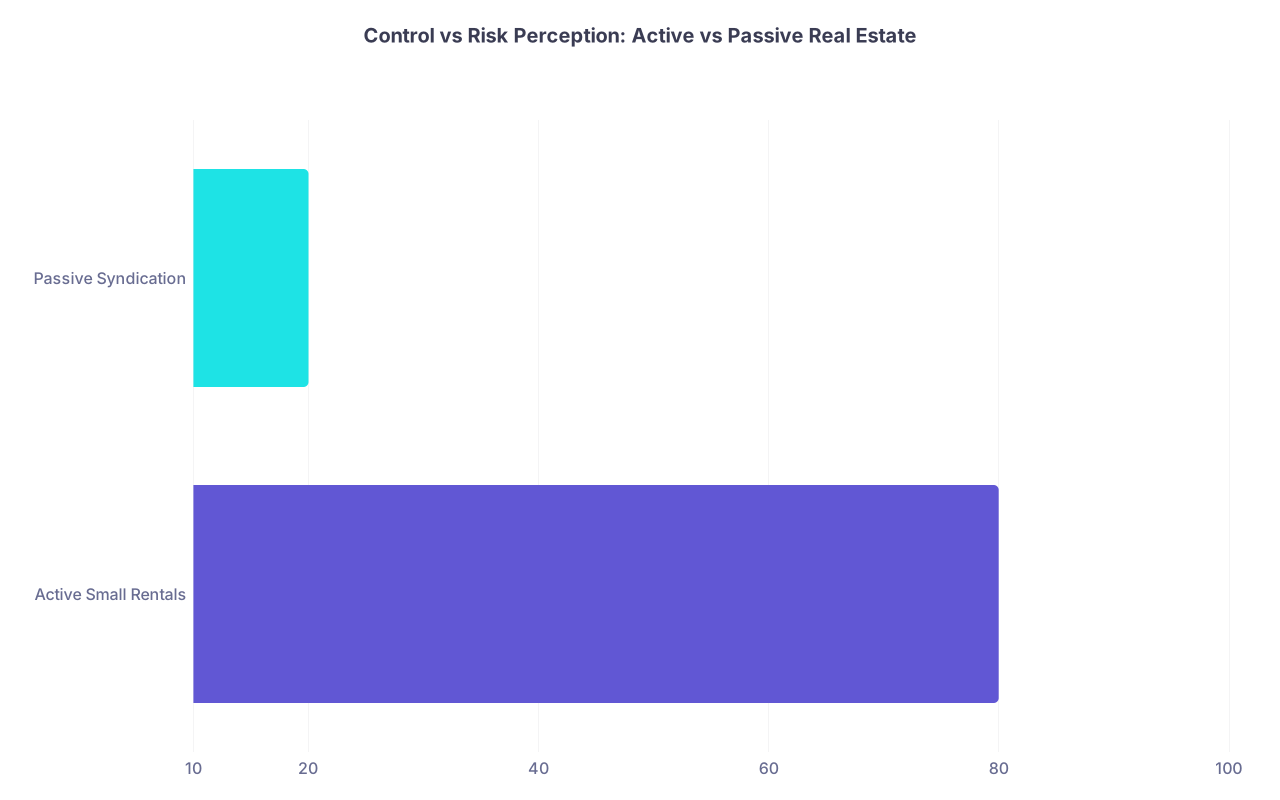
| Category | Value |
|---|---|
| Active Small Rentals | 80 |
| Passive Syndication | 20 |
(Think of those numbers as “how much control you actually have,” not risk level.)
With active small rentals:
- You choose the market, the neighborhood, the property.
- You see the tenant profile and local employer base.
- You choose leverage. You can deleverage or sell if you're uncomfortable.
- If a property underperforms, you actually know why and can adjust.
With passive syndications/funds:
- You often don’t influence:
- Debt structure (fixed vs floating, IO periods, LTV).
- Disposition timing (you might be stuck riding out a bad market).
- Capital calls (you can be forced to choose between wiring more money or being diluted/wiped).
You’re asked to trust the GP’s underwriting, assumptions, and integrity. Some are excellent. Some are reckless. Some are simply inexperienced and will learn their lessons with your capital.
The point isn’t “never do syndications.” It’s this: the story that passive is always safer is fiction. In some cycles, the riskiest thing I’ve seen physicians do is pile into highly leveraged, aggressive passive deals they didn’t understand.
Taxes: Where Active Real Estate Quietly Crushes “Only Passive”
Here’s where the “only passive” crowd usually hand-waves and changes the subject.
Direct real estate with some level of activity gives you a set of tax levers that are either:
- Unavailable
- Or heavily diluted
when you outsource everything.
For high-income physicians in the U.S., three realities matter:
- W-2 income is heavily taxed.
- Real estate depreciation is non-cash and can be large.
- The real estate professional status (REPS) and short-term rental rules can turn real estate losses into W-2 tax shields.
You don’t get those magic switches by just wiring into a random passive deal.
Active small rentals vs purely passive LP interests
- With direct ownership, you can:
- Control when to do a cost segregation study.
- Bunch capital improvements into high-income years.
- Harvest passive losses in a targeted way.
- Potentially qualify for REPS if you or a spouse meaningfully participate.
- With purely passive LP syndications:
- Losses are typically passive and just pile up on paper unless you already have other passive income.
- You have no say in when refinances or sales (and resulting tax events) happen.
- K-1s often show up late, complicating filing.
- Many deals are structured to maximize the GP’s fee timing, not your tax optimization.
If you have a spouse who can qualify for REPS, the “only passive” mantra borders on malpractice-level bad advice. You’re potentially giving up six figures in tax savings to stay “hands off.”
Legal & Liability: Active Isn’t a Lawsuit Magnet If You Structure It Correctly
Another scare tactic:
“If you own properties directly, you’ll get sued into oblivion. Passive is safer.”
That’s a half-truth at best.
Yes, owning property exposes you to landlord-tenant risk, slip-and-fall claims, Fair Housing issues, etc. But structure and insurance matter more than whether you sign ‘member – manager’ on one LLC vs LP on another.
Well-structured active ownership often looks like:
- Each property (or small group) in an LLC.
- Adequate umbrella coverage.
- Solid property/casualty policies.
- A professional property manager following local laws and fair housing standards.
Many passive LP structures:
- Put you into a larger LLC/LP with other investors.
- Advertising “limited liability” but with:
- Zero say in day-to-day compliance.
- Zero control over safety standards, screening policies, or vendor selection.
- Full exposure to any global failure of that asset/business plan.
You’re not magically immune to legal risk because you’re an LP. You’re just betting that the GP’s operational discipline is bulletproof.
Done correctly, active small-scale investing with sane legal structure and insurance can actually feel more predictable than wiring money into an opaque entity three states away.
Cognitive Bias & Conflicts of Interest: Who’s Telling You “Only Passive”?
You rarely hear, “Doctors should only do passive real estate” from:
- People who built their wealth on small active portfolios.
- Landlords with 5–20 units and professional management.
- CPAs who specialize in real estate tax planning.
You hear it from:
- Syndicators who need LP capital.
- Fund managers selling “doctor-only” funds.
- Gurus whose entire business is courses and masterminds, not owning property.
I’ve sat in those conference rooms. I’ve heard the pitch:
“You’re a high-earning professional. You don’t have time to deal with tenants. We pre-vet everything for you. Just pick a deal and wire in.”
Sometimes the deals are decent. Sometimes the assumptions are laughable. Very rarely do they show realistic downside scenarios, real stress-testing, or the GP’s actual skin in the game.
And almost never do they say:
“Here’s when you’d be better off just buying a boring triplex in your own metro and hiring a manager.”
Because that doesn’t generate fees for them.
You don’t need to be cynical about everyone. You should be realistic about incentives.
When Passive Does Make Sense for Physicians
Let me be clear: passive investing isn’t bad. “Only passive” as a blanket prescription is bad.
There are cases where leaning mostly passive is rational:
- You genuinely hate real estate and business.
- You’re in a brutal subspecialty with 80–100 hour weeks and zero cognitive bandwidth.
- You already built enough wealth; your focus is capital preservation and simplicity, not maximizing growth.
- You already have a solid active base (e.g., 4–10 owned units) and now selectively add passive deals for diversification.
But even in those scenarios, some direct exposure usually makes sense: your own home, one or two rentals, maybe a short-term rental you understand.
“Only passive” should be your conscious choice after understanding trade-offs, not your default because someone on a podcast told you you’re “too busy to learn this.”
A More Honest Framework: Hybrid, Not Binary
The smartest physician real estate investors I’ve seen do not live at either extreme. They:
- Start with one or two small active properties to learn underwriting, financing, and operations.
- Use that knowledge to avoid obviously bad passive deals (and pick the few good ones).
- Build a hybrid portfolio:
- Some stable, cash-flowing local rentals with solid management.
- Some selectively chosen passive syndications/funds with GPs they know and understand.
- Occasionally, opportunistic deals (small partnerships, STRs, etc.) where they have edge.
That mix lets you:
- Use the tax code aggressively when it benefits you.
- Keep part of your portfolio boring and stable.
- Deploy capital into larger scale projects—but with eyes open.
The “only passive” idea dies quickly once you’ve actually owned and operated even one normal rental. The mystique vanishes. You stop believing you’re too fragile or busy to handle basic business decisions.

| Step | Description |
|---|---|
| Step 1 | High income physician |
| Step 2 | Start with 1-2 local rentals |
| Step 3 | Small allocation to vetted passive deals |
| Step 4 | Hire property manager |
| Step 5 | Build tax and ops knowledge |
| Step 6 | Scale active + add selective passive |
| Step 7 | Maintain small active base + mostly passive |
| Step 8 | Willing to learn 5-10 hrs? |
| Step 9 | Comfortable with risk and time? |
This is the honest map. Not the “you must stay passive forever” fairy tale.
The Bottom Line
Three points and we’re done:
“Doctors should only do passive real estate” is bad advice because it ignores actual data on returns, tax benefits, and time demands of well-managed small active portfolios.
Active (or semi-active) direct ownership—done sanely with property managers, LLCs, and insurance—often delivers better control, better tax outcomes, and competitive or superior returns compared with handing everything to syndicators.
The optimal path for most physicians isn’t passive or active. It’s hybrid: learn on a few small properties, then decide—based on your actual experience and goals—how much to allocate to passive deals, instead of letting someone with a sales pitch decide for you.
You’re capable of more than wiring money and hoping for quarterly emails. Start acting like it.
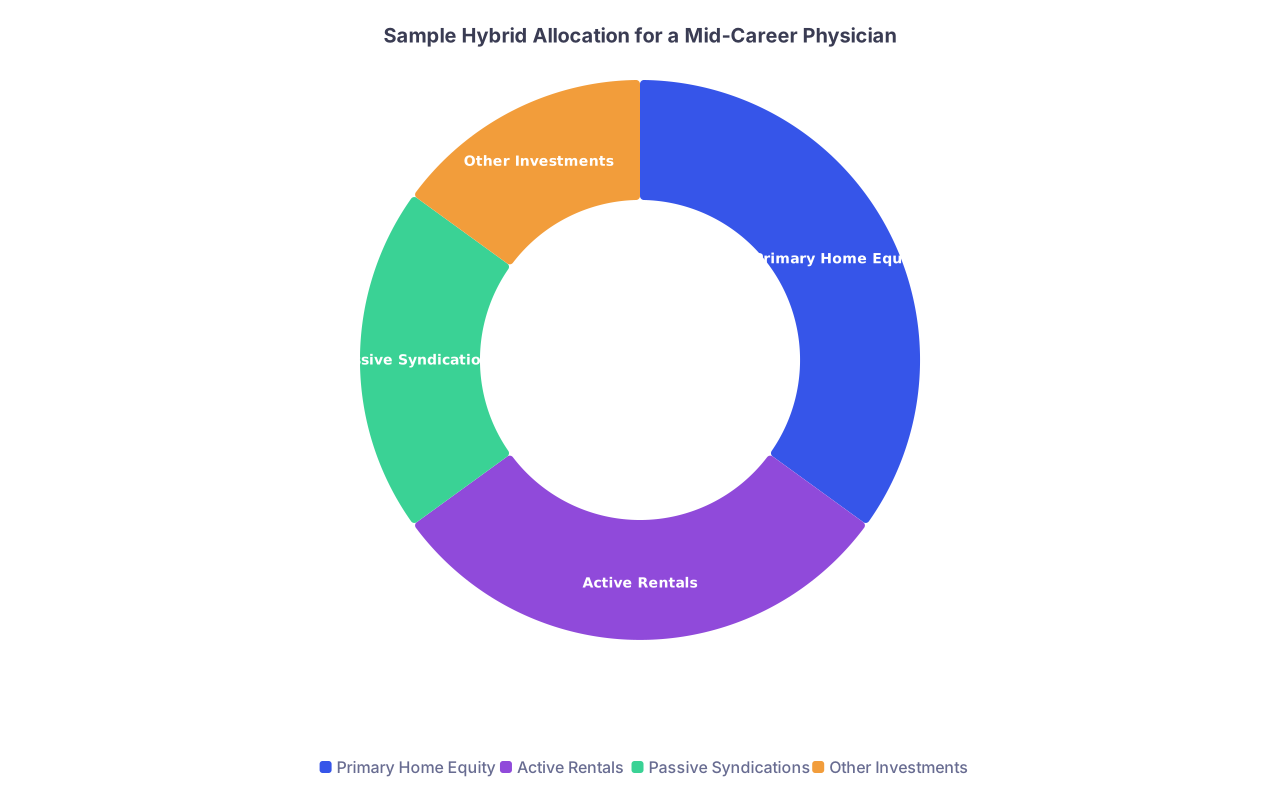
| Category | Value |
|---|---|
| Primary Home Equity | 35 |
| Active Rentals | 30 |
| Passive Syndications | 20 |
| Other Investments | 15 |