
The way most doctors talk about RVUs is wrong—and that’s exactly why people get burned on RVU-based pay.
If you don’t understand RVUs cold before you sign, you’re basically gambling your income on someone else’s assumptions. Sometimes that gamble pays off. Sometimes it blows up your lifestyle.
Let’s fix that.
RVU-Based Pay in One Sentence
RVU-based pay means: you get paid based on how much billable work you generate, not just for showing up.
More volume = more RVUs = more pay… if the contract is fair and the setup actually lets you generate that volume.
The key moving parts:
- wRVU (work RVU) target: how many RVUs you’re expected to produce
- Conversion factor: how many dollars per RVU you get
- Guarantee vs pure productivity: whether there’s a base salary or not
- Infrastructure: whether the practice actually lets you hit those numbers
If you don’t know all four, you don’t understand your offer yet.
Quick RVU Reality Check: Are You Underpaid?
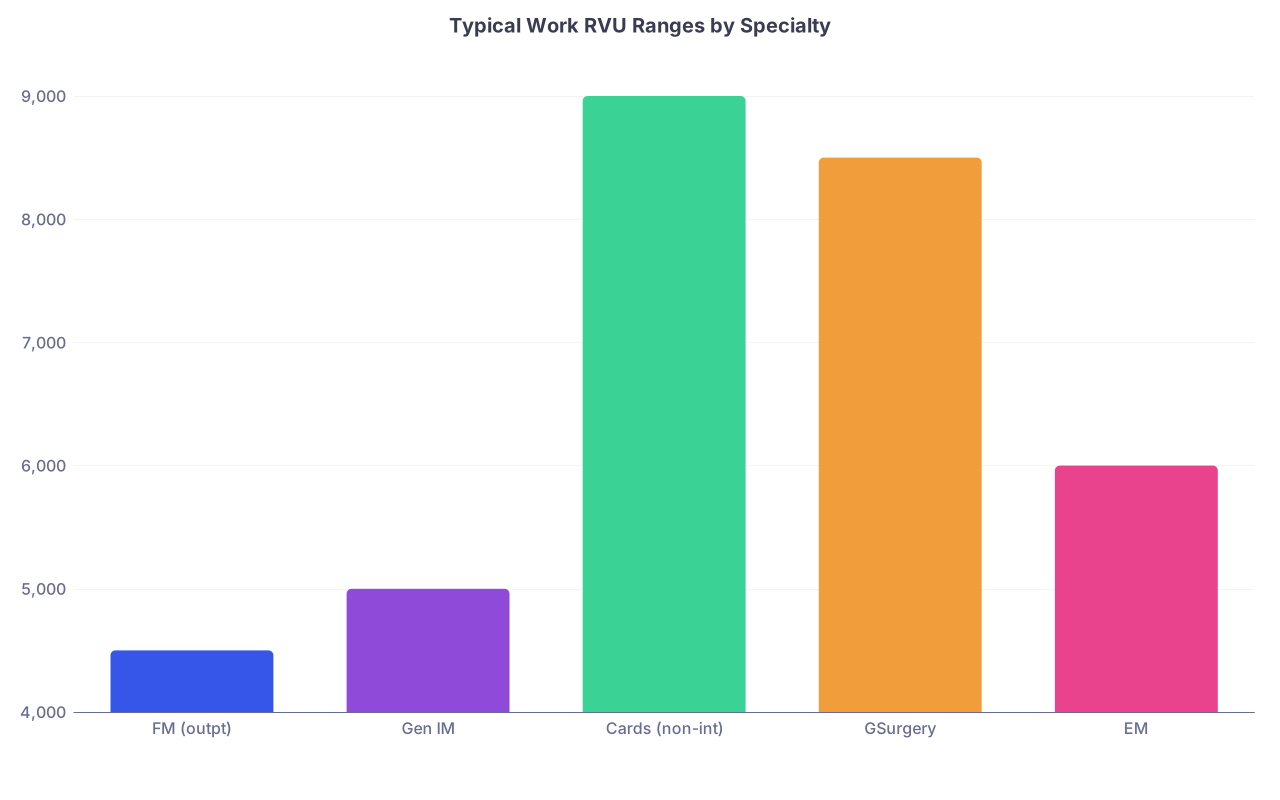
| Category | Value |
|---|---|
| FM (outpt) | 4500 |
| Gen IM | 5000 |
| Cards (non-int) | 9000 |
| GSurgery | 8500 |
| EM | 6000 |
Those are ballpark annual wRVU ranges for full-time physicians in many markets (not academic outliers, not Manhattan boutique practices). Your exact numbers should be compared against MGMA/AMGA data, but if your contract’s expectations are wildly above these—red flag.
How RVU-Based Pay Actually Works (No Fluff)
You’ll usually see one of these models:

Straight salary (no RVUs)
You get a fixed salary. RVUs are tracked internally but don’t change your pay. Simple, common in academic and some hospital-employed jobs.Base salary + RVU bonus (hybrid)
You get a guaranteed base. Above a certain RVU threshold, you get paid extra per RVU. This is very common for first 1–2 years out of training.Guaranteed period → pure RVU
Year 1–2: guaranteed salary based on “expected RVUs.”
After that: your income is mostly or entirely RVU-based.Pure RVU from day one
No real base, or a tiny “draw” that settles against production. More common in private groups, higher risk, higher upside.
Pay is basically:
Total Pay = (wRVUs produced × $ per wRVU) + any base/guarantee
If there’s a “threshold,” you only earn the RVU dollars above that number.
Example:
- Target: 6,000 wRVU/year
- Rate: $55 per wRVU
- Base: $250,000
- Mechanic: You earn bonus for every wRVU above 6,000
If you produce 7,500 wRVUs:
- Extra RVUs: 1,500
- Bonus: 1,500 × $55 = $82,500
- Total: $250,000 + $82,500 = $332,500
If you only produce 5,500? In a well-structured guarantee, you’d still get the $250,000 during the guarantee phase—but those shortfalls are exactly what employers look at when they renegotiate you in year 2 or 3.
Who RVU-Based Pay Helps Most
Let me be blunt: RVUs absolutely benefit some docs more than others.
If any of this sounds like you, RVU-heavy comp can be a win.
You’re high-volume and efficient
You:
- See patients quickly without sacrificing quality
- Don’t mind a full schedule and short visits
- Are okay with a bit of grind in exchange for big paychecks
Hospitalists who comfortably carry 18–20+ patients, EM docs who like busy shifts, proceduralists with full schedules—these folks often crush it in RVU models if the pay per RVU is decent.
You’re in a procedure-heavy specialty
Procedures often carry more RVUs per unit time than clinic visits. Think:
- Cardiology (especially interventional)
- GI
- General surgery and surgical subspecialties
- IR, ortho, urology, etc.
If the RVU values are realistic and the practice feeds you cases, procedure-based docs can dramatically out-earn flat salary peers.
You’re in a high-demand market
If there’s:
- Not enough docs
- Strong referral networks
- Long waitlists
…you’re in a good spot. RVU models are far safer when you’re not fighting others for patients.
You want income upside and are willing to work for it
RVU-based pay is like an income accelerator. If you like the idea of:
- Paying off loans faster
- Frontloading earning years
- Working more now, possibly less later
…then productivity pay lines up with your goals.
Who RVU-Based Pay Hurts Most
On the flip side, some physicians keep getting burned by these models.
You value strict lifestyle control
If your must-haves include:
- Hard stop at 4:30 every day
- Minimal double-booking
- Limited call and extra clinics
You’ll often underperform RVU targets unless the group intentionally builds RVU credit around things like call, admin, or academic work. Most don’t.
You’re in low-volume or capped settings
Example traps:
- Rural clinic with tiny panel and no marketing
- Specialty where hospital caps your OR block time
- EM group that cut shifts but left production expectations unchanged
If your environment limits your volume, RVU pay punishes you for things you don’t control.
You do a lot of non-billable work
Academics, heavy teaching roles, leadership, admin time—if it doesn’t generate CPT codes, it probably doesn’t generate RVUs.
Unless the contract explicitly credits RVUs or dollars for these:
- Committee work
- Program director duties
- Medical director roles
- Quality projects
…you’ll quietly subsidize the system with your time.
You’re early in practice with slow ramp-up
Building a panel takes time. It’s not rare to see:
- Month 1–3: half-empty clinic
- By month 6–12: closer to full
- Year 2: finally hitting stride
Pure RVU from day one with no real ramp-up support is a common way new attendings wind up way underpaid and overworked.
Pros of RVU-Based Compensation
Let’s give RVUs some credit. There are real upsides.
1. Direct line between work and pay
You work more, you earn more. No guessing if you’ll actually see the value from staying late or adding an extra clinic.
That transparency appeals to a lot of type-A docs who like clear rules.
2. Big upside potential
I’ve seen internists on $220k flat salary move to hybrid RVU setups and land in the $320–380k range simply by doing the same or slightly more work in a system that actually paid for it.
Same for proceduralists jumping from academic flat pay to community RVU models.
3. Protection from payer mix shifts
Key point: RVUs are payer-agnostic. The wRVU for a 99214 is the same whether the patient is:
- Commercial
- Medicare
- Medicaid
- Self-pay
If your contract is based on wRVUs and not on collections percentage, you’re partially shielded from crappy payer mix dragging your income down.
4. Negotiation leverage
RVUs give you two big numbers to negotiate:
- Annual RVU expectations
- Dollars per RVU
You can often move one or both if you know market data (MGMA/AMGA benchmarks) and are willing to walk away.
Cons and Hidden Traps of RVU-Based Pay
Now the ugly side.
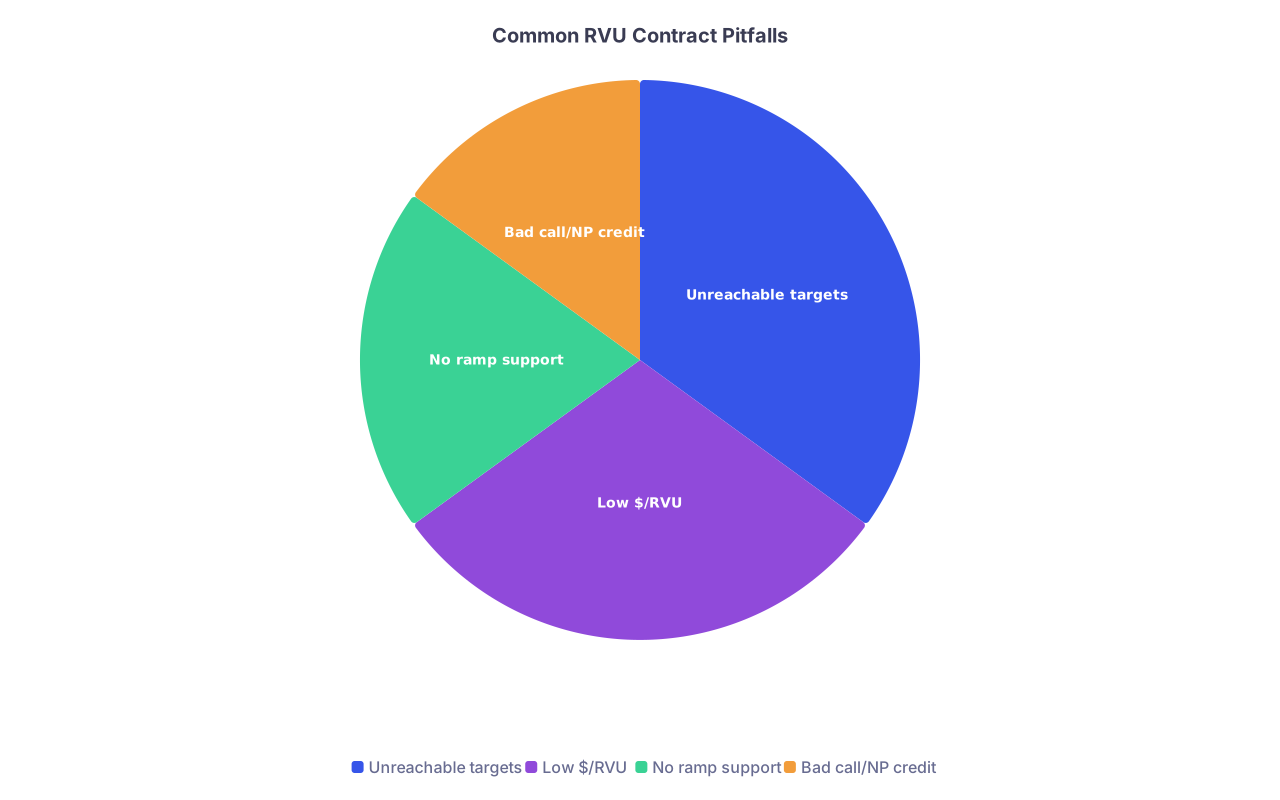
| Category | Value |
|---|---|
| Unreachable targets | 35 |
| Low $/RVU | 30 |
| No ramp support | 20 |
| Bad call/NP credit | 15 |
1. Unrealistic RVU targets
The classic move:
- Offer: Great-looking base salary tied to “expected production”
- Fine print: Expectation is 8,000 wRVUs for outpatient IM in a slow market
- Reality: That’s nearly impossible without seeing unsafe volumes
You meet 75% of goal → employer uses that to slash your salary after the guarantee term and tells you “the numbers just aren’t there.”
2. Low dollars per RVU
Not all RVU rates are equal. For many cognitive specialties, something like:
- $45–60/wRVU is common in many markets
- $35–40/wRVU is on the low side but sometimes defensible with strong benefits
- Below $35/wRVU for non-academic? Usually bad.
Procedure-heavy specialties often see higher $/RVU but it’s hugely variable.
Low conversion factors quietly kill your upside, even if targets look reasonable.
3. You “pay” for more staff or time
RVU setups often ignore that:
- More complex, sicker patients take longer
- If you argue for longer visit slots for quality or safety, your volume (and RVUs) drop
- Extra MA/NP help may not translate into higher RVUs if your schedule is capped
The structure pushes you toward shorter visits and more throughput. If that conflicts with how you want to practice, you’ll be miserable.
4. No RVU credit for NPs/PAs or call
Huge one that people miss:
- Are you supervising NPs/PAs but not getting RVU credit for their work?
- Are you taking heavy call that isn’t credited with RVUs or separate stipends?
- Are you doing lots of “in-basket” work that doesn’t generate codes?
That’s free labor the system loves, and your RVU check will not.
5. Gaming, burnout, and moral injury
The RVU tail can start wagging the clinical dog:
- Pressure to upcode or over-order procedures
- Reluctance to see lower-RVU but needed visits
- Feeling like you can’t breathe without hurting your paycheck
That’s how people slide from “motivated by upside” into “I don’t want to practice like this anymore.”
How to Decide: Is RVU-Based Pay Right for You?
Here’s a simple decision framework.

| Step | Description |
|---|---|
| Step 1 | New Job Offer |
| Step 2 | Prefer salary heavy model |
| Step 3 | Get MGMA/AMGA data |
| Step 4 | Renegotiate or walk |
| Step 5 | Hybrid with strong base |
| Step 6 | RVU heavy ok |
| Step 7 | High volume realistic? |
| Step 8 | Have benchmark data? |
| Step 9 | RVU target and $ fair? |
| Step 10 | Lifestyle priority high? |
Ask yourself:
Do I actually like working at higher volume?
Not “can I tolerate it for a year.” Actually like or at least be okay with it long-term.Will this setting support volume?
- Established referral base?
- Enough clinic slots or OR time?
- Good staffing and scheduling?
Do I know the benchmarks?
Compare:- Their RVU target vs national median for your specialty
- Their $/RVU vs national median for similar settings
If they won’t give you the full comp formula “because it’s complicated,” that’s not a good sign.
Am I okay with income variability?
Some months you’re slammed, some months you’re not. Are you comfortable with income that can swing 10–20% year to year?Does this align with how I want to practice?
If more time per patient, complex care, or heavy teaching is core to your identity, pure productivity will constantly fight that.
What to Negotiate in an RVU Contract
| Item | What You Want to See |
|---|---|
| Annual RVU Target | Near or below national median |
| Dollars per wRVU | At or above local market norm |
| Guarantee/Ramp Period | 1–2 years with realistic expectations |
| Credit for NP/PA Work | wRVU or % of revenue allocated to you |
| Call/Extra Duties | Separate stipend or RVU credit |
| Nonclinical Time | Protected pay or defined RVU equivalent |
Specific asks that actually move the needle:
- Lower RVU target with same base
- Higher $/wRVU above threshold
- Longer guarantee period while your panel builds
- Written language that you get RVU or dollar credit for supervising APPs, call, medical directorship, etc.
- A clear “no clawback” clause on guarantee if you don’t hit RVUs for reasons outside your control
If they won’t budge on anything, that tells you as much as the numbers do.
How RVU Pay Compares to Other Models
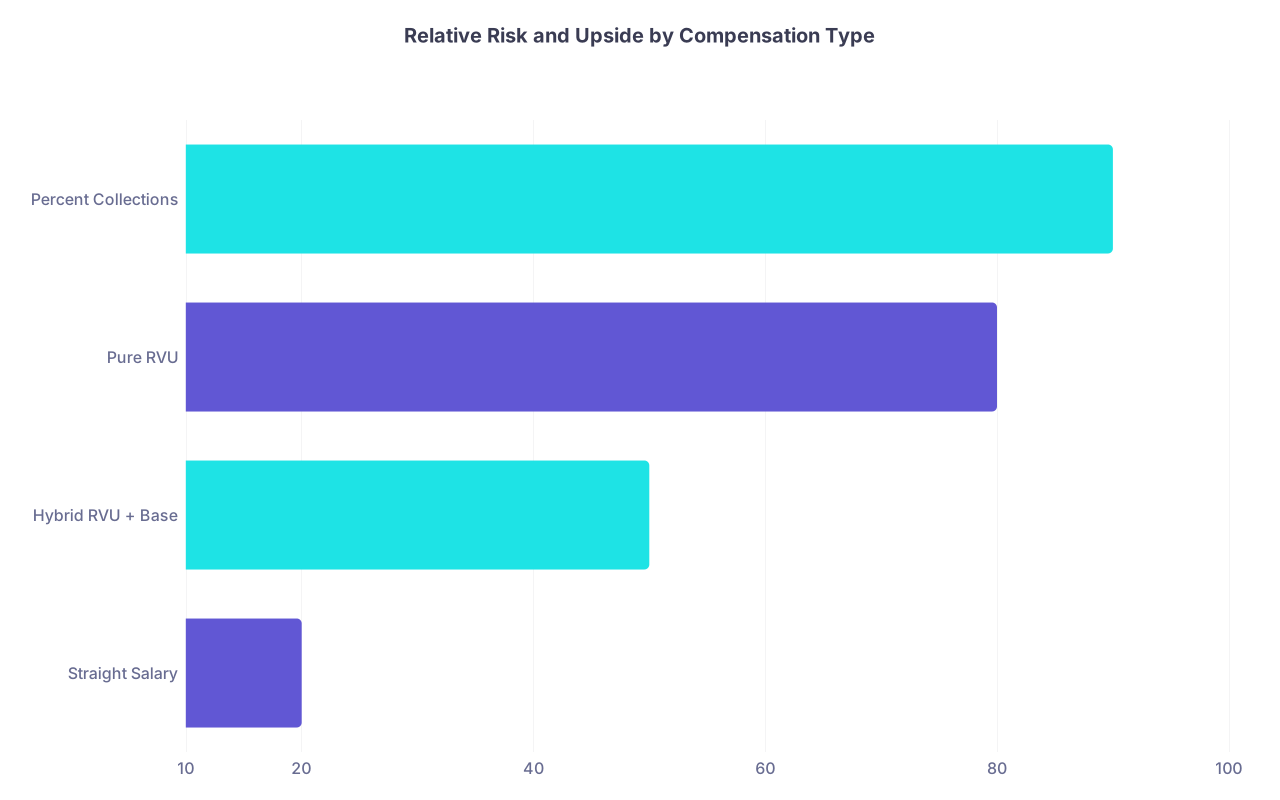
| Category | Value |
|---|---|
| Straight Salary | 20 |
| Hybrid RVU + Base | 50 |
| Pure RVU | 80 |
| Percent Collections | 90 |
(Values here = rough “risk/variability” score, 0–100)
Quick comparison:
Straight salary
Lowest risk, lowest upside. Best for stability, academics, or lifestyle jobs.Hybrid RVU + base
Middle ground. Some stability with real upside. Often best for many employed docs.Pure RVU
High risk, high upside. Works for high-volume, well-supported, confident clinicians.Percent collections
Common in private practice. Riskier than RVU because payer mix and denials hit you directly, but with potentially massive upside if the business is well run.
Red Flags That Say “Walk Away”

If you see these, seriously consider passing:
- They won’t tell you historical RVU numbers for the position you’re filling
- They refuse to specify dollars per RVU in writing
- RVU target is above MGMA 75th percentile for your specialty while offering median pay
- No guarantee/ramp for a new practice with no existing panel
- You’re replacing someone who left after 1–2 years and no one can explain why in a straight answer
- Contract allows them to unilaterally change the compensation formula each year
You’re not “missing an opportunity” by avoiding bad structures. You’re dodging a trap.
Bottom Line: Is RVU-Based Pay Right for You?
Here’s the clean answer:
RVU-based pay benefits you most if you’re:
- High-volume, reasonably efficient, and okay with it
- In a specialty and setting where volume is actually there
- Backed by fair RVU targets and $/RVU that match or beat your market
- Comfortable trading some stability for upside
It probably hurts you if you’re:
- Highly lifestyle-focused or slow-panel by choice
- In a low-volume or capped environment
- Doing lots of non-billable teaching/admin with no explicit credit
- New to practice with no real ramp-up protection
Get the actual numbers. Compare them to benchmarks. Negotiate hard. And walk if the math or culture doesn’t line up with how you want to live and practice.
FAQs
1. What’s a “good” dollars-per-RVU rate for my specialty?
There’s no single magic number, but you can ballpark:
- Cognitive specialties (IM, FM, peds): often $45–60/wRVU in many employed settings
- Hospitalists: similar, sometimes slightly higher because of nights/weekends
- Surgical/procedural: wide range, but usually higher dollar per RVU
You need MGMA/AMGA or state medical society data for your specialty and region. If your offer is 15–20% below median with no exceptional benefits, that’s not “competitive.”
2. How many RVUs should a full-time physician produce?
Rough ranges (not gospel):
- Outpatient FM/IM: 4,500–6,000 wRVU/year
- Hospitalist: 4,000–5,500 (depends on shifts)
- EM: 4,500–6,500
- Many surgical specialties: 7,000–10,000+
If their “expected” RVUs are above MGMA 75th percentile while pay is only at median, you’re being asked to work like a top producer for average money.
3. Is RVU pay better than percent collections?
It depends on risk tolerance and practice quality. RVU pay is usually safer because your income doesn’t swing as wildly with billing inefficiencies or payer mix. Percent collections can beat RVU pay in a lean, well-run private practice with good contracts—but it can also be a disaster if the group’s billing or contracts are poor.
4. Can I change from salary to RVU at my current job?
Sometimes. Larger systems may have set tracks or “tiers” where you can shift from pure salary to hybrid or productivity-heavy models after 1–3 years. If you’re consistently overproducing relative to peers on salary, you’re in a strong position to ask for an RVU-based structure or bonus layer.
5. How do I protect myself in my first RVU-based job?
You want: a 1–2 year guarantee, realistic RVU targets, transparent historical data for your position, written credit for supervision and nonclinical work, and clear terms on what happens after the guarantee. If any of those are vague or “we’ll work it out later,” that’s your sign to slow down or walk.
6. Are RVUs going away with value-based care?
Not anytime soon. Everyone talks about “value-based” and “population health,” but most physician comp plans still lean heavily on wRVUs, sometimes with small quality bonuses bolted on. You may see more hybrid models (RVU + panel size + quality scores), but RVUs will stay central to physician pay for the foreseeable future.