
It’s 10:45 p.m. You just finished a 14‑hour shift, you’re eating cold pasta over your laptop, and your checking account balance is an insult. You’ve got an idea: telemedicine on your golden weekends, some tutoring, maybe a Substack or a YouTube channel. Then you remember your contract and that vague “no outside employment without approval” line.
You’re asking yourself the right question:
Can your residency program actually stop you from having a side gig?
Short answer: Yes, they can restrict and sometimes effectively block certain side gigs. But no, they cannot “own your life” in the way a lot of residents assume. The trick is knowing what they control, what they think they control, and what they absolutely do not.
Let’s break this down cleanly.
The Core Reality: What Programs Can Control vs What They Can’t
Here’s the basic framework you need in your head:
Your residency program controls:
- Your training status (continue vs remediation vs termination)
- Your schedule and duty hours
- Compliance with policies and your employment contract
Your employer/health system controls:
- Your paycheck, benefits, malpractice coverage
- HR policies: moonlighting, conflicts of interest, IP, social media
Outside that?
The rest of your life is yours. But you can still get burned if you cross their lines.
The legal and practical answer hinges on four main frameworks:
| Area | What It Affects |
|---|---|
| Employment Contract | Moonlighting, outside work, IP ownership |
| GME / Program Policies | Professionalism, time commitment, conflicts |
| ACGME Rules | Duty hours, fatigue, supervision, education |
| State Law / Licensing | Practicing medicine, telehealth, malpractice |
If your side gig collides with any of these, yes — they can stop you, discipline you, or make your life miserable enough that you drop it.
Typical Contract Language: Where Side Gigs Get Killed
Most residency contracts and GME handbooks have at least one of:
- “Outside employment requires prior written approval from the Program Director or DIO.”
- “Resident shall not engage in activities which interfere with training or violate ACGME duty hour regulations.”
- “All inventions, writings, and intellectual property created using institutional resources are property of the institution.”
Translation:
- They can require permission for paid work outside the program.
- They can discipline you if side work screws up your performance, attendance, or duty hours.
- They can sometimes claim ownership of what you build if you use their resources.
But “outside employment” is narrower than many residents think.
Writing a blog at 11 p.m.?
Recording anonymized educational videos?
Selling an Anki deck you built yourself, off‑hours, without institutional data?
Most programs never even thought about those when they wrote the policy. That gray zone is where a lot of realistic side hustles live.
The Big Categories of Side Gigs: What’s Allowed, Restricted, and Asking for Trouble
Let’s go category by category. This is where the practical decisions live.
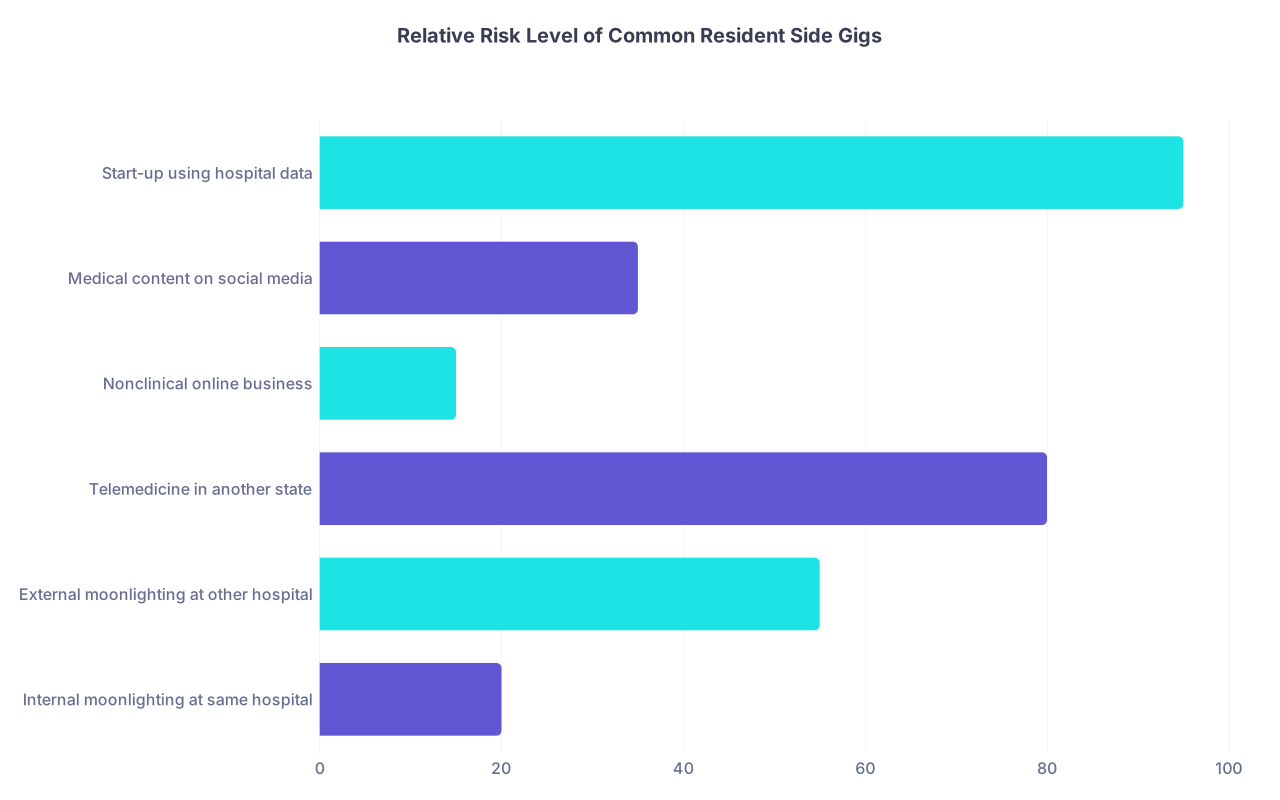
| Category | Value |
|---|---|
| Internal moonlighting at same hospital | 20 |
| External moonlighting at other hospital | 55 |
| Telemedicine in another state | 80 |
| Nonclinical online business | 15 |
| Medical content on social media | 35 |
| Start-up using hospital data | 95 |
(0 = basically safe if you are competent, 100 = asking for institutional rage + legal headaches)
1. Clinical moonlighting (internal or external)
This is the most regulated.
Programs can:
- Ban moonlighting completely.
- Restrict it to PGY‑2+ or only if “on track” academically.
- Require prior written approval.
- Count moonlighting hours toward ACGME duty hours.
If your contract or handbook says “no moonlighting,” that’s enforceable. If you sneak off to moonlight and they find out, they’re not bluffing when they say it can be grounds for discipline or non‑renewal.
Bottom line: Yes, they can stop this. And they often do.
2. Telemedicine as a resident
This is a layered problem:
- You need a license in that state.
- You need malpractice coverage (your residency’s coverage almost never extends).
- You need your program’s buy‑in if they consider it moonlighting.
Some telemed companies contract with residents. Some explicitly refuse because of duty hour and malpractice headaches.
Can your program stop you from doing telemed on your own license?
Usually yes, practically. They’ll label it moonlighting and either:
- Ban moonlighting altogether, or
- Require approval and then deny it.
If you do it anyway and something goes wrong, you’ll be alone — no institutional shield. High risk move.
3. Nonclinical side businesses (the most underrated category)
This includes:
- Content creation: YouTube, TikTok, newsletter, podcast, blog
- Online courses, tutoring, USMLE prep
- Consulting for startups (non‑clinical advice, product feedback)
- E‑commerce, investing education, real estate content, etc.
Can they stop you here?
They can try. But their leverage is way weaker.
They can:
- Enforce professionalism policies (HIPAA, patient privacy, hospital reputation)
- Nail you if you do this during work hours or it affects performance
- Use vague “unprofessional behavior” if you’re posting reckless or brand‑damaging content
They usually cannot:
- Ban you from having a YouTube channel that you run on your own time
- Own your generic medical content if you do it off‑hours, on your own equipment, and without PHI or institutional branding
I’ve seen:
- Residents with channels over 100k subs run this cleanly.
- Residents dragged into a PD’s office because they posted “funny codes” stories that were obviously traceable to specific patients. They got crushed.
The difference wasn’t having a side gig. It was judgment.
4. Startups and tech — where IP and conflict of interest explode
If you start:
- An app that uses clinical data
- A tool that runs on hospital servers
- Anything built with your residency research or institutional datasets
Your program and hospital have a serious claim. They will almost certainly assert institutional ownership and/or conflict of interest.
They can’t stop you from being an entrepreneur in general. They can stop you from building a company on top of:
- Their data
- Their systems
- Their time
- Their grants
If you want to play in this space, get actual legal counsel, not hallway advice.
The Actual Levers Programs Use Against Side Gigs
Programs don’t typically come out and say, “We forbid side hustles.” They use blunt tools.
1. “Professionalism” and “commitment to training”
Catch‑all categories. If they think your side gig is:
- Taking time away from reading or patient care
- Making you late, tired, unavailable
- Embarrassing the program
They can:
- Put you on a remediation plan
- Delay promotion
- Not renew your contract
You won’t see “because of your YouTube channel” written in the file. You’ll see “concerns regarding professionalism, time management, and commitment to training.”
2. Duty hour violations
If they can connect your fatigue, errors, or absences to outside work, they’ve got teeth.
ACGME says:
- Max 80 hours/week averaged over 4 weeks
- One day off in 7
- Adequate rest between shifts (depending on level)
Moonlighting counts. Your side business at a laptop at 2 a.m. doesn’t officially count — but if you show up wrecked and make mistakes, they’re going to care.
3. Policy and contract breaches
If your contract says “no outside employment without written approval” and you’re getting a 1099 from some company, they can discipline you even if your performance is fine. Will they always? No. But they can.
What They Cannot Do (At Least, Not Legitimately)
Let’s be clear where their power stops.
They cannot legitimately:
Claim they “own” all your thoughts and creations 24/7
If your IP clause says they own “all inventions created during employment,” courts often interpret that as: during employment hours / with employer resources / within your scope of assigned work. But this is jurisdiction‑specific, and SDNY is not Alabama. That’s why you read your contract.Forbid you from:
- Writing non‑medical fiction on your own time
- Running a generic finance blog
- Doing completely non‑medical consulting on weekends
- Investing, real estate, basic entrepreneurship
Police your free time just because they don’t like that you have a life
They need a hook: contract, policy, or performance issue.
What they do have is leverage via your evaluation and your future. If you antagonize them just to “win” a theoretical rights argument, you’ll lose something more important: letters, promotion, jobs.
So the game is: stay inside the lines where they have real power. Use the freedom where they don’t.
How to Be Smart About Side Gigs as a Resident
Here’s a practical framework that actually works in real life.

| Step | Description |
|---|---|
| Step 1 | Have side gig idea |
| Step 2 | Check contract for moonlighting rules |
| Step 3 | Nonclinical gig |
| Step 4 | Do not proceed or get approval |
| Step 5 | Get written approval and log hours |
| Step 6 | High risk - get legal advice |
| Step 7 | Low risk - protect privacy and performance |
| Step 8 | Clinical work? |
| Step 9 | Moonlighting allowed? |
| Step 10 | Uses hospital data or time? |
Step 1: Read your actual contract and GME handbook
Not your co‑resident’s memory. Yours.
Look specifically for:
- “Outside employment” or “moonlighting”
- “Intellectual property” or “invention assignment”
- “Social media” and “patient privacy”
- Any requirement to disclose conflicts of interest
If the language is too vague, that’s not a license to be reckless. It’s a signal to ask targeted questions.
Step 2: Classify your side gig
Ask:
Is this clinical?
If yes, it’s moonlighting. Assume they can control or ban it.Is this nonclinical, zero PHI, zero hospital systems, off‑hours, on my own hardware?
If yes, much safer.Does it directly trade on my status as a resident at X program?
Name‑dropping your hospital all over your social media brings branding and reputational questions into play.
Step 3: Decide: disclose or don’t?
Rough rule:
- If money flows through a W‑2 or 1099 for clinical work → disclose and follow moonlighting policy.
- If it’s visible, branded, and medical (big social media presence, widely known content) → assume they’ll find it; build it clean and professional from day one.
- If it’s small, nonclinical, and doesn’t touch your residency world at all (e.g., Etsy shop, anonymous niche blog about productivity) → many residents keep this separate and don’t make a production out of it.
When in doubt, talk to someone with no stake: alumni, upper‑year who’s done it, or an actual lawyer if the stakes are high.
Examples: What Usually Flies vs What Blows Up
Let me be concrete.
Things I’ve seen residents do without major issue:
- Run a Step 1/Step 2 tutoring business, disclosed as “educational consulting,” fully off‑hours, no hospital systems, all generic cases.
- Have a personal finance blog for doctors, no employer name, no PHI, all done at home.
- Build a USMLE question bank while a resident, on their own laptop, story‑based but de‑identified and not drawn from specific identifiable cases.
Things I’ve seen cause serious trouble:
- Anonymous Twitter account posting “funny” ED stories with enough detail that local staff recognized patients.
- Moonlighting at an unaffiliated hospital without approval, then showing up post‑call to clinic and making a serious mistake.
- Resident using hospital time, data, and subordinate med students to build an app — then trying to launch it solo. Institution intervened hard.
It’s not mystical. It’s pattern recognition: privacy violations, fatigue, deception, and institutional reputational harm are what make programs clamp down.
Quick Comparison: Program Control by Side Gig Type
| Side Gig Type | Can Program Ban? | Needs Approval? | Main Risk Area |
|---|---|---|---|
| Internal moonlighting | Yes | Yes | Duty hours, performance |
| External moonlighting | Yes | Yes | Contract breach, fatigue |
| Telemedicine (clinical) | Often yes | Yes | Malpractice, moonlighting |
| Medical YouTube/blog | Rarely outright | Usually no | Professionalism, privacy |
| Non-medical online biz | Hard to ban | Usually no | Performance only |
FAQs
1. Can my program fire me just for having a YouTube channel or podcast?
They’re unlikely to explicitly say, “You’re fired for YouTube.” What they can do is label specific behaviors unprofessional: privacy breaches, crude content, misrepresentation, or obvious conflict with your role. If your channel is clean, no PHI, no bashing patients or staff, and your performance is solid, most programs will grumble at worst. The real danger is if your content makes the institution look bad or crosses privacy lines.
2. Do I have to tell my program about nonclinical side gigs?
Usually not, unless:
- Your contract or GME policy explicitly says “all outside employment must be disclosed,” or
- There’s a plausible conflict of interest (e.g., you’re consulting for a vendor your hospital uses).
If it’s nonclinical, off‑hours, no institutional tie‑in, most residents keep it separate. But if it grows big and public, assume they’ll discover it eventually — so build it in a way you’d be comfortable defending.
3. What if my contract bans “moonlighting” — does that include online teaching or tutoring?
“Moonlighting” usually means clinical work: caring for patients, billing professionally, using a medical license. USMLE tutoring or MCAT prep is not clinical care. Most programs do not treat that as moonlighting, and I’ve seen dozens of residents do it without formal approval. Still, check how your contract defines outside employment. If they literally say “any compensated work,” technically it could be included, but enforcement is another story.
4. Who owns an app, course, or book I create during residency?
If you:
- Build it on your own time
- Use your own equipment
- Do not use hospital data, patients, or research infrastructure
- It’s not part of your assigned duties or funded by the hospital
You have a strong claim that it’s yours. If you used institutional data, IRB projects, or significant faculty support, the hospital can assert ownership or at least a stake. IP clauses are highly state‑specific, so if money or equity is on the line, you want an actual lawyer, not a program coordinator’s opinion.
5. What’s the safest kind of side gig as a resident?
Nonclinical, low‑visibility, off‑hours work that:
- Does not involve patient care
- Does not touch hospital data or systems
- Does not rely on your hospital’s name or logo
- Does not affect your performance, sleep, or availability
Examples: generic educational content, test prep tutoring, non‑medical blogs or newsletters, basic online businesses, real estate or investing education. Those are extremely hard for a program to control, as long as you keep your residency performance strong and your content professional.
Key takeaways:
- Programs absolutely can ban or tightly control clinical side work (moonlighting, telemed) and anything that hits duty hours, performance, or professionalism.
- Nonclinical side gigs done off‑hours, without PHI or institutional resources, are far more defensible — but you still have to protect privacy and your performance.
- Read your contract, know the lines they can actually enforce, and build your side gig in the open spaces instead of playing high‑risk games at the edges.