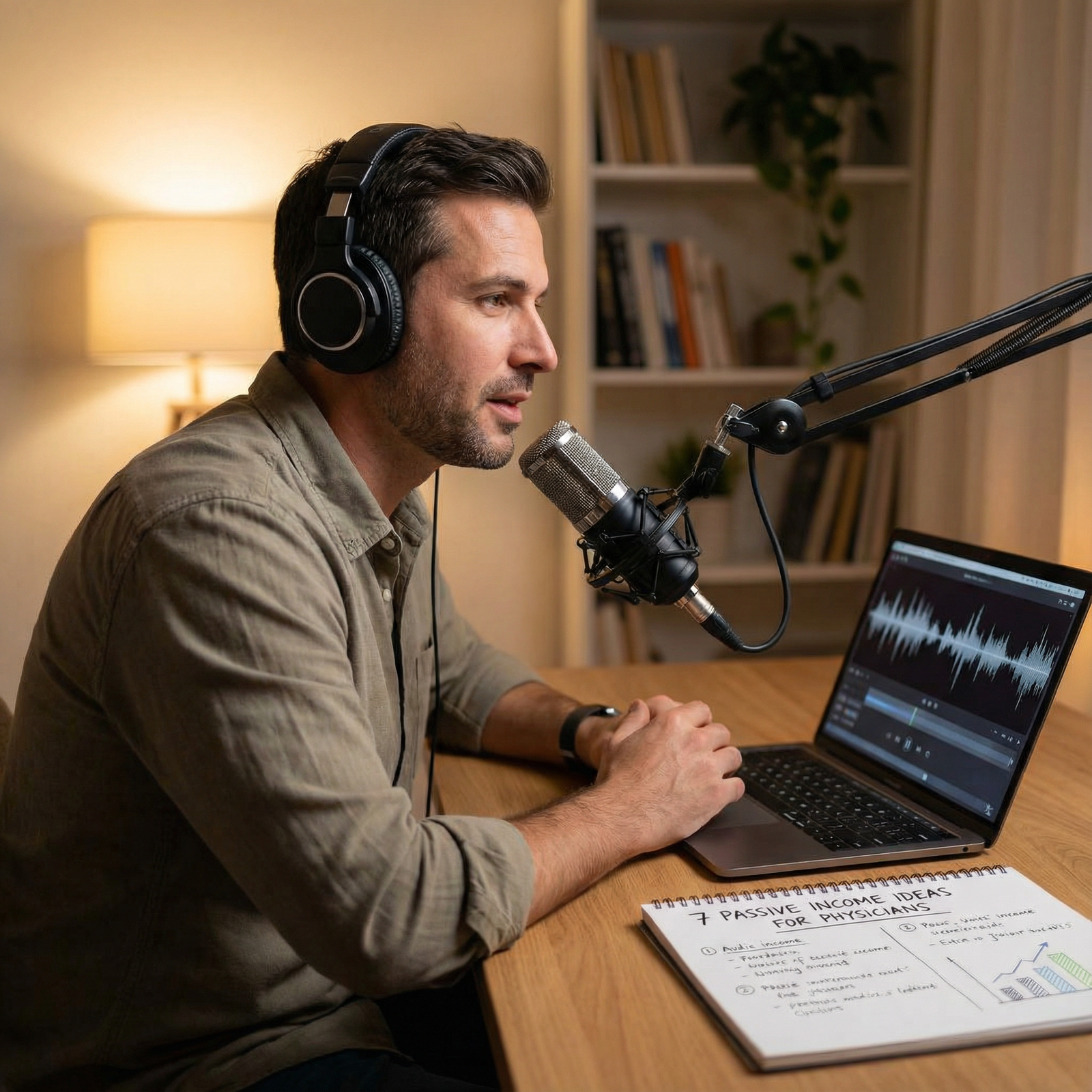
What actually happens if you mention money or your side gig in a fellowship interview… and the PD quietly labels you as “not committed”?
That’s the fear, right? You’re sitting in front of a program director who lives and breathes research and call schedules, and in the back of your head you’re thinking:
“If I say I care about my loans… or that I do telemed/locums/YouTube/consulting… do they instantly move me to the ‘do not rank’ pile?”
Let me be blunt: yes, you can hurt your fellowship chances by talking about money and side hustles. But not because money is evil or side gigs are wrong. It’s because fellowship culture is still stuck in this weird, half-delusional fantasy where “pure academic devotion” is the only acceptable motive.
The trick isn’t “never talk about money.” It’s knowing how, when, and how much to reveal.
Let’s pull this apart like people who actually have $300k+ in loans and a pulse.
Why Fellowship Programs Freak Out About Money and Side Gigs
Programs won’t say this in their brochure, but here’s what’s running through some people’s minds when you mention money or side hustles:
- “This applicant is going to moonlight too much and be exhausted.”
- “They’re more interested in income than research/academia.”
- “They’re a flight risk – they’ll leave for private practice as soon as possible.”
- “They might bring conflict of interest or professionalism issues.”
Is that always fair? No. Is it real? Yes. I’ve heard attendings say out loud in rank meetings:
- “He talked a lot about wanting to pay off loans – I’m not sure he’s going to stick around for academics.”
- “She has a big social media presence. I don’t want a brand-building project; I want a fellow.”
That doesn’t mean you must lie. It means you have to be surgical with what you say and how you frame it.
Types of Side Gigs: Which Ones Raise Red Flags?
Not all side hustles are seen the same. Some are practically “socially acceptable.” Others set off sirens in their heads.
| Side Gig Type | Typical Program Reaction |
|---|---|
| Extra academic research | Positive / Neutral |
| Teaching / tutoring / boards | Positive / Neutral |
| Non-medical small business | Cautious / Curious |
| Clinical moonlighting | Cautious / Sometimes Negative |
| Social media / YouTube | Suspicious / Depends |
| Consulting / industry work | Suspicious / Depends |
Low-risk side gigs (usually fine if framed well)
- Tutoring med students/USMLE/Step 3
- Teaching for Kaplan, Boards and Beyond, etc.
- Paid research assistant or data analysis
- Writing medical content / question banks
- Local teaching/curriculum design for med schools
These scream “academic, educational, aligned with medicine.” Committees like that. It fits the story they want to believe about you.
Medium-risk side gigs
- Non-medical small business (Etsy shop, real estate, photography)
- General online business (blog, small SaaS, coaching)
- Telemedicine/urgent care moonlighting
These raise, “How much time is this eating?” questions. They’re not automatic disqualifiers, but they can shift the conversation quickly into “time commitment” and “focus” if you’re not careful.
High-risk (in their eyes, not morally)
- Influencer/social media brand around medicine
- Big YouTube/podcast presence
- Aggressive consulting, pharma/device advising
- Heavy moonlighting / locums with big income numbers
Programs worry about professionalism, conflicts of interest, attention-seeking, and someone who will say “no” to work because they’re too busy scaling their “brand.”
You and I might think that’s outdated thinking. They still think it.
How Talking About Money Can Go Bad in an Interview
The worst part? You don’t even have to say anything outrageous. You can sound reasonable in your own head and still set off alarms.
Here are ways it goes sideways:
Leading with money as your primary motivation.
“I’m really interested in cardiology because the compensation is good and I have a lot of loans.”
Translation in their minds: “If this field stops paying top dollar, I’m out.”Over-emphasizing lifestyle and schedules.
“I’ve heard this fellowship has good hours and I value work-life balance.”
They hear: “Weak work ethic. Might complain about call.”Sounding like you’ll choose jobs purely by salary.
“I’ll probably go where the compensation is highest; I need to pay off debt fast.”
They wonder: “Why invest in someone who’s clearly going to bounce?”Bragging about income from side gigs.
“My telemedicine work brings in another $6–8k a month.”
They think: “So… when is this person actually sleeping? And will they drop shifts for conference or research?”Talking about financial independence too bluntly.
“My long-term goal is to be financially independent and work less.”
Yes, same. But say that in public to an academic PD and watch their soul leave their body.
The line is thin. You can say:
- “I’m very aware of the financial realities of training.”
- “Loan burden is a factor in my decision-making.”
But if the tone shifts to “I’m here for the money,” they will not forget it.
How to Talk About Money Without Killing Your Chances
You don’t have to pretend money doesn’t matter. That’s fake and honestly insulting to yourself. The goal is to show you’re financially literate, not financially driven at the expense of everything else.
Frame it like this:
Money as a constraint, not your core value.
“Like many trainees, I have significant educational debt, so I do think about financial sustainability. But my primary reason for pursuing this fellowship is the clinical complexity and the chance to work with [subspecialty/population].”Tie financial awareness to professionalism.
“Learning about personal finance has made me more stable and less stressed, which honestly lets me show up better for patients and training.”Talk about wanting a sustainable career, not quick cash.
“I’m more focused on building a career structure that’s sustainable over 20–30 years than on any short-term income.”Be very careful when they ask about your future plans.
You can say:
“I’m open to academics vs. private practice, but I know I want a role where I can keep teaching and maybe do some clinical research. I do think geographic and financial realities will play a role, but they’re not the only factors.”
If you’re worried they’ll think you’re naïve if you never mention money: they won’t. They’ll assume you’re financially delusional like everyone else. They’re used to it. That doesn’t hurt you.
Side Gigs: What’s Safe to Say and How to Say It
You’re sitting there and they ask, “What do you like to do outside of medicine?” And your brain screams:
“Is this where I say I have a 50k-subscriber YouTube channel?”
Maybe. But carefully.
Rule 1: Only highlight side gigs that sound compatible with being a fellow
Ask yourself: If they imagine me doing this during fellowship, will it sound insane?
Things that usually sound fine:
- “I tutor med students for Step 1/2 – I really like breaking down complex topics.”
- “I do some paid medical writing for question banks and enjoy it.”
- “I help with some data analysis on a research project at another institution.”
These actually strengthen your academic story.
Things that are risky if you lead with them:
- “I run a real estate business.”
- “I have a monetized YouTube channel where I talk about residency and income.”
- “I work telemedicine shifts 10–15 hours a week.”
If you have to mention them, you soften and minimize:
Instead of:
“I run a real estate company and manage 10 doors.”
Say:
“I’ve done a bit of small-scale real estate investing. It’s mostly systems-based at this point and doesn’t interfere with my training, but it’s taught me a lot about organization and long-term planning.”
Instead of:
“I do a lot of telemedicine moonlighting.”
Say:
“Occasionally I pick up clinically appropriate extra shifts when my schedule allows, but my priority has been my residency training and will be this fellowship.”
Rule 2: Don’t overshare specifics
The more numbers you give, the more they imagine you as distracted.
You don’t need to say:
- How much the side hustle earns
- Exact subscriber counts
- Number of properties, clients, or hours
General phrases are your friend:
- “on a small scale”
- “occasional”
- “when my training schedule allows”
- “structured so it doesn’t interfere with clinical work”
If that feels like you’re hiding, remember: they aren’t telling you exactly how toxic their call schedule actually is, either.
When It Makes Sense to Be Fully Honest (Even If Risky)
There are rare situations where being upfront is worth potential risk:
- Your side gig is publicly visible and trivially searchable (big YouTube, public company, widely known social media).
- The fellowship is explicitly aligned with what you do (e.g., you build AI tools and are applying to informatics).
- You’re applying to a very progressive, innovation-focused place that clearly values non-traditional careers.
In those cases, you control the narrative:
“I’ve built a YouTube channel focused on helping medical students and residents with studying and wellness. I’ve been extremely careful about professionalism and institutional policies. It’s taught me a lot about communication, curriculum design, and how learners think, and that’s something I’d love to bring into teaching as a fellow.”
You’re not apologizing. You’re showing them how it fits their interests. And you emphasize boundaries:
“I’ve also learned to set strict limits so that it never interferes with patient care or training responsibilities.”
If they still don’t like it? That might not be your program. But yeah, that’s easier to say when you have multiple offers.
How Programs Actually Judge “Commitment” (Even If They Don’t Admit It)
Here’s the ugly truth: they’re not evaluating your love for medicine in a vacuum. They’re running a mental calculation:
“Will this person:
- Show up on time?
- Do the scut?
- Take call without drama?
- Push our research/reputation upward?
- Not embarrass us on social media?”
When you talk about money and side gigs, what they’re really asking underneath is:
“Is this going to compete with fellowship?”
So your job is to close that loop before they stress about it.
You want to make it painfully clear that:
- Fellowship comes first.
- Side things are either minimal, paused, or tightly controlled.
- You’re not planning to work crazy hours on the side.
You can even say it directly:
“I’ve done [side gig] during residency, but during fellowship my priority will be the training. I’m comfortable scaling back or pausing other things if needed.”
You think that sounds weak. They think that sounds perfect.
A Quick Reality Check: Are People Actually Getting Derailed by This?
Yes. I’ve seen it.
Resident #1: Mentioned over and over how much he moonlighted, how much more it paid than residency salary, and how he planned to “maximize income” during fellowship. Had decent stats. Multiple faculty later said, “He’s going to burn out here, not a good fit,” and he slid way down rank lists.
Resident #2: Big Instagram account on “doctor lifestyle.” Posted borderline stuff about hating call, mocking patients, and flaunting purchases. One PD literally said, “No way. Not touching that.” Never got an interview.
Resident #3: Talked about personal finance in a measured way, did some tutoring and small freelance writing. Framed it around teaching and stress reduction. PDs actually liked that she was “organized and mature about money.”
Same topic. Different framing. Very different outcome.
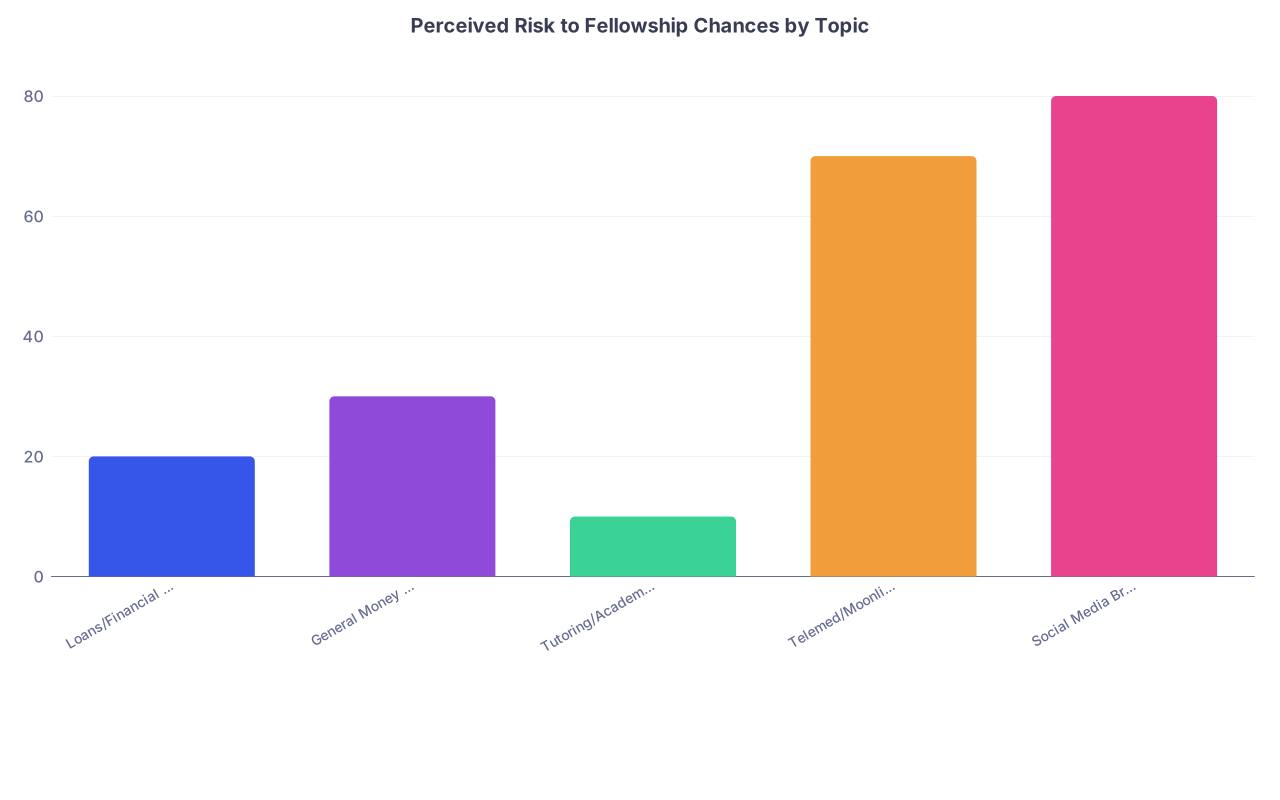
| Category | Value |
|---|---|
| Loans/Financial Stress | 20 |
| General Money Talk | 30 |
| Tutoring/Academic Side Work | 10 |
| Telemed/Moonlighting | 70 |
| Social Media Brand | 80 |
If You’re Already Deep Into a Side Gig: Now What?
Let’s say the damage (or progress, depending how you see it) is done. You already:
- Have a solid side business
- Moonlight regularly
- Run a visible online brand
You don’t have to blow it up. But you should:
- Scrub anything unprofessional online. Yesterday.
- Turn down the volume publicly during application season (fewer posts, no flexing income).
- Have one tight, rehearsed explanation that:
- Emphasizes skills (teaching, communication, systems thinking, leadership)
- Emphasizes boundaries (“I keep it strictly secondary to clinical duties.”)
- Be ready for follow-up questions like:
- “How many hours a week do you spend on that?”
- “Would you continue that during fellowship?”
Have an answer that doesn’t make you sound like you’re trying to work 2 full-time jobs. If inside you’re thinking, “But I kind of am…” you don’t say that out loud.

| Step | Description |
|---|---|
| Step 1 | Have side gig? |
| Step 2 | Align with professional story |
| Step 3 | Low relevance to fellowship |
| Step 4 | Share, frame as strength |
| Step 5 | Minimize details |
| Step 6 | Skip or mention briefly as hobby |
| Step 7 | Publicly visible? |
| Step 8 | Helps your narrative? |
FAQ (exactly 4 questions)
1. Should I completely avoid mentioning money in fellowship interviews?
No, you don’t have to pretend money doesn’t exist. You should avoid making money sound like your primary motivation. It’s fine to acknowledge loans or financial realities briefly and then pivot hard back to your genuine clinical, academic, or research interests. If you’re unsure, err on the side of under-sharing, not over-sharing.
2. Is it safer to just hide my side gig entirely?
If it’s not publicly visible and not central to your application story, yes, you can absolutely treat it as background noise and not bring it up. Fellowship interviews are not your confessional. Focus on what directly supports your clinical and academic narrative. If your side gig is public or easily searchable, then you’re usually better off briefly owning it and framing it as structured, minimal, and non-interfering with training.
3. Can I say I plan to moonlight during fellowship to help with loans?
I wouldn’t. Even if the program allows moonlighting, saying in interviews that you plan to do it can make you sound like you’re already prioritizing extra income over training. A safer approach: don’t volunteer it. If they bring up moonlighting, you can say you’re open to it only if it doesn’t compromise your learning or well-being and that your priority is fully engaging with the fellowship.
4. What if my side hustle is actually in academic medicine or education – can that help me?
Yes, those are the rare side gigs that usually help if framed correctly. If you tutor, write board questions, design curricula, or do paid research work, that’s closely aligned with what many programs value. Just emphasize the educational/academic aspect, the skills you’ve gained (teaching, communication, scholarly work), and make it clear you already know how to balance these with clinical duties without burnout.
Key takeaways:
- Money and side gigs don’t automatically kill your fellowship chances, but careless framing absolutely can.
- Emphasize commitment to training first; present any side work as limited, structured, and aligned with your professional growth.
- When in doubt, under-share details about income and hours, and over-communicate that fellowship – not your side hustle – is your top priority.