

Most physicians massively underprice their brain when they enter CME—and then wonder why they’re stuck doing slide decks for peanuts.
Let me walk you through how the serious people do it. From first outline to signed contract and actual money in your bank account.
This is not “start a blog and maybe someone will notice.” This is how you become the person CME companies email when they urgently need a high-quality, evidence-based course turned around on a deadline—and they know they will have to pay you professional rates to get it.
1. Understand the CME Ecosystem (And Where You Fit)
If you do not understand how CME money flows, you will either undercharge, sign garbage contracts, or create the wrong kind of content.
At a high level, there are four main players:
The Accreditor
Think ACCME (for physicians in the US), AAFP, AANP, etc. They set rules around independence, disclosures, outcomes, and “no promotion” standards. You must respect these if you want repeat work.The CME Provider / Education Company
Examples: Clinical Care Options, Pri-Med, Medscape Education, academic CME offices, specialty societies. They:- Get grants or institutional money
- Design activities
- Hire you to create and/or deliver content
- Handle accreditation paperwork and outcomes
The Sponsor (Often Pharma, Devices, or Health Systems)
Not always, but often. They provide money via educational grants. They:- Are not allowed to control the content
- Cannot select you directly as faculty
- Definitely care about topic alignment and quality
The Learner (Your “Customer” in Reality)
Frontline clinicians. Burned out. Limited time. They want:- Clear, clinically relevant, practical content
- Short modules, case-based, easy to digest
- Credit that actually counts for their boards or licensure
Your job as a CME content creator: sit right in the middle of that ecosystem as the trusted, credible, fast, and compliant expert.
Not the diva KOL who turns in slides the morning of. Not the amateur who does not know what “commercial bias” means.
You need to be three things at once:
- Clinically sharp
- Educationally competent
- Contract-savvy
2. Pick a Niche and Format You Can Dominate
“Internal medicine” is not a niche. “Hypertension management in primary care” is not even a sharp niche.
“Practical hypertension management for busy primary care: guideline updates, real-world barriers, and polypharmacy in older adults” starts to sound like something someone would pay for.
You want to sit at the intersection of:
- Your genuine clinical expertise
- High educational demand
- Commercial or institutional interest
Examples of niches that actually sell:
- GLP-1 agonists for obesity and diabetes: prescribing, monitoring, prior auth headaches
- Outpatient management of post-COVID syndromes
- Practical ECG interpretation for non-cardiologists
- High-yield dermatology for PCPs and NPs
- ED risk stratification: chest pain, syncope, PE
Now overlay with formats.
Common CME content formats you can get paid for:
- Slide decks with speaker notes (used for live or enduring content)
- Recorded video modules (you record or present live on Zoom)
- Interactive case-based modules (branching cases, questions)
- Self-assessment questions / board-style question banks
- Monographs / enduring online articles
- Podcast CME episodes
Pick 1–2 formats you can execute repeatedly and professionally. Do not promise interactive branching case platforms if you barely know PowerPoint.
3. Building the CME Outline That Actually Gets You Hired
Most physicians submit glorified table-of-contents outlines. That is not enough.
CME companies want to know:
- Is this clinically accurate and current?
- Does it align with adult learning principles?
- Does it meet accreditor and grant requirements (gaps, needs, outcomes)?
- Is it clear how this becomes a 30–60 minute activity?
Build your outline like a grant writer, not like a resident on autopilot.
Core Components of a Strong CME Outline
Clear Title and Target Audience
Example:
“Closing the Gap in Outpatient Heart Failure Management: Practical Strategies for Primary Care Physicians and APPs”Practice Gap and Needs Statement (2–3 bullets each)
- Gap: “Many PCPs under-titrate GDMT for HFrEF due to time constraints and concern about hypotension.”
- Need: “Clinicians need practical algorithms for titration and monitoring side effects in a 15-minute visit.”
Learning Objectives (3–5, measurable, verbs that are not “understand”)
- “Apply current guideline-directed therapy recommendations for HFrEF in outpatient practice.”
- “Select appropriate monitoring plans for patients started on SGLT2 inhibitors.”
Structured Content Outline with Time Estimates
For a 45-minute module, break it down:- 5 min – Epidemiology and impact (quick, not a lecture on burden of disease)
- 10 min – Guidelines distilled: what actually matters at the bedside
- 15 min – Case 1: Middle-aged patient with HFrEF, titration decisions
- 10 min – Case 2: Older frail patient, renal issues, polypharmacy constraints
- 5 min – Summary, key take-home algorithms, resources
Proposed Interactivity
- Poll questions (“What would you do?” at decision points)
- Knowledge checks before/after key concepts
- Case-based questions with explanations
Outcomes / Assessment Plan
This is where most physicians are weak. You need at least:- 3–5 pre/post-test questions (MCQs, single best answer)
- At least one “commitment to change” item: “As a result of this activity, I plan to…”
You do not need full questions at the pitch stage, but show that you know outcomes matter.
4. Outline to Content: How to Build CME That Will Get You Repeat Work
Once the outline is accepted, the real work begins. This is where your reputation is built or destroyed.
Step 1: Clarify Deliverables in Writing
Do this before you open PowerPoint.
Ask and confirm:
- Length of activity (minutes, word count, or slide count range)
- Final format (slide deck only? narrated? video recording?)
- Level of referencing required (peer-reviewed only, guideline recency)
- Any prior activity you must align with or avoid overlapping
- File format, template, and brand / style rules
- Timeline with intermediate checkpoints
Get this in an email from the project manager. Keep it.
Step 2: Design with Adult Learning Principles, Not Med School Lecture Habits
Busy clinicians will not tolerate dense, text-heavy, guideline regurgitation.
You want:
- Cases early and often
- Repeated exposure to key algorithms
- Visuals over paragraphs
Practical rules:
- 1 main idea per slide
- Use diagrams and flowcharts for algorithms
- Use real-world wording: “What I actually do in clinic when…”
- Build “if/then” structures: “If creatinine rises by X, then…”
You are not writing a review article. You are designing something that can change behavior.
Step 3: Integrate Cases Intelligently
Cases are not just “patient is 65, comes to clinic, what do you do?”
Use them to:
- Surface common errors or outdated practices
- Walk through decision logic step by step
- Embed guideline recommendations without reading them verbatim
Example structure for a case:
- Brief patient vignette (2–3 sentences, no novels)
- Ask: “What is your next best step?” with 3–4 options
- Show how many answered which way (for live / recorded with hypothetical)
- Explain:
- Why the correct answer is correct
- Why the others are wrong but tempting
- How this maps to guidelines and real constraints
Step 4: Reference and Disclosure Compliance
Sloppy referencing is how you quietly end your CME side gig.
Standards:
- Use current guidelines (within 1–3 years, or justify if older)
- Major trials cited clearly on relevant slides
- No brand names without generics (and often only generics)
- No logos from industry or hospitals unless explicitly allowed
And disclosures:
- Declare all relevant relationships: speaking, consulting, advisory boards, research, stock
- Learn the difference between “relevant financial relationships” and unrelated ones
- Expect that sometimes your conflicts will exclude you from specific topics. Do not take it personally. It is protection.
5. Where the Paid Contracts Actually Come From
You do not start with a giant pharma-supported national program. You build from smaller, faster projects.
Here are realistic entry points.
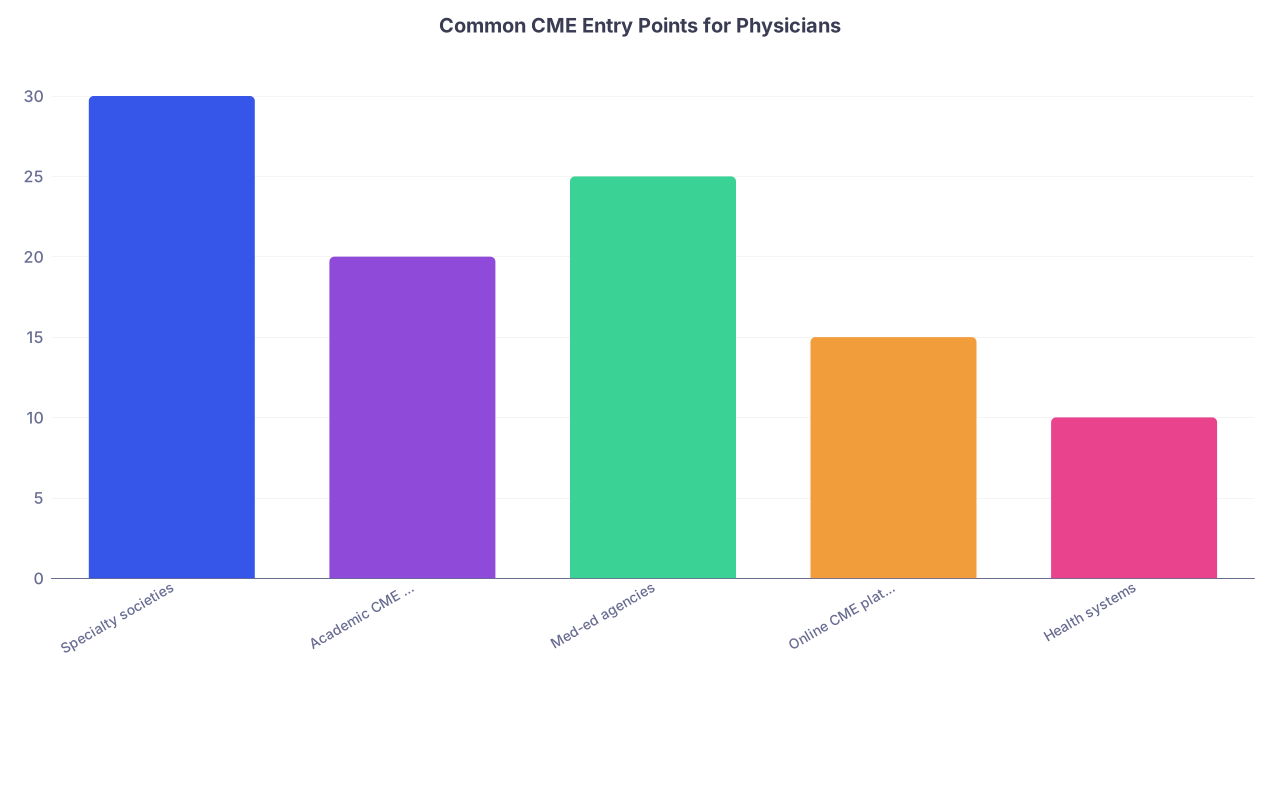
| Category | Value |
|---|---|
| Specialty societies | 30 |
| Academic CME office | 20 |
| Med-ed agencies | 25 |
| Online CME platforms | 15 |
| Health systems | 10 |
Route 1: Your Hospital or Academic CME Office
If you are in an academic center or large system, this is the lowest friction step.
You can:
- Offer to build a new enduring material from a recurring grand rounds topic
- Convert a popular in-person lecture into an online CME module
- Propose a short series (e.g., “Primary care updates in…”)
Pros:
- Straightforward to get started
- Higher trust if they know you
- Less commercial pressure
Cons:
- Lower pay per hour, often
- More bureaucracy
- Sometimes “honorarium” territory rather than commercial rates
Route 2: Specialty Societies
Think ACP, AHA, AAD, ACEP, etc.
Tactics:
- Present at their annual meeting first
- After a well-rated talk, email the education director: “Happy to convert this into an online CME module if useful.”
- Offer ideas that fill specific member gaps: they often have member surveys and are desperate for topics that hit these needs.
Route 3: Independent Med-Ed Agencies and CME Companies
This is where most scalable paid work lives.
Finding them:
- Search “independent medical education CME oncology” (swap oncology for your field)
- Look at who sponsors high-quality activities on Medscape or CME Outfitters
- LinkedIn search for “Medical Education Manager” or “CME Program Manager”
Approach:
- You do not send them a 3-page CV and pray.
- You send:
- A tight 1-page “faculty profile” with your expertise, speaking topics, and prior CME experience
- 2–3 specific CME activity ideas with brief outlines (gaps, objectives, format)
- Links to any recorded talks, podcasts, or YouTube where you present clinically
These agencies live and die by deadlines and reliability. Once you prove you deliver clean, compliant content on time, they will reuse you.
Route 4: Online CME Platforms
Examples:
AudioDigest, Pri-Med, Hippo Education–style outlets, specialty-specific platforms.
They:
- Need constant new content
- Often have set formats (audio, live webinars, short videos)
- Value clinicians who can be concise and engaging on mic
Approach with:
- 3–4 tightly defined talk topics
- 1–2 sample slides or mini-outline
- A short sample audio or presentation reel if you have it
6. Fee Structures, Pricing, and Not Getting Exploited
Here is where physicians routinely undersell themselves.
You are not a resident doing a noon conference for pizza. You are a subject-matter expert delivering monetizable content.
Common payment models:
- Flat fee per activity (most common)
- Fee per slide deck + separate fee for live delivery
- Hourly rate for consulting-type educational strategy (less common but better)
- Royalties / revenue share (exists, but rare and often overhyped)
Realistic ranges (US, 2024-ish, assuming specialist with decent CV and prior CME work):
| Deliverable Type | Typical Range (USD) |
|---|---|
| 45–60 min slide deck (no speaking) | $1,000 – $3,000 |
| 45–60 min slide deck + live talk | $1,500 – $4,000 |
| Recorded 30–45 min video module | $1,500 – $4,000 |
| Question set (10–15 high-quality Qs) | $750 – $2,000 |
| Multi-part course (3–5 modules) | $5,000 – $20,000+ |
Where you land depends on:
- Your niche (ultra-specialized vs generic)
- Your name recognition
- The sponsor budget
- Whether you are just doing slides vs also presenting vs also helping design the program
Guidelines for you:
- Do not accept “exposure” as payment beyond your first one or two projects.
- If they quote a number and you have no idea, ask: “Is there flexibility based on scope and timeline?”
- For truly custom, multi-module work, give a range and offer a brief call to define scope before you commit.
And yes, you can negotiate. CME companies expect it from serious people.
7. Contract Essentials: What You Must Look For
The fastest way to hate CME work is to sign a garbage contract that lets them reuse your content forever, modify it without your approval, and forbid you from speaking on related topics.
You need to read for:
Scope of Work
- Clearly states deliverables, length, format, and deadlines.
- No vague “as needed” language.
Compensation and Payment Terms
- Amount, payment milestones (on signing, on draft, on final).
- Net 30 vs Net 60. Push for Net 30 when you can.
- Reimbursement of expenses if travel or recording studio involved.
Intellectual Property (IP) and Use Rights
Pay attention here.- Are you assigning full copyright or granting a license?
- Can they reuse your content in other programs without extra payment?
- Are you allowed to reuse your own slide frameworks (minus branding) elsewhere?
Reasonable middle ground:
- They own the specific final branded version for that activity.
- You retain rights to your clinical frameworks and can adapt them elsewhere.
- Any repurposing into new activities requires new agreements.
- Warranties and Indemnification
You will see language where you warrant that:- Content is original and not infringing
- No confidential patient data included
- You are not violating any institutional policies
Try to avoid broad indemnification where you personally cover them for everything under the sun. If you have institutional legal, run it by them at least once to get a sense.
- Conflict of Interest and Compliance
You will agree to:- Follow ACCME/other accreditor rules
- Not include promotional content
- Accept that they can edit for balance / bias
This is standard. But insist that scientific content edits are collaborative, not unilateral rewrites with your name still on it.
8. Systems: How to Produce CME Content Without Burning Out
If you are doing this as a side hustle, you need a repeatable personal workflow.

| Step | Description |
|---|---|
| Step 1 | Idea or RFP |
| Step 2 | Outline with objectives |
| Step 3 | Contract and scope signed |
| Step 4 | Draft slides and cases |
| Step 5 | Peer review or internal review |
| Step 6 | Revise and finalize content |
| Step 7 | Record or present |
| Step 8 | Post-activity tweaks |
| Step 9 | Collect feedback and outcomes |
| Step 10 | Pitch next activity |
Practical systems I have seen work well:
Templates
- One master PowerPoint template with:
- Title slide
- “Case” slide layout
- Algorithm / flowchart slide
- Summary “3 takeaways” slide
- A Word template for:
- Gaps
- Needs
- Objectives
- 5–7 sample questions with rationales
- One master PowerPoint template with:
Citation Library
- Maintain a Zotero / Mendeley / EndNote library of your key guidelines and trials.
- Tag them by topic (e.g., “HF-SGLT2,” “GLP1-obesity,” “anticoag-Elderly”).
Time Boxing
If this is a side hustle, you cannot “whenever I get around to it” this.Example pattern:
- 1 evening: refine outline, confirm objectives
- 2 evenings: build full slide draft
- 1 evening: tighten visuals, add references
- 1 weekend morning: rehearse, record notes or narration
Quality Control
Do a final pass specifically for:- Remove brand names and promotional tone
- Check every dose, number, and guideline year
- Ensure every major recommendation has a reference
9. Turning One CME Project Into a Stable Side Income
The mistake: treating each project as a one-off gig.
The better path: treat each as proof of concept, feedback, and marketing for the next one.
Ways to leverage each completed activity:
- Ask for Feedback and Data
- Faculty evaluation summaries
- Learner feedback (comments)
- Outcome summaries (knowledge gain percentages, intent-to-change data)
This is gold for your next pitch. You can say:
“In the last activity I led on X, 87% of 1,200 learners reported they would change practice in at least one area.”
-
- List of CME talks with dates, audiences, formats
- Links to public-facing descriptions (not the full content)
- Snippets of anonymous feedback
Pitch Series and Follow-ons
- If you did one module on GLP-1s, propose:
- A second module on managing side effects
- A module targeting obesity medicine vs primary care vs endocrinology separately
- If you did an emergency department chest pain risk module, propose:
- Syncope risk stratification
- PE in low-resource settings
- Special populations (elderly, pregnant)
- If you did one module on GLP-1s, propose:
Raise Your Rates Gradually
Once you have:- 3–5 well-rated activities
- Stable relationships with 1–2 agencies or societies
Move your floor up. If you started at $1,000 for a 60-minute deck, make your new target $1,500–$2,000. The good clients will pay if you are reliable.
10. The Future: Where CME Content Is Actually Headed
If you are starting now, you should not be building content like it is 2005.
Trends that are already here or arriving fast:
Microlearning and Just-in-Time CME
- 5–10 minute modules
- Embedded into EHRs or clinical workflows
- CME for quick clinical questions, not only big lectures
Data-Driven Personalization
- Platforms track what learners miss
- Future modules adapt to gaps
- You may be asked to create tiered content: basic, intermediate, advanced
Interactive Cases and Simulations
- More branching logic, not linear slides
- Clinical decision support lookalikes
- Opportunities for clinicians who can think like “product designers,” not just lecturers
AI-Assisted Content
Let me be clear: AI can draft outlines and first-pass questions. It cannot:- Validate nuanced clinical trade-offs
- Catch subtle bias
- Understand system constraints in your specific practice environment
But you will increasingly be asked to:
- Review and correct AI-drafted content
- Add real-world nuance and cases
- Sign off as the human subject-matter expert
If you learn how to:
- Set standards,
- Rapidly review,
- Layer in clinical judgment,
you turn into someone who can oversee larger volumes of content without burning out. And that is where the bigger contracts live.
- Outcomes-Obsessed Funders
Sponsors and systems are under pressure to show that CME does something beyond checking a box.
Expect:
- More activities requiring follow-up surveys at 3–6 months
- More sophisticated outcomes design (chart audits, performance metrics)
- Preference for faculty who understand behavior change, not just disease facts.
If you can speak the language of “Level 3 and 4 outcomes” (behavior and results, not just satisfaction and knowledge), you become more valuable.
FAQs
1. Do I need academic titles or publications to get CME contracts?
They help, but they are not mandatory. I have seen community-based clinicians with strong speaking skills and a clear niche get steady CME work without big-name affiliations. What matters more: solid CV, evidence that you teach well, and someone willing to vouch for your clinical credibility.
2. How do I handle topics where evidence is still emerging or controversial?
You make the uncertainty explicit. Present what major guidelines say, flag conflicting recommendations, and walk through how you personally weigh risks and benefits. CME providers prefer transparent, balanced nuance over fake certainty. Document your references carefully when data are shaky.
3. Can I still do industry-sponsored talks if I am doing CME faculty work?
Yes, but be strategic. Many CME providers will still work with you if your industry relationships are disclosed and managed. However, for certain grant-funded topics, heavy promotional speaking for the same product area can be a problem. Read each provider’s conflict policies; some are stricter than others.
4. How many hours does a typical 60-minute CME module take to create?
For a well-organized physician with some experience: roughly 8–20 hours, depending on how familiar you are with the topic and how complex the format is (simple slide deck vs interactive cases). The first few projects will be on the high end. With templates and systems, you can reliably get toward the lower end without sacrificing quality.
5. What is the fastest way to get my first paid CME project?
Leverage what you already have. Take a talk you have given recently that went well. Clean it up into a strong outline with gaps, objectives, and a clear target audience. Then:
- Bring it to your hospital CME office or specialty society as a proposed enduring module.
- In parallel, send a concise pitch email with that outline and your faculty profile to 3–5 independent CME companies in your niche.
You will usually get traction faster through existing institutional relationships, then use that as proof when talking to external companies.
Three things to remember:
Design CME like a behavior-change tool, not a lecture. Treat your expertise as a billable asset, not a favor. And think in systems—each module you create should make the next one easier, faster, and more profitable.


