
The Myth of Passive Income in Medicine: What Actually Stays Passive
What if I told you that your “passive income” dream as a physician is probably just… another job with better branding?
The phrase has infiltrated medicine. Attendings talking about “making money while you sleep.” Residents on Reddit asking which side hustle is most passive. Instagram docs posting beach photos with captions about “my rentals paying for this.”
Here’s the problem: most of what you’re being sold as “passive income” in medicine is not passive. It is active work front‑loaded with risk, time, and cognitive load. And the tiny slice that actually does stay mostly passive? It’s a lot more boring and slower than the hustle culture wants you to believe.
Let’s strip the romance out and look at what the data and real physician behavior actually show.
Why “Passive Income” Is Mostly Marketing
In finance, the IRS has a dry definition of passive activity: trade or business in which you do not materially participate. That sounds like what doctors want. Money without more call, more notes, more RVUs.
But real life does not care about definitions. It cares about time and attention. The two things you’re already short on.
When physicians say “passive income,” they usually mean one of three very different beasts:
- Extra earned income outside clinical work (locums, expert witness, consulting, telemed)
- Operating a business or real estate project they’re actively involved in (medspa, rentals, course creation)
- Capital doing the work (stocks, bonds, funds, equity in someone else’s business)
Only the third category has any hope of staying passive over time. And even then, there are caveats.
Look at how physicians actually earn money beyond salary. Multiple surveys (White Coat Investor, Medscape) consistently show the big levers are:
- Extra clinical work (locums, PRN, telehealth)
- Ownership in practice, surgery centers, or imaging
- Real estate (direct or syndications)
- Tax‑advantaged investing in the market
The first two are heavily active. The third is semi‑active unless you outsource almost everything. The fourth is the closest thing you’ll get to genuinely passive.
So why does everything get labeled “passive”? Because “side job that might pay off if I grind after call for 3 years” does not sell courses.
The Popular “Passive” Plays in Medicine — Reality Check
Let’s go through the greatest hits and be blunt about which parts are actually passive and which are fairy tale.
Real Estate: From “Mailbox Money” to Second Job
The physician real estate obsession is real. Duplexes. Short‑term rentals. Syndications. You hear the same pitch: “Tenants pay off your mortgage while you sleep.”
Sometimes. Eventually. After you’ve eaten enough broken water heaters, missed rent, and 2 a.m. Airbnb calls to justify outsourcing everything.
Here’s the real split.
| Approach | Upfront Time | Ongoing Time | Control | True Passivity |
|---|---|---|---|---|
| Self-managed rental | High | High | High | Low |
| Property manager | Medium | Low-Med | Medium | Medium |
| Syndication/RE fund | Low | Very Low | Low | High |
| Public REITs | Very Low | Very Low | Very Low | Very High |
Self‑managing a rental while on 60‑hour weeks is not passive. It is a second job with plumbing. I’ve watched anesthesiologists trying to line up a contractor between cases because the tenant reported “a small leak,” which turned into a ceiling collapse.
Even with a property manager, you’re not done. You still:
- Vet deals.
- Review leases, repairs, renewals.
- Track and reconcile cash flow.
- Make refinance / sell / hold decisions.
Only two flavors of real estate are actually close to passive for most physicians:
- Syndications and private real estate funds where you’re a limited partner and someone else runs the show.
- Public REITs you buy in an index fund or ETF.
They’re boring. You will not impress anyone on Instagram with “I own VNQ in my brokerage account.” But from a time‑per‑dollar standpoint, they crush your four‑plex remodel while on trauma call.
Online Courses, Coaching, and Content: Highly Active with Leverage
Doctors now try to “monetize their knowledge.” Courses for premeds. Coaching for residents. CME platforms. You’ll hear: “Build once, sell forever.”
That “build once” is fantasy. Here’s the actual life cycle.
You have to:
- Research, outline, script, and record the content.
- Edit, host, and set up the tech stack.
- Build an audience from scratch (email, social, podcast, something).
- Handle refunds, tech problems, content updates, and customer support.
- Keep marketing or sales die off.
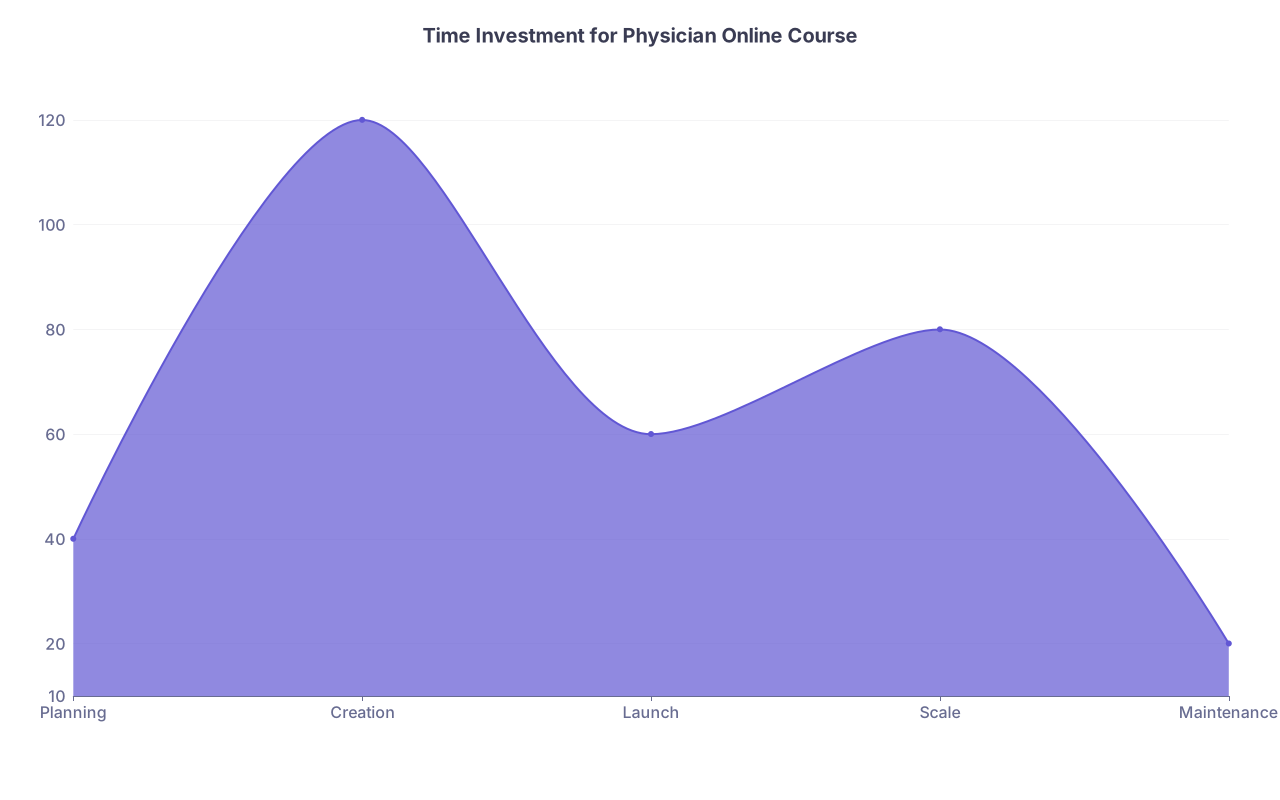
| Category | Value |
|---|---|
| Planning | 40 |
| Creation | 120 |
| Launch | 60 |
| Scale | 80 |
| Maintenance | 20 |
The upshot: digital products are scalable, not passive. You can detach incremental revenue from incremental hours once the machine is built. But getting that machine running is long, unglamorous grind.
I’ve seen the whole spectrum:
- A cardiologist who spent 9 months building a $1,000 ECG course… sold 8 copies.
- A palliative care doc who quietly built a low‑priced, niche communication course and, five years later, it throws off 50–80k/year with maybe 5–10 hours a month.
Notice that second example: years, not weeks. It only got “semi‑passive” after massive front‑loaded work and a consistent marketing engine.
Anyone telling you to “just record your lectures and cash checks” is skipping 90% of the work.
Locums, Telemedicine, Expert Witness: Zero Passive, 100% Active
This should be obvious, but it gets misclassified constantly.
Locums. Extra weekend telemed shifts. Chart review. Expert witness work. These are great ways to increase income. They are not investments. They are trading your time for money.
They can be smart moves, especially short term:
- Pay off high‑interest debt.
- Build an emergency fund.
- Stack initial capital to actually invest.
But do not confuse “multiple income streams” with “passive income.” The moment you stop logging in or signing reports, the income drops to zero. That’s the definition of active.
Direct Business Ownership: The Golden Handcuffs Disguised as Freedom
Medspas. Urgent cares. ASC ownership. Device distributorships. Concierge practices. The doctor‑entrepreneur fantasy.
There’s a kernel of truth: owning the profit engine can be more lucrative than punching the EMR for someone else. But the idea that this is passive? Fiction.
For 99% of physicians, owning a business does three things:
- Extends your workday beyond clinical hours.
- Loads you with management, HR, legal, and regulatory headaches you were never trained for.
- Makes you emotionally and financially entangled in the operation.
Could you eventually hire a CEO, manager, and build a system that mostly runs without you? Yes. Some do. But they usually live through 3–7 years of intense, risk‑heavy, aggressively non‑passive work first.
And many never get there. The “doc owned medspa” with one NP, three staff, and the owner doing Botox two evenings a week until they burn out—that is a job, not passive income.
What Actually Stays (Mostly) Passive for Physicians
Here’s the part nobody wants to hear because it doesn’t generate clicks: the most reliably passive income streams for physicians are also the least glamorous and the slowest to show up.
1. Broad, Boring Market Investing
You earn clinical income. You live on less than you make. You shovel the difference into:
- Broad stock index funds.
- Bond funds appropriate to your risk.
- Maybe some low‑cost REIT funds.
You automate it. You ignore it. You rebalance once a year. You do this for 10–20 years.
That is actual passive income building under the hood.
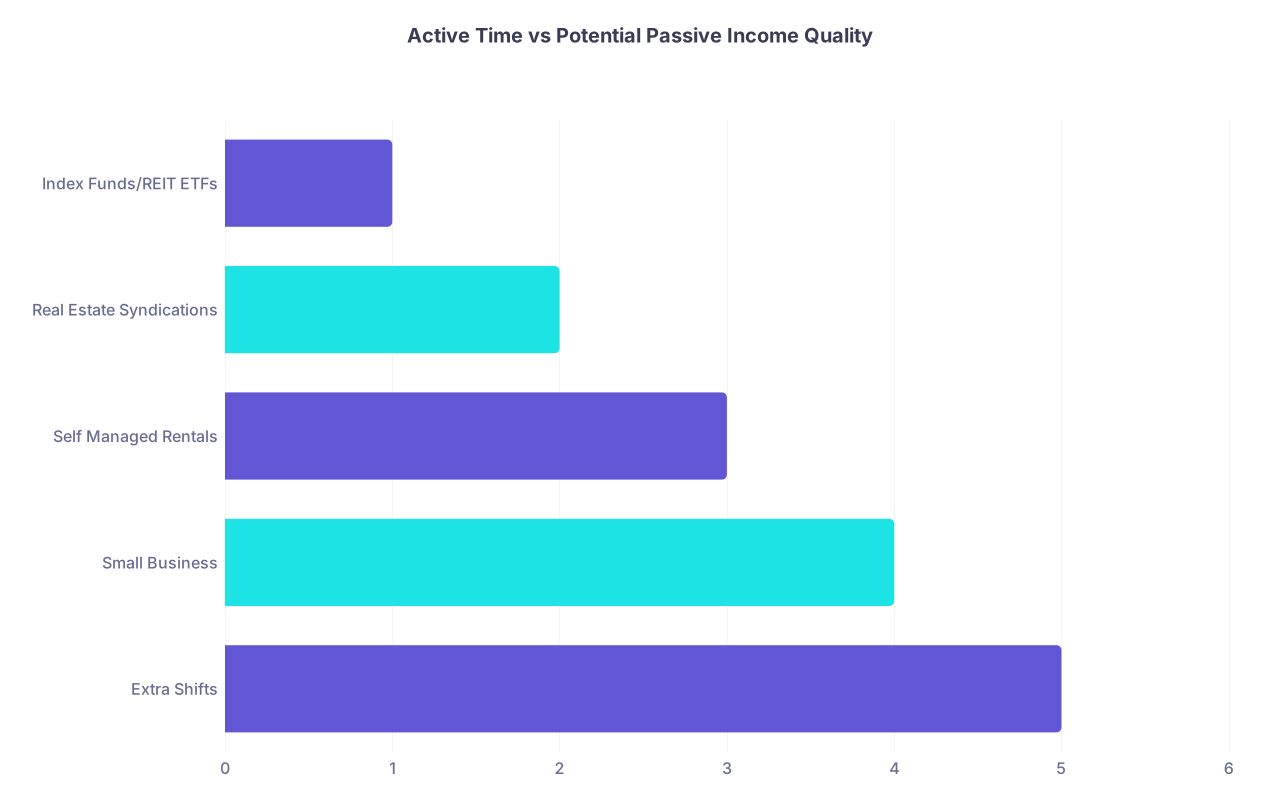
| Category | Value |
|---|---|
| Extra Shifts | 5 |
| Small Business | 4 |
| Self Managed Rentals | 3 |
| Real Estate Syndications | 2 |
| Index Funds/REIT ETFs | 1 |
(1 = most passive, 5 = least passive. Pattern should be obvious.)
This is the only path where you can genuinely make money while you sleep, with nearly zero ongoing input after setup. Dividends, capital gains, and compounding do not care if you are scrubbed in or on the beach.
It’s also the one most physicians underutilize because it is dull and slow and doesn’t make for TikTok content.
2. Being a Limited Partner in Other People’s Work
When you invest as an LP in:
- Real estate syndications.
- Private equity funds.
- ASC or imaging centers where you’re not the managing partner.
You are essentially renting out your capital to someone else’s effort.
This can be relatively passive if you:
- Do careful upfront due diligence.
- Avoid concentration risk (not “all into one buddy’s deal”).
- Accept that you will not be involved in daily operations.
But don’t kid yourself—it is not work‑free. You’re trading ongoing time for front‑end time and risk analysis.
The passivity threshold is crossed after you’ve:
- Built a vetted list of sponsors/funds you trust.
- Allocated a planned chunk of your portfolio into multiple deals.
- Set up a simple tracking system for distributions and K‑1s.
Then, yes, distributions show up without you logging into anything but your bank.
3. Royalties and Licensing (for the Rare Few Who Get It Right)
This is niche but real. Royalties from:
- Patents or inventions.
- Textbooks or reference works.
- Software tools or algorithms.
When structured correctly, these can be extremely passive. But it’s a power‑law game. Many projects never earn out. A tiny minority pay for years.
And again, the pattern holds: heavy up‑front creation and development, then a long tail of semi‑passive income.
The Biggest Myth: You Need a Side Hustle at All
There’s a quieter myth beneath the passive‑income myth: that every physician should have multiple income streams outside medicine to be “safe” or “free.”
This is not backed by data. It’s backed by vibe.
Here’s what longitudinal data and real‑world outcomes actually support:
- Physicians with strong savings rates and boring, diversified investments almost always end up financially independent—even with zero side hustles.
- Physicians who chase complex high‑risk side projects without basic financial discipline often burn out harder and sometimes lose money outright.
- Time is a finite asset. Every hour you throw at a questionable side venture is an hour you’re not using to rest, deepen your expertise, maintain your health, or just exist as a human.
If you hate your clinical work, passive income is not the cure. Fixing your job, specialty, environment, or schedule is. Or exiting, carefully, with a real plan.
A Saner Framework: Active Now, Passive Later
Instead of asking, “What’s the most passive side hustle?” ask two better questions:
- Where is my time actually high value right now?
- How do I convert today’s active effort into tomorrow’s passive freedom?
For most physicians early or mid‑career, the honest answers are:
- Your highest hourly value is still clinical work and possibly short‑term extra shifts or expert work to build capital.
- The best conversion of that capital into future passive freedom is plain, high‑savings‑rate investing in diversified assets.
So a rational path looks like:

| Step | Description |
|---|---|
| Step 1 | Clinical Income Only |
| Step 2 | Increase Savings Rate |
| Step 3 | Pay Off High Interest Debt |
| Step 4 | Invest in Index Funds and REITs |
| Step 5 | Selective LP Real Estate or Business Stakes |
| Step 6 | Meaningful Passive Income |
Can you layer a side business or course on top if you enjoy it or see real opportunity? Sure. Just be honest: you’re choosing a second career, not a magic passive trick.
When “Passive Income” Becomes Self-Sabotage
There’s a dark side to all this. I’ve watched residents and new attendings:
- Sign up for expensive mastermind groups and coaching programs that cost more than they’ll likely ever make from the side hustle being sold.
- Take on leverage for real estate they barely understand because “everyone says buy doors.”
- Spread themselves so thin between clinic, young kids, and side projects that their actual clinical performance and mental health suffer.
The opportunity cost is brutal. An extra 15–20 hours a week thrown at a mediocre “passive” venture over 3 years could have:
- Paid down student loans faster via a few targeted locums stints.
- Been invested steadily in broad markets, compounding quietly.
- Prevented burnout by being used for rest, relationships, or exercise.
Your future self will not care that you “owned 7 doors” if those doors mainly produced anxiety and 4% returns you could have gotten in a bond fund without the tenant drama.
So What Actually Deserves the Label “Passive” for Doctors?
If we’re being strict about what stays passive after setup, the shortlist is disappointingly simple:
- Automated investing into broad stock, bond, and REIT index funds.
- Well‑chosen LP investments where you are not operational.
- Occasional royalties/licensing when you’ve genuinely built something durable.
Everything else is either:
- An extra job (locums, telemed, expert witness).
- A business you operate (medspa, practice, coaching, courses).
- A second job disguised as “investing” (self‑managed real estate, flipping).
That doesn’t mean those things are bad. They just are not passive. Call them what they are: active income with potential leverage.
You’re a physician. You already work in a high‑stakes, cognitively demanding, lawsuit‑friendly environment most people would never volunteer for. You do not need another complex, stress‑inducing job dressed up as freedom.
Years from now, you won’t be proud that you chased every shiny “passive income” trick on social media. You’ll be glad you understood what actually stays passive, used your limited time deliberately, and built a life where your money worked harder than you did.