

29% of physicians say they are considering leaving medicine in the next two years primarily because of financial and burnout pressures, not because they suddenly stopped loving patients.
That statistic should immediately make you suspicious of anyone preaching, “Real doctors don’t side hustle.” The data are screaming that the traditional “one job, one identity, one paycheck” model is cracking. The culture just has not caught up yet.
Let me be blunt: telling modern physicians to avoid side income is not noble. It is financially reckless.
The Myth of the Pure, Single‑Income Physician
The phrase “real doctors don’t side hustle” usually comes packaged with moral judgment. You’re supposed to:
- Be fully devoted to patients
- Trust that your salary will be enough
- Avoid money “distractions” like businesses, consulting, or online work
It sounds virtuous. It also ignores reality.
Medscape’s 2023 compensation report shows about half of physicians feel underpaid. About a third report trouble saving enough for retirement. And that is before we get to the $200k–$400k of student debt many young doctors carry.
The old model—stable group practice, predictable reimbursements, modest lifestyle—died quietly while everyone was busy complaining about EMR clicks.
Today you have:
- RVU pressure and productivity metrics
- Prior auth wars with insurers
- Hospital consolidation squeezing independent practices
- Real wage stagnation after adjusting for inflation in many specialties
But sure, the problem is that you want to write a course, do some telehealth on the side, or invest in a small business.
The “no side hustle” crowd is clinging to a version of medicine that does not exist anymore.
What the Money Actually Looks Like
Let’s talk numbers, not feelings.
Average physician compensation in many specialties looks high at first glance. But look at the combination of debt, taxes, and delayed earnings, and the picture shifts.
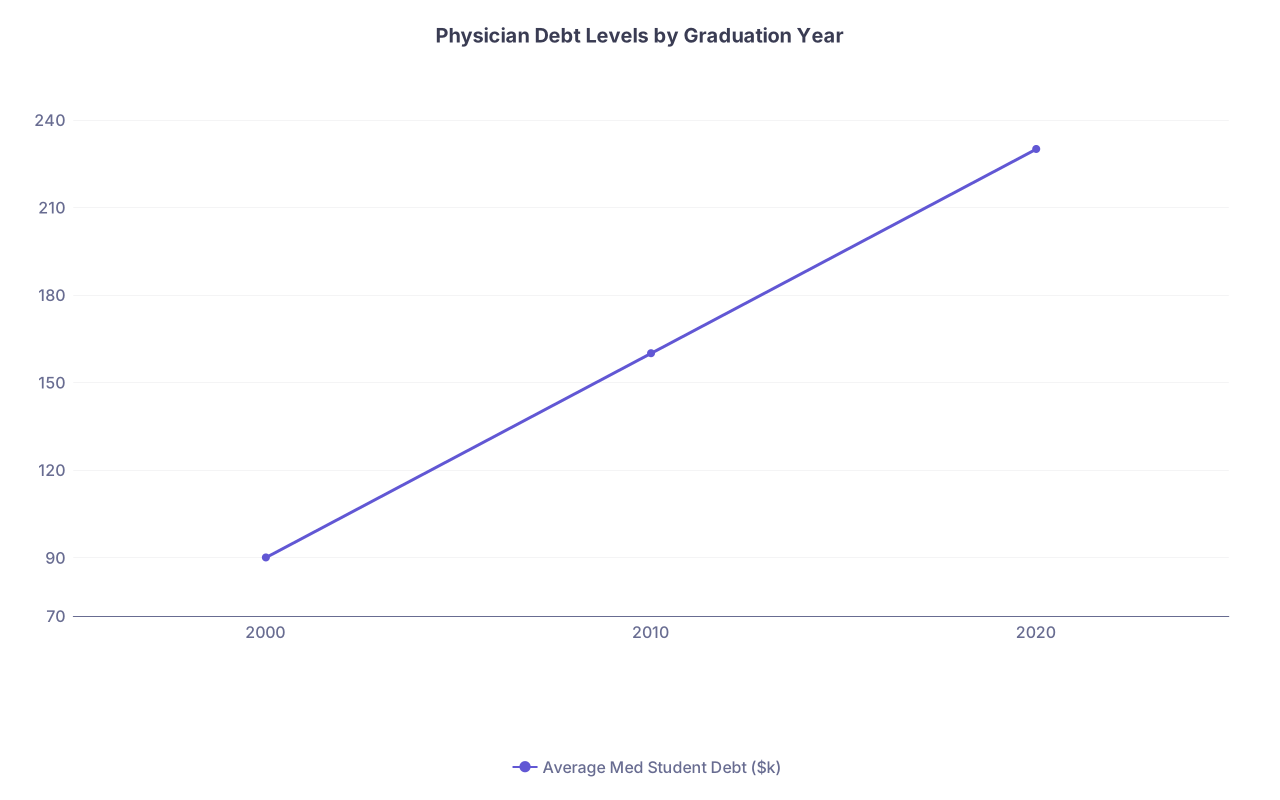
| Category | Average Med Student Debt ($k) |
|---|---|
| 2000 | 90 |
| 2010 | 160 |
| 2020 | 230 |
Most physicians:
- Start serious earning in their 30s
- Have six‑figure loans
- Live in high cost‑of‑living areas
- Face high marginal tax rates on W‑2 income
Meanwhile, your income is tied to:
- Call schedules
- Hospital politics
- Payer mix you do not control
- Reimbursement environments you definitely do not control
Now compare that to a reasonably run side business or leveraged income stream that:
- Is not hostage to RVUs
- Can be location‑independent
- Can grow without you adding more shifts or call
- Is often taxed more favorably than W‑2 income
No, a side hustle will not magically fix bad financial decisions. But pretending every physician can safely rely on a single W‑2 or 1099 clinical income for the next 30 years? That is fantasy.
Where Side Income Really Moves the Needle
Here is what I actually see in real households, not idealized budgets.
| Scenario | Key Outcome |
|---|---|
| No Side Income | 30-year loan payoff, minimal extra investing |
| +$50k for 5 years | Loans gone in 7–10 years, early retirement plausible |
| +$50k for 10 years | Loans gone, mortgage accelerated, 7-figure portfolio early |
An extra $30k–$50k per year for even a few years can:
- Eliminate student loans
- Erase credit card or practice start‑up debt
- Let you max retirement accounts instead of “doing what you can”
- Give you the freedom to say no to toxic shifts or employers
This is not theoretical. I have watched hospitalists use locums plus online teaching to kill $300k in debt in under six years. I have seen an anesthesiologist’s consulting work pay for three kids’ 529s while their clinical salary handled living expenses.
You do not need a seven‑figure empire. You need optionality.
Where “Real Doctors Don’t Side Hustle” Actually Comes From
Let’s call out the sources of this myth, because they are not exactly unbiased.
1. Old‑Guard Culture and Ego
Some senior physicians did fine in the old system. Lower tuition. Better reimbursements. Less admin overhead. They bought a house, worked 30 years, retired.
They then universalize their experience. “I did not need a side gig. You should not either.”
Except their starting salary to tuition ratio was completely different. The math changed. The advice did not.
2. Employers Who Want All of You for One Price
Hospitals and large systems love the “full devotion” narrative. A physician who believes their identity and worth are tied to a single employer is easy to control.
I have seen contracts with “no outside work” clauses that had nothing to do with conflict of interest and everything to do with leverage. HR phrases it nicely—“We want you focused on patient care”—but the subtext is “we’d like to buy 110% of your economic brainpower for 1.0 FTE wages.”
3. Colleague Insecurity and Status Games
Physicians who are burned out but stuck will sometimes attack those experimenting with new income streams. You mention a small course you are building or a consulting arrangement you landed, and the response is, “What, is medicine not enough for you?”
Translation: “I never figured out how to do that, and it threatens my story that I didn't have options.”
I have watched this play out in physician Facebook groups and even partner meetings. The loudest “real doctors don’t side hustle” people are often the ones most miserable in their current setup.
The Real Risk Profile: Clinical‑Only vs Diversified
Let’s compare two archetypes. Neither is perfect, but one is clearly more fragile.
| Factor | Clinical-Only Physician | Diversified Physician |
|---|---|---|
| Income Sources | 1 employer | 2–4 income streams |
| Control Over Schedule | Low | Moderate to high |
| Vulnerability to Policy Changes | High | Lower |
| Burnout Escape Options | Few | Several |
| Negotiation Power | Weak | Stronger |
Now pair that with what is actually happening to clinical environments.
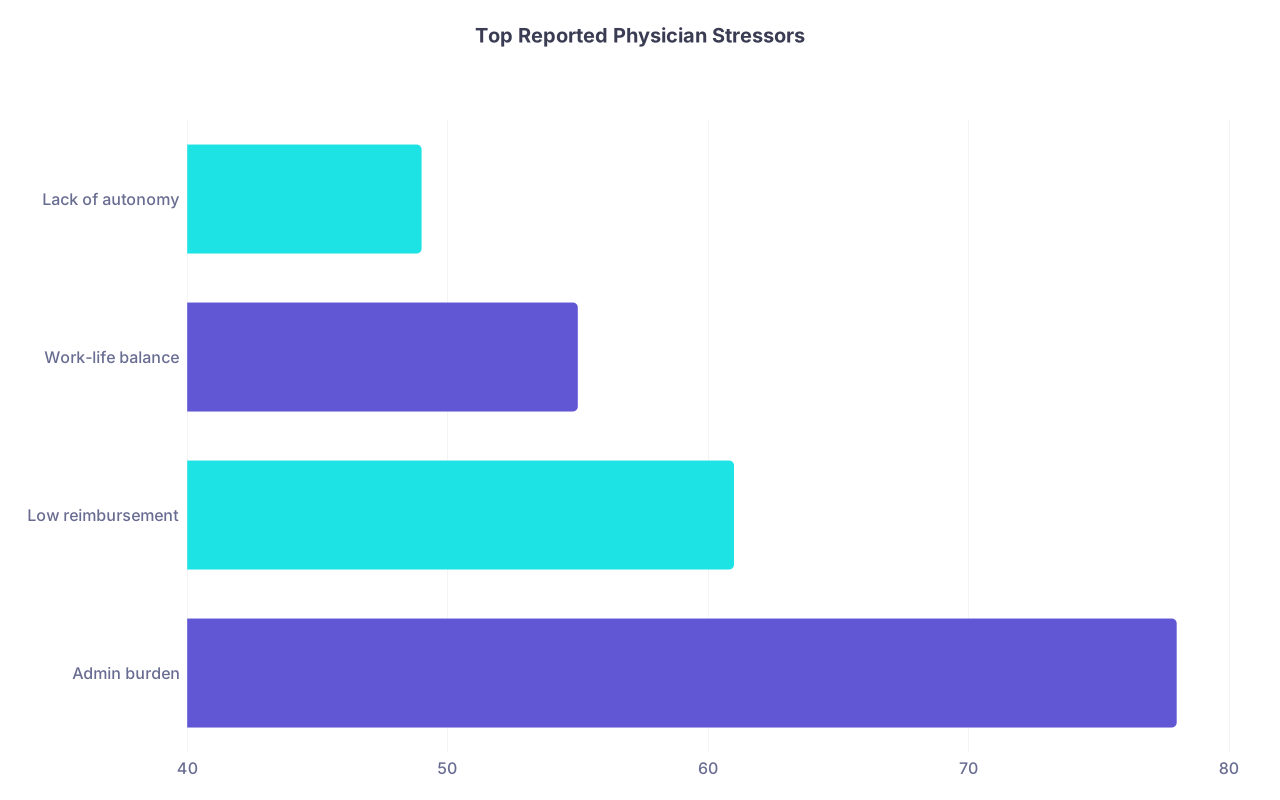
| Category | Value |
|---|---|
| Admin burden | 78 |
| Low reimbursement | 61 |
| Work-life balance | 55 |
| Lack of autonomy | 49 |
If you think the safe position is to anchor your entire financial life to the one domain where stress is highest, control is lowest, and change is fastest, you are not being conservative. You are being reckless.
Diversified physicians are not “less dedicated.” They are less exposed.
The Burnout Lie: “Side Hustles Distract from Patient Care”
The common moral argument is: if you are doing anything else for money, you are less of a doctor.
Here is what actually shows up in the data and in real lives:
- Burnout is strongly associated with lack of autonomy, excessive workload, and misalignment with values.
- Having some control over your time and income improves well‑being.
- Financial stress is a major driver of emotional exhaustion.
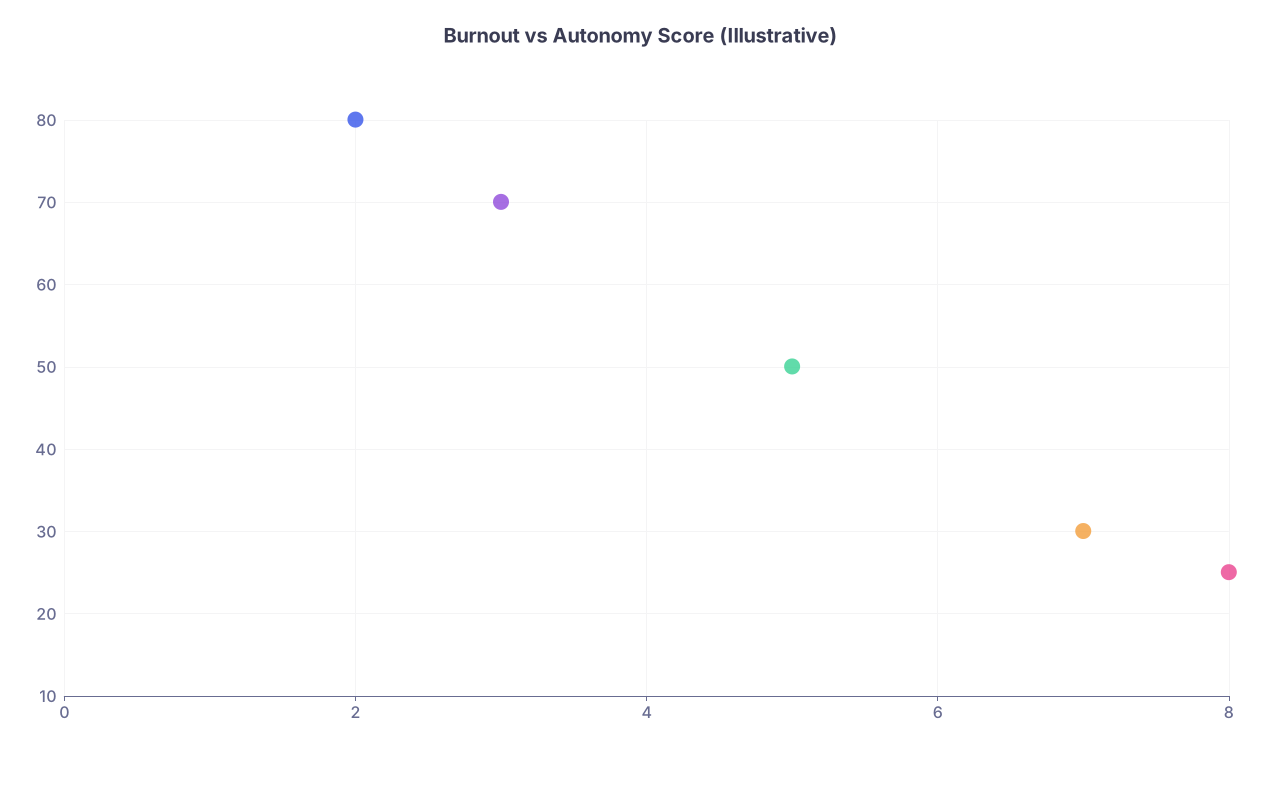
| Category | Value |
|---|---|
| Physician 1 | 2,80 |
| Physician 2 | 3,70 |
| Physician 3 | 5,50 |
| Physician 4 | 7,30 |
| Physician 5 | 8,25 |
(Autonomy score on x‑axis, burnout score on y‑axis, showing that as autonomy rises, burnout drops.)
I have seen more burnout from physicians who feel trapped in a single job than from anyone experimenting with side work. The physician with some online income who cuts back from 1.0 to 0.7 FTE clinical is usually:
- More present with patients
- Less resentful of call
- More able to say no to unsafe volume
You know who is dangerous? The doctor who cannot afford to lose the job, who drags themselves into clinic already mentally checked out, but keeps grinding because there is no alternative.
The side hustle did not cause that. The lack of options did.
Not All Side Hustles Are Created Equal
Let me be clear: I am not saying every “doctor side hustle” is smart.
Some are dumb. Some are scams. Some are just second jobs in disguise.
For example:
- MLM “wellness” schemes using your MD as marketing leverage? Bad.
- Getting roped into a high‑pressure real estate seminar with no due diligence? Also bad.
- Signing up for extra shifts at worse rates and calling it a “side hustle”? That is just more clinical work. Different logo, same burnout.
But real leveraged side income is different. It has at least one of these traits:
- Not tied directly to hours at bedside
- Scalable without linear time increase
- Teaches you skills beyond medicine (marketing, negotiation, tech, leadership)
- Can be turned up or down depending on life stage
Examples that actually fit that profile:
- A niche online course or membership for a very specific audience (e.g., “running and sports injuries for recreational athletes” led by a sports med doc)
- Small consulting engagements with startups, payers, or health systems
- Thoughtful real estate investing where you actually understand the deal
- Telehealth structured as your own small practice, not just “more shifts” on another platform
The “real doctors don’t side hustle” line rarely distinguishes between unethical garbage and smart diversification. It just condemns all of it in one lazy sweep.
The Future of Medicine: Fewer Walls, More Portfolios
The wall between “medicine” and “non‑medicine” work is collapsing. You can fight that, or you can use it.
Look at what is emerging:
- Physician‑led startups in digital health, AI triage, remote monitoring
- Hybrid clinicians who do 2–3 days of clinical, 1–2 days of product, policy, or admin work
- Doctors building online education platforms for patients or peers
- Clinicians doing expert witness, quality consulting, or guideline development

The “single job, single track” career will still exist. But the portfolio career—part clinical, part other—is becoming more normal every year.
In that environment, “Don’t you dare build other income streams” is not just old‑fashioned. It actively handicaps younger physicians entering the most volatile healthcare ecosystem we have ever seen.
How to Side Hustle Without Wrecking Your Life (or License)
There is a legitimate concern underneath the noise: poorly handled side work can cause problems. Time conflicts, contract violations, burnout of a different flavor.
So here is the boring but crucial part, based on what actually works:
- Read your contract like a lawyer, not a romantic. Look for non‑competes, outside work clauses, IP language. If they try to own everything you create “related to healthcare,” that is a red flag.
- Protect your license first. Anything that pressures you into gray‑zone clinical decisions or weird documentation games is not worth whatever it pays.
- Cap how much of your total energy goes to side work. A lot of physicians do fine with 5–10 hours a week. Beyond that, it has to be very leveraged or you are just trading one grind for another.
- Do not broadcast half‑baked ventures to every colleague. People love to shoot down what they do not understand. Build quietly, show results, then talk.
Notice what I did not say: I did not say “avoid side hustles.” I said “treat them like actual businesses and assets, not random shiny objects.”
The Most Dangerous Part of the Myth: Identity
The worst damage from “real doctors don’t side hustle” is not financial. It is psychological.
If your entire identity is “I am a doctor, I do doctor things, I make doctor money in doctor ways,” then:
- Any threat to your job feels like a threat to you
- Any nonclinical interest feels like betrayal
- Any desire for more control over your time or money feels like greed
That is how people end up staying in toxic jobs for years. Or feeling guilty for wanting to see their kids more. Or quietly panicking about retirement but doing nothing because “doctors are supposed to be okay.”
Side income is not just about dollars. It is about learning that your value is not confined to one building or one schedule or one employer. That you can generate value in more than one way.
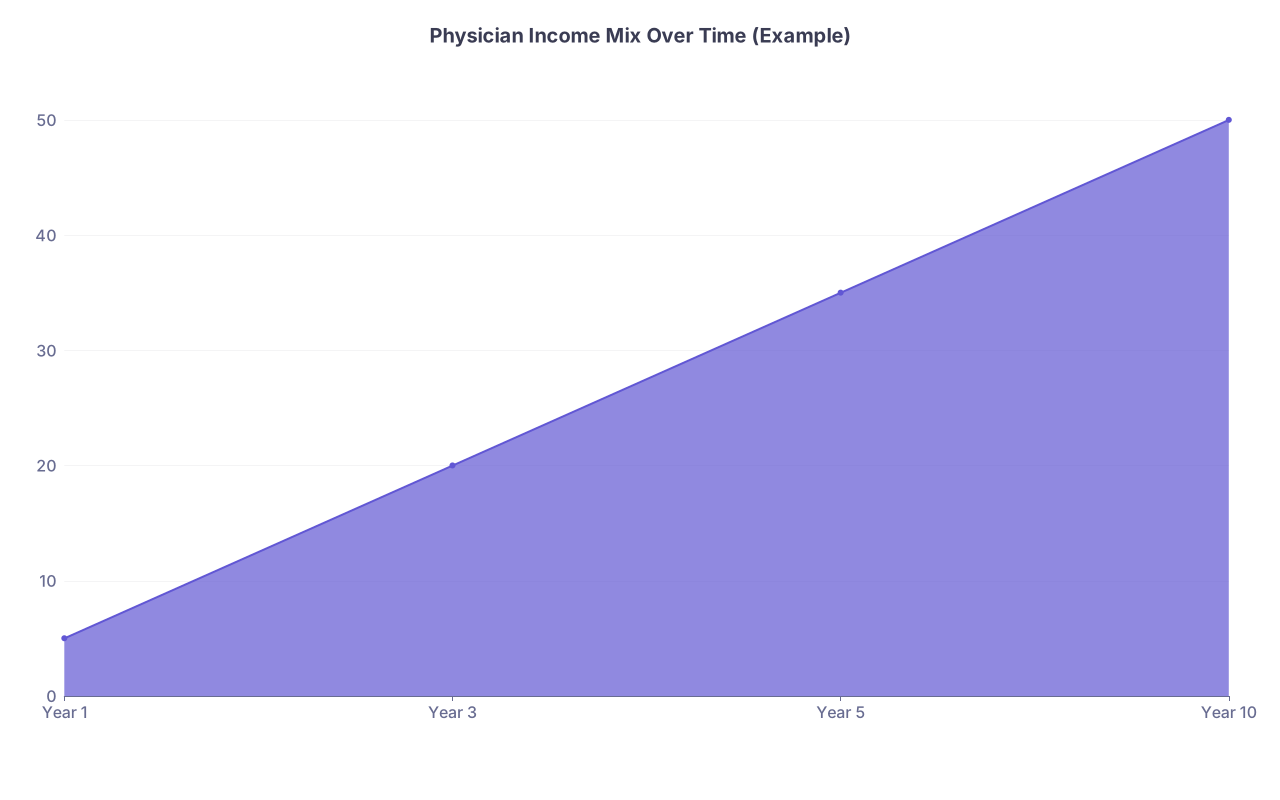
| Category | Value |
|---|---|
| Year 1 | 5 |
| Year 3 | 20 |
| Year 5 | 35 |
| Year 10 | 50 |
(Percent of total income from nonclinical or side sources gradually increasing over time.)
When that number goes from 0% to even 10–20%, something shifts. You negotiate differently. You tolerate less nonsense. You see more options.
Not because you are less of a “real doctor.” Because you stopped pretending your only tool is a stethoscope.
Years from now, you will not be proud you stayed financially dependent on a single employer out of some warped sense of professional purity. You will be proud of the moment you stopped outsourcing your financial security to a system that keeps showing you it is willing to burn you out and replace you.


