

Last week I was talking to a new attending who whispered this like it was a confession: “Between my loans and taxes, I feel like I’m just working for everyone else. What if I never actually get ahead?” She wasn’t being dramatic. She had $420k in med school loans, lived in a high-tax state, and her first real paycheck felt… weirdly disappointing.
If you’re reading this, I’m guessing you’ve run the same mental math at 1 a.m.: big income, bigger loans, high marginal tax rates… and this ugly question: what if I’ll never actually build wealth?
Let’s walk through that fear. Slowly. And honestly.
First: Is It Even Rational To Worry About This?
Short answer: yes. Totally rational. You’re not making this up.
Here’s the emotional math you’re probably doing in your head:
- Six-figure med school loans (maybe multiple six figures)
- 37–50% of each extra dollar going to taxes (federal, state, payroll)
- Cost of living that makes your “doctor salary” feel suspiciously average
- Everyone on Instagram seems to be FIRE’d at 32 with no debt
Combine all that and your brain jumps to: “I will be a high-income broke person forever.”
Here’s the non-sugar-coated truth:
If you:
- Make no plan
- Let lifestyle creep run the show
- Ignore taxes and loans and “just pay whatever”
…then yes, you can absolutely earn $300–500k for decades and end up with not much to show for it.
I’ve seen 55-year-old physicians with luxury cars and private school bills and retirement balances that would scare you.
So your fear? It’s not crazy.
But it’s incomplete.
Because a high-earning doc who does get a handle on:
- Student loans
- Taxes
- Savings rate
…can move from negative net worth to millionaire status much faster than it feels when you’re drowning in debt.
Let’s ground this instead of using vague hope.
What’s Actually Eating Your Money? (It’s Not Just Loans)
You’re probably blaming loans and taxes for everything. They’re big, loud, annoying. But they’re not the whole problem.

The Three Big Drains
For a typical physician in a high-tax state:
- Taxes
- Housing / lifestyle
- Student loans
Notice where loans actually sit on that list.
Let me give you a rough, not-perfect-but-useful snapshot.
Say:
- Attending income: $320,000
- Location: high-tax state (CA, NY, NJ, etc.)
- Student loans: $350,000 at 6–7%
- Filing single, no kids yet
After federal, state, and payroll taxes, you might lose ~35–45% of gross to taxes, depending on deductions and planning.
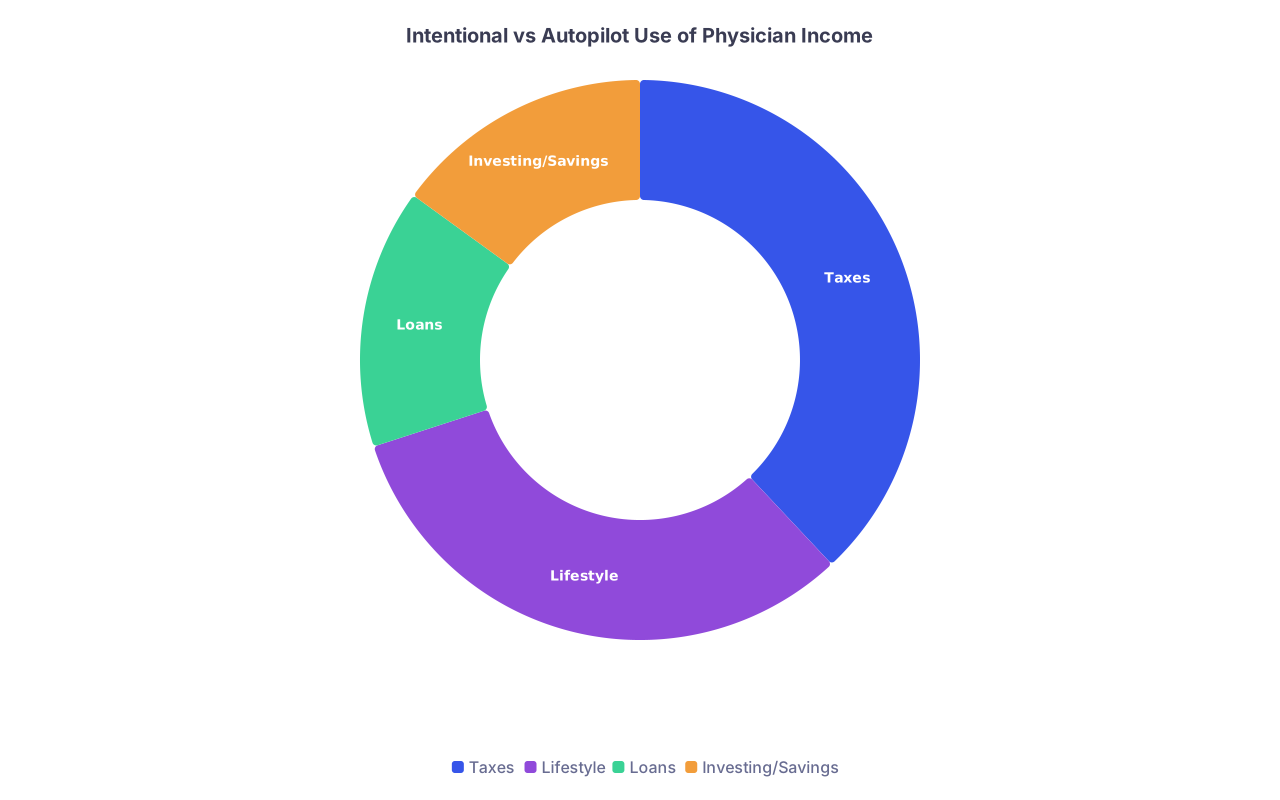
Let’s visualize where money can go if you’re intentional vs if you’re on autopilot:
| Category | Value |
|---|---|
| Taxes | 38 |
| Lifestyle | 32 |
| Loans | 15 |
| Investing/Savings | 15 |
That’s the intentional version. Taxes still brutal, but:
- Lifestyle is contained
- Loans are handled
- 15%+ going to real wealth-building
Now the autopilot version I see way too often in new attendings:
- Taxes: 38–40% (same)
- Lifestyle: 45–55% (big house, nice car, eating out, daycare, random Amazon, etc.)
- Loans: minimum-ish, or messy forbearance
- Savings/investing: 0–5% “I’ll start later when things calm down”
Guess which one leads to the “I’m screwed forever” feeling.
(Hint: the second one.)
The big mental shift: Loans and taxes feel like the villain, but your savings rate is the actual hero or villain.
If you’re saving and investing 15–25% of your gross? Wealth becomes almost inevitable over 10–20 years.
If you’re saving 0–5%? Yeah, then you stay stuck.
The Student Loan Panic: “I Owe More Than I’ll Ever Save”
Let’s attack the scariest thought directly: “My loans are so big I’ll never build wealth.”
There are basically three sane paths for a physician:
- Aggressive payoff (private practice, high income, not using PSLF)
- PSLF/IDR strategy (academic, non-profit, or government jobs)
- Middle-ground refinance + balanced investing (some flexibility, some speed)
| Strategy | Typical Job Type | Timeline | Monthly Focus |
|---|---|---|---|
| PSLF + IDR | Academic / hospital | 10 years | Lower payments, save |
| Aggressive Payoff | Private practice | 3–7 years | Max payments |
| Refinance Balanced | Mixed / flexible | 7–15 years | Moderate payments |
Here’s the fear:
“If I do PSLF, I’ll never pay this off and I’ll be in debt forever.”
And the opposite fear:
“If I don’t do PSLF and just pay it off, I’ll be broke for a decade.”
You can’t win in your head because you’re imagining the pain of every path at once.
A More Useful Question
Instead of “Which path is perfect?” ask:
“On this path, can I consistently invest at least 15–20% of my gross income while handling my loans?”
If the answer is yes, that path probably leads to wealth, regardless of whether you:
- Pay off loans in 3 years
- Get forgiveness at year 10
- Refinance and pay them for 12 years
Wealth doesn’t wait for your loans to be gone.
Wealth shows up when you’re investing consistently while paying them.
The truly dangerous scenario isn’t “big loans.”
It’s “big loans + no investing + rising lifestyle + tax oblivion.”
The Tax Horror Story In Your Head
Taxes feel like this black hole that just eats your income and laughs.
Federal. State. Payroll. Maybe city.
You see your marginal rate and think: “40%+. Why am I even trying?”
This is where your brain goes full catastrophic:
- “I’m just working for the government and banks”
- “There’s no way to win in a high-tax state”
- “By the time I pay taxes and loans there’s nothing left”
Let me be blunt: if you ignore tax planning, you will absolutely overpay. For decades.
But you actually have more levers than you think.
| Lever | Typical Annual Impact |
|---|---|
| 401(k)/403(b) | Up to $23k+ sheltered |
| 457(b) | Another $23k+ sheltered |
| Backdoor Roth IRA | $6.5–7k tax-free growth |
| HSA | $4k+ triple tax-advant. |
| Entity/1099 setup | Thousands in deductions |
Here’s the uncomfortable part:
Most physicians:
- Don’t max their pre-tax accounts early in their careers
- Don’t use backdoor Roths
- Don’t understand 457(b)s (or are scared of them)
- Never talk to a real tax pro who understands physicians
- Stay W-2 when 1099 / hybrid options might help
And then they blame “high taxes” for everything.
I’ve watched new attendings in high-tax states get back five figures per year in reduced taxes just by:
- Maxing 401(k)/403(b) + 457(b)
- Using an HSA if eligible
- Doing a backdoor Roth every year
- Getting decent advice on deductions if they have any 1099 income
That’s not theoretical. That’s literally the difference between:
- Feeling permanently stuck
versus - Watching your investment accounts cross six figures in under 5 years
You can’t control the tax code. You can control whether you’re playing the game intelligently or passively donating extra to the IRS/state every year.
“What If I Start Too Late And It’s Over For Me?”
Here’s another poison thought:
“I’m already behind. Everyone else started earlier. I’ll never catch up.”
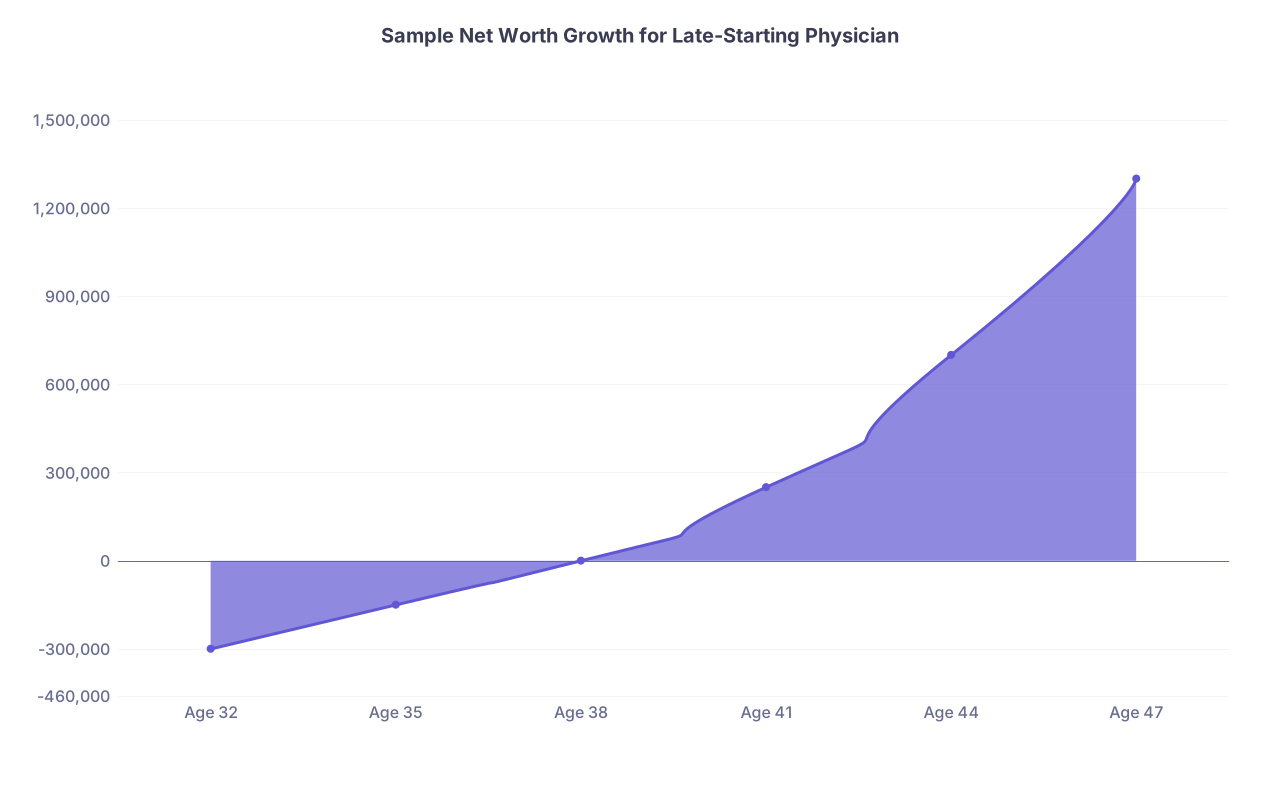
Let me tell you what I’ve seen:
- A 38-year-old hospitalist with $450k in loans who went from negative net worth to >$1M in under 10 years by maxing retirement accounts, living in a modest home, and driving paid-off cars.
- A 42-year-old surgeon who “woke up late,” then went on a 7-year tear: aggressive loan payoff + 25% savings rate + some locums. He ended with multiple seven figures by his early 50s.
- A 33-year-old peds doc who thought she was doomed in a “low-paying specialty” but nailed PSLF + heavy Roth investing + low lifestyle. Her net worth curve looked better than a lot of surgeons’.
The common pattern isn’t perfection. It’s this:
- They got brutally honest about cash flow
- They chose a loan strategy and stopped second-guessing it every 3 weeks
- They built a tax-efficient, automated investing plan
- They didn’t let their lifestyle grow faster than their plan
| Category | Value |
|---|---|
| Age 32 | -300000 |
| Age 35 | -150000 |
| Age 38 | 0 |
| Age 41 | 250000 |
| Age 44 | 700000 |
| Age 47 | 1300000 |
Your brain wants to say, “But what if I’m the exception who never gets ahead?”
Mathematically, if you:
- Earn a physician income
- Save/invest 15–25% of it
- Avoid catastrophic lifestyle and debt decisions
…you’d have to try pretty hard not to build wealth over 15–25 years.
Your risk is not “starting too late.”
It’s “never actually starting because you’re paralyzed by anxiety and vague dread.”
So What Do I Do Now, Realistically?
Let’s strip this down to something you can actually act on, not some fantasy spreadsheet.
1. Get crystal clear on your real numbers
Not vibes. Not feelings.
Actual numbers:
- Take-home pay per month
- Minimum loan payment(s) and likely path (PSLF, payoff, refinance?)
- Core living expenses (housing, food, utilities, insurance, childcare, etc.)
- How much is left
If the “what’s left” number is zero or negative, you don’t have a “wealth” problem yet. You have a cash flow problem. That has to be fixed first: cheaper housing, fewer cars, less random spending, something.
2. Commit to a target saving/investing rate
Pick a starting target, even if it feels impossible:
- Intern/resident: 5–10%
- New attending: 15–20% of gross
- Catch-up mode or burned years: 20–30% for a while
Your fear says: “I can’t, not with these loans and taxes.”
Reality: you probably can — but not with the lifestyle you’re quietly assuming you “deserve” as a physician.
3. Use taxes as a tool instead of just a bill
- Max pre-tax accounts if it makes sense for your bracket
- Use Roth accounts strategically (backdoor Roth is usually a no-brainer)
- Learn the basics of your state’s tax situation and what moves are even possible
- If you have any 1099 income, do not wing it — get professional help early
4. Choose a loan strategy and stick with it
Flip-flopping between PSLF and refinancing and aggressive payoff every six months is a great way to:
- Increase your anxiety
- Kill your progress
- Make bad decisions out of panic
You don’t need the perfect plan. You need a decent plan that you can execute on for years.
The Dark Thought You’re Really Afraid To Say Out Loud
Under all of this, there’s usually a quieter, meaner sentence:
“What if I went through all this training, all this debt, and I still end up financially insecure?”
That’s the nightmare, right?
Not just “I have loans” — but “I sacrificed my 20s and still lose the money game.”
Here’s my honest take:
If you keep doing what most physicians do by default — ignore money, react instead of plan, treat taxes like an annoyance instead of a system — that nightmare is on the table.
But if you’re anxious enough that you’re reading about physician tax planning in your off time? You’re already not “most physicians.”
You don’t have to turn into some finance bro. You just need:
- A clear loan path
- A clear savings target
- Basic tax optimization
- And the discipline to let time do its thing
You’re not doomed by your loans and taxes.
You’re only doomed if you use them as a reason to never take control.
FAQ (Exactly The Stuff You’re Afraid To Ask)
1. What if my loans are over $500k — is it actually possible to build wealth from there?
Yes. Ugly? Yes. Impossible? No. With physician-level income, the math still works. The key is aligning your path with reality: PSLF for many academic/non-profit jobs, aggressive payoff only if your income and lifestyle allow it, and always — always — investing at the same time. I’ve seen people with $500k+ in loans and a net worth over $1M within 10–15 years of finishing training because they took it seriously and didn’t live like a TV doctor.
2. I’m in a high-tax state. Should I just move to fix this?
Maybe, but don’t treat moving like a magic button. If you move from CA to TX, then immediately buy a giant house and two new cars, you gained nothing. Lower tax states help, especially over decades, but you still need a savings plan. If moving means lower taxes and lower cost of living and you keep your spending in check, then yeah, that can accelerate everything. But it’s not required to build wealth.
3. Should I pay off my loans before I invest for retirement?
If you wait to be “debt-free” before investing, you’ll lose your most important asset: time in the market. For most physicians, a hybrid approach wins: meet your required loan payments (or a bit more if refinancing/aggressive payoff) and invest simultaneously. The only time I’d pause investing briefly is for a very short, intense payoff period (like a 1–3 year sprint) — and even then, I’d still try to get at least employer match if available.
4. What if I feel completely clueless about taxes and investing? Am I already behind?
No. Most residents and new attendings feel exactly like this, they just pretend they don’t. The fact that you’re worried means you’re at the starting line, not at the finish. Start with one thing: learn how your 401(k)/403(b) works, or figure out if PSLF applies to you, or schedule one meeting with a fee-only planner who actually understands physicians. You don’t have to solve everything this year. You just can’t ignore it for another decade.
5. I’m afraid to meet with a financial advisor because I don’t want to be judged. Is that dumb?
It’s not dumb; it’s human. But a good advisor has seen worse. Way worse. They’re not shocked by $400k in loans or a negative net worth at 33. What is dumb is letting embarrassment cost you hundreds of thousands of dollars over your career. If someone makes you feel stupid, that’s the wrong advisor. Find someone who explains things clearly and respects that you’re smart — just not trained in this.
6. Is it already too late for me? I’m [35, 40, 45] and just now waking up to this.
No, it’s not too late — but you don’t have many “waste years” left. You’ll need a higher savings rate than someone who started at 28, yes. You may need to say no to some lifestyle upgrades your peers say yes to. But I’ve seen people in their 40s completely change their trajectory with 10–15 years of focused, high-savings behavior. You don’t need perfection. You need urgency and consistency, starting now.
Key points to hang onto when your brain spirals at night:
- Loans and taxes are heavy, but they don’t mathematically prevent wealth if you save/invest consistently.
- Your savings rate and basic tax planning matter more than picking the “perfect” loan or investment strategy.
- You’re not doomed — unless you let fear keep you from actually making a plan and sticking to it.


