The belief that “research will fix my application after I don’t match” is wrong. Not slightly off. Flat-out wrong for most people.
If you went unmatched and your first instinct is “I guess I need a research year,” you’re thinking exactly like thousands of other applicants. And that’s the problem. You’re defaulting to the most popular myth rather than what the data – and actual program behavior – support.
Let me be blunt: research can help a very specific type of applicant in very specific situations. For everyone else, it’s an expensive, time-consuming detour that does not address the real reasons they did not match.
Let’s dissect this properly.
The Myth: “I Didn’t Match, So I Need a Research Year”
The script goes like this. I’ve heard it from MS4s every March:
“I didn’t match into derm/ortho/plastics/etc. My advisor says a dedicated research year at Big Name Institution is the way to go. Get some pubs, reapply stronger.”
Sounds logical. Feels productive. You’re doing something “prestigious.”
But here’s what the data and actual match patterns show: the majority of unmatched applicants are not primarily failing because of a lack of research. They’re failing because of:
- Step/COMLEX scores or number of attempts
- Poor or misaligned letters
- Weak clinical performance or professionalism concerns
- Horrible application strategy (wrong specialty, wrong program list, too few applications, late application)
- Lack of strong home institution support in a competitive specialty
- Visa or IMG-related barriers
Research does almost nothing for most of those.
What the Data Actually Shows About Research and Matching
You know those NRMP Charting Outcomes graphs where matched applicants in competitive specialties have 10–20+ “abstracts, presentations, and publications”? People stare at those bars and panic.
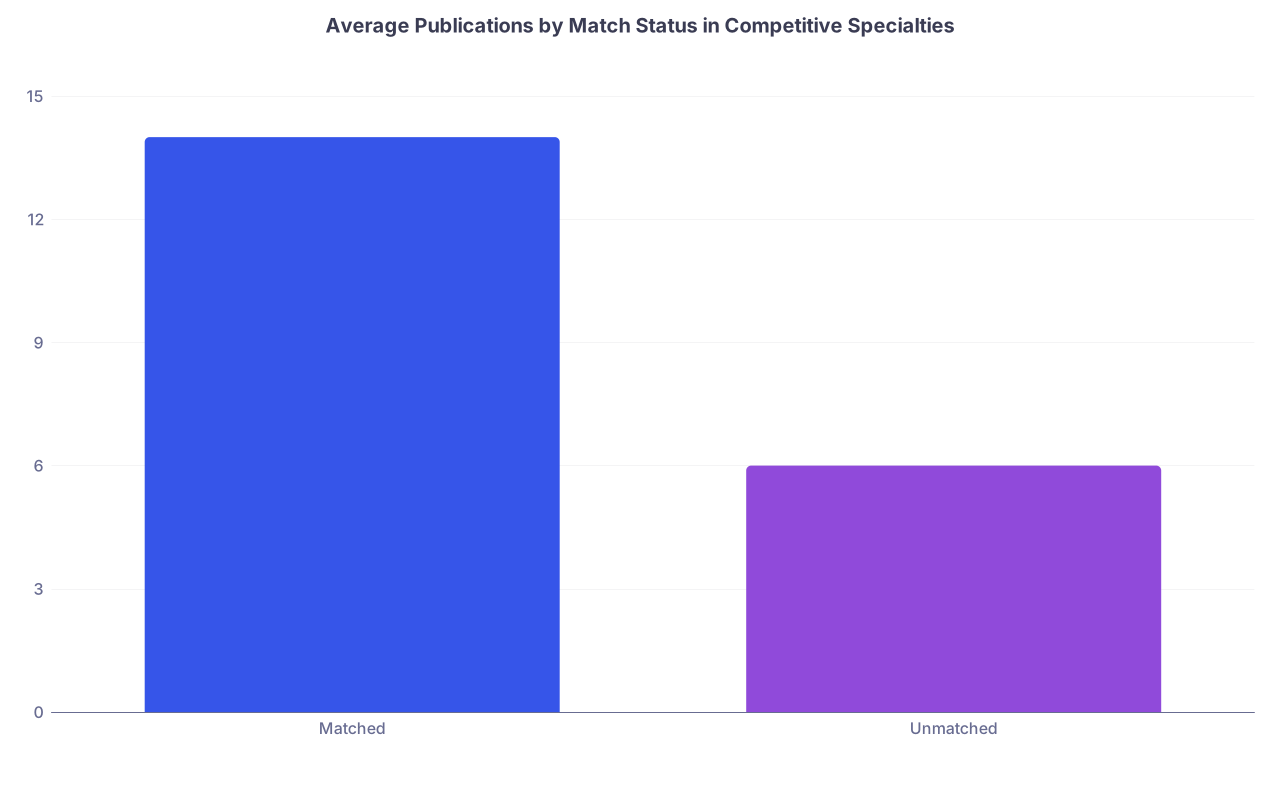
| Category | Value |
|---|---|
| Matched | 14 |
| Unmatched | 6 |
Here’s the part almost nobody explains to you:
- Those are averages of people who already matched, not a recipe you can follow retroactively.
- Research output correlates with matching in competitive specialties, but correlation is not causation. The same people who get lots of research often:
- Attend highly resourced med schools
- Have better test scores
- Have mentors who call PDs
- Come from earlier academic interest and planning, not a panic research year
Late-stage research is a marker more than a magic lever.
You almost never see a study like: “100 unmatched applicants did a research year; 100 did not; here’s how many then matched, controlling for scores, specialty, and school.” Because that’s hard to study and not in anyone’s interest to publish.
What you do see, informally and repeatedly:
- The applicant who had 2 interviews in ortho, takes a research year, ends up with 4–6 interviews next cycle. Sometimes matches, sometimes still doesn’t.
- The applicant who had 0 interviews because of 2 Step failures does a research year and still gets 0 interviews.
- The IMG who does 2–3 unpaid research years and still has doors slammed because of systemic barriers unrelated to publications.
In other words: research modestly boosts an already borderline-viable application in some competitive fields. It does not resurrect a fundamentally non-competitive profile.
When Research Actually Helps (And When It Absolutely Does Not)
Let’s separate signal from noise.
Situations where research can be worth it
You’re a US MD/DO, you applied to a highly research-heavy field (derm, plastics, neurosurgery, rad onc, sometimes ENT), and your profile looks like this:
- Solid or decent scores (or now, strong clinical performance/Clerkship comments + Step 2)
- Some early research but thin compared to your peers
- A couple of interviews but obviously not enough; feedback is “you’re competitive but lots of people had more research/academic ties”
For that person, a targeted research year:
- Embedded in a well-known department in the chosen specialty
- With a specific mentor who is known to PDs
- With built-in opportunities to present, publish, and be seen clinically or in conferences
…can meaningfully improve odds. Notice the key part: you were already at least on the radar. You got some interviews. People did not run away from your file; they just had better toys to pick.
Situations where research is almost useless as a “fix”
You’re unlikely to benefit much from a research year if any of these apply:
- Multiple Step/COMLEX failures or very low scores relative to your specialty of choice
- Poor or generic letters (“hardworking, pleasant”) with no strong advocacy
- Red flags in professionalism, remediation, leave of absence without a clear and well-managed narrative
- You applied late, applied to 20 programs instead of 80, or only applied to reach programs with almost no home or away support
- You’re aiming for a non-research-heavy field (FM, IM, psych, peds, EM at most community programs)
Here’s the pattern I’ve seen repeatedly: someone with a 2x Step 1 fail thinks that a big-name research year in cardiology or oncology will magically convince IM or FM PDs to ignore their exam history.
They won’t. At best, they’ll think, “Nice that this person is productive.” Then they’ll still rank your file below someone with no failures and minimal research.
What Programs Actually Care About Post-Match
Program directors are not sitting in a room in February saying, “If only that applicant had three more abstracts.” That’s fantasy.
They’re asking:
- Can this person pass boards on the first try?
- Will they show up, not cause problems, and not burn out by November?
- Do I trust the people vouching for them?
- Does their history match what we need here: academic track vs workhorse community vs niche expertise?
So after you don’t match, you should be obsessively asking:
“What signal do I need to change in my file for PDs to answer ‘yes’ more often to those questions?”
Sometimes the answer is research. Very often it is not.
Look at the realistic levers you can pull:
| Strategy | Main Problem It Helps With |
|---|---|
| Research year | Academic interest, specialty fit, networking |
| Preliminary year | Clinical performance, recency, letters |
| Extra audition (away) rotations | Exposure, letters, specialty fit |
| Rewriting application strategy | Program list, timing, narrative alignment |
| Step 2 retake/improvement | Score concerns, recent competence signal |
Notice how research is only one box on that table. And it’s not the one that fixes scores, rotations, or strategy.
Research vs Preliminary Year vs Reapplication Strategy
Let me contrast the big three options I see people consider after not matching: research year, prelim year, and “fix my approach and reapply.”
Research year
Best used when:
- You’re still committed to a research-heavy specialty
- Your scores are already fine
- You can land a legit position: funded or at least structured, in the right specialty, with a name that carries weight
- You’ll be seen by people who actually talk to PDs
Terrible idea when:
- You’re broke and this is unpaid
- You’re doing random bench lab work in cardio while trying to go into anesthesia with average stats
- You’re hoping publications will distract from 3 exam attempts
Preliminary year
A prelim year (IM, surgery, transitional year) does things research can’t:
- Gives current clinical evaluations and fresh letters
- Shows you can function as a doctor, not just a data collector
- Sometimes lets you network with attendings who know PDs in your target specialty
- Builds a “recency of training” argument if you’ve had a gap
But it’s not a panacea either. Doing a prelim IM year while trying to get ortho without ortho support is still an uphill climb. The advantage is that this at least screams “I can practice clinical medicine right now,” which PDs like.
Fixing your actual application strategy
This is the unsexy answer. But it’s often where the most gain sits.
You’d be surprised how many unmatched applicants:
- Applied to 30 programs where the average matched Step 2 is way above theirs
- Skipped community, new, or lower-profile programs
- Didn’t apply broadly across geographic regions
- Had a vague, generic personal statement that could fit any specialty
- Sent a poor signal list in specialties that now use signaling
You can change your outcome without a single new publication if you:
- Switch to a specialty that actually fits your numbers and experiences
- Apply earlier, broadly, and strategically
- Use mentors who will actively pick up the phone or email PDs
- Clean up your narrative so it matches who you actually are and what you have done
The Opportunity Cost Nobody Talks About
A research year isn’t “neutral.” It costs you:
- An entire year of physician salary down the line (compounded over your career, that’s huge)
- One more year of not practicing clinical medicine, which can make you rusty
- Mental health strain: being in limbo, watching your classmates start residency
- Sometimes moving cities, burning savings, or working unpaid
If the probable benefit is “maybe a slightly better shot in an already long-odds specialty,” you need to be brutally honest about that tradeoff.
That’s not me being pessimistic. That’s what I’ve seen with applicants who treat research as a reflex rather than a decision.
Here’s roughly how I’d think about payoff expectations:
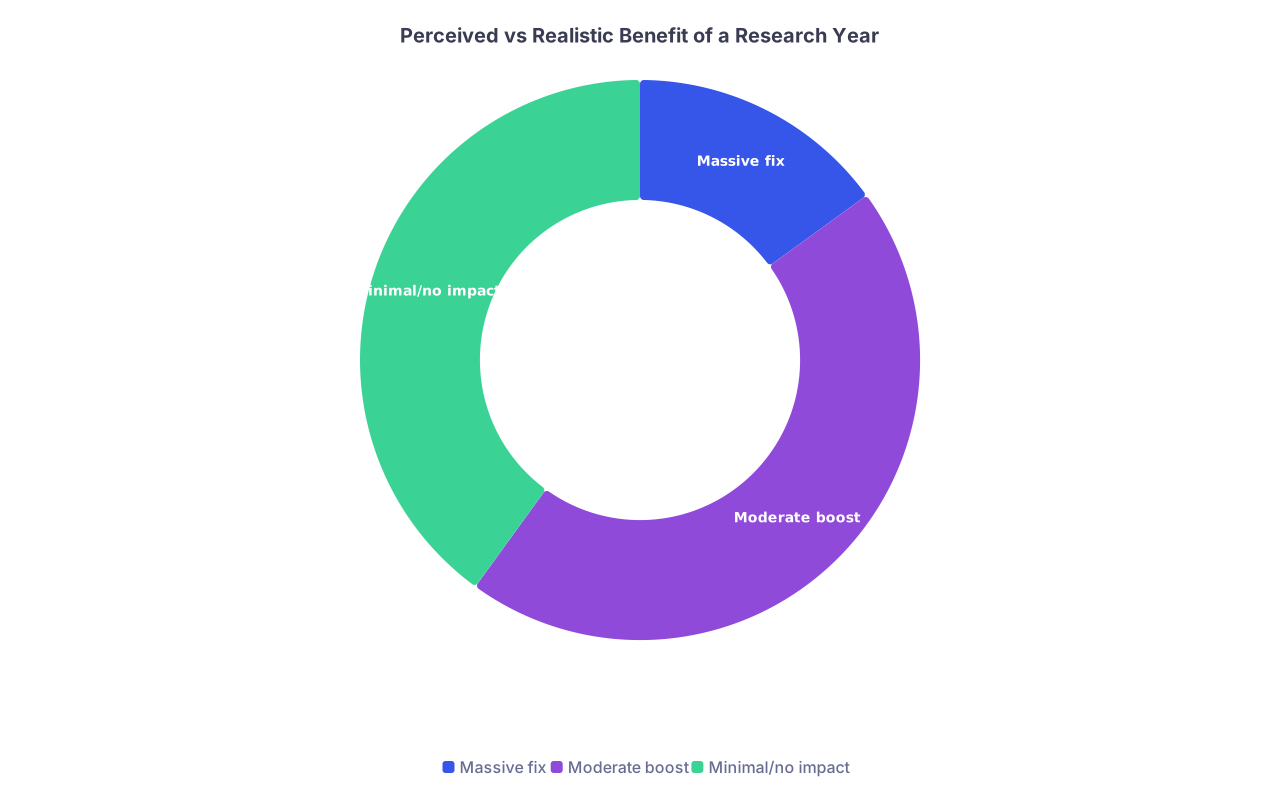
| Category | Value |
|---|---|
| Massive fix | 15 |
| Moderate boost | 45 |
| Minimal/no impact | 40 |
Most students think they’re signing up for the “massive fix” slice. In reality, most land in “moderate boost if you were already close” or “no meaningful difference because wrong problem targeted.”
How to Decide If Research Makes Sense For You
Let me give you a practical decision flow. Not feelings. Not prestige. Just logic.

| Step | Description |
|---|---|
| Step 1 | Did not match |
| Step 2 | Focus on prelim year and strategy |
| Step 3 | Address exams, clinical issues first |
| Step 4 | Research year may help |
| Step 5 | Competitive, research heavy specialty? |
| Step 6 | Scores and performance solid? |
| Step 7 | Got interviews but not enough? |
| Step 8 | Access to strong research mentor in specialty? |
If you don’t check those boxes – specialty actually cares about research, your exams and performance are not the glaring problem, you got at least a few interviews, and you can plug into a strong research group – then a research year is usually post-match cosplay productivity. It looks impressive on Instagram; it does little at rank-list time.
If instead you’re aiming for IM, FM, psych, peds, EM, anesthesia at many programs? A rock-solid prelim year, better letters, better timing, and a realistic program list will outperform a random research year practically every time.
So What Should You Actually Do After Not Matching?
Here’s the part the “just do research” crowd skips.
You need a structured, brutally honest post-mortem:
- Pull your ERAS and your interview list.
- Compare yourself to matched residents in your desired specialty at realistic programs, not your dream program’s website brochure.
- Talk to at least two people who will not sugarcoat: a PD or APD, and a faculty member who has mentored applicants in your specialty.
- Ask a specific question: “If you could change three things in my file, what would they be?” Not “What do you think?”
Then map each deficit to the right fix:
| Main Deficit | Higher-Yield Fix Than Research Year |
|---|---|
| Low or failed Step/COMLEX | Step 2 improvement, remediation clarity |
| Weak letters | Prelim year, targeted rotations |
| No interviews at all | Change specialty, broader application |
| Poor narrative / red flags | Expert advising, strong explanation |
| Borderline but interview-limited in research-heavy specialty | Targeted research year in that field |
Now research is on the menu. But as one option among many – not the auto-pilot answer.
FAQs
1. I’m an IMG who didn’t match. Should I do a US research year to improve my chances?
Only if you also solve the other IMG barriers. A US-based research year, by itself, usually won’t overcome very low scores, lack of US clinical experience, or visa challenges. If you’re an IMG with solid scores, some USCE, and specific interest in a competitive or academic IM subspecialty, then research at a program that actually takes IMGs and has PDs who advocate for them can help. But three disconnected “research years” at places that never interview IMGs is a trap I’ve seen too many times.
2. What if I enjoy research and might want an academic career anyway?
Then do research because you like it and it matches where you’re headed, not as a panic move. If long-term you want to be academic cardiology, GI, heme/onc, or rad onc faculty, then spending a year building basic or clinical research skills with a good mentor is rational. But even then, you should still ask: does this delay my clinical start unnecessarily, and will this specific role actually open doors?
3. Do program directors really care about publications, or is it just a checkbox?
Depends heavily on specialty and program type. In derm, plastics, rad onc, neurosurgery, and top-tier academic programs, substantial research (not just your name as author #9 on a case report) is part of the culture and can help signal fit. In community FM, psych, peds, EM, or standard IM? They may nod politely and move on. They’re more worried about whether you’ll pass boards, show up, and stay.
4. I matched into a prelim year only. Should I still consider a research year afterward?
In most cases, no. A strong prelim year with excellent clinical performance and letters is much more powerful than dropping out of clinical medicine to do research. If you finish a prelim year and still do not match into your desired advanced specialty, the next move is either rethinking specialty or finding additional clinical roles/rotations and support – not usually a research detour.
5. I already accepted a research year offer. How do I make it actually help?
Treat it like a strategic campaign, not a gap-year hobby. Clarify expectations with your PI: number of projects, authorship, chances to present, and opportunities to meet clinicians and PDs in the specialty. Push to get involved in visible work (presentations, conference posters, multi-center studies) and build relationships with attendings who will actually write you strong, specific letters and pick up the phone for you. If you finish a research year without at least one powerful new advocate and some concrete outputs, you left value on the table.
Key points: Research is not the universal post-match cure people think it is. It helps a subset of applicants in research-heavy fields who are already close; it does almost nothing for fundamental score, professionalism, or strategy problems. Your job after not matching is not to reflexively “do research,” but to diagnose the real reasons you were passed over and choose the right tool for those specific problems.