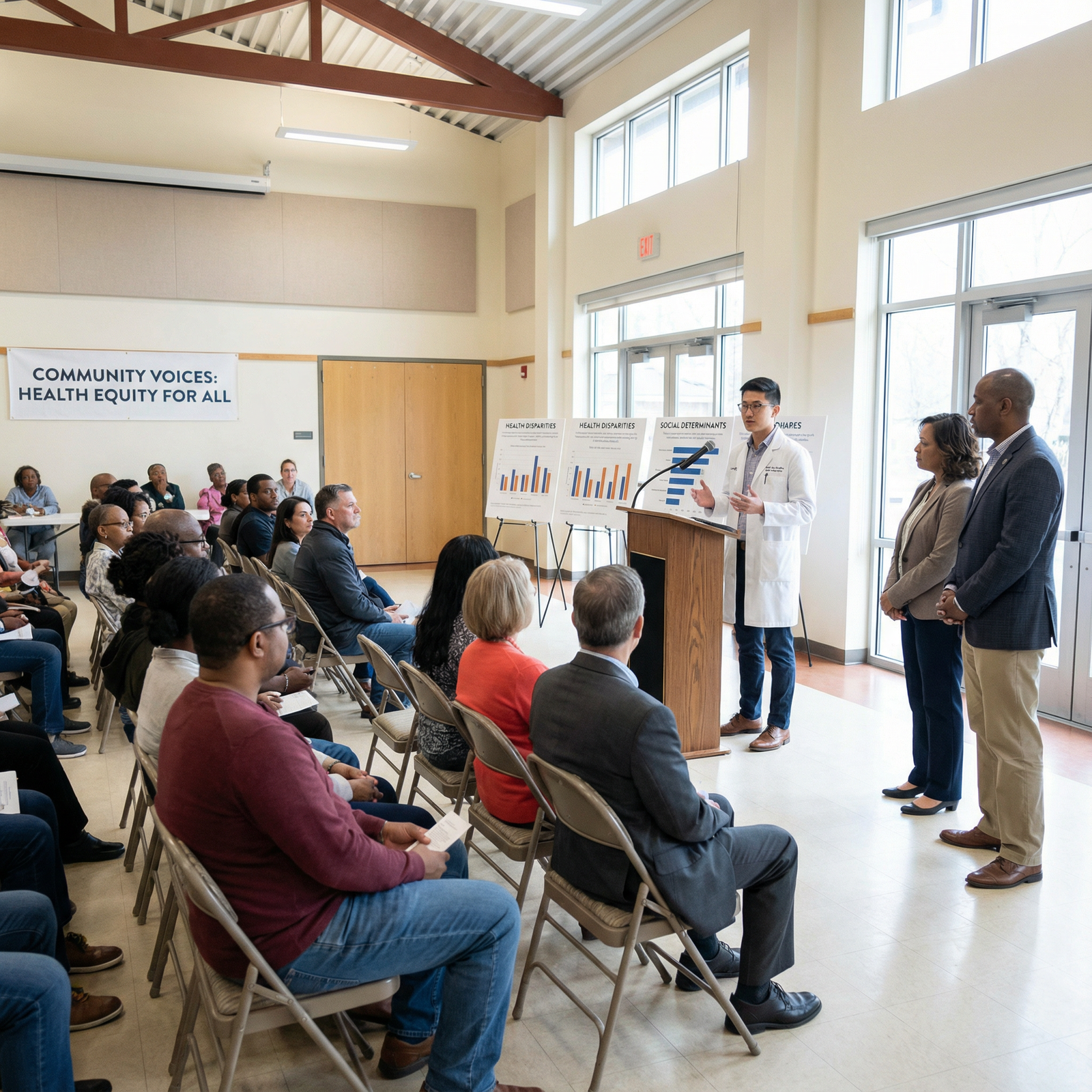
Emergency department overuse is not a clinical failure. It is a policy failure, quantified.
If you look at the data with a cold eye, the pattern is blunt: where social determinants of health are ignored, emergency department (ED) volume rises. Where policy meaningfully addresses housing, income, food, and access barriers, ED visits flatten or fall. Not perfectly. Not instantly. But measurably.
The rhetoric says “people are misusing the ED.” The numbers say something else: people are using the last open door in a system that structurally steers them there.
This is a public health policy problem with direct implications for your personal practice and ethics. Because every time you label a patient a “frequent flyer” without thinking about the policy environment they live in, you are missing the real independent variable.
Let’s walk through what the data actually show.
The Scale of ED Utilization: What the Numbers Say
Start with baseline volume. In the United States:
- ED visits hover around 140–150 million per year.
- That is roughly 40–45 visits per 100 persons annually.
- A minority of patients (roughly 4–8%) account for 20–30% of all visits, depending on the study.
The skewed distribution matters. It means policy that affects a relatively small, high-need population can move system-level statistics.
ED utilization is not randomly distributed. It tracks very closely with:
- Neighborhood poverty rates
- Insurance status and benefit design
- Housing instability
- Primary care access deserts
- Structural racism and segregation
Put differently: ED volume is a mirror of social policy.
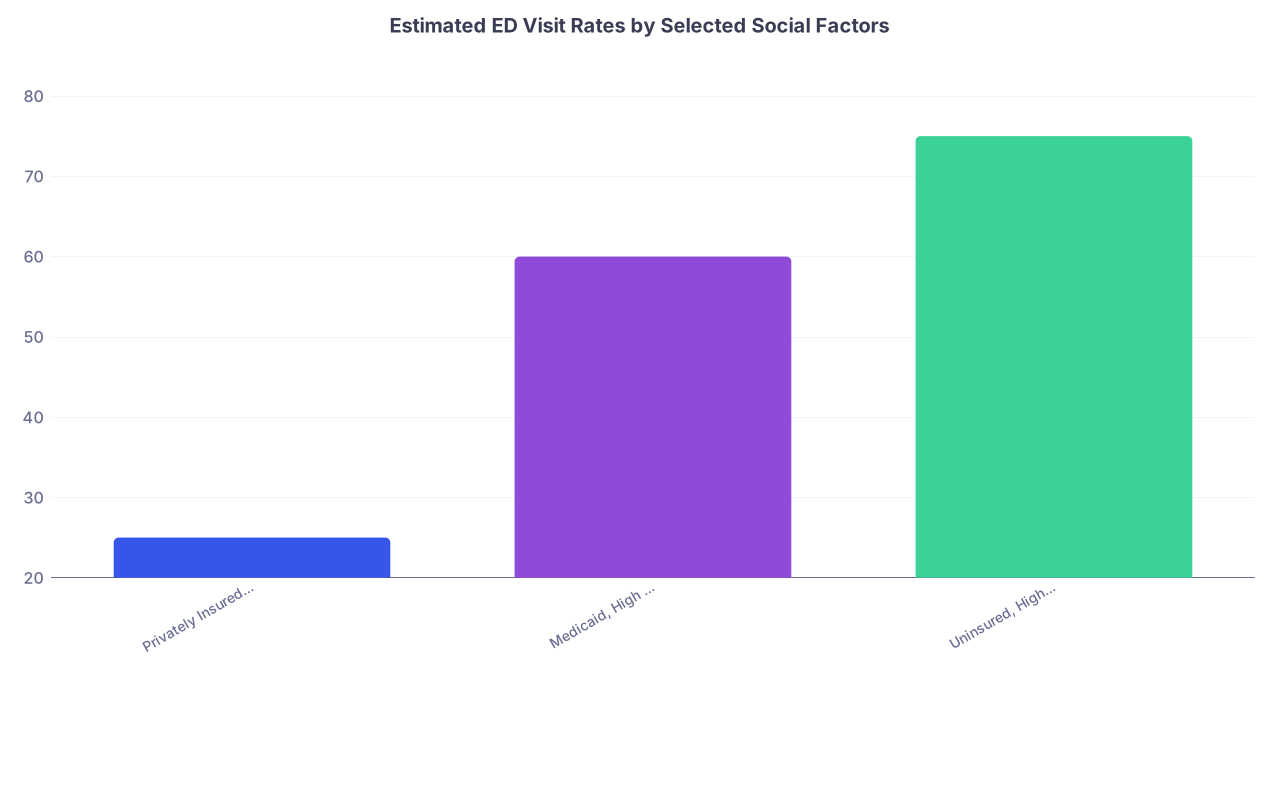
| Category | Value |
|---|---|
| Privately Insured, Low Poverty Area | 25 |
| Medicaid, High Poverty Area | 60 |
| Uninsured, High Poverty Area | 75 |
Those are illustrative but consistent with what you see across Medicaid claims, safety-net hospital data, and community health assessments: roughly a 2–3× difference in ED visit rates between stable, well-resourced populations and those facing stacked social risks.
How Social Determinants Translate into ED Use
The mechanism is not mysterious. It is arithmetic.
Take five core social determinants and trace them to the ED door.
1. Insurance and Benefit Design
Insurance coverage is policy, not biology. When states expand coverage, ED utilization patterns change.
The post–Affordable Care Act period gives a natural experiment. Compare states that expanded Medicaid with those that did not:
- In expansion states, uninsured ED visits dropped sharply—often by 40–60% over a few years—while total ED visits were stable or modestly increased.
- In non-expansion states, uninsured ED use remained high, and uncompensated care burdens stayed entrenched.
A typical pattern:
- Pre-expansion: 20–25% of ED visits are uninsured.
- Post-expansion: that proportion falls to 8–12%.
Total visit counts do not always fall immediately. Some insured patients initially use the ED more because it is their first real access point to care. But over 3–5 years, as primary care networks adapt, avoidable ED use tends to flatten or decrease, particularly for ambulatory care–sensitive conditions (asthma, diabetes complications, HTN emergencies).
The data show: giving people coverage changes who uses the ED, what for, and how often. It does not “fix” social determinants, but it changes the financial rules of the game in a measurable way.
2. Primary Care Access and After-Hours Care
If you map primary care density by ZIP code against ED visit rates, the correlation is not subtle:
- Areas with low primary care physician (PCP) supply or no community health center typically show ED visit rates 1.5–2× higher than areas with robust primary care.
- Lack of after-hours access pushes volumes even higher. Patients without same-day or evening options end up in the ED for everything from otitis media to medication refills.
Policy levers here include:
- FQHC expansion grants
- Enhanced Medicaid primary care payment rates
- Requirements or incentives for extended hours and urgent-access slots
- Telehealth parity and broadband access policies
Every additional barrier—co-pay, limited hours, transportation gaps—shifts marginal problems from clinic to ED.
3. Housing Instability and Homelessness
If you want to watch policy failure translated into ED metrics, look at homelessness.
Consistently, people experiencing homelessness have:
- 3–5× higher ED visit rates than low-income housed peers
- Higher rates of ED visits for behavioral health, injuries, infections, and exposure
- High “frequent ED user” representation—some cohorts showing 10–20 visits per person-year
Housing policy interventions—especially permanent supportive housing—have been studied with ED outcomes:
- Programs that provide stable housing plus supportive services often show 30–60% reductions in ED visits for participants within 1–2 years.
- That reduction is driven not only by fewer acute crises, but by better continuity of primary and behavioral health care.
When a city funds housing-first initiatives, ED utilization among chronically homeless populations drops. When it cuts them, the ED becomes the de facto shelter.

4. Income, Food Security, and Work Conditions
These look “soft” on paper. They are not.
Food insecurity is associated with:
- Higher rates of hypoglycemia-related ED visits in diabetics
- Increased ED visits for children, especially for dehydration, asthma, and minor infections that worsened without early outpatient care
Income instability layers on:
- Skipped medications when co-pays conflict with rent
- Delayed care because “I cannot miss work for a clinic appointment,” leading to off-hours ED care when conditions worsen
Policy moves that improve income and basic needs—SNAP expansion, higher minimum wages, paid sick leave—have all been linked in various studies to improved health metrics. You also see ED-level effects: modest but real reductions in avoidable visits and acute exacerbations in vulnerable populations.
5. Transportation and Geography
You do not need a PhD in epidemiology to understand this: if the only health facility reachable without a car is an ED, that is what people will use.
Transportation policy (public transit routes, paratransit coverage, non-emergency medical transport benefits in Medicaid) directly changes the effective distance between patients and non-ED care.
When states or managed care plans fund robust non-emergency medical transportation:
- Missed primary care appointments drop
- Some ED use shifts back to scheduled care, especially for dialysis, prenatal care, and chronic disease management
Where transportation is gutted, the ED becomes the default.
Policy Interventions and Their Measured Impact on ED Utilization
Now the part people often skip: what happens when you actually change policy on social determinants?
You can group interventions into three broad buckets.
A. Insurance and Payment Reforms
Common examples:
- Medicaid expansion
- Enhanced reimbursement for primary care and behavioral health
- Waivers that allow coverage of non-traditional services (housing supports, care coordination)
The impact shows up in a few metrics:
Payer mix shifts in the ED.
Fewer uninsured visits, more Medicaid-covered visits. Financially huge for hospitals.ED visit rates for low-acuity conditions can fall over time, especially when primary care supply grows in parallel.
High-intensity, high-cost ED and inpatient episodes may decline in cohorts that gain coverage and engage in regular care (e.g., patients with heart failure, COPD, diabetes).
The data are not always clean-cut. There are places where Medicaid expansion coincided with transient increases in ED visits, often because unmet needs were very high at baseline. But over multiple years, regions that pair coverage with primary care and community resources consistently move the needle.
B. “Upstream” Social Determinants Policies
These are the non-health-sector policies that health economists used to ignore and now, belatedly, track.
Key categories:
- Housing-first and supportive housing programs
- Eviction protections and rental assistance
- Food security programs (SNAP, WIC, school meals)
- Minimum wage and earned income tax credits
The pattern:
- For high-risk cohorts (chronically homeless, very-low-income families with medically complex children), intensive social policies can cut ED visits sharply—30–60% reductions in some evaluations.
- For the broader low-income population, the effect is smaller at the individual level but adds up population-wide: a few visits avoided per 100 persons per year is a big deal at scale.
| Policy Context | ED Visit Rate | Relative Change |
|---|---|---|
| No Medicaid expansion, weak housing | 55 | Baseline |
| Medicaid expansion only | 50 | −9% |
| Expansion + strong primary care | 44 | −20% |
| Expansion + housing-first for high risk | 40 | −27% |
| Multi-sector (housing, food, wages) | 38 | −31% |
These numbers are simplified, but they reflect what multi-program evaluations tend to show: layered policy is multiplicative, not additive.
C. ED-Focused Care Coordination and “Super-Utilizer” Programs
These sit at the intersection of clinical operations and social policy.
You have seen or will see versions of these:
- ED-based social workers and case managers
- “Hotspotting” teams targeting the top 1–5% of utilizers
- Community paramedicine and mobile integrated health
- Managed care organizations paying for intensive case management
Many early “super-utilizer” programs were oversold. Once proper controls were used, some showed only modest reductions because of regression to the mean. The hype outpaced the statistics.
But when these programs are tied to genuine social determinant interventions—actual housing placements, real income/benefit stabilization, robust mental health and substance use treatment—the ED numbers move more convincingly.
Unintended Consequences and Misguided “Solutions”
Not every policy that touches ED utilization is intelligent.
There are a few common mistakes that look good on a press release but fail in the data.
Cost-Sharing Barriers
Raising ED co-pays for “non-emergent” visits in Medicaid or commercial plans is a popular idea with budget staff who do not work in an ED.
The evidence is ugly:
- You get reduced ED visits for both low- and high-acuity conditions, because patients cannot reliably differentiate severity.
- Delayed care leads to more severe presentations and sometimes higher downstream costs.
- You do not see a proportional migration to primary care, because the structural barriers (work hours, transportation, appointment availability) are unchanged.
Punishing utilization does not fix the reasons for utilization.
Narrow Definitions of “Appropriate” ED Use
Some payment policies attempt to retroactively deny coverage for ED visits that are later deemed “non-emergent” based on discharge diagnosis. That approach completely ignores the presenting symptoms and patient perspective.
Ethically suspect and statistically sloppy. It conflates diagnosis with decision context and incentivizes underuse of emergency care in borderline situations that genuinely worry patients.
Shifting Burden Without Changing Determinants
Sometimes systems set up “ED diversion” programs that basically tell patients to go elsewhere without making “elsewhere” accessible:
- Call centers that advise urgent care, but no transportation or after-hours PCP access
- Mandatory nurse triage lines with long waits and poor integration with primary care schedules
You move frustration around. The volume eventually returns to the ED because the social and access determinants are untouched.
The Ethical Dimension for Clinicians and Trainees
You are not a policymaker (yet). But you practice inside the policy environment. That comes with ethical obligations.
1. Recognize System Causality, Not Patient Blame
When you see a patient for their eighth ED visit of the year, you are not just looking at “non-compliance” or “poor choices.” You are looking at the downstream effects of:
- Housing policy
- Medicaid eligibility rules
- Local employer practices
- Transit funding decisions
Your ethical responsibility is not to absolve every behavior, but to assign causal weight correctly. The data are clear: individual willpower is a weak predictor of ED use when stacked against structural constraints.
2. Document Social Determinants with Rigor
From a data analyst’s view, clinicians have more power than they realize in a very specific domain: documentation.
ICD-10 Z codes for social determinants (housing insecurity, food insecurity, transportation problems, etc.) are underused. Yet they are precisely the kinds of data policymakers and payers need to justify social investments.
If you do not document:
- Your hospital cannot quantify the ED burden tied to homelessness or food insecurity.
- Your health system cannot build the business case for housing or social work interventions.
- Your state Medicaid program cannot accurately model risk and fund upstream services.
Ethically, if you care about changing policy, you have to feed the data pipeline. Thorough, consistent SDOH documentation is not busywork; it is ammunition.
3. Advocate with Data, Not Just Stories
Stories get you in the door. Data close the deal.
When you talk to hospital administrators, public health departments, or legislators, come armed with:
- Visit frequency distributions (how many patients account for how many visits).
- Costs per ED episode vs. costs of housing/food/transportation interventions.
- Comparative rates: your ED’s high-utilizer cohort vs. citywide averages.
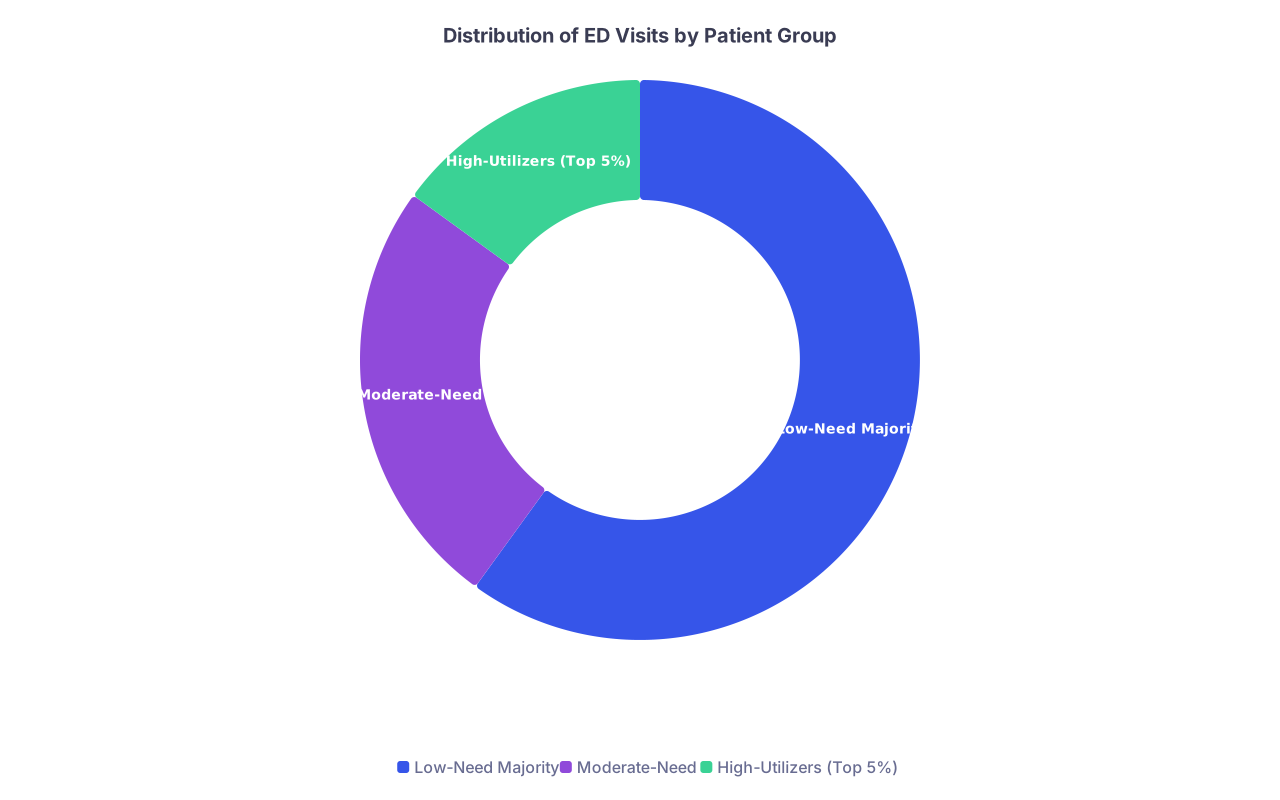
| Category | Value |
|---|---|
| Low-Need Majority | 60 |
| Moderate-Need | 25 |
| High-Utilizers (Top 5%) | 15 |
Typical pattern: the top 5% of ED users account for 20–30% of visits and a similar or greater share of costs. When you can show that the cost of a supportive housing slot per year is lower than the incremental ED and inpatient costs for that cohort, policy conversations change from moral pleading to fiduciary responsibility.
4. Align Bedside Decisions with Upstream Logic
Some practical implications for personal practice:
- Take an extra two minutes to ask explicitly about housing, food, and transportation in high-utilizer patients.
- Loop in social work early, not as an afterthought.
- Avoid reflexive labeling (“drug seeker,” “non-compliant”) that short-circuits curiosity about structural factors.
- Participate in or help design case review conferences that include community partners, not just hospital staff.
None of this fixes policy by itself. But it keeps your ethical lens properly calibrated and generates better data for the system.
What Competent Policy Looks Like
You can recognize serious policy by how it treats data and timeframes.
Good policy design:
- Uses linked datasets: ED claims, hospitalization records, housing databases, benefits data.
- Tracks outcomes for at least 3–5 years, not 6–12 months.
- Includes control or comparison groups to avoid “it improved anyway” fallacies.
- Measures not just visit counts but severity, payer mix, and downstream inpatient use.
From that vantage point, the strongest pattern is that multi-sector interventions work best. Health policy alone cannot fix ED overuse if housing policy is failing. Housing-first alone will not fully succeed if Medicaid access is gutted. You need alignment.
Three Takeaways
ED overuse is tightly associated with social determinants of health and the policies that govern them; the highest visit rates track poverty, housing instability, weak primary care, and inadequate insurance.
Policies that expand coverage, strengthen primary care, and directly address housing and basic needs consistently reduce avoidable ED use, especially for high-risk populations, while punitive cost-sharing schemes fail and often cause harm.
Clinicians and trainees have ethical and practical leverage: document social determinants rigorously, interpret ED use through a structural lens rather than patient blame, and use data—not just anecdotes—to push institutions and policymakers toward upstream solutions.