

The email you send your program director about burnout does not just “ask for help.” It sets a whole machine in motion behind the scenes—whether you see it or not.
Let me walk you through what actually happens on our side of the door when your finger hovers over “Send.”
Because I’ve seen every version of that email. The midnight meltdown novel. The three-line “I’m not okay.” The carefully lawyered message from a resident who has already talked to GME. And I’ve sat in the follow-up meetings where PDs, chiefs, and faculty decide what to do with you—support you, protect you, sideline you, or quietly start asking, “Is this person going to finish?”
You deserve to know what that email really signals to your PD and the system around them.
First Truth: Your Email Is Not Just “Between You and Me”
The moment you email your PD about burnout, you’re no longer just a tired resident with a bad week. You’ve become a risk node in the program’s mental map.
Not because they don’t care. Many do. But because they’ve been burned before—by residents who crashed, by lawsuits, by suicide reviews, by ACGME citations.
Here’s what that email usually triggers in the PD’s head within the first 30 seconds:
- Is this a wellness issue or a safety issue?
- Is this a chronic pattern or a new development?
- Does this have documentation implications?
- Who else already knows? Chiefs? Faculty? Co-residents? GME?
They’re not just thinking, “How can I help?” They’re also thinking, “What do I have to do to protect the resident, the patients, and the program?”
And that’s the part nobody tells you in wellness lectures.
How PDs Read Your Email (Line by Line)
Your wording matters more than you think. PDs and APDs have essentially become amateur forensic linguists of distress.
They’re scanning for a few key signals immediately.
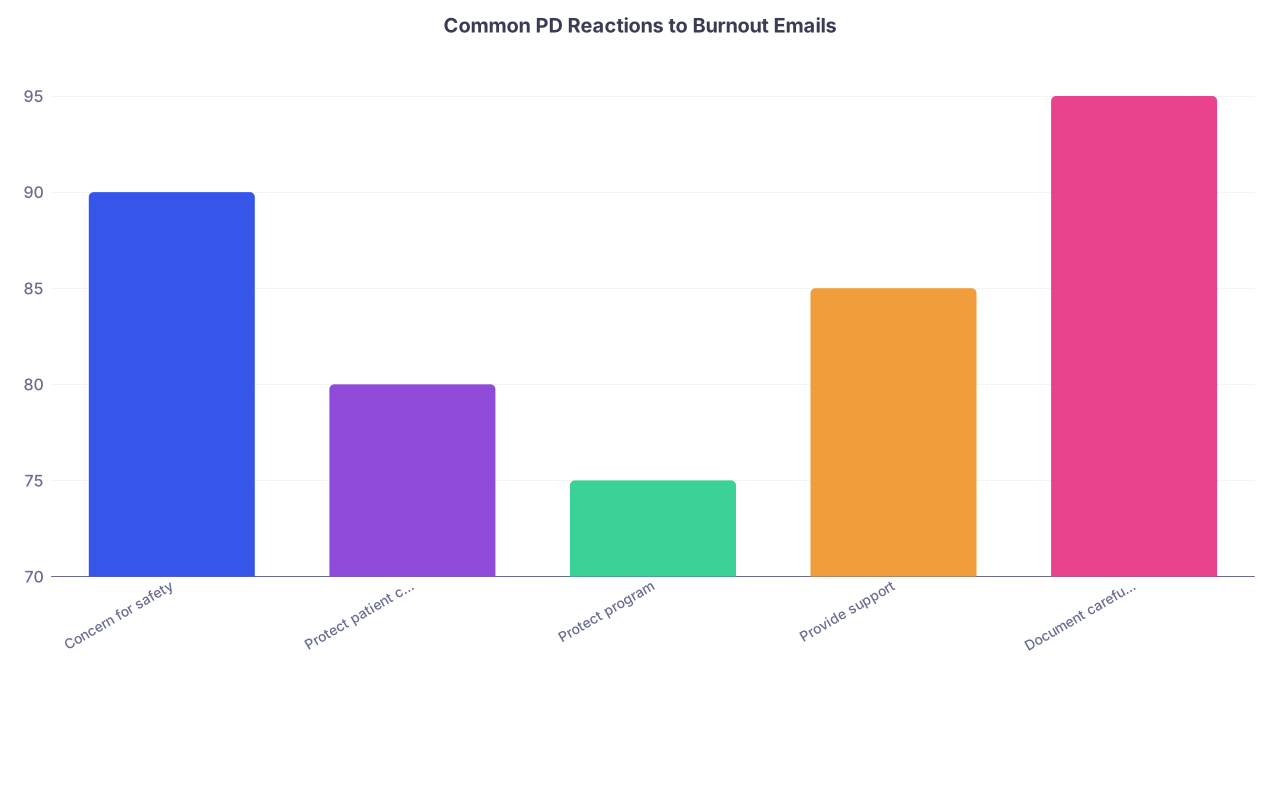
| Category | Value |
|---|---|
| Concern for safety | 90 |
| Protect patient care | 80 |
| Protect program | 75 |
| Provide support | 85 |
| Document carefully | 95 |
I’m going to break down the big categories of what your email can signal.
1. “I’m burned out but still functioning.”
This is the classic, “I’m really struggling with burnout and wanted to reach out before things get worse. I’m still able to do my work, but I’m worried about how I’m feeling.”
Behind the scenes, this usually signals:
- Insight present.
- No immediate safety crisis.
- Good candidate for support + adjustments without pulling you out.
What a PD thinks when they read this:
- “Okay, this person is still holding the line.”
- “We have some room to work with.”
- “I can try to fix this before it escalates.”
This is the least threatening version from a PD perspective and often gets you the most flexibility with the least structural fallout.
2. “I can’t do this anymore” or “I don’t think I can keep going.”
Now we’re in very different territory.
Phrases like:
- “I can’t keep doing this.”
- “I don’t know how much longer I can go on like this.”
- “I’ve thought about quitting.”
- “Sometimes I wish I’d never gone into medicine at all.”
These are red flags. Not just wellness flags. Liability flags.
Inside the PD’s brain:
- “Is this a suicide risk?”
- “Do I need to remove them from duty?”
- “If something happens tonight and I did nothing after reading this, I’m liable.”
This is when your email stops being just a personal cry for help and becomes an institutional problem. That’s when you get looped into emergency processes—rapid meetings, mental health checks, sometimes immediate removal from clinical work.
3. “I am not safe to practice.”
The nuclear sentence: “I don’t feel safe taking care of patients right now.”
From your side, that might be honesty, humility, and responsibility.
On the PD’s side, it immediately triggers:
- Removal from duty. Often same day.
- Documentation. A lot of it.
- Notification to GME, maybe risk management.
- Consideration of fitness-for-duty evaluations.
Once that sentence is written, you have crossed into the territory where your training timeline, board eligibility timing, and sometimes your long-term professional record may be affected.
Is it wrong to say it if it’s true? No. But you should know the consequences are structural, not just emotional.
4. The vague, rambling crisis email at 2 a.m.
I’ve watched PDs read these with a pit in their stomach.
The late-night wall of text. Stream of consciousness. Lots of “I can’t”, “this is too much”, “nobody listens”, “I’m breaking.”
If you send this, one of three things happens:
- They call you. Or page you. Immediately.
- They call the chiefs and say, “Find them. Now.”
- If they can’t reach you, they start to worry about worst-case scenarios.
Does this mean never email late? No. But if you’re in meltdown mode, recognize you’re triggering emergency mode on the other end. PDs have sat through morbidity and mortality reviews of resident suicides. Some of those cases included “prior distress email not acted on strongly enough.” That scars people.
What Actually Happens After You Hit Send
You think you sent one email to one person.
You didn’t.
You set off a chain.
Here’s the unpretty version of what happens in many programs behind the scenes once your burnout email lands.

| Step | Description |
|---|---|
| Step 1 | Resident sends email |
| Step 2 | PD reads email |
| Step 3 | Immediate contact by PD or chief |
| Step 4 | Schedule meeting with resident |
| Step 5 | Remove from schedule |
| Step 6 | Reduced schedule or support plan |
| Step 7 | Discuss stressors and options |
| Step 8 | Notify GME and document |
| Step 9 | Safety concern? |
| Step 10 | Fit for duty? |
Step by step, here’s what tends to happen.
Step 1: Quick risk sort
Within minutes (or hours, if they’re on service), your PD mentally sorts your message:
- Low acute risk: schedule a meeting.
- Moderate risk: same or next-day meeting + loop in chiefs.
- High risk: same-day contact, possibly removal from duty, immediate mental health referral or ED if needed.
They may not reply in writing right away, especially if the message is intense. That’s not indifference. That’s them thinking, “I need to handle this live, not in an email that becomes discoverable evidence if anything goes wrong.”
Step 2: Quiet conversations start
Before you ever sit in their office, many PDs will already have talked to:
- Chief residents: “How has this person been lately?”
- Key attendings: “Have you noticed concerns about performance, reliability, affect?”
- Maybe the program coordinator: “What rotations are they on? What’s coming up next month?”
- Sometimes GME: “I may need to adjust this resident’s schedule. What are our options?”
You become a topic in private group texts and hallway chats that you’ll never hear about. Not always malicious. Sometimes protective. Sometimes neutral. Sometimes evaluative.
But understand this: you are being assessed, not just comforted.
Step 3: Planning the meeting
By the time you “talk with the PD,” they often have an agenda already drafted in their head:
- Clarify: How bad is this really?
- Determine: Safety vs burnout vs depression vs complete decompensation.
- Decide: Leave? Reduced schedule? Change of rotation? Referral?
And in the back of their mind: “How will this affect the program if they need time off? Will we have coverage? Will this put us on ACGME’s radar if we have multiple residents in distress?”
You’re thinking about your life. They’re thinking about your life plus the lives of 30–60 other residents plus service coverage plus accreditation.
That conflict shapes everything.
What Your Email Signals About Your Future
Here’s the uncomfortable part: your email about burnout doesn’t just trigger support. It can quietly change how the program views your trajectory.
I’ve heard these lines in PD meetings more times than I can count:
- “She’s good, but she’s fragile.”
- “He’s a hard worker, but I’m not sure he can handle fellowship-level intensity.”
- “If this is how they are as a PGY2, what happens as a senior?”
And yes, that can bite you later when:
- You’re asking for a glowing fellowship letter.
- You want a high-intensity subspecialty.
- You need the PD to vouch that you’re ready for independent practice.
Let’s be clear: this doesn’t mean “never speak up.” But you have to understand how the game is actually played.
| Email Tone / Content | Typical PD Interpretation |
|---|---|
| “I’m struggling but want to address it early” | Insightful, proactive |
| “I’m not safe to practice right now” | High risk, reliability concern |
| 2 a.m. meltdown wall of text | Emotional instability concern |
| Calm, specific request for support | Professional, salvageable |
| Blaming, accusatory tone | Poor insight, potential problem |
The “fragile but good” label
There’s a soft category many residents fall into after a burnout disclosure: “strong clinically, but psychologically vulnerable.”
If you get tagged this way:
- They may be more cautious about putting you on the heaviest rotations.
- They may hesitate to write you as “top 5% I’ve ever worked with” in letters.
- They may double-think recommending you for ultra-demanding fellowships.
Is that fair? Not always. But it happens.
The “we might lose them” label
If your email hints at quitting, switching specialties, or leaving medicine:
- PDs start quietly contingency planning.
- They may invest less in you leadership-wise.
- Chiefs might stop considering you for chief roles.
- You go into the mental “may not be here in 2 years” category.
Again: not because they hate you. Because they’ve seen people leave. And they unconsciously reallocate energy.
The Difference Between “Supportable Burnout” and “System Alarm”
This is the distinction you need to understand if you’re going to write smart.
There are two parallel questions in every PD’s head:
- Is this humanly concerning?
- Is this institutionally alarming?
Those are not the same thing.
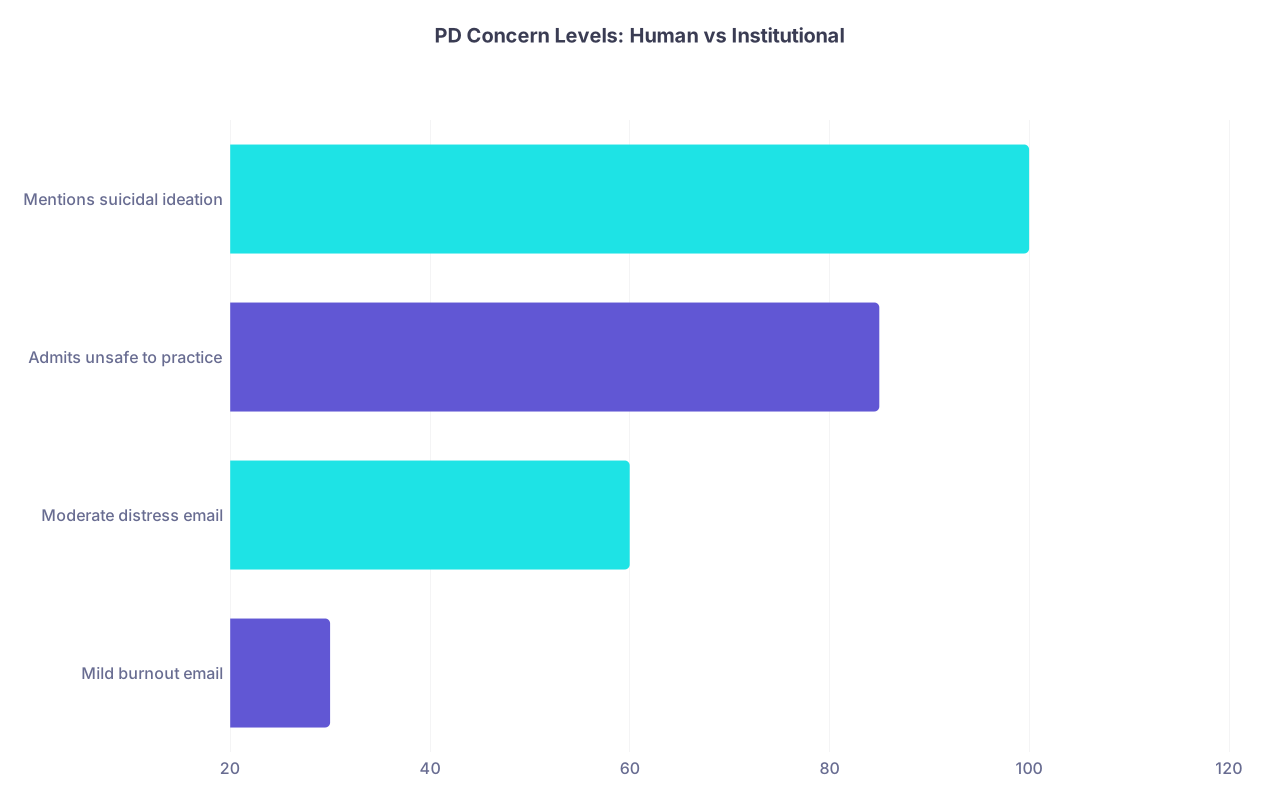
| Category | Value |
|---|---|
| Mild burnout email | 30 |
| Moderate distress email | 60 |
| Admits unsafe to practice | 85 |
| Mentions suicidal ideation | 100 |
“Supportable burnout”
This is what PDs are actually equipped to handle well:
- You’re exhausted, cynical, feel disconnected.
- You’re still functioning, showing up, doing your work.
- You want help early, before harm.
Here, programs can:
- Adjust call or rotation timing.
- Help you access therapy confidentially.
- Give you protected days to see a doctor or counselor.
- Connect you with EAP, wellness resources, coaching, peer support.
In this lane, your email signals maturity and insight, and most good PDs respect that.
“System alarm burnout”
Once your message trips into:
- “I am not safe to practice.”
- “I have active suicidal thoughts.”
- “I might just disappear.”
- Clear functional collapse on service.
Now you’re in a different lane. You’ve turned on the system alarms.
This often triggers:
- Mandatory reporting steps.
- Fitness-for-duty evaluations.
- Official leave of absence.
- Letters and documentation that can follow you.
Again, that doesn’t mean you should hide true risk. But understand that you’re now in the world of policy and legal requirements, not just human kindness.
How to Email Your PD About Burnout Without Torching Your Future
You cannot game this perfectly. But you can be smart.
The goal is not to be fake. The goal is to:
- Be honest.
- Be specific.
- Show insight.
- Signal motivation to improve.
- Avoid language that sounds like imminent collapse unless that’s actually what’s happening.
Here’s the rough structure I’ve seen work best in residents who got real help and retained PD confidence.
1. Start with purpose, not drama
Skip the 8-line apology. Skip the 10-paragraph life story.
Example:
“Dr. Smith, I wanted to reach out because I’ve been struggling with burnout and I don’t want it to reach a point where it affects patient care or my performance.”
This opener tells the PD: this resident has insight, is trying to prevent harm, not just complaining.
2. Describe the problem in concrete, behavioral terms
Vague: “I’m overwhelmed and exhausted.”
Better: “Over the last 2 months on night float, I’ve noticed increasing emotional exhaustion, trouble sleeping even when I’m off, and difficulty shaking work thoughts when I’m at home.”
Even better if you add:
- Any changes in performance you’ve noticed.
- Any specific stressors (schedule, personal, health).
You’re giving them something they can actually respond to.
3. Make it clear what you’re still able to do
This is the part residents forget.
If you are still functioning, say it:
“I’m still able to complete my duties and I haven’t had any lapses in patient care, but I’m concerned about where this is heading if I don’t address it now.”
This is the line that keeps you in the “supportable burnout” lane instead of “system alarm” lane.
If you’re not functioning, you still need to be honest. But if you are, protect that perception.

4. Show that you’re willing to work on it, not just hand them a mess
PDs respond much better to:
“I’d like to talk about strategies or potential adjustments that might help me get back to a sustainable place—whether that’s a temporary schedule change, connecting with mental health resources, or other options you think might fit.”
than:
“This is unsustainable, and I can’t keep doing this.”
One frames you as a collaborator. The other as a problem to be managed.
5. Avoid email for active crisis
If you are actively suicidal, feel you might harm yourself, or truly cannot safely practice, do not rely on email as your first move.
Call:
- A crisis line.
- Your physician.
- A trusted attending or chief.
- 911 or ED if needed.
Then loop in your PD as part of the aftermath, not your first and only lifeline.
Why? Because email is delayed, impersonal, and legally loaded. You need immediate human support, not just institutional response.
What You Don’t See: The PD Who Actually Cares (But Still Documents Everything)
There’s a false dichotomy in residents’ minds: “Either my PD is a monster who only cares about coverage, or they’re a saint who will fix my life.”
Reality is uglier and more human.
Most PDs I’ve worked with:
- Do lose sleep over struggling residents.
- Have cried after a resident left or harmed themselves.
- Have pushed back against hospital leadership to protect a burned-out trainee.
And in the same breath:
- They document every serious wellness conversation.
- They track patterns across rotations.
- They share “need-to-know” information with other leaders.
Because if they don’t, they’re exposed.
I’ve been in the room after a resident suicide where the institution combed through every email, every note, every evaluation asking: “What did we miss? Who knew what, when?”
After you’ve lived through that once, you never read a burnout email as “just a conversation” again.
So when your PD:
- Insists on meeting in person.
- Takes notes.
- Sends a follow-up email summarizing the plan.
That’s not them “building a case” against you (in most situations). It’s them making sure they’re not the next person on an M&M slide.
If You’re Already Deep in the Hole
Some of you aren’t emailing at the first signs of trouble. You’re emailing when you’re already wrecked.
Rotations blown up. Evaluations tanking. Tearful episodes on call. Maybe a professionalism complaint or two.
You’re not just asking, “Can I get some help?” You’re asking, “Is there anything left to salvage here?”
In that situation, you need to do three things simultaneously:
- Own the reality. Don’t sanitize what’s obvious to everyone.
- Show insight and remorse without self-destruction. “I see the impact this has had” lands better than “I’m a terrible resident who doesn’t belong here.”
- Express a concrete plan. Therapy already scheduled. PCP appointment booked. Sleep plan. Specific requests (temporary schedule change, formal LOA discussion, etc.).
The resident who walks into that meeting saying, “I’m a mess, please fix me,” often gets triaged and sidelined.
The one who says, “I’ve hit a wall, I see the damage, here’s what I’m already doing, and here’s how I hope the program can support me,” is the one PDs fight harder to keep.
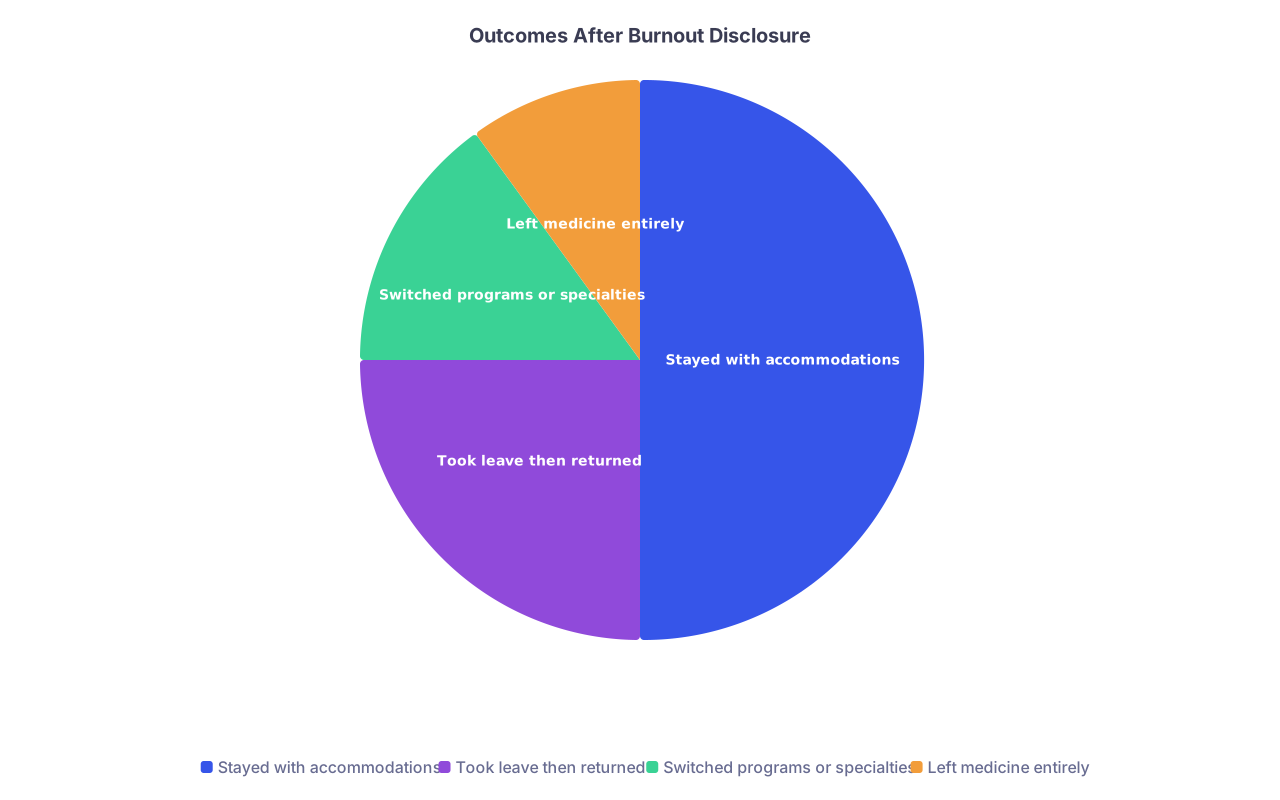
| Category | Value |
|---|---|
| Stayed with accommodations | 50 |
| Took leave then returned | 25 |
| Switched programs or specialties | 15 |
| Left medicine entirely | 10 |
I’ve seen residents come back from disastrous stretches. Ones everyone had written off. They did it by:
- Being brutally honest without being theatrically self-destructive.
- Doing the work outside of work (therapy, meds, lifestyle changes).
- Accepting short-term damage (delayed graduation, extra remediation) to avoid long-term obliteration.
The email to your PD is just the first move, not the whole game.
Use Other Channels Before You Burn the PD Email Card
The smartest residents rarely start with a PD email. They warm up through other channels.
Think:
- Private conversation with a trusted attending.
- Honest talk with a chief resident who isn’t a gossip.
- Personal therapist or physician to help you shape what you want to say.
Those people can help you:
- Decide whether this is email-worthy or conversation-only material.
- Clean up your language so you don’t accidentally set off system alarms.
- Clarify what you actually want from the PD.

I’ve seen chiefs literally say, “Don’t email it like that. Say this instead.” Not to hide truth, but to convert raw emotion into something the system can respond to constructively.
That’s not manipulation. That’s survival.
The Bottom Line
Three things I want you to walk away with.
Your email to the PD about burnout is both a lifeline and a signal. It can bring you real help, but it also flips on institutional radar. Write it with clarity and insight, not just desperation.
PDs are balancing genuine concern with legal and program pressures. They’re not your therapist, and they’re not your enemy. They’re a human being who has to think about you, patient safety, and accreditation all at once.
You have more power than you think in how you frame your distress. Honest, specific, early, and collaborative language keeps you in the “supportable burnout” lane. Vague, explosive, or catastrophic language moves you into “system alarm” whether you intended that or not.
You’re allowed to struggle. You’re allowed to ask for help. Just understand what really happens when you do.


