

The biggest lie in residency is that you have to just “tough it out” when you’re burning out. You don’t. And you absolutely have confidential options that won’t automatically tank your career.
Let me walk you through what’s actually safe, what’s risky, and how to get real help without lighting up alarm bells across your program.
The Core Truth: You Have More Confidential Options Than You Think
Most residents wait until they’re in full meltdown mode to reach out—panic attacks on call, snapping at nurses, crying in stairwells. By then, everything feels urgent and dangerous.
Here’s the basic landscape:
- Options that are truly confidential and outside your hospital
- Options that are low-risk but connected to your institution
- Situations where things can trigger reporting or fitness-for-duty issues
- How this affects licensing, credentialing, and “Will this follow me forever?”
We’ll go one by one. But first, here’s the big picture.
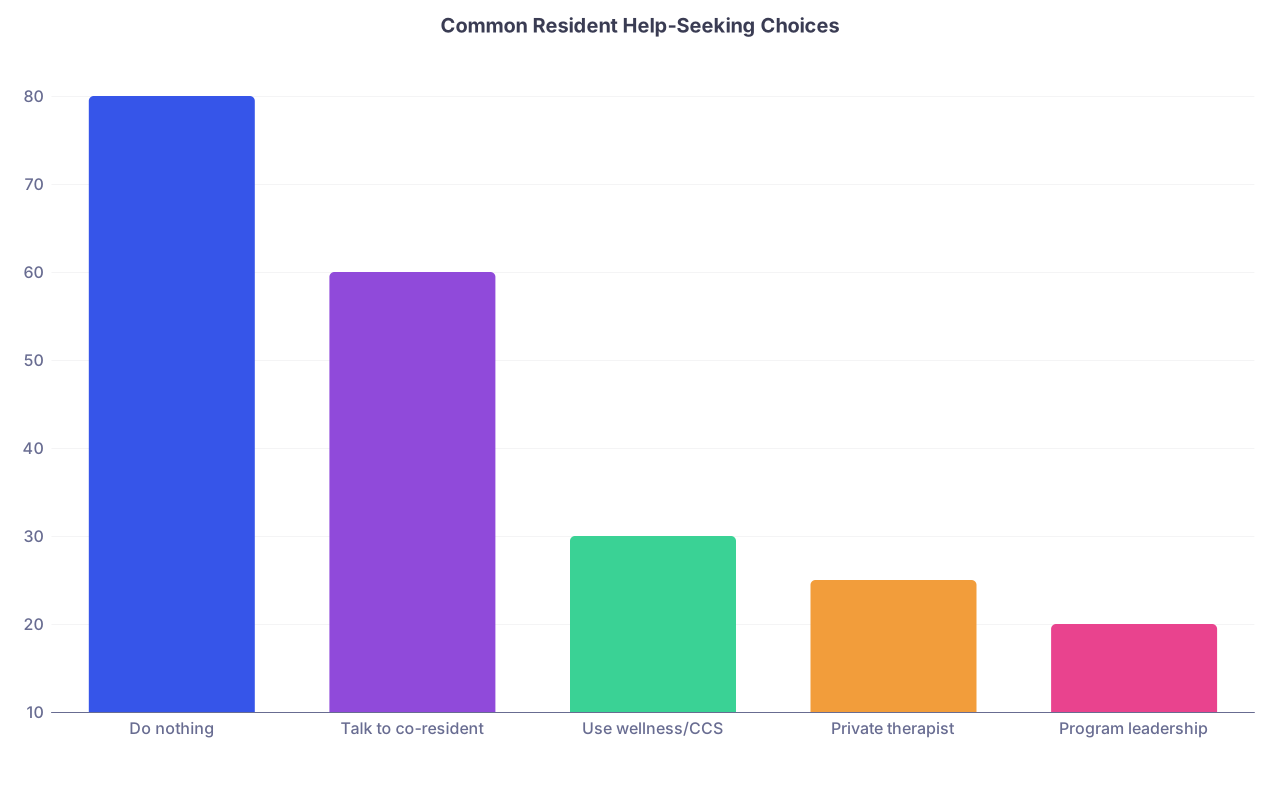
| Category | Value |
|---|---|
| Do nothing | 80 |
| Talk to co-resident | 60 |
| Use wellness/CCS | 30 |
| Private therapist | 25 |
| Program leadership | 20 |
Most residents stick to peers and silence. The healthiest choices (private therapy, real professional help) are the least used. That’s backwards.
Let’s fix that.
Category 1: Safest, Most Confidential Options (Start Here)
These are options you can use without looping your program into your business. If you’re worried about privacy, this is your first stop.
1. Private Therapist or Psychiatrist (Outside the Hospital System)
This is usually the gold-standard confidential option.
Why it’s strong:
- Records live in a separate health system or private practice
- Your PD doesn’t get automatic reports
- You control what you disclose (or don’t) to your program
Good options:
- Independent private practices in your city
- Telehealth platforms with licensed clinicians in your state
- A different hospital system in town (not your employer)
What to ask when you book:
- “Do you bill through [my employer’s] system or a totally separate EMR?”
- “Do you have other residents as patients? Are you familiar with licensure questions?”
- “Do you provide any reports to employers without my consent?” (unless safety is at stake)
If you’re paying cash and not billing insurance, your footprint is even smaller—no explanation needed to your institution.
2. Therapy Using Your Own Insurance (But Not Through Employee Health)
Your residency insurance often covers mental health. The key is avoiding your hospital’s internal mental health services when you want maximum separation.
You can:
- Use your insurance website to search for therapists
- Filter by “not affiliated with [Your Hospital]” if possible
- Look for people who list “physicians,” “healthcare workers,” or “burnout” as a specialty
Is this still confidential? Yes. Your insurer has data, but your program doesn’t get a notification that you’re in therapy.
3. State Physician Health Programs (PHPs)… Sometimes
This one’s tricky.
Some state PHPs:
- Offer truly confidential early support if you self-refer
- Don’t report unless there’s major impairment, safety issues, or you fail an agreed plan
Some PHPs:
- Immediately plug you into a monitoring-style process that does get reported to boards or future hospitals.
You need to:
- Look up your specific state’s PHP
- Call anonymously first and ask: “If I self-refer for burnout, not substance use, not safety issues, is participation confidential and non-reportable?”
- Get clear answers before giving your name
I’ve seen this be life-saving for some; I’ve also seen it turn into an 18–24 month monitored agreement when the real problem was brutal work hours and depression.
Conclusion: useful tool, but not your first move for basic burnout unless you know your state’s culture.
Category 2: Inside-the-System Options That Are Usually Low-Risk
These can be helpful and fairly safe, but they sit closer to your program and hospital. You want to be thoughtful here.
4. Confidential Counseling Services (EAP, Resident Wellness Programs)
Most hospitals have:
- Employee Assistance Programs (EAP)
- Resident wellness or “confidential” counseling
These are better than nothing, but the confidentiality varies.
What usually happens:
- You get a limited number of sessions (often 3–8)
- They don’t send notes to your PD
- They may keep minimal internal documentation
Concerns:
- EAP providers might be generalists who don’t really “get” residency
- Some residents don’t fully trust internal services, especially under toxic leadership
Questions to ask directly:
- “Do my program directors or GME get any information that I’m seen here?”
- “Are my notes in the same EMR as my patient care?”
- “What are the limits of confidentiality? Under what conditions would you contact my employer?”
If the answers are vague, use them for crisis stabilization and start quietly looking for an outside therapist.
5. Talking to a Trusted Faculty Mentor (Not Your PD)
There are two kinds of faculty:
- The “grind harder, back in my day…” types
- The “close the door, tell me what’s going on, we’ll figure this out” types
Find the second group.
Why this can help:
- They can quietly adjust schedules, advocate for you, and steer you toward resources
- They know the political terrain: which options are truly safe, which are landmines
- They can sometimes act as a buffer with the program
What to share:
- Enough so they know this is serious: “I’m burning out hard. I’m not sleeping, I’m dreading every shift, and I need help before I completely fall apart.”
- You don’t have to disclose your entire mental health history
This is not fully confidential, obviously. But it can be strategically useful if you choose the right person.
6. Peer Support / Resident Support Groups
Not therapy. But not useless.
You’ve seen this:
- A PGY-3 quietly checking in with a PGY-1 after a code
- Informal resident support groups after a bad outcome or death
- Wellness electives that include group debriefs
What this is good for:
- Normalizing what you’re feeling: “Oh, I’m not just weak. Everyone is drowning.”
- Reducing isolation
- Getting names of good actual therapists from people who’ve been there
What it’s not:
- A replacement for true mental health care if you’re sinking
Category 3: When Does Getting Help Affect My Record or Career?
This is the fear that freezes residents: “If I see someone, will this haunt me on my license apps forever?”
Let’s separate myth from reality.
Medical Licensure Questions: What They Really Ask
Most states are slowly shifting away from “Have you ever had a mental health diagnosis?” because they know that’s garbage.
Common patterns:
- Some states now only ask about current impairment (as they should)
- Others still ask broad, intrusive mental-health-history questions
| Question Type | Impact on You |
|---|---|
| Current impairment only | Safest, focuses on function |
| Broad history of diagnosis | More intrusive, but improving |
| PHP/monitoring status | Must disclose if under contract |
| Hospital disciplinary actions | Always reportable |
Seeing a therapist by itself usually:
- Does not generate a “record” that boards see
- Only becomes relevant if:
- You’re put under formal monitoring
- You’ve had serious performance or safety issues attached to mental illness or substance use
When Programs Have to Act
Your program leadership is generally forced to escalate if:
- You’re a danger to yourself (serious self-harm intent)
- You’re a danger to patients (showing up grossly impaired, repeated errors tied to illness)
- There’s a reportable event (e.g., DUI, diversion of meds)
That’s very different from:
- “I’m crying on the way to work and I can’t feel joy”
- “I’m exhausted, depersonalized, and I hate everyone”
The latter is burnout and depression, common and treatable. Getting help earlier reduces the chances you’ll ever trigger a formal fitness-for-duty process.
Category 4: How To Choose the Right Option For Your Situation
Let me give you a basic decision framework. Nothing fancy. Just real.

| Step | Description |
|---|---|
| Step 1 | Feeling burned out |
| Step 2 | Go to ED or crisis line now |
| Step 3 | Private therapist or psychiatrist outside system |
| Step 4 | Private therapist OR EAP/wellness |
| Step 5 | Consider trusted mentor or chief |
| Step 6 | Any suicidal thoughts or self harm? |
| Step 7 | Able to function at work? |
If you:
- Have active suicidal intent/plan → this is not a “quietly solve it alone” moment. Use ED, crisis hotlines, or on-call psychiatry. Safety comes first. Full stop.
- Are non-functional at work (missing shifts, constant errors, can’t think straight) → you need real treatment, outside therapist/psychiatrist at minimum. You may need schedule adjustments too.
- Are functioning but miserable → best mix is:
- Outside therapist
- Limited use of internal wellness/EAP
- One trusted human in your system who can support you (faculty, chief, co-resident)
Category 5: Practical Steps to Get Help This Week
You don’t need a 12-step self-optimization plan. You need a concrete starting point.
Here’s what I’d do if I were you, burned out and wary of exposure.
Step 1: Lock In One Outside Professional
Tonight:
- Go to PsychologyToday, Zocdoc, or your insurer’s website
- Filter for:
- Specialty: “Physicians,” “Healthcare workers,” “Burnout,” “Trauma”
- Modality: Telehealth
- License in your state
- Email 3–5 people:
“Hi, I’m a resident physician dealing with significant burnout and stress. I’m looking for confidential therapy with someone familiar with medical training. Do you have availability for new patients in the next few weeks, preferably evenings or weekends?”
Take the first decent fit with an opening.
Step 2: Use Low-Risk Internal Help Strategically
Pick one:
- EAP / resident wellness for:
- Crisis weeks
- Stopgap while you wait for outside therapist
- Chief resident / trusted APD for:
- Minor schedule tweaks
- Space after a bad outcome
- Redirecting you from toxic rotations or attendings when possible
Don’t trauma-dump on the wrong person. Share enough to get what you need.
Step 3: Protect Your Minimum Viable Life Outside Work
No, this doesn’t fix systemic abuse. But it keeps you from falling completely through the floor.
Basic non-negotiables:
- Some form of sleep protection (even 1–2 nights you fiercely protect)
- One human outside medicine who knows you’re struggling
- 10–20 minutes of anything that reminds you you’re more than a resident: music, walking outside, calling a sibling, journaling, lifting, whatever
This is not “self-care.” This is preventing total collapse while you get real help.
Category 6: Red Flags That You Need More Than Just “Support”
Let me be very clear. These are get real help now signs:
- You’re thinking, “If I crashed my car on the way to work, at least I’d get a break.”
- You’re using alcohol, benzos, or other substances just to sleep or get through a shift
- You’ve started making careless mistakes you know are beneath your usual standard
- You feel emotionally numb, like you’re just a body walking through tasks
- You’re fantasizing about disappearing, quitting medicine, or just not waking up
You’re not weak. You’re human, in a system that routinely overloads people.
This is exactly when a confidential therapist or psychiatrist—outside your hospital—matters most.
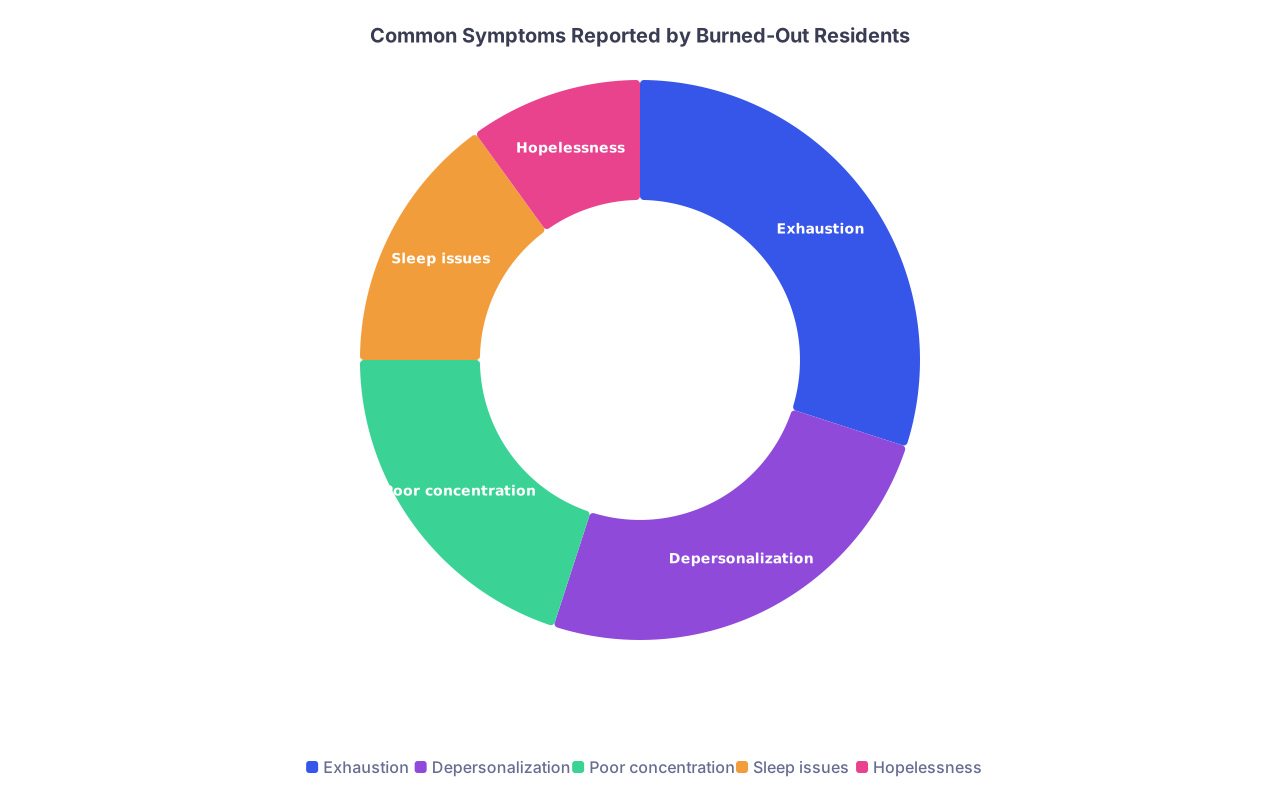
| Category | Value |
|---|---|
| Exhaustion | 30 |
| Depersonalization | 25 |
| Poor concentration | 20 |
| Sleep issues | 15 |
| Hopelessness | 10 |
Category 7: A Quick Reality Check on “Career Damage”
Big fear: “If I get help, I’ll ruin my chances at fellowship or a job.”
Harsh truth: It’s usually the untreated burnout or depression that tanks careers—missed exams, unprofessional behavior, safety events, disappearing from rotations.
Things that actually cause long-term issues:
- Formal disciplinary actions
- Documented pattern of unsafe behavior
- Unexplained leaves where no one knows what’s going on and assumes the worst
- Ongoing impairment with no insight
Things that almost never do:
- Quietly seeing a private therapist
- Short-term SSRI use prescribed by a psychiatrist
- Short, well-planned leaves with supportive documentation
Residency is brutal. Many excellent physicians have seen therapists, taken meds, or taken time off. Most are still practicing, many are in competitive specialties, some are now your attendings.
You’re not an outlier for needing help. You’re just honest enough to admit it.

FAQ: Confidential Help for Burnout in Residency
1. Will my program find out if I see a therapist?
Not if you:
- See a private therapist or psychiatrist outside your hospital system
- Don’t use employee health or internal mental health services
- Aren’t in a crisis that requires emergency intervention from your workplace
Your therapist isn’t calling your PD with updates. That’s not how this works.
2. Do I have to disclose therapy or antidepressant use on license or job applications?
Usually no. Most licensing and credentialing forms care about:
- Current impairment, not treatment
- Participation in monitoring programs (like PHP contracts)
- Disciplinary actions or hospital sanctions
Read questions literally. If they don’t ask about “treatment” or “therapy,” don’t volunteer extra.
3. Is employee assistance (EAP) actually confidential?
Generally:
- They don’t report to your PD
- They keep limited internal records But:
- They may be embedded in your health system
- The quality is hit-or-miss
Use them as a bridge, but still set up something external if you’re really struggling.
4. Can I take a leave of absence for burnout or mental health?
Yes, but this is where things get less private. You’ll usually:
- Need documentation from a treating clinician
- Work with GME, HR, and sometimes occupational health
- Potentially extend your training
Is it career-ending? No, not usually. But it does create a visible event in your record. This is why early, confidential treatment is so valuable—it can sometimes prevent things from reaching this point.
5. What if my state’s Physician Health Program has a bad reputation?
Then be careful. Options:
- Call anonymously first and ask exactly what happens with self-referrals
- Talk to a private psychiatrist who understands your state’s PHP before engaging
- Don’t assume PHP is your only path—independent therapy and psychiatry are often enough for burnout and depression.
6. What should I do today if I’m burned out but scared to act?
Do three things:
- Email 3–5 external therapists or psychiatrists for an appointment.
- Tell one trusted person (friend, co-resident, partner) that you’re struggling.
- Block off one small, non-negotiable window for sleep and one tiny thing that isn’t medicine.
That’s it. Not forever—just to get through this week while you line up real help.
Key takeaways:
- Your safest confidential move is an outside therapist or psychiatrist, not tied to your hospital system.
- Using help early—before full collapse—protects your career more than hiding and hoping it gets better.
- You’re not the only resident burned out. You’re just one of the few willing to get smart, quiet help instead of white-knuckling your way to a breakdown.


