

What happens when you hit the wall at 2 a.m. on night float and realize you literally cannot keep doing this rotation the way it’s set up?
Let me be direct: yes, you can sometimes change rotations or schedules because of burnout. But it is not as simple as “I’m tired, switch me.” Programs will help you if you do this the right way, and they’ll dig their heels in if you do it poorly.
Here’s how this actually works in real residency life.
1. When Is Burnout “Bad Enough” to Ask for a Change?
You are always going to be tired in residency. That’s not burnout; that’s the job. The question is whether what you are feeling is:
- Normal fatigue and stress
vs. - A level of burnout that’s unsafe for you or your patients
You should start seriously thinking about changing rotations or schedules if:
- You dread going to work with a level of panic, not just annoyance
- Your sleep is a disaster even on days off
- You’re making more mistakes, missing pages, or zoning out during sign-out
- You’ve lost any sense of empathy and feel numb with patients and colleagues
- You have thoughts like “If I got into a minor car accident and didn’t have to go to work, that would be a relief”
- You’re thinking about self-harm or “disappearing” (this is an emergency; skip rotation negotiation and get urgent help)
Programs start listening more carefully when there is a patient safety angle or a serious wellness concern. That’s just the truth.
2. What Can Actually Be Changed?
You cannot redesign your entire residency because you’re burned out. But there are several things that can be adjusted, and I’ve seen all of these done.
Possible changes include:
- Swapping an upcoming rotation with another block later in the year
- Moving you off a malignant or particularly toxic service earlier than planned
- Adjusting your call schedule (e.g., fewer 24s, different call distribution)
- Temporarily converting to a lighter elective or outpatient block
- Decreasing FTE (rare in residency, but occasionally done in serious burnout/health cases)
- Changing specific team placement (e.g., switching from one attending/service to another)
Here’s what usually doesn’t fly just on burnout alone:
- “I don’t want to do nights at all.”
- “I never want ICU again.” (until you’ve met core requirements, anyway)
- “I want all outpatient and electives from now on.”
Burnout can justify modifications and timing changes. It rarely erases core requirements.
| Change Type | Realistic Likelihood |
|---|---|
| Swap two inpatient rotations | Moderate |
| Switch to elective for 1 block | Moderate–High |
| Remove all night float permanently | Low |
| Adjust number/timing of calls | Moderate |
| Move off toxic attending/service | High (if clear issue) |
3. Who Do You Talk To, and In What Order?
If you start with a mass email or a complaining group text that “this rotation is inhumane,” you’ve already made this harder.
The cleanest chain usually looks like this:
- A trusted senior resident or chief
- Your program director (PD) or associate PD
- GME / Employee health / mental health services
- Hospital administration (only if it escalates to that level, and usually with PD involved)
Step 1: Quietly reality-check with a senior or chief
You: “I’m running on fumes. I’m not functioning safely. Do people ever get switched off this rotation or have their call changed?”
A good chief will do one of three things:
- Tell you what’s normal for that rotation and what others have done
- Confirm this is beyond normal and offer to help you talk to leadership
- Suggest urgent PD involvement if you’re clearly at risk
This step is crucial because chiefs know what’s politically feasible in your program.
Step 2: Prepare for the PD conversation
You do not walk into the PD’s office saying, “I hate this rotation. It’s toxic. I need out.”
You go in with:
- Specifics: “In the last 3 weeks I’ve been sleeping 3–4 hours on average, even at home. I’ve made two near-miss errors, and I’m starting to dread coming to work in a way that feels unsafe.”
- Duration: Not “I had one bad night” but “This has built over the last month/block.”
- Impact: Patient safety, performance, and your health.
- A reasonable request: “What options exist to adjust my schedule or switch an upcoming block to something lighter so I can recover and be safe?”
Your tone matters. Calm and serious beats emotional explosion. Crying is fine; rage usually isn’t helpful.
4. How to Actually Ask: Scripts That Work
Use this, or something close to it. Edit for your style, but keep the structure.
Email to request a meeting with PD
“Dr. Smith,
I’m having a hard time with my current level of fatigue and stress on [rotation/service]. I’m concerned about my ability to function safely if this continues. Could we meet briefly this week to talk about options for adjusting my schedule or rotations so I can get back to a level where I’m safe and effective?
Thank you for your time,
Alex”
Do not put your whole life story in the email. The email is just to get the meeting.
In the meeting
You:
“I want to be clear up front: I’m committed to the program and to finishing my training. But I’ve reached a level of burnout where I’m worried about my safety and performance. Over the last [X weeks], I’ve had [concrete symptoms]. I’ve had [near-miss/mistake] that scared me. This feels different from normal resident fatigue.
I wanted to ask: are there options like swapping an upcoming [ICU/night float/inpatient] block for a lighter elective or outpatient rotation, or adjusting my call schedule temporarily so I can recover? I’d rather ask for help early than wait until something bad happens.”
You’re showing three things the PD cares about:
- You know this is serious, not just “I’m tired”
- You care about patient safety
- You’re not trying to dodge training; you’re trying to stay safe and finish

| Step | Description |
|---|---|
| Step 1 | Recognize severe burnout |
| Step 2 | Talk to chief or senior |
| Step 3 | Contact PD immediately |
| Step 4 | Schedule PD meeting |
| Step 5 | Discuss options and supports |
| Step 6 | Implement new schedule |
| Step 7 | Escalate supports - mental health, GME |
| Step 8 | Urgent safety concern |
| Step 9 | Change approved? |
5. What PDs Actually Look For Before Saying Yes
Behind closed doors, PDs are asking themselves:
- Is this resident normally reliable, or are they always asking for special treatment?
- Is there a documented pattern of distress or is this new and serious?
- Will this change blow up the schedule for 10 other people?
- Is there a clear educational and safety rationale?
Things that help your case:
- You’ve been solid up until now
- You’ve already tried some local fixes (sleep hygiene, talking to chief, basic coping)
- You’re willing to see mental health or employee health
- You’re flexible on what the change looks like (“open to any lighter block that fits”)
- There’s a clear story: death in the family, depression flare, medical issue, severe chronic stress
Things that hurt your case:
- Constant complaining, no solutions
- Blaming everyone else (“this program is abusive”) without any ownership
- Demanding specific rotations off-limits permanently without a real medical basis
- Refusing mental health referrals while claiming extreme impairment
6. Concrete Types of Changes You Can Request
Here are realistic requests that often get some traction:
Swap this block with a later one
“Is there any way to move my [ICU/wards] block to later in the year and bring up an elective or outpatient rotation now so I can recover and then come back stronger?”Convert part of a block to a lighter experience
“Is there an option to convert the last 1–2 weeks of this block to a lighter assignment or an admin/research week?”Adjust call or night distribution
“Could we look at redistributing some of my upcoming calls or nights, even if I make them up on a different block when I’m more stable?”Step back for health reasons
For serious burnout, depression, anxiety, or medical issues:
“I think I may need a brief medical leave or reduced schedule to stabilize. How does that work here, and what would that mean for my training timeline?”
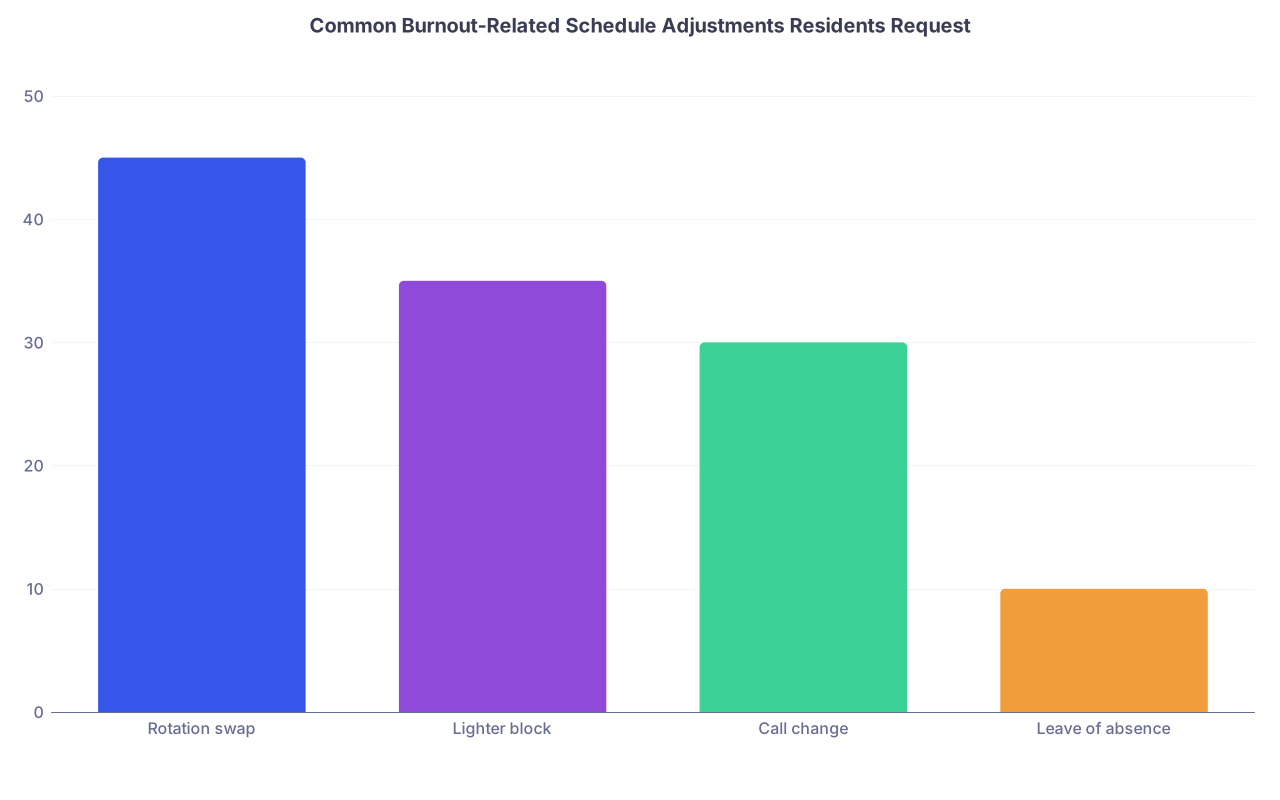
| Category | Value |
|---|---|
| Rotation swap | 45 |
| Lighter block | 35 |
| Call change | 30 |
| Leave of absence | 10 |
Numbers here are illustrative, but the pattern is real: swaps and lighter blocks get more yeses than full leaves.
7. What If The Program Says No?
Sometimes the answer is “We can’t change the current block,” or “We don’t have anywhere to move you.” That doesn’t mean you’re stuck with nothing.
You can push gently in a few ways:
- “If we can’t change the rotation, are there adjustments we can make—call schedule, days off, clinic assignments?”
- “Can we plan a lighter block immediately after this one to give me a chance to recover?”
- “Can we put in writing a specific plan so that if my symptoms worsen, we have a trigger for making a change or starting a leave?”
If the answer is just stonewalling and you’re truly not safe, then you escalate:
- GME office
- Institutional wellness / resident well-being office
- Mental health provider writing a recommendation for schedule change or leave
A letter from psychiatry or employee health saying, “This resident needs temporary reduced demands / leave for medical reasons” carries a lot more weight than you just insisting you’re burnt out.
8. Protecting Yourself While You’re Still Stuck on the Rotation
Even if a change is coming, you still have to survive the current week or two. Some blunt but practical moves:
- Shorten your personal expectations. You are not here to impress; you are here to be safe. Don’t volunteer for extra projects, QI, or research right now.
- Simplify your notes and pre-rounding. Stop over-documenting. Use templates, be efficient, leave on time when the work is done.
- Tell your senior you’re at your limit. “I’m really struggling with fatigue. If you see me missing things or zoning out, please tell me immediately.” A good senior will adjust where they can.
- Micro-rest. Ten-minute breaks to sit, breathe, and reset are not weakness. They are survival. Go to the stairwell, call room, or bathroom and breathe.
None of this fixes the system. But you’re not going to fix the system this month. Your job is to not break yourself while you get to a slightly better setup.

9. Documentation, Gossip, and Not Burning Bridges
Do not turn this into a group rebellion unless you’re ready for serious fallout. This is about you and your safety, not about leading a strike.
A few guardrails:
- Keep emails factual, short, and professional. Assume they could be read by GME or legal.
- Don’t rant about your PD or attendings in group chats. Screenshots travel.
- Tell only the colleagues who need to know—usually your chief, PD, and maybe one trusted co-resident.
- If you go on leave or your schedule changes, you’re not required to give everyone details. “I had some health stuff; I’m ok and glad to be back” is enough.
You want to leave a paper trail that shows you acted responsibly, early, and with concern for safety. You do not want a trail that makes you look like a constant problem.
10. When You Actually Need a Leave, Not Just a Swap
Sometimes the right answer isn’t rotation gymnastics. It’s stepping away.
Serious red flags you’re at that point:
- Persistent suicidal thoughts
- You’re using alcohol/benzos/opioids to get through the day or night
- You’re having panic attacks regularly at work
- Colleagues are telling you they’re worried about you
- You physically cannot get out of bed to go to work more than once or twice
At that point, you say to your PD:
“I don’t think a rotation change is enough. My mental health is bad enough that I may need a medical leave. I’m willing to talk to occupational health/psychiatry and figure out the logistics.”
And then you actually go. Get evaluated. Because if you crash hard enough that something dangerous happens, everyone loses—especially you.

11. Planning the Recovery: Not Repeating the Same Crash
If you get a change, don’t treat it like a vacation. Treat it like rehab.
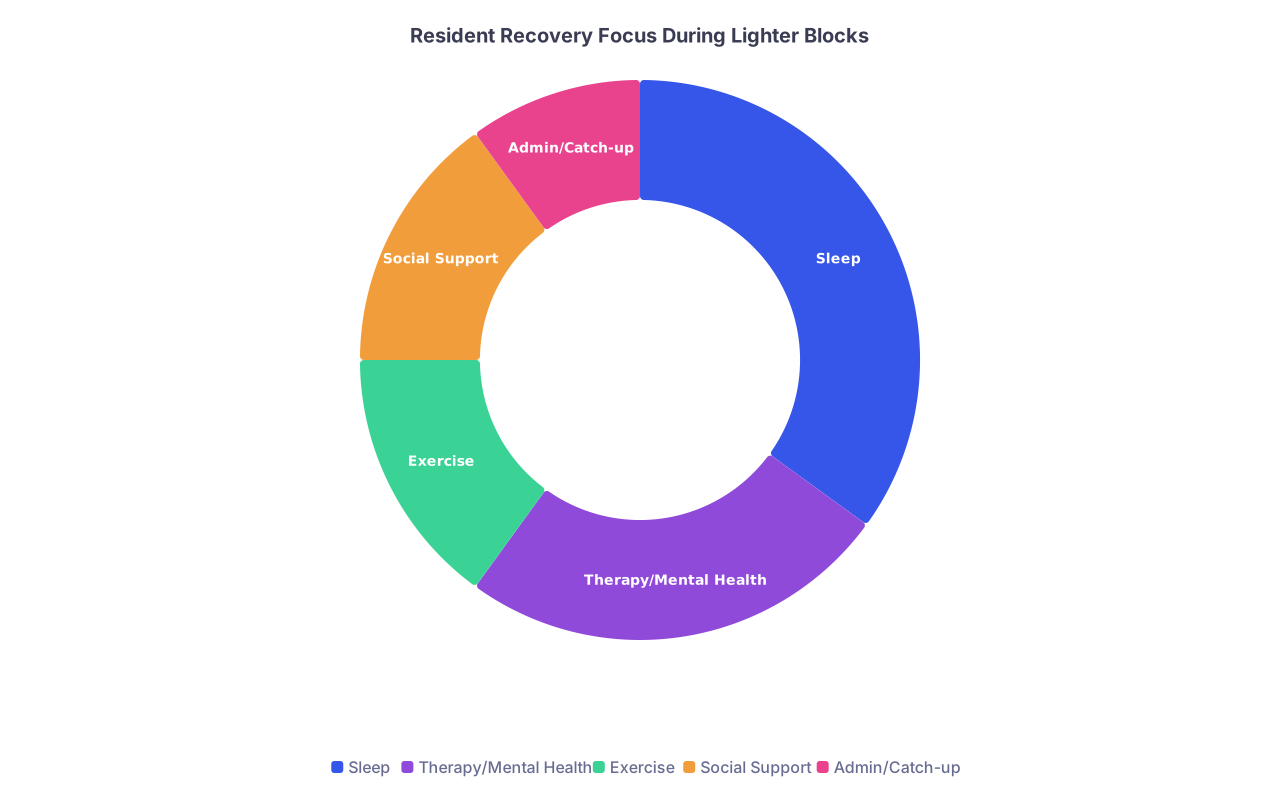
During your lighter block / elective / leave:
- Start or continue therapy. Not optional if you’ve reached extreme burnout.
- Fix your sleep as aggressively as you can. Absolute blackout, strict bedtime/wake time, no scrolling until 2 a.m.
- Decide what specifically pushed you over the edge: certain services? night frequency? lack of support?
- Go back to the PD with a forward-looking plan: “Here’s what I’ve put in place so I don’t end up in the same spot, and here’s what I may need from the program going forward.”
You want your PD thinking, “This resident took this seriously and is now more stable,” not “We’re going to be dealing with this every three months.”
| Category | Value |
|---|---|
| Sleep | 35 |
| Therapy/Mental Health | 25 |
| Exercise | 15 |
| Social Support | 15 |
| Admin/Catch-up | 10 |
FAQ: Burnout, Rotations, and Schedule Changes
1. Can I be fired or non-renewed for admitting I’m burned out and asking for a change?
You shouldn’t be, and most programs won’t. What gets people in trouble isn’t admitting burnout; it’s unsafe behavior, repeated no-shows, dishonesty, or refusing reasonable help. Framing this as a safety and health concern and being willing to engage with mental health or occupational health protects you, both practically and legally.
2. Should I get a note from a therapist or doctor before asking for a rotation change?
You do not have to, but it can help, especially if the program initially resists. A brief note stating that you’re being treated for a health condition and that temporary reduced demands, schedule adjustment, or leave is recommended carries weight. If things are severe, I’d actually recommend seeing someone early rather than waiting until you’re desperate.
3. What if my co-residents get angry that they have to cover my shifts or calls?
Some will be annoyed. That’s reality. You can acknowledge it without apologizing for needing help: “I know this adds stress, and I’m grateful you’re covering. I was at a point where it wasn’t safe for me or my patients.” Long term, most people would prefer covering now over being on a team where someone unsafe is barely holding it together.
4. Is it better to wait until the rotation is over and then ask for changes for the future?
If you’re mildly burnt out but still functioning, yes, it can make sense to finish the block and ask for future changes (e.g., fewer consecutive heavy blocks, avoiding certain attendings, spacing out ICU). If you’re at the “I could hurt someone” level, you do not wait. You talk to your chief/PD now, even if it’s mid-rotation.
5. Can I ask to never rotate with a certain attending or service again because it’s toxic?
Sometimes. If the issue is clear mistreatment, harassment, or clear pattern of abuse, you absolutely can and should raise that—and programs often will quietly avoid that pairing in the future. If the issue is just “they were demanding and I didn’t like them,” that’s harder. Document serious mistreatment and consider GME or ombuds if it’s bad.
6. How does this affect fellowship applications or letters of recommendation?
Handled well, it often doesn’t hurt you at all. Many fellows and attendings have had their own burnout or leave stories. It becomes a problem if there’s a formal remediation, professionalism flags, or repeated issues. If you need a leave or big schedule change, work with your PD to frame it: a medical issue addressed responsibly, recovery documented, performance solid afterward.
Key takeaways:
- Yes, you can often change rotations or schedules for burnout—but you need a clear safety/health rationale and a calm, specific ask.
- Talk to your chief, then your PD, and be flexible about how the help looks (swap, lighter block, adjusted call, or leave).
- Use any break you get to actually recover and fix the underlying problem—not just to tread water until the next crash.


