

Does Program Prestige Matter Enough to Bump It Up My Rank List?
What do you do when a big‑name program impressed you on paper, but a “lesser” program actually felt like home on interview day?
Let me be blunt: most people overrate prestige and underrate day‑to‑day reality. But prestige is not irrelevant. The trick is knowing when it should move a program up your rank list, when it should not move the needle, and when it’s outright dangerous to chase the name.
Let’s walk through a clear way to decide.
Step 1: Understand What “Prestige” Actually Buys You
Prestige usually means some mix of:
- National reputation (name recognition)
- Strong fellowship match history
- High research output
- Famous faculty / “big names” in the field
- Competitive applicant pool (you’re surrounded by strong co-residents)
What that can translate into:
- Easier path to competitive fellowships
- Stronger letters of recommendation (from known people)
- More research opportunities and infrastructure
- A network that follows you for decades
- Slight advantage when applying for academic jobs
But here’s the part people ignore: the further you get from academics and niche fellowships, the less prestige matters.
If you’re going into primary care, hospitalist work, or a non-ultra-competitive subspecialty in a normal market? Your performance and personality matter way more than program name.
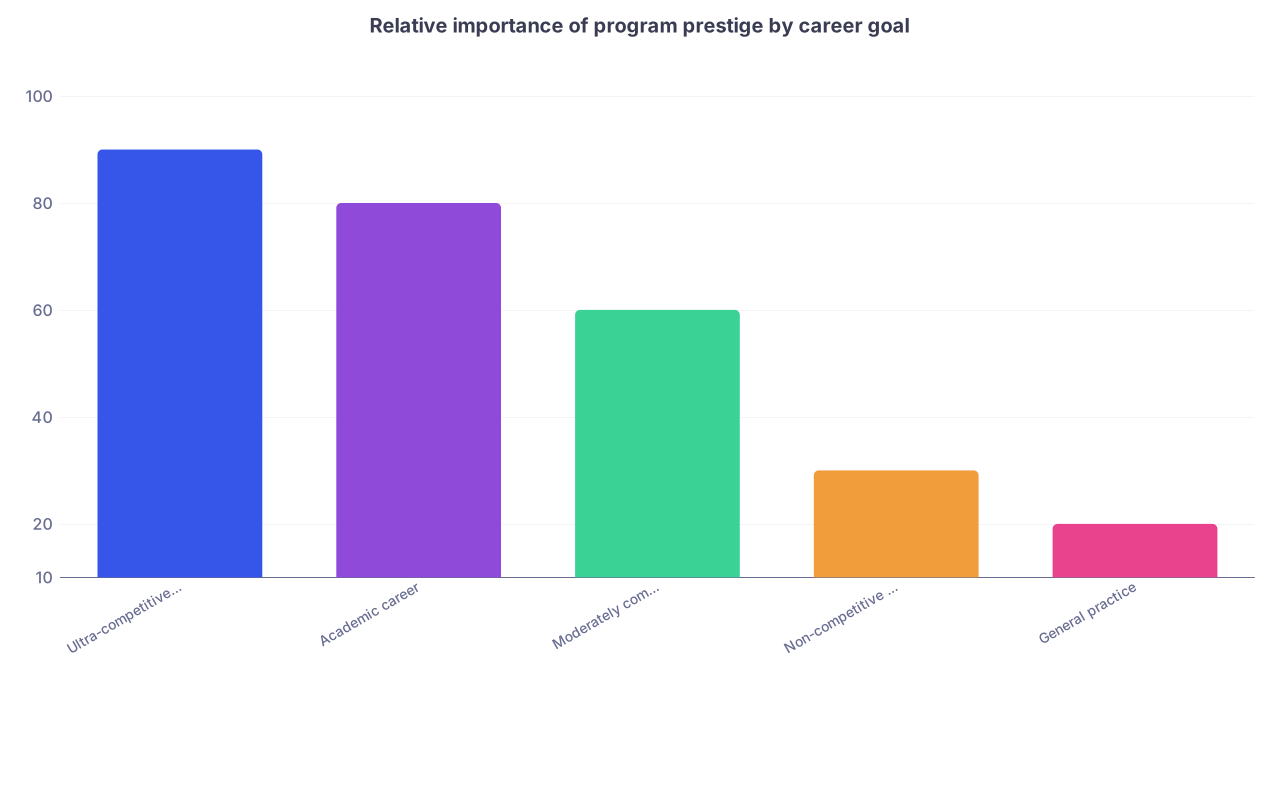
| Category | Value |
|---|---|
| Ultra-competitive fellowship | 90 |
| Academic career | 80 |
| Moderately competitive fellowship | 60 |
| Non-competitive fellowship | 30 |
| General practice | 20 |
(Values are conceptual, not exact percentages, but you get the idea.)
Step 2: Ask the Only Question That Matters Long-Term
Here’s the core question:
Will this program’s prestige materially change my future options compared with other programs I’m ranking?
If the answer is “no” or “probably not,” you shouldn’t bump it up your list just for name alone.
Where prestige really can justify a bump:
- You’re dead set on a hyper-competitive fellowship (e.g., Derm, Plastics, IR, GI, Heme/Onc, Ortho, Ortho Spine, Interventional Cards) and
- The prestigious program has a track record of consistently matching people into those fellowships and
- Your alternatives do not.
If you’re talking about the difference between “solid academic program A” vs “very famous brand-name program B” and both place similarly in your desired path? Prestige by itself is mostly ego.
Step 3: Compare Two Programs Head-to-Head (Not in a Vacuum)
Do not ask, “Is this program prestigious?” Instead ask:
Between these two specific programs, what am I trading for more prestige?
You’re usually trading:
- Location (support system vs new city)
- Lifestyle (malignant vs supportive culture)
- Flexibility (rigid vs humane scheduling)
- Fit (you felt seen vs you felt like a number)
- Cost of living and commute
Put it in concrete terms. Example:
- Program A: Top-10 name, high research, fellowships everywhere, but residents quietly said “you survive here, you don’t thrive”; minimal support, high burnout.
- Program B: Mid-tier academic, strong regional reputation, excellent mentorship, residents seemed genuinely happy, good fellowship match regionally.
Should you bump A above B just because of name?
If you want academic cardiology at a top institution, and Program A regularly sends people to big-name cards fellowships while Program B mostly sends people to regional spots, then yes, that name may be worth a bump.
If you want to be a community hospitalist or you’re not sure on fellowship? No. Choosing misery for vague future benefits you might never use is foolish.
Step 4: Use This Framework: Name vs Fit vs Outcomes
Think of your decision on three axes:
Program Fit
- Culture
- How you felt on interview day
- Resident happiness, support, vibe
- Proximity to your support system
Career Outcomes
- Fellowship match (in your intended specialty)
- Job placement (location and type you want)
- Research/teaching opportunities that match your goals
Name / Brand
- National vs regional Recognition
- Famous mentors and departments
- Doors it opens for specific paths
Now the rule of thumb:
If Fit is high and Outcomes are good enough for your goals:
Do not let prestige knock this program far down. Maybe it drops one spot for a clearly better outcomes program, but not five spots for ego.If Outcomes are significantly better at the more prestigious place and your career goal is competitive:
Prestige can and often should bump a program up.If Name is the only major difference (fit similar, outcomes similar outside of ego value):
It’s reasonable to bump the prestigious one slightly up your list—but slightly. Not from #8 to #1.

Step 5: Where Prestige Clearly Matters (and When It Doesn’t)
Situations where prestige strongly matters
You should seriously consider bumping a more prestigious program up when:
You want a very competitive fellowship AND:
- That program consistently sends grads to those spots
- Your other options don’t have that track record
You want a research-heavy academic career:
- You plan to chase R01 grants, become division chief, etc.
- You need heavy research infrastructure and famous mentors
You’re targeting specific elite institutions for later training:
- Some flagship departments absolutely favor grads from a short list of programs
- Being “known” helps get your application read seriously
Situations where prestige is nice but not decisive
- You’re open on fellowship vs general practice
- You’re aiming for regional academic or community jobs
- Multiple programs on your list place similarly in your desired path
- The top-tier name comes with bad culture, terrible location for you, or clear burnout
In those cases, prestige can break a tie, not dominate the board.
Situations where chasing prestige is flat-out dumb
You felt red flags on interview day:
- Residents looked exhausted, guarded, or downright miserable
- You heard things like “it’s survivable” or “you just get through it”
You have major personal needs:
- Partner’s job, kids’ schools, health issues, immigration constraints
- And prestige conflicts with those realities
You’re already leaning toward primary care or hospitalist life:
- The incremental benefit of a flashy name is small
- How you train and who you become clinically matters more
Step 6: Look at Data, Not Just Vibes
If you’re going to bump a prestigious program up, it better not just be based on their marketing.
Ask or look up:
Where did last 3–5 years of grads go for fellowship?
Specifically in your area of interest.Do they have fellows in:
- Top academic centers?
- Your preferred geographic region?
How many residents do research?
And does it actually get published or presented at real conferences?What do residents say off script?
- Ask: “If you could redo rank list, would you still come here?”
- Watch their face and how fast they answer.
| Area | Prestige Very Helpful | Prestige Less Important |
|---|---|---|
| Ultra-competitive fellowships | Yes | No |
| Academic research career | Yes | No |
| Community practice jobs | Limited | Often minimal |
| Salary negotiations | Slight | Performance > name |
| Resident happiness | Unrelated | Culture > name |
Step 7: A Simple Ranking Tiebreaker Method
When you’re stuck between “prestige vs fit,” run this exercise:
Imagine you matched at the prestigious program.
Ask yourself: “In PGY-2, post-call, exhausted, would I still be glad I chose this?”Now imagine you matched at the less prestigious but great-fit program.
Ask: “If later I don’t get my top fellowship or academic dream, will I blame this program, or know that my own choices/performance mattered more?”Then score each program from 1–10 on:
- Fit (gut + data)
- Career fit (fellowship/job in your lane)
- Prestige (only as it affects your real goals)
Multiply: Fit × Career Fit. That product should matter more than Prestige.
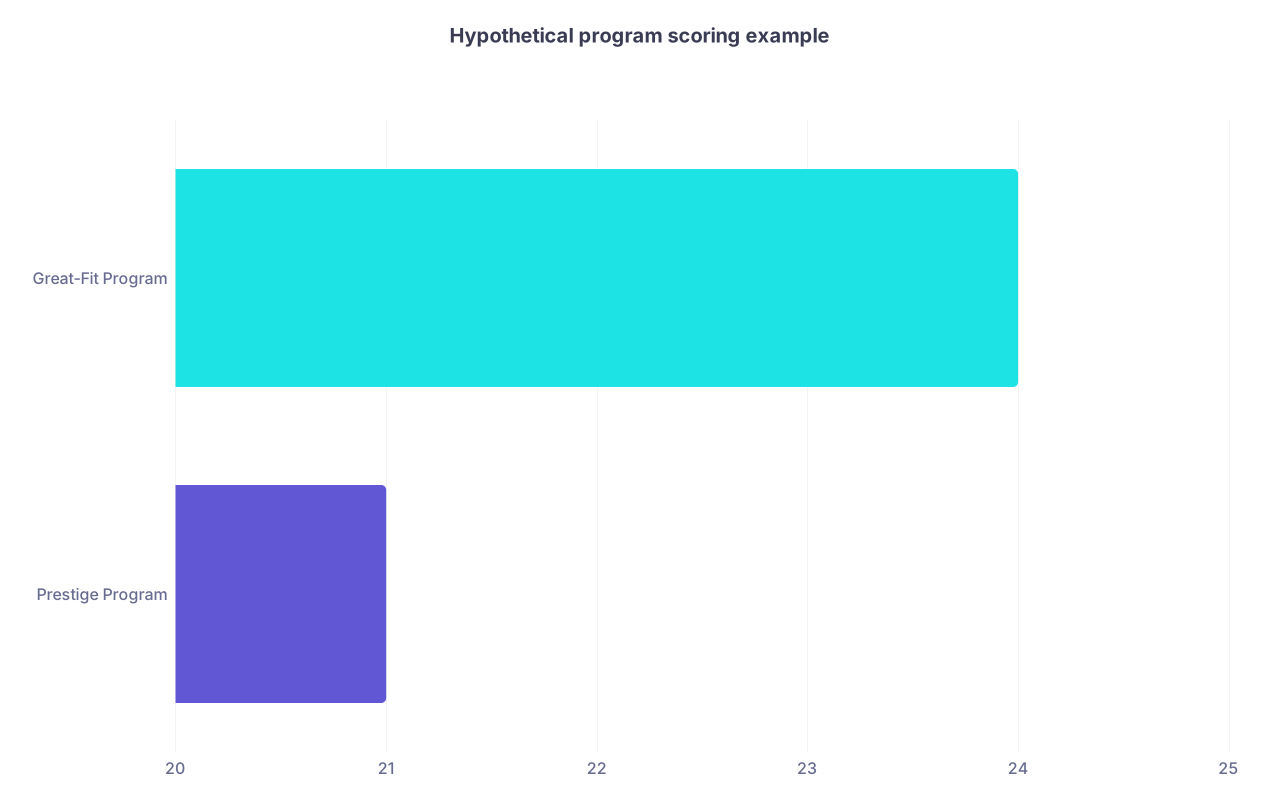
| Category | Value |
|---|---|
| Prestige Program | 21 |
| Great-Fit Program | 24 |
Say Prestige Program: Fit 6, Career 7 → 42.
Great-Fit Program: Fit 9, Career 8 → 72.
You don’t move 42 above 72 because of name alone.
Step 8: How Much Is “Enough” to Bump a Program Up?
Concrete guideline:
Prestige + clearly better career alignment than similar-fit programs?
Reasonable to move it up 2–4 spots.Prestige alone (no clear advantage in outcomes)?
Maybe 1–2 spots max, if you truly care about it and everything else is roughly equal.Prestige with worse fit or questionable culture?
Do not move it above a program where you’d clearly be happier unless your career goals absolutely require it (and you know that, not just suspect).

Step 9: Special Cases People Get Wrong
A few specific scenarios I see repeatedly:
“Big-name IM vs smaller but very solid IM, want GI/Cards”
Here prestige really can matter. If the big-name IM program:
- Sends multiple people each year to GI/Cards at strong places
- Has high-volume research and mentors in those fields
Then yes, you probably should bump it higher than a smaller program that has weaker or sparse GI/Cards match, even if that smaller place felt slightly more comfortable—as long as it wasn’t glaringly toxic.
“Famous coastal academic vs strong Midwest academic, want community practice”
You want to be a hospitalist or outpatient doc in 3–4 years? Choose the place where:
- Residents seemed happier
- You’ll get solid training
- Life for three years is not miserable
The brand won’t matter much to community employers compared with your references and clinical skills. Don’t sacrifice your sanity.
“Top-5 program but I hated the vibe”
If you truly hated it—felt dismissed, ignored, or uneasy—it should not be at the top of your list. I’ve seen people chase names and then spend three years regretting it, only to end up in the same type of job they’d have gotten from a lower-tier but healthier program.
Prestige does not cancel out a bad environment.
Step 10: What I’d Actually Do If I Were You
Here’s the practical ranking sequence I’d use:
- List all programs where you could see yourself not being miserable. Trash the rest.
- Among those, sort by career alignment:
- Strong track record in your likely path
- Right mix of fellowship vs community options
- Within each small cluster of similar outcomes, let prestige and location break the tie.
- Only allow prestige to override meaningfully better fit when:
- You have a specific, competitive career goal
- The prestigious program clearly and repeatedly gets people there
If after all this you’re still thinking, “Yeah, but I kind of just want that name on my CV,” that’s fine. Just be honest with yourself that you’re partially paying in quality of life for ego value. Sometimes people are ok with that. Many regret it.

| Step | Description |
|---|---|
| Step 1 | List all programs |
| Step 2 | Remove from list |
| Step 3 | Evaluate career alignment |
| Step 4 | Use fit + prestige as tiebreaker |
| Step 5 | Prioritize better outcomes |
| Step 6 | Finalize rank cluster |
| Step 7 | Could I be reasonably okay here? |
| Step 8 | Similar career outcomes? |

FAQ: Does Program Prestige Matter Enough to Bump It Up My Rank List?
1. If I want a competitive fellowship, should I always rank the most prestigious program highest?
No. You should rank the program that best combines: strong fellowship match in your specific field, workable culture, and enough support for you to actually perform well. A slightly less famous program with dedicated mentors and a consistent match record can beat a flashy name where residents are burned out and unsupported.
2. How much higher should I move a prestigious program just for the name?
If outcomes and fit are essentially equal, bumping a more prestigious program 1–2 spots is reasonable. Moving a clearly worse-fit program way up your list purely because of the name is almost always a mistake unless your career plan absolutely depends on that specific brand and track record.
3. Does prestige matter for community jobs or hospitalist positions?
Much less. Employers care far more about your references, your reputation as a clinician, and sometimes geographic ties. A “big name” can help slightly with first impressions, but it’s not worth sacrificing three years of your life if you plan to practice in a normal, non-ultra-competitive environment.
4. What if the prestigious program felt red-flaggy on interview day?
Red flags beat prestige. If residents seemed miserable, hesitant to speak honestly, or used phrases like “you survive,” do not shove that program to the top just because of its name. You will feel those red flags at 3 a.m. on a 28‑hour call; the logo on your badge will not comfort you.
5. I’m undecided about fellowship. Should I still favor prestige?
You should favor flexibility and fit. Choose a program with a broad range of fellowship options, decent research, and a culture that supports exploring interests. A slightly prestigious name is nice, but if you burn out or underperform because you’re unhappy, you’ll have fewer options than you would at a “lesser” program where you thrived.
6. How can I tell if prestige actually translates into better outcomes?
Ask specific questions: “Where did your last 5–10 residents interested in [X fellowship] match?” “How many residents do research, and do they publish?” “Do faculty in [your field] have connections at places I might want to train later?” Look at actual match lists, not just the program’s marketing. If the data do not clearly support better outcomes, then the prestige is mostly cosmetic.
Key takeaways:
- Prestige only deserves to bump a program up when it clearly improves your realistic career options, not just your ego.
- Fit and culture are not soft factors; they determine whether you’ll perform well enough to use any prestige you gain.


