

What do you do when a friend tells you, “Everyone is dropping that program on their list,” a week before rank lists lock—and your stomach drops because it’s your #1?
Let me be blunt: changing your rank list based on gossip or what your friends are doing is one of the fastest ways to regret your Match outcome.
Let’s walk through this in a structured way so you don’t panic-edit yourself into a bad decision.
The Core Rule: Rank Based on YOUR True Preferences
If you remember nothing else, remember this:
Rank programs in the exact order of where you’d most like to train, assuming you could match at any of them.
Not where:
- Your classmates are going
- Reddit thinks is “prestigious”
- Someone’s cousin’s co-resident “heard it’s malignant”
The NRMP algorithm is literally designed to favor your preferences over programs’ preferences. It rewards honesty, not strategy games. When you start gaming based on gossip, you’re actively fighting the algorithm that’s trying to help you.
How Friends and Gossip Usually Screw People Up
Here’s how this plays out in real life. I’ve seen all of these:
The Herd Panic You like Program A. Solid vibes, good training, location works. You tell a classmate and they say, “Oh wow, everyone says that place is brutal. I heard the PD is toxic.”
Suddenly, you’re imagining misery for 3 years and drop it from #1 to #5—based on one unverified comment.The Prestige Shuffle You love a strong but mid-tier academic program in a medium city. Then:
- Group chat: “Bro if you can rank [Big-Name] #1 and don’t, that’s insane.”
- Someone posts their rank list flexing all the “name” programs. You bump the brand-name program ahead—even though you didn’t vibe there—just because you’re scared of “wasting” your stats.
The Couples Cluster You and 4 friends all loved Program X. One person gets spooked: “I’m moving it down; I heard interns there do 6+ nights in a row.”
Now there’s a domino effect: nobody wants to be “the only one” ranking it high.The “Everyone Hates It” Rumor Late February, someone claims: “I heard almost no one is ranking [Program Y]. Might not even fill.”
People then:- Move it way up as a “safety”
- Or drop it entirely out of fear it’s terrible
All based on rumor, not data.
Most of this is noise. Not useful signal.
When You Shouldn’t Change Your List Based on Others
Let’s be specific. These are bad reasons to change your rank list:
- “My friends are all moving Program X down.”
- “Reddit says that program is malignant.”
- “A random intern on Instagram said they’re miserable.”
- “Everyone says you HAVE to rank academic programs over community ones.”
- “Someone told me that program is a ‘backup’ and I’m better than that.”
- “I don’t want people to think I couldn’t match somewhere more competitive.”
Those are ego, fear, and groupthink talking.
Unless you get new, specific, credible information that changes your actual preferences, your list shouldn’t move.
When New Information Might Justify Changing Your Rank List
Now, sometimes gossip is actually a messy version of real information. The trick is sorting trash from truth.
Situations where changing your list can make sense:
Verified major program changes Examples:
- The program officially announces losing key hospital coverage or a major rotation
- The PD or core faculty you loved just left (and you confirm it’s real)
- The program merges or closes a site and future training exposure will clearly worsen
This is different from “I heard they’re losing trauma” said by one random person with no details.
Credible, consistent stories from multiple insiders Not one angry resident. I mean:
- Several residents (different years) independently sharing similar concerns
- A consistent pattern: “No teaching, constant violations, retaliatory culture”
- People you trust, not anonymous Reddit ghosts
Personal circumstances changed Nothing to do with gossip, but still a reason to change:
- Partner’s job offer in a specific city
- Family illness that shifts your geographic priorities
- Financial constraints (cost-of-living, need to be closer to support)
You realized your own priorities shifted Example: You thought prestige > all else. Then on a second look, you realize: “Actually, I care a lot more about supportive culture and being near my support system.”
That’s a valid reason to re-rank. But again—your reasons, not your friends’.
Quick Framework: Should I Change My Rank List?
Here’s a simple decision flow. If at any point you answer “No,” stop changing things.

| Step | Description |
|---|---|
| Step 1 | Hear gossip or friends choices |
| Step 2 | Do NOT change list |
| Step 3 | Make targeted, minimal changes |
| Step 4 | Is this new info? |
| Step 5 | Is source credible & specific? |
| Step 6 | Does this change what YOU want? |
| Step 7 | Big enough to swap program order? |
The key idea: minimal, targeted changes only when your true preferences have changed—based on credible information.
How to Evaluate “Gossip” Like an Adult, Not a Panicked MS4
When someone throws a bomb like “that program is malignant,” you don’t accept or reject it blindly. You interrogate it.
Ask:
- “Who told you that?”
- “How do they know?” (Current resident? Faculty? Someone who rotated there?)
- “What exactly happened?” (Vague: “They’re toxic.” Helpful: “On nights, there’s zero attending backup, and interns are expected to manage the ICU alone.”)
- “Is this one person’s experience or everyone’s?”
You’re looking for:
- Specific examples, not vague trash-talking
- Multiple independent sources saying similar things
- Behavior patterns, not “I didn’t like them because I got a bad vibe”
One angry former resident can be an outlier. Ten residents giving the same story? Different problem.
The “Friends Are All Going There” Trap
Another big one: wanting to bump a program up just because lots of your friends are ranking it highly—or down because they’re avoiding it.
Here’s the harsh truth:
Your friends will scatter. People move after residency. Relationships change. Work hours are brutal. You will not be clinging to your M4 friend group as your primary support system forever.
On the other hand:
- A supportive program culture
- Reasonable workload
- Solid training and mentorship
- Being in a city you can actually stand
Those things matter every single day for years.
If Program A is your top choice but you’re tempted to drop it because “no one else from my school is going there,” stop. You’re about to sacrifice 3–7 years of your life to avoid a few weeks of feeling left out in March.
What About “Program X Won’t Rank Me High Anyway”?
This is another rumor-based trap:
- “They only rank AOA people high.”
- “They don’t like DOs.”
- “Sub-I students always get priority.”
Even if those things are partially true, the algorithm still favors your preferences. Ranking a program high cannot hurt you.
If they rank you low, fine—you’ll fall to the next program on your list.
If you drop a program you love because you’re “sure they won’t rank you,” and then later learn they would’ve? That’s real regret.
Reality Check: What Actually Predicts Resident Happiness?
Here’s what consistently matters more than gossip and prestige:
| Factor | Impact on Daily Life |
|---|---|
| Program culture | Very high |
| Work hours & schedule | Very high |
| Support from seniors/PD | High |
| Location & support system | High |
| Case volume & autonomy | High |
Most of the “everyone says” chatter you hear focuses on:
- Reputation
- Research output
- Fellowship match lists
- “How competitive” it is
Those matter. But they don’t override everything else. A “top” program where you’re miserable is not better than a solid program where you’re supported, learn a ton, and stay functional as a human being.
Quick Sanity Exercise Before You Hit Submit
Do this alone. No group chat. No Reddit. Just you.
Write your “no one else exists” list
Rank programs assuming:- You don’t care what your friends think
- You’ll match somewhere for sure
- You’re only optimizing for where you personally want to train
Circle any programs you moved purely for social reasons
“I bumped this place because my friends are ranking it low.”
“I moved this higher because it sounds impressive.”
Those are suspect moves.Ask yourself one brutal question
“If I match at [Program X] as my #1 and everyone online says it’s ‘mid,’ will I actually be unhappy there day-to-day?”
If the true answer is no—you’d be fine or happy—then who cares?
Visual: Where Regret Usually Comes From
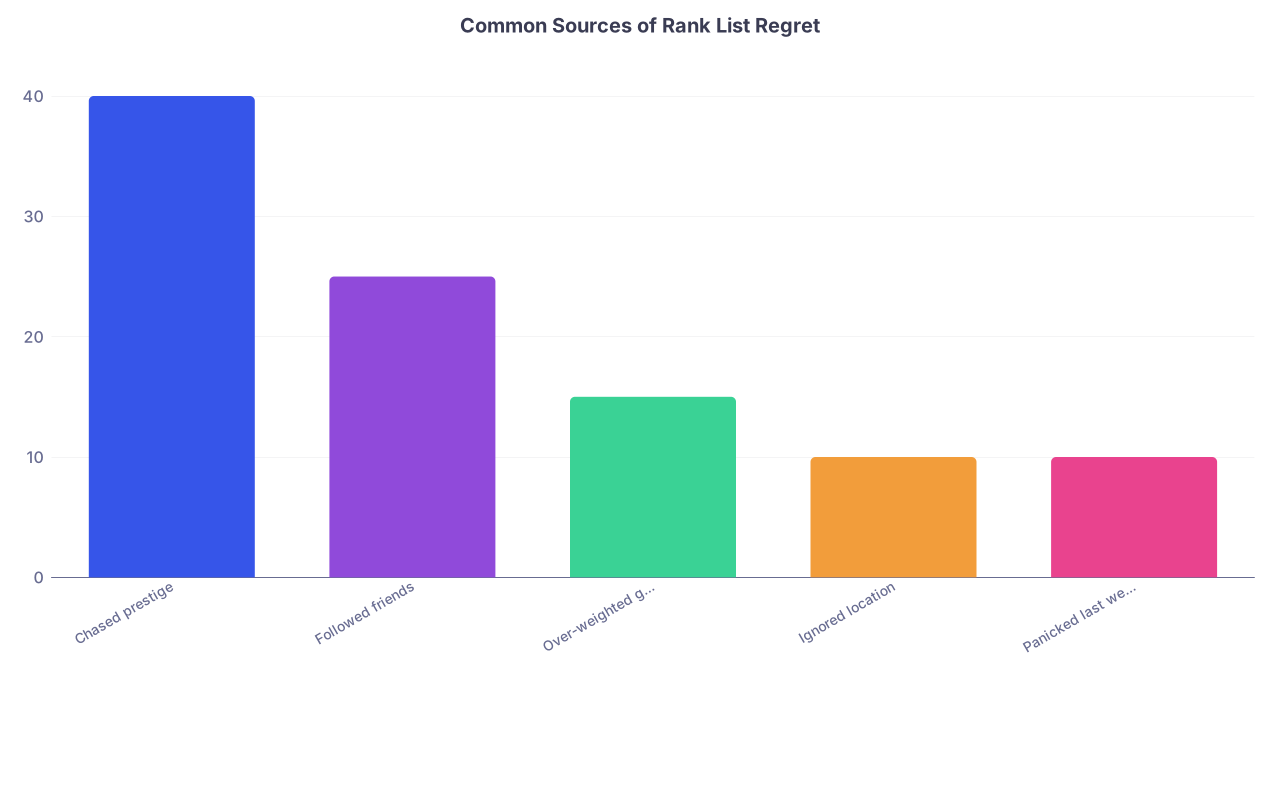
| Category | Value |
|---|---|
| Chased prestige | 40 |
| Followed friends | 25 |
| Over-weighted gossip | 15 |
| Ignored location | 10 |
| Panicked last week | 10 |
Most residents I’ve talked to who regret their rank list don’t say, “I wish I’d listened to more gossip.” They say versions of:
- “I knew in my gut I didn’t like that place, but everyone said I’d be stupid not to rank it #1.”
- “I chose the ‘name’ program over the one where I felt at home.”
How to Use Friends and Gossip the Right Way
I’m not saying ignore everyone and live in a vacuum. Use other people’s input strategically:
Use friends to identify questions, not to override your preferences.
“You said nights were brutal there—what exactly does that look like? I’ll email a resident to confirm.”Use gossip as a signal to investigate, not a verdict.
“Three people said teaching is weak there—let me talk to a chief and see what they say.”Use classmates for emotional support, not career decisions.
It’s fine to vent together. Just don’t rewrite your whole future because someone sounded confident in the group chat.

If You’re Already Second-Guessing Everything
Normal. Late February melts everyone’s brain.
Here’s a quick reset plan:
- Step away from all social media and group chats for 24–48 hours.
- Re-read your interview notes and your own impressions.
- Ask: “If I’d never heard any outside opinions, what would my list be?”
- Align your actual list as close to that as you’re comfortable with.
You’re trying to strip away noise and get back to your own judgment. You spent months interviewing. That data is way more reliable than last-minute gossip.
FAQ: Friends, Gossip, and Your Rank List
1. Should I change my rank list if all my friends are dropping a program?
Not automatically. Ask why. If their reasons don’t change what you want (or are based on vague “vibes” and third-hand rumors), don’t move it. Your day-to-day life matters more than syncing your Match destination with your classmates.
2. If I hear a program is “malignant,” how do I know if it’s real?
You look for specifics and multiple sources. One anonymous Reddit comment? Ignore it. Several residents at different levels, plus maybe a faculty mentor, all describing the same pattern of abuse, lack of support, or chronic duty hour violations? That’s credible and might justify dropping it.
3. Should I move a big-name program up just because it’s prestigious?
No, not just for the name. Prestige can help for certain fellowships or academic careers, but only if you actually survive and thrive there. If you felt ignored, unsupported, or miserable on interview day, ranking it higher just for bragging rights is a bad trade.
4. What if I’m scared my #1 won’t rank me highly?
Rank it #1 anyway if it’s truly your top choice. The Match algorithm already accounts for programs’ preferences. Ranking a program highly can’t hurt you. If they don’t rank you high enough, you just “fall” to your next choice. Don’t try to predict their list; focus on yours.
5. Is it smart to use group chats to “calibrate” my list?
Use them lightly, with skepticism. Group chats are great for sharing contact info or confirming factual things (like, “Did they lose that inpatient site?”). They’re terrible for emotional decisions and last-minute list reshuffling based on herd anxiety. Don’t crowdsource your future.
6. How do I know my rank list is “final enough” to submit?
You’re ready when:
- Programs are ordered by where you’d most want to train, ignoring ego and social pressure.
- Any changes you made in the last week are based on real, verifiable info or genuine shifts in your own priorities.
- You could match at your #1 and honestly say, “Yeah, that’s where I truly wanted to go the most.”
Bottom line:
- Rank programs based on your genuine preferences, not your friends’ panic or internet gossip.
- Only change your list when credible, specific, new information actually changes what you want.
- Once you submit a list that reflects your real priorities, walk away from the noise and let the algorithm do its job.


