
Last February, a fourth-year I know stared at her Rank Order List like it was a bomb. She whispered, “What if they can see this? I liked them… I just didn’t like them that much. What if I hurt their feelings and they rank me lower?” She was about to hit “Certify” and her hand literally shook.
If you’re obsessing over whether your honest ranking might somehow offend a program, you’re not being “irrational.” You’re just in the ERAS brain-spiral stage. I’ve seen it over and over. And I’ve been there.
Let’s go straight at the core fear:
You’re scared that if you rank a program lower, they’ll “know,” get offended, and either:
- Drop you on their list
- Or not rank you at all
- Or somehow punish you later if you end up there
So you start thinking maybe you should rank them higher than you really want. “Just in case.” Like you’re managing their emotions.
Here’s the blunt truth:
Programs can’t see your rank list. They don’t know where you put them. They don’t get notified if you rank them low. And trying to protect a program’s feelings with your list can hurt exactly one person: you.
How the Match Actually Works (Not the Imaginary Version in Your Head)
Let me be annoying and logical for a second, because this is where most of the anxiety is based on total fiction.

| Step | Description |
|---|---|
| Step 1 | Applicant creates rank list |
| Step 2 | Program creates rank list |
| Step 3 | NRMP algorithm runs |
| Step 4 | Match at 1st choice |
| Step 5 | Try 2nd choice |
| Step 6 | Match at 2nd choice |
| Step 7 | Continue down applicant list |
| Step 8 | Can applicant match at 1st choice? |
| Step 9 | Open spot & ranked by program? |
Key facts that you really need tattooed on your brain:
- Programs never see your list. Not during the Match. Not after. Not ever.
- There is no “feelings” variable in the NRMP algorithm. It’s brutally mechanical.
- The algorithm is applicant-proposing. Translation: it tries to give you your highest-ranked program where there’s mutual ranking.
You rank programs.
Programs rank applicants.
NRMP’s algorithm matches based on both lists, but your order is never revealed to programs.
So that horror fantasy where Program X somehow sees they’re #7 for you instead of #2 and decides “wow, screw them” and drops you? That lives only in your head.
Programs submit their rank lists before they ever see any Match results. They don’t adjust their ranking based on whether you put them first or last. They can’t. They literally don’t know.
“But What If They Can Tell?” (The Paranoid Part…)
Here’s where the brain gets sneaky:
“Okay, maybe they can’t see my list. But what if they can kind of… figure it out? Like if I send them a strong letter of intent to another place? Or if I don’t send them any update? Or if they hear something?”
I’m going to break this down into the most common spirals.
Spiral #1: “If I tell one program they’re #1, the others will somehow find out and be mad.”
Programs aren’t calling each other like, “Hey, did they say you’re #1 too?” They just don’t care that much about your emotional loyalty. They care if:
- You’re someone they’d want on their team
- You’re likely to show up if they match you
Will some PDs roll their eyes at obviously fake “you’re my top choice” emails sent to everyone? Sure. But that’s not the same as being offended and dropping you on their list because they guessed your order.
Could you burn trust by lying to multiple programs and getting caught? Yeah, if you do something stupid like post “This is my #1” to multiple programs publicly or forward the wrong email. But that’s not about ranking them honestly. That’s about being reckless.
Spiral #2: “If I rank them low, they’ll sense it because I didn’t send enough updates / signals.”
No. Programs are not clairvoyant.
If they don’t hear from you post-interview, they might:
- Assume you’re lukewarm
- Or assume you’re overwhelmed and not emailing anyone
- Or not think about you at all because they’re busy running a hospital
Some programs care about “demonstrated interest.” Some don’t. But that influences how they rank you — not what they think your list looks like.
Your fear:
“If I don’t fawn over them, they’ll feel undervalued and will drop me.”
Reality:
They rank you based on your application, your interview, your letters, your vibe, and sometimes signals. That’s it. They never see your final rank order.
Spiral #3: “If I match there after ranking them low, they’ll know I didn’t really want them.”
No. They still don’t see your list even after the Match.
Could they suspect they weren’t your dream if:
- You couples matched and clearly targeted somewhere else?
- Or you made another program your “home” in your interview stories?
Maybe. But suspicion isn’t data. And by the time you’re a PGY-1, everyone’s just trying to get through sign-out and survive nights. Nobody’s tracking who had them #3 vs #7.
You Thinking About Their Feelings Is Actually Hurting You
Here’s the messed-up part: your empathy might tank your own outcome.
You’re worrying:
- “They were so kind on interview day, I feel bad putting them at #10.”
- “They emailed me a lot; I don’t want to ‘betray’ them.”
- “I told them I really loved the program; if I rank them lower, I’m being two-faced.”
So what happens? You’re tempted to move them up.
Not because:
- Training is better
- Location is right
- Fit is stronger
But because you don’t want to hurt their feelings in your imagination.
That’s how people end up matched:
- Away from their support system
- In a city they hate
- In a malignant or bad-fit culture
Because they ranked out of guilt and imagined obligation, not honest preference.
Let me be blunt: programs are not worrying about your feelings when they rank you. They’re ranking:
- Who best fits their needs
- Who they think will be strong residents
- Who will make their lives easier, not harder
They’re not sitting around like, “We shouldn’t rank them highly; we don’t want to disappoint them if they don’t get us.”
Why are you doing that for them?
What Actually Matters for Your Rank List
Let’s compare your fear (hurting feelings) with actual rank strategy.
| Your Fear | What Actually Matters for Ranking You |
|---|---|
| Hurting a program's feelings | Your interview performance |
| Not sending enough “I love you” emails | Your overall application strength |
| Ranking them lower than they “deserve” | Fit with their culture and needs |
| Changing your mind after interview day | Faculty feedback and impressions |
| Not making them your #1 | How high they already planned to rank you |
And for your side, your list should be based on:
- Where you’d actually be happiest and safest training
- Where you’ll get the best education for your career goals
- Geography, support, cost of living, significant others, family
- Culture — did the residents seem burned out, or actually okay?
Not:
- Who will be “offended”
- Who you think “deserves” a higher rank because they were nice
- Who emailed you more
Quick sanity check: a simple rank test
If I told you: “You’re guaranteed to match at the highest program on your list where you appear on their list — and the programs will NEVER know your order”
Where would you put:
- #1?
- #2?
- #3?
That’s your real rank list. The guilt version? That’s just noise.
The Myth of “Loyalty” to Programs
A lot of us fall into this weird fake loyalty thing.
They flew you out (or did a long Zoom day).
Residents were nice.
PD seemed invested.
You think: “I owe them.”
No. You don’t.
You gave them your:
- Time
- Emotional energy
- Vulnerability
- Personal story
They used all of that to decide where to put you on their list. Transaction complete.
You don’t owe them your top spot. You owe yourself honesty.
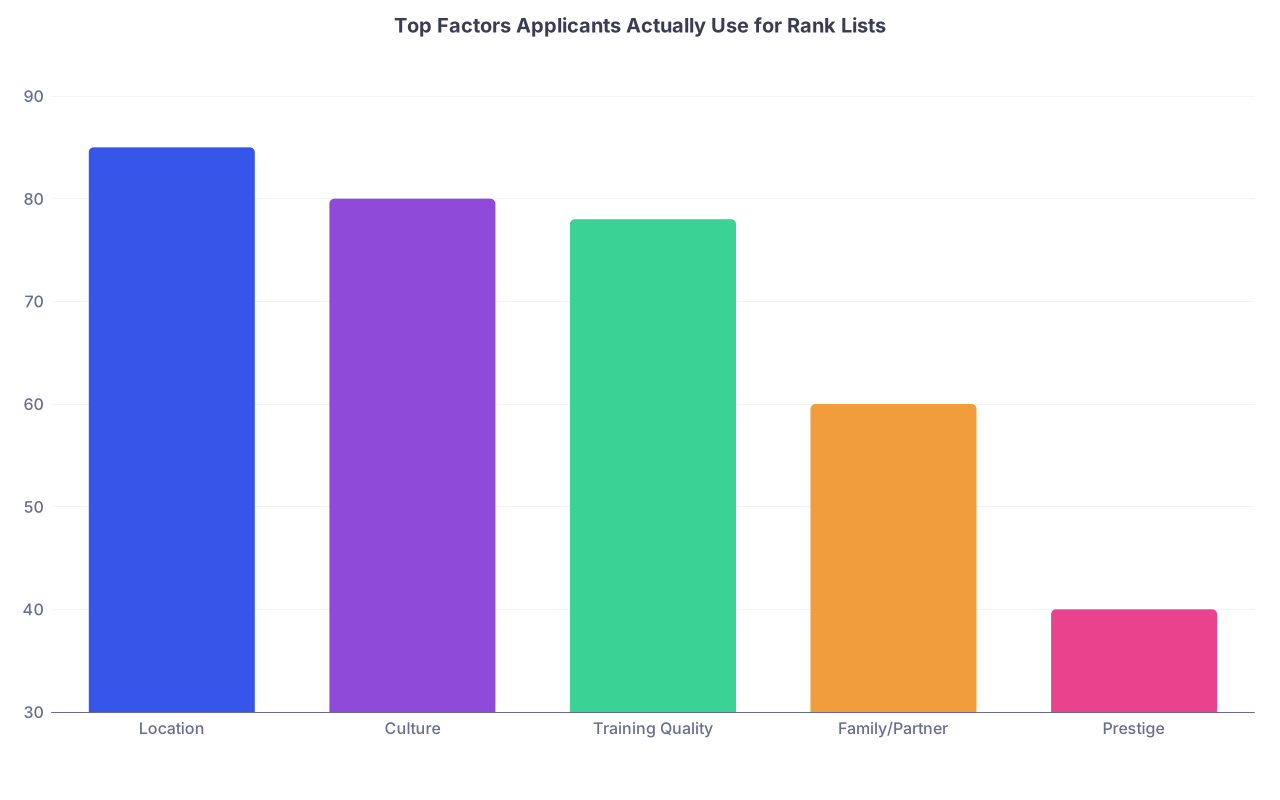
| Category | Value |
|---|---|
| Location | 85 |
| Culture | 80 |
| Training Quality | 78 |
| Family/Partner | 60 |
| Prestige | 40 |
Do some people still rank prestige higher than sanity? Definitely. I’ve watched people do it and regret it halfway through intern year. But no one I’ve met later said, “I’m so glad I ranked that mid-tier program higher just so I wouldn’t hurt their feelings.”
Edge Cases People Obsess Over (That Mostly Don’t Matter)
Let’s walk through the weird “what if” corner cases your brain is probably chewing on at 2 a.m.
“I told Program A in my thank-you email they were my top choice. Now they’re not.”
This happens constantly. You interviewed early, thought they were great, told them so. Then later you saw a program that fits you much better. Now you’re panicking.
You imagine:
- PD at Program A reading your old email on Match Eve, realizing you lied, and blacklisting you forever.
Reality:
- They’re busy, reading 500 emails, and probably forgot your exact wording.
- Even if they remember, they still don’t see your list.
- You’re allowed to change your mind with new information.
Would I send “you’re my #1” to multiple programs? No. That’s dumb and can blow up if anyone ever pieces it together.
But past enthusiasm in a thank-you note isn’t a binding contract.
“My home program treated me well. Isn’t it rude not to rank them first?”
You can like your home program and still know you’d be better off somewhere else. That’s not betrayal. They’ve also probably ranked some of their own students lower or not at all over the years.
Departments want what’s best for the program. You need to want what’s best for your life.
“If I match there dead last on my list, will it be awkward if they somehow find out?”
They won’t find out. There’s no “you were their #13” label attached to you when you show up. If you join, they treat you like every other intern: slightly overwhelmed and replaceable.
Will you feel weird knowing they were low? Probably, for a bit. But that fades when you’re drowning in orders and pages. Your day-to-day will be shaped by:
- How they treat you
- How safe you feel
- How much you’re learning
Not the number they held on your private list.
A Simple Way to Build Your List Without the Guilt Noise
If the “I don’t want to hurt them” loop is strong, try this:
- First pass: rank purely by gut preference as if no one’s feelings exist.
- Step away for 24–48 hours.
- Come back and check each adjacent pair. Ask:
- “If I only matched at one of these two, which would I actually rather live and work at for the next 3–7 years?”
- Swap if needed.
- Don’t touch it again unless new real information appears (SOAP risk, red flags, updated info) — not just guilt.
If you notice yourself thinking, “But they were so nice to me,” catch it. That’s not a ranking criterion. That’s your people-pleasing reflex talking.
FAQ (Exactly the Stuff That Keeps You Up at Night)
1. Can a program see where I ranked them on my list, either during or after the Match?
No. They never see your rank order list. Not during the Match, not after, not years later. NRMP does not release that to them. They get one piece of info on Match Day: did they match with you or not. That’s it.
2. If I send a love letter/intent letter to one program, will other programs know and punish me?
Not unless you do something reckless like post it publicly or forward the wrong email. Programs don’t have some shared database of who you said “you’re my #1” to. They’re not cross-checking with each other. Just don’t lie to multiple places in an obvious way. But honest enthusiasm to one program doesn’t harm you with others.
3. What if I match at a program I ranked low — will they treat me differently if they suspect they weren’t my top choice?
They will not see your list. And almost nobody is sitting there trying to decode your historical loyalty. Once you arrive, you’re a warm body on the call schedule like everyone else. How they treat you depends on their culture, not your imaginary ranking loyalty.
4. Is it morally wrong to rank a program lower even if I told them I liked them a lot?
No. You’re allowed to reassess once you’ve seen all your options. Interview-day enthusiasm isn’t a contract. The moral failure would be forcing yourself into a worse situation for years because you were trying to protect a program’s hypothetical feelings. Rank in the order you honestly prefer to train. That’s not selfish; that’s survival.
If you remember nothing else, remember this:
Programs don’t see your list. They don’t get their feelings hurt by something they can’t see.
But you? You’re the one who has to live with where you land. So rank for you, not for them.