

The biggest mistake applicants make between first interview and Rank Day is trusting their memory. It will lie to you. Systematically.
You are about to live through 2–5 months of smiling PDs, generic hospital tours, and “we’d love to have you” emails that all blur together. If you do not build a reflection system now, you will end up ranking based on the last interview, the shiniest residents, or sheer fatigue. That is how people end up in programs they quietly hate by PGY‑2.
Here’s the fix: a month‑by‑month, then week‑by‑week reflection and ranking plan from your first interview all the way to Rank List Certification Day.
Before Interview Season Starts: Build the Skeleton (Late August–September)
At this point you should set up the structure you’ll lean on later. Do it before the chaos.
Decide your core priorities (no more than 5–6).
Examples:- Resident culture / morale
- Location / family support
- Fellowship or job placement
- Surgical / procedural volume
- Call schedule / work‑hour sanity
- Program leadership (trust and transparency)
Rank those priorities now in order of importance to you. Not to your classmates. To you.
Create a simple scoring framework.
I like a 1–5 scale for each domain, plus a gut‑feeling score:Residency Program Reflection Template Domain Weight Score (1–5) Notes Resident Culture 3 Training/Volume 3 Location/Lifestyle 2 Leadership/Support 2 Fellowship/Jobs 1 Gut Feeling 2 Weights are flexible, but commit. If you say culture matters more than prestige, your later decisions should reflect that.
Build your tracking system.
You need three things:- A master spreadsheet (Google Sheets or Excel) listing:
- Program name
- City
- Interview date
- Categorical vs preliminary
- Your domain scores
- A running “provisional rank” column
- A program reflection template (in Notion, Word, OneNote, whatever) with:
- Quick stats (beds, class size, EMR, call schedule basics)
- Your pros/cons
- Memorable details (“the PD said…”, “resident warned about…”)
- A calendar where you actually block “post‑interview reflection” time.
- A master spreadsheet (Google Sheets or Excel) listing:
At this point you should have a skeleton ready: priorities set, scoring framework built, reflection template made, and 30–45 minutes blocked after each future interview.
Month 1 of Interviews: Capture Everything (October or When Your Interviews Start)
The first month is about volume of data, not decision‑making. You are sampling.
Right after each interview (Same Day)
At this point you should do a structured brain dump within 2–3 hours of logging off Zoom or leaving the hospital.
Minimum checklist (takes ~20 minutes):
Write a one‑sentence summary:
“Feels like a workhorse trauma shop, but residents genuinely happy.”
or
“PD impressive but residents looked exhausted and guarded.”Score each domain (1–5) using your pre‑set framework. Do it fast, based on gut.
Record:
- 3 specific pros
- 3 specific cons
- Any red flags. Be blunt. “Resident pulled me aside to say attrition is bad” belongs in writing.
Capture vibes:
- How did residents talk to each other?
- Did anyone complain subtly? (“You’ll learn to ‘love’ nights eventually.”)
- Did you feel like you could show your real personality?
If you do nothing else, do this same‑day reflection. Memory decays within 24 hours, and you will lose nuance by day 3. I’ve watched people try to reconstruct October interviews in January—pure guesswork.
End of Week 1–4: Light Sorting, No Commitment
At the end of each interview week in Month 1, spend 30 minutes:
Update your spreadsheet.
- Enter scores.
- Calculate a simple weighted total (does not need to be perfect).
Create a provisional “top / middle / bottom” grouping.
Don’t overthink the exact order yet. Just buckets:- Top: “I’d be pretty happy here.”
- Middle: “Fine but not first choice.”
- Bottom: “Only if I have to match somewhere.”
Write a 2–3 line reflection per program after a week’s distance:
- “After a week, this one still stands out because…”
- “Already fading from memory—probably a bad sign.”
At this point you should not be finalizing ranks. Just building structure and noticing which programs stick in your mind without effort.
Month 2: Compare, Don’t Just Collect (November–December)
Now you have data. It’s time to compare programs against each other, not in a vacuum.
Start of Month 2: Lock in Your Priority Weights
You’ve seen a few places now. Revisit your priorities:
- Does culture still matter most, or are you realizing location is non‑negotiable?
- Are you unexpectedly drawn toward academic centers, or vice versa?
Update your weights once—then do not keep changing them. Otherwise you’ll game the system to rationalize whatever feels shiny that week.
After Each Interview (Same Day or Next Morning)
At this point you should add one extra step after the usual reflection: forced comparison.
For each new program:
- Ask: “Would I rank this above or below my current top program?”
- Then: “Which existing program does this feel most similar to, and do I like it more or less?”
In your spreadsheet, assign:
- A provisional numeric rank (1, 2, 3, etc.) that you keep re‑ordering as you go.
It will move a lot. That’s fine. The point is you’re constantly comparing, not treating each interview as a standalone event.
End of Each Month 2 Week: Side‑by‑Side Checks
Once a week, do a side‑by‑side review of pairs of similar programs:
- Two big academic centers in similar cities
- Two community programs in your home region
- Two “safety” programs you’re not excited about
Make yourself choose:
- “If they both called with an offer today and no one else existed, where would I go?”
Document why in 2–3 bullet points. These are the thoughts you forget later—when you’re tired and just sorting by reputation.
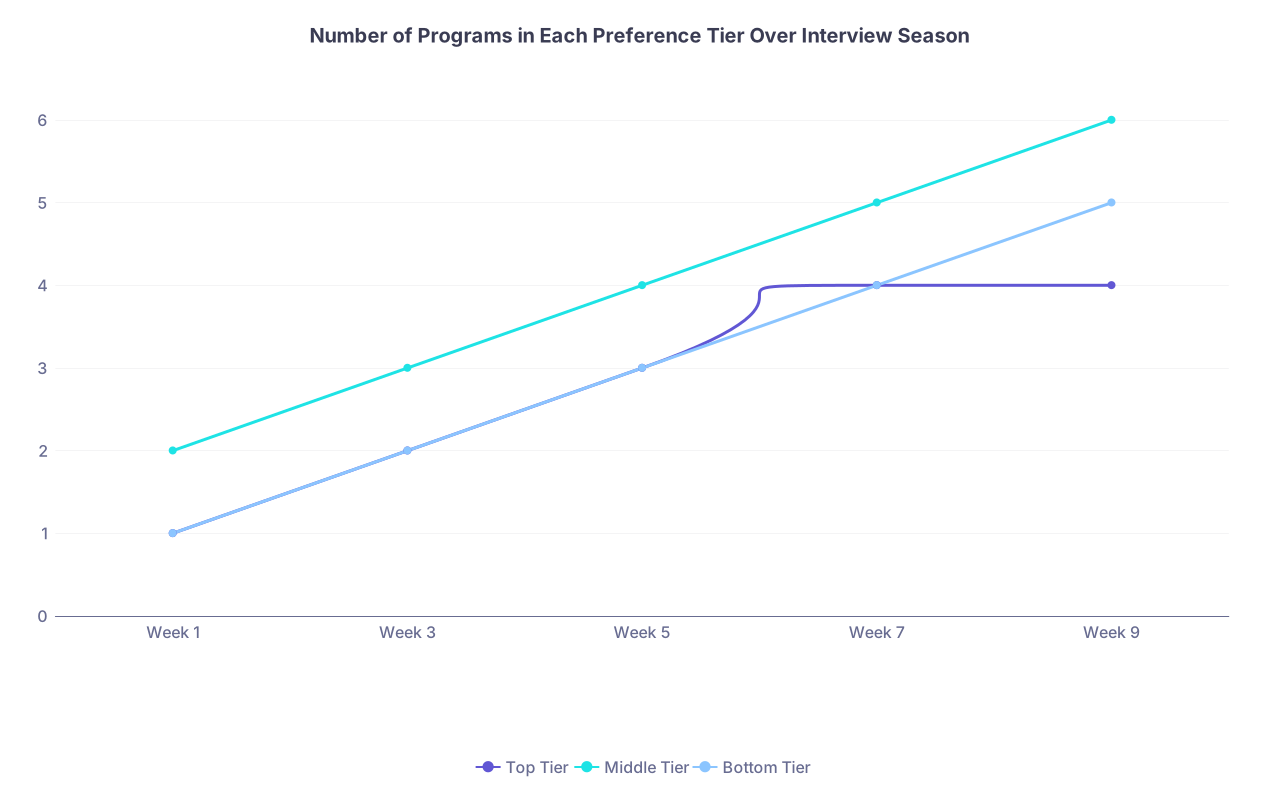
Visualizing Your Evolving List
A simple trend visualization can help you see stability vs chaos in your rankings over time.
| Category | Top Tier | Middle Tier | Bottom Tier |
|---|---|---|---|
| Week 1 | 1 | 2 | 1 |
| Week 3 | 2 | 3 | 2 |
| Week 5 | 3 | 4 | 3 |
| Week 7 | 4 | 5 | 4 |
| Week 9 | 4 | 6 | 5 |
If one program lives in your top 3 for weeks while others churn around it, that should carry real weight later.
Holiday Stretch: Mid‑Season Reset (Late December / Early January)
This is where many applicants burn out. You’re tired, interviews blur, and reflection gets sloppy. Do a deliberate reset.
One Long Session (1–2 hours)
At this point you should step back and look at the whole picture:
Print or export your current list.
Seriously—paper helps. Or at least a single on‑screen view of all programs with:- City
- Scores
- Provisional rank
- Brief pros/cons
Create three hard tiers:
- Tier 1: “I’d be happy to match here” (no more than ~5–7 if you have many interviews)
- Tier 2: “Acceptable but not ideal”
- Tier 3: “Only if needed to match”
Reality‑check Tier 1.
For each:- Could you realistically live in this city for 3–7 years?
- Do you trust the leadership? If the PD left, would the culture survive?
- Is the training strong enough that you won’t feel trapped later?
Write a short narrative paragraph for your top 5.
“I would rank X #1 because…”
The act of writing forces clarity. You’ll notice where you keep reaching for prestige language vs quality‑of‑life language vs specific training goals.
Late Interviews: Guard Against Recency Bias (January)
January interviews are dangerous. Everyone is slicker, you’re more comfortable, and it’s easy to over‑weight the last few places you see.
During Each Remaining Interview
At this point you should actively look for disconfirming evidence:
- You like the location? Probe harder on resident burnout and call.
- The PD is charismatic? Talk to juniors without faculty present.
- The facilities are beautiful? Ask how often you’re actually on that campus vs satellite sites.
Then:
- Force a same‑day comparison: “Would I actually put this above my current #1, or is it just new?”
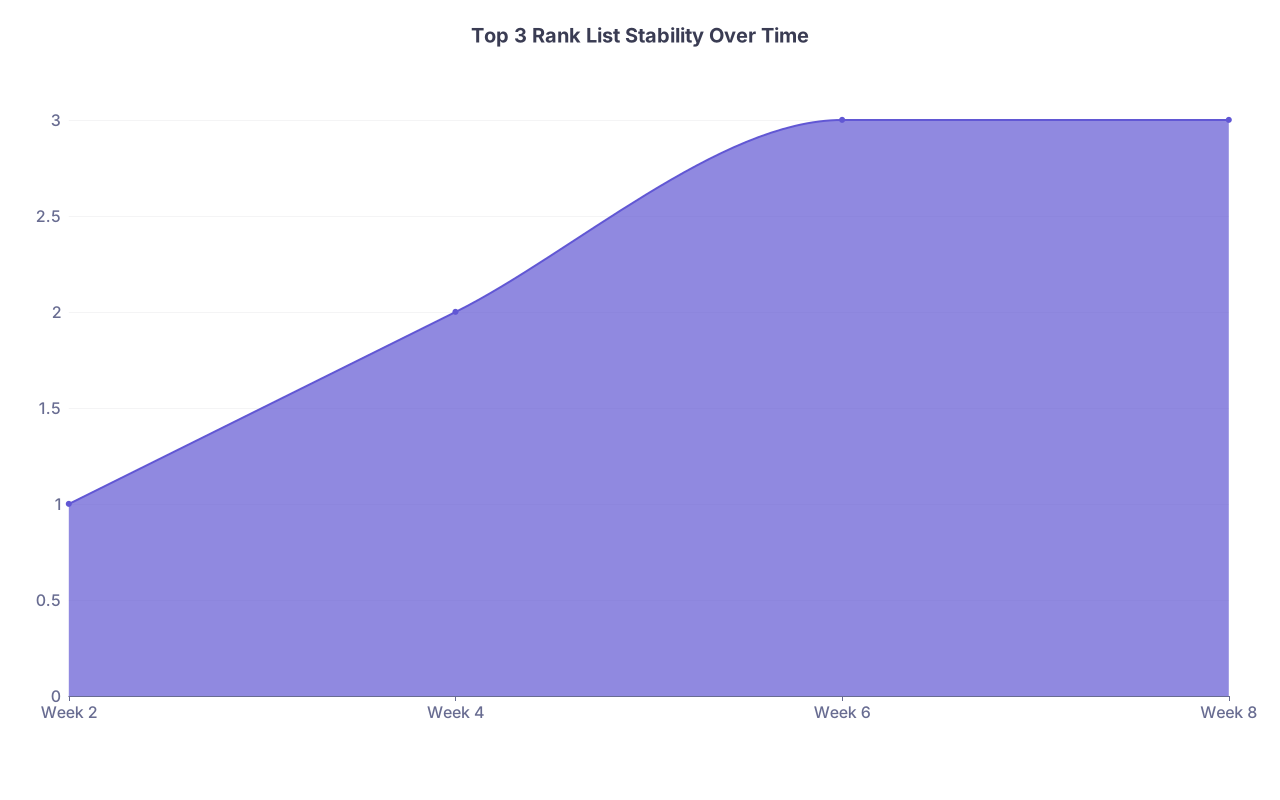
Weekly in January: Stability Check
Once a week, track how often your top 3 actually change:
| Category | Value |
|---|---|
| Week 2 | 1 |
| Week 4 | 2 |
| Week 6 | 3 |
| Week 8 | 3 |
- If you’re swapping #1 every single week, something’s off—either your priorities aren’t real, or you’re overreacting to minor differences.
- If your top 1–2 are stable but #3–6 churn, that’s normal.
Post‑Interview Season: Deep Reflection Month (The 4–6 Weeks Before Rank Deadline)
Now interviews are over. It gets quieter. This is when you do the serious work.
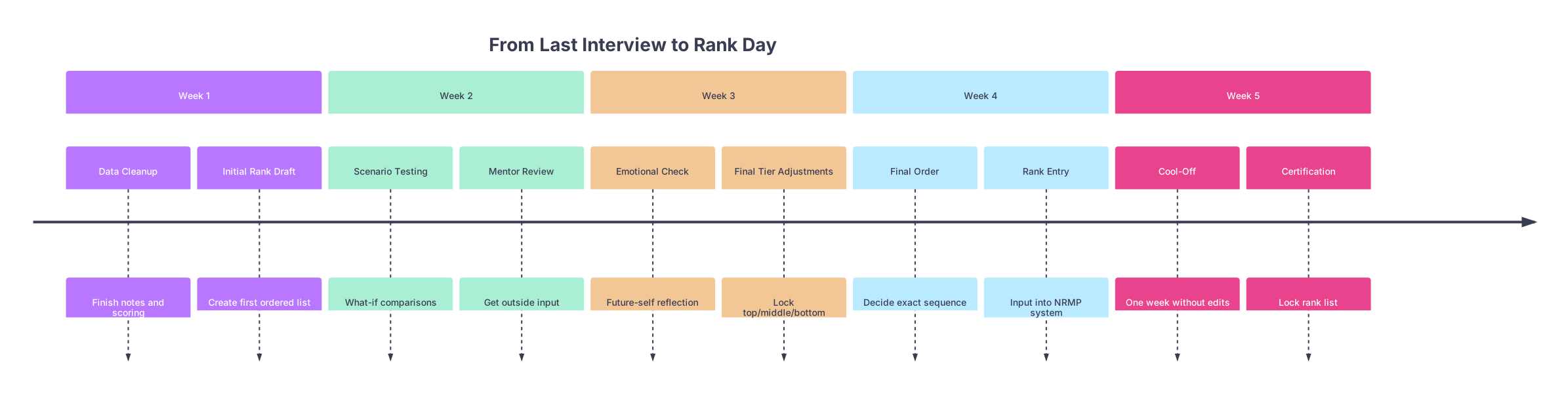
Here’s the overarching timeline:
| Period | Event |
|---|---|
| Week 1 - Data Cleanup | Finish notes and scoring |
| Week 1 - Initial Rank Draft | Create first ordered list |
| Week 2 - Scenario Testing | What-if comparisons |
| Week 2 - Mentor Review | Get outside input |
| Week 3 - Emotional Check | Future-self reflection |
| Week 3 - Final Tier Adjustments | Lock top/middle/bottom |
| Week 4 - Final Order | Decide exact sequence |
| Week 4 - Rank Entry | Input into NRMP system |
| Week 5 - Cool-Off | One week without edits |
| Week 5 - Certification | Lock rank list |
Week 1 After Last Interview: Data Cleanup and First Real Rank List
At this point you should:
Clean your data.
- Fill in any missing scores.
- Re‑read your same‑day notes. Fix anything too vague (“nice residents” becomes “chief pulled interns into discussion, good teaching vibe”).
Draft your first full ranked list in order, top to bottom. No ties. No tiers. Force it.
Check for obvious misalignment with your stated priorities.
- If you claimed “location > prestige,” but your top 3 are all far from support systems, ask yourself who you’re really ranking for.
Week 2: Scenario Testing and Outside Input
At this point you should stress‑test the list.
Run “phone call” scenarios.
Visualize:- Program A: “You matched here.”
- Program B: Same.
For each pair (A vs B), notice your immediate emotional reaction. Relief? Disappointment? That gut check matters.
Talk to 1–2 trusted mentors.
Give them:- Your goals (fellowship vs general practice, academic vs community, geographic constraints).
- Your top 5–7 with one‑sentence summaries.
Ask directly:
- “Given what I’ve told you, does this order make sense?”
- “Where do you think I’m lying to myself?”
Do not let mentors reorder your list based only on name recognition. Push them to be specific: “Why exactly do you think Program X is better for me?”
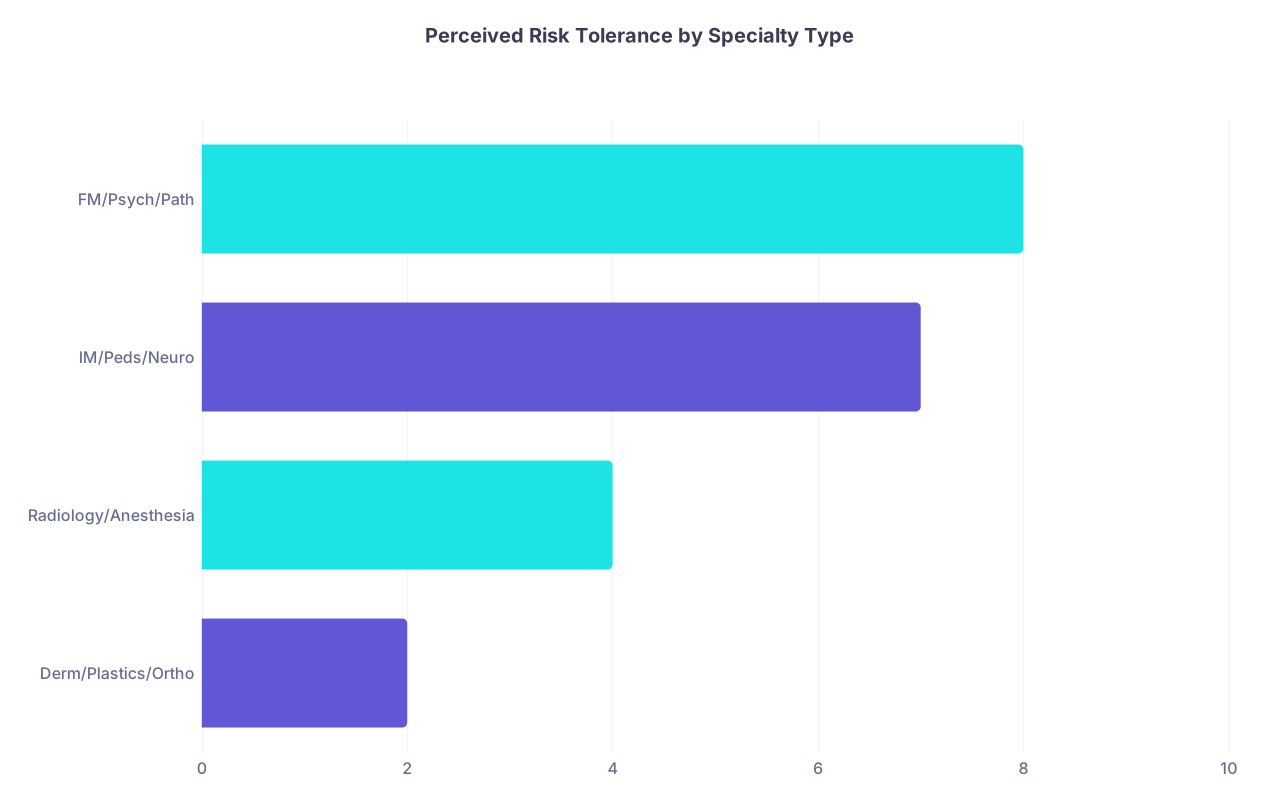
Specialty Competitiveness vs Rank Strategy
Your specialty’s competitiveness changes how aggressive you can be with your top ranks.
| Category | Value |
|---|---|
| Derm/Plastics/Ortho | 2 |
| Radiology/Anesthesia | 4 |
| IM/Peds/Neuro | 7 |
| FM/Psych/Path | 8 |
Scale here is 1 (very risk-averse) to 10 (can take more ranking risks).
- In extremely competitive specialties with limited interviews:
You lean conservative near the bottom—rank every program where you’d actually show up. - In broader match fields:
You can afford to drop programs that were truly toxic. Not just “meh,” but actively bad.
Week 3: Future‑Self Test and Hard Decisions
This is when you stop being “Applicant You” and try to think like “Intern You” and “PGY‑3 You.”
At this point you should:
Do the “Future Tuesday” exercise.
For your top 5 programs, imagine:- It’s a random Tuesday in January, PGY‑2.
- You’re on a busy rotation.
- You get home exhausted.
For each program, ask:
- Who are you coming home to? (Family nearby? Friends?)
- Can you walk outside and not hate the weather / commute / neighborhood?
- Do you trust your co‑residents to have your back?
If one program makes that future day feel lighter, that’s not fluff. That’s your life.
Revisit your red flags.
Go back to your notes:- “Residents looked terrified when PD spoke.”
- “Multiple people hinted at losing ACGME accreditation a few years ago.”
- “Call schedule ‘technically compliant’ but interns laughed when we asked about hours.”
Decide which red flags are:
- Fixable annoyances
- Serious quality‑of‑training issues
- Absolute deal‑breakers
Decide: Cut vs Keep Low.
- Cut completely: Programs where you’d feel unsafe, unsupported, or trapped.
- Keep low on list: Programs that are imperfect but would still give you solid training and a match.
If you’re in a position where cutting is too risky (few interviews, competitive specialty), at least clearly mark those “only if necessary” at the bottom of your list.
Week 4: Finalize the Order and Enter It
Now we move from reflection to action.
At this point you should:
- Lock your tiers first, order second.
- Tier 1 (happy)
- Tier 2 (acceptable)
- Tier 3 (only if needed)
You should not be sliding programs between tiers anymore without a very compelling reason.
Order within Tier 1 using your highest‑priority domain.
- If culture > everything: choose the place where residents looked most like the doctors you want to become.
- If fellowship placement is king: choose the place whose grads are consistently landing the spots you want.
- Ties go to your gut and your future Tuesday exercise.
Order Tiers 2 and 3 by “regret probability.”
Ask: “Where would I regret matching least if I couldn’t have a Tier 1 program?”Enter your list into NRMP (or specialty match system).
- Double‑check program codes.
- Confirm prelim / TY pairings are correct if required.
- Make sure you didn’t accidentally omit a program you meant to rank.
Week 5: Cool‑Off and Certification
This last week before Rank List Certification Day is not for major re‑architecting. It’s for making sure you’re not self‑sabotaging.
At this point you should:
Step away for 3–4 days.
Don’t touch the list. Don’t ask for more opinions. Let your brain settle.Do one final pass with three questions:
- Am I ranking programs in true preference order, not “where I think I’m most likely to match”? (Your list should always be in true preference order.)
- Are my top 3 places I’d be proud—and relieved—to land?
- Did I let anyone else’s ego (mentor, classmate, Reddit) hijack my top choices?
Certify the list.
Then stop. Obsessive tinkering in the last 12 hours rarely improves anything; it just feeds anxiety.
The 3 Things You Should Remember
- Build the system before you need it. Reflection templates, scoring, and scheduled post‑interview time turn chaos into usable data.
- Compare programs against each other, not in isolation. Forced A vs B decisions, weekly reviews, and stability checks keep recency bias in check.
- Rank by your real life, not your ego. Future‑self tests and honest red‑flag reviews will do more for your happiness than any brand‑name logo on your white coat.


