

It’s four weeks before rank list lock. You’ve done the interviews, you’ve smiled through the pre-interview dinners, you’ve nodded through the PD’s vision speech ten times.
Now you’re staring at a messy Google Sheet, a Notes app graveyard, and a rank list that keeps changing every 48 hours. You like different programs for totally different reasons. One has great teaching. Another is 20 minutes from your partner. Another felt… weird… but is name-brand shiny.
At this point, your brain starts lying to you. Recency bias, FOMO, panic. You need structure, not vibes.
This is where we turn the last four weeks into a timeline. Week by week, then day by day in the final stretch. By rank lock, you’ll have done a systematic, brutally honest review of every residency on your list.
Week 4: Turn Chaos Into A Comparable List
You are here: ~4 weeks before rank list lock. You’ve completed (almost) all interviews. You have impressions but no coherent framework.
Step 1 (Day 1–2): Finalize Your Program Universe
First, define the list you’re actually ranking. Stop letting “maybe I’ll add that prelim year in Alaska” live rent‑free in your head.
At this point you should:
- Open your master list (ERAS/Spreadsheet/Notion/whatever).
- Separate into:
- Categorical programs
- Advanced programs
- Prelim/TY years (if relevant)
- Remove:
- Places you know you won’t rank (toxic vibes, sketchy resident interactions, terrible location for your life).
- “Courtesy interviews” you took with no intention of going.
Do not keep programs “just in case” if you truly would rather go unmatched than train there. That’s not dramatic. That’s just understanding how the Match contract works.
You should end with a clean, final list of programs you’re at least theoretically willing to attend.
Step 2 (Day 2–3): Build a Standardized Comparison Sheet
Your brain cannot compare 15 programs using different notes and gut feelings. You need the same fields for every program.
Create a comparison sheet with 8–12 categories that actually matter to you, not to Reddit.
Example core categories:
- Training quality / reputation
- Fellowship or job placement
- Autonomy vs supervision
- Culture / resident happiness
- Location / cost of living
- Schedule / workload
- Support (mentorship, advising, wellness)
- Program stability / leadership
- Fit for your life (family, partner, support system)
- “Red flags” (binary: yes/no, with notes)
- Your overall gut rank (1–10)
Here’s a simple structure to model:
| Category | Description |
|---|---|
| Training Quality | Breadth, acuity, teaching strength |
| Culture / Vibes | Resident morale, PD style |
| Location / Lifestyle | City fit, commute, cost of living |
| Schedule / Workload | Hours, call, night float |
| Career Outcomes | Fellowship/jobs, alumni trajectory |
Rate each program relative to the others you interviewed, not in isolation. Use a simple scale (1–5 or 1–10), but keep it consistent.
Step 3 (Day 3–5): Reconstruct Each Program From Your Notes
At this point you should block 1–2 hours per day to systematically review 2–3 programs at a time, not all of them at once.
For each program:
- Pull:
- Your interview day notes
- Any “immediate post‑interview” ranking you wrote
- Program website / PDF
- WhatsApp/GroupMe impressions (with skepticism)
- Fill in every category in your sheet.
- Write one short paragraph:
“If I matched here, my life would probably look like X. Upsides: Y. Tradeoffs: Z.”
Do not skip this paragraph. It forces you to imagine real life, not brochure life.
By the end of Week 4, you should:
- Have a complete, standardized comparison sheet.
- Realize 1–2 programs have quietly moved up or down already, just from seeing them side‑by‑side.
Drop a quick sanity check visual if you like numbers:
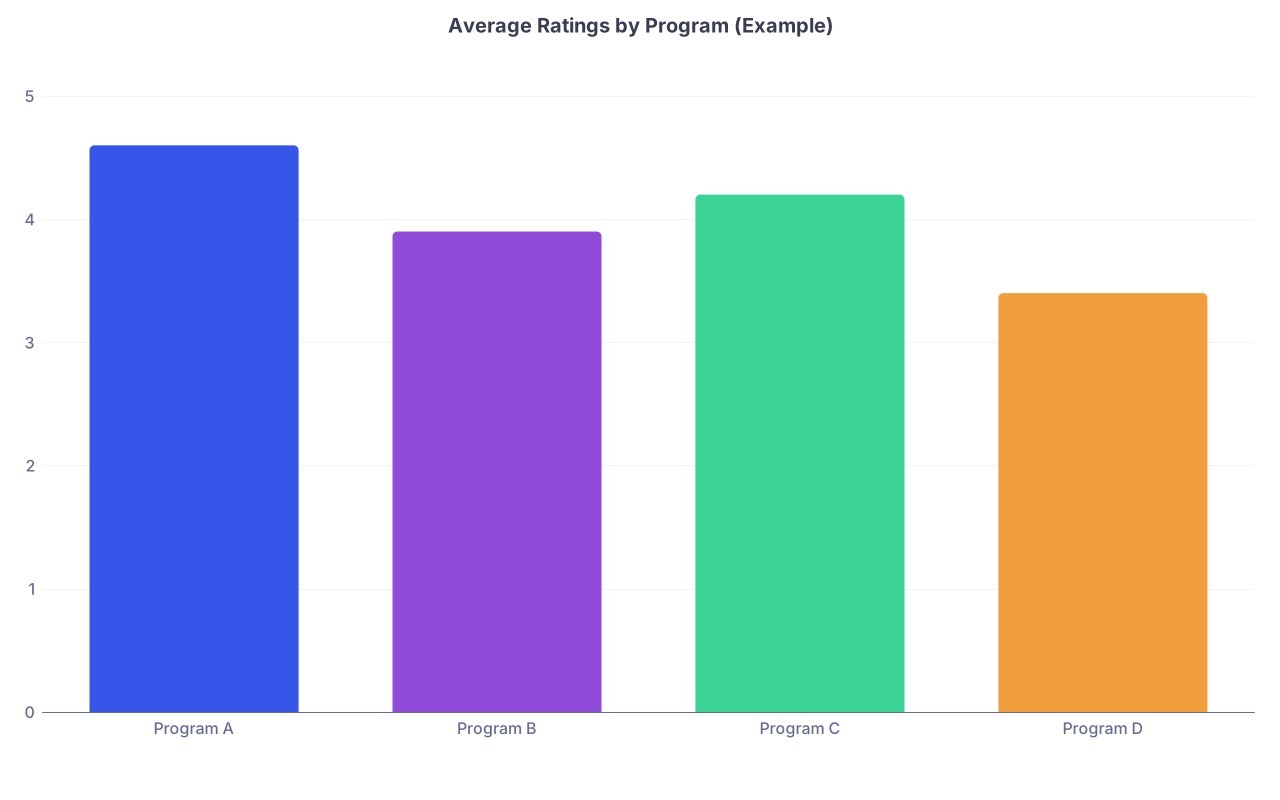
| Category | Value |
|---|---|
| Program A | 4.6 |
| Program B | 3.9 |
| Program C | 4.2 |
| Program D | 3.4 |
Week 3: Deep Dives + Reality Checks
You are here: ~3 weeks before lock. The list is cleaner, but some programs are still tied in your head.
This week is about breaking ties with real data and targeted questions, not endless rumination.
Early Week 3 (Day 1–3): Identify Your “Tiers”
At this point you should stop pretending all 12 programs are “kind of similar.”
Sort them into rough tiers based on your current comparison sheet:
- Tier 1: “I’d be excited to match here.”
- Tier 2: “I’d be fine/happy here.”
- Tier 3: “I’d accept this if needed, but it’s not ideal.”
That’s it. Three buckets.
Then within each tier, star:
- Any program with a clear red flag
- Any program where you realize, “I don’t actually know much about X (e.g., ICU training, clinic structure, maternity leave policy).”
Those starred programs are your research targets this week.
Mid Week 3 (Day 3–5): Focused Follow‑Up With Residents
This is where most applicants get lazy and later regret it. You can email residents. You already met them. This is normal.
For each uncertain program (especially Tier 1–2), at this point you should:
- Email 1–2 residents you connected with:
- Keep it short and direct.
- Ask 3–5 specific questions, not “What do you think of the program?”
- Example questions that actually differentiate:
- “How often do people truly get the fellowships they want from here in [your field]?”
- “Have there been recent big changes in leadership or curriculum? How did that affect residents?”
- “Is the culture more ‘family’ or more ‘work and go home’? How social are people realistically?”
- “On wards months, what’s a typical workweek in hours? What’s the worst week you’ve had?”
Use this to refine your sheet:
- Add a “Resident honesty score” (how transparent they seemed).
- Update categories: culture, workload, stability.
I’ve watched people move a program from #2 to #7 after one blunt resident phone call. This is the point: better now than on Match Day.
Late Week 3 (Day 5–7): Career Outcome Reality Check
You’re not just picking a three‑year experience. You’re picking your launchpad.
At this point you should:
- Look up:
- Recent fellowship match lists (if applicable)
- Where graduates work (community vs academic, geography)
- Any public Case Logs or volume metrics if surgical
- Ask:
- “If I wanted [your career goal], does this program realistically get me there without heroic effort?”
Do a quick side‑by‑side of your true top few:
| Program | Subspecialty Matches | Academic Job Placement | Geographic Spread |
|---|---|---|---|
| A | Strong | High | National |
| B | Moderate | Moderate | Regional |
| C | Limited | Low | Local |
By the end of Week 3, you should:
- Have true tiers that reflect both training and outcomes.
- Have knocked a couple of programs into lower tiers based on real data, not vibes.
Week 2: Lock Your Top 5–7, Then Stress About The Rest
You are here: ~2 weeks before lock. You’ve got data, tiers, and lingering anxiety.
This week’s job: stabilize the top of your list, where it really matters.
Early Week 2 (Day 1–2): Force‑Rank Your Top Tier
Stop calling three programs your “top choice.” That’s not how ranking works.
At this point you should:
Pull just your Tier 1 programs (usually 3–7).
For each, answer these five reality questions:
- If I matched here, would I be proud to tell people?
- How miserable would my worst rotation realistically be?
- What does my life outside the hospital look like here?
- Does this program consistently produce the kind of graduates I want to be?
- If this were my only match, would I be disappointed or relieved?
Then do one exercise that cuts through the noise:
- Imagine NRMP emails: “You matched at Program X.”
- Notice your first physical reaction: relief, hesitation, dread, excitement.
- Write that reaction down. Don’t overthink it.
This usually exposes the real #1 vs #2.
Mid Week 2 (Day 3–4): One‑Program‑Per‑Day Thought Experiment
At this point, pick one program per day (from your top 5–7) and run a “day in the life” through four lenses:
PGY‑1 worst day
- Post‑call, snowing, 5 admissions, pager exploding.
- Which program’s system, coworkers, and leadership do you trust to not break you?
PGY‑3 (or final‑year) best day
- You’re the senior running the team.
- Which place gives you the autonomy and confidence you want?
Life outside
- Where are you living? Can you afford it? Who’s nearby?
- 3 a.m. call: “Your parent is in the ICU back home.” How hard is it to get there?
Exit ramp
- Done with residency. What are your options?
- Is your CV strong, or did you have to DIY everything?
Write 3–5 bullet points for each of those per program. No novel. Just enough so you can read them side‑by‑side.
By now, your gut + your sheet should mostly agree on an order.
Late Week 2 (Day 5–7): Clean Up Middle and Lower Tiers
Do not spend 20 hours debating your #10 vs #11 in a 12‑program list. The match algorithm favors your true preferences, and programs further down are insurance.
At this point you should:
- Order middle‑tier programs based on:
- Least compromise on:
- Training quality
- Location
- Culture
- Least compromise on:
- Push any program with:
- Serious red flags
- Clear dealbreakers for your life
toward the bottom.
You may need one more visual to feel calmer:
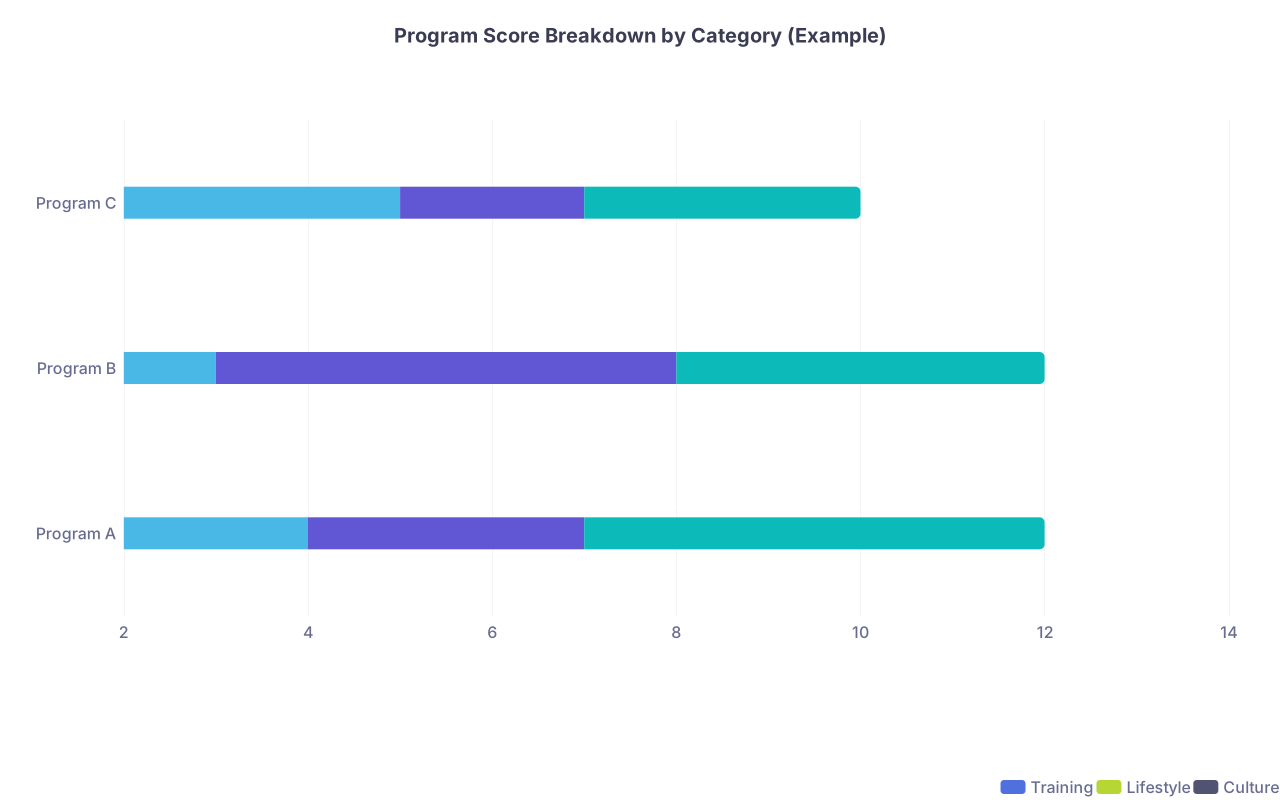
| Category | Training | Lifestyle | Culture |
|---|---|---|---|
| Program A | 4 | 3 | 5 |
| Program B | 3 | 5 | 4 |
| Program C | 5 | 2 | 3 |
By the end of Week 2, your top 5–7 should be in a tentative but defensible order.
Week 1: Final Pass, Red Flag Audit, and Emotional Check
You are here: Rank list locks in under 7 days. This week is about reducing regret later, not inventing new anxiety.
Day 1–2: The Red Flag Audit
At this point you should go line‑by‑line down your entire list and ask:
- Did I hear or see:
- Consistent resident burnout?
- Turnover in PD or chair?
- Major funding/hospital instability?
- Open conflict between faculty and residents?
- Serious issues around support for parents, visas, or diversity?
For each program with a yes:
- Move it to the very bottom section unless:
- You’re in a specialty so competitive that any spot is better than no spot for you, and you’ve thought about that consciously.
If a program has enough red flags that you’d be devastated to match there, unrank it. Leaving it off is the only way to guarantee you won’t match there.
Day 3: Partner/Family Alignment (If Relevant)
If you have a partner or dependents and you haven’t fully brought them into the ranking process, do it now. Late is better than never.
At this point you should:
- Show them:
- Your top 3–5 programs
- Your notes about location, schedule, support
- Ask them honestly:
- “Can you see us living here?”
- “Is there any place you’d really struggle with?”
You don’t have to re‑engineer your whole list, but ignoring their reality is how resentment builds later.
Day 4: Program Re‑Check (Optional, Targeted)
You do not need to email every PD or coordinator again. But if something critical is unresolved (e.g., new baby and need parental leave policy specifics, visa concerns), now is your last reasonable window.
Keep it:
- Short
- Specific
- Professional
If their response is dismissive or vague about something important to you, that’s real data. Adjust your list accordingly.
Day 5–6: The 24‑Hour Shuffle Rule
This is where people blow up a good list.
At this point you should:
- Create what you think is your final rank order.
- Save it. Screenshot it.
- Walk away for 24 hours.
No editing. No refreshing Reddit. No crowd‑sourcing on group chats.
After 24 hours:
- Read your list from top to bottom.
- Notice if any line gives you a physical “That doesn’t feel right.”
If you feel a mismatch between your sheet and your gut:
- Make one deliberate round of changes.
- Write down why:
- “Moved Program C above B because being near family trumps reputation for me.”
- “Dropped Program F lower; resident conversations suggested serious burnout.”
This written justification is what you’ll look back on if you have regrets later. It’s also a good check that you’re not just panic‑editing.
Final 48 Hours: Lock It Without Losing Your Mind
You are here: 1–2 days before rank list certification. This is execution, not ideation.
Step 1: Confirm All Data Is Correct
At this point you should:
- Log into NRMP and/or SF Match (depending on specialty).
- Verify:
- Every program code matches the correct program name/location.
- No duplicates.
- No missing prelim/TY if you need one.
- Cross‑check with your own spreadsheet.
This is where a simple flow view helps:

| Step | Description |
|---|---|
| Step 1 | Review Spreadsheet |
| Step 2 | Build Draft Rank List |
| Step 3 | 24-Hour Pause |
| Step 4 | Final Adjustments |
| Step 5 | Verify Program Codes |
| Step 6 | Certify Rank List |
| Step 7 | Save Confirmation Screenshot |
Step 2: Final Gut Check Visualization
Look at only your top 3. Ask yourself:
- “If I matched at my #3 instead of #1, would I feel:
- Crushed?
- Disappointed but okay?
- Totally fine?”
If you’d be miserable at your #1 outcome compared to #2, your list is lying. Fix it now.
If the top 3 all feel like “I could have a good life here,” you’re in solid shape.
Step 3: Certify, Save, Stop
When you’re ready:
- Certify your rank list.
- Take:
- Screenshot of the “certified” screen.
- Screenshot or PDF of the full list.
- Save it somewhere obvious (email to yourself or cloud drive).
Then stop. Don’t recertify 10 times. Don’t obsess over tiny differences at the bottom.
If you want one last mental anchor, imagine the whole year:
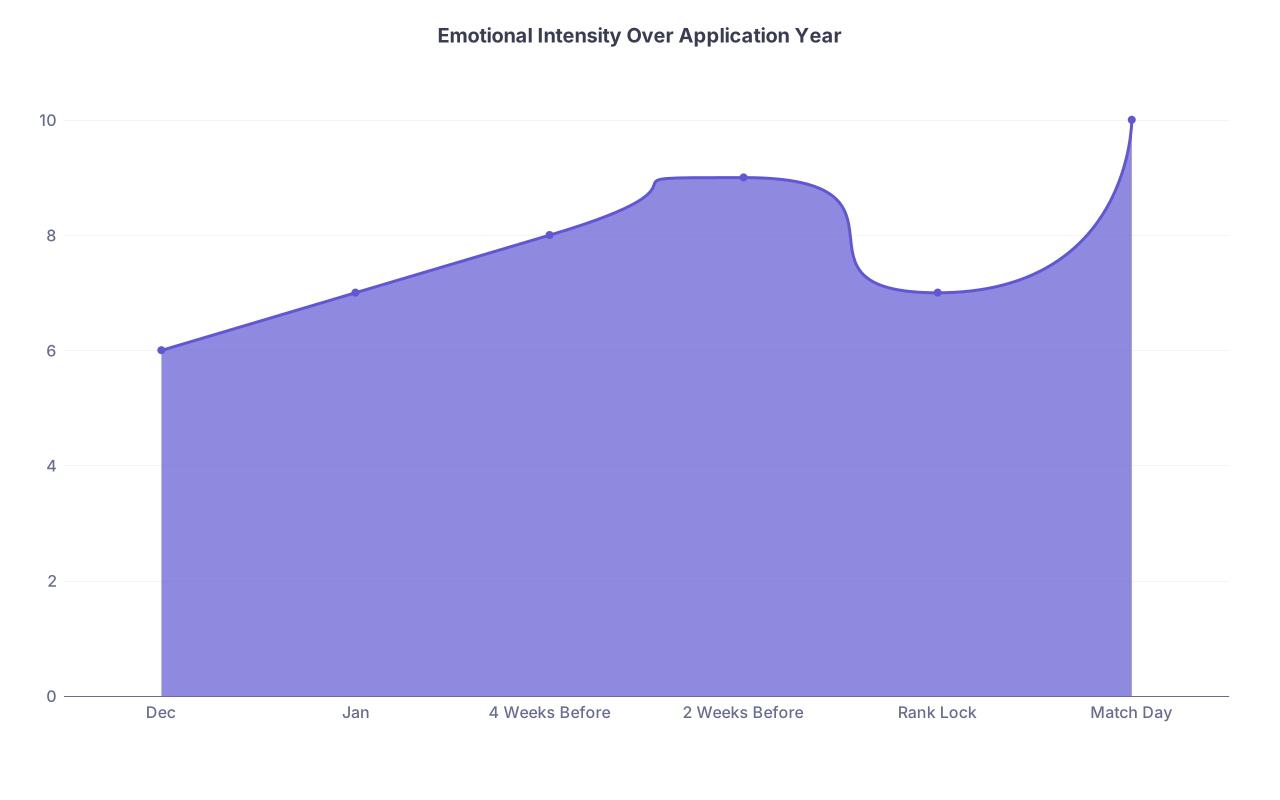
| Category | Value |
|---|---|
| Dec | 6 |
| Jan | 7 |
| 4 Weeks Before | 8 |
| 2 Weeks Before | 9 |
| Rank Lock | 7 |
| Match Day | 10 |
The spike is normal. You’re not doing this wrong because you’re stressed.
Key Takeaways
- Four weeks out, your job is structure, not vibes: standardize your comparison, tier your programs, and systematically fill the gaps with targeted questions.
- The top of your list deserves deep thought; the bottom does not. Focus your energy on your top 5–7 and on eliminating true “never” programs.
- In the last week, audit for red flags, align with your real life, lock the list once, and walk away. A deliberate, documented decision beats last‑minute panic every time.


