

The most dangerous residency filter isn’t Step score, prestige, or program size. It’s location—when you use it as your only gatekeeper.
If you’re building your rank list by first drawing a circle on a map and then forcing everything to fit inside it, you’re playing residency roulette. And you’re stacking the odds against yourself.
Let me be blunt: “I’m only ranking programs in X city/state” is one of the most common ways smart applicants quietly sabotage their Match. I’ve seen people with solid applications go unmatched because they decided they’d “rather SOAP than move.” Some of them did, in fact, SOAP. Into places and specialties they absolutely did not want.
You can—and should—care about location. But if you let geography be your single filter, you’re making a high‑risk bet on a process that already has more randomness than it should.
Let’s unpack the specific ways this shortcut backfires and how to protect yourself without signing up to be miserable in the middle of nowhere.
The Seductive Myth: “If I Love the City, I’ll Love the Program”
You’ve heard this in the interview trail chatter:
- “I’m only ranking big coastal cities.”
- “I won’t be happy outside driving distance of my family.”
- “I could never live in the Midwest/the South/the Northeast/etc.”
I’ve heard people say these exact lines in pre‑interview breakfasts and post‑interview bars. And I’ve watched some of them cry on Match Day.
The core mistake: assuming personal happiness = liking the city and that liking the city = liking the residency. Those are completely different variables.
You’re not moving somewhere to be a barista with a flexible schedule. You’re signing up for 60–80 hr weeks, variable nights, and an emotional blender of death certificates, codes, consults, and scut.
Here’s what actually matters more than ZIP code, and too many people ignore:
- Call structure and true culture of coverage
- How they treat residents who struggle or fall behind
- Faculty accessibility and whether anyone actually teaches
- Fellow vs resident priority in procedures and cases
- How many grads pass boards and get the fellowships/jobs they want
If you prioritize “cool city” over these, you’re doing residency like Instagram: filtered, curated, and detached from reality.
Why Location-Only Filtering Is So Dangerous
Using geography as a single hard filter creates a few specific, predictable problems. None of them are subtle.
1. You Shrink Your Options to an Unsafe Number
Many applicants quietly commit to a geographic constraint that radically shrinks their list:
- “Only within 2 hours of my partner”
- “Only on the West Coast”
- “Only in [one metro area]”
On paper, that still looks like “a decent number of programs.” In real life, it often turns into an unsafe rank list.
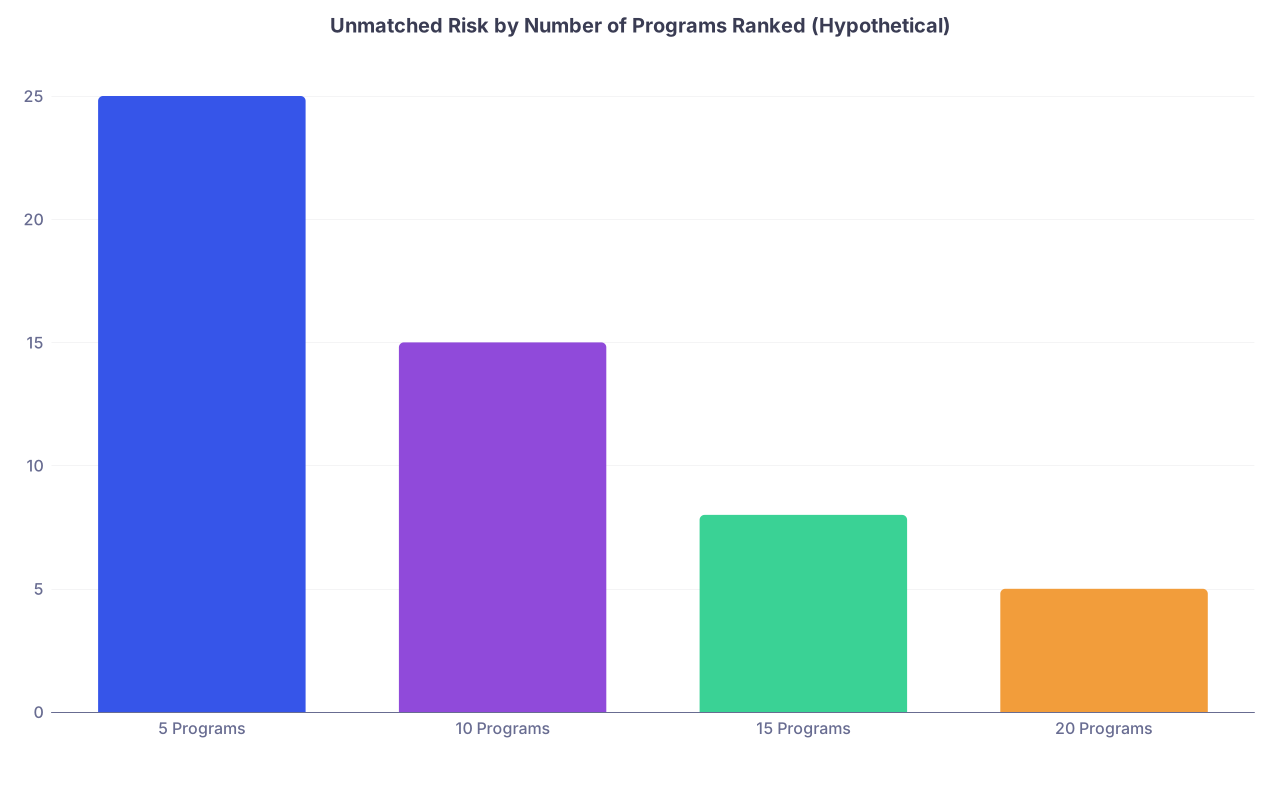
| Category | Value |
|---|---|
| 5 Programs | 25 |
| 10 Programs | 15 |
| 15 Programs | 8 |
| 20 Programs | 5 |
You do not control:
- How many of those programs are actually IMG‑heavy vs US‑grad heavy
- How they felt about your specific interview performance
- How many away rotators they decided to favor this year
- Whether they had a weird funding change or faculty turnover
- How many couples are fighting for the same limited local spots
But you still eat the risk.
If you’re not ranking enough total programs because of location rules, you’re gambling your career timeline on a pretty small sample size.
2. You Ignore Program Fit and Training Quality
I’ve watched people rank:
- A malignant, under‑resourced program in a glamorous city
over - A supportive, well‑run program in an “uncool” region
Their logic, verbatim: “I just can’t see myself living there.”
Here’s what they often can’t see—until it’s too late:
- Being screamed at on rounds in a “top” coastal academic center
- Being blocked out of procedures by five layers of fellows
- Being on constant short call with no backup and no “off” culture
- Having PDs who don’t answer emails or advocate for you, ever
Meanwhile, their friend at the “middle of nowhere” program:
- Has attendings who know their kid’s name
- Logs more procedures by PGY2 than some PGY4s elsewhere
- Gets strong letters that actually open doors for fellowship
The mistake: assuming “good life in city = good training” and “less glamorous area = bad training.” That’s lazy thinking, and residency will punish lazy thinking.
The False Safety of “I Can Always SOAP”
This one worries me the most.
I’ve heard graduating students literally say: “Worst case, I don’t match and I’ll SOAP into something nearby.” Like SOAP is a comfortable plan B.
SOAP is not a backup strategy. SOAP is triage.

Here’s what you’re actually signing up for if you lean on SOAP because you filtered too hard by location:
- Zero control over which programs will be available
- Limited specialties, often not your original choice
- High‑stress, rapid‑fire decisions under a brutal time crunch
- Programs that may be unfilled for very real reasons: malignant culture, systemic disorganization, geographic isolation with poor support
“I’ll just SOAP locally” is fantasy. You have no idea which local programs will be in SOAP. Many years, none are.
Building a weak initial rank list and mentally leaning on SOAP is like planning to skip studying because “I can always remediate.”
You might pass the remediation. But it’s going to hurt more than you think.
The Hidden Problem: You’re Bad at Predicting Where You’ll Be Happy
Everyone thinks they’re an expert at their future happiness. Most are not.
Here’s what I’ve seen countless times:
- The “I’m a big city person” applicant who ends up loving a mid‑sized college town with great co‑residents and normal parking.
- The “I could never live somewhere cold” applicant who ends up fine because they’re inside the hospital 80% of the time anyway.
- The “my partner could never leave this city” couple who discover that being together in a cheaper, smaller city with less traffic actually improves their life.
The reality: your day‑to‑day quality of life will be shaped far more by:
- Your co‑residents’ personalities, support, and work ethic
- The program’s expectations and boundaries
- Commute time and call schedule
- Cost of living vs your salary
- Whether you feel respected and protected
People overestimate:
- The importance of the local restaurant scene
- How often they’ll use the city’s cultural features during residency
- How devastating “geographic distance” really is in the age of FaceTime and cheap flights
And they underestimate:
- The damage of chronic disrespect and fear at work
- How much easier life is when you’re not financially drowning
- The relief of having a PD you actually trust
You’re probably worse than you think at predicting which combination of factors will matter most 18 months from now. Don’t build a rigid geography wall on top of that uncertainty.
Better Than “Only This City”: Smarter Use of Location
Location does matter. Pretending it doesn’t is just as dumb as worshipping it. The trick is to use it as one variable, not the only one.
Here’s a safer framing: use location as a tiered preference, not a hard exclusion.

| Step | Description |
|---|---|
| Step 1 | Start Rank List |
| Step 2 | Identify Safety Range of Total Programs |
| Step 3 | Group Programs by Location Preference Tiers |
| Step 4 | Within Each Tier, Rank by Fit & Training Quality |
| Step 5 | Re-check That Total Ranked > Personal Safety Threshold |
Think more like this:
- Tier 1: Places you’d be thrilled about (city + program fit)
- Tier 2: Places you’d be fine with (some tradeoffs, but solid training)
- Tier 3: Places that aren’t ideal, but you can tolerate for 3–5 years with clear training benefit
Then rank within each tier by training and culture, not just map pins.
You’re balancing three things:
- Geographic preference
- Training quality and outcomes
- Safety in total number of realistic programs ranked
Cut out any one of those, and you’re back in high‑risk territory.
Concrete Red Flags in Your Location Strategy
If you see yourself in a few of these, you’re drifting into danger.
| Scenario | Risk Level |
|---|---|
| Only 1 metro area ranked | Very High |
| Only 1 state/region ranked | High |
| < 10 total programs ranked in a competitive specialty | Very High |
| Refusing strong-fit programs due to “not my vibe” city | Medium–High |
| Assuming SOAP will fix a bad rank list | Extreme |
Translation:
- “I’m only ranking NYC/LA/SF/Chicago/Boston” = very high risk unless your application is truly exceptional and you’re in a less competitive field.
- “I only ranked 7 EM programs in one state” = I’ve seen this exact person not match.
- “I ranked 12 IM programs, but 10 are in the same huge city and are all hyper‑competitive university places” = not as safe as you think.
If your answer to “How many different cities/states are on your list?” is embarrassingly small, don’t ignore that.
How to Use Location Without Letting It Own You
Here’s a safer, more adult way to integrate geography into your rank list without making the classic “single filter” mistake.
1. Set a Minimum Safety Number First
Before you obsess over maps, decide:
- Given your specialty and competitiveness, what’s a realistic, safe minimum number of programs to rank?
For example (these are illustrative, not official cutoffs):
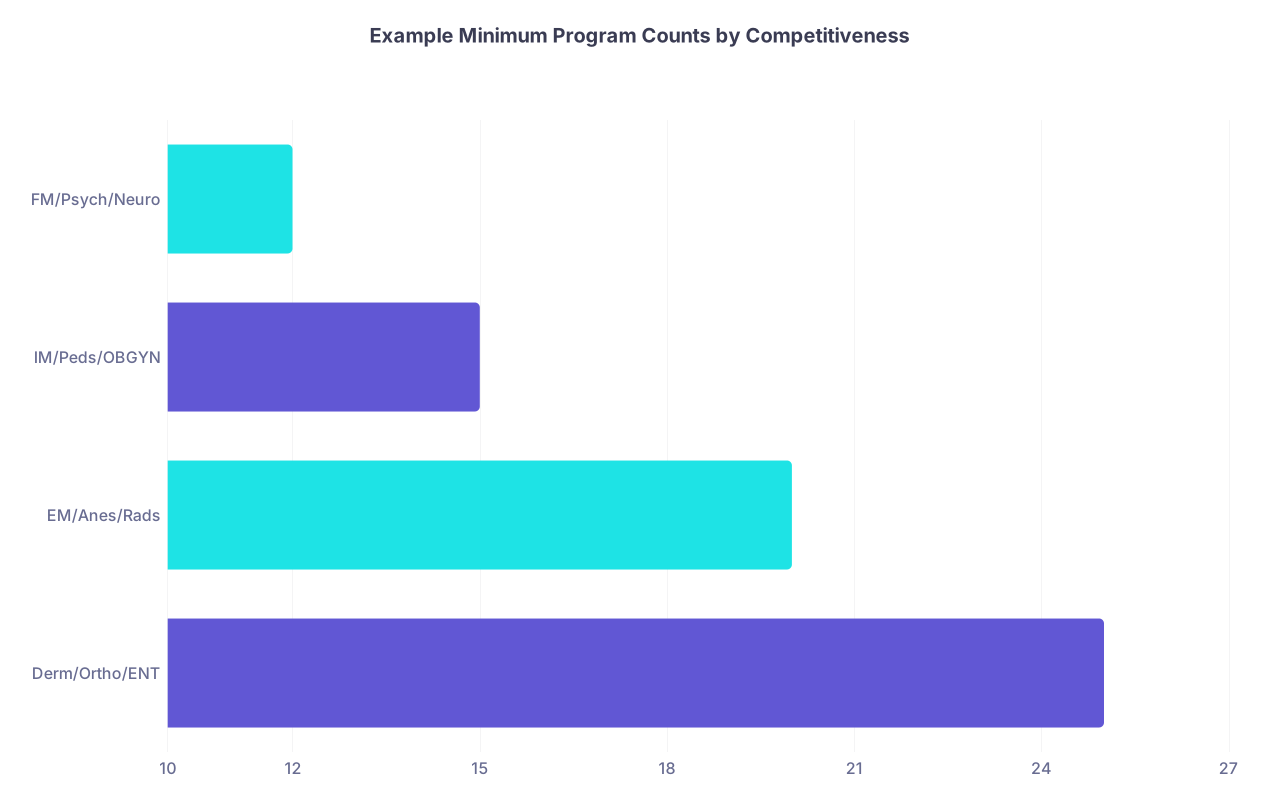
| Category | Value |
|---|---|
| Derm/Ortho/ENT | 25 |
| EM/Anes/Rads | 20 |
| IM/Peds/OBGYN | 15 |
| FM/Psych/Neuro | 12 |
If your location preferences drop you below a safe threshold, that’s your signal: you’re not choosing a lifestyle; you’re choosing risk.
2. Decide What Tradeoffs You’ll Accept for 3 Years, Not 30
You’re not choosing where you’ll die. You’re choosing where you’ll train.
Ask yourself:
- Would I tolerate a smaller/less “exciting” city if the program culture is excellent and training is strong?
- Would I tolerate being 2–4 hours’ flight from family if it dramatically reduces my chances of going unmatched?
- Would I tolerate winter/summer I’m not excited about if it means being at a program that reliably gets people where I want to be next?
You don’t have to love the city. You have to be able to function there without being miserable. That’s a lower bar than some of you are applying.
Special Cases: When Location Matters More (And How Not to Ruin It)
There are real reasons to weight location more heavily:
- Partner’s job or visa limitations
- Child custody arrangements
- Caring for a sick or disabled family member
- Personal medical needs tied to specific centers
Those are legitimate. They still don’t justify being reckless with your rank list.
For these cases:
- Document constraints clearly in your own notes. Know what’s preference vs what’s truly non‑negotiable.
- Use tiers within your realistic geographic zone. Don’t treat every local program as equal just because they share a zip code.
- Stretch the radius where possible. Sometimes “same state” or “short flight” is good enough, even if it’s not ideal.
- Accept you might need to widen scope or adjust specialty competitiveness. If you must stay very local, you may need to be more flexible with specialty or type of program.
The worst mistake here is pretending you have no constraints, then secretly building a handcuffed list around them while telling yourself, “It’ll be fine.” Be honest—with yourself first.
A Simple Sanity Check Before You Certify Your Rank List
Before you click “Certify,” ask yourself three blunt questions:
- If I removed my location constraint, which programs that I like would I add back to this list?
- If I go unmatched, will I honestly believe I made a rational tradeoff—or will I know deep down I gambled on staying in one place?
- Have I mistaken familiarity and fear of change for “I could never be happy anywhere else”?
If the honest answers make you uncomfortable, good. That discomfort is cheaper now than after Match Day.

Don’t Confuse Comfort With Safety
Your brain wants the illusion of control. “I’ll only rank where I really want to live” sounds like control. It feels empowering.
It’s not. If you’re not careful, it’s just narrowing the firing squad.
A protective strategy in the Match is not about getting everything you want. It’s about:
- Avoiding obvious, preventable ways to go unmatched
- Maximizing your chance of solid training
- Giving your future self options, not regrets
Using location as a preference knob? Smart.
Using location as your only filter? That’s how people with decent CVs end up in the SOAP queue refreshing their email with shaking hands.
FAQ (Exactly 5 Questions)
1. Is it ever reasonable to rank only programs in one city?
It’s rarely safe. The only time it makes sense is when you have very strong, non‑negotiable reasons (legal, medical, family) that physically anchor you there—and you fully accept a higher risk of not matching. Even then, you should aggressively apply and rank as many viable programs in that area as you can, and be brutally honest about your competitiveness and the specialty’s competitiveness. For most people, “I like this city” is not a sufficient reason to take that risk.
2. How many programs should I rank to feel “safe” if I’m geographically limiting myself?
There’s no universal number, but if you’re in a moderately or highly competitive specialty and your total ranked programs are in the single digits because of geography, you’re in a danger zone. You should be thinking in terms of 15–20+ for many specialties, and more for the very competitive ones, especially if you’re not a top‑tier applicant. If your geography filter pushes you well below those ranges, you’re trading safety for location.
3. What if I know I’ll be miserable outside certain regions (e.g., hate cold, hate rural, etc.)?
Be careful—many residents discover that their actual happiness depends far more on program culture, schedule, and cost of living than on weather or city size. You don’t have to pretend you’ll love everywhere, but you should distinguish between “mild discomfort” and “truly intolerable.” You can tolerate a less‑than‑ideal place for 3 years to avoid going unmatched or ending up in a malignant program. Misery from climate or nightlife is often less severe than misery from toxic training.
4. How do I talk about location preferences in my interviews without hurting myself?
Don’t announce rigid geography ultimatums. Avoid saying things like “I’m only ranking this city” or “I have no interest in moving outside [region].” Programs want residents who actually want to be there, but they also know people’s lives are complicated. You can say you have strong ties to an area or that you’re especially interested in training in a certain region, but keep it positive and avoid sounding like you’d rather be somewhere else if not for constraints.
5. I already interviewed only in one region. Is it too late to fix this?
You can’t change where you interviewed, but you can change how you rank. If you restricted your interview applications by geography, your main lever now is to avoid further narrowing. Rank as many of the programs where you interviewed as possible, in honest order of fit and training quality—not just “coolest city first.” Don’t leave reasonable programs off your list just because they’re less exciting geographically. At this stage, your job is to protect yourself from going unmatched, not to curate a perfect Instagram map.
Key points:
- Location should be a preference, not a single, hard filter—using it that way is one of the fastest routes to an unsafe rank list.
- Training quality, program culture, and total number of programs ranked will matter more to your future than the glamor of the city.


