

Ranking residency programs without prioritizing culture fit is how strong applicants end up miserable, burned out, or transferring by December of PGY‑1.
You are not just matching to a name. You are matching to a system, a micro‑culture, a 3–7 year ecosystem that will shape who you become as a physician and as a human. If you ignore that, you are gambling with your future sanity.
Let me be blunt:
The residents who are most unhappy PGY‑1 are usually not “at a bad program.” They are at the wrong program for them.
Let’s make sure that is not you.
The Most Common Rank List Culture Mistakes
You will hear a lot of noise right now:
- “You have to rank the biggest name first.”
- “You cannot pass up a university program.”
- “Everyone wants that program, just rank it #1 if you get it.”
- “You can do anything from here.”
These lines are almost always spoken by people who will not be staying up all night with that call schedule, or dealing with that toxic fellow, or getting yelled at by that PD.
Here are the core mistakes I see over and over.
1. Confusing Prestige With Fit
This is the classic trap.
You interview at a “Top 10” program. The residents seem exhausted, no one smiles, you hear hints of malignant behavior, but the brand is huge. They send people to elite fellowships. The PD says, “You will have no trouble matching anywhere from here.”
So you swallow your doubt and rank them first. Because how can you not?
The problem:
- Fellowship outcomes and research output do not protect you from:
- Constant humiliation on rounds
- Unsafe workloads
- Chronic understaffing
- Administration that treats residents as units of labor, not humans
You will not care that your program is ranked #12 nationally when you are on your fourth 28‑hour call in 10 days and no one has your back.
2. Ignoring Red Flags Because “Every Program Has Issues”
Yes, every program has issues. That does not mean all issues are equal.
Some examples I have heard students brush off:
- “The PD left suddenly mid‑year but they say things are ‘stable’ now.”
- “Residents seemed hesitant to talk when faculty joined the Zoom.”
- “They joked that the q3 28‑hour calls ‘make you strong.’”
- “Everyone insisted it’s a ‘family’ but no one could describe concrete support.”
These are not small quirks. They are early warning signs.
Often:
- Sudden leadership turnover = deeper structural problems
- Residents who only speak freely once faculty leave = fear culture
- Bragging about brutal schedules = normalized abuse
- Vague “we’re a family” talk without specifics = marketing script, not reality
If your gut tightened even a little, pay attention. Dismissing that as “I’m overreacting” is how you end up trapped.
3. Letting Other People’s Priorities Override Your Own
Here is the behind‑the‑scenes conversation I hear constantly:
- Student: “I actually liked the smaller community program more. The residents seemed happy. But my advisor says the big academic place opens more doors.”
- Me: “What do you want long‑term?”
- Student: “I’m not sure. Maybe fellowship. Maybe not. I want to be reasonably happy.”
- Me: “Then why are you about to commit 3+ years of your life to a place that already feels wrong to you?”
The mistake is outsourcing your rank list to:
- Advisors who have not set foot in those hospitals in years
- Classmates chasing prestige to patch their own insecurities
- Family who equate brand name with success and know nothing about GME
You are the one who has to show up at 4:30 a.m. on ICU days.
Not them.
What “Culture Fit” Actually Means (And What It Does Not)
People throw around “culture fit” like it is a vibe check or a personality match. That is lazy thinking. You need to be more precise.
Culture Fit IS:
How people treat each other when things go wrong
- Are interns blamed or protected?
- Do attendings teach when mistakes happen, or humiliate?
How power is used
- Can residents speak up about safety?
- Do leadership and chiefs actually listen and act?
How workload and wellness are balanced
- Not the wellness presentation. The real call schedule, backup coverage, and response when people are overwhelmed.
Values in action
- If they say “education first,” do you actually get protected didactics or are they always canceled “for patient care”?
- If they claim “diversity is our strength,” are underrepresented residents thriving or isolated and leaving?
Culture Fit is NOT:
- Whether people laughed at your jokes on interview day
- Whether the city has nicer restaurants
- Whether the program had a glossy PowerPoint
- Whether they said “we’re a family” fifteen times
You are not choosing a friend group. You are choosing:
- Your labor conditions
- Your psychological environment
- Your role models
- Your safety net (or lack of one)
The Hidden Costs of a Bad Culture Fit PGY‑1
This is the part students underestimate badly. The downside is not just “I will be a little less happy.”
Here is what a serious culture mismatch actually looks like.
1. Faster Burnout and Real Health Consequences
Bad fit exaggerates every stressor:
- You work the same hours, but they feel heavier
- You recover more slowly
- You ruminate more on every interaction
Over months, that turns into:
- Sleep disruption that never normalizes
- Constant anxiety about going to work
- Emotional numbing or irritability with patients and staff
- Somatic complaints: GI issues, headaches, chest tightness
This is how residents end up on leave. Or on antidepressants they never needed before. Or quietly thinking about quitting medicine entirely.
2. Erosion of Confidence
At supportive programs, PGY‑1s make mistakes, learn, and grow. At misaligned or toxic ones:
- Feedback is vague or purely negative
- No one explicitly teaches; they just criticize
- You get compared constantly to “that one superstar resident”
Over time you start believing:
- “Maybe I am not cut out for this specialty.”
- “Everyone else is coping better than I am.”
- “I am always behind.”
You can be an objectively strong, capable intern and still feel like an impostor if the culture around you is harsh, competitive, or dismissive.
3. Limited Bandwidth for Growth Opportunities
Yes, the “top” program may have:
- Incredible research
- Complex pathology
- Famous faculty
None of that matters if you are too exhausted or demoralized to take advantage of it.
I have seen residents at supposedly “less competitive” programs:
- Publish more because they had mentors who cared
- Match elite fellowships because they had time and backing
- Grow more as clinicians because they had space to ask questions
While some of their peers at prestigious but malignant programs were:
- Barely keeping up with scut
- Avoiding extra commitments to protect their sanity
- Counting days to graduation
Culture determines what you actually have the capacity to do.
How to Evaluate Program Culture Without Fooling Yourself
You cannot rely on the sales pitch. You need to interrogate reality.
Here are specific tactics that work, if you actually use them.
1. Watch for Micro‑behaviors on Interview Day
The biggest mistake: listening only to the words.
Pay attention to:
How residents talk about each other
- Do they praise colleagues freely?
- Do they roll their eyes or throw others under the bus subtly?
How faculty talk about residents
- Are they proud? Protective?
- Or do they make jokes at residents’ expense?
How people talk about other hospitals / services
- Constant blame and contempt → global culture of disrespect
- Nuanced, fair comments → emotional maturity
How they handle your questions
- Direct answers, even when uncomfortable → honesty
- Deflection, jokes, or “we’re working on that” without specifics → spin
You are not looking for perfect answers. You are looking for alignment between words and demeanor.
2. Use Resident Interactions Strategically
The resident Q&A is often the only unfiltered piece of your day, if faculty truly leave.
Common mistakes:
- Asking generic, fluffy questions:
- “What is your favorite thing about the program?”
- “How is the city?”
- Not asking follow‑ups when you get a vague answer
- Ignoring the quiet resident in the corner who looks like they have not slept in a week
Better questions:
- “What are 2–3 concrete changes leadership made recently based on resident feedback?”
- “When someone is really struggling, what actually happens here?”
- “Describe your last truly bad month. What made it bad? Did anything help?”
- “If you could go back to MS4, would you rank this program #1 again? Why or why not?”
Then watch:
- Who answers quickly?
- Who hesitates?
- Who glances at others before speaking?
Those facial expressions tell you more than the words.
3. Dig Beyond Interview Day: Data and Back‑channel Info
Do not stop at the official show.
| Factor | Healthy Signal | Red Flag Signal |
|---|---|---|
| Resident attrition | Rare, transparent | Frequent, unexplained |
| Leadership stability | PD 3+ years, clear vision | PD churn, vague direction |
| Board pass rates | Consistently strong | Repeated dips, excuses |
| Duty hours | Rare violations | Routine “creative logging” |
| Fellow/resident ratio | Balanced, supportive | Many fellows, resident‑heavy work |
Red flags that applicants ignore all the time:
- Multiple residents “on leave” but no clear story why
- Graduates quietly transferring after PGY‑1 or PGY‑2
- Rumors among students at that school: “People are… not happy there.”
Back‑channel sources:
- Recent grads from your home school who matched there
- Sub‑I experiences: how rotating students were treated
- Residents from neighboring programs: what they say when the cameras are off
If three independent sources hint a program is rough, listen.
Balancing “Training Rigor” vs “Support” Without Lying to Yourself
A common rationalization goes like this:
“Yeah, they seem intense, but I want strong training. I do not want an easy ride.”
Nothing wrong with wanting rigorous training. The mistake is equating cruelty, chaos, or disregard with rigor.
Let me draw a line for you.
Healthy Rigor Looks Like:
- High clinical volume with:
- Clear supervision
- Reasonable backup
- Willing teachers
- Feedback that:
- Is specific
- Targets behavior, not your worth
- Includes concrete improvements
- Expectations that:
- Are clearly communicated
- Are consistent across faculty
- Are paired with resources to meet them
You will be tired. Stretched. Sometimes scared. But you will not feel alone.
Toxic “Rigor” Looks Like:
- Residents moonlighting as attendings with inadequate oversight
- Constant undermining: “You should already know this,” with no teaching
- Public shaming on rounds as a “motivational strategy”
- Hero worship of residents who endure impossible workloads silently
That does not make you a better physician. It makes you a more traumatized one.
Your job on the rank list is to tell those two apart and stop pretending the second is necessary.
A Practical Framework To Build a Culture‑Smart Rank List
Let’s get concrete. Here’s a structured way to avoid the culture fit disaster.
Step 1: Define Your Non‑Negotiables
Before you overthink EMR systems and moonlighting opportunities, identify 3–5 true non‑negotiables about culture.
Examples:
- “I will not train at a place where residents are afraid of leadership.”
- “I need my co‑residents to function as teammates, not competitors.”
- “I cannot tolerate routine duty hour violations.”
- “I need visible support for parents / caregivers.”
Write them down. If a program fails on two or more, it should not be in your top tier, no matter how shiny.
Step 2: Score Programs on Culture, Not Just Brand
Create a rough internal score for each program (yes, actually write numbers):
- Resident happiness / vibe (1–5)
- Leadership responsiveness (1–5)
- Psychological safety (can people speak up?) (1–5)
- Real support systems (backup, wellness, leave) (1–5)
Then compare that to:
- Name recognition
- Fellowship placement
- Research resources
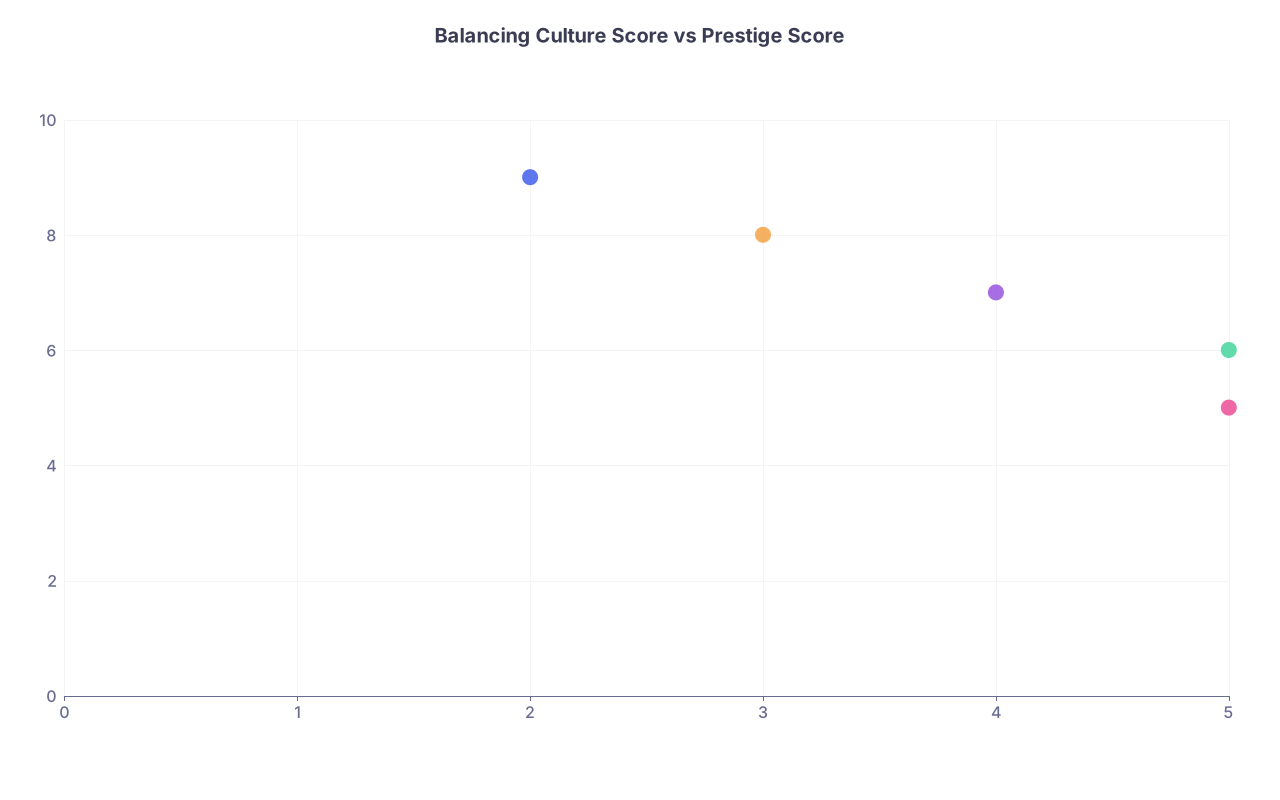
| Category | Value |
|---|---|
| Program A | 2,9 |
| Program B | 4,7 |
| Program C | 5,6 |
| Program D | 3,8 |
| Program E | 5,5 |
If you find yourself ranking a program with a culture score of 2/5 over a 4/5 or 5/5 purely for prestige… stop and ask what you are doing.
Step 3: Scenario Test Your Top Choices
Run this mental exercise:
“It is November of PGY‑1. I just had a 28‑hour shift that went badly. A patient I cared about died. I am exhausted and doubting myself. At Program X, who actually has my back? What happens next?”
For each program:
- Who do you see taking care of you?
- Do you see yourself walking into the PD’s office? A chief’s office? A co‑resident’s apartment?
- Do you trust those people to respond decently?
If you cannot picture that support clearly, you are gambling that you will never have a bad night. You will. Everyone does.
Step 4: Adjust Your Rank List Even If It Feels “Risky”
By the final week, fear sets in:
- Fear of “wasting” a high‑tier interview
- Fear of disappointing mentors
- Fear of choosing wrong
So people freeze and default to:
- Biggest name
- Biggest city
- Home program
- Everything else
That is lazy and dangerous.
You may need to:
- Drop a “famous” program several spots because residents seemed broken
- Move a “mid‑tier” program into your top three because the culture fit was obvious
- Put your home program lower if you witnessed chronic dysfunction on rotations
You are not required to justify this to anyone. You just have to live with the consequences.
Red Flags You Absolutely Should Not Ignore
To make this painfully clear, here is a list of culture red flags that should dramatically lower a program on your list if you see more than one.
- Residents warn you privately: “Do not come here if you have other options.”
- PD or faculty mock other programs’ residents as “soft” or “weak.”
- Leadership blames ACGME for “limiting training” when you ask about hours.
- Residents cannot name a single concrete change made in response to feedback.
- Significant attrition is explained away with vague “personal reasons” every time.
- Residents look visibly uneasy when you ask about wellness, then give canned answers.
- You hear versions of: “We work hard and play hard,” but no one looks like they have time to play anything.
- Multiple residents mention “just getting through” rather than growing or learning.
- No one can explain what happens when a resident is struggling academically or emotionally.
If you see three or more of these in one program, ranking it high is you volunteering for unnecessary pain.
Visualizing Your PGY‑1 Reality
Let me give you a quick mental timeline.
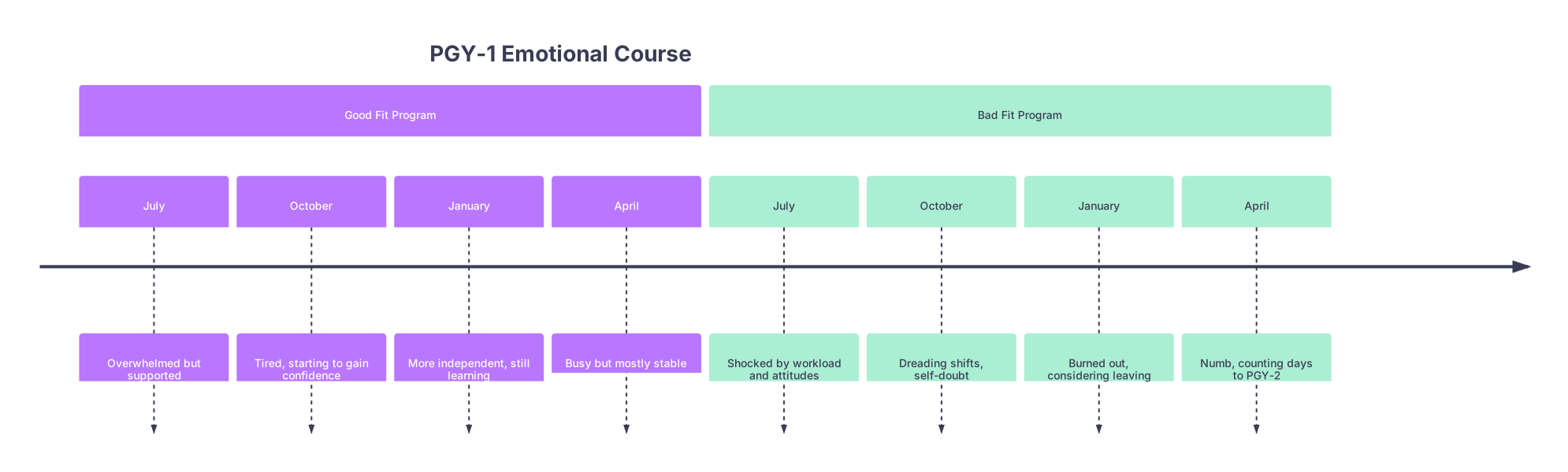
| Period | Event |
|---|---|
| Good Fit Program - July | Overwhelmed but supported |
| Good Fit Program - October | Tired, starting to gain confidence |
| Good Fit Program - January | More independent, still learning |
| Good Fit Program - April | Busy but mostly stable |
| Bad Fit Program - July | Shocked by workload and attitudes |
| Bad Fit Program - October | Dreading shifts, self-doubt |
| Bad Fit Program - January | Burned out, considering leaving |
| Bad Fit Program - April | Numb, counting days to PGY-2 |
Different culture, same person. The trajectory diverges fast.
Quick Self‑Check Before You Certify Your List
Before you click “Certify” on NRMP, sit with these questions:
- Where did I feel most like myself on interview day?
- Where did I see residents that I actually want to become?
- Where did I feel any sense of “I could belong here” rather than “I could survive here”?
- Which programs gave me the strongest sense that my mistakes would be used to teach, not punish?
- If my best friend were applying, would I honestly tell them to rank this program high?
If your answers do not match the order of your rank list, fix it.
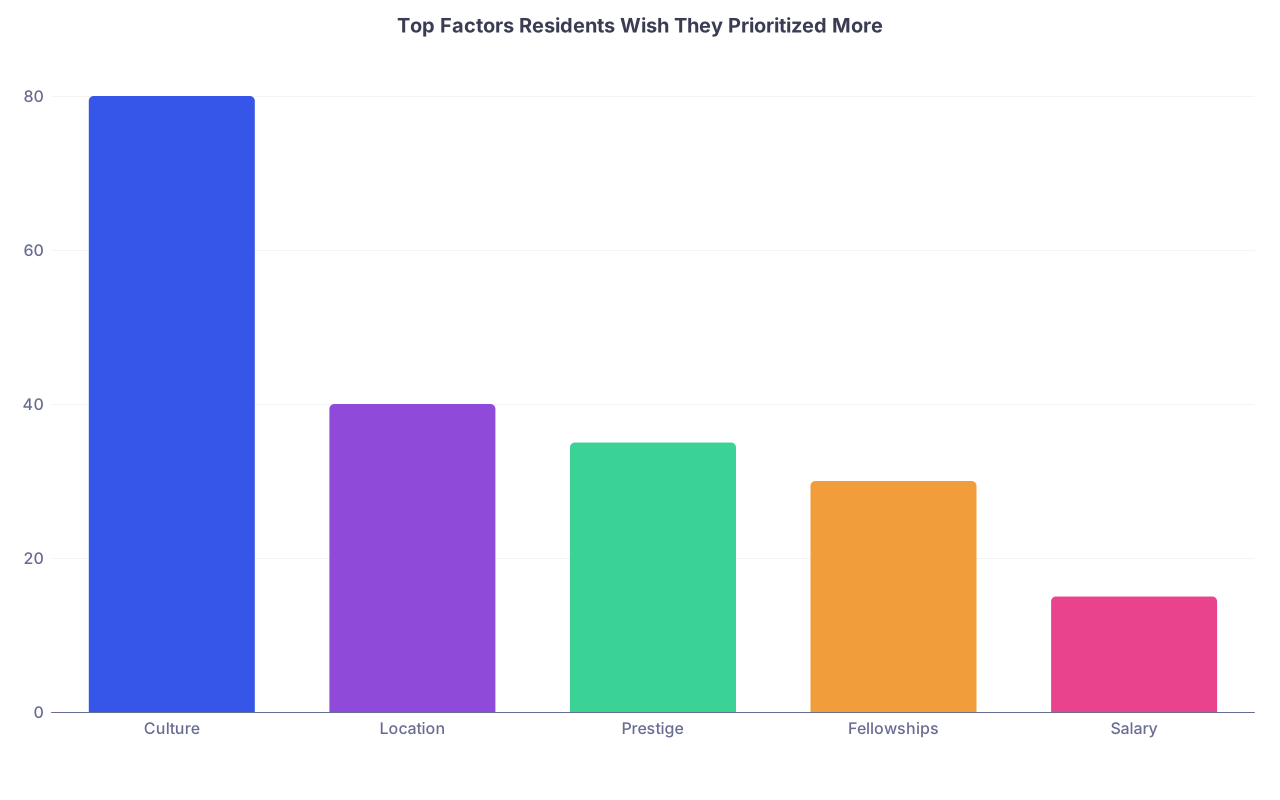
| Category | Value |
|---|---|
| Culture | 80 |
| Location | 40 |
| Prestige | 35 |
| Fellowships | 30 |
| Salary | 15 |
Most PGY‑2s and PGY‑3s, when asked what they wish they had weighed more, say the same thing: culture, colleagues, and support. Not money. Not rank lists. Not cities.
Listen to the people ahead of you. They are not all bitter. Many are simply wiser than they were as MS4s.
FAQ: Residency Rank List & Culture Fit (5 Questions)
1. Should I ever rank a higher‑prestige program above a better culture fit?
Yes, but only when the prestige or specific opportunities clearly align with your actual long‑term goals, and the culture is at least neutral, not actively bad. Choosing “slightly less warm” for very focused fellowship plans can be reasonable. Choosing “borderline malignant” just for a name is not.
2. How do I tell if residents are being honest or just selling the program?
Look for inconsistency. If residents give uniformly rosy answers, never disagree with each other, and lean on slogans, you are getting a script. Honest groups show nuance: they will name real downsides, describe specific changes, and occasionally disagree respectfully. Watch faces. Hesitation, side‑glances, or forced laughter are your cues.
3. What if my top culture fit program is in a less desirable location?
You can be happy in a less “exciting” city with the right people and support. You will be miserable in your dream city if you hate going to work. Location matters, but residency is not a vacation. Give culture meaningful weight. Many residents end up appreciating smaller or quieter locations because they actually have some life outside the hospital.
4. My advisor says I am overemphasizing vibes. Are they right?
You probably are if you ignore objective issues like board pass rates, case volume, or accreditation status. But most MS4s do the opposite: they under‑emphasize culture and over‑value prestige. Use both: hard data and your read on the environment. Dismissing your own perception as “just vibes” is a common way to silence legitimate concerns.
5. If I realize PGY‑1 that culture is a terrible fit, am I stuck?
Not always, but your options are narrower and more painful: transferring, switching specialties, or simply enduring. All of those are possible but costly. This is exactly why you should treat culture fit as a primary filter now, when your choices are wide. You will never again have this much freedom over where and with whom you train.
Remember:
- You are not matching to a logo. You are matching to people, power structures, and daily behaviors that will shape you.
- A program that is “great on paper” but wrong for you is not great. It is a trap.
- If you ignore culture fit now, PGY‑1 is when you will realize that was the one factor you could not afford to get wrong.


