
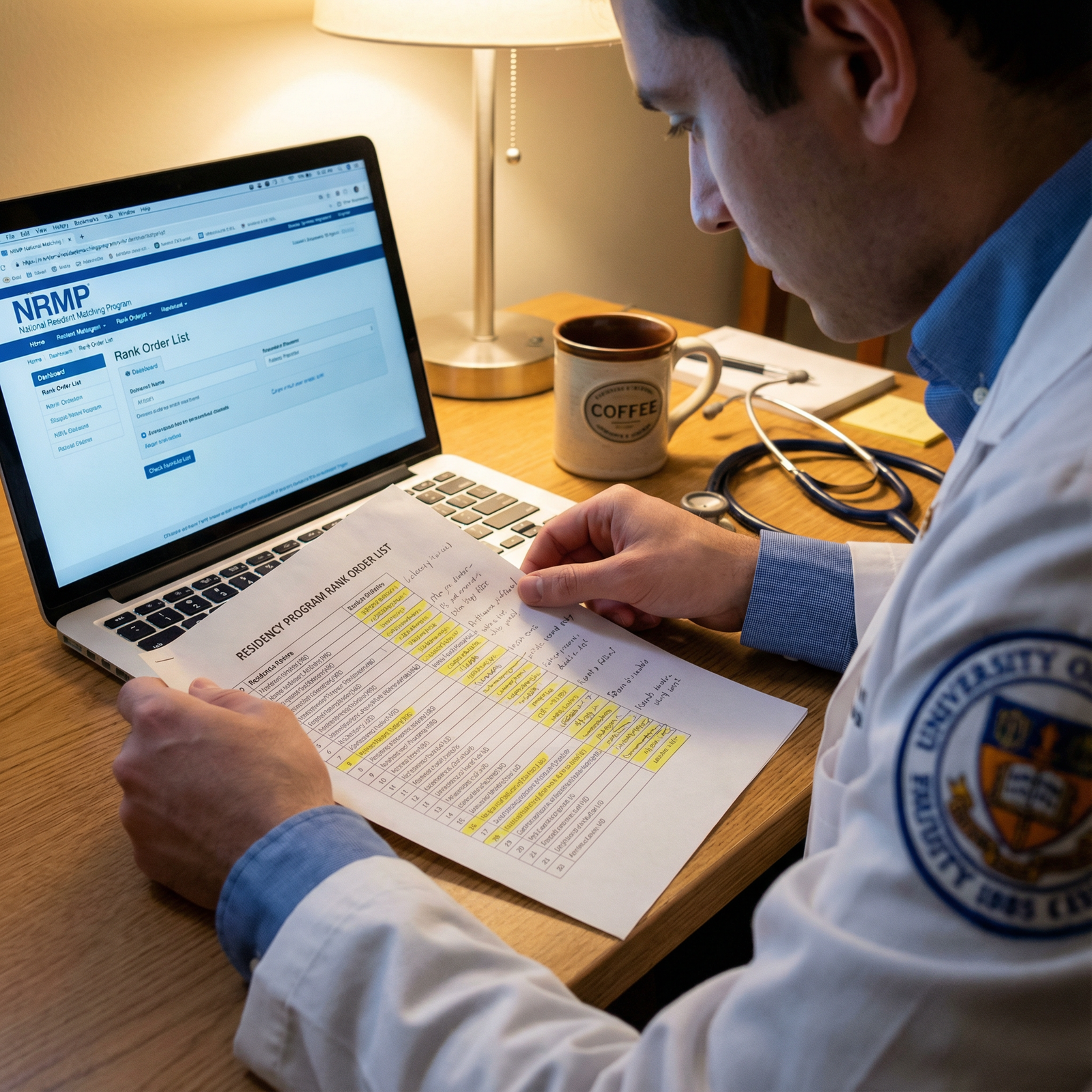
The way away rotations change your spot on rank lists is a lot less “holistic” and a lot more brutal than anyone tells you.
Programs will smile at you on day one, call it an “audition rotation,” and insist, “Don’t be nervous, this is mostly for you to see if we’re a good fit.” That’s the public script. Behind closed doors, your name is getting boxed, starred, or quietly crossed out based on things you’d never guess are being tracked.
Let me walk you through what actually happens to your file—from the day you show up for your away to the night they build the rank list—because the away month has a longer shadow than most students realize.
How Your Away Rotation Really Gets Scored
The single biggest misconception: people think aways are binary. “Crush it and you get ranked high; screw up and you’re doomed.” That’s not how it works.
Most programs use a layered, semi-formal system. They won’t show you the paperwork, but it looks something like this.
| Category | Typical Weight | What They're Actually Judging |
|---|---|---|
| Clinical Ability | 20–30% | Workups, notes, basic management |
| Work Ethic/Reliability | 25–35% | Shows up, stays late, follows through |
| Team Fit | 25–30% | Would residents want you on call with them |
| Knowledge/Growth | 10–20% | Baseline + improvement over the month |
| Red Flags | Automatic | Any serious professionalism issue |
Some places literally tally scores. Others just talk in gestalt. But the logic is the same: the rotation either moves you into one of three mental buckets:
- “We know we want this person.”
- “We’re fine with them here.”
- “No. Absolutely not.”
Notice what’s missing: “Crushed the interview but we’ve never worked with them.” An away rotation usually trumps a shiny interview if you were on their turf for four weeks.
The Hidden Labels You Never See
In the conference room, your name doesn’t get read as “US MD, 250+, AOA.” It gets read as:
- “That student from Midwest who stayed late with the intern every call.”
- “The quiet one from that DO school who never checked back on labs.”
- “Super smart, but kind of high-maintenance.”
- “The one the night float PGY-3 loved.”
Faculty remember vibes and stories, not numbers. And those stories come straight from your away month.
What Happens to You Between Rotation and Rank Meeting
Here’s the part no one explains: the away rotation doesn’t disappear when you leave. It sits in the background, quietly shaping how every later step is interpreted.
Think of it like this: the away gives the program a default narrative about you. Everything after that—your interview, your letters, your email communications—either confirms or contradicts that narrative.

| Step | Description |
|---|---|
| Step 1 | Away Rotation Performance |
| Step 2 | Flagged as Priority Applicant |
| Step 3 | Standard Applicant Pool |
| Step 4 | Soft or Hard Do-Not-Rank |
| Step 5 | Interview Invitation Early |
| Step 6 | Interview Invitation If Space |
| Step 7 | No IV or Courtesy Interview |
| Step 8 | Discussion at Rank Meeting: Push Up |
| Step 9 | Ranked Based on Interview Only |
| Step 10 | Low Rank or No Rank |
| Step 11 | Overall Impression |
Here’s how the pieces fit together.
1. Right After You Leave
Within a week or two of your rotation:
- The clerkship director or rotation lead asks for feedback from residents and attendings.
- In some programs, the chief residents literally sit with a list of rotators and mark: “definite interview, maybe, no.”
- A short comment gets attached to your name in an internal spreadsheet or email chain. Sometimes one line. That one line can haunt or help you for months.
I’ve seen comments like:
- “Workhorse, low drama, would absolutely take.”
- “Nice enough but not independent, got lost with basic tasks.”
- “Great with patients, a bit overconfident with staff.”
- “Red flag: disappeared post-call without signing out tasks.”
Nobody tells you when this happens. It’s just quietly logged.
2. Interview Invitation Stage
This is where aways start shaping your chances.
In competitive specialties, there’s a brutal simple rule: strong away = almost guaranteed interview. Mediocre away = you might get treated like a normal applicant, score-dependent. Bad away = they either won’t invite you or you’ll get a pity invite that’s already emotionally dead.
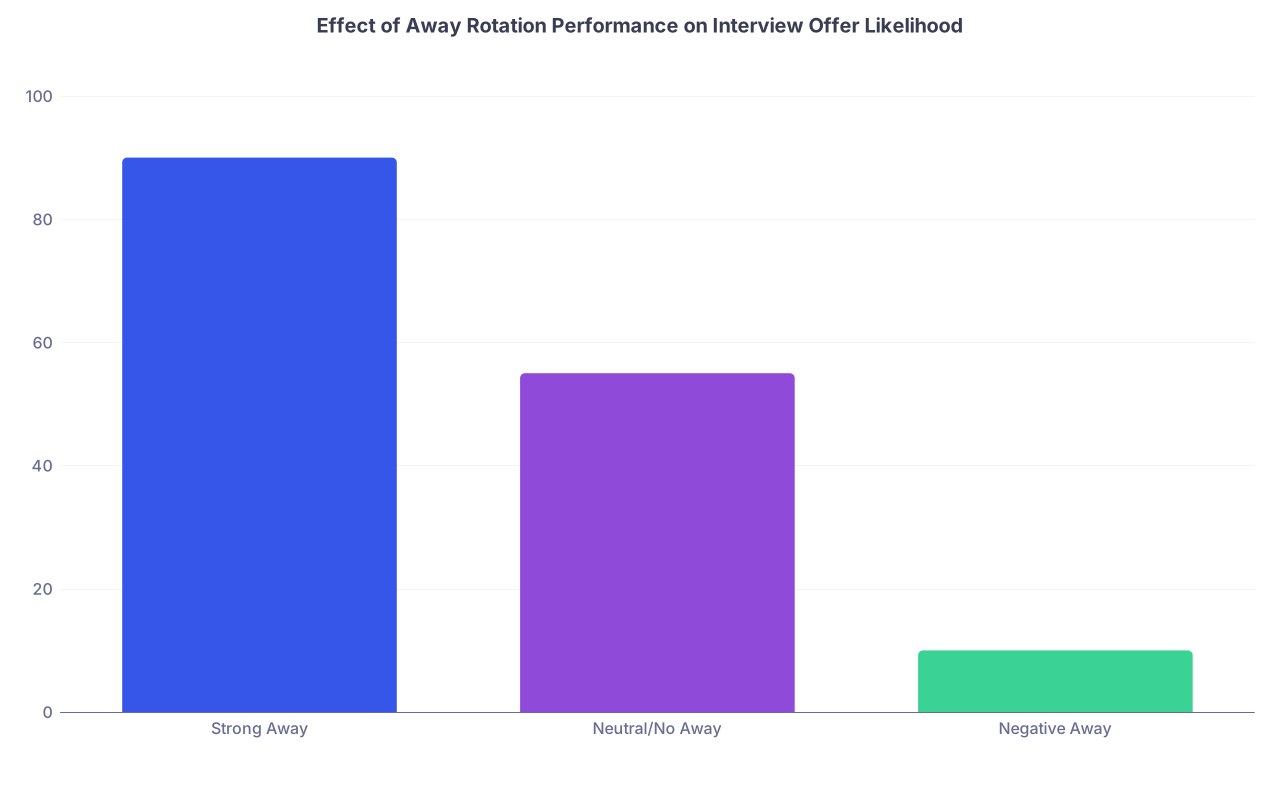
| Category | Value |
|---|---|
| Strong Away | 90 |
| Neutral/No Away | 55 |
| Negative Away | 10 |
Are those exact percentages? No. But the pattern is real. I’ve watched PDs say:
- “We have to invite them, they did great here.”
- “They rotated here and were just okay…do we really want to interview?”
- “They rotated here, residents didn’t like them. Pass.”
Your away rotation puts a thumb on the scale before your interview day even exists.
3. Interview Day Interpretation
If you rotated there, interview day isn’t a fresh start. It’s confirmation bias central.
If you were excellent on the away:
- A mediocre interview gets forgiven: “They were nervous today, but we saw them shine on wards.”
- A great interview doubles your stock: “Exactly what we saw all month—this is who we want.”
If you were mediocre on the away:
- A great interview raises suspicion: “Where was this person last month?”
- They’ll ask the residents again: “Did we miss something, or are they just putting on a show?”
If you were a problem:
- Even if you magically interview well, there will be at least one person in the room who won’t let it go: “I don’t trust this. Rotation feedback was bad.”
You walk into that interview carrying a month’s worth of memories you created for that team. Good or bad.
How You Quietly Move Up—or Down—on the Rank List
Let’s get to the part you actually care about: that final list.
Most applicants imagine that rank meetings are heavy on spreadsheets, Step scores, and “overall academic strength.” That’s the façade. The real gravitational force in the room is resident opinion and specific anecdotes—especially about people they’ve worked with.
The Three-Tier System Nobody Admits To
If you did an away at that program, you’re almost never evaluated like a stranger. On the internal list, you effectively get placed into one of three invisible groups before they even formally “rank” you:
- Priority Insiders – “We know them and want them.”
- Neutral/Unknowns – “Seems fine on paper and interview.”
- Soft/Hard No’s – “We worked with them and do not want them.”
Then they adjust within each shelf.
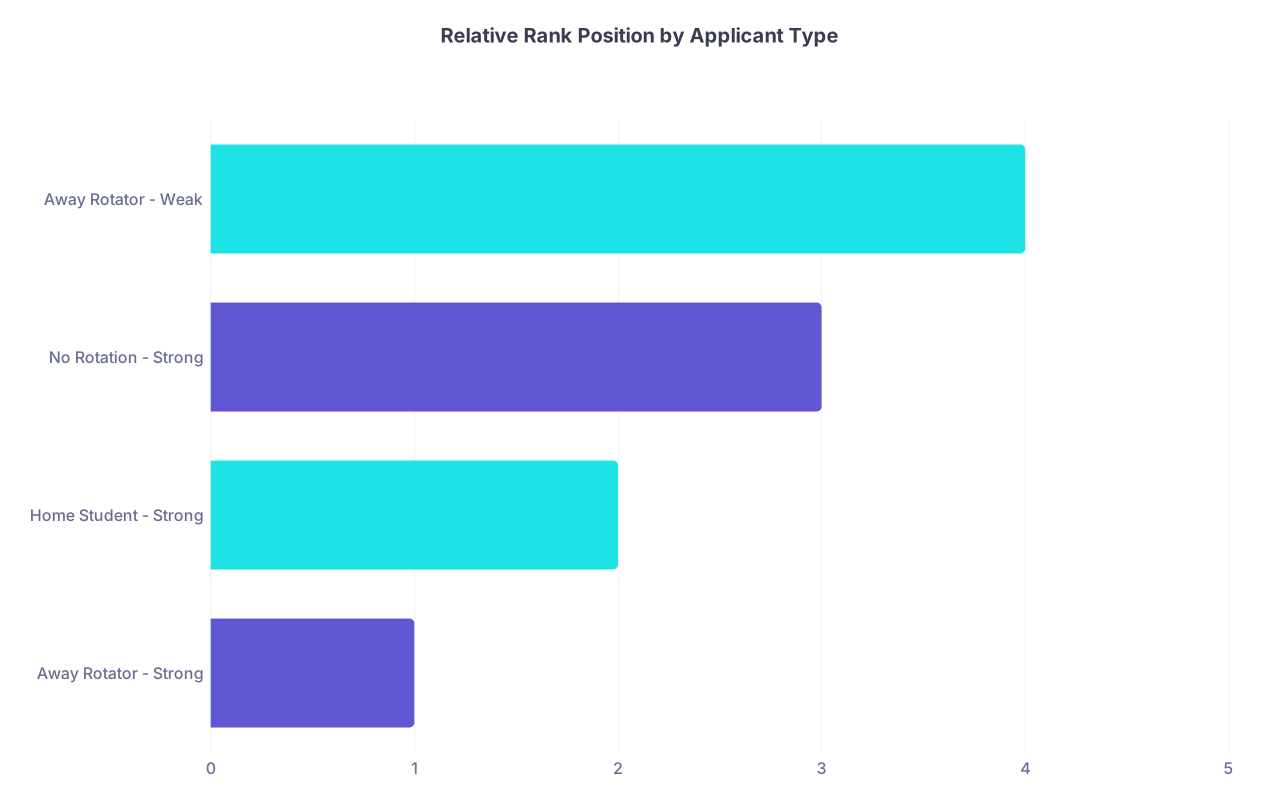
| Category | Value |
|---|---|
| Away Rotator - Strong | 1 |
| Home Student - Strong | 2 |
| No Rotation - Strong | 3 |
| Away Rotator - Weak | 4 |
Interpret that chart correctly: in many programs, a strong away rotator will be ranked higher than a similarly strong applicant who never set foot there. Because the risk is lower. They know exactly what they’re getting.
That’s the whole game: risk management. Aways de-risk you. Or brand you as a risk.
The Real Rank Meeting Conversation
Here’s the kind of dialogue that actually happens in rank meetings when your name comes up and you rotated there:
PD: “Next is Sarah L., USC. She rotated with us in September.”
Chief: “That’s the one who pre-rounded on everyone and stayed to finish notes on call. All the seniors liked her.”
Resident: “Yeah, she was solid. Quiet at first but really stepped up. I’d be happy to have her.”
PD: “Good. Let’s move her up a few spots, above the other USC applicant who didn’t rotate.”
Or, in the darker version:
PD: “Next is Daniel M., Michigan. Rotated here in August.”
Senior: “Honestly, he worried me. Looked polished but missed follow-up on a few critical labs. Good test taker, but I wouldn’t trust him on nights right away.”
PD: “Okay…we’ll keep him on the list, but lower tier. We’ve got safer picks.”
Notice what’s steering the decision. Not Step scores. Not publications. Stories from the away.
Where Aways Help You, Hurt You, Or Don’t Matter Much
Not all specialties and programs use aways the same way. Some will absolutely live or die by them; others treat them more as “nice to have.”
Places Where Away Rotations Are Kingmakers
Certain fields use aways as extended interviews. Think orthopedics, neurosurgery, plastics, derm at some places, EM at many community-heavy programs, and surgical subspecialties in general.
In those worlds, an away can:
- Turn a borderline stat applicant into a must-rank candidate.
- Convert a mid-tier school student into a local favorite.
- Neutralize a weaker Step 1 because residents personally vouch for you.
A PD from a surgical subspecialty once told me bluntly:
“If you were here for a month and we liked you, you are going to sit higher on the rank list than someone we’ve never met with the same numbers. Every time.”
Places Where Aways Mostly Hurt When You Blow It
Some internal medicine, pediatrics, and less competitive programs are a bit more forgiving. They won’t base the entire list on aways, but they will use a negative away as a veto.
Roughly:
- Strong away = nice bump, not automatic top.
- No away = totally fine, interview and letters drive your rank.
- Bad away = strong chance you’re quietly blocked from a high rank.
Where I’ve seen this most: mid-tier IM programs where the residents are overworked. They desperately don’t want someone who needs hand-holding. If you looked lost, they remember.
When An Away Rotation Won’t Save You
A harsh truth: if your file is far below that program’s usual range, a great away doesn’t always rescue you.
For example:
- A surgical program that almost never takes anyone under 230 will struggle to justify a 215 even if you were beloved on the wards.
- A super academic program with 3+ pubs per resident might hesitate with someone completely research-naïve, even if the team liked you.
In those situations, the away rotation might get you on the list when you otherwise would’ve been off it, but not necessarily high enough to match. It narrows the gap. It doesn’t erase it.
What Actually Moves You Up During the Month
Here’s the part students misunderstand most: you don’t get ranked high for “being smart.” You get ranked high for being the kind of intern they want covering their patients at 3 a.m.
There are a handful of behaviors that consistently turn away rotators into rank-list climbers.
1. Making Residents’ Lives Easier
Programs listen to their residents. Heavily. A PD will absolutely bump you up a tier if the chief or senior says, “They made my month better.”
That doesn’t mean being a doormat. It means:
- Volunteering for scut but still protecting your learning.
- Anticipating what needs to be done without being asked six times.
- Not disappearing when stuff gets busy.
The resident bar is surprisingly simple: “Would I want to be on call with this person for 28 hours?” If enough people say yes, your name floats upwards.
2. Being Reliable Over Being Brilliant
Nobody cares if you miss an obscure diagnosis. They care a lot if you vanish, show up late, or leave loose ends.
At rank time, phrases like “always there,” “dependable,” “solid,” and “never complained” weigh more than “crazy smart.” Because initial board scores are already baked in. What they’re looking for now is functional reliability.
3. Showing Trajectory
Programs love “steep learning curve” stories:
- “First week they struggled. By week four, they were running their own patients.”
- “Asked for feedback early and actually changed.”
That translates into: this person will grow fast as an intern. A static performance—smart on day one, same on day twenty—doesn’t give them that story.
The Silent Killers: How You Get Dropped Down the List
You don’t need to implode spectacularly to damage your rank position. Two or three small things, repeated, can quietly drag you out of contention.
Common patterns I’ve seen torpedo people:
- Chronic lateness, even by ten minutes. Nobody forgets.
- Failing to own tasks: “Oh, I thought someone else was doing that.”
- Being too performative with attendings and disengaged with residents.
- Acting like the rotation is a month-long Step 2 CS exam instead of a job audition.
- Complaining about hours, call, or other programs within earshot of people who matter.
No one event kills you. But the narrative that emerges—“kind of flaky,” “seems entitled,” “felt like they were above the work”—sticks. At rank time, you become the “why risk it?” candidate.
How to Strategically Use Aways for Ranking, Not Just Matching
Most people think of aways as “get the interview, get a slot.” That’s too shallow. Smart applicants use aways to shape where they fall on that list.
Here’s what that actually looks like in practice:
- You pick aways at programs where you’re on the bubble on paper. Places where working with them for a month can push you over the line from “maybe” to “priority.”
- You treat every interaction as if the person will sit in the rank meeting. Because they might.
- You follow up after the rotation with something short but real: a thank-you note that subtly reminds them of your work ethic and fit. That keeps your positive narrative alive until interviews.
One EM PD said this unfiltered:
“If a rotator comes here, works hard, and then disappears into the void, they’re still ahead of the pack. But the ones who check in after interviews, send a meaningful thank-you, those are the people whose names I instinctively bump up when we’re splitting hairs.”
You’re not begging. You’re reinforcing the story you already created.
FAQ: Away Rotations and Rank Lists
1. If I do an away and it goes just “fine,” does it actually help my rank?
Usually, yes—but modestly. A “fine” rotation means no red flags and some familiarity. That often buys you: a more secure interview offer and a small bump above equally strong strangers. It probably won’t launch you to the very top, but it can keep you from slipping into the anonymous middle.
2. Can a single bad day on an away really kill my spot on the rank list?
One bad day? Rarely. A bad pattern? Absolutely. People talk about trajectories, not isolated events. If the story they tell is “rough first week, much better by the end,” you’re safe. If the story is “kept making the same mistakes and never really stepped up,” that will hurt you.
3. Do programs ever rank an away rotator lower than someone they’ve never met?
All the time. A known negative is worse than an unknown. If you rotated and came off needy, unreliable, or arrogant, you’ll get pushed below strangers with strong applications. A lot of PDs would rather take a risk on someone untested than someone residents already do not want.
4. Is it better to do more aways or fewer, more targeted ones?
For rank positioning, fewer, targeted aways win. One or two rotations where you can realistically rank the program highly and they can realistically rank you highly is better than four half-hearted visits. Every away is a high-stakes month-long interview. Spreading yourself too thin usually shows.
5. If I didn’t do an away at my dream program, am I automatically behind?
No, but you’re missing one tool. Plenty of applicants match at dream programs without aways, especially if their paper stats and letters are strong. However, if your application is borderline for that program’s usual range, an away is often the only thing that could have pulled you up their list. Without it, you live or die by your file and one interview day.
Key Takeaways:
Away rotations don’t just get you interviews—they create a long-lasting narrative about you that quietly controls how high you climb on rank lists. Residents’ stories about your reliability and team fit matter more than your one polished interview day. Use aways surgically at programs where that month can actually move the needle, then spend every day there behaving like the intern they’d feel safe putting on nights.


