

The biggest misunderstanding about residency interviews is this: the calendar changes how you feel more than it changes how programs evaluate you. Early vs late interviews mess with your perception, your confidence, your memory – and that absolutely bleeds into how you rank.
Let me walk you through exactly how timing warps your brain and how to fight back, step by step, week by week.
Big Picture: How Timing Actually Works
Before we zoom into specific months, you need the real frame.
Programs don’t run one universal system, but most of them fall into a few patterns. And your experience of an “early” vs “late” interview is very different from theirs.
| Aspect | Early Interview | Late Interview |
|---|---|---|
| Applicant mindset | Anxious, rusty, highly alert | Tired, comparative, slightly jaded |
| Program mindset | Calibrating, broad comparisons | Filling gaps, more selective fit |
| Memory bias for you | Overweights small details | Blurs unless extreme (great/awful) |
| Risk | Under-practiced, over-eager | Burnout, negativity, complacency |
| Advantage | Fresh energy, more open mind | Better self-knowledge, refined story |
So the question isn’t “Are early interviews better?” That’s too simple.
The real question is: At each point in the season, how should you prepare, think, and rank differently?
August–September: Pre-Interview Setup (Before Timing Starts to Matter)
At this point you’re not interviewing yet; you’re building the foundation that will make early vs late less dangerous.
Late August – Early September: Lock the Baseline
By now you should:
- Have a core narrative nailed:
- Who you are
- Why this specialty
- What you bring that is not generic “hard worker/team player”
- Have 3–4 anchor stories polished:
- A time you failed and recovered
- A conflict on the team and what you did
- A patient that changed how you think
- A leadership or systems-based story
You’re doing this early for one reason: so your first interview doesn’t become your practice one. That’s the rookie mistake.
Mid–Late September: Controlled Reps
By this point, you should:
- Schedule at least 2 realistic mock interviews:
- One with someone who will be blunt (upper resident, chief, faculty)
- One with someone who doesn’t know you well (to test clarity)
- Record yourself once.
Yes, it’s painful. Do it anyway. You’ll catch the “uhms,” the rambling, the dead eyes.
Your goal before invites really start rolling:
Have your worst answers happen before October, not at your first live interview.
October: Early Invites, Early Interviews – Your Brain Is Overreacting
October is the “everything feels huge” month. Every email feels like life or death.
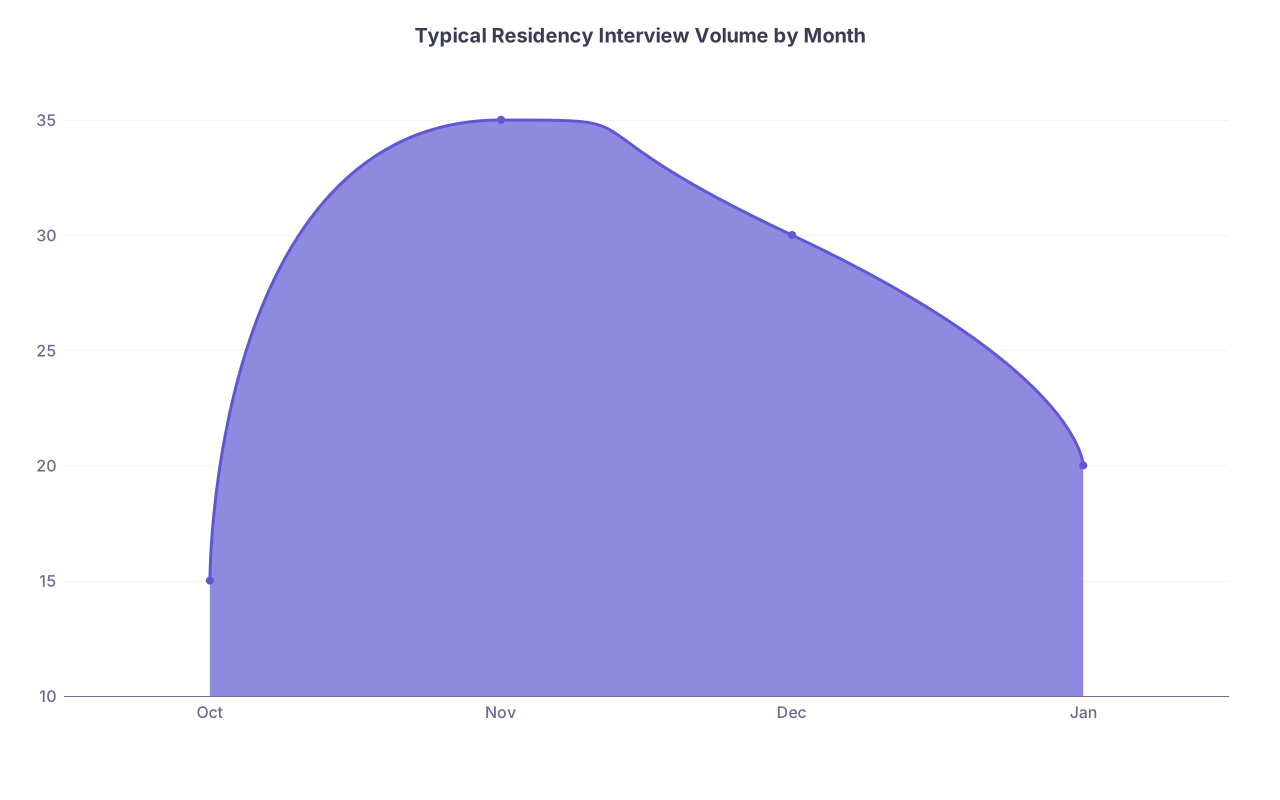
| Category | Value |
|---|---|
| Oct | 15 |
| Nov | 35 |
| Dec | 30 |
| Jan | 20 |
Early October: First Invites Hit
At this point you should:
- Accept early interview invites from:
- Programs you’re genuinely interested in
- Programs in regions you’d realistically rank
Do not treat early interviews as throwaways.
But also don’t put your absolute #1 dream program as the literal first if you can help it.
If you get:
- 2–3 invites early:
- Try to schedule 1–2 mid-level programs first, top choices slightly later (2–3 weeks in).
- 10+ invites in first wave (competitive specialty or strong app):
- You have more flexibility; still don’t front-load your top 3 in week one.
Late October: Your First Interviews Happen
Here’s how early timing warps perception:
- You’re hyper-attentive.
Every tiny awkward pause from an interviewer feels like a red flag. - You’re under-calibrated.
You have no comparison frame. So a “pretty normal” program can feel amazing or terrible simply because it’s the first. - Your post-interview glow/hangover is exaggerated.
You walk out thinking “That was incredible” or “I bombed” more often than reality justifies.
At this point you should:
- Institute a standardized post-interview template (same day, within 2 hours):
- 3 concrete things you liked (with specifics: “resident seemed happy” is not specific; “residents laughed when describing night float – not dead-eyed” is)
- 3 concerns
- Gut rank position for now
- Program-specific facts: call schedule, clinic setup, fellowship paths, location pros/cons
This template will save you in January when everything blurs together.
November: Peak Interview Season, Peak Comparison Trap
By November you’re in the thick of it. You’re not new anymore, but you’re not exhausted yet. This is the sweet spot if you manage it right.
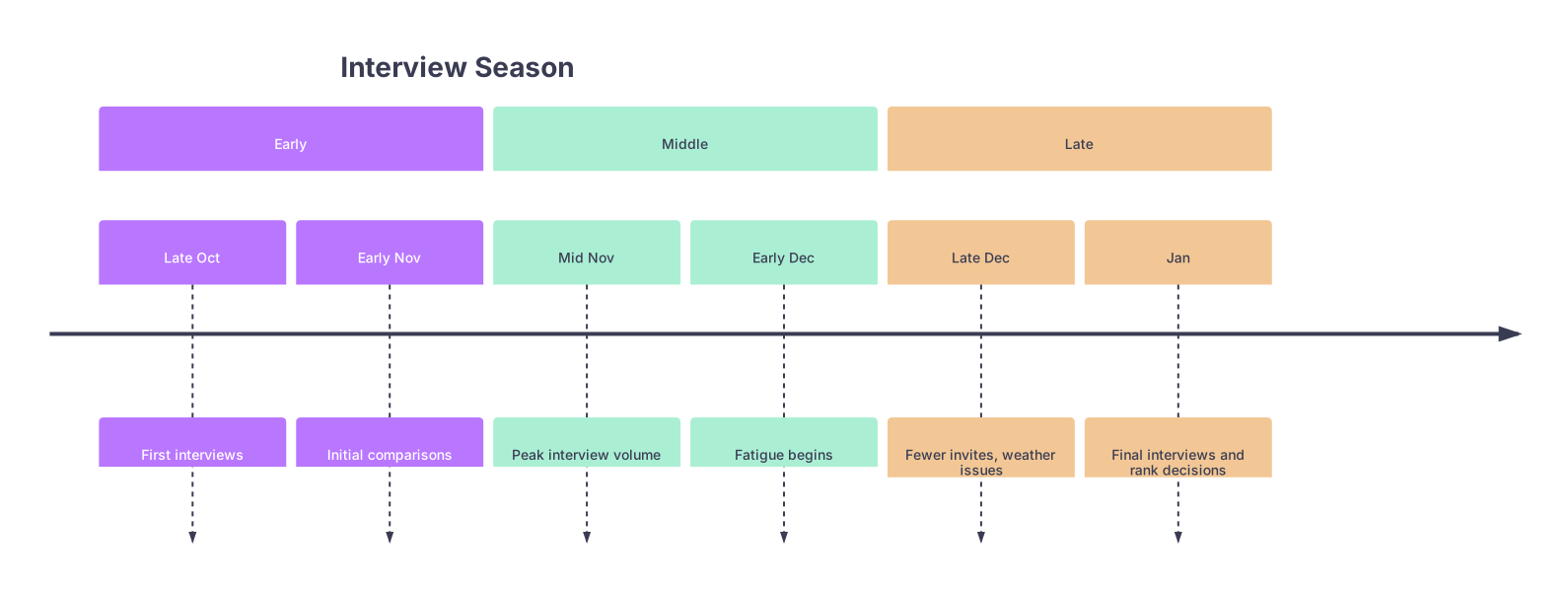
| Period | Event |
|---|---|
| Early - Late Oct | First interviews |
| Early - Early Nov | Initial comparisons |
| Middle - Mid Nov | Peak interview volume |
| Middle - Early Dec | Fatigue begins |
| Late - Late Dec | Fewer invites, weather issues |
| Late - Jan | Final interviews and rank decisions |
Early November: You Start Ranking in Your Head
This is where perception starts to shift:
- You now have 2–5 programs to compare.
- Early standouts may drop as you see stronger fits.
- A program you thought you “bombed” might feel more average in hindsight.
At this point you should:
- Start a running rank list document:
- Only reorder once per week, not after every single interview.
- Force yourself to write why something moved up or down.
- Create 3–5 non-negotiable criteria:
- Example: “No more than Q4 call,” “Pathways in medical education,” “City with partner job options”
- Rating each program against these will help override emotional bias from timing.
Mid–Late November: Volume and Fatigue Climb
Now you’re probably stacking interviews back-to-back. Maybe multiple in a week. Pressure is higher.
Timing effects here:
- You’re smoother, more practiced.
So you think: “I’m interviewing better now, these later programs will like me more.”
Not always true. Programs are also more selective later. - You’re starting to carry emotional residue:
- A bad morning interview makes you harsher about an afternoon one.
- One amazing program makes the next 3 feel worse than they truly are.
At this point you should:
- Cap yourself: no more than 3–4 interviews per week if you can help it.
- Do a weekly 30-minute recalibration:
- Re-read your notes from the first two interviews.
- Ask: “If I interviewed there again now, do I think I’d feel different?”
This helps you correct for “I was nervous then” bias when ranking.
December: Late Interviews, Weather, Burnout, and Second-Guessing
December interviews feel different. You’re tired. Faculty are tired. Travel/weather is annoying. And this time point punishes people who don’t adjust.

Early December: Your Standards Get Weird
You’ve seen enough programs that:
- Mediocre but friendly places start to feel “pretty good.”
- Slightly brusque or unpolished programs feel worse than they should.
- Big-name places may feel disappointing because reality never matches fantasy.
Here’s the dirty secret: your relative bar keeps moving.
At this point you should:
- Re-anchor to your non-negotiables:
- Literally re-read the criteria list you made in November before each new interview.
- Compare late interviews to your written notes, not your mood:
- Example: If in November you said, “Program A: Great teaching, but high call,” and now Program F in December has the same high call but worse teaching, be honest about that.
- Start marking programs as:
- “Absolutely rank”
- “Rank only if needed to reach X total”
- “Do not rank even if last slot”
That “do not rank” category gets crucial once fatigue tempts you to list programs you’d actually be miserable at.
Mid–Late December: True Late Interviews
This is where people start asking: “Do late interviews hurt my chances?”
Reality:
- Some programs have essentially filled their mental top tier by now.
- Others purposefully hold spots and keep open minds for strong late applicants.
- You have no control which is which.
What you do control is how late timing affects you:
At this point you should:
- Assume every interview matters equally for your behavior.
You don’t act more casual or “safe” just because it’s late. That’s how people tank perfectly good opportunities. - Protect your sleep and voice more aggressively:
- Stop doing 3-hour phone calls dissecting programs the night before interviews.
- Minimize back-to-back late-night travel + early-morning interview combos if at all possible.
And mentally, remind yourself:
- You are more practiced now.
- You understand your own priorities better.
- Those two facts can make late interviews very valuable – if you’re not checked out.
January: Last Interviews, Final Memory Distortions, and Rank List Lock-In
January is dangerous. Not because programs suddenly change, but because your memory is lying to you more than you realize.
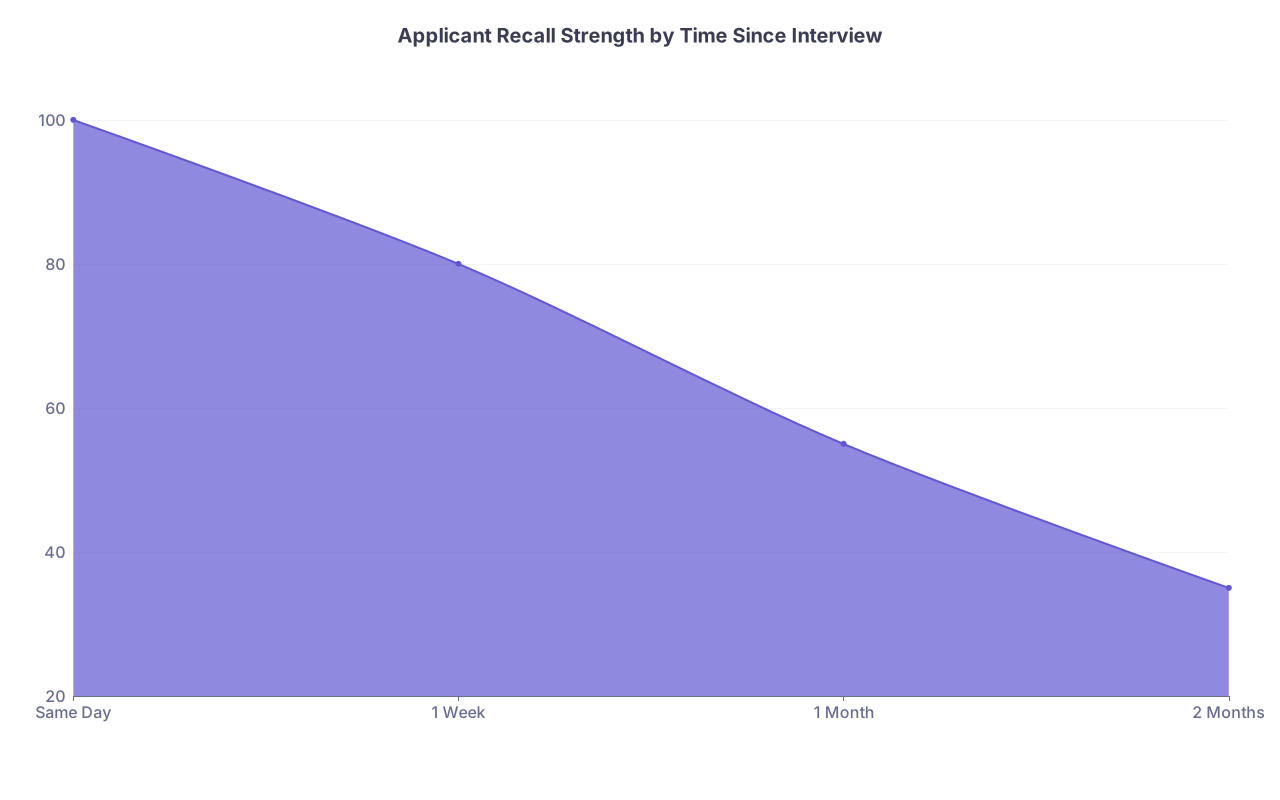
| Category | Value |
|---|---|
| Same Day | 100 |
| 1 Week | 80 |
| 1 Month | 55 |
| 2 Months | 35 |
Early January: Final Interviews
By now:
- You can answer “Tell me about yourself” in your sleep.
- You’ve heard the same 5 faculty questions repeatedly.
- Residents are asking you, “So where else have you been?” and you’re mentally blanking.
At this point you should:
- Treat each final interview as a tie-breaker opportunity:
- If it’s a top-tier option, this is your last chance to gather intel that separates your #2 from #3.
- Ask very specific questions: “How many graduates in the last 3 years went into cardiology fellowship and where?”
- Immediately after these late interviews:
- Do your same post-interview template.
- Then force a tentative placement in your rank list that same day, not “later this week.”
Waiting means the details fade and you over-weight how recent it feels rather than how good it is.
Mid–Late January: Rank List Construction
This is where early vs late timing tries to wreck your rational brain.
Common distortions:
- Recency bias: Programs from December/January feel clearer and more vivid.
- Nostalgia bias: The first place that felt welcoming holds an emotional “first love” spot.
- Contrast bias: Visiting a great program makes the next average one feel terrible, even if it would’ve looked fine in isolation.
At this point you should:
Do a full, written comparison of your top 8–10:
- For each:
- Pros (specific, concrete)
- Cons (again, specific – “vibes” don’t count unless you describe what caused them)
- Alignment with each non-negotiable criterion
- For each:
Then ask:
- “If I had to sign a 3-year contract sight-unseen based ONLY on this sheet, would I be okay with that order?”
- If not, fix it.
Finally:
- Sleep on your draft list twice:
- Make it.
- Don’t touch it for 48 hours.
- Revisit once more and only change things if you can justify the change in writing.
- Sleep on your draft list twice:
Specific Timing Scenarios – What To Do, Step-by-Step
Time for some concrete “If X, then do Y” situations.
Scenario 1: Dream Program Offers Only a Very Early Date
You get an invite from your #1, but the only date you can reasonably attend is in the first week of your season.
At this point you should:
- Take it. Full stop.
Waiting for some hypothetical “later, better you” is fantasy. - In the 7–10 days before:
- Do an extra mock interview specifically focused on that program.
- Deep-dive their website, resident bios, recent research, and conferences so you sound like you belong.
- Afterward:
- Expect that your self-critique will be harsher than reality.
That’s just what happens with first big interviews. - Anchor them in your rank list based on fit and facts, not your self-flagellation over one question.
- Expect that your self-critique will be harsher than reality.
Scenario 2: Amazing Program But Very Late Interview (Mid–January)
You’re tired, but this is a good one. Could be top 3.
At this point you should:
- 3–4 days before:
- Re-review your earliest interview notes. Remind yourself what your baseline excitement looked like before cynicism set in.
- Day before:
- Stop reading Reddit or group chats about “this program is malignant” and similar nonsense.
You need your own impression, not a crowd-sourced myth.
- Stop reading Reddit or group chats about “this program is malignant” and similar nonsense.
- Same day, after the interview:
- Rank it as if you had to submit your list that night.
- Then adjust your final list later only if new, concrete information (not just new emotions) justifies it.
Scenario 3: You Realize in December You Ranked Your First Few Too High Emotionally
You loved those early places. Then you saw better. Now you’re conflicted.
At this point you should:
- Re-read your early notes line by line.
- Ask:
- “If this program had been my 8th, not my 1st interview, would I still put it this high?”
- If the answer is no:
- Drop it to where it would land if interviewed mid-season. Do not “reward” programs for being early; you’re not choosing an airline check-in line.
Concrete Daily/Weekly Checklists by Phase
To keep this practical, here’s what you should be doing – timing aware – throughout the season.

October (Early Interviews)
Each interview day:
- 1–2 hours before:
- Review program notes.
- Review 3–4 key stories; don’t cram new ones.
- Within 2 hours after:
- Fill your post-interview template.
- Place it tentatively in your rank list.
Each week:
- 30 minutes:
- Reorder rank list only once.
- Re-check against your criteria.
November (Peak Season)
Each interview day:
- 15–20 minute morning reset:
- Glance at yesterday’s program only to close the mental tab. New day, new impression.
- Same-day debrief:
- Template + tentative list update.
Each week:
- 30-minute “sanity check”:
- Review top 5 programs in detail.
- Ask: “If the season ended today, would this order make sense?”
December (Late Interviews Start)
Each interview day:
- Before:
- Re-read your criteria. Do not skip this.
- After:
- Be especially suspicious of extreme reactions (“best ever” / “worst ever”) when you’re tired.
Each week:
- Identify:
- Programs that realistically will never make your top 10–12.
- Stop mentally investing in them. Free up brain space.
January (Final Interviews + Rank Building)
Each interview day:
- Same routine, but:
- Pay extra attention to hard data: match lists, case volume, autonomy, didactics.
Each week:
- Lock in:
- Top 3.
- Then top 5.
- Then full list.
- Don’t do major surgery on your list in the last 24 hours unless you discovered genuinely new, meaningful information.
A Quick Word on How Programs See Timing
You’re obsessing over “early vs late.” Most programs do something more boring:
- They evaluate each interview on its own.
- Some keep a running “tiered” list.
- Big jumps up/down usually come from fit and red flags, not from whether you showed up in November vs January.
The one place timing might matter on their side:
A late but phenomenal applicant can absolutely jump over early “pretty good” ones.
So you keep showing up. Every time. Even in January.
Bottom Line: How to Outsmart Timing
Strip it down, here’s what matters:
- Your perception is unstable. Early interviews feel bigger. Late ones feel clearer but biased by fatigue and comparison. You fix that with structured notes and criteria, not vibes.
- Early vs late helps you in different ways. Early = fresh energy, open mind. Late = more practice, better self-knowledge. Use both phases instead of fearing them.
- Your rank list must be built on written reality, not memory. Concrete pros/cons, non-negotiable criteria, and deliberate weekly adjustments. That’s how you stop the calendar from writing your future.
You can’t control when the invites land. You can control how you think at each point. That’s the whole game.


