

It’s December 20th. You’re home, your last interview was a week ago, and your parents just asked, “So…where do you want to end up next year?”
Your official rank list isn’t due until late February or early March, but your brain is already buzzing:
- “Did I like Program A or was I just high on adrenaline that day?”
- “Am I overvaluing prestige?”
- “What if I rank a place higher that feels wrong for my partner?”
Holiday break is when people either get their rank list under control…or let it turn into a panic project in February. You’re here to avoid the second outcome.
Let’s walk through how to use this time—week by week, even day by day—to refine your residency rankings like an adult, not a stressed-out intern-in-waiting.
Big Picture: Your Holiday Break Timeline
Think of your break in three phases:
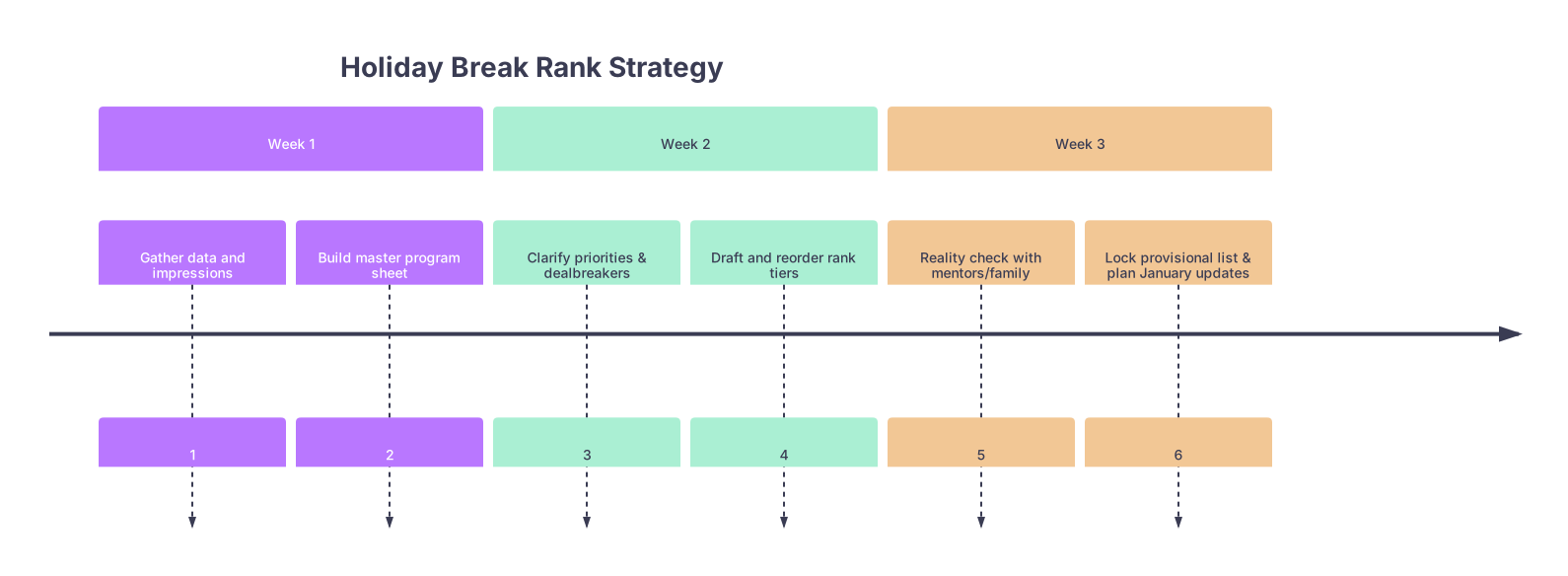
| Period | Event |
|---|---|
| Week 1 - Gather data and impressions | 1 |
| Week 1 - Build master program sheet | 2 |
| Week 2 - Clarify priorities & dealbreakers | 3 |
| Week 2 - Draft and reorder rank tiers | 4 |
| Week 3 - Reality check with mentors/family | 5 |
| Week 3 - Lock provisional list & plan January updates | 6 |
You don’t need to obsess every day. But at each phase, you should hit certain checkpoints. Let’s break it down.
Week 1 of Break: Gather Everything Before Your Memory Lies to You
At this point you should capture all the raw data before nostalgia and anxiety rewrite history.
Day 1–2: Pull Everything into One Place
You want one central, living document. I don’t care if it’s Notion, Excel, Google Sheets, or a notebook you guard with your life. But one place.
Create a sheet with columns like:
- Program name
- City / state
- Distance from support system
- Program size
- Call schedule / night float
- Fellowship match strength
- Research support
- Culture (resident happiness, vibe)
- PD/APD impression
- Cost of living
- Partner/family fit
- Gut score (1–10)
- Red flags
- Notes from interview day
| Category | Type | Example Entry |
|---|---|---|
| Program Name | Text | University of X IM |
| Location | Text | Mid-sized Midwest city |
| Gut Score (1–10) | Number | 8 |
| Culture | Text | Collegial, chill |
| Red Flags | Text | PD dodged burnout Qs |
| Fellowship Match | Text | Strong cards, weak GI |
Then:
- Dump in your notes from interview days.
- Copy any quick ratings you jotted in your phone.
- Pull data from FREIDA, program websites, and your email.
Do not worry about rankings yet. This is pure collection mode.
Day 3–4: Force-Rank Gut Feeling (Before Overthinking Kicks In)
While everything is still relatively fresh, do a pure gut sort.
At this point you should:
- Assign a quick gut score (1–10) to each program. Fast. No overthinking.
- Add one-line tags: “Loved,” “Fine,” “Something felt off,” “Would only go if I have to.”
Then sort your sheet by gut score. Look at the top 5–10. Ask yourself:
- “If I magically matched at #1, am I actually thrilled, or just relieved?”
- “Is there a place I say I like but feel weird about for reasons I’m ignoring?”
Circle (or highlight) any program where your gut and your brain don’t match. Those are the ones that will cause trouble later.
Day 5–7: Hard Data Clean-Up
Now that your impressions are captured, you clean up the objective side.
At this point you should:
- Confirm call schedules if possible (website / resident FAQs).
- Look at fellowship match lists for the last 3–5 years.
- Check cost of living and typical rent for a PGY-1 budget.
- Note any programs that might be in danger of closing or merging (yes, it happens).
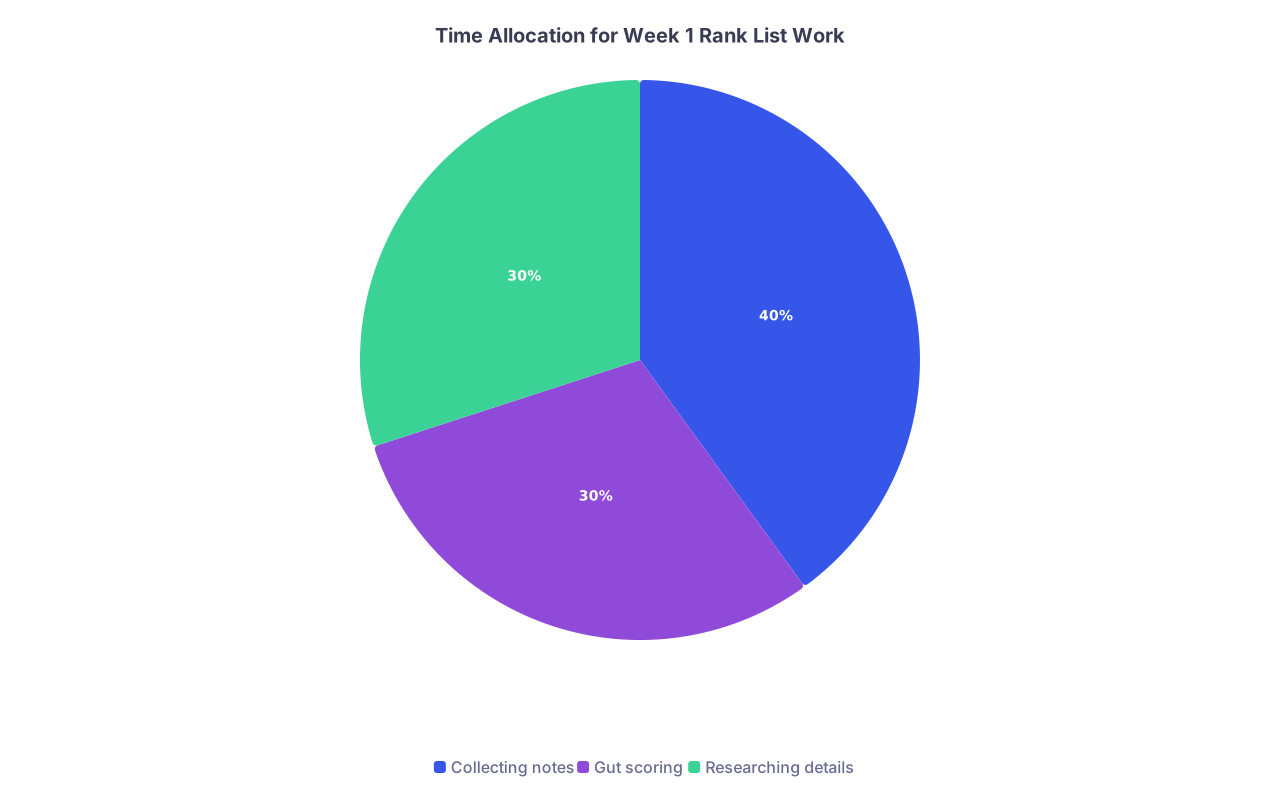
| Category | Value |
|---|---|
| Collecting notes | 40 |
| Gut scoring | 30 |
| Researching details | 30 |
Don’t chase perfection. You want good enough data so you’re not guessing in February.
Week 2: Clarify What Actually Matters to You
Here’s where most people screw up. They jump straight from “I liked them” to “Here’s my exact order” without clarifying their priorities.
Week 2 is about building your internal ranking algorithm.
Step 1: Define Your Top 5 Priorities (Not 12. Not 20.)
At this point you should narrow to five core factors. Not everything can be “critical.”
Common heavy-hitters:
- Geography (family, partner job, co-parenting needs)
- Program culture (supportive vs malignant, hierarchy, resident autonomy)
- Career goals (fellowship competitiveness, academic vs community)
- Lifestyle (schedule, call, commute, moonlighting)
- Financial reality (cost of living, moonlighting options later)
Write them in order. Be ruthless.
Example:
- Location close to partner
- Strong cards + GI fellowship match
- Non-toxic, supportive culture
- Reasonable call schedule
- Affordable city
Now go back to your sheet and:
- Add a column for each of your top 5 priorities.
- Rate each program 1–5 in each category.
You’re not building a perfect algorithm. But you’re forcing your brain to align emotion with reality.
Step 2: Create Tiers Instead of Obsessing Over Exact Order
At this point you should:
- Stop worrying about whether Program X is #4 vs #5.
- Start thinking in tiers.
Something like:
- Tier 1: “Dream but realistic” programs (I’d be thrilled to match here)
- Tier 2: “Solid, I’d be content and well-trained”
- Tier 3: “Fine, acceptable but not ideal”
- Tier 4: “Only if I have to”
Sort programs into tiers based on:
- Your gut score
- Your 5-priority ratings
- Any red flags
Then sort within each tier roughly, but do not obsess yet.
This step alone usually takes people from “I have 25 programs and I’m overwhelmed” to “I have 6–8 in my top tier and a clear bottom group.”
Mid-Break Checkpoint: Are You Behind?
By the midpoint of break, if you:
- Don’t have a master sheet
- Haven’t tiered your programs
- Can’t say out loud what your top 3 priorities are
You’re behind. Not doomed. But behind.
Block out one focused half-day and catch up. No multitasking, no “I’ll just do a little each night” fantasy. One solid 3–4 hour block and you’ll be back on track.
Week 3: Reality Checks, Conflicts, and Locking a Provisional List
This is where you turn your structured thinking into something you’re actually willing to submit (with a little polish in January/February).
Step 1: Talk to Yourself Before You Talk to Everyone Else
At this point you should read your Tier 1 and Tier 2 lists out loud. Yes, literally.
Pay attention to your reactions:
- Do you hesitate saying one program in Tier 1?
- Do you feel an internal “no” when you imagine moving a certain place higher?
- Does a supposedly “lower” program make you weirdly excited?
Highlight those. Your subconscious is trying to help.
Write down:
- 3 programs you’re most excited about
- 3 programs you trust will train you well
- 3 programs you’re only keeping because you’re scared not to
These lists usually overlap in telling ways.
Step 2: Involve the Right People (Not Everyone with an Opinion)
Now you bring in other voices—strategically.
People to talk to:
- Mentor in your specialty who knows your goals (academic vs community, fellowship aims)
- A resident or fellow at 1–2 of your top programs (if you have contacts)
- Partner/family if they’re part of the decision (geography, support, childcare)
Structure the conversations:
- “Here are my top 5 priorities.”
- “These are my current Tier 1 and Tier 2 programs.”
- “Are there any obvious mismatches between my goals and this list?”
You’re not asking people to decide for you. You’re sanity-checking.

Avoid:
- Asking 8 different attendings “What’s the best program?” in a vacuum.
- Letting non-medical relatives weigh in on prestige more than fit. Your uncle’s view of “big-name hospitals” is not what you should build your life on.
Step 3: Handle Common Conflict Scenarios
You’re probably dealing with at least one of these:
Scenario A: Prestige vs Fit
You’ve got a brand-name program where:
- Residents seemed tired.
- Location is rough for you.
- But the name is shiny.
At this point you should be clear: for most specialties, you are better off at a solid, supportive mid-tier program than a malignant “top” name. The exceptions: ultra-competitive fellowships or niche academic careers where pedigree actually opens doors.
If you’re not gunning for derm, ortho, neurosurg, plastics, or ultra-competitive cards/GI/onc, I’d personally downrank prestige in favor of fit and training.
Scenario B: Couple’s Match or Partner Compromise
You might have:
- A partner with their own match list.
- A spouse with a non-medical job.
- Kids and school districts to think about.
You can’t rank in isolation. At this point you should:
- Make a joint list of acceptable cities.
- Decide your hard no regions together.
- Agree on what’s worse: long-distance or both being at suboptimal programs.
Then adjust your tiers with that reality in mind. A program that’s perfect on paper but impossible for your partner is not actually Tier 1.
Scenario C: One Program You Loved but That Looks Weak on Paper
Maybe:
- Minimal research output.
- Weak fellowship match history.
- But you felt at home there.
Ask:
- Are your long-term goals flexible enough that strong basic training matters more than prestige?
- Could you do extra research/away rotations later if needed?
I’ve seen people thrive at “no-name” programs because they were supported, confident, and not burned out. And I’ve seen people at Big Name U completely tapped out by PGY-2.
You are not choosing a brand. You’re choosing your daily life for 3–7 years.
End of Break: Lock a Provisional Rank List
By the last few days of break, you should freeze a working version of your list. Not final, but close.
Your tasks:
Finalize Tiers and Order Within Them
- Tier 1 in exact order you’d prefer.
- Tier 2 in reasonable order.
- Tier 3 and 4 mostly sorted but not obsessively.
Write a One-Sentence Justification for Your Top 5
- “I ranked Program A #1 because…”
- If your explanation sounds like something you’d be embarrassed to tell a co-resident, that’s a red flag.
Identify January/February To-Dos
- 1–2 residents to email with follow-up questions.
- Any second-look visits (if appropriate and offered).
- Any programs you want to move up/down pending answers.
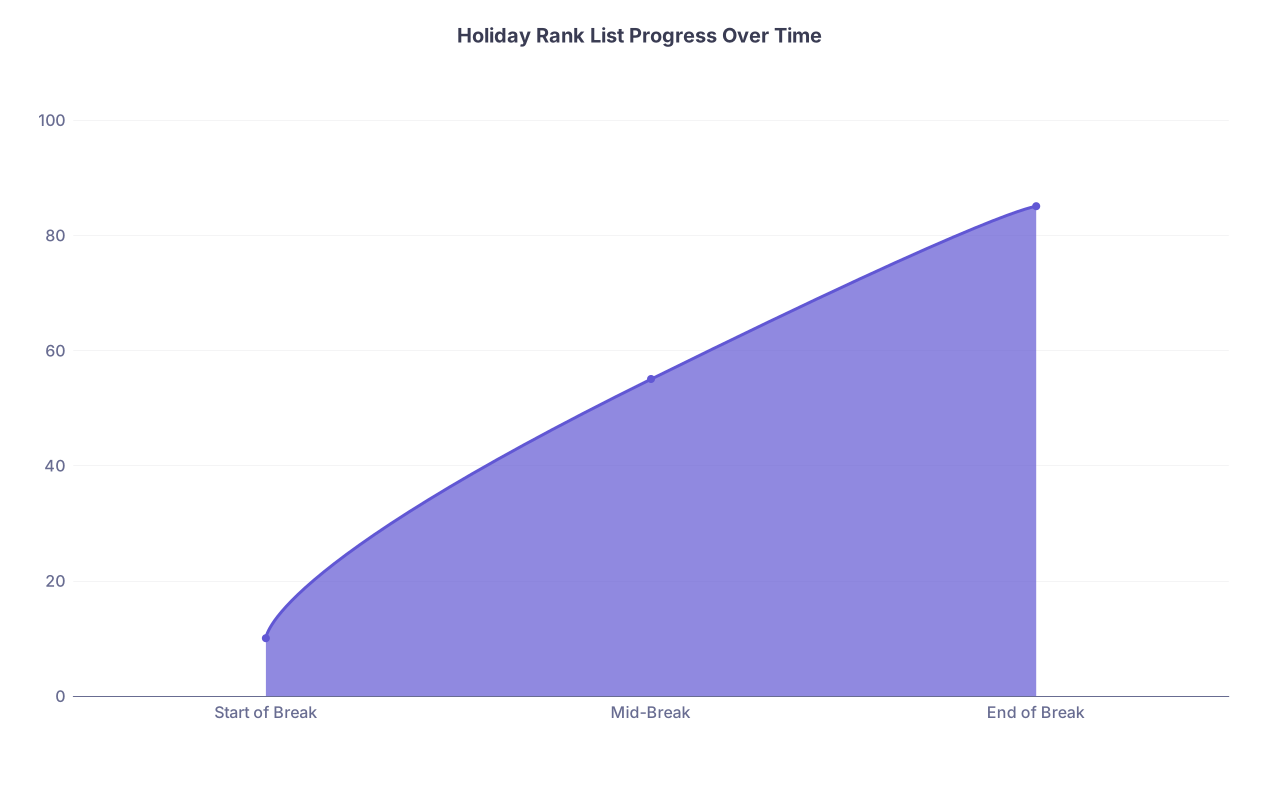
| Category | Value |
|---|---|
| Start of Break | 10 |
| Mid-Break | 55 |
| End of Break | 85 |
Where “progress” is how close you are (honestly) to a final rank list, as a percentage.
Save your provisional list in:
- Your master sheet.
- A separate simple text doc with just the order. (Easy to review without getting lost in the weeds.)
Then walk away from it for a few days. Let your brain cool down.
January–February: Final Polish (Briefly)
Holiday break is for the heavy lifting. January and February are for small refinements, not reinvention.
At this point (post-break) you should:
- Revisit your list once every 2–3 weeks, not every day.
- Make minor adjustments if you get new, substantial information.
- Resist the urge to blow up your list because of a rumor in your group chat.
Before you certify your final list:
- Re-read your top 5 priorities.
- Make sure your actual ranking aligns with them.
- Double-check there’s no program ranked highly only because of name-recognition.

Quick Reality Check: How the Match Algorithm Treats Your List
One last thing you should keep in mind: the NRMP algorithm favors your preferences, not the programs’.
That means:
- You should rank programs in exact order of where you want to go, not where you “think you’ll get in.”
- Don’t play guessing games like, “I’ll move this one down because they probably won’t rank me high.”
Rank by preference. Period. That’s how the system is designed.
FAQ (Exactly 3 Questions)
1. Should I email programs over the holidays to express interest or update them?
Generally, no. Most PDs are off or buried. A single, concise update or signal of strong interest in January is more reasonable. Over-emailing, especially during holidays, makes you look anxious, not desirable.
2. How many programs should realistically be in my “Tier 1” group?
For most people, 3–8. If you have 15 programs in Tier 1, you don’t have a Tier 1. Tighten your priorities, be honest about places you’d be merely fine versus genuinely happy.
3. What if my family strongly prefers a program I don’t feel good about?
You listen, but you don’t outsource the decision. This is your job, your daily life, your mental health. Give weight to real concerns (childcare, safety, partner employment), but if a program feels wrong to you, don’t rank it high to make someone else comfortable.
Key Takeaways:
- Use holiday break to build a single, structured master sheet and capture your real impressions before they blur.
- Clarify your top 5 priorities, build tiers, and align your rankings with what you actually value—not what looks impressive.
- By the end of break, you should have a provisional, honest rank list, needing only minor tweaks in January, not a full rebuild.


