

Most applicants botch second looks because they treat them like bonus visits instead of timeline-sensitive decisions.
You are not “just visiting again.” You are inserting extra travel, stress, and subtle bias into the final weeks before you certify your rank list. Do it right and second looks can sharpen your list. Do it poorly and they cannibalize your time, your energy, and sometimes your judgment.
Here is how to schedule second looks without derailing your rank timeline—week by week and, toward the end, day by day.
Big Picture: Where Second Looks Fit In Your Match Timeline
At this point in the cycle, you should know where you are:
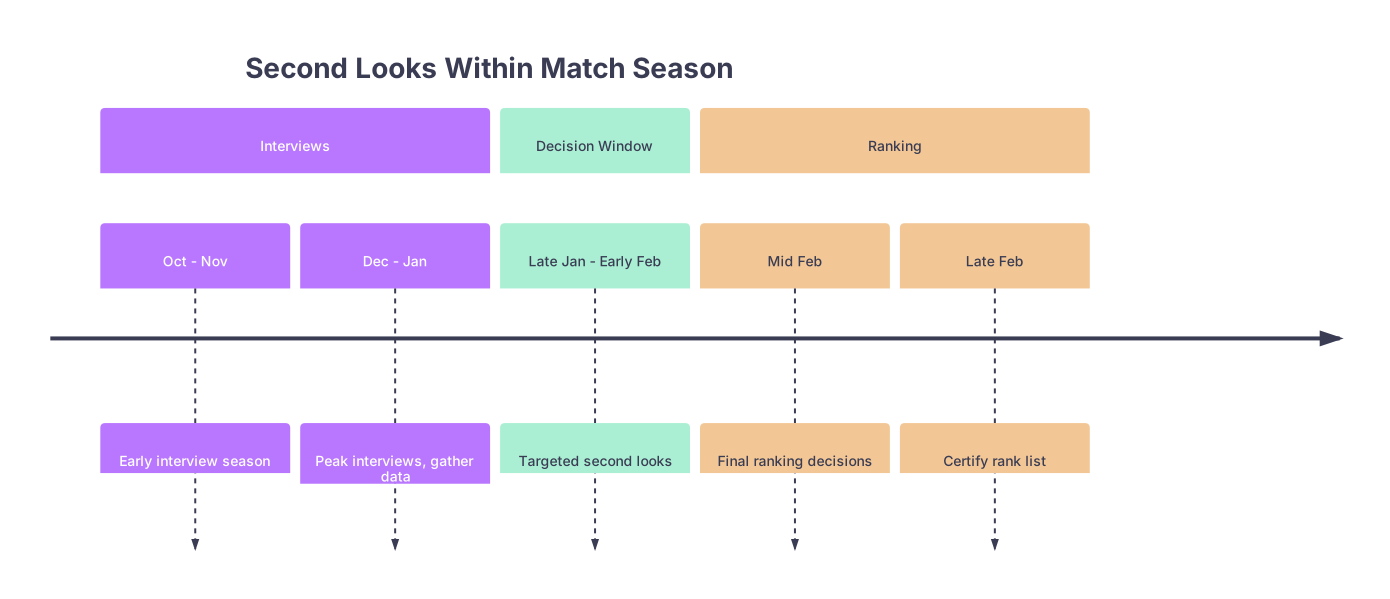
- Interviews mostly: October–January
- Second looks: Late January–mid February
- Rank list due (NRMP): Late February
| Period | Event |
|---|---|
| Interviews - Oct - Nov | Early interview season |
| Interviews - Dec - Jan | Peak interviews, gather data |
| Decision Window - Late Jan - Early Feb | Targeted second looks |
| Ranking - Mid Feb | Final ranking decisions |
| Ranking - Late Feb | Certify rank list |
Your goal is simple:
- Use second looks only to answer specific unanswered questions.
- Cluster them into a tight 2–3 week window.
- Protect the final 5–7 days before the rank deadline as “decision time,” not travel time.
Before You Schedule Anything: 3 Filters (December–Early January)
By late December or early January, you should:
- Have finished at least half your interviews
- Started a preliminary rank list (even if messy)
- Flagged “uncertain” programs
At this point you should run every program through three harsh filters before even thinking “second look.”
Filter 1: Would I actually rank this program in my top 5–7?
If the answer is no, do not second look. Period.
- Second looks are not for “maybe #12” programs.
- They are for “I could see myself at #1–5, but I need clarity.”
Filter 2: Do I have specific questions that cannot be answered by email or virtual follow-up?
Examples that justify a second look:
- You want to see how residents actually interact on rounds, not just at interview dinner.
- You need to compare two similar programs in the same city for vibe, call schedule culture, or faculty approachability.
- You want to confirm spousal job options, commute, or neighborhood feel.
Examples that do not justify a second look:
- “I just want to show more interest.”
- “I liked them and want them to remember me.”
- “Everyone else is doing second looks.”
Filter 3: Does this program explicitly discourage second looks?
Some institutions are pretty blunt: no second looks, or visits will not affect rank. If so:
- Respect it.
- Do not push for an unofficial visit that annoys them. You gain nothing.
January: Building Your Second Look Plan (Week by Week)
Think in three phases.
| Category | Value |
|---|---|
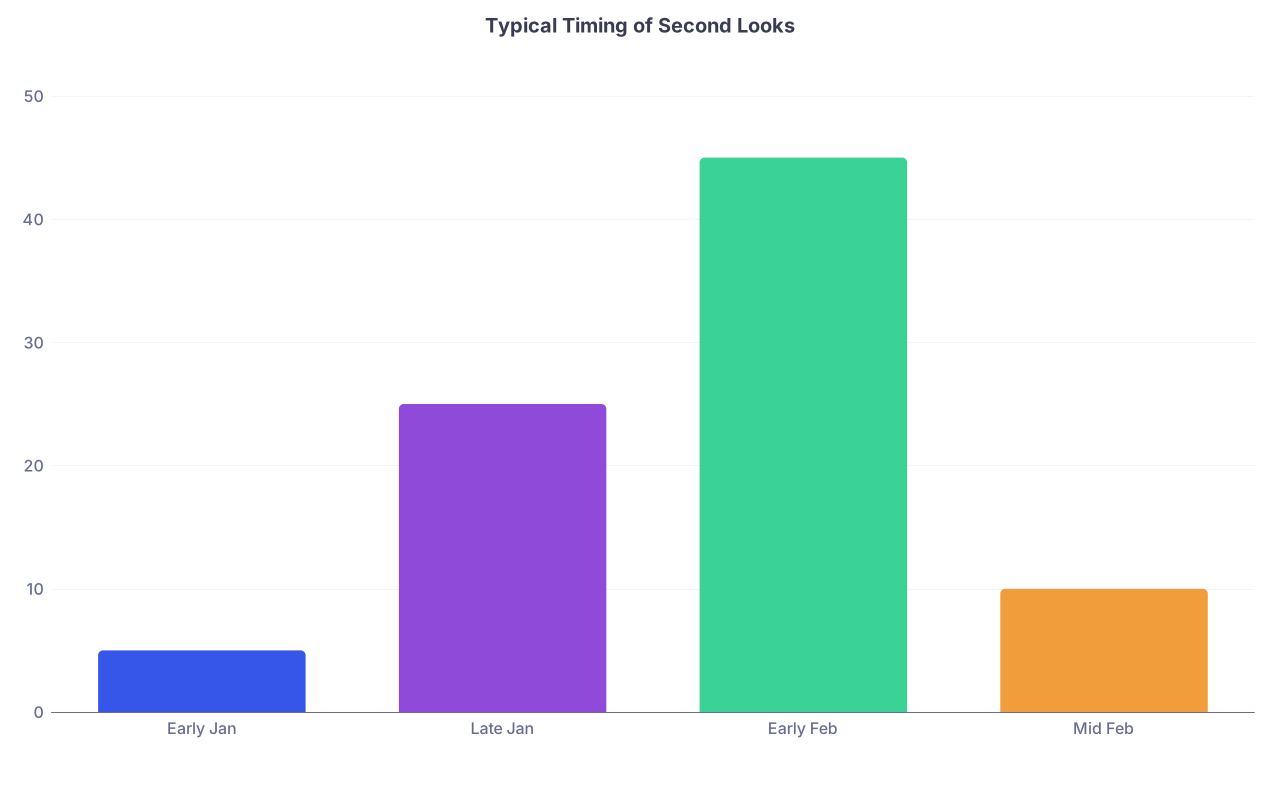
| Early Jan | 5 |
| Late Jan | 25 |
| Early Feb | 45 |
| Mid Feb | 10 |
Week 1 of January: Rough List and Early Intel
At this point you should:
Draft a tentative top 10 list.
- Mark 2–5 “high priority / unclear” programs.
Review your interview notes.
- If your note says “great vibes, residents happy, strong fellowship placement,” you probably do not need a second look.
- If it says “cannot tell if malignant or just high volume,” that might warrant a second look.
Quietly gather intel.
- Talk to alumni from your med school who matched at those programs.
- Ask: “If you could go back, what would you have wanted to see before ranking?”
- A lot of what you think you need a second look for can be answered this way.
Week 2 of January: Decide If You Will Do Second Looks
By now you should:
- Have a short list of 2–4 places that might justify a visit.
- Consider money and time: flights, days off, fatigue.
At this point ask yourself:
- “If I do zero second looks, would my rank list still be reasonably solid?”
- If yes, keep second looks to 1–2 max.
- If no, fix your interview data problem first—review notes, talk to mentors—before reflexively adding travel.
Late January–Early February: Scheduling Second Looks Without Chaos
Now we move from “thinking about” second looks to booking them.
Step 1: Protect Your Rank Decision Window
Look up your actual NRMP rank list certification deadline. Then:
- Block off the final 5–7 days before that date as “no travel, no second looks.”
- This is your thinking and ranking time. Non‑negotiable.
| Period Relative to Rank Deadline | Recommended Use |
|---|---|
| -4 weeks | Safe to schedule visits |
| -3 weeks | Safe, but cluster trips |
| -2 weeks | Only top-priority visits |
| -1 week | No visits; finalize ROL |
Step 2: Cluster Visits Logically
At this point you should group by:
- Geography: Hit multiple programs in the same city / region on one trip.
- Priority: See only programs you could legitimately rank in your top 5–7.
Example smart cluster (Internal Medicine):
- Fly to Boston for 2 days.
- Day 1: Second look at MGH.
- Day 2: Second look at BIDMC.
- Fly home. Debrief, write notes.
Example dumb plan:
- One second look per separate weekend, four different cities, each 2–3 days before another interview or exam. That is how you end up exhausted and confused.
Step 3: Contact Programs the Right Way (Without Looking Desperate)
When you are ready to request, send a concise email to the program coordinator (CC your interviewer only if that feels natural and you had a strong connection).
Template:
Subject: Second Look Visit – [Your Name], [Specialty] Applicant
Dear [Coordinator Name],
I interviewed with [Program Name] on [date] and remain very interested in your program. I am in the process of finalizing my rank list and would appreciate the opportunity for a brief second look to better understand the day-to-day resident experience, particularly regarding [specific interest: e.g., ICU rotations / research time / ambulatory curriculum].
I will be in [city] on [date range]. Would it be possible to visit for part of a day to meet with residents or observe morning conference?
I understand that any visit will not influence your rank list and is solely for my information.
Thank you for your time and consideration,
[Name]
[AAMC ID]
[Contact info]
That last line matters. It signals you understand the rules and are not trying to game the system.
What Each Week Should Look Like (Late Jan Through Rank Deadline)
Let us lay out a clean week‑by‑week structure you can actually follow.
Week −4 Before Rank Deadline: Finalize Second Look Targets
At this point you should:
- Have your interviews 95% done.
- Lock in 2–3 maximum second looks, ideally within this week and next.
Tasks this week:
- Book travel for all second looks you intend to do.
- Build a working rank list in a spreadsheet or NRMP mock list:
- Tier 1: Strong favorites
- Tier 2: Middle
- Tier 3: Safety / low enthusiasm
You will adjust tiers after visits.
Week −3: Execute the Bulk of Your Second Looks
This is your primary second look week.
Day before each visit:
- Re‑read your interview notes.
- Write 3–5 specific questions:
- “How often do seniors actually get to operate vs assist?”
- “Realistic research expectations in PGY‑1?”
- “How is backup handled when someone is out sick?”
During the visit:
- Focus on residents more than faculty. They are your future life.
- Watch for:
- Tone of voice on sign‑out.
- How they talk about program leadership when leadership is not in the room.
- How they respond when you ask, “What is the toughest part of this program?”
Immediately after each visit (same day if possible):
- Sit somewhere quiet and brain‑dump:
- 3 things that moved this program up your list.
- 3 things that moved it down or left you uneasy.
- Your gut rank in relation to others, before overanalyzing.

Week −2: Only High‑Impact Visits, Start Locking Ranks
If you still have second looks scheduled this week, they should be:
- Absolute top priority programs (realistically #1–3).
- Programs where your ranking could significantly change based on the visit.
At this point you should:
- Freeze your bottom half of the list.
- You are unlikely to shift #15 vs #16 based on any remaining data.
- Focus your mental energy on the top 5–7.
After your final second look:
- Do a full top‑to‑bottom pass on your rank list.
- Ask: “If I match at #1, will I be happy? If I slide to #4, will I still be okay?”
- If the answer is no, you need to reorder.
Final 7–10 Days: No New Visits, Only Decisions
This is where a lot of applicants sabotage themselves. They cram in last‑minute second looks that scramble their intuition and eat up the time they should be using to think.
Day −10 to −7: Synthesize All Second Look Data
You should not be traveling now.
Tasks:
- Review notes from each second look.
- For each program you visited, write a one‑sentence summary:
- “Great training, but residents exhausted and moderately bitter.”
- “Less prestigious, but people seem genuinely happy and supported.”
- Create a comparison grid for your top 5–7:
| Program | Resident Morale | Fit with Interests | Location Fit | Gut Rank |
|---|---|---|---|---|
| A | High | Excellent | Good | 1 |
| B | Moderate | Excellent | Excellent | 2 |
| C | High | Good | Fair | 3 |
| D | Low | Excellent | Excellent | 4 |
Trust yourself to use subjective impressions. You are not a robot, and you are the one who has to live there.
Day −6 to −3: Set and Stress‑Test Your Final Order
At this point you should:
- Have a draft rank list that you could live with if the deadline were today.
- Spend 20–30 minutes per day reviewing it—not hours doom‑scrolling forums.
Two useful exercises:
“Match in your head” rehearsal
- Imagine you matched at Program #1. How do you feel?
- Now imagine #2. Then #3.
- If you feel secretly relieved with #2 over #1, you probably have them reversed.
Constraints check
- Spouse / partner job?
- Family responsibilities?
- Visa or licensing issues?
- If any of those make a program effectively impossible, do not rank it high “just because prestige.”
No new second looks now. You are done gathering.
| Category | Value |
|---|---|
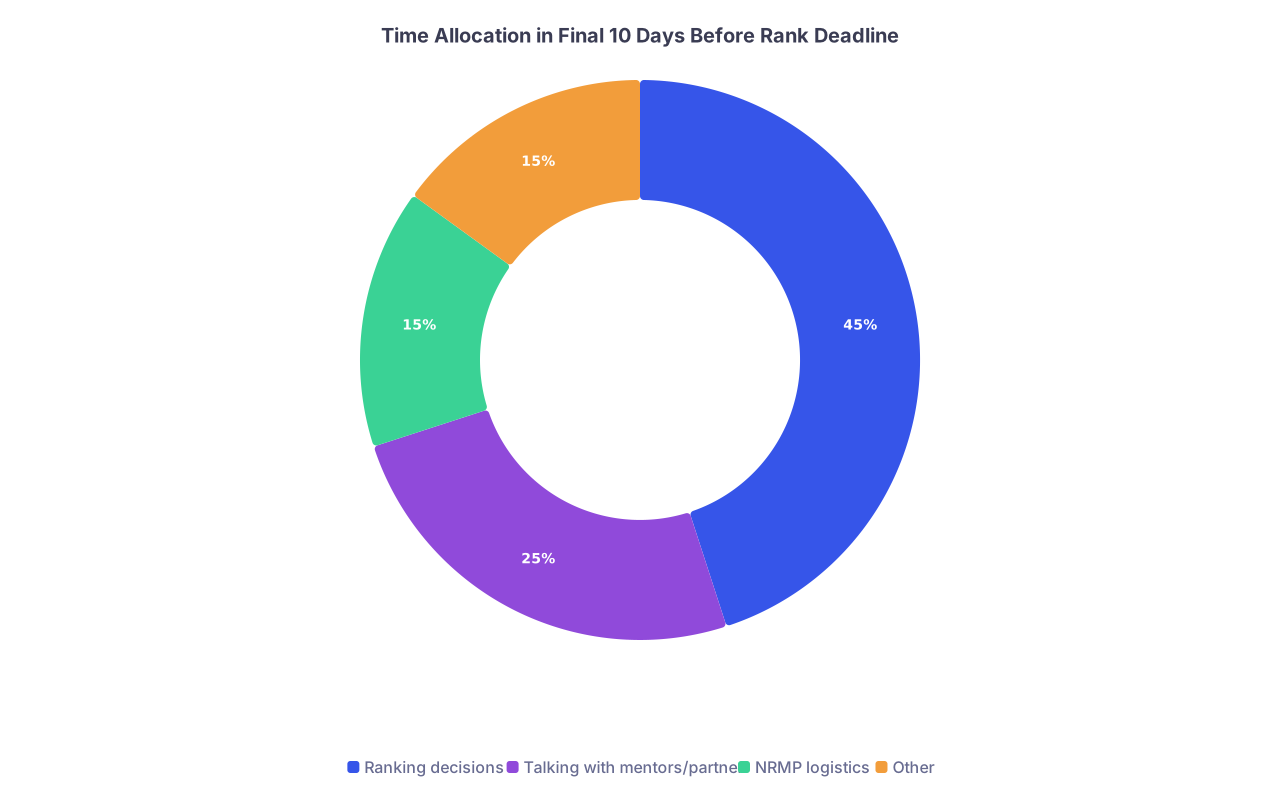
| Ranking decisions | 45 |
| Talking with mentors/partner | 25 |
| NRMP logistics | 15 |
| Other | 15 |
Day −2 to Deadline: Certify and Walk Away
Two days before the NRMP deadline you should:
- Finalize and certify your list. Yes, early.
- Take screenshots and keep confirmation emails.
Do not:
- Change your rank list on deadline day because of a random forum post.
- Add a last‑second second look that you “squeeze in” on the final day. That is pure chaos.
How to Avoid Letting Second Looks Bias Your Rank List
Second looks are dangerous because they are emotionally loud. Recent impressions can distort long‑term judgment.
Here is how to counter that:
Anchor to objective data first.
- Case volume, fellowship match, board pass rates, call schedule.
- Use your interview notes and program materials.
Use second looks as tie‑breakers, not king‑makers.
- A great second look should move a program a few spots, not catapult a mid‑tier option to #1 unless something truly game‑changing surfaced.
Beware of “recency bias glow.”
- If you visit Program X on Monday and rewrite your entire list on Tuesday, force yourself to wait 48 hours and revisit.
- Ask: “If I had visited them three weeks ago, would I still feel this way?”
Control the narrative in your head.
- “They were so nice to me on second look” is not a reason to move a program to #1.
- “Residents candidly acknowledged flaws and showed how they are improving things” actually is legitimate data.
Common Pitfalls (And What You Should Do Instead)

Mistake 1: Using second looks to signal interest
Reality: Most programs have their rank list basically set before your second look or are obligated not to change it based on extra visits.
Do instead: Use second looks purely for your decision making. Express interest with thank‑you emails, occasional meaningful updates, and solid interview performance, not extra trips.
Mistake 2: Visiting too many places
You do not need 8 second looks. You need clarity on your top 3–5 choices.
Do instead: Cap at 3 (maybe 4 if two are in the same city).
Mistake 3: Scheduling second looks before you have enough interview data
If it is mid‑November and you are already booking “second looks” before seeing your full slate of programs, you are operating blind.
Do instead: Wait until late January, once you have a broad sense of the field.
Mistake 4: Letting travel eat your cognitive bandwidth
Red‑eye flights, rapid turnarounds, bouncing between cities. That is how you show up exhausted to actual interviews or lose the mental space to think clearly about your rank list.
Do instead: Bundle trips, avoid back‑to‑back travel weeks, and defend your final 7 days as no‑travel time.

| Step | Description |
|---|---|
| Step 1 | Consider Second Look |
| Step 2 | Do Not Visit |
| Step 3 | Schedule Second Look |
| Step 4 | Use Data to Adjust Rank |
| Step 5 | Top 5-7 Program? |
| Step 6 | Specific Questions Unanswered? |
| Step 7 | Visit Fits -4 to -2 Week Window? |
FAQ (Exactly 4 Questions)
1. Do programs ever change their rank list based on second looks?
Officially, they should not. Many explicitly state that second looks will not influence their ranking. Unofficially, human beings remember faces, but you cannot bank on that, and you should not design your life around a tiny possible bump. Treat second looks as a tool for your clarity, not as a strategy to climb their list.
2. Is it a red flag if I do not do any second looks?
No. The majority of applicants match without a single second look. If your interviews, research, and conversations with residents gave you enough information, skipping second looks is completely reasonable. Programs will not see “no second look” as disinterest.
3. What if my top choice is far away and I cannot afford a second trip?
Then you rely on what you have: your interview day impressions, virtual follow‑ups, emails with residents, and alumni feedback. You can also ask if they offer virtual “second look” sessions or resident Q&A. Rank based on fit, not on guilt that you did not fly back.
4. Should I tell a program during a second look that they are my #1?
Only if it is true and only once you are genuinely sure. If you have already decided they are your top choice, a brief, honest statement to the PD by email after the visit is fine. But do not make this declaration at three different programs, and do not say it just to curry favor. It does not change the match algorithm but it can create ethical landmines.
Key points:
- Limit second looks to top‑tier programs where you have specific unanswered questions.
- Cluster them in the -4 to -2 week window before the rank deadline and block the final week for decision making only.
- Use second looks as tie‑breakers, not as a way to blow up your carefully built rank list at the last minute.


