
The worst residency ranking mistake isn’t picking the “wrong” #1 program. It’s freezing and not deciding at all.
If you’re stuck between two or three programs and your brain feels like a browser with 97 tabs open, you’re not alone. I’ve watched people literally hit “Certify” in NRMP with shaky hands and puffy eyes from crying over whether Program A or Program B should be #1. You’re in very common, very messy company.
Let’s walk through this like two people sitting on the floor with your laptop, surrounded by half-finished pros/cons lists and cold coffee. Because that’s probably close to your life right now.
The Brutal Truth About “Choosing Wrong”
Here’s the ugly little thought in your head:
“If I pick the wrong #1, I’ll ruin my career, my happiness, and basically the rest of my life.”
I’m going to say this as bluntly as I can: that’s not how the Match works and not how life works.
Most people don’t have a “perfect” program. They have 3–6 places they could be okay-to-very-happy at, and then a long tail of “I guess I’d go there if I had to.” You’re probably stuck between options that are all objectively good. That’s why it feels impossible.
Look at what actually happens:
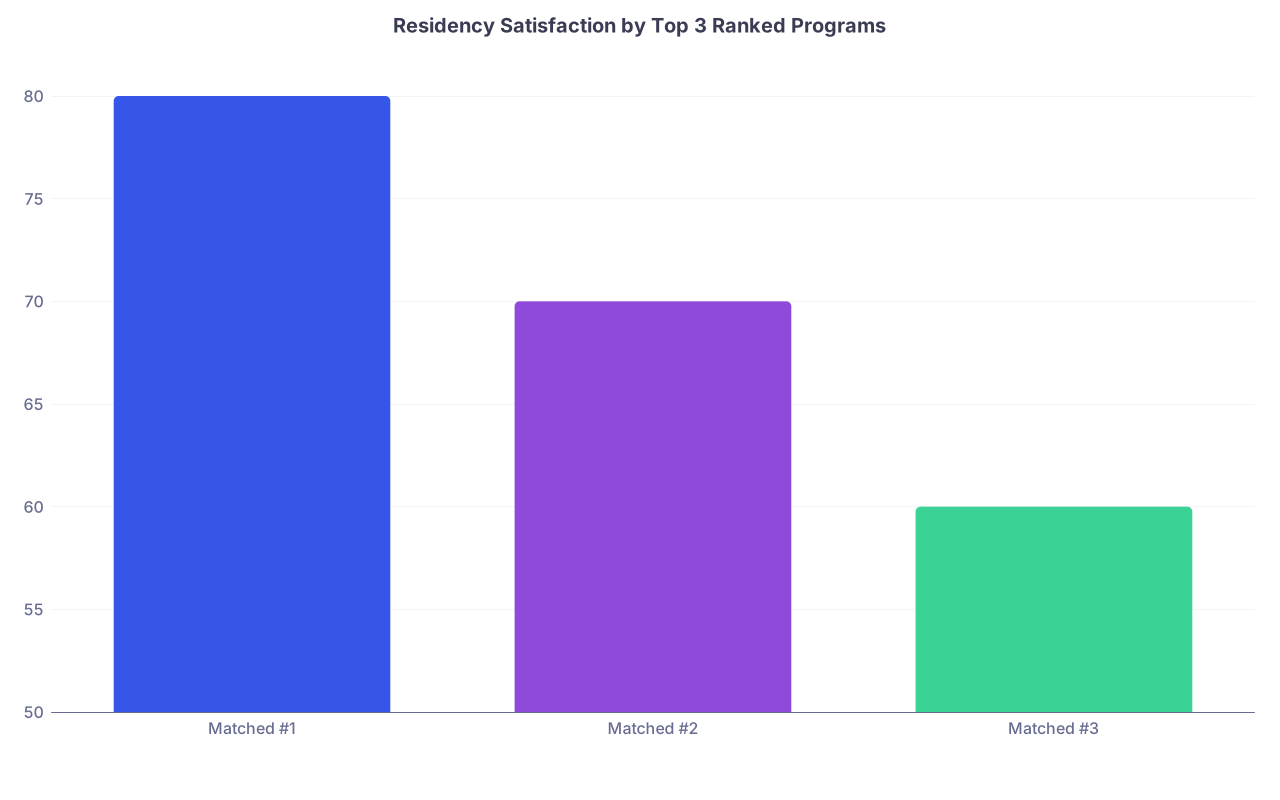
| Category | Value |
|---|---|
| Matched #1 | 80 |
| Matched #2 | 70 |
| Matched #3 | 60 |
No, these aren’t exact national stats, but they match what I’ve seen and what residents say out loud when they forget to be performatively grateful:
People who match #2 or #3 are usually fine. Often happy. Sometimes secretly relieved.
Here’s the pattern I see:
- People catastrophize before the Match: “If I don’t get my #1, it’s over.”
- They match at #2 or #3.
- First month of intern year, they’re drowning in pages, not sitting around comparing rank list choices.
- By October, they’re saying things like, “Honestly, I think this was better for me than [other program].”
You’re not choosing between heaven and hell. You’re choosing between slightly different flavors of “really hard, really formative 3–7 years.”
The bigger risk isn’t picking the “wrong” #1. It’s making a rushed, fear-based decision that ignores actual red flags… or letting anxiety push you into not submitting a list you’re at peace with.
Why You’re Actually Stuck (It’s Not What You Think)
You probably think you’re stuck because the programs are “too similar.” Same prestige tier, similar fellowship options, similar location type. But the paralysis usually comes from something else:
You’re trying to predict the future with 0% uncertainty tolerance.
You want a guarantee. No surprises. No risk. That doesn’t exist. Not for this. Not for anything in medicine.You’re mixing “gut feeling” with anxiety.
Was Program A “off” because your interviewer was weird, or because you slept 3 hours and your social battery was dead? You’re second-guessing every tiny vibe.You’re trying to optimize every category.
You want best fellowship options + best city + happiest residents + most supportive PD + high case volume + best cost of living + near family. That’s fantasy-land. Something will lose.You’re secretly more scared of regret than of actually being unhappy.
You’re imagining Future You at 2 a.m. as an intern saying, “If only I’d ranked Program B higher, my life would be perfect.” That version of you lives rent-free in your brain.
Let me be clear: you are not broken for thinking like this. This is what an exhausted, perfectionist, high-achieving brain does when asked to make a big decision with incomplete information and real consequences.
But we can still box this chaos in.
A Structured Way to Break the Tie (That Doesn’t Feel Fake)
You’ve probably already made a pros/cons list. Maybe three. They didn’t help. I know.
You don’t need more lists. You need a hierarchy of what actually matters to you, and a way to force your brain out of loop mode.
Step 1: Force yourself to pick 3–4 non-negotiables
Not 12. Not “everything.” Just the stuff that, if it’s wrong, will legitimately make you miserable.
Examples that actually matter long-term:
- Being close to a partner or kids
- Cost of living you can’t afford
- Malignant culture / scared residents
- Consistently poor fellowship placement in your must-have field
- Geography you know you hate (you’re extremely not a “winters in Minnesota” person)
Now look (really look) at your top 2–3 programs and ask:
“Does any of these violate a non-negotiable in a serious way?”
If one does, that program isn’t your #1. I don’t care how shiny the name is.
Step 2: Use a weighted scoring system for your anxious brain
This isn’t because the numbers are magical. It’s because your brain needs a tiebreaker that feels less emotional.
Pick 5–7 categories that matter to you (not what Reddit says):
| Factor | Weight (1–5) |
|---|---|
| Location/Support | 5 |
| Program Culture | 5 |
| Fellowship Match | 4 |
| Cost of Living | 3 |
| Case Volume | 3 |
| Research | 2 |
Then, for each program, rate 1–5 in each category, multiply by weight, and sum.
Will it feel artificial? Yes. Does it expose where you’re lying to yourself? Also yes.
Because sometimes you say you don’t care about location, but suddenly the “near family, lower-tier name” program blows the “famous brand, far from everyone” program out of the water on your own scoring.
That disconnect matters.
The Gut Check You’re Avoiding
Okay, after you’ve done the rational exercise, here’s the part that usually makes people squirm:
If you had to* submit the list in the next 30 seconds… which one would you put first?
Don’t overthink it. First answer that flashes up. That’s the one your subconscious has already picked.
Here’s another nasty little exercise:
Flip a coin.
Heads = Program A #1.
Tails = Program B #1.
You’re not actually going to obey the coin. You’re watching your own reaction while it’s in the air or when it lands.
- If it lands on A and your chest tightens and you think, “Ugh, I kind of wanted B…” — that’s data.
- If it lands on B and you feel relieved — that’s data.
That “oh no” or “oh good” moment is your gut, minus three weeks of over-analysis and forum scrolling.
The Match Algorithm: Why You Should Rank in Actual Preference Order
Let me untangle one more layer of anxiety: the “strategy” anxiety.
“I like Program A more, but I think I have a better shot at Program B, so should I rank B first to ‘secure’ a spot?”
No. Rank in your true preference order. The algorithm literally favors your preferences if you’re rankable at the program.
Ultra-simplified example:

| Step | Description |
|---|---|
| Step 1 | You Rank Programs |
| Step 2 | NRMP Starts With #1 |
| Step 3 | Temporarily Matched There |
| Step 4 | Try Your #2 |
| Step 5 | You Stay Matched There |
| Step 6 | Program Ranks You? |
| Step 7 | Program Prefers Another Applicant? |
The only time “strategy” by ranking lower-preference programs higher helps is… never. You just hurt yourself by telling the algorithm you like B more than A when you don’t.
So your job is not to game your chances. It’s to tell the system, as honestly as possible: “If the universe were kind, this is where I’d like to end up.”
Coping With The Fear of Regret (This Is What’s Really Eating You)
The truth: you’re not just ranking programs. You’re ranking future versions of yourself.
- You in City X vs City Y.
- You near family vs far.
- You clinically stronger vs more chill schedule.
Every choice excludes something. And your brain is furious about that.
So it starts building horror stories:
- “If I pick the more academic place, I’ll burn out and be miserable and quit medicine.”
- “If I pick the more chill place, I’ll never match into a good fellowship and I’ll hate myself forever.”
- “If I pick the city over the name, I’m basically lazy.”
- “If I pick the name over the support system, I’m selfish.”
Here’s what I’ve actually seen on the ground:
- Residents at powerhouse name programs who are exhausted… but proud and happy with their training.
- Residents at mid-tier community programs who are thriving, landing fellowships they care about, actually seeing their kids.
- People who thought they’d be devastated not to match #1… and then two years in, don’t even talk about it.
Your future regret monster is very loud right now. But Future You is going to be too busy writing H&Ps and figuring out how to not drown on nights to sit around rewinding your rank list like security footage.
The “what if” will not vanish. It just gets quieter when your real, lived daily life fills up the space.
When Two Programs Really Are Basically Equal
Sometimes, after all the analysis, they’re still tied. You’ve done the work. You’ve run the numbers. You’ve flipped the coin. Still stuck.
Here’s the uncomfortable reality: then it actually… doesn’t matter.
If both are:
- Non-malignant
- Reasonable training
- Locations you can tolerate
- Acceptable fellowship outcomes for what you think you want
Then whichever one you pick will become “your” program, and your brain will post-rationalize it into destiny. Humans are very good at that.
At that point, you’re not choosing between good and bad. You’re choosing between two parallel good-enough paths, each with different tradeoffs.
So yes, flip a coin and lock in whatever it says. Or let a tiny preference decide: better call room, closer airport, cheaper rent. That’s not “being shallow.” That’s breaking a tie you honestly can’t resolve with big factors.
Short-Term Coping: How to Survive Until Rank List Certification
You’re not going to banish all anxiety. But you can keep it from hijacking your entire brain.
Some things that actually help in this weird limbo:
- Put a decision deadline 3–5 days before the actual NRMP deadline. Your future self will be more panicked, not wiser.
- Once you pick a #1, don’t keep re-opening spreadsheets at 1 a.m. Reopening the wound doesn’t magically produce clarity.
- Stop asking 15 different people for their takes. You know what programs your classmates and random attendings worship. That’s their life, not yours.
- Limit doom-scrolling on Reddit/SDN. Those places are full of “I regret everything” and “my program is trash” posts that are more venting than reality.
- Talk to one or two residents you trust, not ten. Ask concrete questions: “What’s the worst part of your program? What surprised you after you started?”
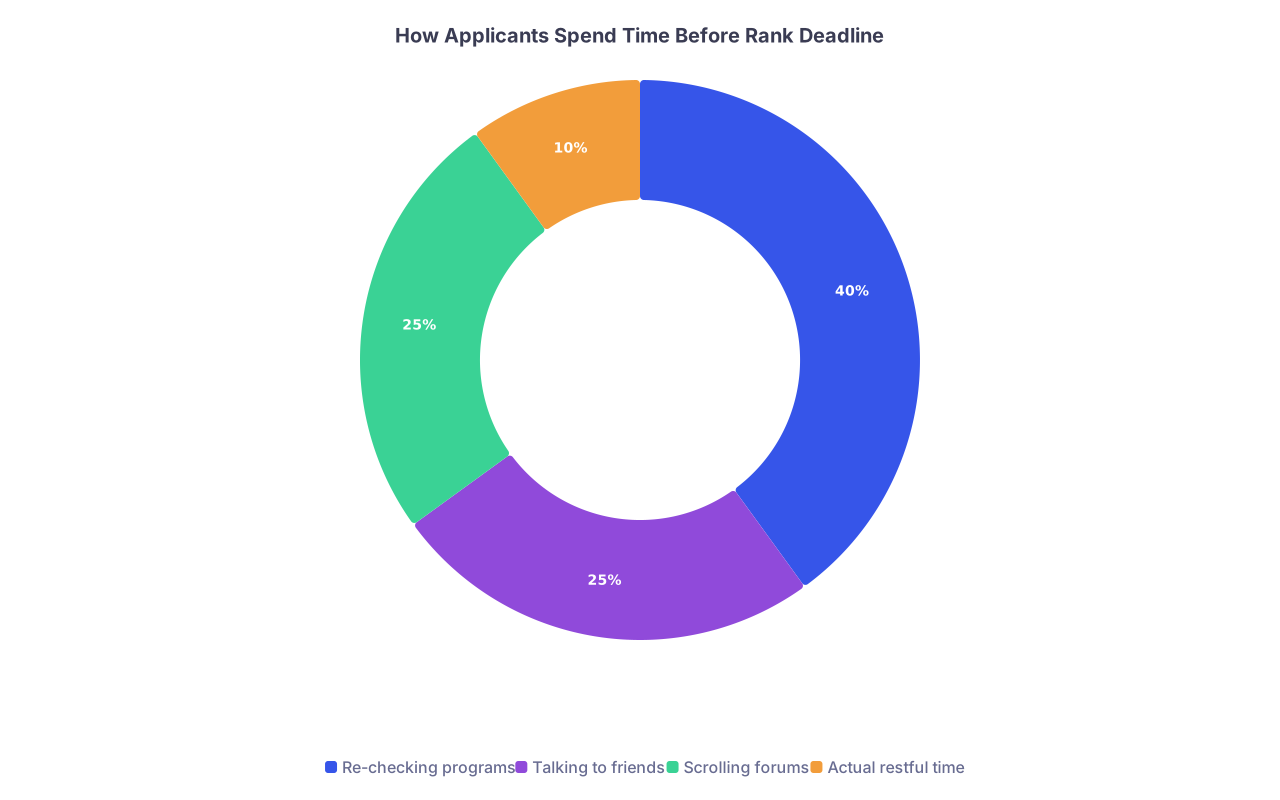
| Category | Value |
|---|---|
| Re-checking programs | 40 |
| Talking to friends | 25 |
| Scrolling forums | 25 |
| Actual restful time | 10 |
You don’t need more “data” at this point. You probably need sleep, food that isn’t from a vending machine, and 24 hours of not touching your rank list.
How to Know You’ve Done “Enough” Thinking
You’ll never feel 100% certain. That’s not the bar.
You’ve done “enough” when:
- You could explain to a friend, in one or two sentences, why each of your top 3 is ordered the way it is.
- You’ve checked your non-negotiables against each program.
- You’re not discovering new information anymore, just re-reading the same stuff and spiraling.
- Changing the order back and forth makes you more anxious, not more clear.
That “ugh, I’m just rearranging the same three programs over and over” feeling? That’s often the sign you’re done, not that you need more time.
At that point, the bravest thing you can do is… stop. Certify. Allow the discomfort to sit there without giving it more control.
FAQ – Exactly What You’re Afraid to Ask Out Loud
1. What if I pick my #1 based on location and then regret not choosing the more prestigious program?
You might. That’s the truth. But I’ve seen way more people miserable from underestimating location/support than prestige. It’s easy to worship brand names on paper; it’s harder when you’re isolated, far from anyone who cares about you, in a city you hate, during the most stressful years of your life. Prestige helps with some doors. It doesn’t hold your hand post-call when you’re falling apart.
2. What if I don’t know my fellowship plans yet? How do I rank without that?
Then don’t pretend you know. For people still unsure, general training, supportive faculty, and flexibility matter more than laser-targeted fellowship pipelines. Programs that place reasonably into multiple fellowships, with attendings who actually write strong letters and care about teaching, will serve you better than ultra-niche fellowship factories if you’re still figuring yourself out. Rank based on overall fit and culture, not a hypothetical future you aren’t sure of yet.
3. Should I email programs to “signal” they’re my #1 before I finalize my list?
If you genuinely know one program is your clear #1 and you want to tell them, fine, send a short, honest email. But don’t use that as a substitute for deciding your list. And don’t lie and tell two places they’re #1; people talk more than you think. Also remember: NRMP rules mean programs aren’t supposed to ask your rank list or force you to commit. Your list is for you. The system already favors you putting your true #1 first.
4. What if I certify my list and then change my mind?
You can modify and re-certify as many times as you want until the actual NRMP deadline. Every new certified version overwrites the old one. The danger isn’t that you’ll be “locked in” too early; it’s that, in a last-minute panic at 11:58 p.m., you’ll make a chaotic change you regret. That’s why I tell people: aim to be done a few days early, then only change if there’s a real new reason, not just a new wave of anxiety.
5. Can one “bad” choice in ranking really ruin my whole career?
No. It can make some things harder or easier, sure. But I’ve watched people from modest programs land dream fellowships because they hustled, found mentors, and did good work. I’ve also watched people from fancy programs crash and burn because they were miserable, unsupported, or checked out. Your program shapes you, but it doesn’t predetermine your entire life. You’re giving this decision way more absolute power than it actually has.
If you remember nothing else, remember this:
You’re not choosing between perfect and disaster. You’re choosing between several imperfect-but-workable paths.
Rank in your real order of preference, based on your actual values, not fear.
And then let yourself be done.