
The standard advice about second looks is backwards: most people chase prestige instead of fit, then wonder why they’re miserable in July.
You’re asking the right question: “Should I prioritize second looks at reach or safe programs?” Here’s the blunt answer:
If you’re going to do second looks at all, prioritize programs where:
- You’re realistically rankable and
- Additional in‑person exposure might meaningfully change your rank list
That usually means:
- Your realistic top 5–8 programs, whether they’re reach or safe
- Not the “Hail Mary” reaches that interviewed you as courtesy filler
- Not the safeties you’d only attend if everything else implodes
Let’s unpack this properly.
First: Are Second Looks Even Worth It?
Second looks are optional everywhere and borderline useless some places.
Here’s what second looks generally are:
- An informal, usually resident-heavy visit after interviews
- A chance for you to clarify culture, workflow, and vibe
- Rarely, a chance for them to get another data point on you
Here’s what they are not:
- A magic way to jump 30 spots on a rank list
- A requirement for ranking someone highly
- A subtle “secret handshake” only insiders know
Plenty of people match at their #1 with zero second looks. I’ve seen competitive IM, EM, Gas, even Derm folks match top programs they never revisited.
So you only do second looks if:
- You’re genuinely torn between programs
- You felt rushed/uncertain during interview day
- Something about a program changed (new leadership, new site, concerns raised by residents)
If none of that is true, you can stop reading and go live your life.
The Real Point of a Second Look
Second looks are for you, not them. That’s the core rule.
Use them to answer questions like:
- “Do I see myself actually happy here?”
- “How do the residents talk when faculty aren’t in the room?”
- “Does the day‑to‑day schedule match what I was told on interview day?”
- “Are people burned out, bitter, or genuinely supported?”
You are not trying to “audition” again. You’re trying to protect future‑you from spending 3–7 years in a bad fit.
So when we talk about reach vs safe, the real question becomes:
Where will this extra data most change my rank list?
That’s where your second looks belong.
Reach vs Safe: What Those Words Actually Mean
Let’s define this in residency terms, not premed nonsense.
Reach program:
You meet the minimums but know you’re on thinner ice
Examples:- You’re an average Step 2 scorer for a hyper‑competitive academic program
- You’re coming from a less-known school applying to a powerhouse name
- Your application has gaps (late Step 2, weak research) but they still interviewed you
Safe program:
You’re above average for them on paper
Examples:- Strong Step 2, strong letters, and they’re mid‑tier/community
- You have some inside connection or home program advantage
- You left the interview feeling you were in their “definitely rank” pile
The key question:
Do second looks change your odds more at reach or safe programs?
Usually? Neither, by much. But they absolutely change your insight more at some than others.
When to Prioritize Reach Programs
You prioritize second looks at reach programs only if:
You’re realistically rankable there
- You weren’t “interview #46 of 60” in a program that takes 8
- Conversation felt engaged, not perfunctory
- You got a sense they actually liked you (follow‑up emails, strong vibes, specific comments)
You’d happily go there over most safer options
- This is somewhere you’d rank in your top 3–4 if the second look goes well
- You’re not just intoxicated by brand name but honestly like their training model
You still have real uncertainty
- Resident culture felt ambiguous on interview day
- You saw only one site and want to see another
- You have questions about call, autonomy, or support that matter for your happiness
In that case, yes: a second look at a reach program is worth it.
But here’s the key: one or two. Not every shiny name that interviewed you.
| Scenario | Second Look Priority |
|---|---|
| You'd rank it #1–3 if vibes are good | Very High |
| You felt rushed on interview day | High |
| Residents gave mixed signals | Medium |
| You'd probably rank it below strong safeties | Low |
| You suspect you were a courtesy interview | Skip |
When to Prioritize Safe Programs
Safe programs often get unfairly ignored, then become people’s actual match. That’s dangerous if you barely know them.
You prioritize second looks at safe programs when:
They’re likely to be your realistic top choices
- You’d be totally fine — maybe even secretly relieved — to match there
- They have a training structure that matches how you learn: hands‑on vs heavily didactic, community vs academic
You didn’t get a true sense of the culture
- Virtual interview with minimal resident interaction
- Group Q&A where no one was honest about workload
- Super polished PR day and no gritty details
Your list’s middle section feels like a blur
- You can’t distinguish between 4–10
- You’re ranking based on vague impressions and website aesthetics
- Your advisor says, “You’d be competitive at all of these,” but you honestly have no idea which you prefer
In reality, these are the programs where a second look can prevent a miserable 3 years.
I’ve watched multiple residents say, “Honestly, I wish I’d taken a second look at my ‘safe’ community program — interview day was generic but they probably fit me better than where I ended up.”
The Smart Strategy: Not Reach vs Safe, but Top vs Fuzzy
Stop thinking “reach vs safe.” Think:
- Who are my true top 3–5?
- Where is my understanding fuzziest in the top half of my list?
- Where do I have specific, unresolved concerns?
That’s where your second looks go.
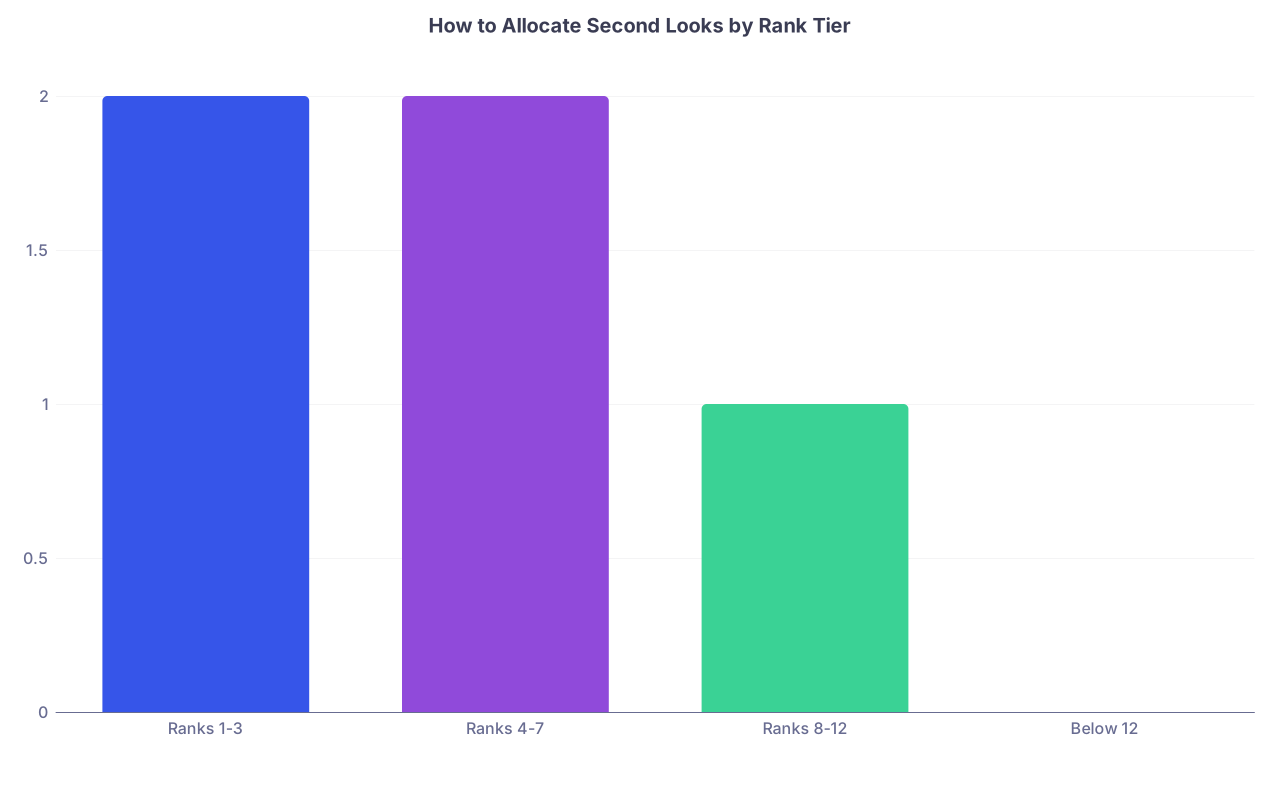
| Category | Value |
|---|---|
| Ranks 1-3 | 2 |
| Ranks 4-7 | 2 |
| Ranks 8-12 | 1 |
| Below 12 | 0 |
A reasonable allocation if you have time and money:
- 2 second looks among your top 3
- 2 among ranks 4–7 where you’re genuinely undecided
- Maybe 1 “tiebreaker” among mid‑tier programs
- Nothing below rank ~10–12 unless there’s a very specific reason
This might mean:
- One reach and three safes, or
- Two reaches, two safes, one mid‑tier
You’re not optimizing for ego. You’re optimizing for the odds of spending your actual life in a place that doesn’t grind you down.
How Programs Actually See Second Looks
Let me be clear: most programs do not have a secret “second look bonus” column on the rank spreadsheet.
What they might do:
- Note that you came back = you’re probably serious
- Use it as a tiny tiebreaker if they’re debating between similar candidates
- Ask residents, “How did they seem on the second look?” to confirm red/green flags
What they won’t do in legit programs:
- Drop you 20 spots because you didn’t come
- Shoot you up the list purely because you showed your face again
If a PD or coordinator hints that second looks are “basically mandatory,” that’s a red flag for manipulation or insecurity. Good programs trust their interview process.
So use this rule:
If you’re doing a second look, do it for you. If it helps them, fine. But that’s a side effect.
Logistics: How Many, When, and How to Choose
Most people have bandwidth (time, money, mental energy) for 2–5 second looks max.
Use a simple decision filter:
Would I realistically rank this program in my top 7 if second look goes well?
- No → skip
- Yes → continue
Did I leave interview day with unanswered deal‑breaker questions?
- No → maybe skip
- Yes → high priority
Is this program materially different from others on my list?
- Different setting (urban academic vs suburban community)
- Different call model (night float vs q4 28‑hour call)
- Different fellowship or career pipeline
If it’s just another slightly different version of the same template, you probably don’t need a second look.
How to Use a Second Look Well (Regardless of Reach/Safe)
If you go, make it count. Don’t just walk around and nod.
You should:
Spend real time with residents without faculty around
Ask direct questions like:
- “What’s one thing you’d change about this program if you could?”
- “How responsive is leadership when residents raise concerns?”
- “On your worst week here, what made it bad?”
- “How often do people moonlight, cry in stairwells, or talk about quitting?”
Watch body language more than the words
Visit work areas (ED, wards, ICU) if allowed
Check call rooms, resident lounges, computer access, parking reality
You’re not collecting brochure quotes. You’re collecting red flags and green flags about your next several years.
So… Reach or Safe?
If I had to boil it down to one rule:
Prioritize second looks where you’re most likely to match and most likely to be unhappy if you misjudge the culture.
That often means:
- At least half of your second looks should be at safe/realistic programs
- Maybe 1–2 at genuine reaches that could be life‑changing if they’re a strong fit
- Zero at “ego-only” reaches you wouldn’t realistically rank over your best safe options
The painful truth: more people are burned by misjudging a “safe” program they actually end up at than by not visiting a shiny reach that never would’ve ranked them high enough anyway.
If you’re going to spend hundreds of dollars and precious time, spend it where it protects your actual future, not your fantasy one.
FAQ: Second Looks at Reach vs Safe Programs
1. Will skipping a second look hurt my chances at a reach program?
Almost never. If a program is legitimate, they do not penalize you for not coming back. They might see a second look as modest evidence of interest, but they already have your interview performance, letters, scores, and application. That’s 99% of their decision. Skip the second look if it’s only about “showing interest” and not about learning what you need.
2. If I can only afford one second look, should it be reach or safe?
Pick the program you’re genuinely most likely to rank #1–3 if the second look goes well, regardless of label. For many people, that’s actually a strong “safe” program where they’d have great training and a better lifestyle. If the reach is more about brand than real fit, you’re wasting money. If the reach might truly be your top choice and you’re borderline between that and a safe, do the reach.
3. Do community programs care about second looks more than academic ones?
Sometimes they feel more appreciative because they get fewer visitors, but that doesn’t mean they’ll overhaul their rank list over it. What I’ve seen: community programs may remember you more personally after a second look, which can help if they were on the fence. But again — use second looks for your own data collection, not as a bribe for attention.
4. Should I tell programs I’m doing a second look at their “competitors”?
No need. This isn’t college tours. If they ask how your season is going, you can answer broadly (“I’ve visited a mix of academic and community programs in the region”), but you don’t need to list where else you’re looking. Your goal is to evaluate them, not to negotiate. Keep it focused on their program, their residents, your fit.
5. What if my advisor says second looks don’t matter at all?
They’re half right. They usually don’t matter much for how programs rank you. But they can matter a lot for how you rank programs. If your list is already crystal clear and you have no doubts, then yeah, skip second looks and save the money. But if your top half is a blur of similar‑seeming places, one or two targeted second looks can prevent years of regret.
Open your tentative rank list right now. Put an asterisk next to the 3–5 programs you’d actually be willing to rank in your top spots but don’t fully understand yet. Those are your second look candidates — not the programs with the fanciest names.