
You do not need an MBA to run a successful private practice. You need competence, systems, and the discipline to look at numbers you would rather ignore. That is not what an MBA sells you—and the data on physician-owners backs this up.
Let me be blunt: the “I should get an MBA before I start a practice” idea is mostly a marketing success story, not an outcomes-based one. Hospital systems, business schools, and a certain kind of prestige-hungry physician have all helped create this myth. The evidence from actual practices? Much less glamorous.
You are post-residency, staring at a job market that’s shifting toward consolidation and hospital employment. You’re wondering if you should armor up with another degree before going solo or joining a small group. The standard narrative tells you: “Medicine doesn’t teach business. Get an MBA so you don’t fail.”
The reality: the vast majority of thriving private practices in the US were built and scaled by physicians with zero formal business degrees. They learned the 20% of business that actually matters for a medical practice. The rest is noise.
Let’s break this properly.
What the Data Actually Shows About MBAs and Physician Practice Success
If MBAs were the secret sauce, we’d see a clear pattern: practices led by MBA-physicians would be more profitable, more stable, and less likely to sell out to private equity or hospital systems.
We do not see that.
There isn’t a single large-scale study showing that physicians with MBAs consistently run more profitable or more durable private practices than those without. What the data does show is this:
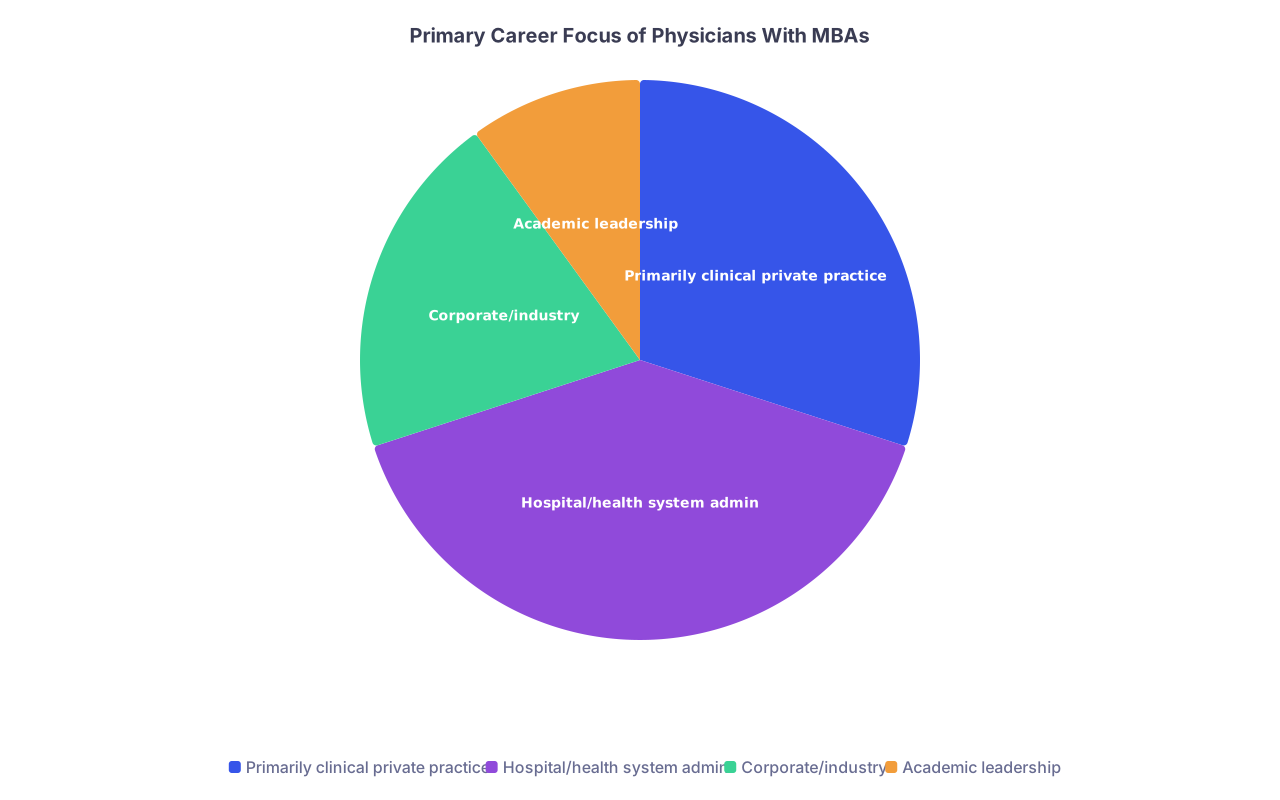
- Physician-MBAs are more likely to hold administrative roles in hospital systems, large groups, and health plans.
- They often earn more from leadership and management positions, not from the productivity of their private practice itself.
- Practices that succeed financially almost always share the same characteristics: tight control of overhead, stable payer mix, efficient scheduling and billing, strong staff, and basic financial literacy by the owner-physician. None of those require a degree.
| Category | Value |
|---|---|
| Primarily clinical private practice | 30 |
| Hospital/health system admin | 40 |
| Corporate/industry | 20 |
| Academic leadership | 10 |
The MBA is a great lever if you want to be a Chief Medical Officer or sit in payer meetings all day. It is not some magical shield against the very ordinary business problems that sink practices: bad leases, bloated staffing, sloppy billing, and ignoring cash flow.
I’ve seen small practices with no spreadsheets, no budget, and no clue about accounts receivable out-earn MBA-led “strategic” groups simply because they:
- Answer phones efficiently
- Fill their schedule
- Collect co-pays and balances
- Watch overhead like a hawk
That is not MBA territory. That’s Business 101, which you can learn for $25 and some discipline.
What You Actually Need to Run a Private Practice
Here’s the quiet truth: a private practice is not a Fortune 500 company. It is a cash-flow-focused, service-heavy small business with a narrow revenue model and a predictable set of levers.
The myth is that you need “advanced business strategy.” You do not. You need competence in a few boring, measurable areas.
The core skills for a post-residency physician who wants to survive (and then thrive) in private practice:
- Basic Financial Literacy, Not Corporate Finance
You must be able to read and understand:
- A profit and loss statement (P&L)
- A balance sheet
- A cash flow statement
- Your payer mix and average reimbursement
If you cannot interpret those four things, you are driving blind. But you do not need a two-year MBA for this. A 200-page small business finance book and 5–10 hours with a competent accountant will cover more than enough.
- Revenue Cycle Basics
You need to understand:
- How a claim goes from visit → submission → adjudication → payment/denial
- What your denial rates are and why
- How long it takes payers to pay you (days in A/R)
- How much you’re writing off—and whether those write-offs are acceptable or just laziness
Your biller might be “handling it,” but if you do not know the numbers, you’re the mark, not the owner.
- Overhead Control
Most practices do not die because of low revenue. They die from rent, staffing, and technology bloat. They sign a 10-year lease that was too expensive on day one. They hire three front-desk people when one and a half plus decent software would do. They buy shiny devices with zero ROI.
Controlling overhead is judgment and discipline. Not a degree.
- Scheduling and Capacity Management
Your schedule templates, visit lengths, double-booking strategy, and no-show management will do more for your revenue than any “business canvas” exercise.
If you consistently run at 70–80% capacity when 90%+ is feasible, that’s real money burned. Again: measurable, fixable, and teachable without an MBA.
- Basic HR and Culture
You need to learn how to:
- Hire without desperation
- Fire without drama when needed
- Set clear expectations and written policies
- Create an environment where your staff does not hate you or the job
Some physicians think an MBA will make them better leaders. Usually, it just gives them more business buzzwords to throw at a frustrated front desk.
None of that list requires you to step into a business school lecture hall.
Where the “Physician Needs an MBA” Myth Comes From
There are three big drivers:
- Business Schools Want Tuition
Physicians are a premium market: smart, stressed, prestige-sensitive, often financially naive about ROI. Perfect customers.
You’ll hear lines like:
- “You’ve spent your life learning medicine; now learn how to run the business side.”
- “Position yourself as a leader in healthcare transformation.”
What you will not hear as loudly: the price tag (often $80,000–$200,000 total) and the actual payback period if you do not pivot into full-time admin or industry.
- Hospitals Want Credentialed Team Players
Hospitals love physicians who think in system terms and are comfortable with financial language. That is not bad. But it’s aligned with their goals, not yours as a future private-practice owner.
The quiet subtext: “MBAs make doctors more like us.” If your endgame is to be a service line director in a large system, then yes, that might be useful. If you want to own a small cardiology group? Much less so.
- Physicians Hate Feeling Incompetent
You’ve spent a decade mastering something. Then suddenly, you are faced with lease negotiations, payer contracts, W-2 vs 1099 decisions, EHR selection, payroll taxes. It is unfamiliar, uncomfortable, and often humiliating.
The MBA offers psychological comfort: “You’re not lost, you’re just not trained… yet.”
But what you actually need is targeted competence—not another identity and another couple hundred grand of opportunity cost.
The Cost–Benefit Reality of an MBA for a Private Practice Physician
Let’s put numbers to this instead of hand-waving.
Assume:
- A decent part-time or executive MBA costs $80,000–$120,000 in tuition/fees.
- You spend 10–15 hours a week on it for 2 years.
- During those years you’re early attending or mid-career, so your time has high value.
You are paying in:
- Direct cash
- Lost clinical income
- Delayed practice-building, networking, and local reputation
Now compare that with a very unsexy but far more targeted stack:
- 10–20 hours of accounting/bookkeeping consultation per year
- A healthcare-focused attorney for entity structure, contracts, and lease review
- A few focused practice management courses or masterminds
- Reading 4–6 good small-business and negotiation books
- Maybe a practice consultant for your first year if you’re starting from scratch
| Option | Direct Cost (Approx) | Time Investment | Relevance to Private Practice |
|---|---|---|---|
| Full/Exec MBA | $80k–$200k | 1000+ hours | 20–30% directly relevant |
| Focused practice courses | $1k–$5k | 30–60 hours | 70–90% directly relevant |
| Accountant + attorney time | $2k–$10k/yr | 10–20 hours | Highly relevant, customized |
| Self-study + mentors | <$1k | 30–50 hours | Depends on discipline |
Most MBA curricula are not built around:
- Prior auth hell
- Insurance panel negotiations
- MACRA, MIPS, RVUs, and payer games
- Practice buy-in/buy-out structures
- Managing front-office dynamics in a 6–15 person team
They are built around corporate finance, generalized management theory, operations, marketing, and leadership frameworks for medium to large organizations. You can absolutely extract useful pieces. But you’ll pay full freight for a lot of content that will never touch your day-to-day as a community GI, ortho, psych, or family doc running a shop.
From a strict return-on-investment perspective, if your primary goal is to start or join a private practice after residency, an MBA is a weak play.
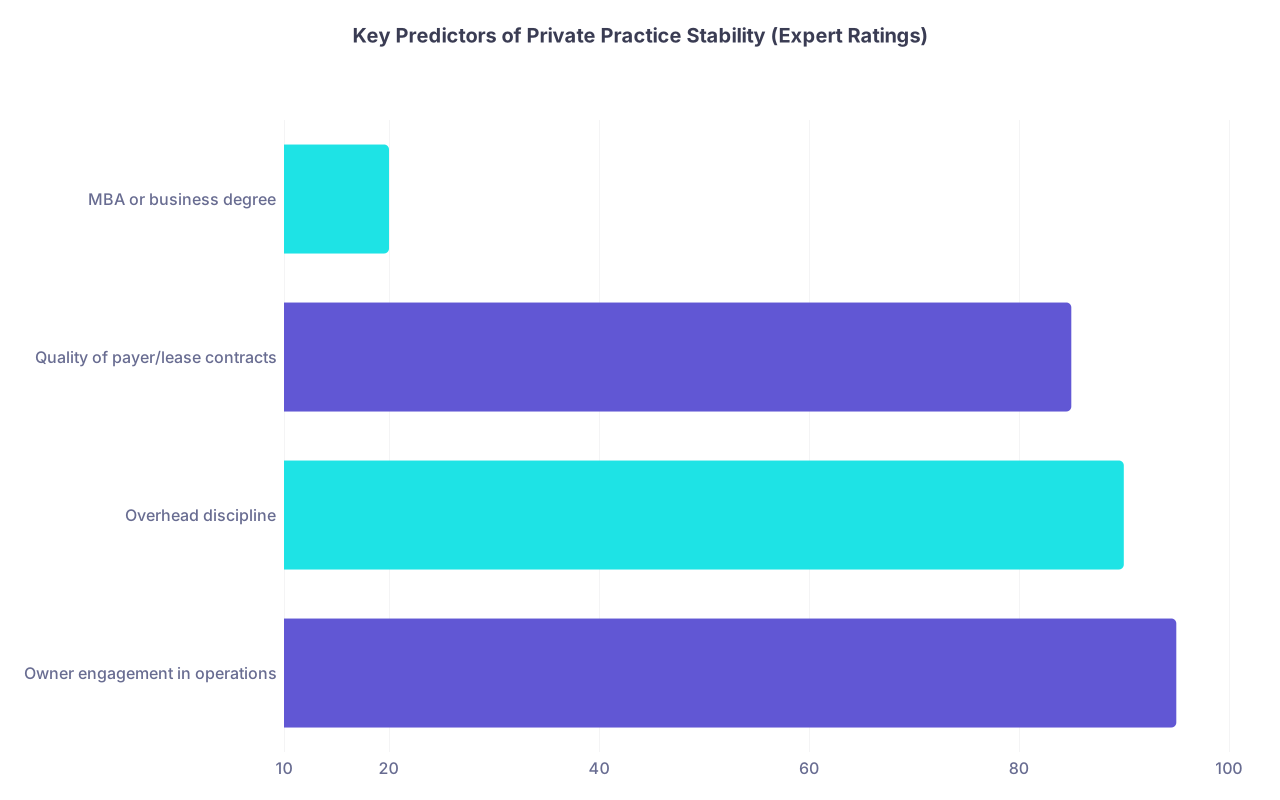
What Actually Predicts Practice Survival (Spoiler: Not the Letters After Your Name)
Let’s talk about what I actually see differentiating practices that grow from those that limp along and eventually sell.
- Early, Honest Number-Watching
Owners who look at:
- Monthly P&L
- New patient volumes
- Referral patterns
- No-show rates
- A/R aging
…from month one are far more likely to correct problems early. This doesn’t require advanced modeling. It requires you not to stick your head in the sand.
- Good Contracts and Negotiations Up Front
The worst practice stories often start with:
- A terrible lease
- A predatory partnership agreement
- Weak payer contracts
That’s lawyer + negotiation skills + willingness to walk away. An MBA might give you a negotiation elective. Or you could read one good book and spend money on a hard-nosed healthcare attorney. I know which one moves the needle faster.
- Choosing the Right Scale, Not the Fancy Scale
Some of the healthiest practices I’ve seen are small, lean, almost boring. One or two physicians, a couple of midlevels, minimal debt, efficient EHR, tight overhead. No marble floors. No $200k “brand identity” project.
Over-ambitious scale kills more post-residency practices than under-ambition.
- Owner Engagement, Not Owner Escape
The physician-owner who knows their staff by name, walks the front office, asks about patient complaints, and actually attends to operations—even for an hour or two per week—beats the absentee owner trying to “just do medicine” and leave “business” to someone else.
This is where a lot of physicians use the MBA myth as self-protection: “I’m not trained in business; I just want to practice medicine.” That attitude, not the lack of an MBA, is what makes you vulnerable.
| Category | Value |
|---|---|
| Owner engagement in operations | 95 |
| Overhead discipline | 90 |
| Quality of payer/lease contracts | 85 |
| MBA or business degree | 20 |
If You’re Post-Residency and Eyeing Private Practice, Do This Instead
You want a playbook? Fine. Here’s a practical path that beats getting an MBA for this specific goal.
Step 1: Get Baseline Financial Literacy
Spend 10–20 hours on:
- One or two solid, practical small-business finance books
- A few hours with an accountant walking through sample P&Ls, balance sheets, and cash flow statements
- Learning how to read your own numbers using your bookkeeping or EHR reports
No theories. Just: What does this line mean? What’s good? What’s dangerous?
Step 2: Shadow the Business Side of a Real Practice
Find a private practice in your specialty or similar and say: “I want to understand the business side. Can I spend a few days with your practice manager?”
Watch:
- How they schedule
- How they handle incoming calls
- How they process claims and handle denials
- How they set up templates and workflows
You’ll get more real-world business education in 3 days there than 3 months of case discussions about multinational corporations.

| Step | Description |
|---|---|
| Step 1 | Post residency |
| Step 2 | Learn basic finance |
| Step 3 | Shadow practice operations |
| Step 4 | Build advisor team |
| Step 5 | Start or join lean practice |
| Step 6 | Review metrics monthly |
| Step 7 | Adjust staffing and contracts |
Step 3: Build a Small Expert Bench
You do not need to become an expert in everything. You need:
- A healthcare-savvy accountant
- A healthcare-savvy attorney
- A competent biller / revenue cycle expert
- Maybe a practice consultant for year one
You are buying specialized, targeted brains instead of a general degree. That’s a smarter allocation of your future income.
Step 4: Start Lean and Iterate
Don’t build your “dream office” out of the gate. Start with:
- Modest space with favorable lease terms
- Core staff only
- Minimal shiny toys and ancillary services
- Careful tracking of what works and what does not
Expand after your first 12–24 months of real data. Not on vibes.

When an MBA Actually Makes Sense for a Physician
Just so we’re clear: I’m not saying MBAs are useless. I’m saying they’re mis-sold as necessary for private practice.
You might reasonably pursue an MBA if:
- You want to move into hospital administration (CMO, service line director, etc.)
- You want to pivot into industry, consulting, or health-tech leadership
- You’re building or joining a multi-site, multi-specialty group with significant growth and M&A ambitions
- You simply enjoy business for its own sake and you can easily afford the cost and time
Those are valid goals.
But if your primary near-term objective post-residency is:
- “I want to open a small to medium-sized private practice”
- “I want to be an owner in a group practice and not get crushed”
…then no, you do not need an MBA. And using the lack of one as an excuse to delay ownership is just self-sabotage with a fancy justification.

The Bottom Line: Stop Hiding Behind the Degree Myth
Let me strip this down so there’s no ambiguity.
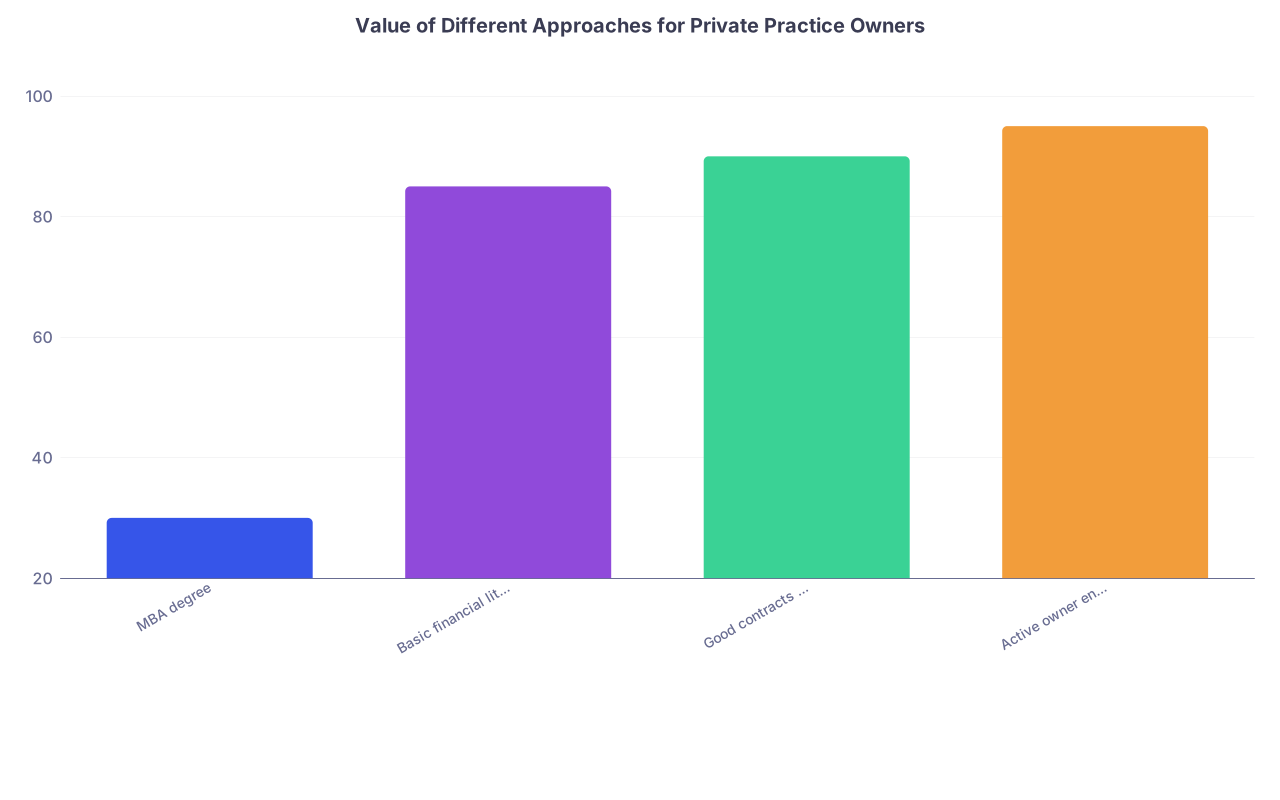
First: Private practice success is driven by basic business competence, consistent attention to operations, and disciplined overhead control—not by possessing an MBA.
Second: From a cost-benefit perspective, an MBA is a poor investment if your primary goal is to start or run a single-specialty private practice post-residency. Targeted learning plus good advisors beats it handily.
Third: The “I need an MBA to do this right” story is usually fear in a lab coat. You do not need another degree. You need to stop outsourcing responsibility for your own numbers and learn the 20% of business that moves 80% of your results.
| Category | Value |
|---|---|
| MBA degree | 30 |
| Basic financial literacy | 85 |
| Good contracts & advisors | 90 |
| Active owner engagement | 95 |
You’re already capable of surviving residency, managing critically ill patients, and memorizing volumes of complex information. Learning how to read a P&L, negotiate a lease, and manage a five-figure payroll is not beyond you. It just isn’t glamorous.
Skip the myth. Learn the basics. Own the practice.