
The first pass/fail Step 1 cohort is both screwed and totally fine at the same time.
That’s the honest answer no one gives you.
You’re sitting in this weird experiment year where everything feels stacked against you: Step 1 is P/F, Step 2 suddenly matters more than your entire personality, and every resident on Reddit seems to be saying, “When I applied, Step 1 was still scored.” Great. Super helpful.
Let’s walk through how programs actually see you, not how your 3 a.m. brain spins it.
The ugly truth: yes, you are the adjustment batch
You’re not imagining it. You are the calibration class.
Program directors had 15+ years of doing this formula:
- Filter by Step 1 score
- Skim for red flags
- Then maybe… actually read the application
Now Step 1 is pass/fail and suddenly they’ve lost their favorite lazy filter. So they did what programs always do when something changes: freak out internally, complain on Zoom meetings, and then overcorrect.
I’ve heard versions of this from actual PDs and residents:
- “We’ll lean harder on Step 2 CK.”
- “We’ll put more emphasis on clerkship grades and narrative comments.”
- “We’ll look more at school reputation, research, and letters.”
Translation: They’re scrambling. And you’re the cohort they’ll experiment on.
But here’s the important part: they know they’re experimenting. They’re not blindly punishing you. They’re trying to not miss good applicants without their old Step 1 crutch.
That anxiety you feel? A lot of programs are feeling some version of it too.
How programs actually evaluate you now (not the fantasy version in your head)
Let me break down what’s actually moved up or down in importance for the first P/F cohorts.
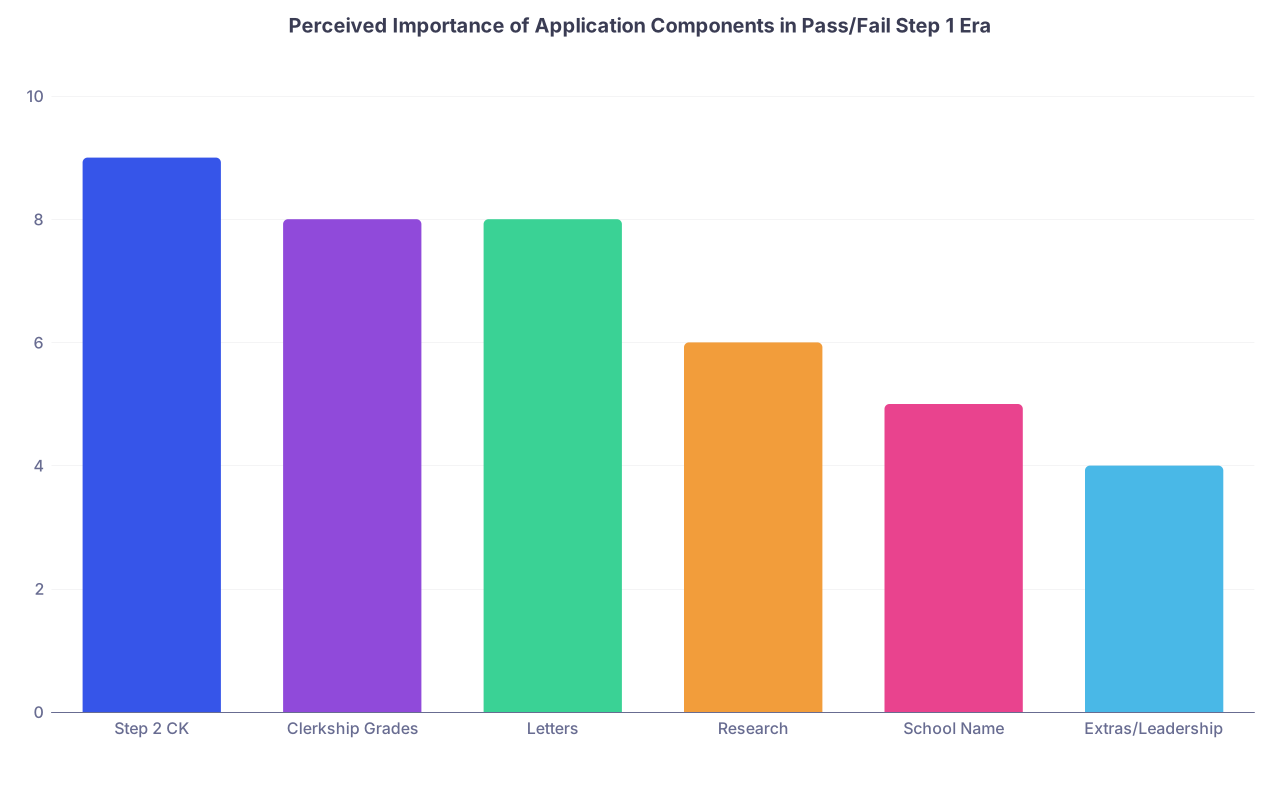
| Category | Value |
|---|---|
| Step 2 CK | 9 |
| Clerkship Grades | 8 |
| Letters | 8 |
| Research | 6 |
| School Name | 5 |
| Extras/Leadership | 4 |
No, that’s not a published study. That’s “vibes plus what PDs keep saying in webinars and surveys” translated into numbers.
Step 1 (P/F): How they really see it
Here’s the fear:
“They’re going to assume ‘pass’ means I would’ve scored like a 215. I’m going to be compared to all the older scored people and lose automatically.”
No. Programs aren’t that dumb. They know the exam’s brutal. They know pass is not trivial. They know your class was told, “Oh don’t worry, it’s pass/fail now” while the curve and difficulty didn’t magically soften.
What Step 1 means now to them:
- You can handle basic science
- You don’t have a glaring weakness big enough to fail a huge standardized exam
- You’re not a risk for immediate academic disaster
It’s a screen-out, not a rank-up.
If you passed, they move on. If you failed, they look for:
- Did you pass on second attempt?
- Did you explain it?
- Does everything else look strong?
They’re not sitting there thinking, “Hm, this pass smells like a 218.”
Step 2 CK: The monster under the bed
This is the piece everyone is freaking out about:
“If Step 1 is P/F, do I now live or die by Step 2?”
Short answer: It’s heavily weighted, yes.
Is it the only thing? No. But it’s the one clean number they still have. And programs love numbers.
Real talk: For competitive specialties, you’ll see Step 2 screen cutoffs the way Step 1 used to function. Not everywhere, and not as rigidly yet, but it’s happening.
So the worst-case story in your head probably sounds like:
“If I don’t absolutely crush Step 2, I’m done.”
But the real story is more like:
- Bad Step 2 + average everything else = trouble
- Average Step 2 + great clinical, research, letters = absolutely viable
- Strong Step 2 + decent rest = you’re in the game
Is it fair? Not really. But it’s predictable.
“But programs had real Step 1 scores before… I’m automatically less competitive, right?”
This is one of the most persistent, anxiety-fueling myths.
You’re imagining this side-by-side comparison:
- Applicant A: 247 Step 1, pre-P/F era
- Applicant B: “Pass,” P/F era
So you think: “They’ll always pick A. I lose before they even read me.”
That’s not how it actually plays out, because programs aren’t comparing you against 2019 kids. They’re comparing you against your current applicant pool in your year with your rules.
And here’s a thing no one talks about: there are a lot of mediocre applications with okay scores from older cohorts. Programs know this. They’ve seen people with 250+ Step 1 who are socially weird, terrible on the wards, or completely uninterested in the specialty.
They’re tired of that.
What I keep hearing from residents on committees is:
“If anything, we’re looking harder at the human now: clerkships, letters, how they’ll fit, how they talk on interview day.”
So no, they’re not sitting there saying, “Wow, wish this kid had a three-digit Step 1 so I could feel safer.” They’re saying:
- “Can this person handle boards?” (Step 2 + Step 1 P/F = yes or no)
- “Will this person take care of my patients without drama?” (clerkships + letters)
- “Will I hate my life working overnight with this person?” (interview vibes)
Your fear is you’re missing a metric.
Their reality is they’re forced to actually read your application.
What quietly got more important because Step 1 went P/F
Programs didn’t just shift all the weight to Step 2 and call it a day. A few things silently leveled up in importance.
1. Clerkship grades and narratives
This used to be background noise if you had a 260. Not anymore.
Now it’s more like:
- Multiple honors in core rotations = “Okay, strong clinically, safe bet.”
- Mostly high pass with solid comments = “Good, normal, likely fine.”
- Several passes, no honors, weak comments = “We need to read this carefully.”
Those narrative comments that feel like vague fluff? They’re not fluff anymore. “Pleasant to work with,” “takes feedback,” “strong fund of knowledge,” “independent learner” — programs cling to that when they can’t lean on Step 1.
2. Letters of recommendation
Generic letter in your specialty? It hurts more now.
Enthusiastic, specific letter? It matters more now.
PD brain:
“No Step 1 score. Step 2 is okay. But this letter says they’re top 10% of students they’ve worked with in five years. That’s huge.”
3. School reputation and context
Not because they’re evil prestige-obsessed villains. Because when your data shrinks, you rely more on the things you recognize.
If you’re from a less-known school, this feels terrible. Feels like you’re now punished twice: P/F Step 1 and no fancy-school name brand.
Reality:
You can compensate with:
- Strong Step 2
- Great letters from people who are known in the field
- Research with recognizable institutions or collaborators
It’s harder, yes. But not “impossible, don’t bother” hard.
How programs view this specific cohort of first P/F students
They do not think:
“These kids got it easy.”
Most PDs I’ve listened to say things like:
- “Their stress didn’t go away; it just moved.”
- “We’re worried about overloading Step 2 now.”
- “We have to learn how to read these apps all over again.”
They know:
- You studied under chaos: changing exam format, pass/fail, variable school support
- You’re the first ones to live with Step 1 P/F + Step 2 doing double duty
- You’re applying in a time of increased applicant volume in many specialties
In their heads, this cohort is more “data light, context heavy,” not “lazy and lucky.”
Would some crusty old faculty still quietly think, “In my day we had real scores”? Of course. But they’re not the only voices in the room anymore.
Your worst fears vs what’s actually likely
Let’s put some of your 3 a.m. spirals next to a more grounded reality.
| Your Fear | More Accurate Reality |
|---|---|
| Programs assume my Step 1 pass = low score | They see pass as: can handle boards, move on to Step 2 and clinicals |
| I’m less competitive than older scored cohorts | You’re judged relative to your year; they expect you NOT to have a Step 1 score |
| If Step 2 isn’t stellar, I’m done | Step 2 is big, but strong clinicals, letters, and fit can absolutely offset an average score |
| They think our cohort had it easier | Most PDs know your stress just shifted; some actually feel bad about it |
You’re not hallucinating the increased Step 2 pressure.
You are exaggerating how doomed you are if you’re not perfect.
So what are you actually supposed to do differently?
This is the part that keeps gnawing at you:
“Okay, Step 1 is pass/fail. Step 2 is huge. I get it. What do I actually do about that right now?”
Here’s how I’d approach it if I were in your exact shoes.
1. Accept that Step 2 is now your “number” — and treat it like that
Don’t let anyone gaslight you with, “Scores don’t matter, just be yourself.” That’s naïve.
Your prep approach for Step 2 should be more like how older students treated Step 1:
- Dedicated period that’s actually protected as much as possible
- Question-bank heavy (UWorld, NBME practice, etc.)
- Track your trajectory, don’t wing it and hope
But also: don’t blow up your entire life for a fantasy 270 if you’re targeting a specialty where 245–255 is completely fine.
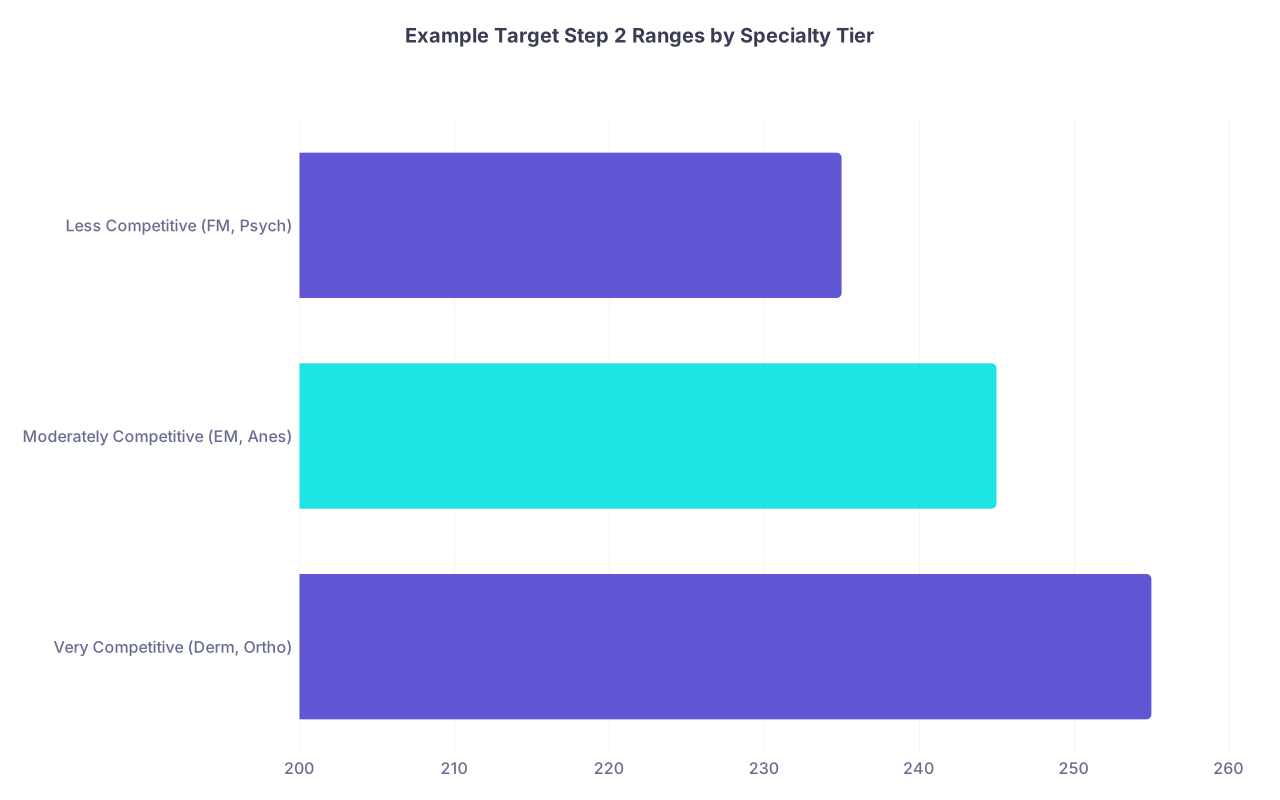
| Category | Value |
|---|---|
| Very Competitive (Derm, Ortho) | 255 |
| Moderately Competitive (EM, Anes) | 245 |
| Less Competitive (FM, Psych) | 235 |
These are illustrative, not real cutoffs — but you get the idea. The goal isn’t “crush Step 2 or die.” It’s “hit in-range for your specialty and let the rest of your app carry weight.”
2. Be intentional with clinical rotations
You can’t afford to be “just fine” on the wards anymore. Programs are using this stuff as a major signal.
That means on core and especially specialty rotations:
- Ask directly what you can improve
- Let residents see you thinking out loud
- Show you can work hard without being a weird gunner
- Ask for feedback before final evaluations are written
It’s annoying. It’s vulnerable. But those comments and grades are now part of your safety net.
3. Letters: decide now whose opinion will matter
Half the anxiety around letters comes from waiting until the last second and then begging whoever isn’t on vacation.
Instead, starting this month:
- Identify 2–3 attendings you want to quietly impress
- Work with them in a way where they actually see you think
- When they compliment you, mentally flag them as potential letter writers
- When the time comes, ask directly: “Do you feel you know me well enough to write a strong letter for [specialty]?”
A lukewarm letter is actively harmful now. A detailed, excited letter can rescue a lot.
What if you’ve already passed Step 1 and you’re just… scared they’ll judge you anyway?
You passed. They won’t see a number. You can’t change that.
So your brain says: “They’ll assume the worst.”
Here’s the reframe that’s actually accurate:
They can’t assume anything — they literally have no data. So they’re forced to move their gaze to:
- Step 2 CK
- Clerkships
- Letters
- Research/interest in the field
- Your interview
And in a weird way? That gives you more control than you think.
You can’t hack your way from a 227 to a 255 Step 1 retroactively. But you can:
- Study smarter for Step 2
- Show up differently on rotations
- Build actual relationships for strong letters
- Craft your personal statement and experiences to show you’re a real human, not a Step score ghost
Programs see you as “unknown but pass,” not “definitely mediocre.”
Your job is to fill in the unknowns with evidence.
The quiet advantage you do have as the first P/F group
Nobody talks about this part because everyone’s too busy panicking.
Programs know they screwed up in the old system. They:
- Overweighted Step 1
- Ignored red flags in people with high scores
- Underestimated people with lower scores who were incredible clinicians
Now there’s a very real appetite in a lot of places to not make the same mistake with Step 2.
You’re coming in at the moment where people are trying to be more holistic — not just saying it for PR. Some programs will still be score-obsessed, sure. But others are genuinely experimenting with:
- Holistic review
- Looking heavily at fit and values
- Considering nontraditional applicants more seriously
You’re not applying in 2012. And that actually helps some of you.
Where this is probably heading (and what that means for you)
If you’re the kind of person who feels better seeing the bigger picture, here’s the likely arc of this whole pass/fail Step 1 mess:
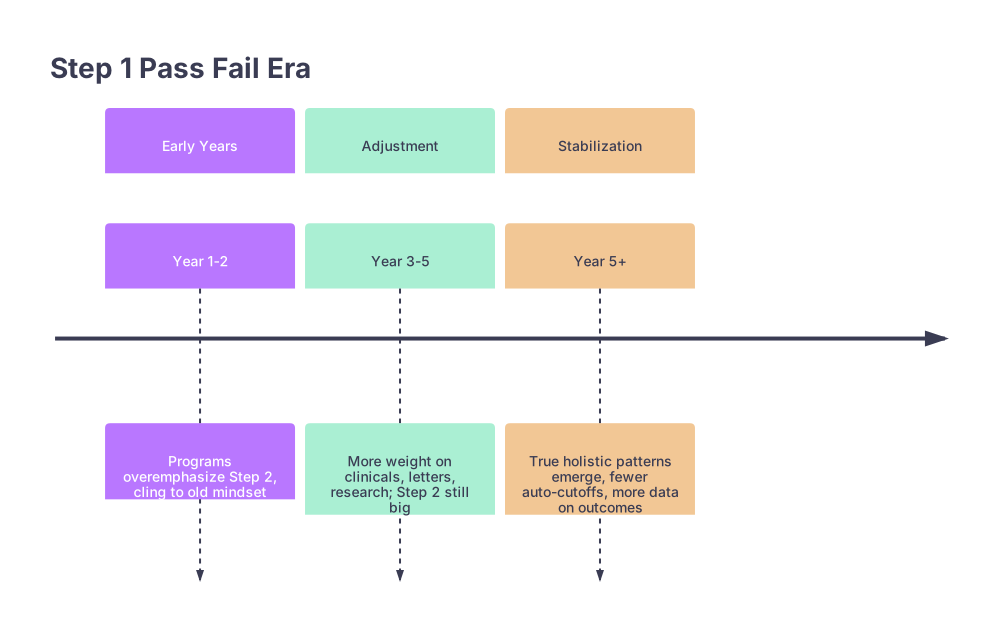
| Period | Event |
|---|---|
| Early Years - Year 1-2 | Programs overemphasize Step 2, cling to old mindset |
| Adjustment - Year 3-5 | More weight on clinicals, letters, research; Step 2 still big |
| Stabilization - Year 5+ | True holistic patterns emerge, fewer auto-cutoffs, more data on outcomes |
You’re in the early–middle chaos band. It’s messy. It’s inconsistent. But it’s not a death sentence.
Some programs will overreact and set harsh Step 2 cutoffs. Others will deliberately avoid that mistake. You’re going to hit both kinds when you apply.
Your job is not to fix the system. It’s to survive it smartly.
One thing you can actually do today
Open a blank page and make a brutally honest, three-column list:
- Column 1: “Already Strong” — things that would genuinely look good to a PD right now (not “I worked really hard,” but “honors in medicine,” “ongoing ortho research with Dr. X,” “great feedback on surgery”)
- Column 2: “Neutral/Middling” — stuff that’s fine, not special (a mix of HP/P, average research, generic activities)
- Column 3: “Weak or Unknown” — Step 2 (if not taken yet), letters you haven’t secured, rotations you haven’t done, areas where feedback was vague or concerning
Then pick one thing from Column 3 and write down one concrete action you’ll take in the next 24–48 hours to move it toward Column 2.
Not your whole plan for the year. Not a color-coded spreadsheet. Just one action.
For example:
- Email a potential letter writer to set up a meeting
- Map out 6 weeks of Step 2 prep with question goals
- Ask your current resident, “Hey, is there anything I could be doing better on this rotation?”
Do that, and you’re already doing more than half of your classmates who are just doom-scrolling r/medicalschool.
You can’t control that you’re the first P/F Step 1 cohort.
You can control whether programs see you as a vague “pass” or as a clearly strong, intentional, trainable resident they’d be lucky — and safe — to rank.