
The panic that Step 1 going Pass/Fail “stole” your hard work is a lie—and believing it will do more damage to your future than the scoring change itself.
I’m just going to say what you’re probably thinking:
“I killed myself during preclinical to get a 260 that I’ll never see.”
“I chose the wrong era.”
“I wasted two years. For nothing.”
You’re not the only one spiraling like this. I’ve heard variations of that in hallways, group chats, panicked late-night calls. Especially from people dreaming of derm, ortho, plastics, neurosurgery. The “I needed Step 1” crowd.
Let’s untangle this without sugarcoating it.
The Grief No One Talks About
Yeah, grief. Because that’s what this is.
You built your identity around a number you’d one day earn. You gave up birthdays, weekends, hobbies, relationships. You memorized biochem pathways you can barely spell now. You internalized “Step 1 or bust” for years.
Then, suddenly, someone up there decided your work would be stamped with a three-letter result that the chill kid who crammed for eight weeks also gets: “Pass.”
Of course you feel robbed.
You’re not crazy for being angry. Or bitter. Or jealous of people a few years older who got to show off a big score and match into competitive stuff with that halo around them.
But here’s the problem: if you stay stuck in “I was robbed,” you start doing something way worse—you quietly give yourself permission to stop trying.
“Why bother? They don’t reward the grind anymore.”
“I already missed my chance to stand out.”
“It’s all politics and randomness now.”
That’s the real danger of the P/F change for you. Not that your past doesn’t count. That your future gets sabotaged by this feeling that you’re already behind and nothing you do matters.
That’s false. But it’s very seductive.
What Actually Happened When Step 1 Went P/F
Let’s be blunt about the system.
Residency programs still needed filters. Step 1 used to be their lazy filter. It’s gone (as a number, anyway), but the underlying behavior? They didn’t become saints overnight.
They shifted to other levers.
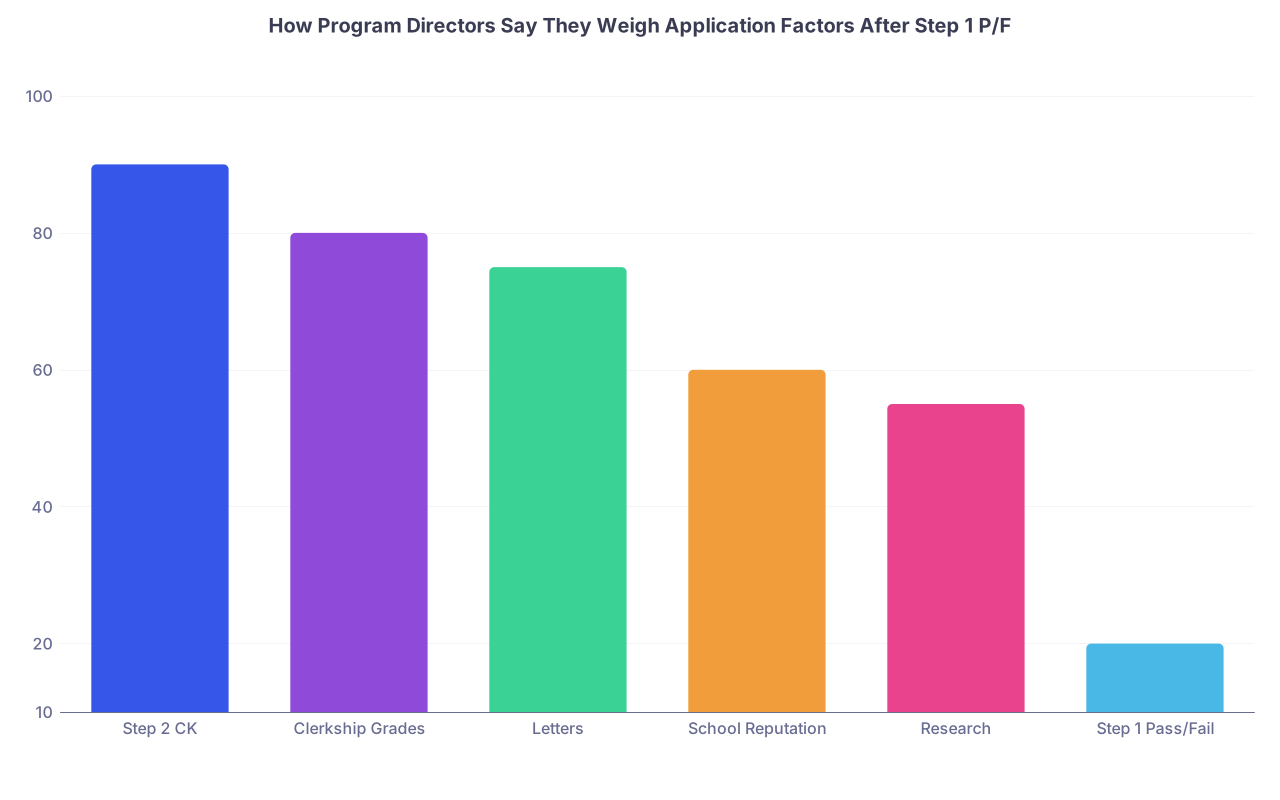
| Category | Value |
|---|---|
| Step 2 CK | 90 |
| Clerkship Grades | 80 |
| Letters | 75 |
| School Reputation | 60 |
| Research | 55 |
| Step 1 Pass/Fail | 20 |
Is that exact data? No. But it reflects what multiple PD surveys and real-world conversations keep saying:
- Step 2 CK is now the high-stakes exam.
- Clinical performance suddenly matters a lot more.
- Letters from people they trust can make or break you.
- Research and tangible output are tiebreakers.
- Step 1 is now: “Did you pass?” and “On first try?”
What didn’t happen:
Your preclinical years didn’t suddenly become irrelevant. They just stopped converting into a single visible number.
That knowledge, those habits, that discipline—those still live in your brain and your routines. They’re exactly what you’re going to cash in when you hit:
- brutal shelf exams
- Step 2 CK
- being pimped by attendings who expect you to know pathophys
- actually managing patients without sounding lost
So no, you didn’t waste those years. You just invested them into a currency that’s slightly different than the one you expected.
The Dark Thought: “But I Chose Wrong. I Came Too Late.”
I know the thought pattern:
“If I’d been born three years earlier, I’d have a score that got me derm.”
“If I’d been a little younger, I’d have grown up knowing it was P/F and not obsessed over Step 1.”
Feels like you landed in the worst possible window.
Here’s the uncomfortable balancing act:
You did get hit by a weird transition period. Programs are still figuring it out. Some are clumsy. Some still secretly “care” about Step 1 timing, first-time pass, all that.
But every single person in your class is in the same era. You’re not the unlucky outlier; you’re the cohort. And the system will adjust to you as a group, because they have no choice. There is no “pre-P/F” clone of you for them to pick instead.
The people really crushed? Honestly, it’s probably the borderline students who used Step 1 as their “Hail Mary” to jump from average school/average preclinical into a hyper-competitive specialty off the back of one monster score.
That path is mostly gone.
Your path? It’s messier, but not impossible. It just requires stacking evidence in a less one-dimensional way.
So Did I Actually Waste My Preclinical Grind?
Let’s be specific.
Where your grind does still pay off
Step 2 CK will be way less horrifying for you.
If you truly went hard in preclinical and actually understood material—not just Anki’d your eyes out—you’re walking into Step 2 with a scaffold most people would kill for. Path, pharm, micro, biostats—these are not totally new animals.Your shelves can quietly shout for you.
Strong shelf scores add up. They affect your clinical grades, which program directors actually read now.You’ve already proven to yourself you can live in “full-sprint mode.”
You know what it feels like to treat studying like a full-time job. People who floated through preclinical now have to build that muscle from scratch for Step 2 CK and clerkships. You don’t.You can answer questions like a functioning future resident.
Attendings notice the student who connects physiology → pathology → management without sounding lost. That’s directly traceable to how hard you worked before.
Where your grind doesn’t translate the way you expected
You’re right about this part:
- No shiny “260” to paste on ERAS.
- No easy way to differentiate yourself on one nationally normed exam early.
- No dopamine of ranking yourself against your classmates.
But that doesn’t mean the grind was useless. It means the ROI graph is different than you were promised.
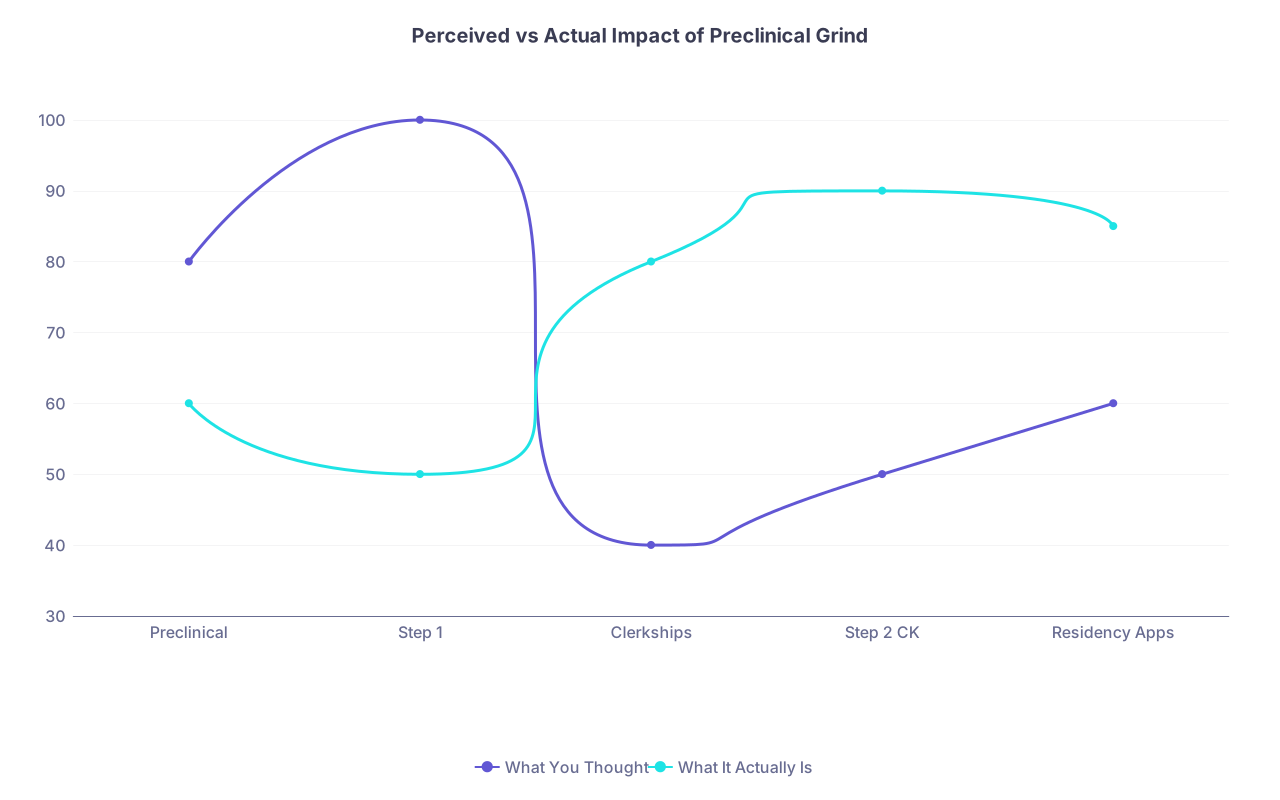
| Category | What You Thought | What It Actually Is |
|---|---|---|
| Preclinical | 80 | 60 |
| Step 1 | 100 | 50 |
| Clerkships | 40 | 80 |
| Step 2 CK | 50 | 90 |
| Residency Apps | 60 | 85 |
You expected everything to peak at Step 1.
Reality? Your peak opportunity is Step 2 + clinical years.
You just prepared for the wrong boss fight first. But the XP still counts.
“Okay But I Wanted Derm/Ortho/ENT. Am I Screwed?”
Let’s not lie: competitive specialties are still competitive. Step 1 going P/F did not make them suddenly holistic and gentle and kind.
They just shifted the battleground.
For something like derm, ortho, ENT, plastics, neurosurg, here’s what I keep seeing over and over from matched residents and PD comments:
| Factor | Relative Importance Now |
|---|---|
| Step 2 CK Score | Extremely High |
| Clinical Grades | Very High |
| Letters (known names) | Very High |
| Research Output | High |
| Step 1 (P/F, first try) | Baseline Filter |
Where your “wasted” preclinical years quietly give you an edge:
- You can probably crush Step 2 CK if you apply the same discipline again.
- You’re more likely to understand pathophys in real patients. That makes you look sharper on rotations.
- You already know how to build and follow a long-term study schedule.
What will hurt you if you’re not careful:
- Letting bitterness make you coast through clerkships.
- Underestimating Step 2 CK because “I already worked hard once.”
- Avoiding research or networking because “it’s all political and I’m tired.”
You’re not screwed. You’re just not allowed to be a one-trick applicant anymore.
The Real Question: Now What?
Okay, enough theory. You’re anxious because you don’t know what to do next to fix the “waste” feeling.
Here’s how I’d triage it if I were sitting across from you at 11 pm in a call room and you were spiraling.
1. Decide what you still actually want
Not what you “should” want. Not what pre-P/F seniors told you was prestigious.
Do you still want ortho badly enough to:
- treat Step 2 CK like Step 1 used to be,
- actively hunt for ortho research,
- show up early and stay late on your ortho rotation,
- email strangers for away rotations and letters?
If yes, the path is harder but still there.
If no, it’s not because Step 1 went P/F—it’s because you’re evolving, which is allowed.
2. Reframe your preclinical years as foundation, not peak
You need to literally rewrite the story in your head from:
“I over-invested in a useless exam”
to
“I did a brutal bootcamp that’s going to make everything coming next less lethal.”
Because guess what’s looming:
- Shelf exams that wreck unprepared students.
- Step 2 CK, which will be a number. A big one. Right there on ERAS.
- Intern year, where people who never deeply learned physiology flounder.
You’re going into those fights with extra armor. That matters.
3. Pick one next concrete target and go all-in
Scattered worry is your enemy. You start doom-scrolling SDN, Reddit, MedTwitter PD threads, and suddenly everything feels impossible.
Narrow it.
Depending on where you are right now:
- If you’re still preclinical: use the rest of this phase to solidify concepts with future Step 2 CK in mind—UWorld-style questions, NBME-style reasoning, not just raw memorization.
- If you’re starting clinicals: decide that you’re going to be “that” third-year—on time, prepared, reading on patients, asking your residents what you can help with.
- If Step 2 CK is 6–12 months away: start sketching a long-term study plan now so you’re not cramming in a panic.
Burnout is real. I’m not telling you to martyr yourself again. I’m saying: don’t let the anger about Step 1 P/F make you underplay the one exam that now matters more.
The Fear Underneath All This: “What If I Peaked Too Early?”
This is the one that usually sits underneath the rest:
“I gave Step 1 everything. What if I don’t have another gear for Step 2 or residency applications?”
I won’t gaslight you. It’s a real risk.
If you white-knuckled your way through preclinical on caffeine, self-hatred, and fear of failure, you might not be able to run that same play again without breaking.
But that doesn’t mean you’re done. It means you need a different operating system this time. Less:
- “If I don’t do X, I’m a failure.”
and more: - “If I chip away at X consistently, I’ll be okay.”
You’ve already proven you can work insanely hard. Now the more impressive skill is learning to work sustainably hard.
That doesn’t make your preclinical years a mistake. It makes them a warning sign and a training ground.
You know what burnout feels like now. That’s data.
How to Quiet the “I Wasted It” Voice Today
You’re not going to fully believe this was all “worth it” overnight. I don’t expect you to.
But you can start making it less loud.
Try this: take one of the hardest preclinical areas you mastered—cardio phys, renal, micro, whatever—and pull up 10–20 Step 2-style questions in that domain.
Do them cold.
Watch how much comes back. Not everything. But more than you think. Watch how many questions you get right because your brain still remembers the logic, not the flashcard.
That’s your supposed “waste” turning into real points on a higher-stakes exam.
Then look at your calendar and put a 30–60 minute recurring block, 3–4 times a week, where you’ll hit mixed clinical-style QBank questions. Not for Step 1. For future-you.
Suddenly, the story becomes:
“I didn’t waste my preclinical years. I front-loaded the pain. Now I’m going to make sure I actually cash in on it.”
Because here’s the truth no one prints on the flyers:
Step 1 going Pass/Fail didn’t erase your work. Letting it convince you that your effort was pointless—that’s what erases it.
Don’t hand it that power.
Do one concrete thing today: open a Step 2-style QBank (UWorld, AMBOSS, whatever you have), pick a system you crushed in preclinical, and do 10 timed questions. Then, in a notebook or notes app, write one sentence: “This is how my preclinical grind still pays off.”