
It’s 1:37 a.m. Your Step 1 score report (well… “pass/fail report”) has been sitting in your inbox all day. You finally opened it. One word: Pass. No numerical score, but you know it was close because you walked out of that exam feeling like you’d been hit by a freight train.
Now your brain is doing the usual med-student spiral:
- “Program directors probably know I barely passed.”
- “Everyone else probably crushed it and I’m the weak link.”
- “Did I just ruin my chances at anything competitive?”
- “What if they can somehow see I was borderline?”
Let me just say this out loud: you’re not the only one thinking this. I’ve watched people with 260+ still obsess over “weak” sections. You? You’re stuck in this horrible Step 1 pass/fail era where everything feels ambiguous and you assume the worst.
Let’s unpack what PDs actually care about now, what “barely passed” means in reality, and what you can do from here that isn’t just sitting and catastrophizing at 2 a.m.
First: What Does “Barely Passed” Even Mean in Pass/Fail Land?
Here’s the uncomfortable truth: only you know how close you probably were, and even you don’t know for sure.
PDs get exactly two options for Step 1 now:
- Pass
- Fail
That’s it.
They do not see your three-digit score. They don’t see percentiles. They don’t get some secret “borderline” flag next to your name. They see “Pass” and move on.
Is that totally reassuring? No. Because your brain is still going, “Yeah but I know.” And you’re worried that what you know means you're secretly not good enough.
But from a PD’s actual data standpoint, here’s what they see:
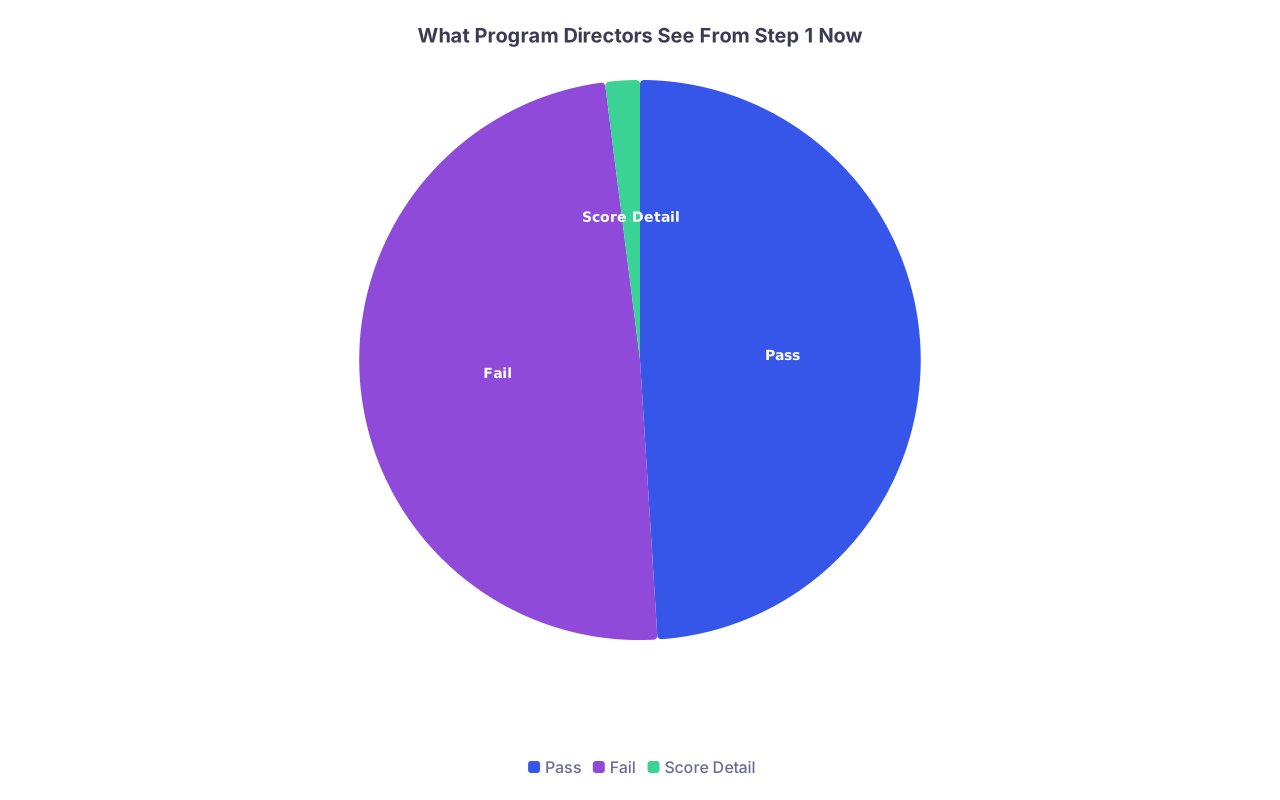
| Category | Value |
|---|---|
| Pass | 49 |
| Fail | 49 |
| Score Detail | 2 |
That “Score Detail” slice? That’s basically gone for almost everyone. For 99% of current applicants, they see pass/fail only.
So when you say, “I barely passed,” what you really mean is: I don’t feel good about how I did, and I’m terrified that reflects on my future. That’s valid. But it’s not the same as PDs docking you for a low number—because they literally don’t have it.
How Much Do PDs Actually Care About Step 1 Now?
Short answer: they care that you passed. Then they move on to other things.
They used to obsess over Step 1 as a filter. Now they’ve just shifted what they obsess over.
What PDs care about more now:
- Step 2 CK score
- Consistency on your transcript
- Shelf/clinical performance
- Departmental letters and narrative comments
- Red flags: professionalism issues, fails, big gaps, weird patterns
The new reality is more like:
| Factor | Typical Importance Now |
|---|---|
| Step 1 (Pass/Fail) | Low–Moderate |
| Step 2 CK Score | High |
| Clinical Grades | High |
| Letters/MSPE | High |
| Research (for some fields) | Moderate–High |
So where does “barely passed” land in their mental model? Honestly: nowhere. There’s no box for “barely.”
If you passed on the first attempt, you’re in one big undifferentiated pool of “passers.” The main Step 1 thing that does still matter to PDs is:
- Did you fail Step 1?
- Yes = they care, they look for an explanation, they want to see recovery.
- No = it’s basically a background variable now.
I’ve literally heard PDs say this in resident selection meetings:
“Step 1 is pass. OK, Step 2 is 248, looks fine. How are the rotations? Any concerns in the MSPE?”
No one is going, “I bet they scraped by on Step 1.”
Where “Barely Passed” Can Matter: In Your Head and In Your Pattern
Here’s where I’m not going to sugarcoat it.
“Barely passing” becomes a problem if it’s part of a bigger pattern:
- Mediocre or low Step 2 CK
- Multiple marginal or failing clerkship grades
- Weak comments like “requires frequent reminders,” “needs supervision beyond level”
- Failing a shelf or two without improvement
- Repeated test-taking struggles with no upward trend
But most people who are worried like you are actually in a different bucket:
You passed Step 1 and feel shitty about it → you overcompensate → you grind hard for Step 2 → you do fine or even strong clinically because you’re scared to screw up again.
That’s not a red flag. That’s normal med-student anxiety being weaponized in your favor.
To be blunt: PDs don’t have the time or interest to psychoanalyze your internal Step 1 trauma. They want to know: Can you safely and reliably take care of patients in my program? Can you pass your boards? Are you going to cause problems?
Step 1 “barely pass” by itself doesn’t answer any of those questions, so they look at other data.
The Shift: Step 2 CK Is Now the Real Score Battle
You already know this, but I’m going to say it anyway because your brain’s probably doing that doom thing.
Step 2 CK is now the standardized test that actually moves your application.
PDs use Step 2 for:
- Comparing applicants within a school
- Comparing applicants across schools
- Checking if you can handle boards later
- Making initial interview offer screens, especially in competitive specialties
So your internal narrative has to change from:
“I barely passed Step 1 → I’m doomed”
to
“I passed Step 1 → I must crush Step 2 as proof.”
Not because Step 1 was almost a fail. But because everyone is under pressure on Step 2 now.
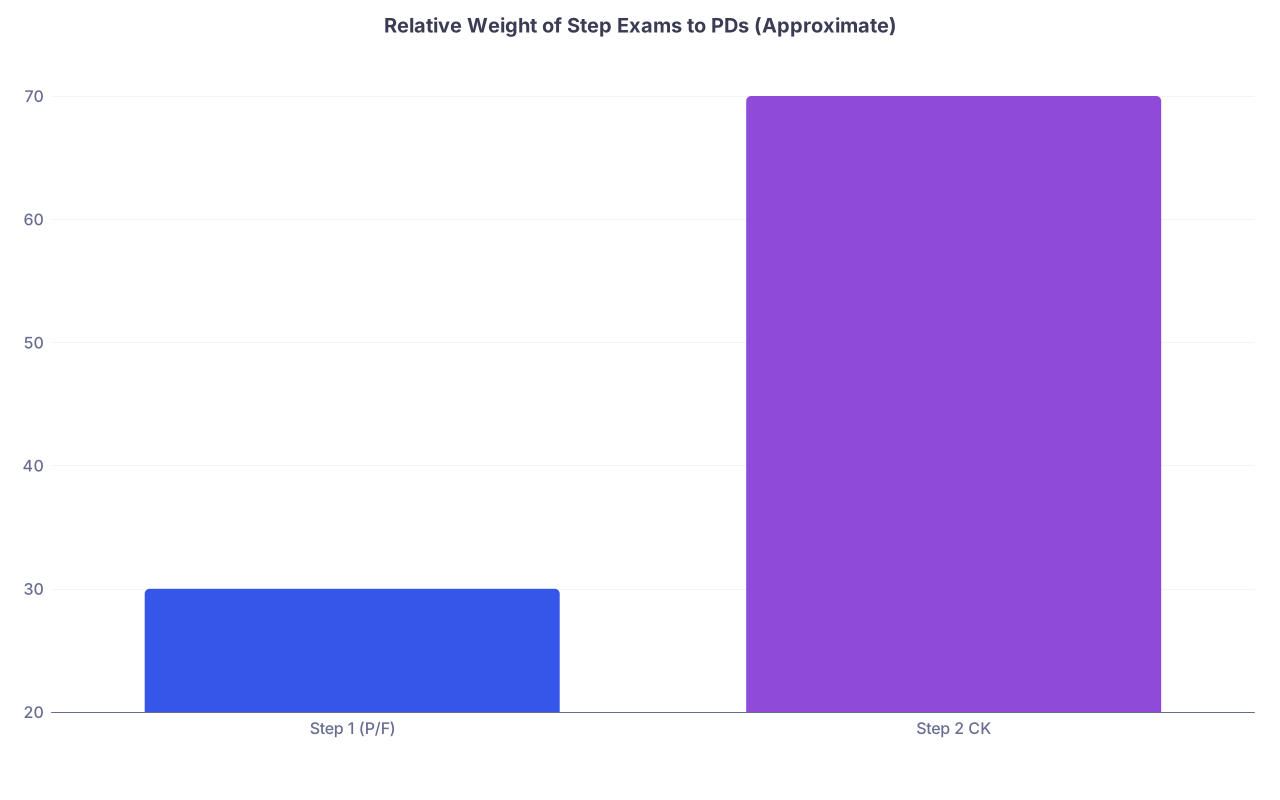
| Category | Value |
|---|---|
| Step 1 (P/F) | 30 |
| Step 2 CK | 70 |
Is this exact? Obviously not. But it’s roughly how it feels in actual conversations: Step 2 is where they look for differentiation now.
So if you’re worried sick about how you did on Step 1, the most productive thing you can do isn’t catastrophizing. It’s plotting out a real Step 2 plan and deciding you’re going to use this fear as fuel instead of letting it paralyze you.
How Different Specialties See a “Barely Pass”
You’re probably also catastrophizing based on specialty.
Competitive fields (Derm, Ortho, Plastics, ENT, Neurosurg, some Radiology, etc.)
Reality check:
- They’re not ranking people based on “who probably barely passed Step 1.”
- They’re looking at:
- Step 2 CK (often pretty high)
- Research output in the field
- Connections/away rotations
- Letters from big names
- Honors in clinicals
If you want something like derm and you only have a “pass” on Step 1 and a mediocre Step 2, no research, average clinicals… yeah, that’s a problem. Not because you “barely passed,” but because your application overall isn’t competitive.
If you:
- Passed Step 1
- Score well on Step 2
- Have strong research / letters / rotations
You’re not automatically out. Plenty of people matching now never had numeric Step 1 scores at all.
Less competitive but still solid fields (IM, Peds, Psych, FM, Neuro, etc.)
Here the main Step-1-related question is really:
“Can this person pass their future boards and function clinically?”
A pass is usually enough to reassure them if:
- Step 2 CK is solid (not necessarily insane, just solid)
- Clerkship comments don’t scream “unsafe” or “lazy”
- No professionalism red flags
I’ve seen PDs barely discuss Step 1 unless there’s a fail. A clean pass is basically, “OK, check.”
Does Anyone Ever Suspect You “Barely” Passed?
You’re not going to like this answer, but it’s honest.
Can they “suspect” based on your later performance? Sometimes, yes. Example:
- You barely passed Step 1 (you think)
- Then you get a Step 2 in the 210–215 range (lowish)
- Multiple shelves barely passing or failing
- Struggle on in-service exams as a resident
At that point, they might conclude: “This person struggles with standardized tests” or “They’re borderline with retention.”
But that conclusion doesn’t come from your Step 1 alone. It comes from a long pattern.
If you passed Step 1 and later hit:
- Step 2: 230s, 240s, 250s
- Decent or strong shelf scores
- Normal in-service exams
No one is retroactively going, “Yeah but I bet Step 1 was a squeaker.” They just don’t have the bandwidth or the benefit to obsess that deeply.
You’re thinking about you way more than they’re thinking about you. Brutal, but also kind of freeing.
Concrete Things You Can Do If You’re Terrified Right Now
Let’s get practical instead of just spiraling.
1. Decide what story you want your Step 2 to tell
Do you want your application to say:
- “Barely passed Step 1 → barely scraped Step 2 → constant borderline”
or
- “Passed Step 1 → then leveled up hard on Step 2 with a clear upward trend”
You actually have control over this one.
2. Build a Step 2 study plan that doesn’t repeat your Step 1 mistakes
If Step 1 felt like drowning in resources and scatter, then for Step 2:
- Pick 1 main Qbank and actually finish it
- Use 1–2 core resources (e.g., UWorld, OnlineMedEd, AMBOSS, etc.), not six
- Treat clerkships as Step 2 prep, not separate tracks
And for the love of everything, plan review time. Most people underestimate how long it takes to go over questions and annotate.

| Step | Description |
|---|---|
| Step 1 | Assess weaknesses |
| Step 2 | Pick main Qbank |
| Step 3 | Daily questions and review |
| Step 4 | Track weak subjects |
| Step 5 | Targeted content review |
| Step 6 | NBME practice exams |
| Step 7 | Adjust plan and timing |
| Step 8 | Take Step 2 |
3. Fix the real issues Step 1 exposed
If you barely passed because:
- You crammed last minute
- You didn’t do enough full-length practice
- You ignored your weak subjects
- You have real test anxiety issues
- You had life chaos (family, mental health, etc.)
Then pretending it was “just a one-time thing” is how you get burned on Step 2.
You don’t need to tell PDs about all of this, but you do need to be honest with yourself. If test anxiety crushed you and you never treat it, it will come back.
4. Talk to someone who’s actually on the selection side
Not your classmate who got a 270. Not Reddit.
A dean, an advisor, a resident you trust, or someone involved in your school’s residency advising. Ask very specific questions:
- “I passed Step 1 on the first attempt and I’m worried I barely passed. How much will that matter for [specialty] if my Step 2 is strong?”
- “What Step 2 range should I realistically aim for to keep [field] open?”
You need someone who’s seen real match lists and sat in real ranking meetings.
The Ugly Fear Underneath All This
Let’s just name what's driving a lot of this panic:
You’re scared that this one test means you’re not actually smart enough for medicine. That they’re going to “find out” in residency. That your co-residents will be superior. That you snuck in the door and don’t belong.
Here’s what I’ve actually seen:
- Residents who barely passed Step 1 and become phenomenal clinicians.
- People with sky-high scores who are unsafe, arrogant, or miserable to work with.
- PDs who care way more about “Can I trust this person at 3 a.m. with a crashing patient?” than “What did they ‘probably’ get on Step 1?”
You passed a brutal exam that many people fail. That doesn’t make you broken. That makes you someone who survived something hard. Imperfectly. Like… almost everyone.
What You Should Focus On for the Rest of Med School
If you want something practical to hang onto, this is what will matters way more than whether you “barely” passed:
- Step 2 CK: Make this your proof that you can handle complex clinical reasoning.
- Clerkship evaluations: Show up, be prepared, be teachable, be reliable. Residents’ comments carry weight.
- MSPE narrative: A consistent story of “hard-working, improving, trustworthy” is gold.
- Letters: Strong, specific letters from people who actually know you beat any imaginary Step 1 whispers.
- Red-flag avoidance: No professionalism disasters. No unexplained big gaps. No repeated failures without growth.

You’re not trying to erase Step 1. You’re building so much other evidence that it just becomes one tiny, boring data point in a sea of stronger ones.
Quick Reality Snapshot
Here’s the mental shift I want you to have:
| Thought | More Accurate Reframe |
|---|---|
| PDs know I almost failed | PDs see “Pass.” That’s it. |
| I ruined my shot at competitive | Step 2, research, letters, and rotations matter more |
| Everyone else did better than me | You literally have no data on that |
| This proves I’m not smart enough | It proves you passed a brutal national exam |
| They’ll hold this against me forever | They’ll care way more about Step 2 and your clinicals |
Are there consequences if you had failed Step 1? Yes. That’s a different conversation: explaining it, showing growth, and often needing stronger Step 2 to compensate.
But you’re not there.
You passed.
FAQ (Exactly 6 Questions)
1. Can program directors somehow see my old numeric Step 1 score if I took it before pass/fail?
If you took Step 1 after the transition to pass/fail, no. There is no secret score buried in ERAS that PDs unlock. They literally see “Pass” or “Fail.” If you took it before the transition and got a number, that score will show. But you wouldn’t be asking this question if that were the case—you’d already know the number is visible.
2. Does a borderline Step 1 pass make it impossible to match into a competitive specialty?
Not automatically. What makes it hard is a weak overall application: mediocre Step 2, minimal research, average or poor letters, no strong clinical performance. If you’re aiming for derm/ortho/ENT/etc., you’ll need to be very intentional with Step 2, research, mentorship, and away rotations. Your Step 1 “barely pass” is not the make-or-break factor—your entire application is.
3. Should I mention my Step 1 struggles in my personal statement?
Usually? No. “I almost failed Step 1” doesn’t help you unless you’re tying it to a clear, compelling growth narrative (e.g., major life event, health crisis, or a concrete shift in how you study and perform that’s backed by a strong Step 2 and clinical record). Randomly confessing anxiety or barely passing just highlights something programs can’t even see and invites unnecessary scrutiny. Don’t create a red flag out of thin air.
4. How high does my Step 2 need to be to “offset” a shaky Step 1?
There’s no exact formula because PDs don’t actually know that your Step 1 was shaky. In practice, though, a solid Step 2 that’s at or above the average for your desired specialty puts you in a much better spot. For many core specialties, that might be somewhere in the mid–230s to mid–250s, depending on where you’re applying. Your advisor or dean’s office should give you specialty-specific targets based on recent match data.
5. What if my shelves are also borderline—does that confirm I’m just bad at tests?
It might confirm that standardized exams are a real challenge for you, yes—but that’s not the same as “bad doctor material.” It does mean you need an intentional strategy: structured question practice, earlier prep for each rotation, maybe formal help for test anxiety or learning issues if those are in the picture. PDs care a lot more about patterns and trends than one single data point. If your shelves start improving and your Step 2 ends up stronger, that pattern matters more than the early stumbles.
6. Do PDs actually talk about Step 1 in ranking meetings anymore?
Only when there’s something obvious to talk about: a fail, multiple attempts, or a gap. If it’s a clean “Pass” on first attempt, the conversation usually goes straight to Step 2, clerkship comments, letters, research, and any red or yellow flags. I’ve seen people’s entire ranking discussion be: “Good Step 2, solid comments, nice letter from IM, no issues—OK to rank.” Step 1 just doesn’t create much drama if it’s a simple pass.
Open your Step 2 study calendar (or create one if it doesn’t exist), pick a realistic test date, and write down exactly how many UWorld/AMBOSS questions you’re going to do this week—with specific blocks on specific days. Don’t just “plan to study more.” Put real numbers on real days so your fear has somewhere useful to go.