
The worst advice you can get about Step 2 CK timing right now is “just take it whenever you feel ready.” That was lazy before. In the Step 1 pass/fail era, it is disastrous.
You are living in a world where Step 2 CK is rapidly becoming the standardized number. Programs will not say it this bluntly, but I will: for many competitive specialties, your Step 2 CK date and score now function as your old Step 1.
So the real question is not “when is Step 2 CK offered?” It is: when, in relation to your clerkships, ERAS, letters, and specialty plans, should you lock that date?
I am going to walk you through this chronologically—from pre-clinical through the ERAS deadline—so you know, month by month, what decision you should be making and what calendar boxes you should be filling in.
Big Picture: The Critical Windows You Are Managing
Before we go into the weeds, you need the overall map.
Here are the 4 timing variables you are juggling:
- Clinical exposure and knowledge peak – When your core clerkships (especially IM, surgery, peds, OB/GYN, psych, FM) are freshest.
- ERAS application timing – You want your score back before programs start serious screening.
- Audition/sub‑internship blocks – You do not want to be cramming for CK while trying to impress at away rotations.
- Backup options – If you misfire and score lower than expected, do you still have time to adjust your application or even retake?
In the Step 1 score era, people could sometimes “coast” on a strong Step 1 and take Step 2 late. That’s gone. Now:
- Step 2 CK is increasingly used for interview screening.
- Many programs expect a score in hand by mid‑October, especially in competitive fields.
- Some PDs explicitly sort by Step 2 CK once Step 1 is pass/fail.
So the default target for most students should be:
Test between late June and mid‑August of the year you apply, with score released by early September.
Let me show you how that plays out on a typical US MD timeline.
Year‑by‑Year Overview: Where Step 2 CK Fits
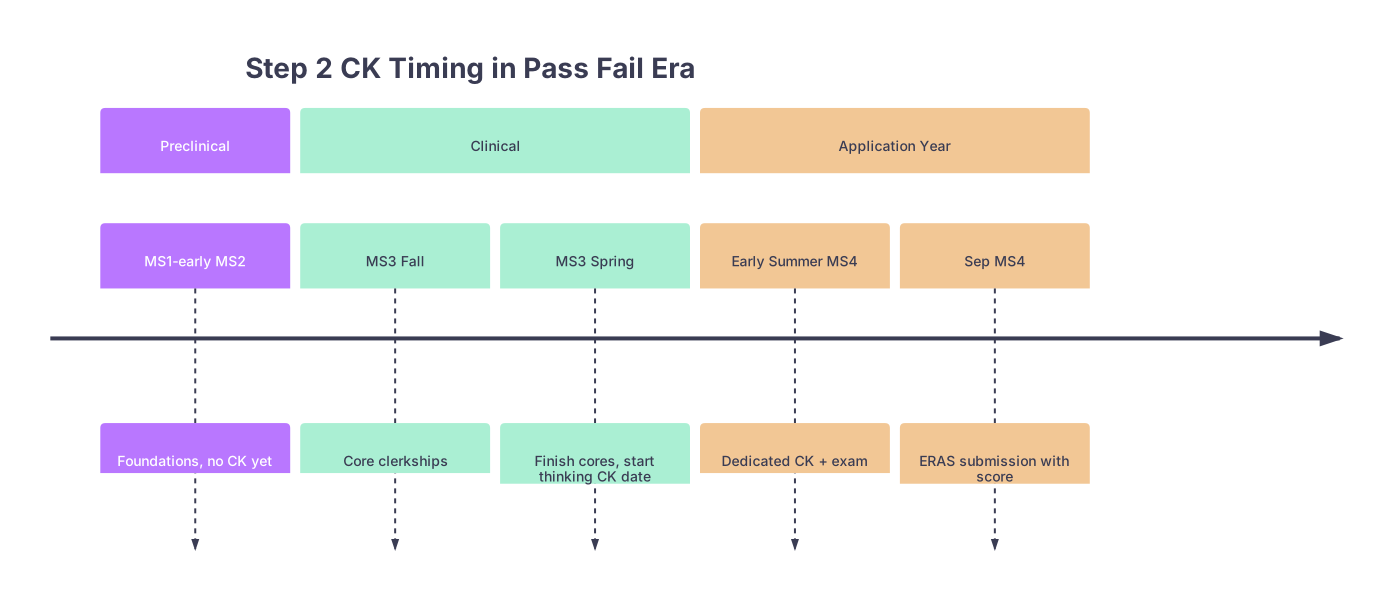
| Period | Event |
|---|---|
| Preclinical - MS1-early MS2 | Foundations, no CK yet |
| Clinical - MS3 Fall | Core clerkships |
| Clinical - MS3 Spring | Finish cores, start thinking CK date |
| Application Year - Early Summer MS4 | Dedicated CK + exam |
| Application Year - Sep MS4 | ERAS submission with score |
If you are an MD student on a fairly standard schedule, this is the pattern I recommend for most specialties:
- Finish all or almost all core clerkships by March–April of third year.
- Take a 4–6 week “CK‑friendly” stretch between late May and July.
- Sit for Step 2 CK no later than early August.
- Have your score in hand by ERAS opening and certainly by the time PDs are building interview lists.
If you are DO, on an accelerated schedule, or off‑cycle, the principles do not change. The dates do. You still want:
- Step 2 CK after you have seen the big clinical subjects.
- Step 2 CK before ERAS screening.
Let us walk this month‑by‑month in detail.
MS2 Spring to Early MS3: Laying the Groundwork (Not Testing Yet)
At this point you should not be scheduling Step 2 CK yet. But you should already be protecting the future window.
Jan–Apr (MS2 Spring)
Your job here is very simple:
- Ensure your core clerkship schedule will let you finish IM, surgery, peds, OB/GYN, and FM by roughly March–April of third year.
- Start light NBME‑style thinking:
- Use UWorld questions on shelf topics to see how NBME clinical reasoning feels.
- Pay attention to time pressure; Step 2 CK is long and tight.
If your school tries to slot you into a late core (e.g., internal medicine ending in July before your application year), push back. I have watched that destroy Step 2 CK timing more than once.
Your internal rule:
No critical core clerkships scheduled in the 2 months before your planned Step 2 CK window.
MS3: The Real Positioning Year
This is where you either set yourself up for a strong, well‑timed Step 2 CK or back yourself into a corner.
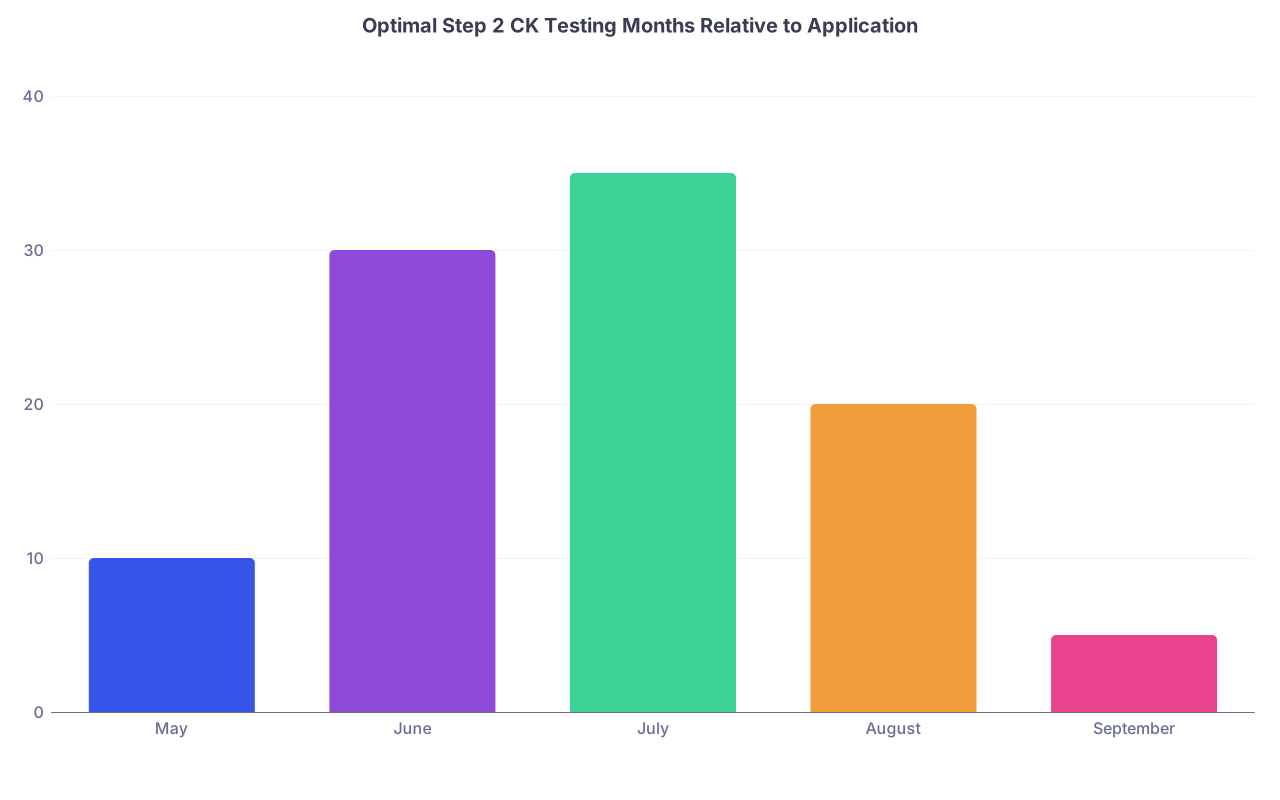
| Category | Value |
|---|---|
| May | 10 |
| June | 30 |
| July | 35 |
| August | 20 |
| September | 5 |
July–December (MS3 Fall): During Core Clerkships
At this point you should not schedule a CK date yet, but you should:
- Track your shelf exam performance:
- Consistent 70–80+ percentile NBME shelves? You can probably afford a shorter dedicated (3–4 weeks).
- Bare passes or remediation? You will likely need 5–6 dedicated weeks.
- Decide your specialty competitiveness tier:
- Derm, plastics, ortho, ENT, neurosurgery, ophtho: you probably need a strong Step 2 CK (250+ range) for serious consideration.
- IM, EM, anesthesia, OB/GYN, gen surg, peds: strong Step 2 still helps a lot, but the “must have 250+” pressure varies.
- Primary care, psych, many IM subspecialty pipelines: a solid score may suffice, but late or missing scores will still hurt.
By December, you should already have in your head:
“Given my shelves and my specialty, I am aiming for Step 2 CK in [Month X] with [Y] weeks of dedicated.”
Write it down. Treat it as real. Do not leave it as “I will see how it goes.”
January–March (MS3 Spring): Locking the Strategy
This is when your clerkship calendar and Step 2 CK plan must meet reality.
At this point you should:
Confirm your core completion date.
- If you are finishing your last core by March → you have room for a May/June exam.
- If you are finishing late April or May → you push toward late June/July for CK.
Look at your early MS4 schedule / away rotations:
- If you plan away rotations in July–August, you do not want Step 2 CK during those.
- Ideal: CK finished before your first major away or sub‑I.
Rough timeline (for a standard rising MS4, ERAS opens mid‑September):
| Timeframe | Recommended Focus |
|---|---|
| Mar–Apr MS3 | Finish last core clerkships |
| May–mid Jun | Mixed study + light rotations |
| Late Jun–Jul | Dedicated + Step 2 CK exam |
| Aug | Sub‑I / aways with score pending |
| Sep | ERAS submitted with CK score |
You still might not book the exact test day in January, but by March you should be logging into the NBME/Prometric system and seeing what dates are even available.
Step 2 CK slots evaporate faster than people expect, especially late June through August. I have seen students forced into September appointments because they waited until May to schedule.
Do not do that.
The Application Year: Week‑by‑Week Timing
Now we get to the part you actually care about: “I am applying this September. When, exactly, do I sit for Step 2 CK?”
I will assume a “typical” ERAS calendar (ERAS opens mid‑September, programs download a week or two later). Adjust a few weeks if your year shifts.
Late MS3 / Early MS4: Picking Your Exact Date
There are 3 main patterns I see that actually work.
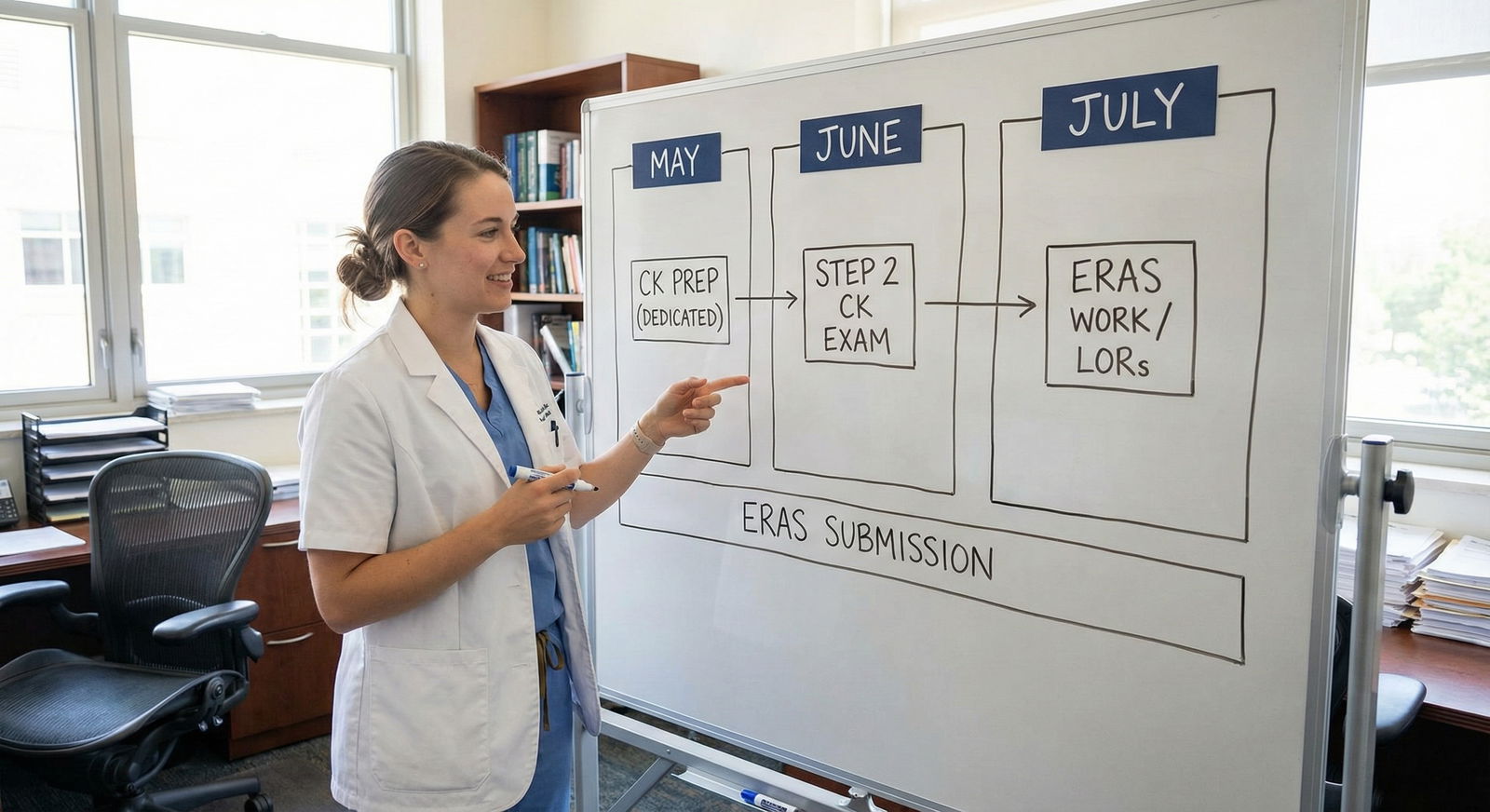
Pattern A: Early Bird (Exam in late May–mid June)
Who this is for:
- Strong shelf performance.
- Comfortable test taker.
- Wants score back very early to shape specialty / program list.
- Often IM, EM, peds, psych applicants, but works for competitive specialties too if you are strong.
Timeline:
- Mar–Apr
- Finish last cores. Start light CK‑style questions (20–40/day) focused on weaker areas.
- Early May (Weeks 1–2)
- Start structured review: UWorld reset or continue + NBME practice.
- Late May–mid June
- 2–4 weeks of semi‑dedicated (light elective or research only).
- Exam by mid‑June.
- Score release
- Usually 3–4 weeks later → mid‑July.
Upside:
- You know your score very early.
- Time to adjust specialty choice if CK underperforms.
- Plenty of room for a Plan B or a retake (yes, painful, but possible) before some deadlines.
Downside:
- You are slightly further from some late cores if your schedule is odd.
- Less total clinical time before exam.
Pattern B: Classic Window (Exam in late June–July)
This is the default I recommend for most students.
Who this is for:
- Normal shelf record (not perfect, not disaster).
- Wants full core exposure.
- Needs June as primary dedicated period.
Timeline:
- Apr–May
- Finish last cores by mid‑April or early May.
- Take 1 light elective or research block and start ramping up questions (40–80/day).
- Early June – mid July
- 4–6 weeks of dedicated.
- Sit for CK sometime between late June and mid‑July.
- Score release
- Late July to early August.
Upside:
- Maximal integration of all core rotations.
- Comfortable dedicated period.
- Score available well before ERAS and before most PDs start serious screening.
Downside:
- Less room for a do‑over if something goes sideways.
- July away rotations may be off the table or require juggling.
Pattern C: Late But Still Usable (Exam in early–mid August)
Who this is for:
- Cores finished late (May–June).
- Needed extra time due to weaker shelf performance.
- Maybe changing specialties late and wants a stronger number.
Timeline:
- May–June
- Finish cores.
- Do 2–3 weeks of mixed elective + starting CK QBank grind.
- July – early August
- 4–5 weeks dedicated.
- Sit CK by first or second week of August.
- Score release
- Early to mid‑September (cutting it close but often in time for ERAS).
Upside:
- More time to remediate weak areas.
- Juggles late cores.
Downside:
- Stressful. You could be waiting for your score as ERAS opens.
- Some programs may review apps before your score populates, especially if they screen early.
What About Late CK? (September–October)
Let me be direct: in the Step 1 pass/fail world, Step 2 CK in September or later is usually a bad idea for applicants in competitive specialties, unless:
- You have a very strong overall application (honors, research, home‑field advantage), and
- You have a clear strategic reason (e.g., reapplying, already matched in early match specialty like ophtho but still taking CK).
Programs are under pressure. They have too many applications. They are not going to “wait and see” on thousands of students who promise a great CK score later.
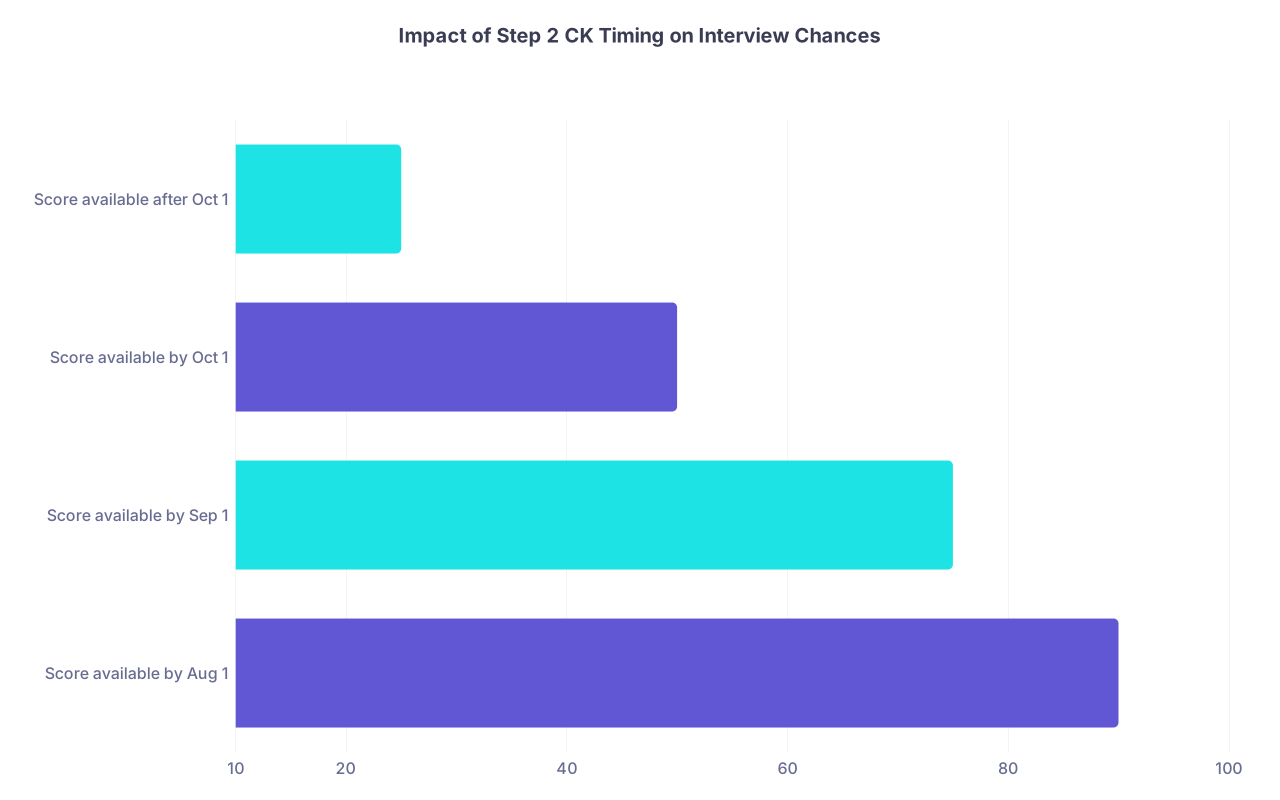
| Category | Value |
|---|---|
| Score available by Aug 1 | 90 |
| Score available by Sep 1 | 75 |
| Score available by Oct 1 | 50 |
| Score available after Oct 1 | 25 |
The exact percentages are not the point; the trend is. Earlier, solid scores open doors. Late or missing scores close them.
If you absolutely must test in September:
- Inform your school’s advising office and get specialty‑specific guidance.
- Be realistic about your specialty choice and consider including less competitive backup options.
- Make sure your personal statement and MSPE address any timing abnormalities only if asked or clearly appropriate. Do not overshare.
Special Situations: When the Standard Timeline Breaks
1. You Did Poorly on Step 1 (Barely Passed, One Failure, etc.)
Now that Step 1 is pass/fail, “poorly” often means a marginal pass or a prior fail.
In this context, PDs are blunt: Step 2 CK becomes your redemption or your confirmation.
At this point you should:
- Aim to test in the early or classic window (May–July), not late.
- Give yourself ample dedicated (5–6 weeks).
- Take at least 2–3 NBME practice exams and do not sit for CK until your practice scores are consistently where you need them.
If you are trending below 230 on NBMEs and you are trying for ortho, derm, plastics, ENT, neurosurgery, you may need to adjust your expectations before you even take the exam.
2. You Are Targeting Extremely Competitive Specialties
Step 1 as a number is gone. Soft signals (AOA, research, home program) and Step 2 CK fill that vacuum.
In this group, I strongly favor:
- Pattern A or B (May–July testing) with a hard cap of first week of August.
- Minimizing clinical obligations during the final 3 weeks before CK.
- Scheduling at least one “full‑dress” NBME or UWorld self‑assessment under strict timing every 7–10 days in the last month.
Also, you do not want CK prep crushing your away rotation performance. PDs notice when the visiting student is clearly distracted and leaving early “to go study.”
3. You Are Off‑Cycle or Taking a Research Year
Research years can actually give you a cleaner CK window.
Example pattern:
- Finish MS3 cores in May.
- Start research year in July.
- Take CK in August or September of research year, long before ERAS for your actual application year.
- Result: you enter your “real” application year with CK already done and out of the way.
This is often ideal, as long as you keep your clinical knowledge fresh with some moonlighting shifts, clinics, or teaching.
Week‑By‑Week Inside a 6‑Week Dedicated Block
You have picked a late June date. You blocked 6 weeks. Now what does that actually look like?

Here is a high‑level structure:
- Weeks 1–2: Broad Coverage
- 60–80 QBank questions per day (IM heavy).
- Rapid review of weak shelves (e.g., OB if you struggled).
- Weeks 3–4: Integration + First NBME
- First NBME at start of Week 3.
- Identify bottom 2–3 subjects; add targeted resources.
- Still 60–80 questions/day, but more mixed sets.
- Weeks 5–6: Polishing + Two More Practice Tests
- NBME at start of Week 5.
- Final NBME 5–7 days before exam.
- Focus on high‑yield topics, error log, and pacing.
You should schedule the actual Step 2 CK date before this block even starts, then work backward to fill in NBME dates like anchors.
How Programs Are Actually Using Step 2 CK Now
No, there is not a single rule across all departments. But there are patterns.
| Program Type | Typical Use of Step 2 CK |
|---|---|
| Highly competitive fields | Primary screening metric |
| Mid‑tier academic IM | Major factor, plus MS3 performance |
| Community programs | Used to confirm basic competence |
| DO‑heavy or IMG‑friendly | Often required before ranking |
| Early match specialties | Still important but timing differs |
A few honest realities I hear from PDs and residents reviewing apps:
- “If Step 2 CK is missing or ‘pending’ when we first run filters, that applicant effectively does not exist in the first pass.”
- “We used to give a little leeway with late Step 2 because Step 1 was there. Now we are less forgiving.”
- “For students with unremarkable clinical grades, Step 2 CK is the only standardized way to show they can crush boards.”
So yes, your score matters, but your timing also matters. A fantastic number that arrives in November may not rescue an application lost in the initial cull.
Putting It All Together: A Simple Decision Flow

| Step | Description |
|---|---|
| Step 1 | Finish Core Clerkships |
| Step 2 | Plan May-Jun CK window |
| Step 3 | Plan Jun-Jul CK window |
| Step 4 | Plan Jul-Aug CK window |
| Step 5 | Avoid CK after early Aug |
| Step 6 | Can use up to late Aug |
| Step 7 | Book exam 3-4 months ahead |
| Step 8 | When do cores end |
| Step 9 | Competitive specialty |
At this point you should have a clear sense of:
- The month you should aim to take Step 2 CK.
- How many dedicated weeks you need, based on shelves and specialty.
- Whether your current clerkship / away schedule supports or sabotages that plan.
Your Next Step Today
Open your calendar for the year you will apply and mark three things in ink:
- The month your last core clerkship ends.
- A 4–6 week block between late May and early August labeled “Step 2 CK Dedicated.”
- A specific test week inside that block that you will aim for.
Then log into the NBME/Prometric scheduling system and see what dates are already disappearing. If you cannot actually book yet, set a reminder for the earliest possible scheduling date your school allows.
Do not wait for “when I feel ready.” Schedule the exam, then build your preparation and rotations around it.