
The worst debt advice for MD/PhD trainees is the generic “you’ll be a doctor, you'll be fine.” That mindset is how people sleepwalk into six-figure mistakes.
You are not a traditional MD student. Your training timeline, income pattern, and federal loan options are structurally different. If you treat your finances like a regular med student, you will overpay, lose years of PSLF credit, or blow up your repayment options right before residency.
Let me break this down specifically.
1. The Core Problem: You Live in a Gray Zone for a Decade
MD/PhD trainees sit in a weird overlap:
- You often qualify as “in school” for 7–9 years.
- You have a taxable stipend that is low but real income.
- You may have federal Direct loans, old FFEL, Perkins, institutional loans, or a mix.
- You might end up in an academic or government job (PSLF-eligible) or jump to private practice.
- Your PhD years are not all treated the same for loans, depending on what you do (and whether you consolidate, apply for IDR, etc.).
Most generic loan advice fails because it assumes one of two simple patterns:
- MD only: 4 years med school → 3–7 years residency/fellowship → attending
- PhD only: funded stipend, minimal or no loans, then academia/industry
You are neither. You’re on:
- 4 years MD (loosely)
- 3–5+ years PhD
- 3–7 years residency/fellowship
- Then attending
That is ~10–15 years between starting med school and your first truly high-earning attending paycheck. These nuances dominate your debt strategy.
2. Step Zero: Know Exactly What You Owe (And What It Is)
Before we even touch repayment strategies, you need to know precisely what you have. Not a rough guess. I mean every loan, type, and interest rate.
Here is what I see constantly: MD/PhD trainees who know their total balance but have no idea which portions are Direct Unsubsidized, Grad PLUS, Perkins, or private. That is like planning surgery without knowing which organ you are operating on.
Start here:
Log into studentaid.gov and pull your full loan summary.
Export or write down, for each loan:
- Loan type (Direct Unsub, Direct Grad PLUS, older FFEL, Perkins, etc.)
- Current servicer
- Interest rate
- Disbursement dates
- Whether it is consolidated or not
Identify any non-federal loans:
- Institutional med school loans
- Private loans from a bank or state agency
Now classify them into buckets:
| Bucket | Typical Loan Types | PSLF Eligible? |
|---|---|---|
| Federal Direct | Direct Unsubsidized, Direct Grad PLUS | Yes |
| Older Federal (non-Direct) | FFEL, Perkins | Not until consolidated |
| Institutional | School-based loans | No |
| Private | Bank/state/online lenders | No |
If you get this classification wrong, every downstream decision is garbage. For PSLF and modern IDR (SAVE, PAYE replacement), only Direct loans count. Everything else either needs consolidation or has to be managed separately.
3. The Three Critical Phases of an MD/PhD Loan Life
Your strategy is not one strategy. It is three different strategies over time.
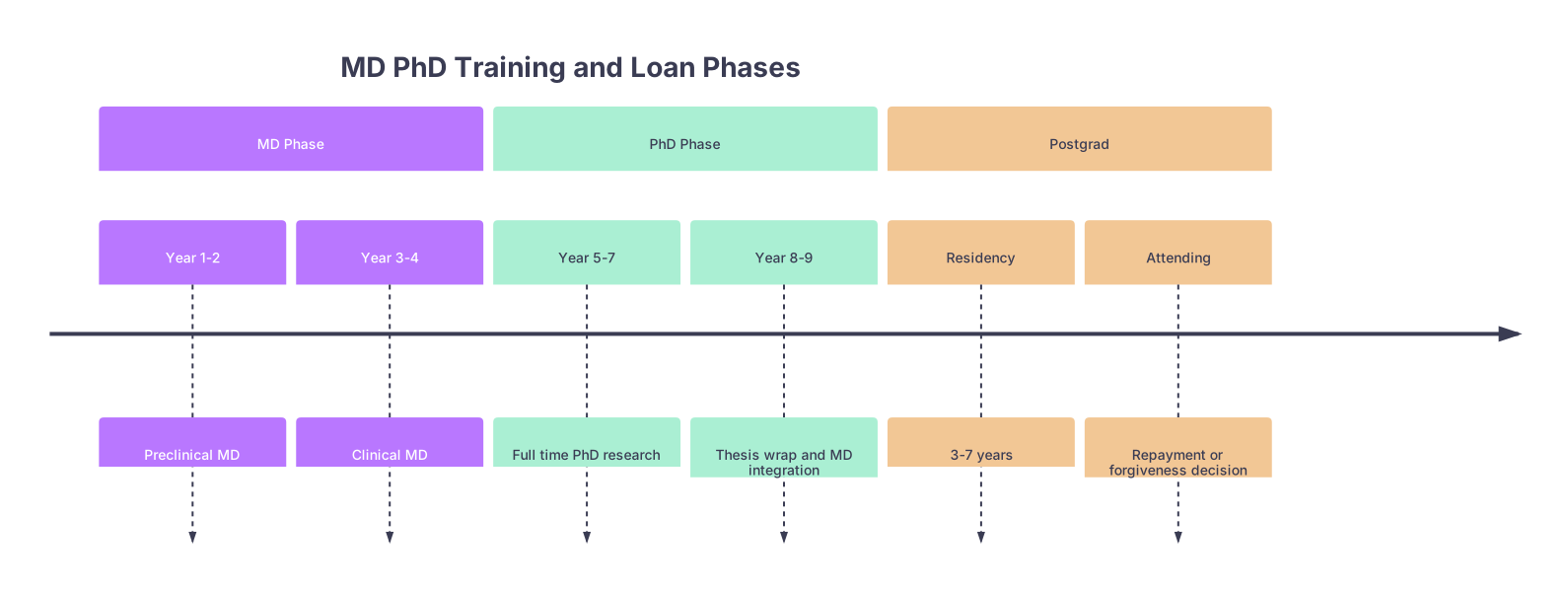
| Period | Event |
|---|---|
| MD Phase - Year 1-2 | Preclinical MD |
| MD Phase - Year 3-4 | Clinical MD |
| PhD Phase - Year 5-7 | Full time PhD research |
| PhD Phase - Year 8-9 | Thesis wrap and MD integration |
| Postgrad - Residency | 3-7 years |
| Postgrad - Attending | Repayment or forgiveness decision |
Think in phases:
- MD tuition years (high borrowing, low or no income)
- PhD stipend years (no new borrowing for tuition, modest income)
- Post-graduation (residency/fellowship and beyond)
Each phase has a different optimal move set.
4. Phase 1 – MD Tuition Years: Don’t Sleep Through the Foundation
You may be fully funded only during the PhD, not necessarily for all MD years. Some programs cover all years, some only the PhD, some front-load, some back-load. Yes, programs differ, and yes, trainees misunderstand this all the time.
In the MD-heavy years, typical pattern:
- You borrow federal Direct Unsubsidized and maybe Grad PLUS.
- You might still be “in-school” for older undergrad loans (they are usually in deferment).
- You usually have no or very minimal taxable income.
Key choices here:
A. To consolidate or not during MD years?
Usually, do not consolidate during pure MD school if:
- You have mostly Direct loans already, and
- You will not be doing any income-driven payments (since you have no income).
Why? Because consolidation:
- Resets certain interest subsidies (for some older loans).
- Resets qualifying payment counts if you somehow had any prior PSLF/IDR credit (rare but can happen if you worked before).
But if you have:
- FFEL or Perkins loans from undergrad that you definitely want eligible for PSLF later,
- And you are early enough that you are not losing much PSLF/IDR credit,
then consolidating to a Direct Consolidation Loan once early in MD can clean up the portfolio. Just do it with intent, not by blindly clicking.
B. Forbearance vs in-school deferment vs early IDR?
During MD years, you are typically in “in-school deferment,” so you do not need to apply for forbearance. Federal loans just sit there, interest accruing.
You have two main options:
- Stay in in-school status, make no payments.
- Voluntarily opt into an IDR plan (like SAVE) using $0 or very low income.
If you are going to pursue PSLF and know you will almost certainly work for a qualifying employer (academic medical center, VA, many research hospitals), voluntarily entering IDR earlier can be a huge hidden win:
- $0 payments while in MD school (if no income or very low AGI)
- But those $0 payments count as qualifying PSLF payments.
I have seen MD/PhD graduates with 6–8 extra PSLF credits simply because they put themselves into IDR during med school using a prior-year low income tax return. That is almost a year of attending-level payments you do not have to make later.
Caveat: this only matters if:
- You are confident on a PSLF track, and
- You understand that you are starting your 120-payment clock earlier.
If your long-term goal is private practice with no PSLF, the calculus changes. Early IDR might still make sense for interest management (under SAVE, unpaid interest is not capitalized if you keep making required payments), but the PSLF angle is less important.
5. Phase 2 – PhD Stipend Years: The Most Underrated Window
This is where MD/PhD trainees can gain or lose tens of thousands of dollars.
You now have:
- A taxable stipend (often 30–40k/year, sometimes slightly higher).
- No new grad-med tuition loans (typically).
- Loans that are either in in-school deferment or optionally in an IDR plan.
The mistake I see constantly: People assume “I’m still in school, so I’ll just ignore loans until residency.” That is med-student thinking, not MD/PhD thinking.
You actually have three levers:
- Whether you keep loans in in-school deferment or move them into repayment under IDR.
- Whether you file taxes single vs married, and jointly vs separately later.
- Whether you use your stipend to make small targeted payments.
A. In-school deferment vs IDR on a stipend
With the newer SAVE plan (which replaced REPAYE in 2023–2024), unpaid interest is largely waived if you stay on the plan and make required payments. That is a huge shift.
So the tradeoff becomes:
In-school deferment:
- $0 required payments
- Interest accrues and can capitalize at the end of deferment
- No PSLF credit accumulating
SAVE (or other IDR) during PhD:
- Required payment based on AGI and family size
- Very low monthly payment on a 30–40k stipend, especially with retirement contributions
- Unpaid interest subsidy (under SAVE, 100% unpaid interest on subsidized/unsubsidized loans is not added to balance if you make required payment)
- Each month counts toward the 120 PSLF payments if you are working for a qualifying employer
Now the nuance: MD/PhD stipends are not automatically PSLF-qualifying. PSLF cares about your employer, not your student status.
So, you must check:
- Are you paid through the medical school / university (a qualifying 501(c)(3) employer)? Often yes.
- Is your appointment classified as full-time for PSLF purposes? The bar is usually 30+ hours/week; many MD/PhD stipends meet this.
If the answer is yes to both, your PhD years can be golden PSLF years:
- Low stipend → small IDR payments
- Full-time at 501(c)(3) → PSLF-qualifying employment
- 3–5 years of cheap PSLF credits
Someone who does 4 MD + 4 PhD + 4 residency, all at qualifying employers and on IDR, can hit 12 years of PSLF credit before even becoming an attending. That means PSLF can trigger in the first attending job contract.
I have seen people walk into their first attending year with 96–108 qualifying payments already banked. That is not theoretical. It just requires intentional setup during PhD.
B. Using the stipend smartly
You do not need to throw your entire stipend at loans. But there are a few high-yield moves:
- Contribute to a 403(b)/401(a) / 457(b) if available. That reduces your AGI, and therefore reduces IDR payments. You get retirement savings + lower PSLF-qualifying payments.
- Keep an emergency buffer (1–3 months living expenses) so you are not forced into high-interest credit card debt when something breaks. Loan prepayments while carrying a 24% APR card balance is just bad math.
- If you are not pursuing PSLF and plan to aggressively pay off loans as an attending, small extra payments during PhD may not be worth the lifestyle hit. In that case, focus more on retirement accounts and avoiding consumer debt.
6. Phase 3 – Residency and Fellowship: Coordination, Not Chaos
By the time you reach residency, two things are true:
- Loan servicers will suddenly care about you again.
- Every mistake gets more expensive.
During residency you are:
- Almost always employed by a PSLF-qualifying institution (teaching hospital, university, VA).
- Earning more than a PhD stipend, but still low relative to future income.
- Locked into 3–7 years where you can rack up PSLF-qualifying payments at a discount.
The debt management plan here depends mostly on what you did during MD and PhD.
A. If you used IDR + PSLF during MD/PhD
You may already have:
- 4–8 years of qualifying PSLF payments.
- A mix of IDR payment history and possibly $0-payment years that still counted.
Your residency goal is simple: do not break the chain.
- Stay on IDR (SAVE or appropriate plan for your loan mix).
- Certify employment annually for PSLF with the PSLF Help Tool (studentaid.gov).
- Watch your servicer like a hawk for miscounted payments.
Do not “forbear” during residency unless you are in a full-on financial catastrophe. Forbearance = no PSLF credit, interest snowball, and you give up the interest subsidies of SAVE.
B. If you deferred everything during MD/PhD
You start residency with:
- 0 PSLF-qualifying payments.
- A large, fully interest-accrued balance.
Not fatal. Just more expensive long-term.
From PGY-1 onward:
- Immediately consolidate older non-Direct loans into a Direct Consolidation Loan (if PSLF is in your future).
- Enroll in SAVE or another IDR plan, with your PGY-1 income and household size.
- Start banking PSLF payments each month.
You will likely finish residency with 3–7 years of PSLF credit. If you do an academic attending job, you can still hit PSLF in your mid-career.
7. MD/PhD-Specific Landmines That Blow Up Good Plans
Let’s talk about the weird stuff that hits this group more than others.
A. “Temporary” private refinancing during PhD or residency
I see this pitch often: “Refinance your federal loans to a low private rate while your balance is high, then deal with it later.”
For an MD/PhD trainee who may:
- End up in academic medicine
- Qualify for PSLF
- Benefit from SAVE interest subsidies
This is usually terrible. Once you refinance federal loans to private, they:
- Lose PSLF eligibility permanently.
- Lose access to federal IDR protections.
- Lose all the pandemic-era style relief possibilities (and future ones).
You are giving up a massive government subsidy potential in exchange for a few points shaved off interest during your lowest-earning years. That is not a good trade for most MD/PhD paths, especially those even marginally likely to stay in academic or VA systems.
B. Marrying into a high-income partner too early (without planning)
Here is where financial planning and life planning collide.
If you:
- Marry a high-earning partner, and
- File taxes jointly, and
- Use an IDR plan that considers joint AGI,
your monthly IDR payment will spike. That is fine if you are not pursuing PSLF and want loans gone quickly. But it is a disaster if you are banking PSLF credits and wanted to keep payments low.
MD/PhD-specific nuance:
- You might still be in your PhD years when your partner is already attending-level income.
- You might be in a 60–70k stipend environment while your partner is at 300k+.
In that case, you need to know:
- SAVE considers spousal income unless you file taxes separately.
- Filing “married filing separately” can preserve low IDR payments based on your income only, but tax brackets and certain deductions get worse.
- This is a joint decision with real money on the line, often five figures over several years.
Bottom line: Loop a CPA or student loan-savvy planner into the conversation before you click “married filing jointly” during your PhD or residency.
C. Letting non-federal / institutional loans drift
Many MD/PhD trainees have small-ish institutional loans (e.g., med school hardship loans at 5% or 6%) on top of federal loans.
These:
- Are not PSLF-eligible.
- Do not qualify for federal IDR.
- Have their own forbearance/deferment rules.
I have seen people ignore them entirely, only to have them capitalized and balloon by attendinghood.
If balances are small and rates reasonable, sometimes the best move is:
- Keep them in school or residency deferment if offered,
- Then wipe them out aggressively in your first 1–2 attending years.
But if the interest rate is high or deferment options are poor, it may be worth:
- Making small fixed payments during PhD/residency if cash flow allows, or
- Refinancing only those into a better private rate, while leaving your main federal loans intact for PSLF/IDR.
Keep federal PSLF-eligible loans and private/institutional loans mentally separate. They are different animals.
8. SAVE, PSLF, and the Long Tail for MD/PhD
Let me zoom out and connect the policy changes to your reality.
SAVE’s influence on MD/PhD math
The SAVE plan (successor to REPAYE) does two critical things for you:
- Bases payments on a higher protected income threshold, lowering required payments on low stipends/salaries.
- Subsidizes 100% of unpaid interest when you make required payments.
This combo means:
- During PhD and residency, your loan balance is not ballooning in the same ugly way, even if your payments are tiny.
- PSLF utilization becomes far more attractive, because you can get a lot of qualifying years with minimal “skin in the game.”
For MD/PhD trainees who line up:
- 4 years MD on SAVE ($0–low payments)
- 4–5 years PhD on SAVE (low payments) with PSLF-qualifying employer
- 3–7 years residency/fellowship on SAVE (moderate payments) at teaching hospital
You are stacking a decade plus of low-cost PSLF years. By the time you hit attending, PSLF is not some distant concept; it is sitting right in front of you.
Routes where PSLF still does not make sense
There are MD/PhD paths where PSLF is less compelling:
- You strongly intend to go into high-pay private subspecialty in a non-501(c)(3) environment.
- Your loan burden is very modest (say < $80k total), and you can realistically pay it off in 2–3 attending years.
- Your academic/VA interest is near zero, and your whole residency/fellowship is at non-qualifying private hospitals (less common, but does exist).
In those cases, the plan might be:
- Use SAVE or PAYE during PhD/residency simply to control interest and keep cash flow reasonable.
- Refinance aggressively to a private lender once you are an attending with stable income and no PSLF intent, then pay off in 3–7 years.
The nuance: you do not pre-commit to that in MS1. You preserve options by not privatizing your federal loans too early.
9. Putting It Together: Example Trainee Scenarios
Let me give you three concrete sketches.
Scenario 1: MD/PhD who loves academia and will likely stay
- Loans: $280k federal Direct from MD years.
- Employer during PhD: University 501(c)(3), full-time research appointment.
- Path: Academic internal medicine with eventual R01 ambitions.
Optimal-ish path:
- Early MD: Consolidate old undergrad FFEL/Perkins into Direct once.
- MD years: Enroll in IDR (SAVE) with $0 income → $0 payments → PSLF-qualifying months.
- PhD years: On SAVE, AGI ~35k, payments maybe $80–150/month; all years PSLF-qualifying.
- Residency: Continue SAVE, certify PSLF annually; payments maybe $250–350/month.
By PGY-4 attending start, they might have:
- 9–12 years of PSLF credit.
- Reasonable remaining balance.
Then they sign with a university hospital as attending, and PSLF wipes the remaining balance within a few years of starting.
Scenario 2: MD/PhD leaning industry / private subspecialty
- Loans: $180k federal Direct, $20k institutional.
- Employer during PhD: University 501(c)(3).
- Goal: Industry job, private practice consults, not anchored to academic centers.
Path:
- MD: Use in-school deferment, no IDR, keep things simple.
- PhD: Enroll in SAVE mostly for interest control, but PSLF is a maybe, not a priority. Pay minimal amounts.
- Residency: SAVE again to control payment size, maybe PSLF-eligible but does not depend on it.
- Attending: Once high, stable income is in place and PSLF intent is clearly low, refinance entire federal balance to a competitive private rate and kill loans in 3–5 years.
This trainee uses the federal system as a flexible buffer, not a forgiveness engine.
Scenario 3: MD/PhD who married an attending during PhD
- Loans: $250k federal Direct.
- Partner: Surgical attending making 500k+.
- Goal: Unsure about long-term academic vs private; wants options.
Key moves:
- File taxes “married filing separately” during PhD and residency to keep IDR payments based on trainee income only.
- Use SAVE to keep balances from ballooning.
- Maintain PSLF eligibility (full-time employment at university during PhD; academic residency).
- Reassess at end of residency: if an academic job is chosen, stay in PSLF lane; if private practice, consider private refinance.
Without that MFS (married filing separately) decision, IDR payments would skyrocket to reflect 500k joint income, wiping out much of the PSLF arbitrage.
10. A Concrete Checklist for MD/PhD Trainees
Here is the no-fluff version of what you should actually do.
Pull your studentaid.gov file and classify every loan.
Confirm:
- Whether your PhD stipend is paid by a PSLF-qualifying employer.
- Whether your position counts as full-time by their HR definition.
Decide now if PSLF is likely (academic / VA / nonprofit career).
If PSLF is likely:
- Make sure all loans are Direct (consolidate non-Direct once early).
- Enroll in SAVE as early as practically possible (even during MD if you can).
- Submit PSLF employment certification annually during PhD and residency.
If PSLF is unclear:
- Still avoid private refinancing of federal loans before attending. Keep doors open.
- Use SAVE to limit interest growth during low-income years.
If PSLF is unlikely and private practice is almost certain:
- Use SAVE for cash flow flexibility and interest reduction during training.
- Plan a clean refinance as soon as you are an attending with stable income and no use for federal protection.
Before marriage or tax filing changes:
- Talk with a CPA or student-loan-competent advisor about joint vs separate filing and how it impacts IDR.
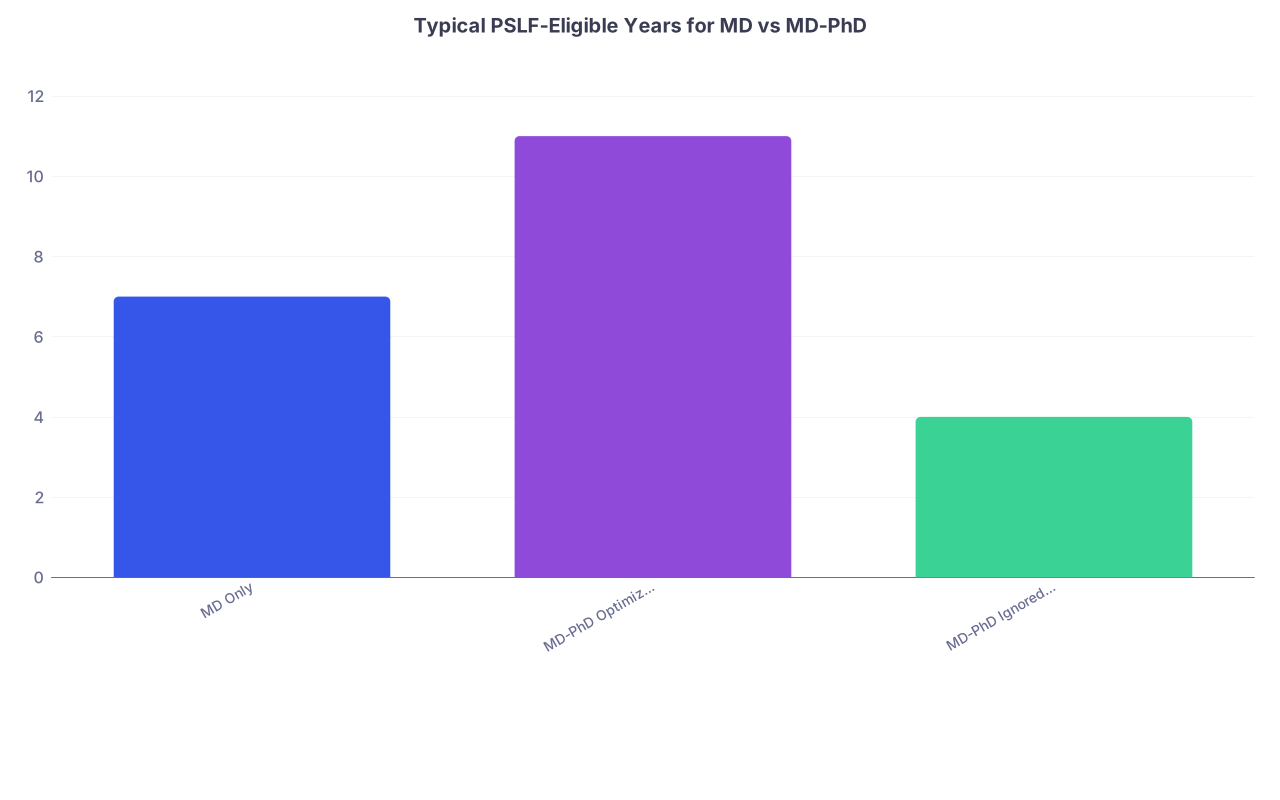
| Category | Value |
|---|---|
| MD Only | 7 |
| MD-PhD Optimized | 11 |
| MD-PhD Ignored Loans | 4 |

| Step | Description |
|---|---|
| Step 1 | MD PhD Trainee |
| Step 2 | Ensure all loans are Direct |
| Step 3 | Keep loans federal for now |
| Step 4 | Enroll in SAVE early |
| Step 5 | Certify PSLF in PhD and residency |
| Step 6 | Use SAVE for interest control |
| Step 7 | Reassess at attending |
| Step 8 | Consider PSLF as attending |
| Step 9 | Refinance privately if no PSLF |
| Step 10 | Likely PSLF Career? |

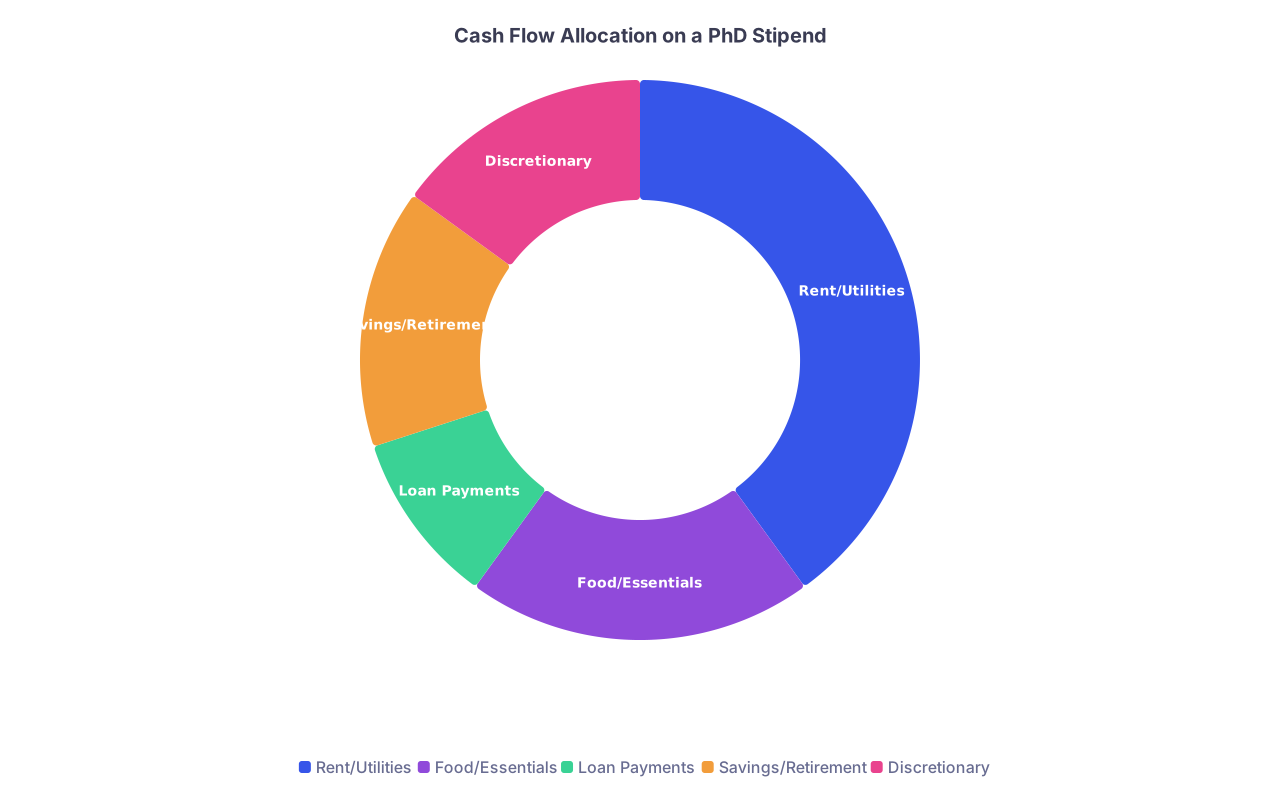
| Category | Value |
|---|---|
| Rent/Utilities | 40 |
| Food/Essentials | 20 |
| Loan Payments | 10 |
| Savings/Retirement | 15 |
| Discretionary | 15 |

FAQs (Exactly 6)
1. Should I consolidate my loans as an MD/PhD, and if so, when?
Consolidate once, early, if you have non-Direct federal loans (FFEL, Perkins) that you want to be PSLF-eligible. If all your loans are already Direct, consolidation is usually unnecessary and can reset some payment histories. The best timing is usually early in MD or early in PhD, before you have racked up substantial IDR/PSLF credit.
2. Can my PhD years actually count toward PSLF?
Yes, if two conditions are met:
- You are employed by a PSLF-qualifying employer (generally a 501(c)(3) university or hospital or government institution), and
- You are in a qualifying repayment plan (like SAVE) and making required payments based on your income (even if very small).
“Student” status does not disqualify you. Employer and payment plan are what matter.
3. Is it ever smart for an MD/PhD to refinance federal loans to private during training?
Almost never. You give up PSLF, federal IDR plans, and future relief flexibility in exchange for a lower interest rate while your income is lowest. For most MD/PhD trajectories, especially those with any chance of academic or VA work, that is a poor trade. The usual exception: small non-federal or institutional loans at high rates that are clearly not PSLF-eligible.
4. How does the SAVE plan specifically help MD/PhD trainees?
SAVE lowers required payments on low incomes and prevents unpaid interest from accruing beyond what you owe if you make required payments. For MD/PhD trainees with stipends or resident salaries, this means you can keep payments manageable, prevent balances from exploding, and stack low-cost PSLF-qualifying years if you are at eligible employers.
5. My spouse earns a lot more than I do. How do we avoid massive IDR payments?
You consider filing “married filing separately” so that your IDR payments are based on your income only (under SAVE and certain other IDR plans). The tradeoff is higher taxes and loss of some deductions/credits. You need a CPA to run both scenarios. For MD/PhD trainees bankrolling PSLF credits, this can save tens of thousands of dollars over a few years.
6. If I am not sure about academic vs private practice, how do I keep my options open?
Keep your loans federal (do not refinance privately), consolidate only to Direct if needed, enroll in SAVE to control interest and allow PSLF eligibility, and certify employment with PSLF whenever you are at a qualifying employer. You are essentially “parking” yourself in a flexible posture: if you choose academic/VA later, you already have qualifying years; if you go private, you can refinance and attack the balance aggressively as an attending.
Key points to walk away with:
- Your MD/PhD structure is an asset for loan management if you use PhD and residency years to accumulate low-cost PSLF credit under SAVE.
- Do not privatize federal loans prematurely. It destroys flexibility you may need more than you think.
- Tax filing status, employer type, and when you enter IDR matter more for you than for a typical MD. Those details are where five-figure mistakes hide.