
The financial advice people give you assumes you match on time. That’s your first problem.
Most budgeting and loan guidance for MS4s is built around a clean, linear story: Match in March, start residency July 1, paycheck hits mid-July. But if you’re unmatched, partially matched, or just scraped through SOAP into a prelim or off-cycle spot, your finances are in a completely different universe.
Let’s treat your actual situation, not the imaginary “perfect Match” version.
1. First: Get a 12-Month Cash Timeline On Paper
If you’re delayed in the Match or had a SOAP outcome that changes your start date or income, you cannot wing this. You need a simple, brutal timeline.
Grab a piece of paper or a note on your laptop and sketch out:
- March–June: current status (no job? short-term work?)
- Expected residency start date (July 1 or later?)
- First real paycheck date (usually 2–4 weeks after start)
- Loan status dates (when grace/deferment ends, when payments could start)
- Lease dates and moving costs
Then answer, in order:
- When is the next money in?
- When is the next big money out (rent, moving, licensing, Step 3, etc.)?
- When do your loans exit grace/deferment?
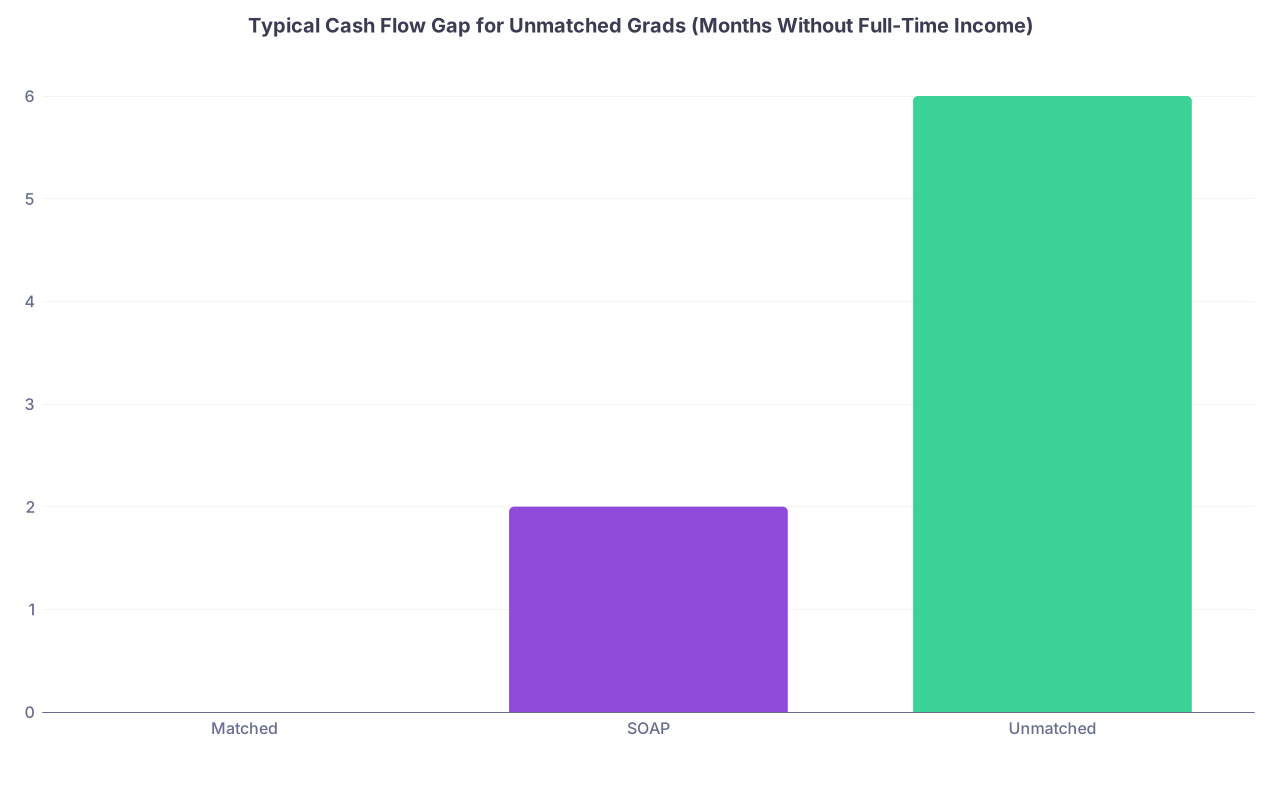
| Category | Value |
|---|---|
| Matched | 0 |
| SOAP | 2 |
| Unmatched | 6 |
If you’re:
- Unmatched and not starting anything in July → assume 6–12 months with minimal income.
- SOAPed into a prelim or off-cycle position → income may start late (September, October, or later).
- Matched but to a lower cost-of-living / different region at the last minute → your moving and setup costs may spike unexpectedly.
Once the timeline is there, then we talk loans and budgets. Not before.
2. Understand Exactly What Your Loans Are About To Do
The people who get crushed in this situation are the ones who “plan to look at it later.” Later turns into “my loans capitalized and my payment quote is insane.”
You need to know three things about each loan:
- Type (Direct Unsubsidized, Grad PLUS, private, institutional)
- Servicer (MOHELA, Nelnet, etc.)
- Status and date (in school, grace, deferment, forbearance; and when that changes)
Federal loans: the basic rules that now matter
- Med school grace period is usually 6 months after you graduate.
- After grace, if not in residency yet, your options:
- Income-Driven Repayment plan (SAVE, PAYE if grandfathered, IBR, etc.)
- Deferment (economic hardship in limited situations)
- Forbearance (discretionary or mandatory in certain cases)
If you will not have residency income by the time your grace ends, your playbook is:
- Apply for an IDR plan early (SAVE in most cases).
- Use $0 or very low income on your application if that’s accurate.
- Lock in that low required payment, even if you later go into forbearance briefly.
Why bother if you’re going to pay little or nothing?
Because for federal loans, especially if you’ll pursue PSLF later, your time in most IDR plans counts toward forgiveness, even if payment is $0. Forbearance usually does not (with a few limited exceptions).
Private and institutional loans
Different beast.
- No PSLF.
- Less flexible hardship options.
- Some give 6–12 months of residency deferment, some do not.
Call or log in and find:
- When does repayment start?
- Is there a residency deferment or reduced-payment option?
- What’s the interest rate?
- What happens if you do nothing?
If you’ve got, say, a 9–12% private loan kicking into repayment during a year you’re unmatched, you need to make that a priority line item, even if it means cutting aggressively elsewhere.
| Priority | Action | Applies To |
|---|---|---|
| 1 | Confirm grace end date and servicer | All federal loans |
| 2 | Apply for IDR (SAVE) with $0 income if accurate | Federal loans |
| 3 | Request residency or hardship deferment if available | Private/institutional |
| 4 | Set up autopay for any you must pay now | Highest-interest loans |
3. If You’re Completely Unmatched: Survival Mode Budget
If you didn’t match or only got a SOAP offer you declined, you’re in a holding pattern. Emotionally awful. Financially dangerous if you pretend you’re still a full-time student.
You need a survival budget, not a “new attending starter pack.”
Your categories:
- Non-negotiables:
- Rent / basic housing
- Utilities and phone
- Food (realistic, not DoorDash fantasies)
- Insurance (health, possibly renter’s, car)
- Minimum debt obligations you cannot defer
- Actually optional:
- Car upgrade
- New furniture
- “Last free summer” vacation
- Subscriptions and nice-to-haves
Aim for relentless minimalism for 6–12 months. If you’ve been living like a full-time med student on loan disbursements, this is the first time the bank of future-you is closed.
What to do about housing
If you’re not starting residency July 1:
- Strongly consider moving to a cheaper situation:
- Move back home if that’s an option and not toxic.
- Find a room instead of your own apartment.
- Re-negotiate lease or find someone to take over if possible.
Most people overspend here out of pride. “I’m about to be a doctor, I can’t move back in with my parents.” Fine. But then do not complain when your emergency fund is dust and your credit cards are maxed.
4. If You SOAPed Into a Prelim or Off-Cycle Spot: Transitional Budget
SOAP outcomes can throw your timeline sideways:
- Prelim only, no guaranteed PGY-2.
- Off-cycle start (e.g., September).
- Different specialty than you planned, with different Step 3 / licensing / board prep costs.
Your focus is bridging the gap from March to first paycheck without exploding your debt unnecessarily.
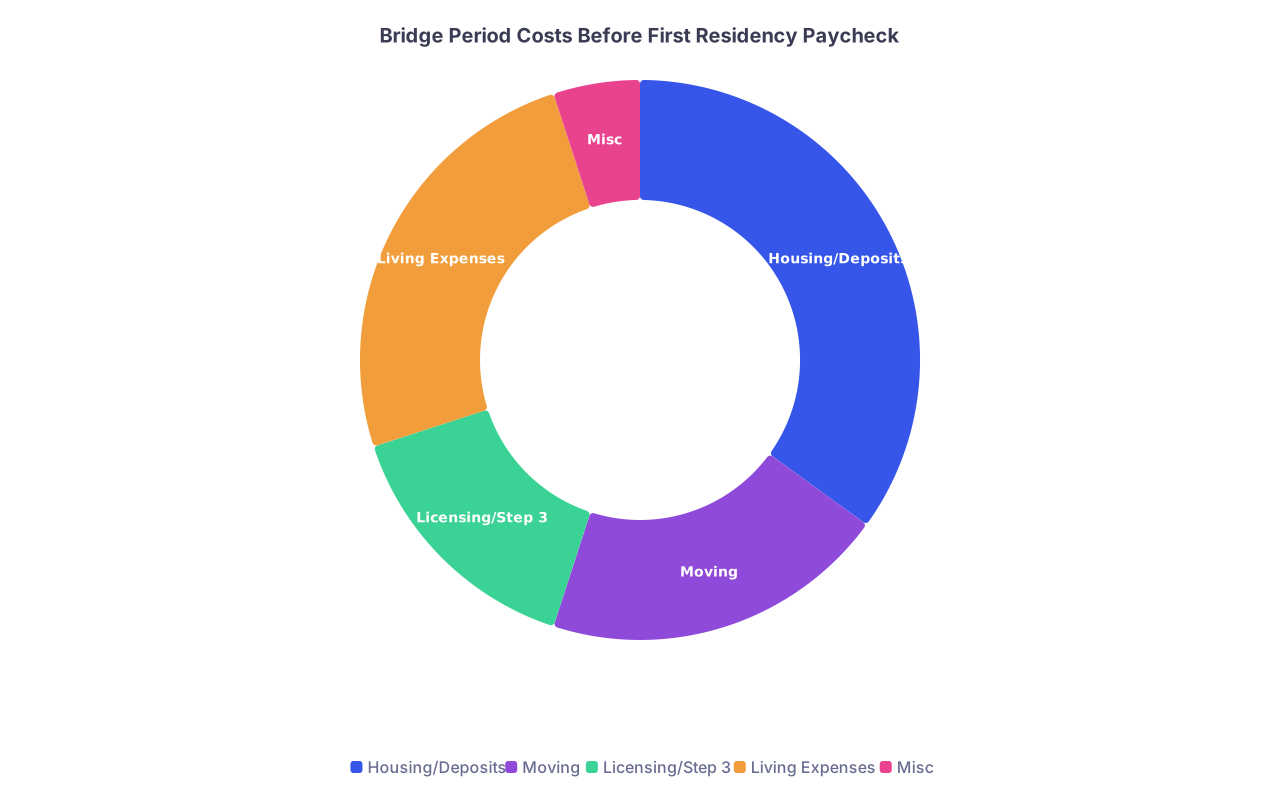
| Category | Value |
|---|---|
| Housing/Deposits | 35 |
| Moving | 20 |
| Licensing/Step 3 | 15 |
| Living Expenses | 25 |
| Misc | 5 |
You need to cover:
- Move (if required by new program)
- Deposits (apartment, utilities)
- Initial living expenses (first 4–8 weeks)
- Exam / licensing fees (state license, Step 3 eventually)
Strategies that actually work
Short-term work that is realistic
Do not wait for “perfect.” If you can:- Do part-time clinical work allowed for grads (medical assistant, scribe, research with pay).
- Pick up tutoring (MCAT, undergrad premed, USMLE-style for juniors).
- Grab non-clinical temp work that doesn’t wreck your studying.
Avoid new high-interest consumer debt if at all possible
Prefer:- 0% promo period credit lines only if you have a concrete payoff plan.
- Borrow (carefully) from family with a written expectation for repayment after you start residency.
Front-load the licensing/Step 3 planning
If you know your state and specialty:- Map out when you’ll actually pay each fee.
- Spread those costs—don’t let three big fees hit one month if you can prevent it.
5. Adjusting Loan Repayment Expectations Realistically
Here’s where people lie to themselves. They picture a future attending salary and ignore the next three years.
If you’re unmatched or SOAPed and uncertain:
- You are very likely to have lower initial income or delayed income.
- You are very likely to spend some time in low or $0 payment IDR plans.
- PSLF is still very much on the table if you end up in a 501(c)(3) hospital.
What to do with federal loans right now
If:
- You’re not working full-time yet, or
- Your income is minimal
Then:
- Enroll in SAVE (or your eligible IDR) as soon as grace ends.
- Use actual income (if it’s low or $0, that works in your favor).
- Do not voluntarily put everything into forbearance unless:
- You’ve done the math and PSLF/forgiveness is irrelevant for you, and
- You need the cash flow temporarily and will attack the principal later.
Remember: in SAVE, there’s a partial interest subsidy. That matters when your payment is tiny.
What to do with private/institutional loans
- If they offer a residency deferment even if you aren’t technically a resident yet (some do for “medical training” or similar language), use that.
- If not, ask explicitly about:
- Temporary hardship programs
- Interest-only periods
- Reduced fixed payments for 12–24 months
If they say no, you treat these like emergency bills. Keep them current to protect your credit unless you are absolutely forced to prioritize housing and food first. Defaulting here will haunt you later when you are an attending and want a mortgage.
6. Rebuilding the Plan: What If You’re Reapplying Next Cycle?
You didn’t match. You’re regrouping to apply again. This is where reality and hope need to coexist without one crushing the other.
You now have three parallel tracks:
- Financial survival this year.
- Application improvement (USMLE/COMLEX, research, clinical experience).
- Preservation of long-term options (PSLF, avoiding catastrophic debt growth).

| Step | Description |
|---|---|
| Step 1 | Unmatched in March |
| Step 2 | Build Surplus for Moving and Apps |
| Step 3 | Cut Housing and Expenses |
| Step 4 | Apply SAVE or IDR |
| Step 5 | Plan Reapplication Budget |
| Step 6 | Rank Programs Realistically |
| Step 7 | Start Income by June? |
Cash plan for the reapplication year
Line items you must budget for:
- Application fees (ERAS or equivalent).
- Travel or virtual interview-related costs (yes, even virtual—upgraded internet, camera, quiet space).
- Exam fees or retakes (Step 2/3, COMLEX).
- Living basics.
You do not budget for:
- Major lifestyle upgrades.
- Long-term investment contributions (beyond maybe a token amount if you’re stable).
- Expensive “productivity” subscriptions you don’t really need.
If you can line up consistent income this year—even a modest 30–40k job—you dramatically change the equation. Use that to:
- Cover basic living costs.
- Cash-flow application expenses.
- Make targeted payments on the worst private loans.
7. Emotional Reality vs. Financial Reality
You’re not just dealing with numbers. You’re dealing with ego, shame, and “everyone else is posting Match photos in their new cities.”
That’s exactly when people do financially dumb things:
- Signing a fancy lease in a new city because “I’ll be a resident soon anyway.”
- Ignoring loans for a year because it feels too overwhelming.
- Buying a new car “because I deserve something nice after all this.”
Here’s the blunt truth: your future self will not thank you for that. They will be paying 7–10% interest on the emotional purchases you made in a bad week.
Channel the frustration into something concrete:
- Calling every lender and getting clarity instead of avoiding emails.
- Doing one paid shift, side gig, or tutoring session instead of doom-scrolling.
- Spending one evening building a 12-month budget rather than catastrophizing.

8. Simple 3-Tier Budget Framework For This Exact Situation
You do not need a complex app. You need three numbers:
- Survival number – bare minimum monthly spending (roof, food, insurance, absolute minimum payments).
- Realistic number – survival + a bit of sanity (some eating out, small buffer, phone that actually works).
- Target number – what you’d spend once you are fully in residency and stable, not now.
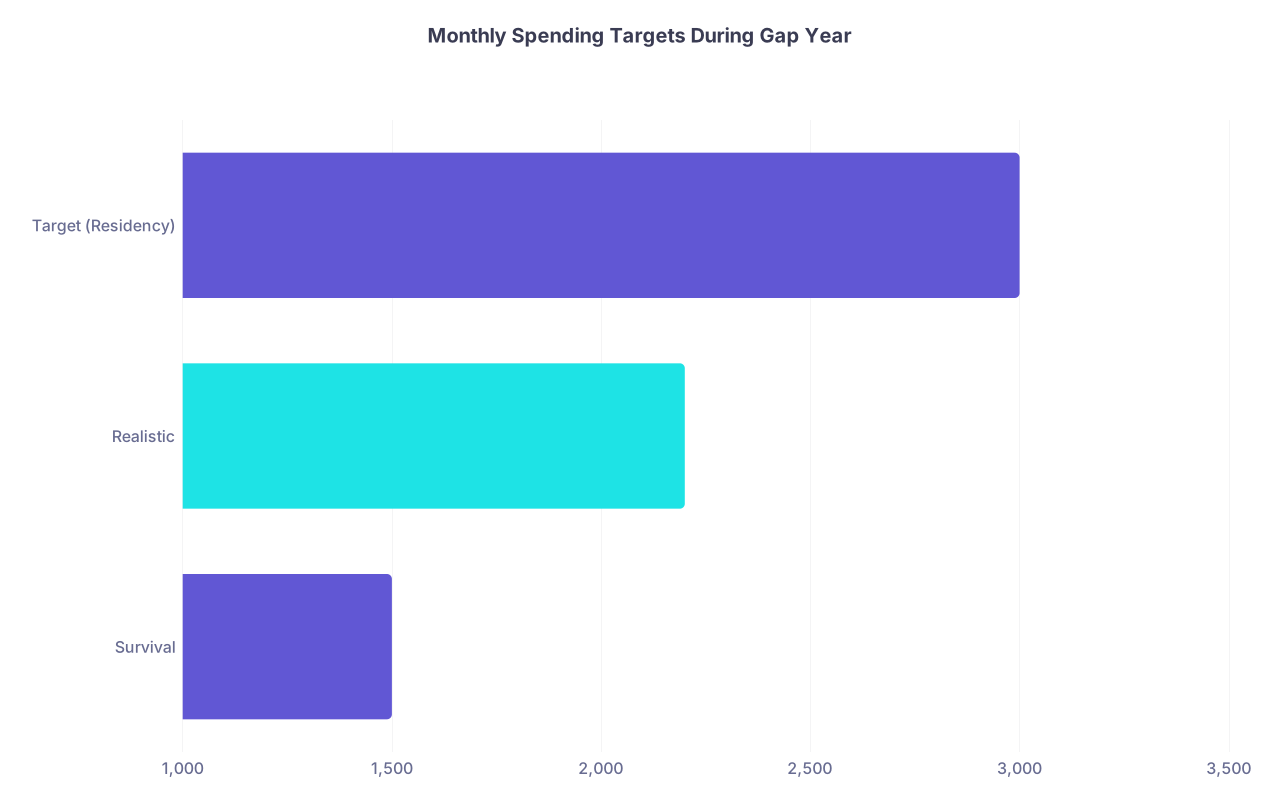
| Category | Value |
|---|---|
| Survival | 1500 |
| Realistic | 2200 |
| Target (Residency) | 3000 |
Your current job is to:
- Operate at or near survival until:
- You’ve got a contract and a start date AND
- You’ve built at least a tiny cash buffer (even $1,000–2,000) for moving and unexpected expenses.
- Shift to realistic once income is steady and your loan plan is in place.
- Treat the target as a future resident version of you. Not today.
If your current spending is above survival and you don’t have guaranteed income yet, you’re acting like you matched when you didn’t. Fix that.
9. Quick Example Scenarios
Sometimes abstract advice doesn’t land. So let’s make this concrete.
Scenario A: Unmatched, living in a high-cost city, no job lined up
- Federal loans: grace until November.
- Private institutional loan: $250/month starting August.
- Current rent: $1,800/month.
What you do:
- Move out or get a roommate by June; aim to drop housing below $900 if possible.
- Get any paid work by May (tutoring, research assistant, MA if allowed).
- In October, enroll in SAVE with documented low income so your federal payment is $0–$50 when grace ends.
- Keep paying the $250 on the private loan and cut everything else to protect your credit.
Scenario B: SOAPed into prelim starting October 1 in another state
- Move required.
- First paycheck around October 20.
- Federal loans: grace ends December.
- Some savings: $3,000.
What you do:
- Build a lean moving plan: cheap apartment, possibly roommate, used furniture, drive instead of ship if possible.
- Use savings to cover:
- Moving + deposits (cap as low as humanly possible).
- October and November living costs.
- Once paychecks start, immediately:
- Set aside a small emergency buffer.
- Enroll in SAVE in November so payments starting December are low and count toward forgiveness.
- No car upgrade. No big purchases until at least three stable paychecks.

10. Legal and Contract Considerations That Affect Finances
You’re in the “Financial and Legal Aspects” phase, so don’t ignore the legal side of your money.
Pay attention to:
Residency contracts
- Start date
- Salary
- Bonus/relocation language (many do not have this, but check)
- Penalties for backing out
Lease agreements
- Early termination clauses
- Subletting rules
- Security deposit conditions
Loan promissory notes
- Capitalization triggers
- Deferment/forbearance rules
- Default consequences
If you’re unsure whether you’re about to sign something that will box you in financially—like a lease in a city you may not end up in next year—ask someone who’s been around (upper resident, faculty mentor, or even a legal clinic if available).

FAQ (Exactly 5 Questions)
1. Should I go into forbearance on my federal loans if I’m unmatched and broke?
Usually, no—at least not as your first move. Enroll in an income-driven plan like SAVE using your actual (low or $0) income. That can give you a $0 required payment that still counts toward forgiveness and possibly PSLF, while forbearance usually does not. Use forbearance only as a short-term emergency last resort.
2. Is it worth taking a high-interest personal loan to cover moving and licensing costs?
Generally, I’d avoid it unless you’ve run out of options and you already have a signed contract with a start date. Even then, compare it to cheaper options: tightening your budget, support from family with a written payback plan, or 0% promotional credit (only if you’re disciplined and can pay it off quickly after you start residency).
3. I matched into a prelim through SOAP with no guaranteed PGY-2. Should I pay extra on loans now or save cash?
Save cash first. Your situation is unstable—you may be reapplying, moving again, or facing extra exam and application costs. Build a few thousand in buffer, stay current on required payments (especially private loans), and lock into SAVE or IDR for federal loans. Aggressive prepayments can come later when your long-term spot is secured.
4. My grace period ends before I start residency. Can I delay payments until I get my first paycheck?
Yes, but don’t just “ignore” the loans. File for an IDR plan early. If you truly have $0 income, your payment may be $0; that effectively delays cash outflow while still protecting you from delinquency and preserving forgiveness time. If you need an extra month or two, you can ask for a very short forbearance, but do it consciously.
5. How much should I budget for moving if I SOAP or match late?
For a bare-bones resident move, I usually tell people to aim for roughly $2,000–$4,000 total if crossing states: deposits, first month’s rent, gas, basic furniture, and setup. You can cut that lower by getting roommates, buying used furniture, and driving yourself. The key is to decide upfront that this is an economy move, not a lifestyle upgrade.
Key takeaways:
- Drop the “standard Match” script—your actual start date and income dictate your budget, not what should have happened.
- Lock in a protective loan strategy early: IDR over forbearance for federal loans, and crystal clarity on private loan terms.
- Run a survival-level budget until income is stable and you’ve built a buffer; you can rebuild lifestyle later, but you only get one shot at not wrecking your finances this year.