
Will Programs Judge Me for Talking About Student Loans During Interviews?
What if you say one honest thing about your student loans in an interview… and they quietly move you from “rank to match” to “do not rank”?
That’s the fear, right?
Not just, “Will they judge me?” but, “Will this one comment about money label me as high-risk, uncommitted, or ‘in it for the wrong reasons’… and ruin everything I’ve worked for?”
Let’s walk straight into that anxiety.
What Programs Really Think When You Mention Loans
Here’s the uncomfortable truth: programs absolutely notice how you talk about money, debt, and lifestyle.
But it’s not the topic that gets people in trouble. It’s the tone.
I’ve sat in on post‑interview debriefs where these exact phrases were thrown around:
- “Felt very money‑focused.”
- “Seemed more worried about lifestyle than the work.”
- “Kept bringing up loans and salary — red flag.”
But I’ve also heard:
- “Very realistic about debt and finances.”
- “I liked that they understood loan repayment.”
- “They’ve clearly thought about the long term.”
Same topic. Different vibe. Very different outcomes.
So no — you’re not going to tank your chances just because you mention student loans. You tank your chances if you sound:
- Entitled
- Bitter or resentful
- Like you’re choosing a specialty mainly for money
- Like you think residency pay is unfair and you’re already angry about it
Programs are wary of people who sound like they’re going to be chronically burned out, constantly complaining, or suing the institution in five years. Fair? Not always. Reality? Yes.
But having loans? Everyone assumes you do. They also know the numbers are brutal.
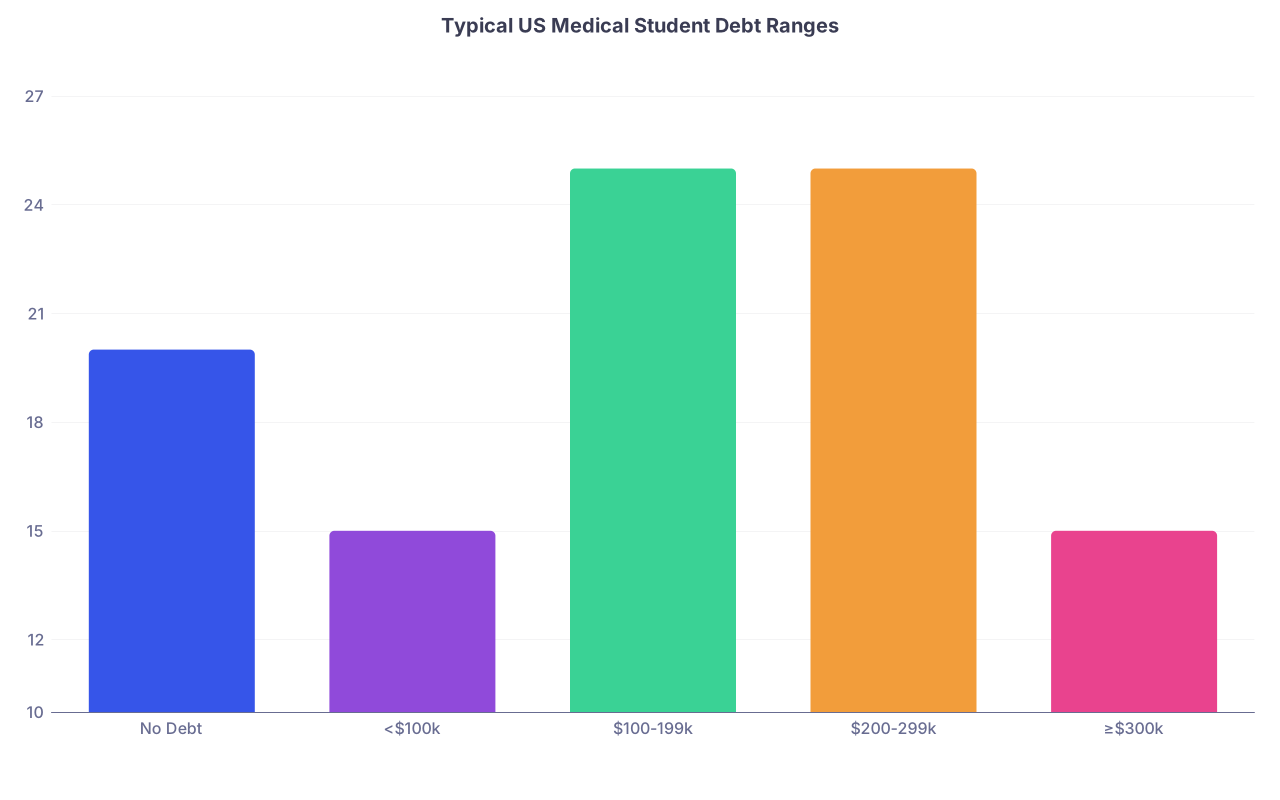
| Category | Value |
|---|---|
| No Debt | 20 |
| <$100k | 15 |
| $100-199k | 25 |
| $200-299k | 25 |
| ≥$300k | 15 |
You’re not weird for caring about your loans. You’d be weird if you didn’t.
When Talking About Student Loans Is Totally Fine (Even Smart)
The thing nobody tells you: some contexts are actually great for mentioning loans — if you do it calmly and maturely.
Safe-ish places where loans can come up without screaming “red flag”:
Explaining why a loan repayment or PSLF-eligible program appeals to you
Example:
“I have a significant loan burden, so I really value that this hospital is non‑profit and PSLF‑eligible. It makes it more realistic for me to stay in academic medicine long term.”Discussing why geography matters
“I grew up in this state, and being near family means I can live more affordably and manage my loans more sustainably while still working in a high‑need population.”Answering honestly about stress or challenges
“One ongoing stressor has been the size of my student loans. It pushed me to actually learn about finances and budgeting earlier than I might have otherwise.”Showing you’ve taken responsibility
“I’ve been using an income‑driven repayment plan in school and tracking different options like PSLF and REPAYE so I’m not blindsided after residency.”
Notice the pattern: you’re not ranting about how unfair debt is. You’re showing:
- Insight
- Planning
- Emotional control
That’s what programs like.
They hate surprises. Debt is not a surprise. A resident who constantly complains, panics about every paycheck, or threatens to leave because of money? That’s the nightmare.
When Talking About Loans Will Make You Look Bad
Now the scary part — the places this topic really can wreck you.
Here are the landmines where I’d be extremely careful:
You connect your specialty choice primarily to salary
“I thought about peds, but with my loans, I really need something that pays better.”
That reads as: “I’m here for the money.”You sound resentful toward medicine or your school
“I feel like schools just shove us into massive debt and walk away.”
Even if it’s kind of true, this is not the room to say it.You complain about resident salaries in a whiny way
“It’s wild we work so many hours and get paid so little, especially with loans.”
Everyone in that room already knows it’s wild. They still don’t want to hear you say it like that.You focus on money over patients
“I need to pay off my loans quickly, so I’m looking for places with high moonlighting potential.”
If they already love you? Maybe you get away with that. But from a neutral place? Risky.
Here’s the mental check I’d use:
If your sentence, stripped of context, could be paraphrased as
“I care more about money than the work,”
don’t say it.
You can think it. Silently. In your car. On the plane. Just not in front of the PD.
Exactly How to Phrase Things So You Don’t Sound Like a Walking Red Flag
Let’s rewrite some of the scary versions into “interview‑safe but still honest” versions.
Bad:
“I have a ton of loans so I really need to pick a high‑paying specialty.”
Better:
“My loans are significant, so I wanted a specialty where I’d feel fulfilled enough to practice long term. For me, that ended up being [specialty] because of [insert actual reason that isn’t just money].”
Bad:
“I can’t afford to live somewhere expensive with my loans.”
Better:
“Cost of living is one factor for me because of my loan burden, so I’ve been looking at cities where I can realistically manage my finances and still have enough bandwidth to be fully present in residency.”
Bad:
“I’m really stressed about my debt.”
Better:
“One ongoing stressor has been my student loans. To handle that, I started learning more about financial planning, using a detailed budget, and reading about repayment options. It’s helped me focus more on training and less on panic.”
See the pattern?
- Acknowledge reality
- Show you’re doing something about it
- Frame it as one factor, not your whole personality
If you need a quick template:
“[Acknowledgment of loans] → [What I did about it] → [How that supports my training / career / patient care].”
Is It Ever Safe to Ask Programs Directly About Money and Loans?
You don’t want to sound like that applicant who, during Q&A, shoots their hand up and says, “So… how much moonlighting can we do and what’s the pay?”
That person gets remembered. And not the way they want.
But there are ways to ask:
| Topic | Safer Version | Risky Version |
|---|---|---|
| Loan Repayment | “Do graduates commonly pursue PSLF from here?” | “Will this program help pay my loans?” |
| Benefits | “Is financial counseling available to residents?” | “Can someone tell me how to get rich fast?” |
| Moonlighting | “At what level do residents typically moonlight?” | “How much extra can we make moonlighting?” |
| Cost of Living | “Do residents generally find the salary livable?” | “Is the pay enough? It seems low.” |
Who to ask what:
Program leadership (PD/APD)
Good for: structured things like PSLF‑eligible employer status, financial counseling, formal benefits.
Avoid: “So… what do you think about resident pay?” Just don’t.Chiefs / senior residents
Good for: “Is the salary livable in this city?”, “Do people feel financially crushed or generally okay?”
This is where to be a tiny bit more real.Current interns/residents on the tour
Good for: “Do people actually have time for moonlighting?”, “How do people handle cost of living?”
Just don’t be the person monopolizing the conversation with money talk.
If you ask 1–2 thoughtful, practical questions across the whole day, no one cares.
If every question you ask is about money, loans, or time off, people absolutely notice.
How Much Do Programs Actually Care About Your Debt Level?
Here’s the thing that might actually calm you down: programs usually have no idea how much you owe.
They don’t see your NSLDS breakdown. They’re not reading how many private vs federal loans you have. They’re not running your debt‑to‑income ratio behind the scenes.
Their concern is not:
“Does this person have $150k or $450k of loans?”
Their concern is:
“Does this person seem emotionally stable, reasonably happy to be here, and unlikely to quit or constantly fight with administration?”
They care about:
- Your reliability
- Your professionalism
- The likelihood that you’ll finish the program without imploding
If mentioning loans is one small piece of a story that shows maturity and foresight, it actually helps. It paints you as grounded, not naive.
The danger is when your entire persona in the interview becomes “debt‑panicked applicant who seems kind of bitter.” That’s when people quietly move you down the rank list.
Quick Mental Framework: How to Decide Whether to Mention Loans
When you’re about to say something money‑related, run it through this 3‑question filter in your head:
Is this about planning or complaining?
Planning = safer. Complaining = risky.Does this connect to my ability to be a good resident?
“This helps me be more stable and focused” = good.
“This is why I’m angry and stressed” = bad.Could I say this in front of a very traditional, old‑school PD and not cringe?
If imagining a stone‑faced 65‑year‑old PD hearing it makes you feel sick, don’t say it.
If the answer to any of those is bad, rephrase or drop it.
How to Prepare One Safe, Honest “Debt Line” Before Interviews
To stop yourself from spiraling and oversharing on the spot, script one short, honest statement you can use if loans come up.
Something like:
“I do have substantial student loans, so I’ve tried to be thoughtful about long‑term financial planning. I don’t want it to drive my decisions, but I also don’t want to be reckless. I see [specialty/program type] as something I’d genuinely be happy doing for decades, which matters more to me than just the paycheck.”
Or:
“Debt has definitely been a stressor, but it forced me to get organized early — budgeting, learning about repayment, thinking long term. My goal is to manage it in a way that doesn’t distract from being fully engaged in residency.”
Practice it out loud a few times. So if your brain freezes, you can auto‑pilot that line instead of blurting out:
“Yeah, I’m super stressed about my loans and honestly I just need to start making real money.”
Because that’s the version that haunts you at 2 a.m. for months.
Visualizing Your Actual Risk (It’s Lower Than Your Anxiety Says)
Most applicants never mention loans directly. Some do, and do it badly. Some do, and it actually helps them seem grounded.
If I had to roughly sketch the “outcome” pie:
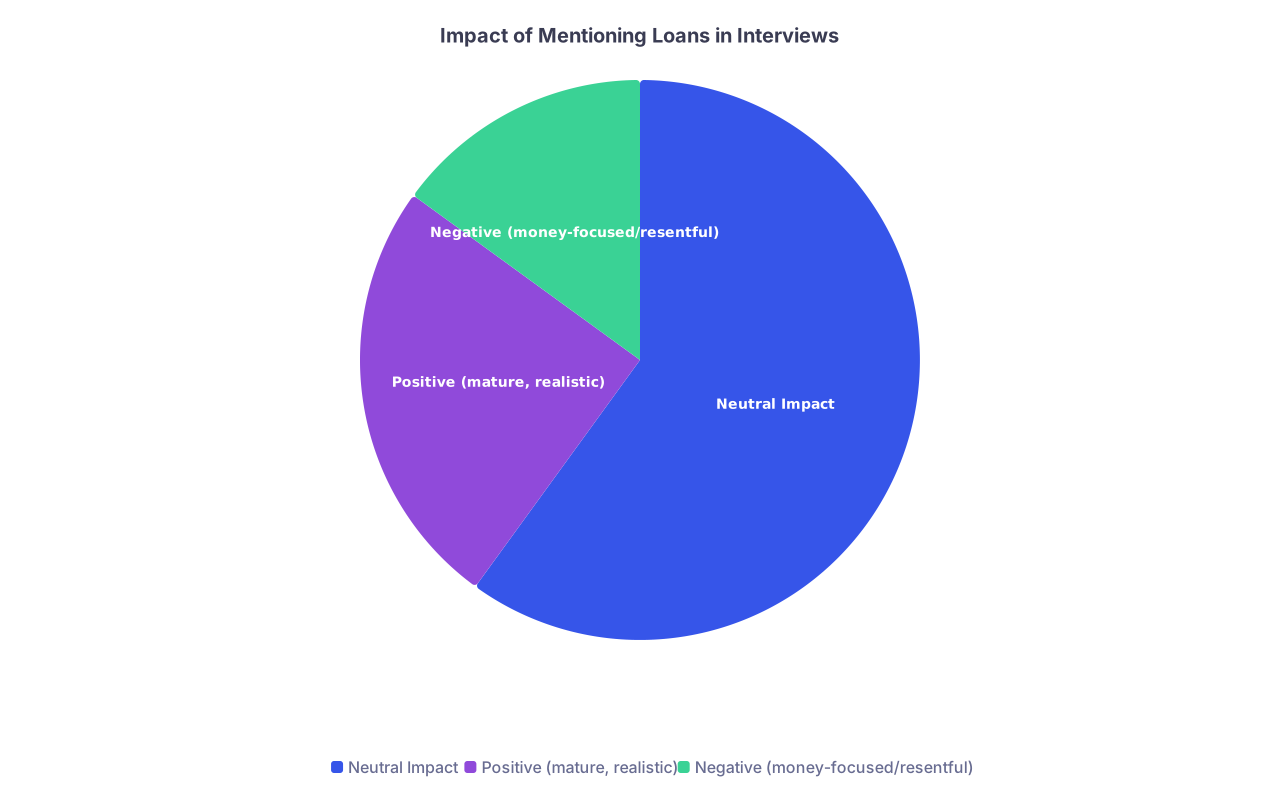
| Category | Value |
|---|---|
| Neutral Impact | 60 |
| Positive (mature, realistic) | 25 |
| Negative (money-focused/resentful) | 15 |
The majority? Neutral. It doesn’t move your rank.
A decent chunk? Slight positive — you look grounded.
The minority? Negative — those are the ones who lean too hard into money talk.
Your goal isn’t “never mention loans.” It’s “don’t become the story about the applicant who wouldn’t stop talking about money.”
Tiny Scripted Scenarios (Because Your Brain Needs Concrete Examples)
Scenario 1: They ask, “What worries you about the future?”
You want to say: “Debt and burnout and the healthcare system being on fire.”
Safer version:
“One ongoing concern is managing my student loans while maintaining some balance. To address that, I’ve been learning more about financial planning so I don’t feel blindsided post‑residency. Knowing I have a plan helps me focus more on developing as a clinician.”
Scenario 2: Resident asks, “Any questions for us?”
You want to say: “Is this salary even livable in this city?”
Better:
“How do residents here generally feel about cost of living on the salary? Do people typically have roommates or live alone, and do they feel financially stretched or mostly okay?”
You’ll still get the real answer. Without sounding like you’re interviewing them.
Scenario 3: Group Q&A, PD present
You want to ask about moonlighting pay.
Better approach: Ask a resident privately later, or phrase it like:
“At what level of training do residents here typically start moonlighting, if at all? Is that something the program supports, or more individual?”
Less “how much extra cash can I squeeze out of this place,” more “what’s the culture here?”
FAQ: Student Loans and Interviews – The 5 Questions You’re Probably Still Worried About
1. Will programs see my actual loan amounts and judge me for high debt?
No. They don’t see your loan ledger. They assume almost everyone has substantial debt. They care about how you handle stress and responsibility, not the specific dollar number.
2. Is it bad if I say that debt influenced my specialty choice?
It’s risky if you make it sound like the main reason. Saying, “Compensation was one of many factors, but the primary reasons were X, Y, Z about the work itself,” is okay. Saying, “I chose this for the money because of loans,” is a problem.
3. Can I ask about PSLF, loan repayment, or financial resources during interviews?
Yes, briefly and calmly. Ask 1–2 clear, non‑whiny questions. Focus on structure (“Is this hospital PSLF‑eligible?”, “Do residents have access to financial counseling?”), not complaints about pay.
4. What if my anxiety makes me overshare about money in the moment?
This is exactly why you script one or two “safe lines” about debt beforehand and practice them. If you feel yourself about to rant, pause, breathe, and use your rehearsed version. Short, steady, done.
5. Could mentioning loans actually help me in an interview?
Yes, if it shows maturity: you’ve faced a real stressor, taken responsibility, learned basic financial literacy, and are planning for a sustainable career. Programs like people who are realistic and won’t crumble the first time real life hits.
Open your interview prep document right now and write one single sentence you’d feel okay saying about your loans if it came up. Just one. Then read it out loud and tweak it until it sounds calm, adult, and not apologetic. That one line will save you from saying the thing you’ll replay in your head for the next six months.